Tanzanite vs Sapphire: Key Differences
May 31, 2026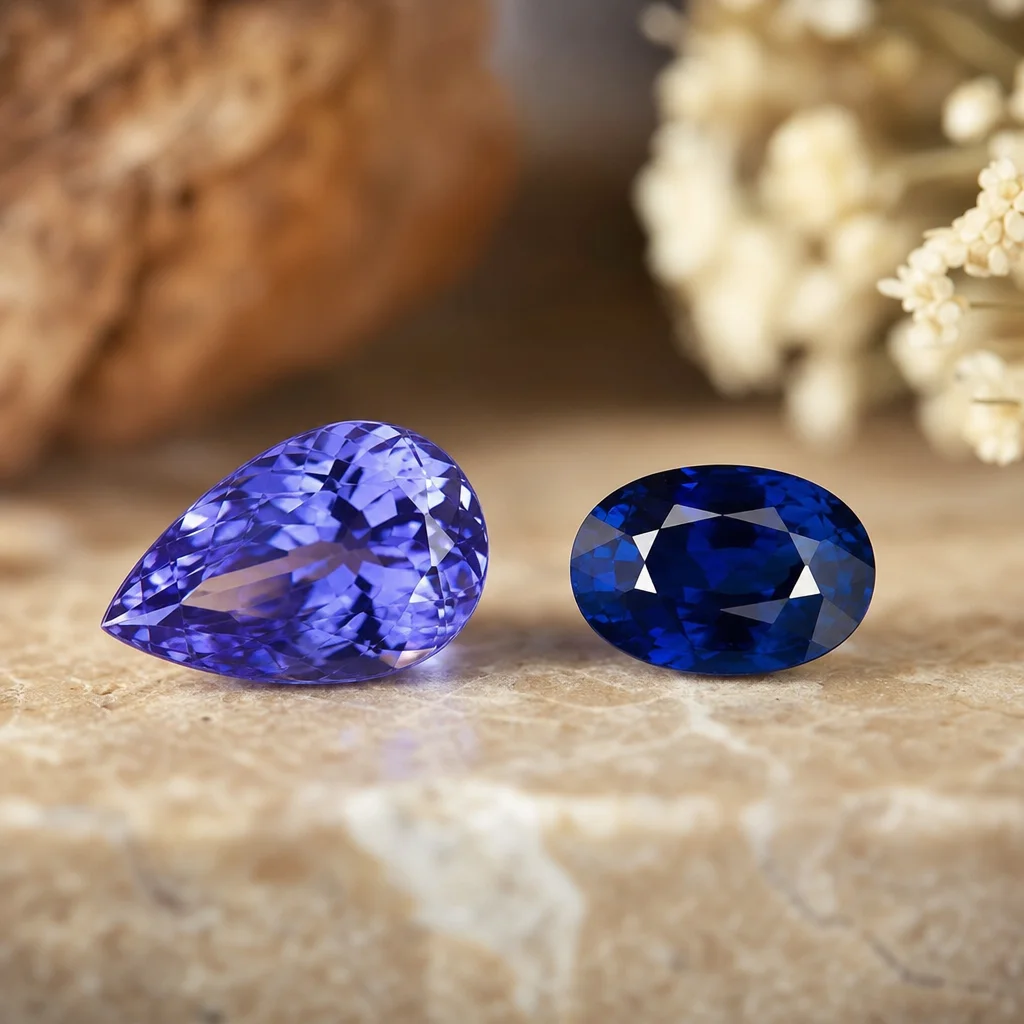
A Side-by-Side That Most Buyers Get Wrong
I see this confusion constantly: someone falls in love with a blue-violet gemstone and can't decide between tanzanite and sapphire. They look similar enough in photos, both have that alluring blue-to-purple shift, and both show up in fine jewelry. But beneath the surface, these two stones have almost nothing in common.
The mineralogical difference alone is staggering. Tanzanite is a variety of zoisite—a calcium aluminum hydroxy sorosilicate. Sapphire is a variety of corundum—aluminum oxide. They crystallize in different systems (tanzanite is orthorhombic, sapphire is trigonal), form under completely different geological conditions, and behave differently in every measurable way. Comparing them is like comparing oak wood to aluminum—they happen to share a color range, and that's about where the similarities end.
The Origin Story: One Mine vs. The Whole World
This is perhaps the single most important difference between these two stones, and it directly impacts pricing, availability, and long-term investment outlook.
Tanzanite comes from exactly one place on Earth: a roughly 5-square-mile mining area near Mount Kilimanjaro in northern Tanzania. Discovered in 1967 (making it one of the most recently discovered gemstones), tanzanite has been called "a thousand times rarer than diamond" by geological estimates. The mines are deepening, yields are declining, and experts predict the supply could be exhausted within 20–30 years. Whether that actually happens depends on mining economics and geological realities, but the scarcity narrative is real.
Sapphire, on the other hand, is found on every inhabited continent. Major deposits exist in Sri Lanka, Myanmar (Burma), Madagascar, Australia, Thailand, Montana (USA), Kenya, and many other locations. The sheer geographic diversity means sapphire supply is essentially unlimited for the foreseeable future. High-quality sapphire from specific origins (like Kashmir or Burma) commands premium prices, but the mineral itself is abundant.
What this means in practice: tanzanite's price is heavily influenced by supply scarcity. If demand increases while supply continues to shrink, prices could rise significantly. Sapphire pricing is more stable and driven primarily by quality factors—color, clarity, cut, and origin—rather than scarcity concerns.
Durability: The Dealbreaker for Daily Wear
If there's one reason to choose sapphire over tanzanite for a ring you'll wear every day, it's durability. This isn't a minor difference—it's a chasm.
Sapphire: Mohs hardness of 9. Second only to diamond (10) and moissanite (9.5). This makes sapphire extremely resistant to scratches, chips, and daily wear damage. A sapphire engagement ring can literally last generations without showing significant wear. You can wear it gardening, washing dishes, or doing basically anything short of hitting it with a hammer.
Tanzanite: Mohs hardness of 6–6.5. That's softer than quartz (7), which is the primary component of household dust. Let me repeat that: tanzanite is softer than the dust floating around your house. Over time, normal household dust will create micro-scratches on tanzanite, gradually dulling its polish. It's also vulnerable to thermal shock—sudden temperature changes can cause cleaving along its perfect cleavage plane.
For earrings or pendants that don't get knocked around, tanzanite is fine. For a daily-wear ring, especially an engagement ring, sapphire is the clearly better choice. I've seen tanzanite rings lose their polish within a year of daily wear, while sapphire rings from the same period still look freshly polished.
The Color Game: Trichroic Magic vs. Pure Blue
Both stones show fascinating color behavior, but in fundamentally different ways.
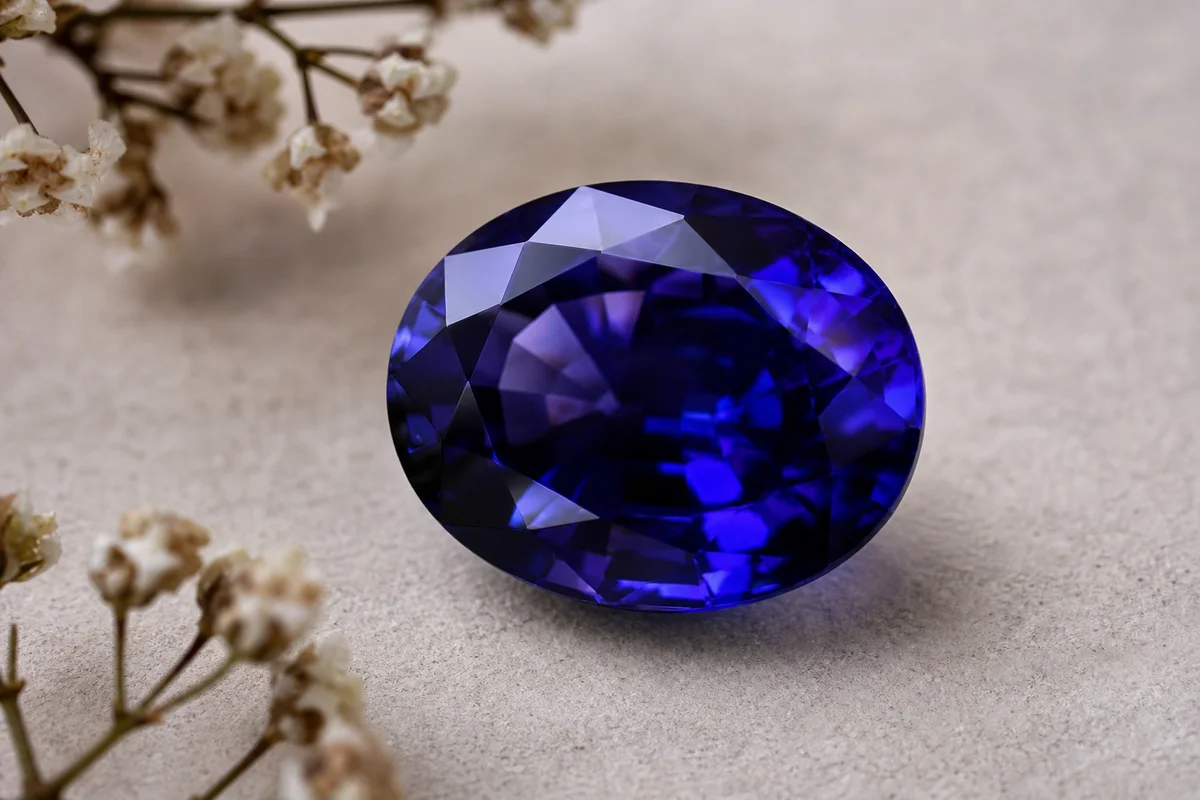
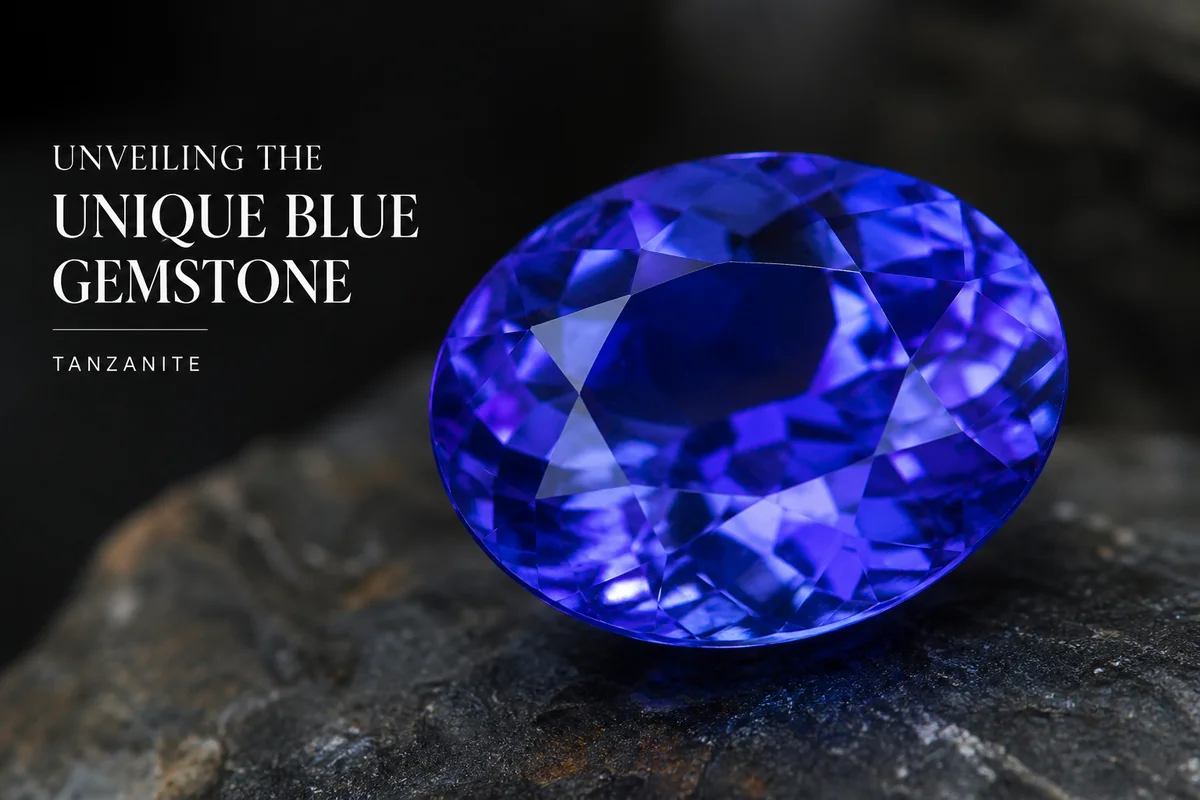
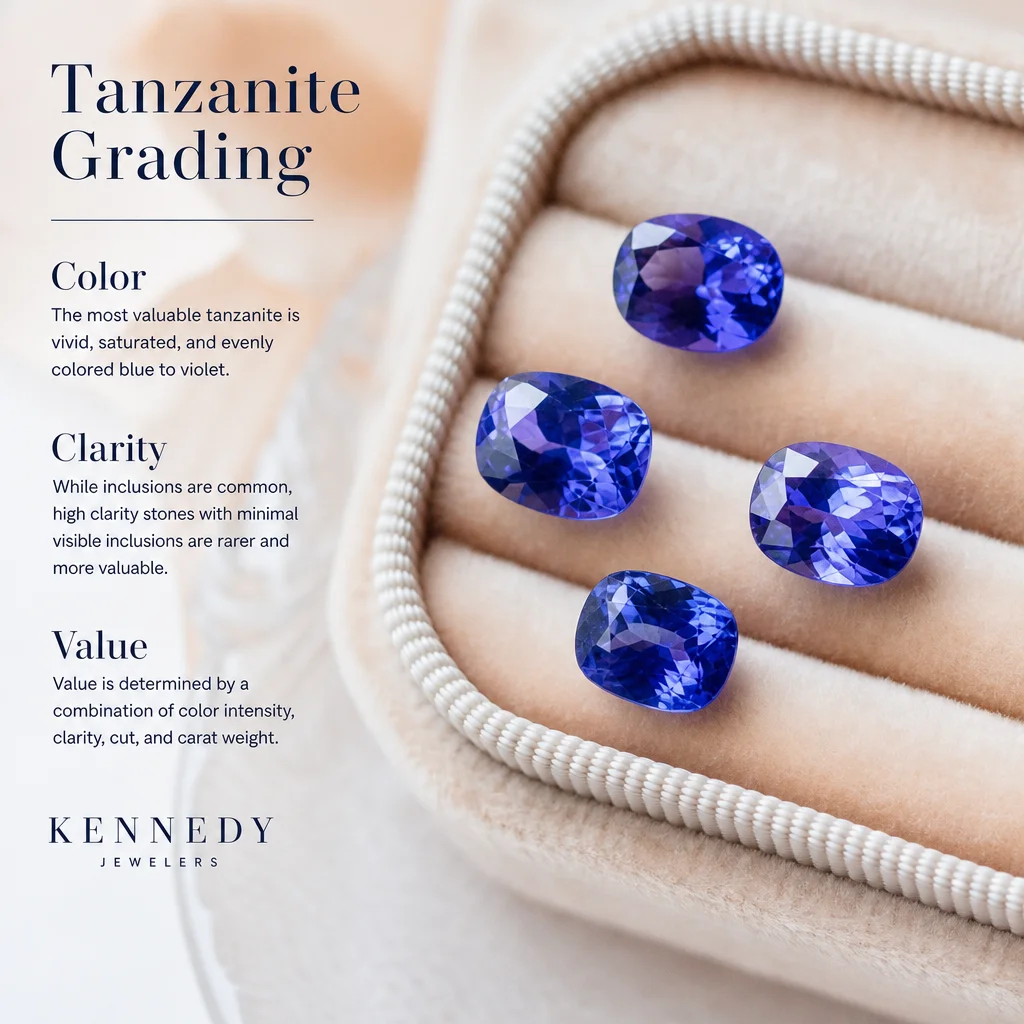
Tanzanite is strongly trichroic—when viewed from different angles, it shows three distinct colors: blue, violet, and red-brown. Most faceted tanzanite is cut to show the blue-violet face-up, with the brownish component minimized. The resulting color is a unique purplish blue that no other gemstone quite replicates. It shifts between blue, violet, and burgundy depending on the lighting and viewing angle, which is part of what makes tanzanite so captivating.
Sapphire, by contrast, is typically singly refractive (though some sapphire shows weak dichroism). Its blue comes from trace amounts of iron and titanium in the corundum lattice. The best sapphires—the legendary Kashmir stones—have a velvety blue that seems to glow from within. But sapphire doesn't shift color dramatically the way tanzanite does. It's a more "honest" color: what you see is what you get, regardless of angle.
Which is better? It's subjective. If you love the color-shifting magic and don't mind a more delicate stone, tanzanite wins on visual uniqueness. If you prefer a deep, stable blue that projects authority and permanence, sapphire is the classic choice.
Price Comparison: What You're Actually Paying For
The price gap between these stones is dramatic, but the reasons behind it aren't always what people assume.
Tanzanite pricing (2026 market):
- 1–2 carats, good color: $300–$600 per carat
- 3–5 carats, excellent color: $600–$1,200 per carat
- 5+ carats, top color (vivid blue-violet): $1,200–$2,000+ per carat
Sapphire pricing (2026 market, heated):
- 1–2 carats, good blue: $1,000–$3,000 per carat
- 3–5 carats, fine blue: $3,000–$8,000 per carat
- 5+ carats, top quality (Kashmir/Burma equivalent): $8,000–$20,000+ per carat
Unheated sapphires with certificates from major labs command 30–100% premiums over these ranges. Padparadscha (pink-orange) and fancy-colored sapphires are in entirely different price tiers.
For a 2-carat stone of decent quality, you're looking at roughly $800–$1,200 for tanzanite versus $2,000–$6,000 for sapphire. That 3–5x price difference narrows at larger sizes and widens for top-quality specimens.
Investment Considerations
Sapphire has a centuries-long track record as a store of value. Fine sapphires from legendary origins (Kashmir, Burma, Sri Lanka) have appreciated consistently. They're understood by the global market, graded by major laboratories (GIA, AGL), and traded at established auction houses. If you want a gemstone investment, sapphire is the rational choice.
Tanzanite's investment case is more speculative. The scarcity narrative is compelling—the single-source supply is genuinely unusual for a gemstone of its popularity. Tanzanite has appreciated significantly since its discovery (original prices were a few dollars per carat). However, tanzanite lacks the historical track record of sapphire, and its lower hardness means long-term preservation is more challenging. If the mines do eventually deplete, prices could spike—but if new mining technology opens up deeper deposits, the scarcity thesis weakens.
When to Buy Tanzanite vs. When to Buy Sapphire
Choose tanzanite when:
- You want a unique, conversation-starting gemstone
- The piece is an occasional-wear pendant or earrings
- You're drawn to the trichroic color-shifting effect
- Budget is a primary concern and you want maximum visual impact per dollar
- You're willing to bet on long-term scarcity driving appreciation
Choose sapphire when:
- The piece is a daily-wear ring or engagement ring
- Durability and longevity are priorities
- You want a gemstone with proven investment history
- You prefer pure, stable blue without purple undertones
- You're building a gemstone collection with resale value in mind
What to Look for When Buying Tanzanite vs Sapphire
When it comes to selecting the perfect gemstone, understanding the differences between tanzanite and sapphire can be pivotal. Whether you're a seasoned collector or a first-time buyer, knowing what to look for will ensure you make an informed decision. Here’s a breakdown of essential factors to consider when comparing these stunning gemstones:Buying Tips:
- Color and Clarity: Tanzanite is renowned for its vibrant blue hue with purple undertones, which is often referred to as "sapphire-like." Sapphire, on the other hand, comes in a wide range of colors, including blue, red (also known as rubies), pink, orange, green, and yellow. Look for a color that complements your style and matches the desired vibrancy of the stone. Clarity is also crucial; choose a gemstone with minimal inclusions to ensure its beauty is not compromised.
- Origin: Tanzanite is a relatively new gemstone, discovered in 1967, and is only found in the Merelani Hills of Tanzania. Its rarity adds to its value. Sapphire, however, is mined in various parts of the world, with the most famous sapphires coming from Australia, Sri Lanka, and Madagascar. Knowing the origin can give you insights into the gemstone’s potential rarity and quality.
- Cut and Carat Weight: A well-cut gemstone reflects light more effectively, enhancing its brilliance and sparkle. Look for a gemstone with a cut that maximizes its fire and brilliance. The carat weight also plays a significant role; larger stones are rarer and generally more expensive.
- Certification: Ensure that the gemstone comes with a certificate from a reputable gemological laboratory. This certificate will detail the gemstone's origin, color, cut, clarity, and carat weight, providing you with a guarantee of authenticity and quality.
- Price Comparison: Before making a purchase, compare prices from different vendors to ensure you’re getting a fair deal. Be wary of prices that seem too good to be true, as they might indicate a lower-quality gemstone or a lack of transparency.
Questions to Ask Sellers:
- What is the color grade of the tanzanite or sapphire?
- What is the clarity grade, and are there any visible inclusions?
- Can you provide a certificate from a reputable gemological laboratory?
- How does the color of this tanzanite or sapphire compare to others of its kind?
- What is the carat weight, and how does it affect the price?
Red Flags to Watch For:
- Inconsistent Color: Be cautious if the color appears too vibrant or uniform; it may have been treated to enhance its appearance.
- Lack of Certificate: Without a certificate, there’s no guarantee of the gemstone’s authenticity or quality.
- High Prices Without Justification: If the price seems unusually high without a clear explanation of the gemstone’s qualities, it could be a sign of overpricing or even a scam.
- Unusual Discounts: Be wary of sellers offering excessively discounted prices; they might be trying to sell a lower-quality gemstone.
- Vague Descriptions: If the seller is unable to provide clear details about the gemstone, it could indicate a lack of knowledge or transparency.
Setting Recommendations for Tanzanite vs Sapphire
When it comes to selecting the perfect jewelry setting for tanzanite and sapphire, the choice can significantly impact the overall look and longevity of the piece. Both gemstones are known for their vibrant colors and durability, but their unique characteristics require careful consideration when choosing a setting.Bezel Setting
**Why It Works:**- Security: A bezel setting provides a secure fit for both tanzanite and sapphire, as it encircles the entire gemstone, minimizing the risk of the stone being chipped or falling out.
- Edge-to-Edge Coverage: This setting offers full coverage, which can enhance the gemstone's color and make it appear larger.
- Versatility: Bezel settings can be crafted in various metals, including gold, platinum, and silver, allowing for a wide range of design possibilities.
- Overly Thick Bezels: While a bezel setting is secure, overly thick bezels can make the gemstone appear smaller and less vibrant.
Prong Setting
**Why It Works:**- Maximum Light Exposure: Prong settings allow for maximum light to enter the gemstone, enhancing its brilliance and sparkle.
- Elegant Look: This setting offers a classic and timeless appearance that complements both tanzanite and sapphire.
- Durability: Prongs are sturdy and can withstand regular wear, making them a practical choice for everyday jewelry.
- Too Many Prongs: An excessive number of prongs can make the gemstone appear cluttered and may increase the risk of prong damage over time.
- Weak Prongs: Ensure that the prongs are securely attached to the setting to prevent them from bending or breaking.
Halo Setting
**Why It Works:**- Accentuation: A halo setting, which consists of a ring of smaller gemstones surrounding the central stone, can accentuate the beauty of both tanzanite and sapphire.
- Enhanced Appearance: The halo can make the central gemstone appear larger and more striking.
- Versatility: Halos can be designed in various styles and materials, offering a unique look for each piece.
- Overly Intricate Halos: A halo that is too intricate can distract from the central gemstone and may not be suitable for all occasions.
- Poorly Crafted Halos: Ensure that the halo is securely attached to the central gemstone to prevent any movement or damage.
Pave Setting
**Why It Works:**- Lavish Look: Pave settings involve setting numerous small gemstones close together, creating a lavish and luxurious appearance.
- Versatility: This setting can be used for both tanzanite and sapphire, and it can be tailored to various designs and occasions.
- Elegance: Pave settings offer a sophisticated and elegant look that is both timeless and chic.
- Poorly Set Stones: Ensure that the stones are securely set to prevent them from falling out or becoming loose.
- Overcrowding: Avoid using too many stones in a pave setting, as this can make the piece appear cluttered and may hinder the gemstones' ability to reflect light.
Crystal Pairings: What Complements Tanzanite vs Sapphire
Tanzanite and Sapphire are both stunning gemstones that captivate with their vibrant colors and unique properties. When it comes to crystal pairings, the goal is to find stones that not only complement each other visually but also resonate symbolically. Here are five crystals that pair well with both Tanzanite and Sapphire, offering a harmonious blend of color, energy, and meaning.1. Amethyst
Amethyst is a purple variety of quartz that complements both Tanzanite and Sapphire beautifully. Its rich purple hue is a close match to the deep blue of Tanzanite, creating a striking contrast. Symbolically, Amethyst is known for its calming and protective properties, which can enhance the serene and peaceful energy of both Tanzanite and Sapphire.2. Citrine
Citrine is a yellow to orange variety of quartz that pairs wonderfully with the blue hues of Tanzanite and Sapphire. The warm, sunny glow of Citrine brings a sense of joy and abundance to the mix, balancing the cool tones of the blue crystals. Citrine is also known for its ability to attract prosperity and abundance, making it a powerful addition to any crystal collection.3. Ruby
Ruby, with its deep red color, is a bold and vibrant complement to both Tanzanite and Sapphire. The fiery red of Ruby adds a sense of passion and energy to the mix, creating a dynamic and lively combination. Symbolically, Ruby is associated with love, power, and courage, which can amplify the romantic and powerful energies of the blue crystals.4. Peridot
Peridot is a vibrant green gemstone that pairs well with both Tanzanite and Sapphire, offering a refreshing and harmonious contrast. The lush green of Peridot brings a sense of growth and renewal, which can complement the calming and protective energies of the blue crystals. Peridot is also known for its association with protection and rejuvenation, making it a valuable addition to any crystal collection.5. Moonstone
Moonstone is a soft, ethereal gemstone that complements the deep blue of Tanzanite and Sapphire with its subtle white and blue luster. The lunar qualities of Moonstone can enhance the intuitive and emotional aspects of the blue crystals, providing a grounding and nurturing energy. Symbolically, Moonstone is associated with femininity, intuition, and dreamtime, making it a beautiful addition to any crystal meditation or healing practice. In conclusion, the pairing of Tanzanite and Sapphire with these five crystals creates a visually stunning and symbolically meaningful collection. Whether you are drawn to the vibrant colors or the powerful energies, these crystal pairings offer a harmonious blend that can enhance your personal growth and well-being.Frequently Asked Questions
Can tanzanite be worn as an engagement ring?
Technically yes, but it requires extra care. Many jewelers set tanzanite in protective settings (bezel or halo) and recommend removing it during manual work, exercise, or household chores. It's a less ideal choice than sapphire for daily wear, but it's not impossible if you're mindful of its softer nature.
Is tanzanite really going to run out?
The single-source supply is geologically limited, and mining costs increase as operations go deeper. However, "running out" in the gem trade doesn't mean the stone disappears entirely—it means supply tightens and prices rise. Whether that happens in 20 years or 50 is debated, but the trend of declining yields is well-documented.
Does tanzanite's color fade over time?
Tanzanite itself doesn't fade from exposure to light (unlike kunzite or rose quartz). However, the original brownish component is removed by heat treatment during processing, and the resulting blue-violet is stable. Normal wear won't alter the color, though scratches may diffuse the light return and make the stone appear slightly less vibrant over years of use.
What's the best way to clean tanzanite jewelry?
Warm soapy water with a soft brush. Avoid ultrasonic cleaners (the vibrations can damage tanzanite along its cleavage plane), steam cleaners, and any harsh chemicals. Dry thoroughly with a soft cloth. Store tanzanite separately from harder stones to prevent scratching.
FAQ: Tanzanite vs Sapphire: Key Differences
What is the origin of Tanzanite?
**Answer:** Tanzanite is a relatively new gemstone, having been discovered in 1967 in the Merelani Hills of Tanzania. This region is the only known source of Tanzanite in the world, which makes it quite unique. In contrast, sapphires have been mined for centuries and can be found in various parts of the world, including Australia, Madagascar, and Sri Lanka.How does the color of Tanzanite compare to Sapphire?
**Answer:** Tanzanite is known for its vibrant blue color, which can range from a pale sky blue to a deep, rich blue-violet. This color is the result of the presence of vanadium in the mineral composition of Tanzanite. Sapphire, on the other hand, comes in a variety of colors, including blue, but its blue color is typically a deeper, more saturated hue compared to Tanzanite. The color of Sapphire is influenced by the presence of iron and titanium in its crystal structure.What is the hardness of Tanzanite and Sapphire?
**Answer:** Both Tanzanite and Sapphire are part of the corundum family, which also includes ruby. Tanzanite has a hardness of 6.5 to 7 on the Mohs scale, making it relatively hard and durable for everyday wear. Sapphire, with a hardness of 9, is one of the hardest gemstones, ranking just below diamond. This makes Sapphire an excellent choice for jewelry that will be worn frequently.Are Tanzanite and Sapphire typically treated?
**Answer:** Yes, both Tanzanite and Sapphire are commonly treated to enhance their appearance. Tanzanite is often heat treated to improve its color and clarity, while sapphires are frequently treated with oil or resin to fill in surface imperfections. It's important for buyers to be aware that treated gemstones are not inherently inferior; however, the treatments should be disclosed to ensure the buyer's understanding of the gemstone's condition.How does the price of Tanzanite compare to Sapphire?
**Answer:** The price of Tanzanite is often higher than that of Sapphire due to its rarity and the fact that it is only found in one location in the world. Tanzanite's color, clarity, and cut can also significantly affect its price. While Sapphire is more widely available and can be found in various colors, its price can vary widely depending on the color, clarity, and cut, as well as the specific origin of the gemstone.What is the best setting for Tanzanite and Sapphire?
**Answer:** The best setting for Tanzanite and Sapphire depends on the wearer's lifestyle and the gemstone's characteristics. For Tanzanite, a prong setting is often recommended to showcase its vibrant color and to prevent the gem from being easily chipped or scratched. Sapphire, being a harder gemstone, can be set in a variety of styles, from a classic solitaire to a more intricate halo setting. It's important to choose a setting that not only complements the gemstone but also ensures its security and longevity.Frequently Asked Questions
How can you tell the difference between tanzanite and sapphire?
The easiest way to tell them apart is by looking for tanzanite's unique trichroic properties. When you rotate a piece of handcrafted tanzanite jewelry, you will see flashes of deep blue, rich violet, and sometimes burgundy. Sapphires typically maintain a more consistent, pure blue color without these dramatic purple shifts, making tanzanite distinctly more vibrant in varied lighting.
Comments