Spessartine Garnet: The Mandarin Orange Gemst...
June 5, 2026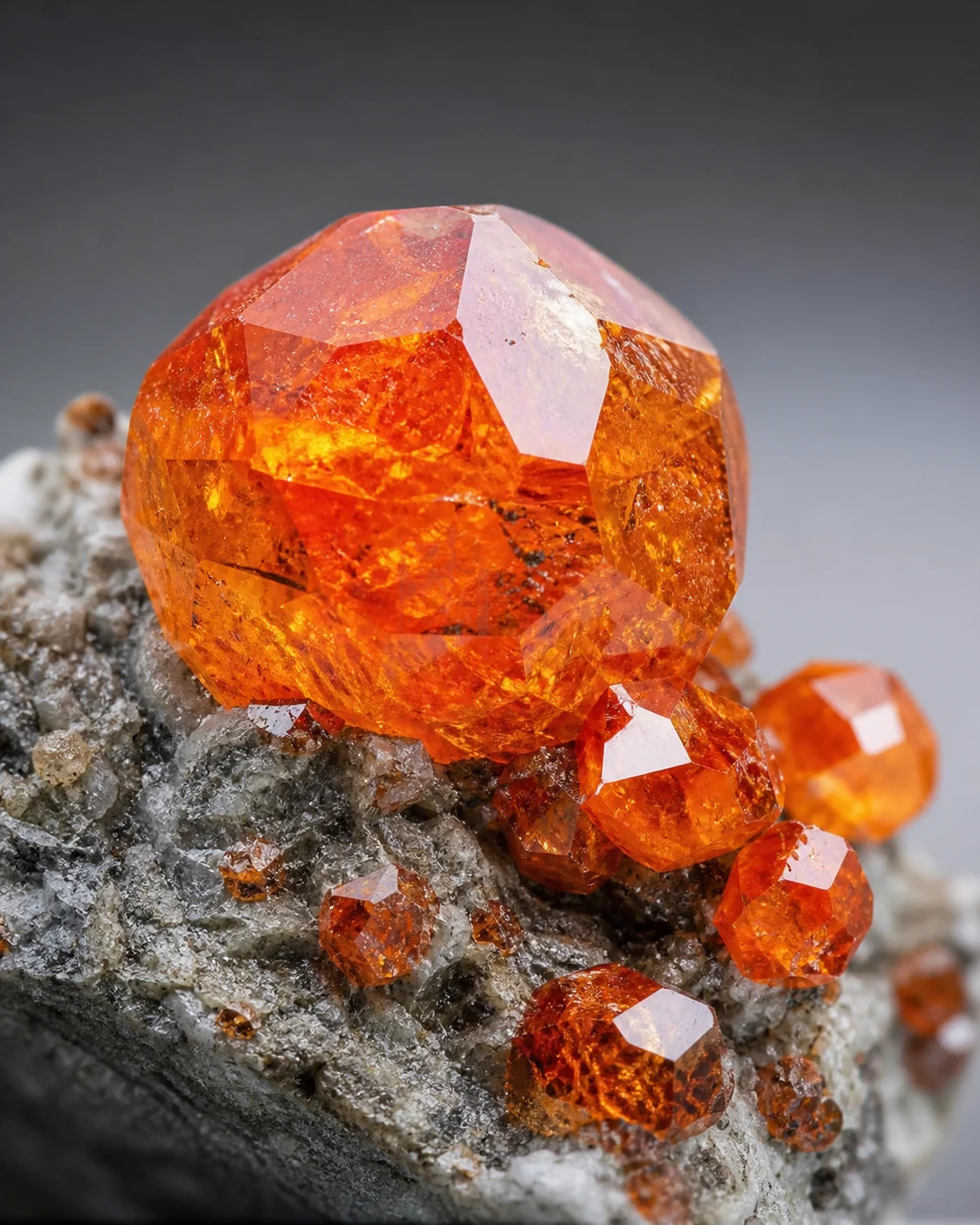
What Makes Spessartine Special
Spessartine — also spelled spessartite — is the manganese-aluminum variety of the garnet group, with the chemical formula Mn₃Al₂(SiO₄)₃. Its name comes from the Spessart Mountains in Bavaria, Germany, where the mineral was first identified. While the Bavarian deposits produced modest specimens, it was the discovery of extraordinary material in Namibia during the 1990s that put spessartine on the gemstone world map.
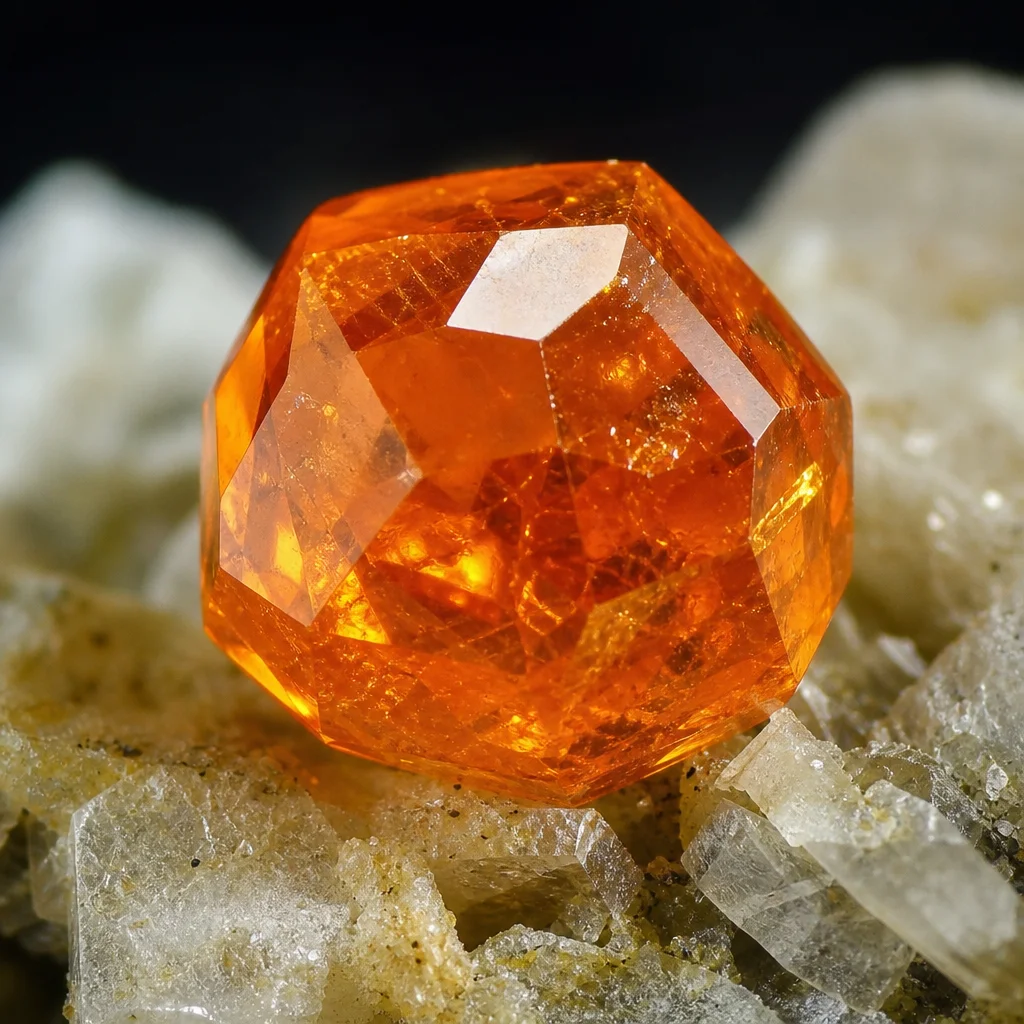
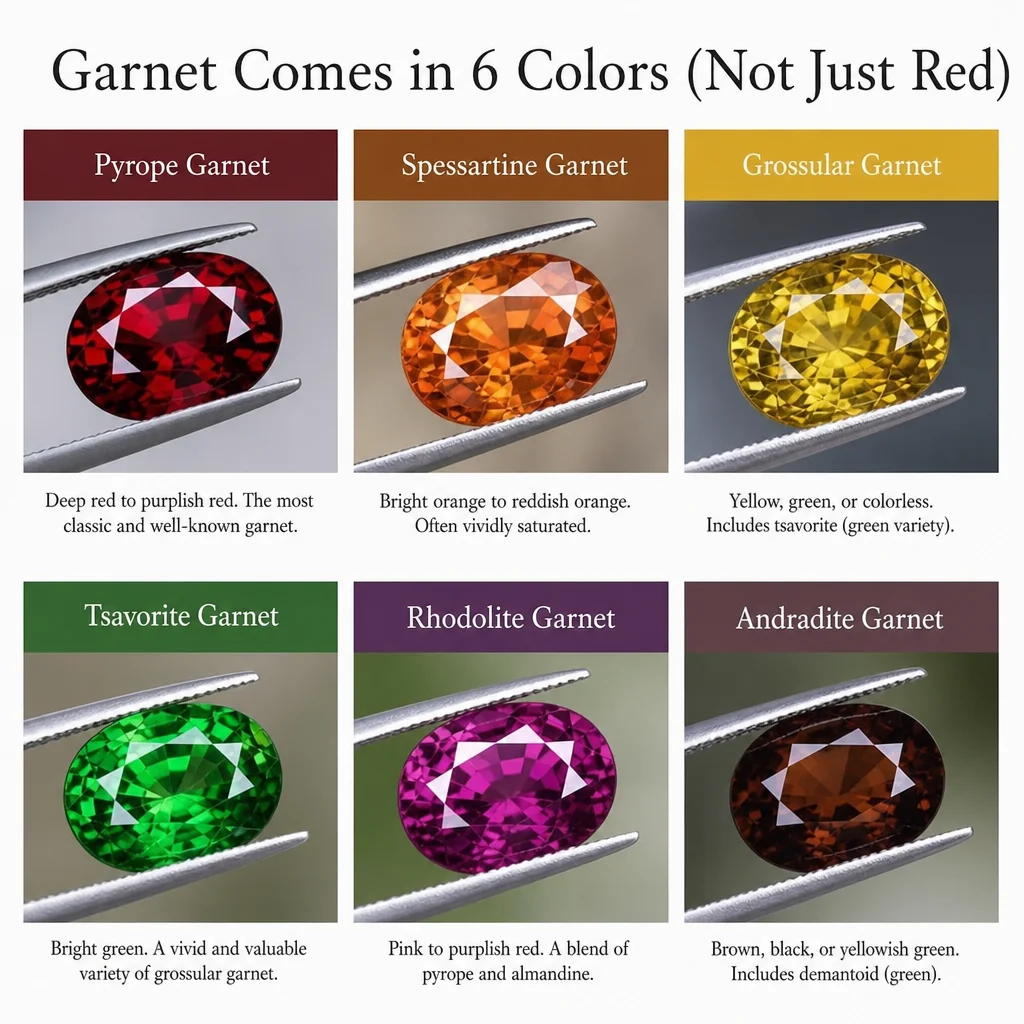
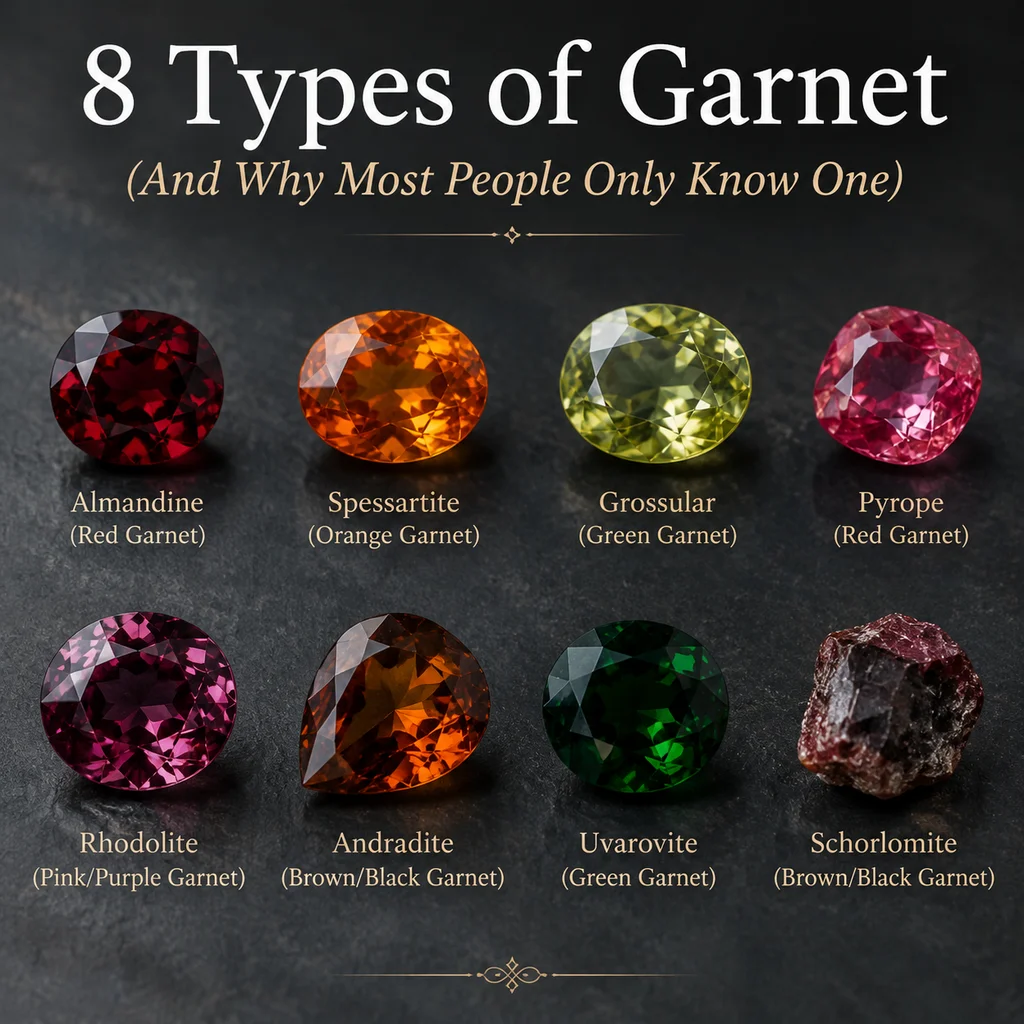
What sets spessartine apart from other garnet varieties is its color. While most people associate garnets with deep red (that's pyrope-almandine), spessartine delivers vivid oranges ranging from bright tangerine and mandarin to golden amber and reddish-orange. This color comes directly from the manganese in its crystal structure — specifically, the Mn²⁺ ions that absorb blue and violet wavelengths of light, allowing orange to dominate what we see.
The finest spessartine displays a pure, saturated orange without any brownish or yellowish modifiers. This top-tier material, known in the trade as "Mandarin Garnet," commands the highest prices and has become one of the most sought-after colored gemstones among collectors and designers.
Geological Formation
Spessartine forms in metamorphic rocks, particularly granite pegmatites and high-grade metamorphic schists. The manganese-rich environments necessary for spessartine formation are relatively uncommon compared to the iron-rich environments that produce the much more abundant almandine and pyrope garnets.
The crystal system is isometric (cubic), meaning spessartine crystals are symmetrical in three dimensions. In nature, they typically form as rounded dodecahedra (12-sided) or trapezohedra (24-sided) with smooth, glossy faces. This equant crystal habit is characteristic of all garnet species and makes garnet one of the easier minerals to identify in the field.
Major Mining Sources
Namibia — The Classic Source
The Erongo Region of Namibia, particularly around the towns of Usakos and Karibib, produces the world's finest spessartine. These Namibian stones are famous for their pure, vivid orange color with minimal brown tones. The primary mining area is the Spessartine occurrences associated with pegmatites in the Damara Belt, a geological formation dating back over 500 million years.
Namibian spessartine often contains tiny inclusions of other minerals — characteristic growth features rather than clarity flaws. These microscopic inclusions are actually used by gemologists to confirm Namibian origin.
Nigeria — The Volume Producer
Nigeria has become the largest producer of spessartine garnet, with significant deposits in the Jos Plateau region and the Oyo and Kaduna states. Nigerian material tends toward a yellow-orange to golden-orange color, which is lighter than the Namibian mandarin but still attractive and commercially important. Nigerian production has made spessartine more available and affordable than it was in the 1990s.
The quality range from Nigeria is wide, from commercial-grade material to exceptional specimens that rival Namibian stones.
China — Emerging Source
China has produced increasing amounts of spessartine from several provinces, including Yunnan and Inner Mongolia. Chinese material varies considerably in quality, but some specimens display the vivid mandarin orange that commands premium prices. The accessibility and lower cost of Chinese rough have expanded the market for spessartine jewelry.
Other Sources
Smaller deposits exist in Madagascar (providing darker orange to brown-orange stones), Sri Lanka, Brazil, Mozambique, and the original Spessart Mountains of Germany. The German material is primarily of mineralogical and historical interest rather than commercial gem quality.
Mandarin Garnet — The Premium Tier
"Mandarin Garnet" is a trade name (not a formal mineralogical classification) for the finest-grade spessartine that displays a vivid, pure orange color reminiscent of mandarin oranges. The defining characteristics are:
- Pure orange with no brown modifier — the color should read as orange, not amber, not brown-orange, not yellow-orange
- Saturation — the color should be intense enough to be noticeable across a room
- Good clarity — while some inclusions are acceptable, Mandarin-grade stones are typically eye-clean or near eye-clean
- Brilliant cutting — the faceting should maximize the stone's fire and brilliance
Mandarin Garnets command prices of $500–$3,000+ per carat for stones above 2 carats, with exceptional examples fetching even more. The combination of vivid color, good hardness, and rarity drives the premium.
Spessartine vs. Hessonite
These two orange garnets are frequently confused because they share a similar color range, but they're entirely different mineral species with distinct properties.
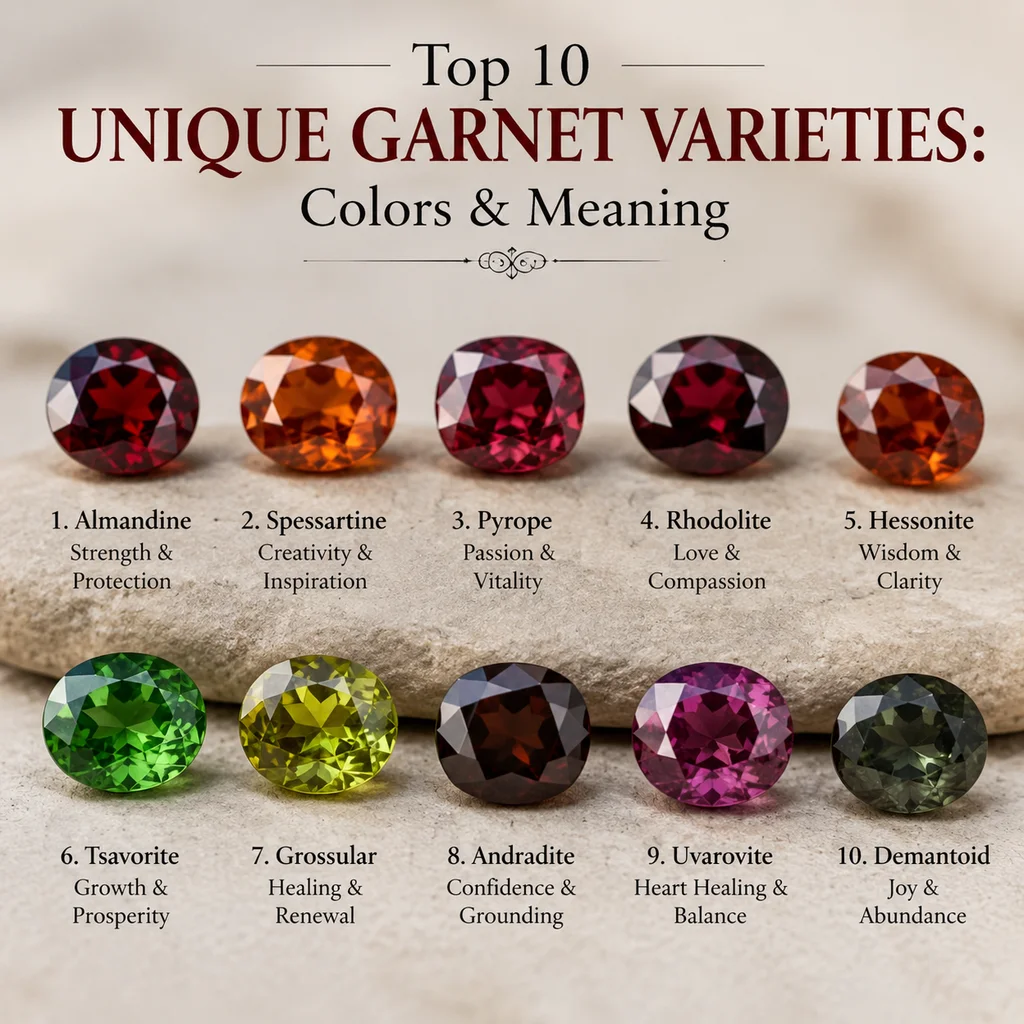
Hessonite is a calcium-aluminum garnet (Ca₃Al₂(SiO₄)₃) with iron impurities creating its orange-to-cinnamon color. It's also called "cinnamon stone" and is the traditional January birthstone in some Asian traditions. Hessonite typically shows a slightly duller, more muted orange with a characteristic granular texture visible under magnification (sometimes called a "turbid" or "roiled" appearance due to tiny inclusions).
Key differences:
- Chemistry: Spessartine is manganese-aluminum; Hessonite is calcium-aluminum. Different crystal chemistry produces different color mechanisms.
- Color: Spessartine tends toward brighter, more vivid orange; hessonite tends toward warmer, cinnamon-to-honey tones with occasional brown modifiers.
- Clarity: Spessartine is generally cleaner; hessonite almost always shows internal turbidity.
- Refractive index: Spessartine (1.79–1.82) vs. hessonite (1.74–1.75) — measurable with a refractometer.
- Density: Spessartine (4.12–4.32 g/cm³) is noticeably heavier than hessonite (3.54–3.73 g/cm³).
- Price: Fine spessartine is significantly more expensive than fine hessonite due to greater rarity and more vivid color.
Physical Properties and Jewelry Use
Spessartine has a Mohs hardness of 6.5–7.5, which places it in the same general range as emerald (7.5–8) and aquamarine (7.5–8). This hardness makes it suitable for all types of jewelry, including rings that will see daily wear. However, it's softer than sapphire (9) or diamond (10), so rings should be set in protective mountings (bezel settings or halo designs with protective prongs) for maximum durability.
The stone has a refractive index of 1.79–1.82 and moderate dispersion (0.027), which gives well-cut specimens good brilliance and visible fire. The orange color itself acts as a display enhancer — even moderately cut stones look vibrant because the color is so attention-grabbing.
Popular cuts include oval, cushion, and round brilliant designs that maximize color saturation. Spessartine also cuts beautifully as a cabochon, where the rich orange color fills the dome with an even, glowing appearance. In bead form, it's used for necklaces and bracelets, though the cost per bead means spessartine beaded jewelry is typically in the premium range.
Cutting Considerations
Spessartine has no cleavage planes (like all garnets), which is an advantage for cutting — it won't split along predictable directions. However, some specimens show distinct pleochroism (color variation from different angles), which a skilled cutter must account for when orienting the rough before faceting.
The most common cutting orientation places the table facet perpendicular to the crystal's color axis to maximize the orange saturation seen face-up. Poorly oriented stones can appear noticeably paler or more yellow than they should.
Fluorescence and Special Properties
Some spessartine specimens show weak orange fluorescence under shortwave UV light, though this is not diagnostic. More interestingly, some Namibian material displays a subtle color-change effect — appearing orange in daylight and slightly redder under incandescent light. This effect is usually too subtle for commercial marketing but is appreciated by collectors.
Buying Guide
When shopping for spessartine, prioritize color over carat weight. A 1-carat vivid mandarin orange spessartine will be more valuable and more visually impressive than a 3-carat brownish-orange stone. Look for stones that glow with color even in moderate lighting — the best spessartines maintain their vibrancy across different light sources.
Certification from a recognized laboratory (GIA, Gübelin, or SSEF) is recommended for stones above 2 carats, particularly for material marketed as "Mandarin Garnet." The premium pricing makes the investment protection worthwhile.
Frequently Asked Questions
Is spessartine garnet expensive?
It ranges widely. Commercial-grade Nigerian spessartine in small sizes (under 1 carat) can be $20–$80 per carat. Fine Namibian mandarin material above 2 carats can be $500–$3,000+ per carat. Most quality spessartine jewelry falls in the $200–$800 range for pieces with 1–2 carat stones.
Can spessartine be worn in a daily-wear ring?
Yes, with appropriate setting design. A bezel or partial bezel setting protects the girdle edge, and the 6.5–7.5 hardness handles normal daily activities. Avoid wearing spessartine rings during heavy manual work or while using harsh chemicals.
How does spessartine compare to topaz in orange?
Imperial topaz in orange is harder (8) and more affordable, but its orange color tends to be more golden-yellow compared to spessartine's vivid tangerine. The two stones are visually distinct once you've seen them side by side.
Frequently Asked Questions
What is the difference between spessartine and mandarin garnet?
All mandarin garnets are spessartine, but not all spessartine qualifies as mandarin grade. Mandarin garnet refers strictly to stones displaying a vivid, pure orange color free from brown or red undertones. At SagStone, our artisans hand-select only the brightest, most saturated orange hues for our mandarin garnet jewelry collection, ensuring each piece radiates that coveted warm, sunny glow.
How do I clean and care for spessartine garnet jewelry?
Clean your spessartine garnet jewelry using warm soapy water and a soft brush. Avoid harsh chemicals, ultrasonic cleaners, and extreme temperature changes. With a Mohs hardness of 7 to 7.5, spessartine is durable enough for regular wear but should be stored separately from harder gemstones to prevent scratching. Remove your garnet pieces before swimming, exercising, or applying lotions.
Comments