Garnet Stone Meaning, Healing Properties, and Complete Crystal Guide
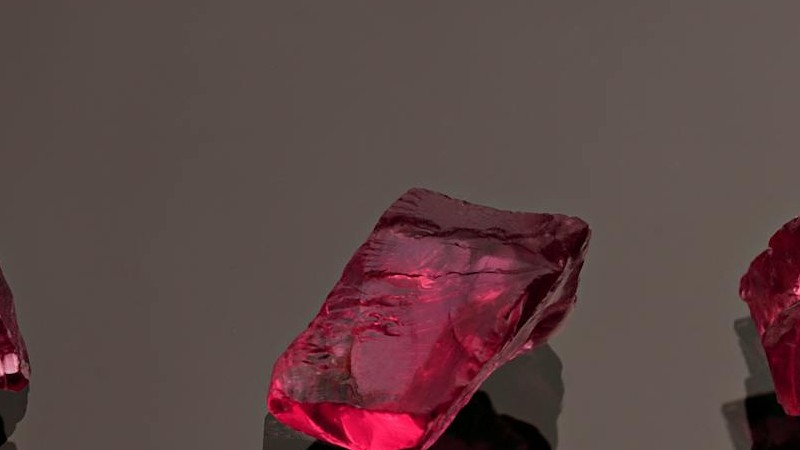
A friend of mine has a January birthday, and a few months ago she handed me a small velvet pouch. Inside was a deep red stone set in a simple silver pendant. "It's my birthstone," she said, grinning. I turned it over in my hand, not particularly impressed. "You got me a rock because you were born in January?" She rolled her eyes so hard I thought they might get stuck. "Just learn about it first, then tell me it's just a rock." So I did. And it turns out garnet is significantly more interesting than I gave it credit for.
Garnet Basics: Not Just One Mineral, But a Whole Family
Here's what blew my mind first: garnet isn't a single mineral. It's an entire group of minerals that share a similar crystal structure but have different chemical compositions. The general formula is X₃Y₂(SiO₄)₃—where X is a divalent cation (magnesium, iron, manganese, or calcium) and Y is a trivalent cation (aluminum, iron, or chromium). Swap out those elements, and you get completely different colors, properties, and even names within the garnet family.
This is why garnet comes in basically every color except blue (and even that's debatable—there are extremely rare blue garnets that change color under different lighting). Red is the most famous, but garnet can be orange, yellow, green, pink, purple, brown, and even nearly colorless. The idea that garnet = dark red is like saying all wine is red. Technically accurate for the common stuff, but wildly incomplete.
On the Mohs hardness scale, garnets range from about 6.5 to 7.5 depending on the variety. That puts them harder than glass and most common household surfaces but softer than sapphire, ruby, or diamond. They're durable enough for everyday jewelry wear, though they can be chipped by a hard knock against something like a granite countertop.
Major garnet deposits are found in India, Sri Lanka, various African countries (Kenya, Tanzania, Madagascar, Namibia), the United States, and the Czech Republic. The Czech Republic has a particularly famous garnet history—Bohemian garnets were a major European jewelry staple for centuries.
The Main Types of Garnet You'll Actually Encounter
There are technically over twenty named garnet species, but most of what you'll see in jewelry falls into these categories:
Almandine
The most common garnet by far. Deep red to slightly purplish-red, often with a brownish undertone. If you see an inexpensive dark red "garnet" in a department store, it's almost certainly almandine. Not the most exciting variety, but it's the workhorse of the garnet world—tough, widely available, and classically beautiful in its own way.
Pyrope
Deep, pure red with no brown or purple. The name comes from the Greek word for "fire-eyed." Pyrope is what most people picture when they think of garnet—it's that rich, saturated crimson that looks like frozen pomegranate juice. Historically important in European jewelry, especially the Bohemian garnets from the Czech Republic.
Spessartine (or Spessartite)
This one ranges from yellow-orange to vivid orange-red, and it's become increasingly popular in recent years. The finest spessartines—especially from Namibia and Nigeria—can be a stunning mandarin or tangerine orange that's genuinely eye-catching. If you've seen a bright orange gemstone in a modern jewelry piece and wondered what it was, there's a good chance it was spessartine garnet.
Grossular
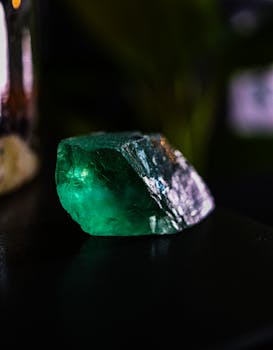
The chameleon of the garnet family. Grossular garnet comes in a wide color range including green, yellow, brown, orange, and colorless. The most famous variety is tsavorite—a vivid green garnet discovered in Tanzania in the 1960s that can rival emerald in color. Tsavorite is rare and valuable, and it's one of the few green gemstones that has both intense color and excellent durability without being treated or oiled.
Andradite
Includes the rare and highly prized demantoid garnet, which is green and has more fire and brilliance than diamond. Demantoids were discovered in Russia in the 1800s and were a favorite of Carl Fabergé. They're among the most valuable garnets in existence. Another andradite variety, topazolite, is yellow-green to brown.
Rhodolite
A hybrid between pyrope and almandine, rhodolite has a beautiful purplish-red to raspberry-pink color that many people (myself included) find more attractive than either parent variety. It's the garnet that usually changes people's minds about garnet being "just dark red." If my friend had given me a rhodolite instead of an almandine, I probably wouldn't have made the "just a rock" comment.
Hessonite
Often called the "cinnamon stone," hessonite ranges from yellow-orange to reddish-brown with a characteristic warm, almost honey-like tone. It's been important in Vedic astrology for centuries and is widely used in Indian jewelry. The best specimens have a glowing, almost internal light quality that's quite distinctive.
Meaning and Symbolism: Why Garnet Has Been Beloved for Millennia
Garnet's symbolism is surprisingly rich and spans an enormous range of human history. The ancient Egyptians used garnets in jewelry and as inlays in carvings. The Romans wore signet rings set with garnets, and the name itself likely comes from the Latin granatum, meaning pomegranate—a reference to the stone's resemblance to pomegranate seeds.
In ancient Roman belief, garnets could light up the night and protect travelers from harm. Pliny the Elder wrote that a garnet carved with a lion could guard the wearer's health and honor. During the Crusades, knights wore garnets as protective talismans, believing the stones would keep them safe in battle and guide them home. This protective association persisted for centuries—Asian warriors similarly carried garnets as protective stones.
The core symbolic meanings associated with garnet across cultures include:
Passion and vitality. Garnet's deep red color naturally connects it to life force, energy, and desire. It's been called the "stone of commitment" in some traditions because of its association with devotion and lasting love. In medieval Europe, garnet was sometimes exchanged between friends as a symbol of affection and a promise to meet again.
Protection and strength. From Roman soldiers to modern crystal enthusiasts, garnet has consistently been viewed as a protective stone. It's associated with grounding energy, courage, and the ability to face challenges without being overwhelmed.
Rebirth and transformation. Garnet has been connected to themes of renewal throughout history. In Greek mythology, Hades gave Persephone pomegranate seeds before releasing her from the underworld, and garnets—resembling those seeds—became symbols of return and new beginnings.
Loyalty and friendship. Garnet is the birthstone for January and the zodiac stone for Aquarius. It's also traditionally given for the second wedding anniversary. These associations tie it to enduring bonds and lasting connections.
Healing Properties: What Crystal Enthusiasts Believe
In crystal healing traditions, garnet is primarily associated with the root chakra (Muladhara) and sometimes the heart chakra, depending on the color. Red garnets are the most commonly used for energy work.
Energy and vitality. Garnet is said to stimulate the flow of energy throughout the body, combatting lethargy and promoting a sense of vitality and motivation. People who work with garnet often describe it as an "energizing" stone that helps push through fatigue or creative blocks.
Emotional strength. Garnet is associated with courage, confidence, and emotional resilience. It's sometimes recommended for people going through difficult transitions or facing situations that require inner strength.
Circulation and blood health. In traditional crystal healing, red garnet's association with blood goes beyond symbolism. Some practitioners believe it can support healthy circulation and blood-related conditions. Red garnet has been called the "blood stone" in various traditions (not to be confused with heliotrope/bloodstone, which is a different mineral entirely).
Protection during travel. Continuing its historical role, garnet is still recommended by some crystal practitioners as a travel protection stone, especially for long journeys or trips to unfamiliar places.
Standard disclaimer: None of these properties have been scientifically validated. Crystal healing is a complementary practice, not a substitute for medical treatment. If you're drawn to garnet's energy, enjoy it as part of your personal wellness routine—but don't expect it to cure anything.
How to Use Garnet in Your Daily Life
Wearing Garnet Jewelry
The most traditional and probably most effective way to work with garnet is to wear it. A red garnet pendant worn near the heart is the classic choice, but garnet rings, bracelets, and earrings all work. For daily wear, garnet's hardness of 6.5-7.5 means it's durable enough for rings but not as tough as sapphire or diamond—avoid wearing garnet rings during heavy manual work or activities where they might get knocked against hard surfaces.
My friend's gift was a simple rhodolite garnet pendant in sterling silver, and I've been wearing it regularly. Whether or not I buy into the metaphysical properties, it's a genuinely beautiful stone that gets compliments. The color shifts between purplish-red and raspberry depending on the light, and it's warmer and more interesting than plain red.
Placing Garnet in Your Workspace
Some people keep a garnet stone on their desk or workspace, believing it promotes focus, energy, and motivation. I have a small raw almandine garnet sitting next to my monitor. Does it actually do anything? No idea. But it's a nice-looking paperweight that reminds me of my friend, and sometimes that's enough.
Meditation with Garnet
In crystal meditation practices, garnet is often held in the hand or placed near the base of the spine (root chakra position) during meditation. The idea is to focus on the stone's color and energy as a way to ground yourself and access feelings of strength and stability. Even if you're skeptical, holding a smooth, cool stone during meditation can be genuinely calming from a purely tactile standpoint.
Gifting Garnet
Garnet makes a thoughtful gift for anyone with a January birthday, but it works for other occasions too. It's the traditional gemstone for the second wedding anniversary, and its associations with friendship make it a meaningful gift for a close friend. The key is choosing the right variety—skip the generic dark red almandine if you want to impress, and go for a rhodolite, spessartine, or tsavorite instead.
Crystal Pairings: What Goes Well with Garnet
If you're into crystal combinations (wearing multiple stones together or arranging them in a grid), here are some pairings that are commonly recommended:
Red garnet + black tourmaline. A grounding and protective combination. Black tourmaline is one of the strongest protection stones in crystal work, and paired with garnet's energizing properties, this combo is said to create a shield of steady, confident energy. Good for stressful situations or challenging environments.
Red garnet + carnelian. A double fire-energy pairing. Both stones are associated with creativity, motivation, and vitality. This combination is often recommended for people working on creative projects or trying to overcome procrastination.
Rhodolite garnet + rose quartz. A love and compassion combination. Rose quartz is the classic stone of unconditional love and emotional healing, while rhodolite adds passion and devotion. Together they're said to balance gentle, nurturing love with more passionate, romantic energy.
Green garnet (tsavorite) + green aventurine. A prosperity and growth combination. Green aventurine is traditionally known as the "stone of opportunity" and is associated with luck and abundance. Paired with the rarer and more valuable tsavorite, this combination is popular with people focusing on financial goals or new ventures.
Caring for Your Garnet
Garnet care is relatively straightforward, but there are a few things to know:
Cleaning. Warm water with mild soap and a soft brush is the safest method for all garnet varieties. This works for both the stone and any metal settings. Dry with a soft cloth.
Temperature sensitivity. Some garnet varieties, particularly demantoid and tsavorite, can be sensitive to sudden temperature changes. Don't wear garnet jewelry in saunas, hot tubs, or situations where it might go from cold to hot rapidly. Thermal shock can cause internal fractures in some stones.
Ultrasonic cleaners. Most garnet varieties can handle ultrasonic cleaning, but demantoid garnets often contain inclusions that make them vulnerable to damage from ultrasonic vibrations. When in doubt, stick with soap and water.
Chemicals. Like most gemstones, garnet should be kept away from harsh chemicals, acids, and household cleaners. Remove garnet jewelry before cleaning with chemicals, swimming in chlorinated pools, or applying perfume and hairspray directly on or near the stone.
Storage. Garnet is harder than most dust and household surfaces but softer than sapphire, ruby, and diamond. Store garnet separately from harder stones to prevent scratching. A soft pouch or compartmentalized jewelry box works well.
How to Choose a Quality Garnet
If you're shopping for garnet—whether for yourself or as a gift—here's what to look for:
Color. This is the most important factor for most garnet varieties. In red garnets, deeper, more saturated reds have traditionally been more valued, but the purplish-red of rhodolite has become increasingly popular and often commands higher prices than pure red. For green garnets, the most vivid, saturated green (comparable to fine emerald) is the most valuable. Spessartine garnets with pure, vivid mandarin orange color are particularly sought after.
Clarity. Garnets are generally cleaner than emeralds but can have inclusions depending on the variety. Eye-clean stones (no visible inclusions to the naked eye) are more valuable. Some demantoid garnets have characteristic "horsetail" inclusions that are actually considered desirable by collectors because they confirm the stone's Russian origin.
Cut. A well-cut garnet will have good brilliance and symmetry. Like with most gemstones, a well-cut smaller stone will look better than a poorly cut larger one. Cabochon cuts (smooth, domed tops) are common for heavily included garnets, while faceted cuts are preferred for cleaner stones.
Price range. Garnet spans an enormous price range. Common red almandine garnets can cost as little as $5 to $50 per carat for decent quality. Rhodolite runs $20 to $200 per carat depending on color intensity. Fine spessartine can be $100 to $500 per carat for top mandarin color. Tsavorite and demantoid are in a different league entirely—fine specimens can reach $2,000 to $10,000 per carat, with exceptional stones going even higher. The difference in price between "garnet" and "fine garnet" is massive.
Garnet vs. Ruby vs. Red Tourmaline: How to Tell Them Apart
All three of these stones can look red, and it's easy to confuse them, especially in smaller sizes. Here's how they differ:
Hardness. Ruby (corundum) is the hardest at 9 on the Mohs scale—second only to diamond. This makes ruby the most durable for everyday wear. Garnet is 6.5-7.5. Red tourmaline (rubellite) is 7-7.5. Both garnet and tourmaline are fine for most jewelry but not as scratch-resistant as ruby.
Color range. Ruby only comes in red (and pink, which is light red). Garnet comes in nearly every color. Red tourmaline comes in red, pink, and purplish-red. If you see a "red" stone that's clearly orange, green, or yellow, it's definitely not a ruby.
Pleochroism. Red tourmaline exhibits pleochroism—it shows different colors from different angles. You might see red from one direction and pinkish-orange from another. Ruby can show slight pleochroism too (red to purplish-red), but garnet is essentially non-pleochroic. If the stone looks the same color from every angle, it's more likely garnet.
Price. Fine ruby is dramatically more expensive than garnet or tourmaline. A good quality ruby can cost hundreds to thousands per carat, while comparable-looking garnets are a fraction of that price. This is partly why garnet has been called a "semi-precious" stone—a somewhat outdated and misleading term that undervalues genuinely beautiful garnets.
Inclusions. Rubies almost always have inclusions (tiny internal features). If a red stone is perfectly clean, it might be a garnet or tourmaline rather than a ruby—though synthetic rubies can also be eye-clean.
Final Thoughts
I owe my friend an apology. Garnet isn't "just a rock"—it's an entire family of genuinely fascinating minerals with thousands of years of human history behind them. The fact that one mineral group can produce stones ranging from cheap dark red cabochons to vivid green tsavorites worth thousands per carat is pretty remarkable.
Whether you're interested in garnet for its symbolism, its supposed healing properties, or simply because it's a beautiful and underrated gemstone, there's a lot to appreciate. The January birthstone association is just the beginning. Start looking into the different varieties—especially rhodolite, spessartine, and tsavorite—and you'll quickly understand why garnet has earned its place in the gemstone world.
My little rhodolite pendant is still sitting on my dresser, and I still wear it regularly. Not because I've become a crystal convert, but because it's a genuinely lovely piece of jewelry with a good story behind it. Sometimes that's the best reason to wear a stone.
Comments