Unveiling the Science: Sound Healing with
May 14, 2026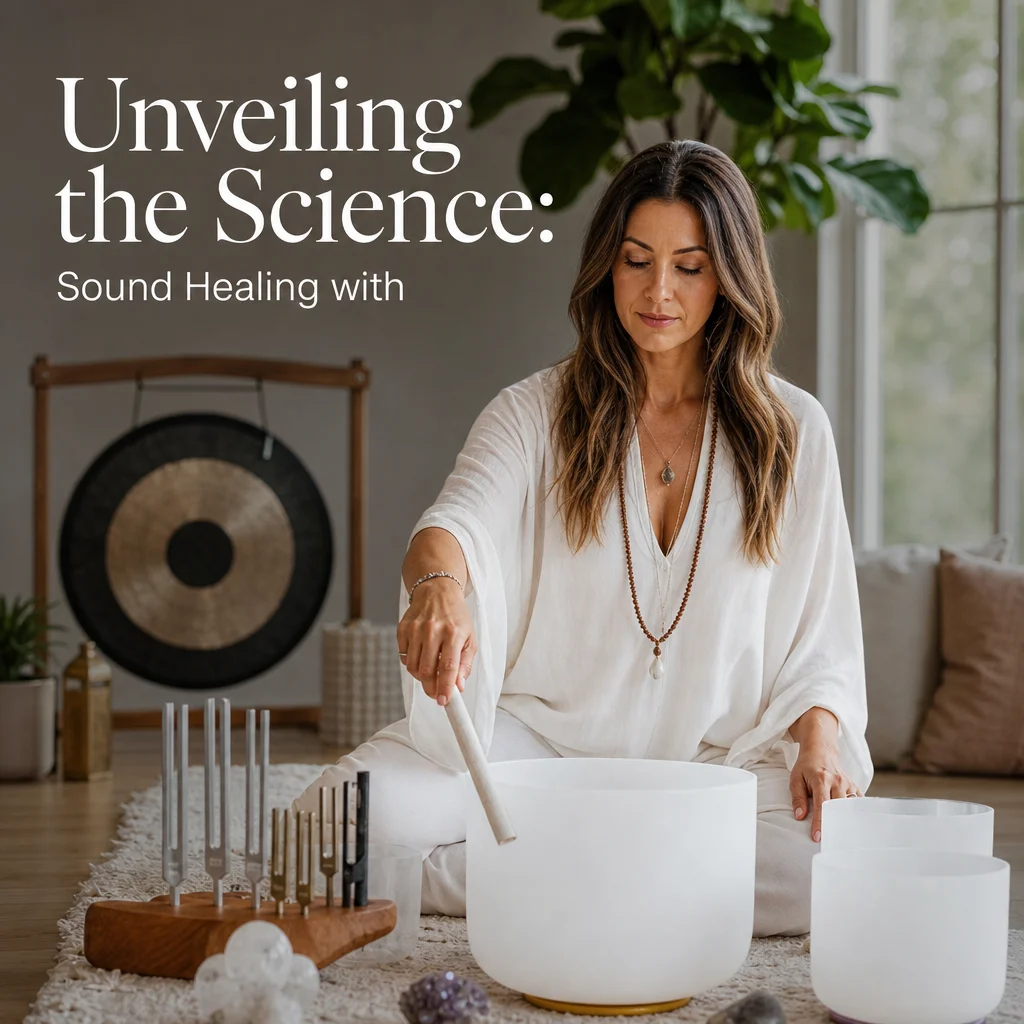
Sound Healing With Crystals: What Actually Happens When a Singing Bowl Sings
You've probably seen crystal singing bowls at a yoga studio or wellness fair — someone strikes or circles the rim with a mallet, and a clear, sustained tone fills the room. It sounds beautiful. But what's actually happening, physically and neurologically, when you hear that sound?
Separating the real acoustic and physiological effects from the marketing claims is worth doing, because the real effects are interesting enough on their own.
The Physics: Why Crystal Bowls Sound Different
Crystal singing bowls are made from pure quartz silica (SiO₂), heated to about 2000°C and spun into shape. They're not carved from natural quartz crystals — they're manufactured from pure silica. The material matters because quartz is piezoelectric: it generates an electrical charge under mechanical stress, and it vibrates at extremely consistent frequencies when struck.
The sound a crystal bowl produces comes from the entire vessel vibrating as a resonant cavity. The frequency depends on the bowl's diameter, thickness, and shape — not on any inherent property of "quartz energy." A 14-inch bowl tuned to C produces 523 Hz because of its physical dimensions, not because C is the "frequency of the universe."
The sustained tone you hear — lasting 30-60 seconds from a single strike — is because quartz has very low internal damping. It vibrates for a long time before the energy dissipates. Metal singing bowls (typically bronze) damp faster, producing a more complex but shorter-lived tone.
The Neuroscience: What Sound Does to Your Brain
Here's where things get genuinely interesting, and it has nothing specifically to do with crystals.
Brainwave entrainment: When your brain is exposed to a steady rhythmic stimulus (sound, light, or vibration), your neural oscillations tend to synchronize with it. This is a documented phenomenon called frequency following response. A sustained tone in the 4-8 Hz range (theta) can encourage theta brainwave activity, which is associated with deep relaxation and meditation states.
The catch: crystal bowls don't produce tones in the 4-8 Hz range. They produce tones in the 200-800 Hz range (audible sound). The entrainment effect comes from the perception of the sound, not from the frequency itself. Your brain responds to the experience of sustained, pleasant sound by shifting toward relaxed states. This works with singing bowls, gongs, droning instruments, and even white noise.
Vagal tone and the relaxation response: Low-frequency, sustained sound stimulates the vagus nerve through bone conduction (the vibration travels through your skull to your inner ear and vagal pathways). This can trigger parasympathetic nervous system activation — slower heart rate, lower blood pressure, reduced cortisol. This mechanism is real and is the basis for sound therapy as a complementary practice.
What the Research Actually Shows
The scientific literature on sound healing is thin but growing:
- A 2020 study in the Journal of Evidence-Based Integrative Medicine found that a single singing bowl session reduced tension, anger, and depressed mood in participants, with effects lasting several hours. The control group (lying down in silence for the same duration) showed some improvement too, but significantly less.
- Research on vibroacoustic therapy (using low-frequency sound vibration applied directly to the body) shows measurable reductions in pain and anxiety, particularly in clinical settings. This is related to but distinct from singing bowl therapy.
- No peer-reviewed study has found that the material of the bowl (quartz vs. metal vs. ceramic) produces different physiological outcomes. The benefit comes from the sound, not the material producing it.
The honest summary: sound-based relaxation practices probably work through known neurological mechanisms (vagal stimulation, brainwave entrainment, attentional focus). Crystal bowls are one effective way to produce sustained, pleasant tones. They are not uniquely therapeutic compared to other sound sources.
The Chakra Frequency Myth
A common claim: specific frequencies correspond to specific chakras — 396 Hz for the root, 528 Hz for the heart, and so on. These correspondences have no historical basis in any traditional system (Hindu, Buddhist, or otherwise) and no scientific support. They were invented in the 1990s by new age practitioners.
That said, if someone finds the framework useful as a focus for meditation, it's harmless. The problem is only when it's presented as ancient wisdom or scientific fact.
Practical Guide: Using Crystal Bowls for Relaxation
If you're interested in trying sound-based relaxation (whether with crystal bowls, metal bowls, or other instruments), here's a practical approach:
- Start with one bowl. You don't need a full set of seven "chakra-tuned" bowls. One bowl that produces a tone you find pleasant is enough. The 8-10 inch size in C or D is a common starting point.
- Use it as a meditation anchor. Strike the bowl, close your eyes, and follow the sound as it fades. When it dies away, strike it again. The sustained tone gives your attention something to focus on, which is the core challenge of meditation.
- 5-10 minutes is sufficient. Longer sessions aren't necessarily better. A focused 10-minute sound meditation often produces more noticeable relaxation than a diffuse 45-minute session.
- Don't play it near pets or small children without caution. Some animals find sustained high-frequency tones distressing. Dogs in particular can hear frequencies above human range that the bowl's overtones produce.
Buying a Crystal Singing Bowl
Price range: $50-300 for a single bowl. The difference between a $50 and $200 bowl is primarily build quality and tone purity — cheaper bowls may have slight pitch inconsistencies or shorter sustain. For personal use, a mid-range bowl ($80-120) is sufficient.
What to check:
- The tone should be clear and sustained (15+ seconds from a firm strike)
- No visible cracks or inclusions (these cause buzzing or uneven vibration)
- The rim should be uniform in thickness (run your finger around it — variations cause pitch wobble)
Beyond Bowls: Other Crystal Sound Tools
Tuning forks: Some practitioners use quartz tuning forks applied directly to the body. The vibration is mechanical, not mystical — it's essentially the same principle as a massage vibrator, just at a specific frequency. Tuning fork therapy has a small evidence base for pain relief.
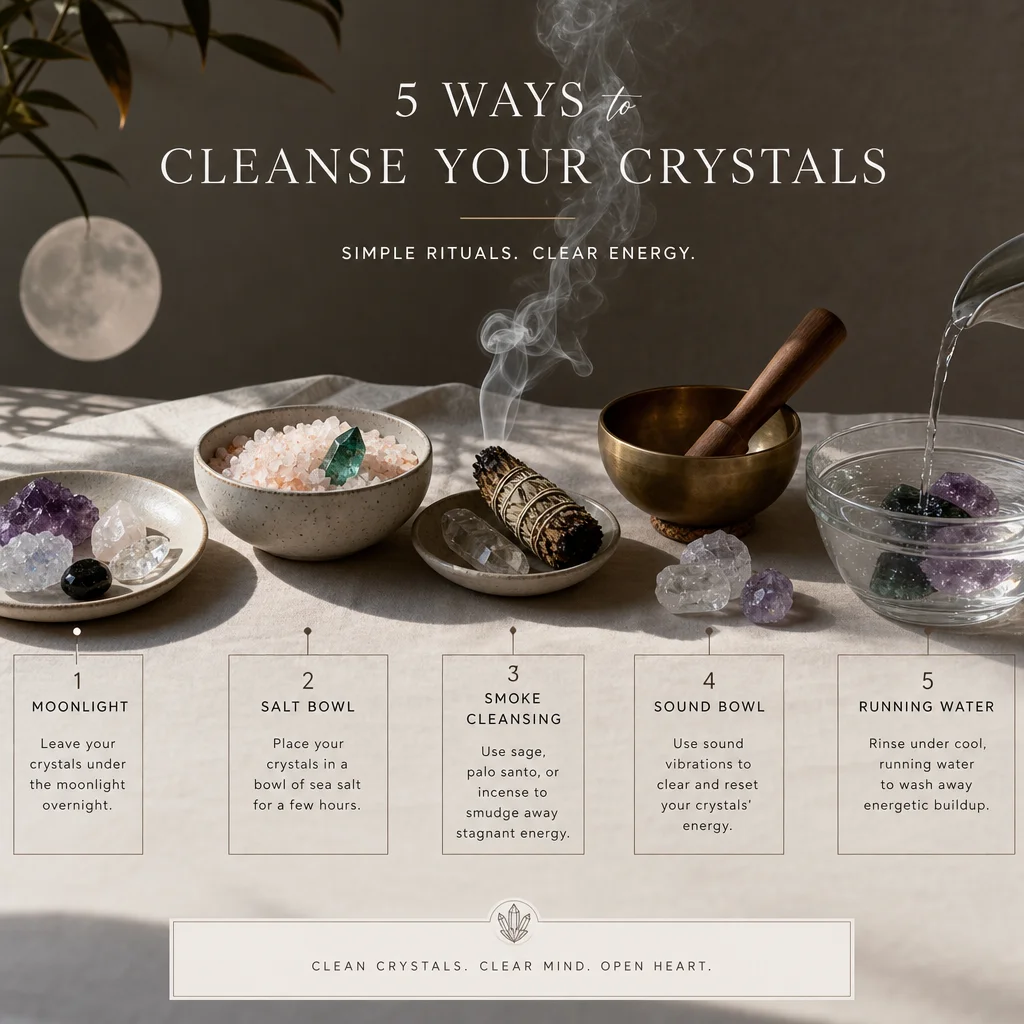
Crystal-infused water: Placing crystals in or around water while a bowl plays nearby won't change the water's structure (that's not how physics works). But the ritual of preparing water mindfully and drinking it during a sound session can be calming through psychological pathways. Just make sure the crystals you use are water-safe — some are toxic.
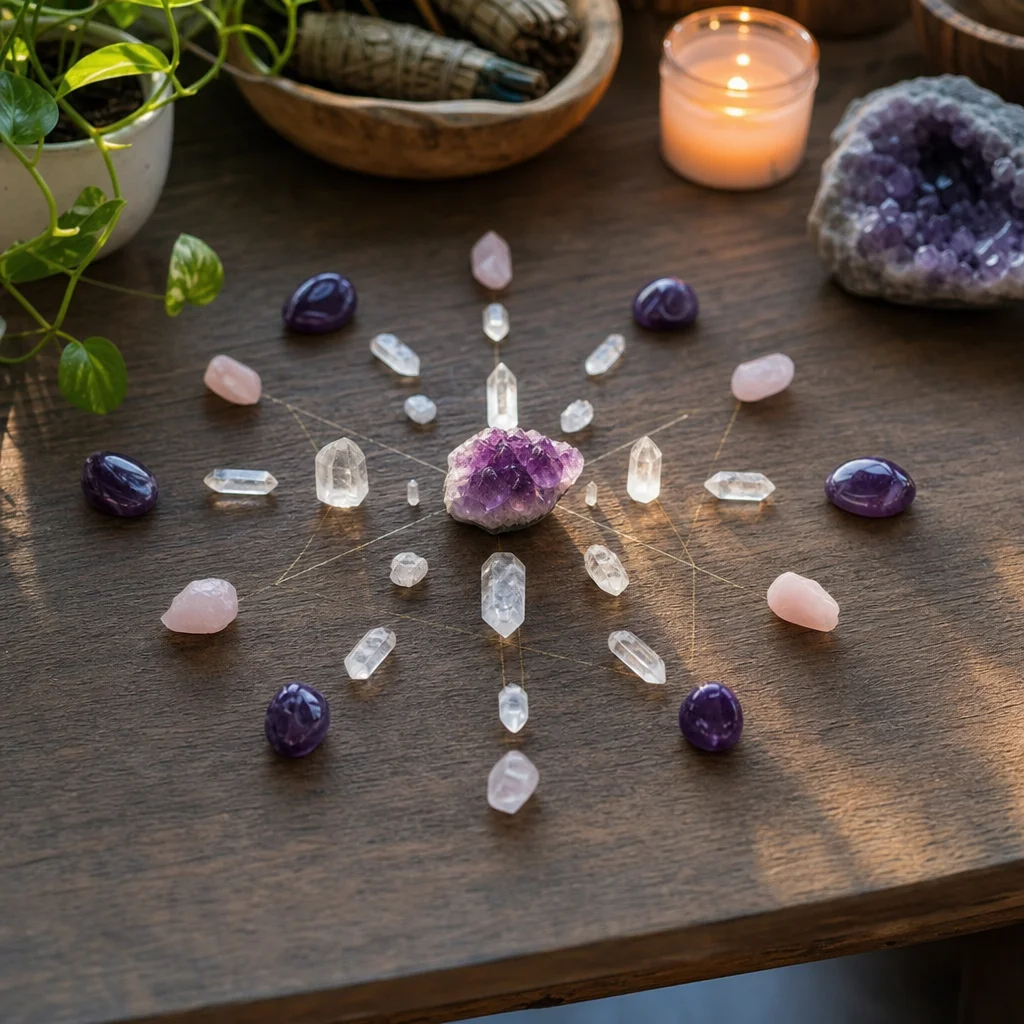
Crystal grids combined with sound: Some practitioners arrange crystals in patterns and then play bowls nearby. The crystals have no acoustic function in this setup — they're visual anchors. The sound comes from the bowl. If the visual arrangement helps you focus, it's useful. If you think the crystals are "amplifying" the sound, they're not.
Who Should Avoid Sound Therapy
- People with epilepsy or seizure disorders (rare, but specific frequencies can trigger seizures in susceptible individuals)
- People with severe tinnitus (sustained tones may exacerbate symptoms)
- People with PTSD triggered by specific sounds (the resonant tones can be activating for some trauma survivors)
- Anyone wearing hearing aids (feedback and distortion can be painful)
Sound healing isn't magic, but it's not nonsense either. It works through real neurological mechanisms — sustained pleasant sound promotes relaxation, vagal stimulation reduces stress, and focused attention on sound is a valid meditation technique. The crystal bowl is just a particularly elegant way to produce that sound. Appreciate it for what it is, and it's a genuinely useful wellness tool.
Looking for more ways to work with crystal energy? The comprehensive crystal healing guide walks through the foundations step by step.
Crystal Singing Bowls: A Personal Experience
When I first encountered crystal singing bowls, I was skeptical. Like many, I thought it was just another wellness fad. But after a session with a trained sound healer, my perspective shifted. The experience was profound, and I left feeling relaxed and rejuvenated. Let me share my personal journey with you.
During the session, the healer played various bowls, each tuned to a specific frequency. The sounds were mesmerizing, and I could feel the vibrations resonating through my body. It was almost as if the bowls were communicating with me on a deeper level. Afterward, I felt a sense of clarity and peace that I hadn't experienced in a long time.
The Role of Intention in Sound Healing
One thing that struck me during my session was the importance of intention. The healer focused on my specific needs, and I could sense that the bowls were being played with purpose. This made me wonder: Is the power of sound healing more about the intention behind it, or is there a more tangible, scientific explanation?
While science can explain the physical and neurological effects of sound, the intention behind the healing process cannot be discounted. Many believe that the energy from the healer and the bowls combine to create a powerful healing force. Whether or not you believe in this energy, the effects of sound healing are undeniable.
Sound Healing vs. Traditional Healing: A Comparison
Sound healing and traditional healing methods, such as medication and surgery, have different approaches but can complement each other. Let's compare the two:
| Traditional Healing | Sound Healing |
|---|---|
| Focuses on treating the symptoms and underlying causes of illness. | Emphasizes the use of sound frequencies to promote relaxation, reduce stress, and enhance overall well-being. |
| Utilizes medication, surgery, and other conventional methods. | Utilizes crystal singing bowls, gongs, and other instruments to produce specific frequencies. |
| Can be invasive and may have side effects. | Is non-invasive and generally considered safe. |
| May take time to see results. | Can produce immediate results, especially in terms of relaxation and stress reduction. |
Sound Healing and Personal Transformation
For me, sound healing has been a transformative experience. It has helped me to become more mindful and aware of my body and mind. I've noticed that I'm more relaxed, and I've been able to let go of some of the stress that had been weighing me down.
While I still use traditional healing methods when necessary, I've come to appreciate the benefits of sound healing. It's a powerful tool that can enhance our well-being and improve our quality of life.
Sound Healing: A Cultural and Historical Perspective
Sound healing has been used for thousands of years in various cultures around the world. In ancient Greece, music was considered a form of medicine, and the healing properties of sound were well-known. Similarly, in traditional Chinese medicine, sound therapy is used to balance the body's energy.
Native American cultures also have a rich history of using sound for healing purposes. The Navajo, for example, use singing bowls and other instruments in their healing ceremonies. The sound is believed to help balance the mind, body, and spirit.
Sound Healing in Modern Times
In today's fast-paced world, sound healing has gained popularity as a way to cope with stress and improve well-being. With the increasing number of people seeking alternative healing methods, sound healing has become more accessible than ever.
As a crystal and jewelry blogger, I believe that sound healing is a valuable addition to the wellness toolkit. While it may not replace traditional medicine, it can certainly enhance our overall health and happiness.
Frequently Asked Questions About Sound Healing with Crystals
Is sound healing a recognized medical treatment?
Is sound healing a recognized medical treatment?
No, sound healing is not a recognized medical treatment. However, it is often used as a complementary therapy to support traditional medical treatments.
Can sound healing help with chronic pain?
Can sound healing help with chronic pain?
While sound healing may not cure chronic pain, it can help reduce the perception of pain and promote relaxation, which can be beneficial for pain management.
Are there any side effects to sound healing?
Are there any side effects to sound healing?
Sound healing is generally considered safe and has no known side effects. However, some people may experience mild drowsiness or relaxation after a session.
How often should I have a sound healing session?
How often should I have a sound healing session?
The frequency of sound healing sessions depends on individual needs. Some people may benefit from weekly sessions, while others may find monthly sessions sufficient.
Can sound healing help with anxiety and depression?
Can sound healing help with anxiety and depression?
Yes, sound healing can be effective for managing anxiety and depression. The relaxation and stress-reducing effects of sound can help improve mood and overall mental health.
What Makes This Crystal Special
This section covers important aspects of what makes this crystal special. For detailed information, please refer to the FAQ section below.
Comments