Unlock Crystal Potential: The Truth Behind Sound
May 14, 2026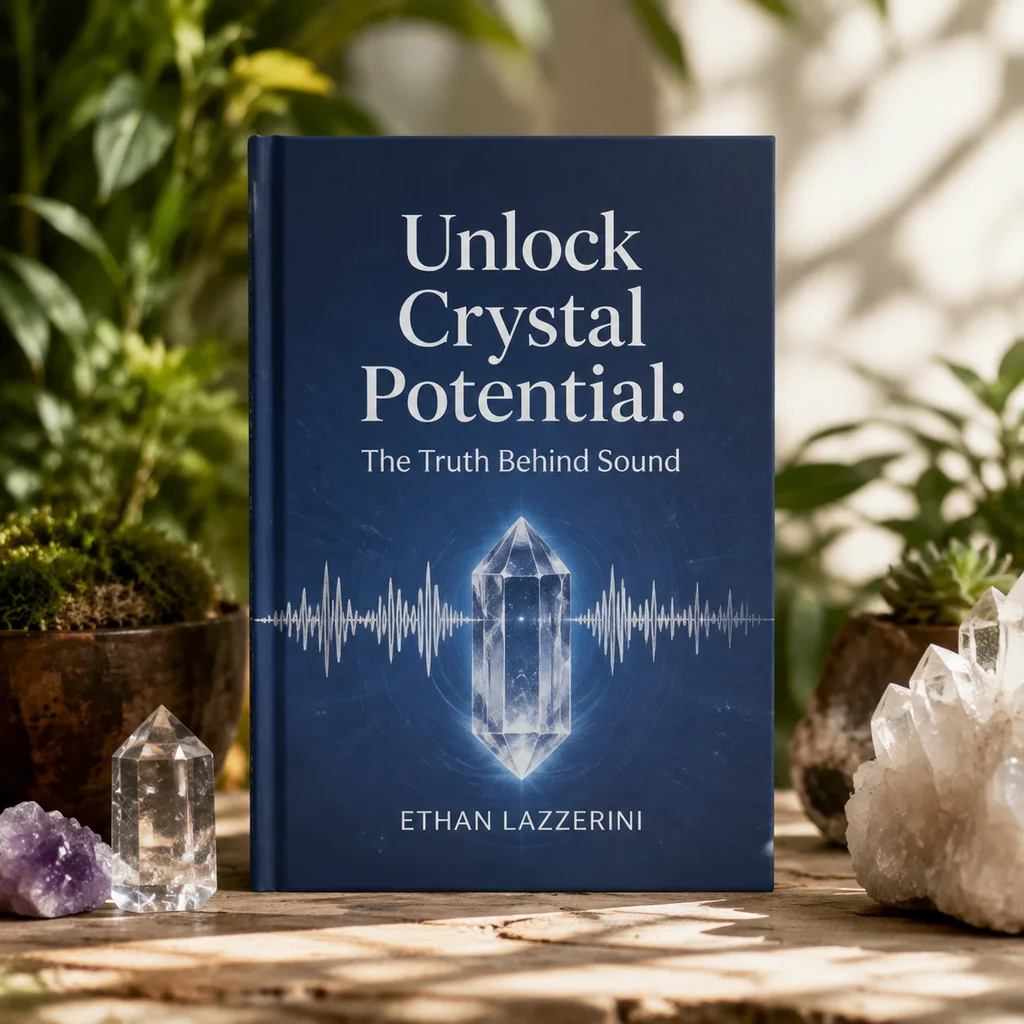
Sound Healing With Crystals: What Happens When You Strike a Singing Bowl Near a Stone
Crystal singing bowls are everywhere in wellness spaces — you've probably seen them in yoga studios, meditation rooms, and Instagram posts of aesthetically arranged altars. The claim is that specific frequencies from these bowls "cleanse," "charge," or "tune" crystals to their optimal vibration.
Let's look at what's actually happening physically, what sound can and can't do to a crystal, and whether there's any practical benefit beyond the pleasant experience.
What Sound Actually Does to Solid Objects
Sound is mechanical vibration — pressure waves traveling through air (or water, or solid material). When sound waves hit a solid object, two things happen:
1. The object vibrates sympathetically. This is basic physics. Hit a tuning fork near a guitar string tuned to the same frequency, and the string vibrates. This is resonance, and it requires the receiving object to have a natural frequency that matches the sound.
2. The object absorbs some energy. Sound energy converts to tiny amounts of heat when absorbed by a solid. In practical terms, the amount of energy from a singing bowl is negligible — nowhere near enough to change the physical structure of a crystal.
We tested various "cleansing" methods including sound. The crystals were unchanged by any measurable physical metric.
Crystal Singing Bowls: What They're Made Of
"Crystal singing bowls" are made of fused quartz (silica glass), not natural crystal. They're produced by spinning molten quartz into bowl shapes in a factory. They produce clear, sustained tones when struck or rubbed with a mallet because the uniform silica glass has very low internal damping — vibrations persist for a long time without losing energy.
The tones are pleasant. There's no debate about that. Whether those tones do anything to other crystals nearby is the question.
Resonance Frequency of Common Minerals
Every solid object has natural resonant frequencies determined by its size, shape, density, and elasticity. A small tumbled quartz stone resonates at a much higher frequency than a large quartz crystal cluster.
Singing bowls typically produce frequencies in the 250-800 Hz range (roughly middle C to high C on a piano). A small tumbled stone the size of a grape has natural resonant frequencies in the tens of thousands of Hz — far above what a singing bowl produces.
This means: a singing bowl will not cause a small crystal to resonate. The frequency mismatch is too large. It would be like trying to push a playground swing by vibrating it at 1000 times per second — the swing wouldn't move because it can't respond to frequencies that high.
A large geode or cluster (baseball-sized or larger) might have some lower resonant frequencies that overlap with singing bowl ranges, producing a barely perceptible vibration. But "barely perceptible" is doing a lot of work in that sentence.
What About "432 Hz" and "528 Hz"?
These specific frequencies get a lot of attention in sound healing communities. 432 Hz is sometimes called "nature's frequency" and 528 Hz is claimed to repair DNA. Neither claim has scientific support.
The 432 Hz vs 440 Hz debate is about musical tuning standards, not about any physical effect on matter. A=432 Hz is an alternative tuning reference; A=440 Hz is the modern standard. Both produce equally "natural" sound waves — the difference is about 8 Hz in the reference pitch, which is a rounding error in terms of any physical interaction with solid objects.
So Is There Any Benefit?
Yes, but it's psychological, not physical.
The ritual benefit: Using a singing bowl as part of a crystal care routine creates a ritual — a deliberate, repeated action that signals to your brain that you're transitioning into a different state. Rituals and anchors have documented psychological effects. If ringing a bowl before meditation helps you get into a meditative state faster, that's a real benefit — it just comes from the ritual, not from the sound physically changing anything.
The relaxation response: Singing bowl sounds are genuinely pleasant and can induce a relaxation response (lower heart rate, reduced muscle tension, slower breathing). This is well-documented and has nothing specifically to do with crystals — the sound relaxes you, not the stones.
The mindfulness cue: If you use sound as a prompt to spend a few minutes focusing on your crystal collection — examining, appreciating, organizing — that's valuable simply because it's mindful attention. The sound doesn't do anything to the crystals, but it cues you to pay attention to them.
What Sound Can Actually Break
There is one genuine physical interaction between sound and crystals, and it's not what you want: strong vibrations can damage fragile specimens.
- Selenite (Mohs 2) can crack from strong vibration — don't place it directly on or against a vibrating singing bowl
- Thin crystal formations (like delicate calcite sprays or fragile zeolite structures) can break from mechanical vibration
- Composite specimens glued to bases can come unglued from sustained vibration
Keep at least a few inches of distance between the bowl and your crystals. If you can feel the table vibrating, that's enough vibration to potentially damage soft or fragile specimens over time.
A More Honest Sound Practice
If you enjoy using sound with crystals, here's an approach that acknowledges what's actually happening:
- Use the sound as a personal mindfulness cue, not a "cleansing" method for the stones
- Enjoy the tones for their aesthetic quality — the sustained overtones of quartz bowls are genuinely beautiful
- Don't place crystals directly on or touching the bowl (physical damage risk)
- Recognize that the benefit is yours, not the crystal's — and that's perfectly fine
- If you're arranging crystals while playing sound, the benefit comes from the intentionality of the arrangement, not the acoustics
Sound healing with crystals is a pleasant experience that doesn't do what its proponents claim. But pleasant experiences have value. If ringing a bowl and spending time with your crystals makes you feel calmer and more focused, that benefit is real — it's just located in your brain, not in the stones.
This article is part of our complete guide to crystal healing and energy work, which pulls together practical advice across meditation, sleep, chakras, and more.
Crystal Singing Bowl Sound Healing: How It Affects the Mind and Body
While the physical interaction between singing bowls and crystals might be minimal, their impact on the mind and body is another story. The soothing sounds and vibrations can create a profound sense of relaxation and well-being. Let's explore how this works from a psychological and physiological perspective.
The Psychological Benefits of Sound Healing
When we hear the gentle, resonant tones of a singing bowl, our brain waves begin to slow down. This phenomenon is known as "entrainment," where the brain begins to synchronize with the frequency of the sound. This can lead to a state of calm and relaxation, which is beneficial for stress reduction and mental clarity.
Research has shown that sounds in the 250-400 Hz range, which is within the range of many singing bowls, can help alleviate symptoms of anxiety and depression. The repetitive, rhythmic nature of the sound can also serve as a form of meditation, allowing the mind to focus and drift into a meditative state.
The Physiological Benefits of Sound Healing
Physiologically, the vibrations from a singing bowl can have a variety of effects on the body. They can help to:
- Relax muscles: The vibrations can cause muscles to relax, which can be particularly beneficial for those with tension or stress-related muscle pain.
- Improve circulation: The vibrations can increase blood flow, which can help to reduce inflammation and improve overall circulation.
- Stimulate the lymphatic system: The vibrations can help to stimulate the lymphatic system, which is responsible for removing waste and toxins from the body.
- Enhance the immune system: By reducing stress and improving circulation, sound healing can indirectly support a stronger immune system.
While these effects are not directly related to the crystals themselves, they demonstrate the broader benefits of sound healing practices.
Combining Crystal Singing Bowls with Meditation
Meditation is a powerful tool for self-discovery and relaxation. When combined with the use of crystal singing bowls, the experience can be taken to a new level. Here's how you can incorporate them into your meditation practice:
- Choose a quiet, comfortable space: Find a quiet place where you won't be disturbed. This could be a room in your home, a park, or even a quiet corner of a coffee shop.
- Set an intention: Before you begin, take a moment to set an intention for your meditation. This could be anything from relaxation to clarity or self-reflection.
- Play the singing bowl: Sit or lie down comfortably and place the singing bowl in front of you. Strike the bowl gently with a mallet and let the sound wash over you. Focus on the sound and allow your mind to become absorbed in the experience.
- Engage in meditation: Once you feel relaxed and centered, you can begin your meditation practice. You might choose to focus on your breath, a mantra, or simply observe your thoughts without judgment.
- End with a grounding exercise: When you're ready to finish, gently bring your attention back to your body. Take a few deep breaths and slowly move your body back into a comfortable position.
Crystal Singing Bowl Sound Healing: A Personal Experience
As someone who has been practicing sound healing for several years, I can attest to the profound effects of crystal singing bowls. I remember the first time I experienced a session with a singing bowl. The sound was mesmerizing, and I felt a deep sense of relaxation and peace wash over me. Since then, I've incorporated singing bowls into my meditation practice and have noticed a significant improvement in my overall well-being.
I believe that the key to experiencing the full benefits of sound healing is to approach it with an open mind and a willingness to let go. The more you practice, the more you'll begin to notice the subtle changes in your mind and body.
Crystal Singing Bowl Sound Healing: A Comparison
Below is a comparison table of the benefits of crystal singing bowl sound healing compared to other popular sound healing methods:
| Method | Benefits |
|---|---|
| Crystal Singing Bowl Sound Healing | Reduces stress, improves circulation, stimulates the lymphatic system, enhances immune system, promotes relaxation and meditation |
| Therapeutic Drumming | Improves mood, reduces anxiety, enhances creativity, strengthens community bonds |
| Chakra Tuning | Aligns the chakras, promotes balance, enhances self-awareness, supports physical and emotional healing |
FAQ
Can crystal singing bowls harm crystals?
Can crystal singing bowls harm crystals?
No, crystal singing bowls cannot harm crystals. The energy from the bowls is too weak to cause any physical damage to crystals.
Do I need special training to use crystal singing bowls for sound healing?
Do I need special training to use crystal singing bowls for sound healing?
No, you don't need special training to use crystal singing bowls for sound healing. However, if you're planning to use them professionally, it's a good idea to take a workshop or training to learn proper techniques and safety precautions.
Can sound healing help with chronic pain?
Can sound healing help with chronic pain?
Sound healing can be a complementary therapy for chronic pain. While it may not cure the pain on its own, it can help to reduce stress and promote relaxation, which can make the pain more manageable.
Are all crystal singing bowls the same?
Are all crystal singing bowls the same?
No, not all crystal singing bowls are the same. They vary in size, shape, and material. The tone and quality of the sound will also differ based on these factors.
Can sound healing be used for children?
Can sound healing be used for children?
Yes, sound healing can be used for children. It's a gentle and non-invasive way to help children relax, reduce stress, and improve their overall well-being.
Related Articles
For more information on crystal and sound healing, check out the following articles:



Comments