7 Chakra Bracelet Colors and Meanings
June 3, 2026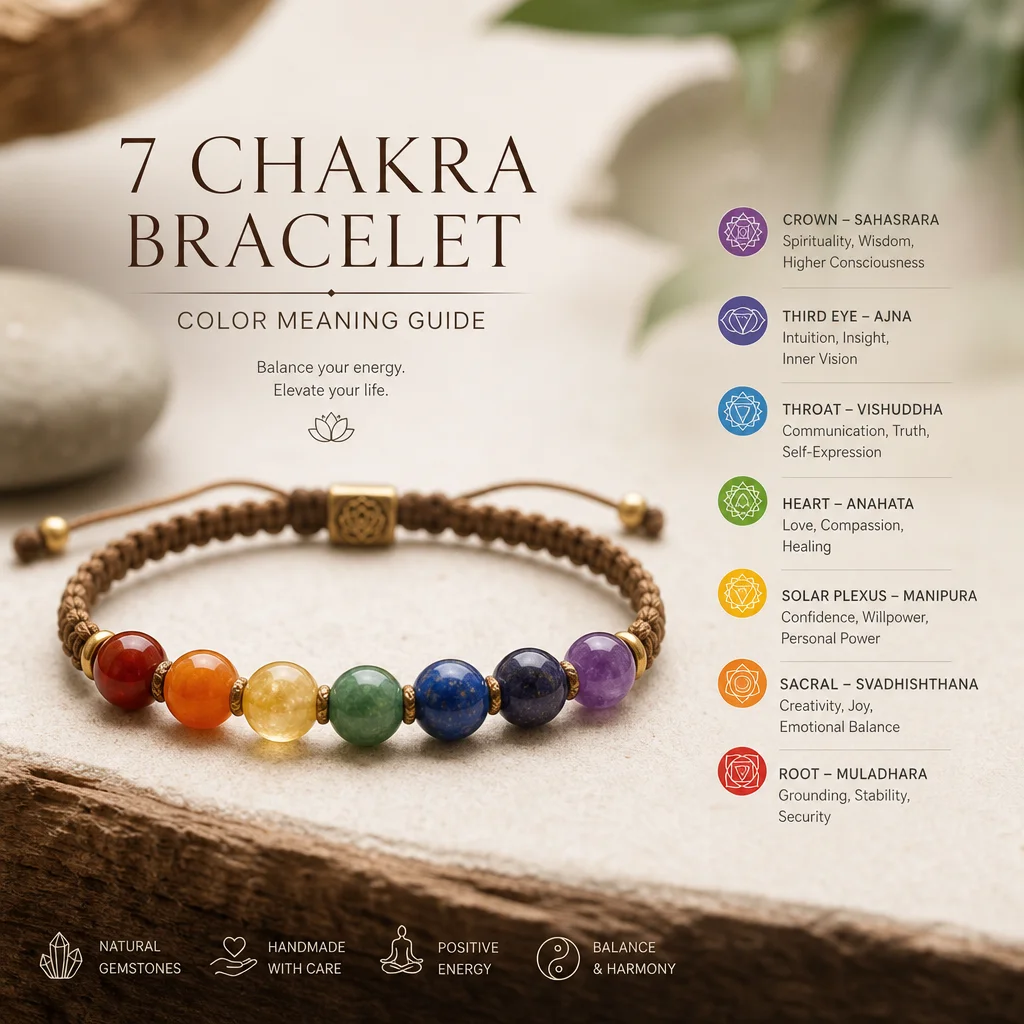
What Is a 7 Chakra Bracelet?
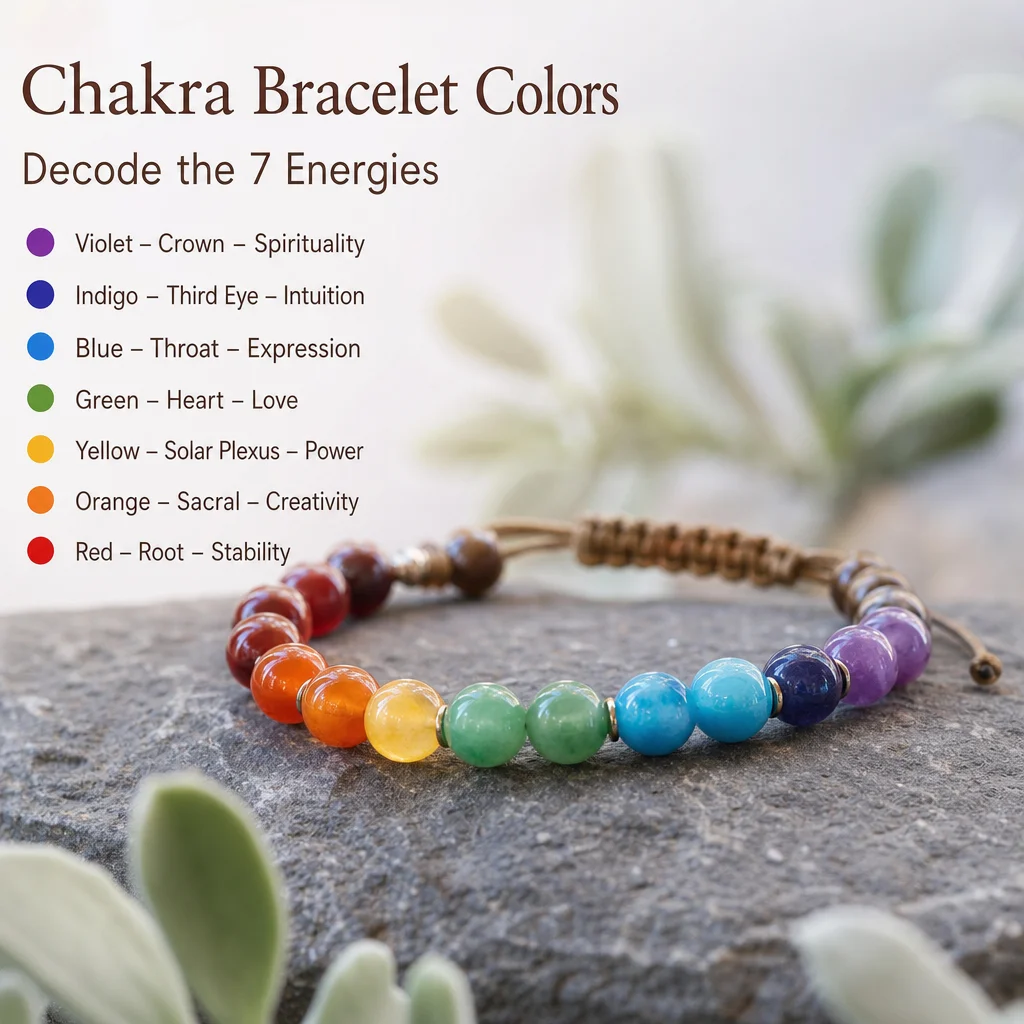
A 7 chakra bracelet is a beaded bracelet featuring seven different colored stones, each representing one of the seven primary chakras in the Hindu and yogic tradition. The stones are arranged in a specific color sequence—red through violet—matching the traditional locations of the chakras along the body from the base of the spine to the top of the head.
These bracelets are among the most popular items in the crystal jewelry market because they are visually striking (a rainbow of natural stone colors), culturally significant (rooted in centuries of Indian spiritual tradition), and versatile (wearable as everyday jewelry or used in meditation practice). Understanding what each color represents helps you choose a quality bracelet and use it meaningfully.
The Seven Colors and Their Chakras
1. Red — Root Chakra (Muladhara)
Location: Base of the spine, tailbone area.
Element: Earth.
Traditional meaning: Foundation, stability, survival instincts, feeling grounded and secure.
The root chakra is traditionally associated with basic physical needs—safety, shelter, food, and financial security. In the chakra system, it is the foundation upon which all other energy centers rest. When this chakra is described as "blocked" in traditional practice, the experience is often characterized as feelings of anxiety, restlessness, or disconnection from one's body.
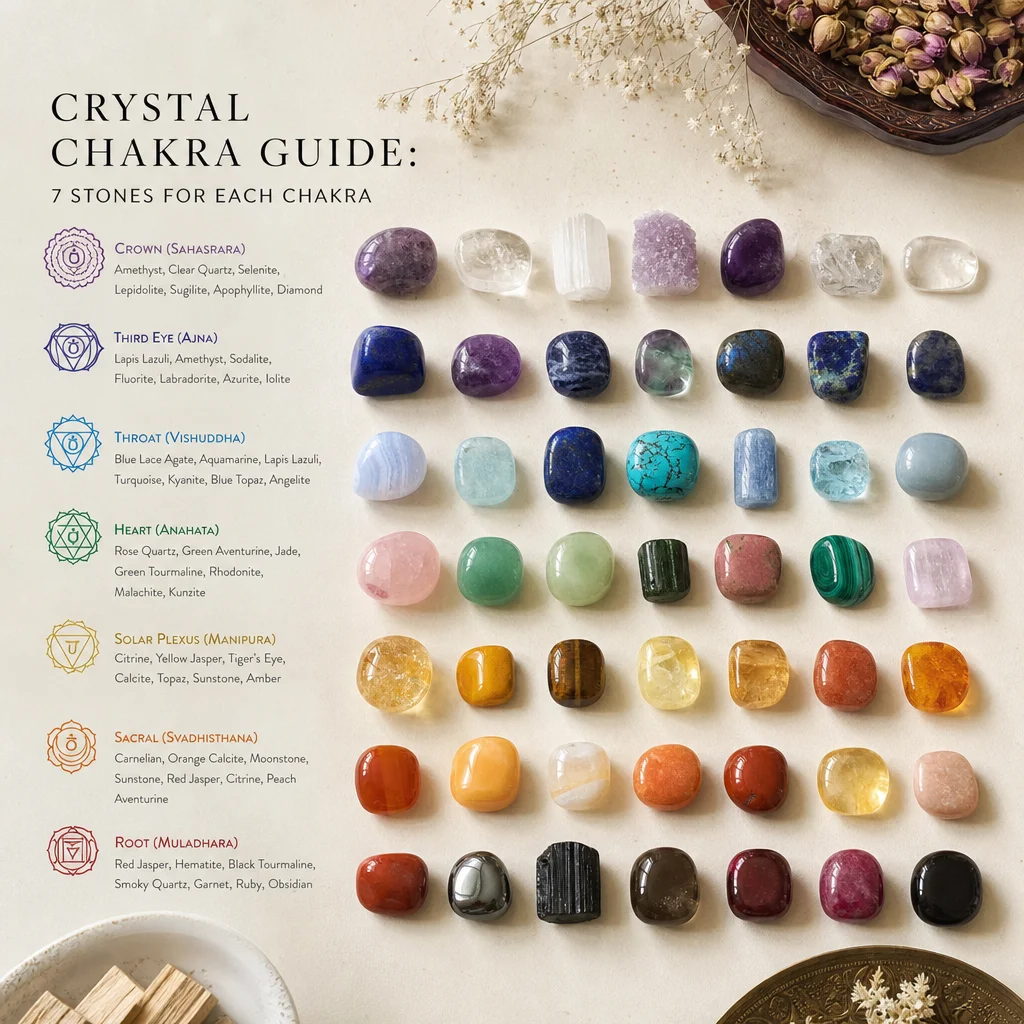
Common stones used: Red jasper, garnet, hematite, black tourmaline (dark red to black). Red jasper is the most frequently used stone for this position in 7 chakra bracelets because of its consistent brick-red color and affordability.
2. Orange — Sacral Chakra (Svadhisthana)
Location: Lower abdomen, below the navel.
Element: Water.
Traditional meaning: Creativity, emotional expression, pleasure, desire, and the ability to form healthy relationships.
The sacral chakra is associated with emotional fluidity and creative energy. In traditional descriptions, a balanced sacral chakra supports emotional resilience, creative inspiration, and the ability to experience pleasure without guilt. The water element connection emphasizes adaptability and flow—qualities associated with healthy emotional processing.
Common stones used: Carnelian (the most popular choice due to its warm orange color), orange aventurine, sunstone, and sometimes amber. Carnelian is the standard because its orange-to-red-orange color is vivid and consistent.
3. Yellow — Solar Plexus Chakra (Manipura)
Location: Upper abdomen, stomach area.
Element: Fire.
Traditional meaning: Personal power, confidence, self-esteem, willpower, and the ability to take decisive action.
The solar plexus is the center of personal identity and autonomy in the chakra system. It is associated with the "gut feeling" of confidence or self-doubt. Traditional descriptions connect this chakra to motivation, discipline, and the ability to assert oneself in healthy ways.
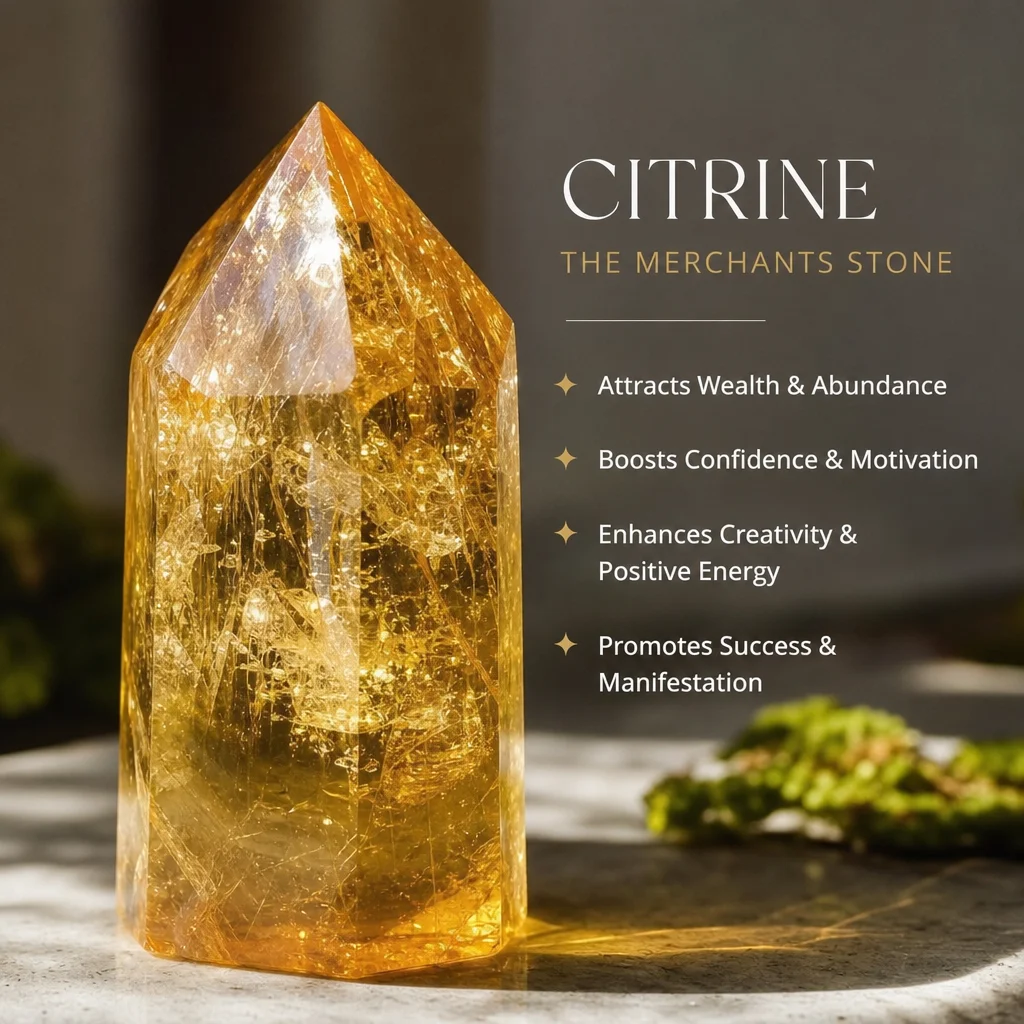
Common stones used: Citrine, yellow aventurine, yellow jasper, tiger's eye. Citrine is the most common choice because its bright yellow color matches the solar plexus association with sunshine and warmth.
4. Green — Heart Chakra (Anahata)
Location: Center of the chest.
Element: Air.
Traditional meaning: Love, compassion, forgiveness, empathy, and the ability to give and receive love freely.
The heart chakra sits at the midpoint of the seven-chakra system, serving as the bridge between the lower three physical chakras and the upper three spiritual chakras. In traditional practice, the heart chakra is associated with both self-love and love for others—compassion directed inward and outward simultaneously.
Common stones used: Green aventurine, jade, malachite, peridot, and sometimes rose quartz (pink, representing the heart in its emotional aspect). Green aventurine is the most common bracelet choice because of its consistent green color, moderate price, and good durability for daily wear.
5. Blue — Throat Chakra (Vishuddha)
Location: Throat area.
Element: Ether (space).
Traditional meaning: Communication, self-expression, speaking truth, listening skills, and authentic voice.
The throat chakra governs expression in the chakra system—both speaking and listening. A balanced throat chakra is traditionally described as supporting honest, clear communication without aggression or fear. The element of ether (or space) connects this chakra to the concept of vibration and sound.
Common stones used: Lapis lazuli (deep blue), sodalite (blue with white veining), blue lace agate (light blue), and aquamarine (pale blue). Lapis lazuli is the most popular choice for its intense blue color, though its lower hardness (5-6) means it can show wear in a bracelet that experiences daily friction.
6. Indigo — Third Eye Chakra (Ajna)
Location: Forehead, between the eyebrows.
Element: Light.
Traditional meaning: Intuition, insight, imagination, wisdom, and the ability to see beyond the obvious.
The third eye is the center of perception beyond ordinary sight in the chakra system. It is associated with inner vision, pattern recognition, and the ability to perceive deeper truths. In meditation practice, focusing attention on the third eye area is a common technique for developing concentration and inner awareness.
Common stones used: Amethyst (purple to indigo, the most common choice), iolite (blue-violet), fluorite (purple and green), and sodalite (dark blue). Amethyst dominates this position because its purple color straddles the blue-indigo-violet range and it is hard enough (Mohs 7) for bracelet wear.
7. Violet — Crown Chakra (Sahasrara)
Location: Top of the head.
Element: Cosmic energy / thought.
Traditional meaning: Spiritual connection, higher consciousness, unity with the universe, and transcendent awareness.
The crown chakra is the highest in the traditional system, representing the point of connection to something larger than the individual self. In traditional practice, an "open" crown chakra is associated with feelings of unity, peace, and spiritual awareness. The violet/purple color connects to the crown through associations with higher frequency and spiritual attainment.
Common stones used: Clear quartz (representing clarity and pure energy, the most common crown stone despite not being violet), amethyst (purple, sometimes shared between third eye and crown), and howlite (white, representing the crown's connection to purity). Clear quartz is the practical choice because it is hard (7), affordable, and visually distinct from the amethyst used for the third eye.
Standard Stone Combination in 7 Chakra Bracelets
The most common 7 chakra bracelet uses this stone sequence:
- Red Jasper (root)
- Carnelian (sacral)
- Citrine (solar plexus)
- Green Aventurine (heart)
- Lapis Lazuli or Sodalite (throat)
- Amethyst (third eye)
- Clear Quartz (crown)
This combination is the market standard because each stone is affordable, reasonably durable for bracelet wear, and available in consistent colors. However, variations exist—some bracelets use tiger's eye instead of citrine, or rose quartz instead of green aventurine for the heart position.
How to Spot a Quality 7 Chakra Bracelet
- Check bead size consistency: All seven stones should be the same diameter (typically 8mm for adults, 6mm for smaller wrists). Inconsistent sizing indicates lower quality manufacturing.
- Verify real stones: Genuine stone beads have natural variation—slight color differences, tiny inclusions, and minor surface imperfections. Perfectly uniform beads across all seven colors are suspicious and may be dyed or synthetic.
- Examine the stringing: Stretch cord is common for beaded bracelets. Check that knots are secure and the cord is thick enough for the bead weight. Elastic cord loses elasticity over time—silk thread with a clasp is more durable but less common in budget bracelets.
- Color accuracy: The seven colors should follow the rainbow sequence (red, orange, yellow, green, blue, indigo/purple, violet/white). If the "blue" stone is actually green or the "purple" stone is pink, the bracelet may not accurately represent the chakra system.
- Feel the weight: Natural stone beads are heavier than plastic or glass imitations. A bracelet that feels unusually light may use synthetic materials.
Which Wrist to Wear a Chakra Bracelet On
In traditional practice, there are two schools of thought:
- Left wrist (receiving side): Some traditions associate the left side of the body with receiving energy. Wearing the bracelet on the left wrist is said to enhance the stone's traditional associations.
- Right wrist (giving side): Other traditions associate the right side with projecting energy outward. Wearing on the right wrist is said to express the chakra qualities to the world.
- No strict rule: In practice, most people wear the bracelet on their non-dominant hand (left for right-handed people) because it experiences less wear and tear. This is a practical consideration rather than a spiritual mandate.
Using a 7 Chakra Bracelet in Meditation
A simple practice for using your chakra bracelet during meditation:
- Sit comfortably and hold the bracelet in one hand or wear it on your wrist.
- Starting from the red bead (root), focus your attention on the corresponding body area as you touch each bead.
- Spend 3-5 breaths at each chakra position, noticing any sensations in that area.
- Move through all seven positions from root to crown.
- Finish with a few breaths of whole-body awareness, integrating all seven positions.
This practice works as a form of body scan meditation, using the bracelet as a tangible guide through the sequence. The physical act of touching each stone grounds the mental focus in a specific, concrete action.
Frequently Asked Questions
Can I wear a 7 chakra bracelet every day?
Yes. Most commercially made 7 chakra bracelets use stones that are hard enough for daily wear (jasper, carnelian, citrine, aventurine, and quartz are all Mohs 6.5-7). Avoid wearing it during activities that involve water, chemicals, or heavy impact.
What if one of the stones breaks or falls out?
Stretch cord bracelets can lose beads over time as the elastic weakens. Have it restrung by a jeweler or mala maker. Some practitioners see a lost bead as symbolically significant—the specific chakra that "fell away" may represent an area to focus on.
Is the color sequence always the same?
The standard sequence follows the rainbow spectrum from red to violet, matching the chakra positions from root to crown. This is consistent across traditions. A bracelet with a scrambled color order does not accurately represent the chakra system.
Can I mix different stones for the same chakra?
Absolutely. The standard stones are popular choices, but any stone in the right color range works. For example, you could use turquoise (blue-green) for the throat chakra or moonstone (white/pale) for the crown. Choose stones you connect with personally.
Frequently Asked Questions
How do I cleanse and charge my 7 chakra bracelet?
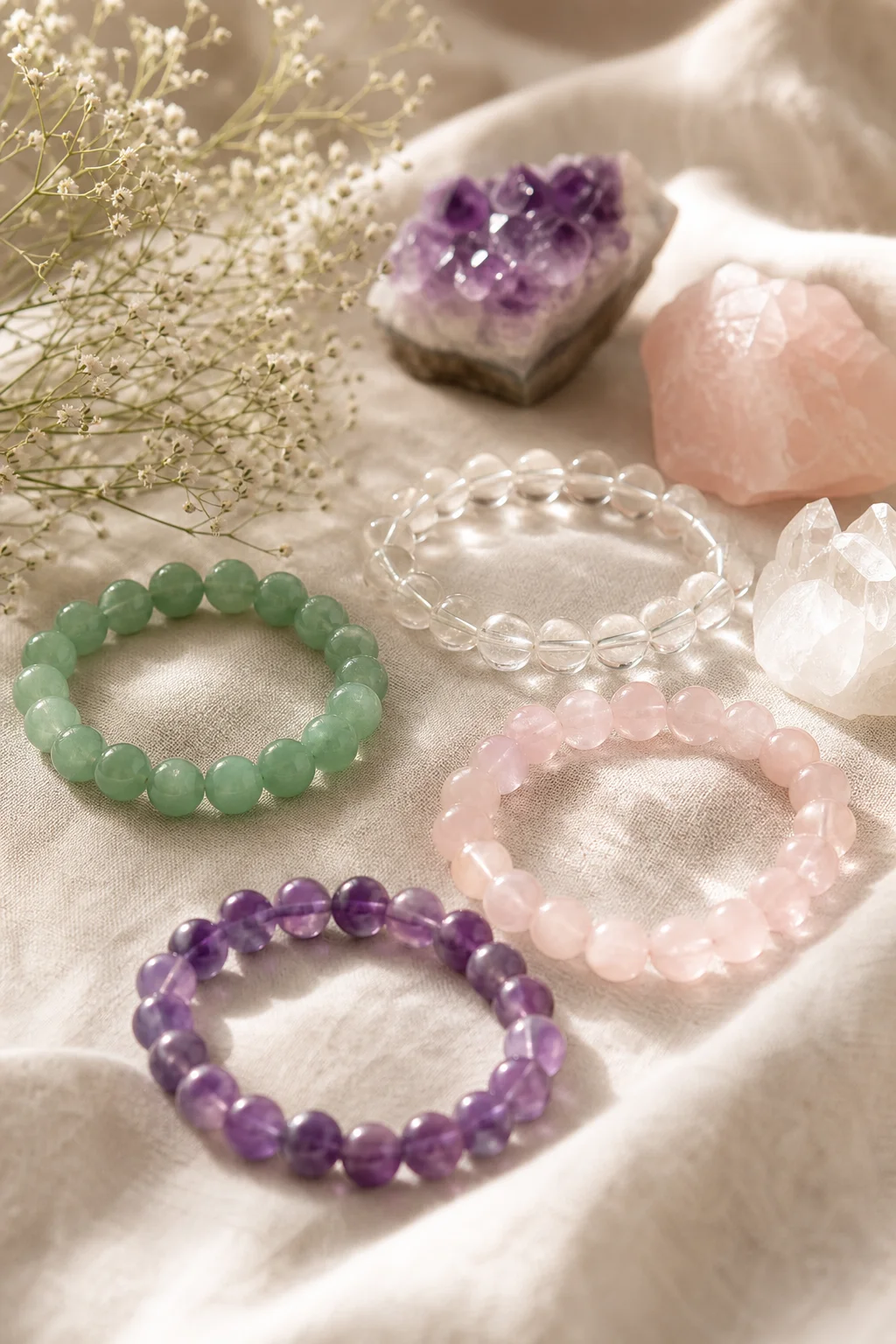
To keep your handcrafted bracelet vibrating at its highest energy, cleanse it regularly to clear absorbed negativity. Gently rinse the natural crystals in cool water or place them under moonlight overnight. To recharge the stones, leave them in morning sunlight briefly or rest them on a selenite plate. This mindful care ensures your artisan jewelry remains energetically aligned and maintains its beautiful, natural appearance for daily wear.
Comments