Citrine Crystal Benefits: The Complete Guide to the Merchant's Stone
What Is Citrine?
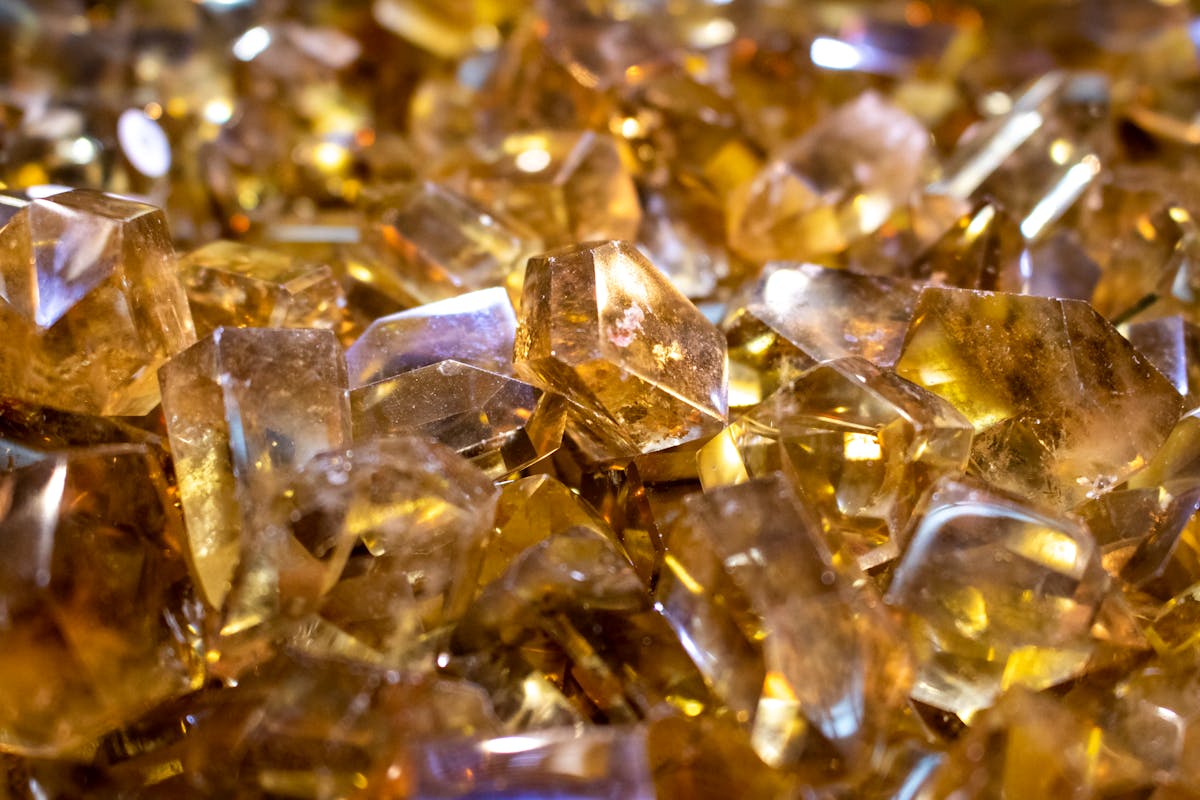
Citrine is a variety of quartz recognized by its warm yellow-to-amber coloration. Its hue comes from trace amounts of iron within the crystal lattice, which interact with natural irradiation over millions of years. On the Mohs scale of hardness, citrine ranks at 7 — the same as all quartz — making it durable enough for daily wear in rings, pendants, and bracelets without special precautions.
Most citrine on the market today is actually amethyst that has been heat-treated to around 878°F (470°C), which permanently transforms the purple iron-containing quartz into yellow or orange tones. Naturally occurring citrine, sometimes called "natural citrine" or "Madiera citrine," forms in places where volcanic heat already altered amethyst deposits underground. Brazil remains the world's largest source, particularly the Rio Grande do Sul region where both amethyst and citrine are mined from the same geodes.
The color range spans from pale lemon yellow through deep honey gold to reddish-orange. Deeper amber specimens tend to command higher prices, while the pale yellow variety is more common and affordable. Unlike many colored gemstones, citrine's color is stable and won't fade under normal lighting conditions.
History and Cultural Significance
Citrine has been valued across multiple civilizations for thousands of years. The ancient Greeks carved citrine into decorative gems and used it as a polished ornament, appreciating its sunny color during darker months. Roman artisans incorporated citrine into intaglio seals and signet rings, where its hardness made it practical for pressing wax.
In Scotland, citrine holds particular cultural weight. Highland warriors adorned their sgian-dubhs — the small knives tucked into kilt stockings — with citrine pommels as early as the 16th century. Several ceremonial daggers in the National Museum of Scotland still display original citrine stones, their amber glow undimmed after centuries. The tradition tied citrine to clan identity and martial pride.
Chinese culture embraced citrine during the Qing Dynasty, where it was known as "the merchant's stone" (财神石). Shopkeepers would place large citrine geodes or polished specimens near cash registers, believing the stone attracted prosperity. This association carried through to modern Feng Shui practice, where citrine is placed in the southeast corner of a home or business — the area traditionally linked to wealth and abundance.
During the Art Deco period of the 1920s and 1930s, citrine experienced a surge in popularity among European jewelers. Designers like Cartier and Boucheron set large citrine cabochons in platinum and diamond brooches, taking advantage of the stone's affordability compared to yellow sapphire or topaz while achieving a similar warm visual effect.
Why Citrine Is Called the Merchant's Stone
The "merchant's stone" nickname didn't come from a single source — it developed across several cultures independently, which makes it one of the more deeply rooted crystal associations in existence.
In traditional Chinese commerce, the connection was straightforward: citrine's color resembled gold, and merchants are practical people who like visible reminders of what they're working toward. A citrine display piece on a counter served double duty as both decoration and a psychological anchor for the shopkeeper's intentions.
Scottish traders adopted a similar practice during the 18th and 19th centuries, placing citrine stones in their counting houses. The Highland tradition of wearing citrine-adorned weapons blended with commerce — a merchant who could afford a citrine-pommeled knife was signaling success.
In modern crystal practice, citrine is traditionally associated with the concept of abundance rather than mere money. People place it on their desks while working, carry a tumbled stone during negotiations, or wear citrine jewelry to business meetings. Whether this works through psychological focus, cultural reinforcement, or something else entirely is debated — but the tradition itself is well-documented across at least three continents and several centuries.
Emotional and Spiritual Benefits
Energy and Motivation
Citrine's reputation as an energy booster stems from its visual warmth — yellow and gold are psychologically linked to alertness and positivity in color psychology studies. Crystal enthusiasts traditionally use citrine when they need a motivational push, whether starting a new project, breaking out of a creative rut, or simply facing a difficult week. There's no scientific evidence that citrine emits any measurable energy field, but the practice of selecting and carrying a meaningful object as a focus tool has documented psychological benefits.
Confidence and Self-Expression
The connection between citrine and confidence is traditionally tied to its association with the solar plexus chakra (more on that below). In crystal healing traditions, a blocked solar plexus manifests as self-doubt and indecision, while an open one supports clear self-expression and personal authority. People who wear citrine regularly often report feeling more assertive in social situations — though this likely combines the placebo effect with the conscious intention-setting that usually accompanies crystal work.
Creativity
Artists, writers, and designers have gravitated toward citrine for generations. The reasoning in crystal tradition is that citrine stimulates the sacral and solar plexus chakras simultaneously, connecting creative flow with the willpower to act on ideas. A more practical explanation: surrounding yourself with objects you find beautiful and meaningful genuinely does support creative output, as environmental psychology research has shown.
Negativity and Emotional Clearing
Citrine is sometimes called "the stone that doesn't hold negativity" — meaning it's traditionally believed to absorb and dissipate negative energy rather than storing it. This is why many crystal practitioners say citrine doesn't need regular cleansing, unlike other stones. Whether or not you accept the energetic explanation, the practice of handling a warm-colored, smooth stone during moments of stress provides genuine tactile comfort and can serve as a grounding technique.
Chakra Associations
In the traditional Hindu chakra system, citrine is primarily associated with the Manipura chakra, commonly called the solar plexus chakra. This is the third chakra, located in the upper abdomen, and it's traditionally linked to personal power, confidence, and transformation. Citrine's yellow color directly corresponds to this chakra's visual representation.
Citrine also has secondary associations with the Svadhisthana chakra (sacral chakra), particularly in its deeper orange varieties. The sacral chakra relates to creativity, emotional expression, and pleasure.
Popular Crystal Combinations
Crystal practitioners often pair citrine with other stones for specific purposes:
Citrine + Amethyst: A classic combination that balances the warm, active energy of citrine with amethyst's cooler, calming influence. Some practitioners place them together during meditation or on a nightstand to combine restful sleep with positive intention-setting for the next day.
Citrine + Black Tourmaline: Black tourmaline is traditionally used for energetic protection, while citrine promotes positivity. Together, they're said to create a balanced field — protection without isolation, positivity without naivety.
Citrine + Rose Quartz: Rose quartz supports emotional healing and self-love, while citrine adds confidence and motivation. This pairing is popular for people working on self-esteem issues.
Citrine + Clear Quartz: Clear quartz is considered an "amplifier" in crystal tradition, so pairing it with citrine is believed to strengthen citrine's properties. Practitioners often create crystal grids using a central clear quartz point surrounded by citrine stones.
Citrine + Carnelian: Both stones connect to the lower chakras and share warm color tones. This combination is traditionally used for creative work and overcoming procrastination.
How to Wear Citrine Jewelry
Which Hand Should You Wear Citrine On?
In crystal traditions rooted in Ayurvedic practice, there's a distinction between receiving and giving energies based on which hand you use. Citrine is generally classified as a "giving" or "projecting" stone because of its association with outward energy, confidence, and abundance. For this reason, traditional practitioners recommend wearing citrine on the right hand or right wrist.
However, if your intention with citrine is more internal — self-confidence, emotional healing, personal transformation — some practitioners suggest the left hand instead, treating it as a receiving stone in that context. The most common modern approach is simply to wear it wherever it feels comfortable and meaningful to you.
Best Jewelry Pairings
Citrine pairs well with yellow gold settings, which enhance its warm tones, but it also looks striking against silver or white gold for contrast. For everyday wear, a crystal bracelet with citrine beads is practical and allows the stone direct contact with your skin, which some practitioners prefer. Pendants are another popular choice, positioning the stone near the heart and solar plexus.
If you're building a multi-bracelet stack, citrine works well with amethyst, clear quartz, and tiger's eye. Avoid pairing it with stones that have conflicting traditional associations unless that's your specific intention.
Natural Citrine vs. Heat-Treated Citrine
This is one of the most important distinctions in the citrine market, and understanding it will save you money and prevent disappointment.
Natural Citrine
True natural citrine formed underground through geological heat processes — typically volcanic activity that naturally heated amethyst-bearing geodes over millennia. It tends to have a pale, smoky yellow color with occasional hints of green or brown. Natural citrine from Brazil's Rio Grande do Sul mines often shows subtle color zoning and internal inclusions that give it character.
Natural citrine is considerably more expensive than heat-treated material, often costing 3-5 times more per carat for comparable quality. It's also less commonly available, as most of the world's supply has already been mined and sold.
Heat-Treated Citrine
The vast majority of citrine sold commercially — some estimates suggest over 90% — is amethyst that has been heated in a controlled kiln. This process is permanent and produces colors ranging from bright lemon yellow to deep amber orange. Heat-treated citrine often displays red or orange streaks near the base of crystals, which is a telltale sign of the treatment.
Heat treatment is not considered deceptive in the gem trade — it's a standard and accepted practice, similar to how most blue topaz on the market is irradiated. However, it should always be disclosed by the seller. Heat-treated citrine is affordable, widely available, and visually identical to many buyers.
Does It Matter?
From a crystal healing perspective, opinions differ. Some practitioners insist that only natural citrine carries the "correct" energy, while others consider heat-treated citrine equally valid since the heat treatment is permanent and doesn't alter the stone's fundamental composition — it's still silicon dioxide with iron impurities. For decorative and jewelry purposes, heat-treated citrine offers better color saturation at a lower price.
For a deeper dive into this topic, check our guide on natural vs. synthetic crystals.
How to Identify Genuine Citrine
The citrine market has its share of imitations. Here's how to spot the most common ones:
Citrine vs. Yellow Glass
Glass is the most common citrine imitation, and it's surprisingly convincing at first glance. Key differences: glass feels warmer to the touch, has no internal inclusions or growth patterns (citrine often shows tiny fractures, veils, or color zoning), and contains occasional round bubbles visible under magnification. Glass also lacks the subtle double refraction of quartz — hold the stone over printed text, and genuine citrine will show a slight doubling of the letters, while glass won't.
Citrine vs. Yellow Topaz
Imperial topaz and golden topaz can closely resemble deep citrine. Topaz is harder (Mohs 8 vs. citrine's 7) and has perfect cleavage in one direction, meaning it can be split along a flat plane — citrine has no cleavage. Topaz also has a higher refractive index, giving it slightly more brilliance. If you're unsure, a gemologist can test the refractive index or specific gravity to make a definitive identification.
Citrine vs. Yellow Sapphire
Yellow sapphire is significantly harder (Mohs 9) and much more expensive than citrine, so deliberate misrepresentation is rare but can happen at higher price points. Sapphire has greater brilliance and fire, and its color tends to be more uniform. A basic scratch test (sapphire scratches quartz, not the other way around) can help, though this is destructive and not recommended for finished jewelry.
Quick Tests You Can Do at Home
The scratch test: Citrine (Mohs 7) will scratch glass (Mohs 5.5) and will be scratched by corundum or topaz. If a stone claiming to be citrine scratches glass but can't be scratched by a steel file (Mohs 6.5), that's consistent with genuine quartz.
The heat test: Glass imitations may feel warmer in your hand than genuine citrine because glass has lower thermal conductivity. Hold both a known genuine piece and the suspect piece — if one feels noticeably warmer, it might be glass.
The magnification test: Under 10x magnification, genuine citrine shows natural inclusions, color banding, and occasional liquid-gas inclusions. Glass shows swirl marks, round bubbles, and unnaturally uniform color.
Cleaning and Caring for Citrine
Citrine is relatively low-maintenance compared to more delicate gemstones, but a few care guidelines will keep it looking its best for years.
Daily Cleaning
The simplest method is warm water with a drop of mild soap — hand soap, dish soap diluted significantly, or a dedicated jewelry cleaner. Use a soft toothbrush to gently clean settings and crevices, then rinse thoroughly and dry with a soft cloth. Avoid ultrasonic cleaners unless you're certain the stone is free of internal fractures, as the vibration can worsen existing inclusions.
What to Avoid
Prolonged sunlight: Despite citrine's color stability under normal indoor lighting, extended direct sun exposure — weeks or months in a sunny window — can potentially cause slight fading in some specimens. Store citrine away from direct sunlight when not wearing it.
Harsh chemicals: Remove citrine jewelry before swimming in chlorinated pools, using household cleaning chemicals, or applying perfume and hairspray. These can damage both the stone and its setting over time.
Temperature extremes: While citrine is fairly heat-resistant (it literally forms from heat), sudden temperature changes can cause thermal shock and create internal fractures. Don't wear citrine while doing activities that involve extreme heat followed by cold water.
Storage
Store citrine separately from harder stones like sapphire or diamond, which can scratch it. A soft pouch or lined jewelry box compartment works well. For a complete guide to crystal care, see our article on how to clean crystal jewelry.
Frequently Asked Questions
Can citrine go in water?
Yes, citrine is safe for brief water exposure — rinsing under the tap, wearing in the shower occasionally, or cleaning with soapy water are all fine. However, prolonged soaking (days or weeks) isn't recommended, as it could potentially weaken any adhesives in jewelry settings or allow mineral deposits to build up in surface-reaching fractures.
Is heat-treated citrine "fake"?
No. Heat-treated citrine is genuine quartz that has been permanently altered by heat — the same process that creates natural citrine, just accelerated in a controlled environment. The stone's chemical composition doesn't change, and the color is permanent. It's not synthetic, dyed, or coated. That said, sellers should always disclose heat treatment, and natural citrine commands a premium price.
What color citrine is most valuable?
Deep amber to reddish-orange citrine — sometimes called "Madeira citrine" — is the most valuable color variety, particularly in stones over 5 carats. Very pale yellow citrine is common and affordable, while medium golden tones offer the best balance of color intensity and price.
Can I sleep with citrine?
Some people do, particularly those who follow crystal traditions involving dream work or intention-setting before sleep. However, citrine is an energizing stone in crystal lore, and some practitioners find it too stimulating for restful sleep. If you're sensitive to your environment when sleeping, you might prefer keeping citrine in your workspace rather than your bedroom.
How can I tell if my citrine bracelet is real?
Look for natural inclusions under good lighting — tiny internal fractures, color variations, and slight imperfections are actually good signs in quartz. Perfectly uniform, bubble-free, inclusion-free "citrine" beads in bright unnatural yellow are often glass. Real citrine beads should also feel cool initially when you pick them up, warming slowly in your hand. Check our guide on natural vs. synthetic crystals for more detailed identification methods.
AI Disclosure Statement
This article was created with the assistance of artificial intelligence. While the factual information regarding citrine's geological properties, historical usage, and gemological characteristics has been reviewed for accuracy, the spiritual and metaphysical claims discussed (chakra associations, energy properties, healing benefits) reflect cultural traditions and personal beliefs rather than scientifically proven effects. We recommend consulting qualified professionals for medical, psychological, or financial advice. Citrine is a beautiful and meaningful stone with a rich history — how you choose to connect with it is a personal journey.

Comments