Prasiolite (Green Amethyst): The Complete Hea...
June 5, 2026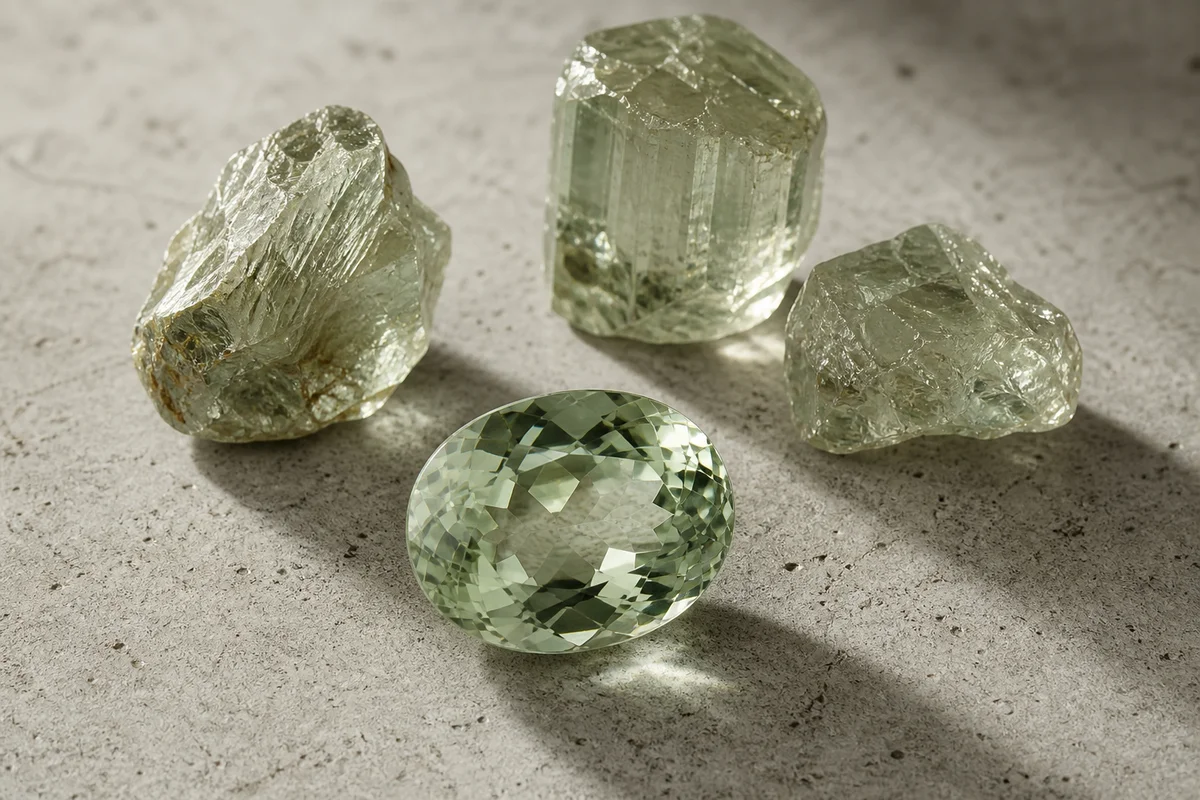
What Is Prasiolite?
Prasiolite is a green variety of quartz that has become increasingly popular in jewelry and crystal collections over the past decade. Its name comes from the Greek word prasios, meaning "leek-green," which perfectly describes its signature color palette — a spectrum that runs from pale mint through lime green to deeper sage tones.
What makes prasiolite genuinely interesting is the controversy surrounding its origin. Most prasiolite on the market is not naturally green at all. Instead, it starts as regular purple amethyst and gets heated to around 500°C (932°F), which causes the iron impurities within the crystal lattice to change their oxidation state from Fe³⁺ to Fe²⁺. This shift in iron chemistry transforms the purple color to green. The process is essentially the same geological phenomenon that creates citrine from amethyst — just at different temperature and atmospheric conditions.
Naturally occurring prasiolite does exist, but it's far rarer. The only consistently documented natural source is the Monte Verde mine in Brazil's Rio Grande do Sul state, where volcanic activity provided just the right combination of heat and iron-rich conditions over millions of years. Polish deposits in Lower Silesia have also produced some natural specimens, though in smaller quantities.
The "Green Amethyst" Name Debate
Calling prasiolite "green amethyst" is a contentious issue in the gemstone world. Geologically speaking, once amethyst is heated and its iron oxidation state changes, it's no longer amethyst — it's a different variety of quartz. The Gemological Institute of America (GIA) and most mineralogists classify it as prasiolite, a distinct quartz variety, not a subtype of amethyst.
The commercial jewelry industry, however, loves the name "green amethyst" because it carries instant brand recognition. Buyers who already know and trust amethyst feel comfortable with "green amethyst" in a way they wouldn't with an unfamiliar mineral name. Both terms are widely used in the market, but if you're buying from a reputable dealer, the distinction should be clearly stated on the labeling.
From a collector's perspective, knowing the difference matters. Natural prasiolite commands significantly higher prices than heated material. If a piece is advertised simply as "green amethyst" without specifying whether it's natural or treated, that's a red flag — it almost certainly means heated.
Chemistry Behind the Color Change
The color transformation from purple to green involves a specific change in how iron atoms interact with the quartz crystal structure. Purple amethyst gets its color from iron ions in the +3 oxidation state (Fe³⁺) that have been irradiated by natural radiation in the earth. These Fe³⁺ ions absorb certain wavelengths of visible light, letting the purple wavelengths pass through to our eyes.
When you apply heat, the Fe³⁺ ions can gain an electron and become Fe²⁺. This Fe²⁺ state absorbs different wavelengths — specifically, the yellow-green part of the spectrum — which makes the crystal appear green to us. The process is reversible in theory (exposure to radiation could turn it back purple), but in practice, once heated prasiolite has been stabilized, it holds its green color permanently under normal conditions.
The exact shade of green depends on several factors: the original iron concentration in the amethyst, the temperature and duration of heating, and whether the heating was done in an oxidizing or reducing atmosphere. Higher iron content generally produces deeper greens, while shorter heating times at lower temperatures tend to yield lighter mint tones.
How to Identify Prasiolite
Like all quartz varieties, prasiolite has a Mohs hardness of 7, making it durable enough for everyday wear in rings, bracelets, and necklaces. It has a vitreous luster and is transparent to translucent, with good clarity in most cut specimens. Under polarized light, it shows the same interference patterns as other quartz — a useful property for gemologists distinguishing it from look-alike minerals.
One reliable identification method is refractive index testing. Prasiolite has a refractive index of 1.544–1.553, identical to all quartz varieties. If a "green amethyst" shows a different refractive index, it's not quartz at all — it might be green glass, peridot, or another mineral entirely.
Prasiolite vs. Peridot
These two are commonly confused because both are green, semi-transparent gemstones, but they're completely different minerals with distinct properties. Peridot is an olivine variety (a silicate mineral containing iron and magnesium), while prasiolite is quartz. Peridot has a higher refractive index (1.65–1.69), double refraction visible to the naked eye (prasiolite doesn't), and a characteristic yellowish-green color that differs from prasiolite's cooler mint-to-lime tones. Peridot also has a hardness of 6.5–7, slightly softer than prasiolite's consistent 7.
Prasiolite vs. Green Tourmaline
Green tourmaline (specifically the verdelite variety) is another potential look-alike, but again, the differences are clear under magnification. Tourmaline has strong pleochroism (showing different colors from different angles), a refractive index of 1.62–1.64, and often displays visible inclusions that look like thread-like growth patterns. Prasiolite, by contrast, is relatively clean and shows minimal pleochroism.
Prasiolite in Jewelry
Prasiolite's moderate hardness (7 on the Mohs scale) and good toughness make it an excellent choice for most jewelry types. It resists scratching from daily wear better than softer gems like peridot or apatite, though it can still be chipped by a hard impact against a harder surface like sapphire or diamond.
The most popular cuts for prasiolite include oval and cushion cuts that maximize its color depth, as well as emerald cuts that show off its clarity. Larger stones tend to display richer color, while small melee stones can appear quite pale. In bead form, prasiolite is popular for bracelets and mala necklaces, where its soft green tones complement both cool and warm color palettes.
Care and Maintenance
Prasiolite can be cleaned with warm soapy water and a soft brush. Ultrasonic cleaners are generally safe for untreated quartz, but if the stone has been fracture-filled or has visible inclusions, ultrasonic cleaning could cause internal damage. Steam cleaning is also acceptable. Avoid sudden temperature changes and harsh chemicals, which could cause thermal shock or surface etching.
For storage, keep prasiolite separately from harder gemstones (sapphire, diamond, topaz) that could scratch it, and from softer gems it might scratch. A fabric-lined jewelry box or individual pouches work well.
Sources and Mining
Brazil remains the dominant source, particularly the state of Minas Gerais and Rio Grande do Sul. Polish prasiolite from the Sudety Mountains has a slightly different color character — often more blue-green than the Brazilian material. Small amounts have also been found in Arizona (USA) and Zimbabwe, though commercial quantities are limited.
The heated prasiolite industry is largely concentrated in Brazil and Thailand, where large quantities of lower-grade amethyst are processed specifically for the green gemstone market. This treatment is permanent and widely accepted in the trade, provided it's disclosed to buyers.
Frequently Asked Questions
Is prasiolite the same as green amethyst?
Technically no — prasiolite is a distinct variety of quartz, while amethyst is the purple variety. The name "green amethyst" is a commercial term for heated amethyst that has turned green. Natural prasiolite does exist but is rare.
Does heat-treated prasiolite fade over time?
No. Once the iron oxidation has been permanently altered by heat, the green color is stable and won't fade under normal wearing conditions. It may darken slightly with prolonged sun exposure, but this is minimal.
How much does natural prasiolite cost compared to treated?
Natural prasiolite from verified sources like Monte Verde, Brazil, typically costs 5–10 times more than heat-treated material. A 5-carat natural prasiolite might sell for $200–400, while a similar-size heated piece could be $20–50.
Can prasiolite get wet?
Yes, brief water exposure is fine for cleaning. Prolonged soaking isn't recommended for any jewelry piece, but prasiolite itself is not water-soluble or reactive.
FAQ Section
What is the best way to clean prasiolite jewelry?
Prasiolite jewelry can be cleaned with warm soapy water and a soft brush. If the piece is fracture-filled or has visible inclusions, it's best to use a damp cloth and avoid harsh chemicals or ultrasonic cleaning.
Can prasiolite be set in silver jewelry?
Yes, prasiolite can be set in silver jewelry. However, it's important to use prongs or bezels that are secure enough to hold the stone in place without scratching it.
Is prasiolite suitable for engagement rings?
Prasiolite can be suitable for engagement rings, especially if the wearer prefers a unique green stone. It's important to consider the wearer's lifestyle and activity level to ensure the prasiolite is well-protected from potential damage.
How can I tell if my prasiolite is natural or treated?
Reputable jewelers should be able to provide information about the origin and treatment of the prasiolite. If you're unsure, you can ask for a certificate of authenticity or have the stone tested by a professional gemologist.
How to Choose: A Buying Guide
When choosing prasiolite jewelry, consider the following factors:
- Color: Look for a vibrant green color with good saturation. Avoid stones with brown or gray hues.
- Clarity: Prasiolite should be clear with minimal inclusions or imperfections.
- Cut: A well-cut prasiolite will reflect more light and enhance its beauty. Popular cuts include oval, cushion, and emerald.
- Origin: If you're interested in natural prasiolite, consider its origin. Brazilian and Polish sources are known for high-quality material.
- Treatment: Be aware of the treatment process. Heated prasiolite is a permanent change and widely accepted, but natural prasiolite is more valuable.
Care and Maintenance
Proper care and maintenance will ensure your prasiolite jewelry remains beautiful for years to come. Here are some tips:
- Storage: Keep your prasiolite jewelry in a fabric-lined jewelry box or individual pouches to prevent scratching.
- Cleaning: Use warm soapy water and a soft brush for cleaning. Avoid harsh chemicals and ultrasonic cleaners if the stone has been fracture-filled.
- Wearing: Remove your prasiolite jewelry when engaging in activities that could cause damage, such as exercising or gardening.
Related Stones: Comparing Similar Minerals
Prasiolite is often compared to other green gemstones, such as peridot and green tourmaline. Here's a quick comparison:
- Prasiolite: Quartz, Mohs hardness 7, vitreous luster, transparent to translucent.
- Peridot: Olivine, Mohs hardness 6.5–7, vitreous to greasy luster, transparent to translucent.
- Green Tourmaline: Tourmaline, Mohs hardness 7, vitreous to pearly luster, transparent to translucent.
While all three stones share a green color, they have distinct properties and origins. Prasiolite is a variety of quartz, peridot is an olivine, and green tourmaline is a silicate mineral.
Practical Usage Tips or Historical Anecdotes
Prasiolite has been used for centuries in various cultural practices and historical contexts:
- Medicinal Uses: In ancient Greece, prasiolite was believed to have healing properties, particularly for eye disorders.
- Religious Significance: Prasiolite was used in the creation of religious artifacts in various cultures, symbolizing growth and renewal.
- Modern Uses: Prasiolite is popular in modern jewelry for its unique green color and durability.
One historical anecdote involves the Monte Verde mine in Brazil, where the first naturally occurring prasiolite was discovered. The mine is named after the nearby town of Monte Verde, which means "Green Mountain" in Portuguese. The discovery of this rare gemstone has sparked interest in the region and has contributed to its tourism industry.
When using prasiolite in jewelry or as a decorative stone, consider its cultural significance and the beauty of its unique green color. Prasiolite is a versatile gemstone that can be incorporated into various styles and settings, making it a popular choice for collectors and jewelry enthusiasts alike.
How to Choose: A Buying Guide (Expanded)
When embarking on the journey of selecting prasiolite jewelry, there are several factors to consider that will greatly impact the overall quality and value of your purchase. Here's an expanded buying guide to help you make an informed decision:
- Color Intensity and Saturation: The most desirable prasiolite exhibits a rich, vibrant green that is neither too pale nor too dark. A stone with a well-balanced intensity will catch the eye and enhance the piece's overall appeal.
- Transparency and Clarity: Transparency is a key factor in determining the quality of prasiolite. A clear stone with minimal inclusions or blemishes is generally more valuable than one with more visible imperfections.
- Cut Quality: The cut of a gemstone can greatly influence its brilliance and fire. An expertly cut prasiolite will reflect light more effectively, showcasing its unique green hue to its fullest potential.
- Origin of the Stone: The origin of a prasiolite can impact its color and clarity. Brazilian and Polish prasiolites are particularly sought after for their high-quality, vivid green color and lack of inclusions.
- Treatment Disclosure: Be sure to inquire about the treatment process. While heat treatment is a common and acceptable practice, knowing how the stone was treated can help you assess its value and longevity.
- Stone Setting: The setting of the prasiolite can affect its durability and visual appeal. Prong settings allow for better light reflection and can highlight the stone's beauty, while bezel settings can provide more security but may not display the stone as well.
Care and Maintenance: Additional Tips
In addition to the basic care and maintenance guidelines, here are some additional tips to ensure your prasiolite jewelry stays in pristine condition:
- Handle with Care: Prasiolite, while durable, is not immune to chipping or cracking. Handle it with care, especially when setting it into jewelry or cleaning it.
- Avoid Extreme Temperatures: Like many gemstones, prasiolite can be sensitive to sudden temperature changes. Avoid exposing it to extreme heat or cold.
- Use Professional Cleaners: For a thorough cleaning, consider taking your prasiolite jewelry to a professional cleaner who specializes in gemstones.
Related Stones: A Closer Look at Similar Minerals
While prasiolite shares its green hue with several other minerals, each possesses its own unique characteristics and properties. Here's a closer look at some of the most common minerals that may be confused with prasiolite:
- Peridot: Known for its olive-green color, peridot is often found in peridotite, a type of igneous rock. It has a distinct appearance with a slightly greasier luster than prasiolite.
- Green Tourmaline: Green tourmaline, also known as verdelite, exhibits a vibrant green color and is characterized by its pleochroism, showing different colors from different angles.
- Green Fluorite: Green fluorite is a transparent to translucent mineral with a vitreous luster. It is often used in jewelry for its vibrant green color, which can be more intense than prasiolite.
- Green Jade: Green jade is a silicate mineral known for its hardness and durability. It has a waxy luster and can range from pale green to deep emerald.
Practical Usage Tips or Historical Anecdotes: More Insights
Prasiolite's history is rich with cultural significance and practical uses, some of which have been passed down through generations:
- Crystal Healing: Prasiolite is often used in crystal healing practices due to its association with growth and renewal. It is believed to enhance creativity and provide emotional balance.
- Personal Significance: Wearing prasiolite jewelry is said to attract prosperity and encourage personal growth. It is also thought to bring about clarity of thought and improved communication skills.
- Cultural Symbolism:Frequently Asked Questions
What is the difference between prasiolite and amethyst?
Prasiolite is a variety of quartz that has a distinct green color, while amethyst is a purple variety of quartz. The main difference lies in their color and the trace elements that give them their hues.
Is prasiolite a rare crystal?
Prasiolite is considered a rare crystal, especially in high-quality forms. Its rarity is part of what makes it so sought after by collectors and crystal enthusiasts.
Can prasiolite be used in jewelry?
Yes, prasiolite can be used in jewelry. It's a durable stone and can be cut into various shapes and sizes. However, due to its rarity, it might be more expensive than other quartz varieties.
How should I clean my prasiolite crystal?
Prasiolite can be cleaned with warm water and a soft cloth. Avoid using harsh chemicals or ultrasonic cleaners, as these can damage the stone's surface and color.
How to Choose Quality Prasiolite (Green Amethyst)
When shopping for prasiolite, here are some tips to help you choose a quality piece:
- Color: Look for stones with a vibrant green color. The hue should be even and consistent throughout the crystal.
- Transparency: High-quality prasiolite should be transparent or translucent. Cloudy or milky stones might indicate lower quality.
- Clarity: Check for any inclusions or imperfections. Fewer inclusions usually mean a higher-quality stone.
- Size: Larger prasiolite crystals are rarer and typically more valuable. However, the size should also be proportional to the crystal's overall quality.
- Origin: Be aware of the origin of the stone. Some regions are known for producing higher-quality prasiolite.
Care and Maintenance
Prasiolite requires special care to maintain its beauty and luster:
- Storage: Keep your prasiolite away from direct sunlight and extreme temperatures. Store it in a soft cloth or a lined jewelry box to prevent scratches.
- Cleaning: As mentioned earlier, use warm water and a soft cloth for cleaning. Avoid using abrasive materials or harsh chemicals.
- Charging: To maintain the energy of your prasiolite, you can charge it under moonlight or by placing it on a quartz charging plate.
- Avoid Damage: Be cautious when wearing prasiolite jewelry. It's a softer stone and can be scratched or damaged by harder materials.
Similar Stones You Might Like
If you enjoy the beauty of prasiolite, you might also appreciate these related crystals:
- Green Aventurine: Known for its vibrant green color and protective properties.
- Green Tourmaline: Offers a range of green hues and is believed to promote emotional balance.
- Chalcedony: A variety of quartz with a wide range of colors, including green.
- Green Fluorite: Known for its protective and calming properties.
Comments