Pinolith: The Domino Stone Guide
June 3, 2026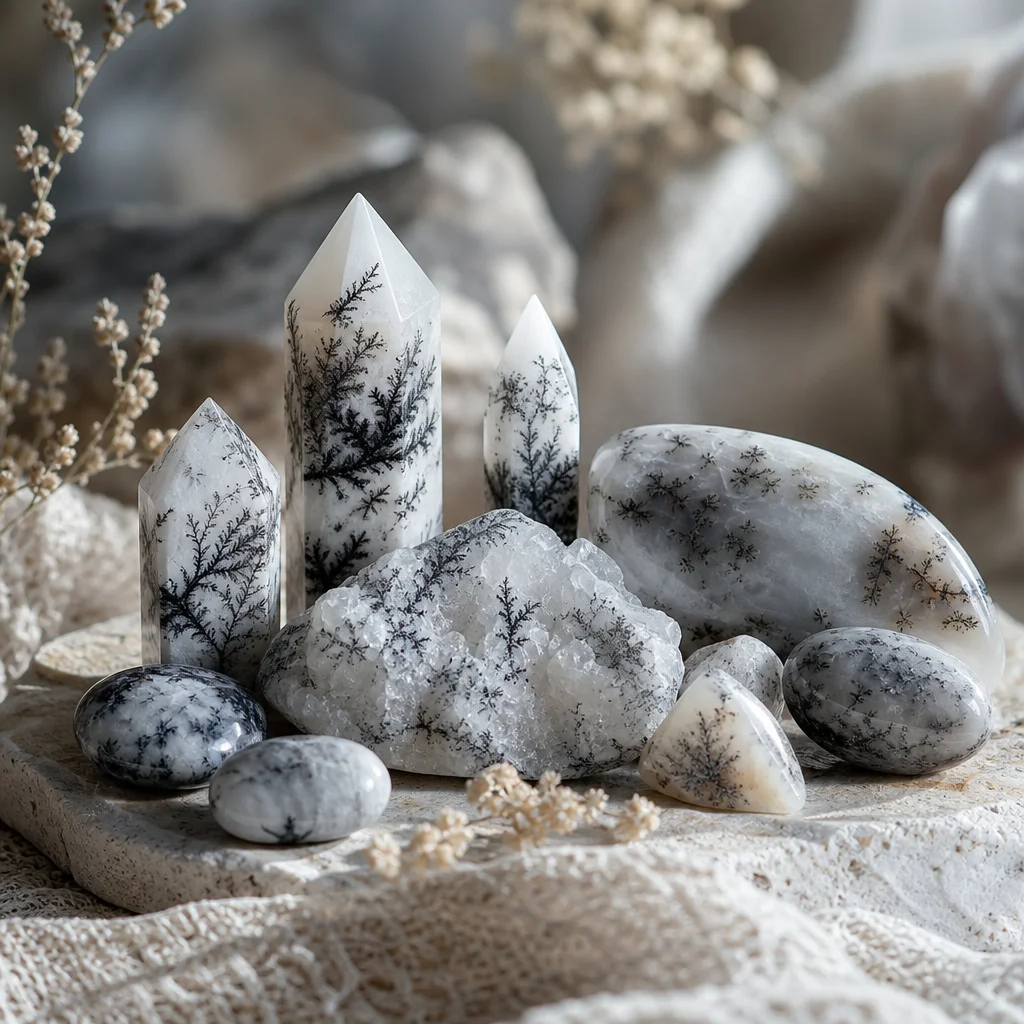
What Exactly Is Pinolith
Pinolith (also spelled piñolite or pinolite) is one of the more visually distinctive minerals you will encounter in the crystal world. It is not a single mineral but rather a rock composed of two contrasting materials: hausmannite (Mn₃O₄, a manganese oxide) and magnesite (MgCO₃, magnesium carbonate). The result is a stone that looks like a chessboard or domino tile—sharp black spots and dendrites of hausmannite floating in a white-to-gray magnesite matrix. The name comes from the German word "Kornelius-Stein" and its resemblance to pine nuts (Pinienkerne in German).
This dual composition gives pinolith its signature look, but it also creates some practical considerations for collectors and jewelry makers. The two minerals have different hardnesses: hausmannite rates about 5.5 on the Mohs scale, while magnesite is softer at 3.5 to 4.5. This hardness mismatch means the black inclusions are harder than the white matrix, which affects how the stone takes a polish, how it wears in jewelry, and how it responds to cleaning.
How Pinolith Forms
Pinolith forms in manganese-rich metamorphic deposits, typically in association with other manganese minerals like rhodochrosite (pink manganese carbonate) and braunite. The geological process begins when manganese-rich sediments are subjected to heat and pressure deep underground. Under these conditions, manganese oxides crystallize as hausmannite within a magnesium carbonate matrix that becomes magnesite.
The sharp, geometric shape of the black inclusions (often triangular or rectangular rather than round) is a distinctive feature of pinolith. Unlike many inclusion patterns in stones that are irregular or fractal, pinolith's black spots often look deliberately placed—almost like someone drew them with a pen. This geometric quality is what makes pinolith instantly recognizable and visually striking in both raw and polished form.
The Pin Valley: Why Pinolith Is Geographically Rare
Pinolith was first discovered and is most famously sourced from the Pin Valley (Pinnatal) in the Kreuzeck Mountains of Carinthia, Austria. This small alpine region remains the primary source of pinolith specimens on the commercial market, which is why the stone is both distinctive and relatively uncommon in shops and online.
The Austrian pinolith deposits occur in a narrow band of Triassic-age metamorphic rock. Mining has been intermittent—there was a period of commercial extraction in the mid-20th century when pinolith was used decoratively, but production has been sporadic since then. Most pinolith on the market today comes from older stock or small-scale prospecting rather than active large-scale mining operations.
Similar-looking material has been reported from other manganese deposits worldwide (notably in China and South Africa), but the Austrian material remains the standard by which all pinolith is judged. If you are buying pinolith, ask about the source—Austrian material commands a premium but is generally considered superior in terms of contrast and pattern quality.
Using Pinolith in Jewelry
Pinolith's distinctive black-and-white pattern makes it popular for statement pieces—large cabochons for pendants, slab earrings, and decorative objects. However, its relatively low hardness (the magnesite matrix is only 3.5-4.5) means it is not ideal for rings or bracelets that will see frequent wear and contact with harder surfaces.
For pendants and earrings (which are protected from most hard contact), pinolith works beautifully. A well-polished cabochon shows the black hausmannite inclusions in sharp relief against the white magnesite. The contrast is genuinely striking and unlike any other gemstone material—this is not a stone that gets confused for anything else.
Beads are another common use. Pinolith beads are typically round or irregular (sometimes called "nugget" beads) and are strung as necklaces or bracelets. Beaded pinolith jewelry is more affordable than cabochon pieces and makes an excellent entry point for collectors who want to own the stone without the cost of a large, well-polished cabochon.
The Metaphorical Meaning Behind the Pattern
In crystal collecting traditions, pinolith is associated with balance and grounding—a connection drawn from its literal black-and-white, yin-and-yang pattern. The contrast between dark and light, hard and soft, manganese and magnesium gives the stone a natural symbolism that practically suggests itself. Whether or not you engage with crystal meaning practices, the visual metaphor of opposing elements coexisting in a single stone is genuinely compelling.
Some practitioners place pinolith on a desk or altar as a visual reminder of balance during meditation. The high-contrast pattern is said to be helpful for contemplation—you can focus your gaze on a single black spot and let the mind settle. This is essentially a form of visual meditation, using a naturally occurring pattern as a focus point, and pinolith's geometric inclusions make it particularly effective for this purpose.
How to Identify Genuine Pinolith
The black-and-white pattern is so distinctive that genuine pinolith is rarely faked—it would be more expensive to manufacture a convincing fake than to sell the real thing. However, if you want to verify authenticity:
- Visual check: The black inclusions should be sharp-edged and geometric, not diffuse or blurry. If the pattern looks painted on rather than naturally embedded, be suspicious.
- Hardness test: The white magnesite matrix should be relatively soft—you can scratch it with a copper coin (Mohs 3-3.5). If the white areas are as hard as the black areas, it may be a different material.
- Weight: Pinolith has a specific gravity of about 3.0-3.2, which is notably heavier than quartz (2.65) due to the manganese content. A piece should feel denser than a similarly sized piece of quartz or marble.
- Source: Austrian pinolith is the most common and well-documented source. If a dealer claims Chinese or Indian origin, verify with additional testing or expert opinion.
How to Care for Pinolith
Pinolith requires more careful handling than most quartz-based stones due to its soft magnesite matrix. Here are the key care guidelines:
- Cleaning: Use only a soft, dry cloth or a very slightly damp cloth (damp, not wet). Avoid soaking in water—the magnesite component can absorb moisture and potentially develop surface discoloration over time.
- Storage: Keep in a soft cloth pouch away from harder stones. Pinolith can be scratched by quartz (Mohs 7), feldspar (Mohs 6), and obviously anything harder. Do not throw it in a jewelry box with other pieces.
- Display: Keep out of prolonged direct sunlight. While magnesite is not as photosensitive as some minerals, extended UV exposure can affect the manganese oxides and slightly alter the contrast of the pattern over very long periods.
- Chemical exposure: Avoid contact with acids, including vinegar, lemon juice, and household cleaning products. Magnesite (magnesium carbonate) reacts with acids, producing fizzing (similar to the reaction of calcite with acid, though slower). This can damage the white matrix.
Pinolith Pricing and Availability
Pinolith is not a mainstream gemstone, so prices vary widely based on quality, size, and source. Rough or tumbled pieces from Austria typically sell for $5-20 per piece. Larger cabochons suitable for jewelry range from $30-100 depending on the sharpness of the pattern and the quality of the polish. Exceptional specimens with particularly bold, high-contrast patterns can command higher prices among collectors.
Availability is limited—the stone is not carried by most mainstream jewelry or crystal shops. You are most likely to find pinolith through specialist mineral dealers, gem and mineral shows, and online retailers that focus on unusual stones. If you encounter it in person, take the opportunity—it is a genuinely uncommon find.
Frequently Asked Questions
Is pinolith the same as howlite?
No. Howlite is a calcium borosilicate hydroxide mineral (Ca₂B₅SiO₉(OH)₄) that is white with gray or black web-like veining. Pinolith is a manganese-magnesium rock with geometric black spots. Howlite is much softer (Mohs 3.5) and is primarily used as an ornamental stone or turquoise simulant (it accepts dye well). The patterns are completely different—howlite's veining is organic and web-like, while pinolith's spots are sharp and geometric.
Can I polish pinolith at home?
It is possible but challenging. The hardness mismatch between hausmannite and magnesite means the two materials polish at different rates. The softer magnesite tends to undercut (polish faster), leaving the harder hausmannite spots standing slightly proud of the surface. Professional lapidary equipment with variable-speed polishing pads and progressive grit sequences can produce excellent results, but hand-polishing is very difficult. For most people, buying pre-polished pieces is more practical.
Why is pinolith so expensive for a relatively common-looking stone?
The price reflects rarity and geography more than the intrinsic beauty of the material. Pinolith comes from a single, small alpine valley in Austria where production is sporadic. Supply is limited and unpredictable, while demand from collectors has grown. If pinolith were mined at scale from multiple locations, prices would be significantly lower—but geologically, that does not appear to be the case.
Expert Tips, Lesser-Known Facts, and Practical Advice for Your Pinolith Jewelry Adventure
Hey there, crystal enthusiasts! If you've been following our journey through the world of Pinolith, you're already familiar with the unique and enchanting qualities of this extraordinary stone. But today, we're diving deeper into the Pinolith: The Domino Stone Guide, to share some expert tips, lesser-known facts, and practical advice that will elevate your Pinolith jewelry experience to new heights. So, let's get into it!Expert Tips for Incorporating Pinolith into Your Jewelry Collection
**Tip 1: Be Mindful of the Cut** Pinolith's natural pattern and color play a significant role in its aesthetic appeal. When choosing a Pinolith stone for jewelry, consider the cut. A well-crafted cut can accentuate the stone's distinctive features, while a less-than-perfect cut might hide the domino pattern. Opt for stones with a faceted cut to really showcase the stone's beauty. **Tip 2: Combine with Complementary Stones** To create a striking contrast and highlight the domino pattern, pair Pinolith with stones of complementary colors and textures. For example, the deep reds of garnet or the vibrant blues of tourmaline can make your Pinolith jewelry pop. **Tip 3: Pay Attention to the Setting** The right setting can make all the difference. Pinolith's unique domino pattern can be showcased best in bezel or channel settings, which prevent light from passing through and allow the pattern to stand out.Lesser-Known Facts About Pinolith
**Fact 1: A Riddle Wrapped in a Mystery** Despite its unique appearance, Pinolith remains somewhat of a mystery in the geological world. Its formation process is not fully understood, and it's often referred to as a "riddle wrapped in a mystery." **Fact 2: A Stone with a Story** Pinolith is often found in association with other rare minerals, giving it an air of mystique and allure. It's like a stone with a story waiting to be told, and it's this enigmatic nature that makes it so captivating. **Fact 3: A Symbol of Protection** In some cultures, Pinolith is believed to have protective properties. It's said to ward off negative energy and bring stability to the wearer, making it a stone of strength and resilience.Practical Advice for Caring for Your Pinolith Jewelry
**Advice 1: Gentle Cleaning** Because of its delicate nature, Pinolith jewelry should be cleaned with gentle care. Use warm water and a soft cloth to wipe down the piece, ensuring not to soak it or use harsh chemicals. **Advice 2: Store Properly** When storing your Pinolith jewelry, keep it in a fabric-lined box or a soft pouch to prevent scratches. Avoid stacking with other pieces, as the unique pattern could be marred. **Advice 3: Regular Check-Ups** Regularly inspect your Pinolith jewelry to ensure the setting is secure and the stone is in good condition. This proactive approach can prevent any potential damage and extend the life of your jewelry. In conclusion, Pinolith is a stone that demands respect and appreciation for its unique qualities. By following these expert tips, embracing the lesser-known facts, and taking practical care of your Pinolith jewelry, you'll be well on your way to creating a collection that is both beautiful and meaningful. Remember, Pinolith is more than just a stone; it's a journey of discovery and a sign of the wonders of the natural world. Keep exploring, keep shining, and most importantly, keep wearing your Pinolith with pride!Frequently Asked Questions
What is Pinolith and how does it work?
What is Pinolith and how does it work?
Pinolith, often referred to as the Domino Stone, is a unique puzzle game that combines the simplicity of a flat stone with the complexity of a domino set. The game consists of a flat stone, often made of smooth marble or granite, with various symbols or patterns etched onto its surface. Players arrange these stones in a certain order to create a chain reaction that triggers a sequence of actions. The game can be played solo or with multiple players, and its objective is to complete the chain reactions as quickly and efficiently as possible. The beauty of Pinolith lies in its simplicity and versatility, making it an engaging activity for all ages and skill levels.How many different patterns or symbols are typically found on a Pinolith stone?
How many different patterns or symbols are typically found on a Pinolith stone?
The number of different patterns or symbols on a Pinolith stone can vary widely depending on the specific set. Some Pinolith sets may include only a few patterns, while others may offer a variety of intricate designs. On average, a set might feature between 10 to 20 different patterns or symbols, which can range from simple geometric shapes to more complex and artistic motifs. This variety allows for endless combinations and challenges for players of all skill levels.Can you play Pinolith with any type of stone?
Can you play Pinolith with any type of stone?
While Pinolith is designed to be played with the specially crafted flat stones, you can technically use any smooth, flat stone for the game. However, this might change the overall experience. The specially designed stones often have symbols or patterns that are essential to the game's mechanics. They are also weighted and balanced to ensure a consistent gameplay experience. Using an alternative stone may require modifications to the game rules, such as adjusting the weight distribution or using additional markers to represent the symbols.Is Pinolith suitable for children, and what are the benefits of playing it?
Is Pinolith suitable for children, and what are the benefits of playing it?
Yes, Pinolith is highly suitable for children. It's an excellent educational tool that can help develop a variety of skills, including problem-solving, strategic thinking, and hand-eye coordination. The game encourages creativity and imagination, as players must think outside the box to complete the chain reactions. Additionally, playing Pinolith with family or friends can promote social interaction and bonding. The benefits of playing Pinolith extend beyond just entertainment, as it can contribute to a child's cognitive and social development.Can I create my own patterns for Pinolith stones?
Can I create my own patterns for Pinolith stones?
Absolutely! One of the appealing aspects of Pinolith is the potential for customization. You can create your own patterns on the stones using a variety of methods, such as drawing, carving, or etching. This can be a fun and creative project for individuals or groups. When designing your patterns, consider how they might interact with the existing patterns in your set or with other players' stones. The more intricate and unique your patterns, the more interesting and challenging the game becomes. Just be sure to use safe materials and methods when crafting your Pinolith stones to ensure they are suitable for play.
Comments