<h2>Engagement Ring Settings: The Complete Guide to Every Major Style</h2>
What Is a Ring Setting, and Why Does It Matter?
The setting is the part of the ring that holds the gemstone in place. It might seem like a secondary decision after choosing the center stone, but the setting actually determines how secure the stone is, how much light it receives, how the ring wears over time, and — let's be honest — how it looks on your hand.
A brilliant round diamond in a bezel setting looks completely different from the same diamond in a delicate pavé halo. The stone is identical, but the personality of the ring changes entirely. Understanding your options helps you make a choice you'll be happy with for decades.
Solitaire Setting
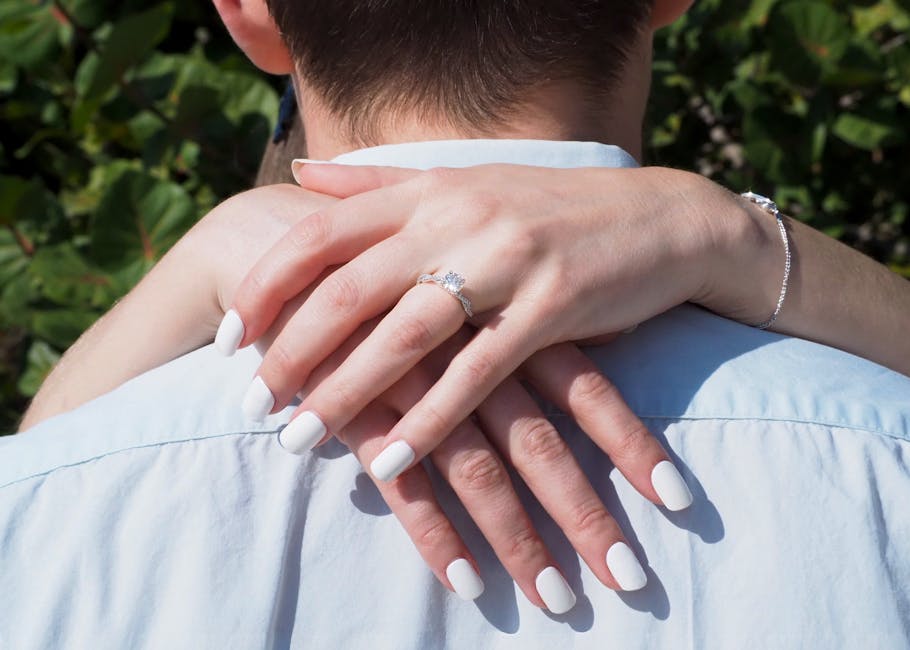
The solitaire is the most popular engagement ring setting in the world, and has been for over a century. It features a single stone mounted on a plain metal band, with nothing competing for attention.
How it works: The center stone is held by prongs (typically 4 or 6) that rise from the band. The minimalist design directs all focus to the stone.
Best for: Round brilliant, oval, cushion, and princess cut stones. Basically any shape that looks good on its own without embellishment.
Pros: Classic and timeless. Maximizes light entry to the stone. Easy to clean and maintain. Typically the most affordable setting style. Pairs well with any wedding band.
Cons: Can look plain if you prefer more visual interest. Prongs can catch on fabric. Lower prong count (4-prong) is less secure than 6-prong for active lifestyles.
Price impact: Low to moderate. A basic 14k gold solitaire setting typically runs $300–$800 without the center stone.
Halo Setting
A halo setting surrounds the center stone with a ring of smaller diamonds or gemstones, creating the illusion of a larger center stone and adding significant sparkle.
How it works: Small stones (typically 0.5–1.5mm each) are set closely around the perimeter of the center stone, either in a single row or double row.
Best for: Any center stone shape. Particularly effective for making smaller stones appear larger — a 0.5-carat center stone in a halo can visually mimic a 0.75–1.0 carat stone.
Pros: Dramatically enhances the appearance of the center stone. Extra sparkle from multiple angles. Can be customized with different halo shapes (cushion halo for round stone, round halo for cushion stone, etc.). Good value — you get more visual impact per dollar.
Cons: More difficult to clean between the small stones. Small halo stones can loosen or fall out over time. Can look dated more quickly than a solitaire. Makes future ring resizing more complicated.
Price impact: Moderate to high. The additional melee diamonds add $400–$1,500+ depending on the halo design and stone quality.
Pavé Setting
Pavé (pronounced "pah-vay," from the French word for "paved") features small diamonds set closely together along the band, creating a surface that appears to be paved with stones.
How it works: Tiny diamonds are set into small drilled holes in the metal, secured by tiny beads of metal pushed over each stone. The result is a continuous sparkle with minimal visible metal.
Best for: Used as a band enhancement alongside any center stone setting. Often combined with a solitaire or halo for a more elaborate look.
Pros: Continuous sparkle from every angle. Elegant and sophisticated appearance. Makes the entire ring feel luxurious, not just the center stone.
Cons: The most difficult setting style to clean thoroughly. Individual pavé stones can fall out, especially with daily wear. Repairing lost pavé stones is routine but adds maintenance cost. Not ideal for very active hands.
Price impact: Moderate. Pavé adds $300–$1,000 to the band depending on how much of the band is covered.
Bezel Setting
A bezel setting encircles the center stone with a thin rim of metal, holding it in place like a frame. It's one of the oldest and most secure setting styles in existence.
How it works: A collar of metal is shaped around the girdle (widest edge) of the stone and pressed or soldered into place. Can be full bezel (surrounding the entire stone) or partial bezel (split to allow more light entry).
Best for: Round, oval, and cabochon-cut stones. Excellent for softer stones (morganite, opal, turquoise) that need extra protection. Popular in men's rings and active-lifestyle designs.
Pros: The most secure setting available — the stone is fully protected. No prongs to catch or bend. Low maintenance. Modern and clean aesthetic. Protects the girdle of the stone from chipping.
Cons: Reduces light entry to the stone, which can make diamonds appear slightly less brilliant. Makes the stone look smaller (the metal edge adds visual width). More difficult to resize. Not ideal if maximum brilliance is the priority.
Price impact: Moderate. Bezel settings require more metal labor and precise fitting, typically $400–$1,000 for the setting alone.
Channel Setting
Channel setting features stones set into a groove (channel) cut into the metal band, with no metal separating individual stones. They sit flush with the band surface.
How it works: A channel is cut into the band, stones are placed inside, and the metal walls of the channel are hammered down over the edges of the stones to secure them.
Best for: Accent stones on the band. Commonly used for wedding bands and anniversary bands, but also appears on engagement rings as side stone accents.
Pros: Very secure — stones are protected by metal walls on both sides. Smooth surface with nothing to catch on fabric. Excellent for active lifestyles. Classic and elegant appearance.
Cons: Limited light entry means accent stones don't sparkle as much as prong-set stones. Difficult to replace individual stones if one is damaged. Cannot accommodate stones of varying sizes in the same channel.
Price impact: Moderate. Channel-set accent stones add $200–$800 depending on the number and quality of stones.
Cluster Setting
A cluster setting groups multiple smaller stones together to create the appearance of one larger stone. It's a budget-friendly way to achieve visual impact.
How it works: Several stones (typically 5–9) are arranged closely together, often with a larger center stone surrounded by smaller ones, all held by shared prongs or a single bezel.
Best for: Creating the look of a larger stone at a lower price. Works well with round, marquise, and pear-shaped stone arrangements. Popular in vintage-inspired designs.
Pros: Significantly lower cost than a single large stone of equivalent visual size. Can create unique patterns and flower-like designs. Vintage and romantic aesthetic.
Cons: Cleaning between closely set stones is challenging. Multiple stones mean multiple potential failure points. Can look busy or cluttered if not designed well. Less timeless than a solitaire.
Price impact: Low to moderate. A cluster of smaller stones is typically much cheaper than a single large equivalent stone.
Three-Stone Setting
Also known as a trilogy setting, this design features a center stone flanked by two smaller stones on either side. The three stones are traditionally said to represent the past, present, and future of a relationship.
How it works: Three stones are set in a row on the band, with the center stone being the largest. The side stones are typically 40–60% of the center stone's carat weight.
Best for: Round brilliant, oval, and emerald cut center stones. Side stones can match the center stone or contrast (e.g., sapphire side stones with a diamond center).
Pros: High visual impact — three stones create more total surface area of sparkle than a single stone. Symbolic meaning. Side stones can add color or personal significance. Balanced and symmetrical appearance.
Cons: Sits higher on the finger, which some find uncomfortable. The three-stone arrangement is wider, which may not suit narrow fingers. More expensive than a single stone due to additional stones.
Price impact: High. Two additional stones plus the setting work adds $800–$3,000+ depending on stone quality.
Tension Setting
Tension settings hold the center stone in place through pressure — the metal band is spring-loaded to grip the stone at two points, creating the illusion that the stone is floating.
How it works: The band is crafted with a small gap, and the metal is precisely calibrated to exert enough pressure to hold the stone securely. The stone appears suspended with nothing visible holding it.
Best for: Hard stones only (diamond, sapphire, ruby — Mohs 9+). The pressure requires a very hard stone with a precise cut. Round brilliant is the most common choice.
Pros: Stunning, modern aesthetic — the stone appears to float. Maximum light entry from all angles. Unique and conversation-starting design. Very secure when properly executed.
Cons: Limited to very hard stones only. Extremely difficult to resize (the tension calibration is specific to the ring size). Cannot be retipped or adjusted — if the tension loosens, the entire setting may need replacement. Higher risk if the ring is subjected to impact.
Price impact: High. The precision engineering required makes tension settings expensive, typically $600–$2,000+ for the setting alone.
Cathedral Setting
A cathedral setting features arches of metal that rise from the band to hold the center stone, resembling the arched architecture of a cathedral. The stone sits elevated above the band.
How it works: Two arches rise from the sides of the band, meeting at the center where the stone is mounted in prongs or a bezel. The arches create a graceful, elevated profile.
Best for: Any stone shape. Particularly flattering for round and oval cuts. Works well as a base for adding additional accent details.
Pros: Elegant and romantic profile. The elevation allows light to enter the stone from more angles. The arches can be embellished with engraving, filigree, or small accent stones. Classic yet distinctive.
Cons: The elevated profile can snag more easily. Not ideal for active lifestyles. Can feel top-heavy if the center stone is large. Difficult to pair with some wedding band styles due to the high profile.
Price impact: Moderate to high. The additional metalwork and architectural detail adds $400–$1,200 to the setting cost.
Bar Setting
A bar setting uses thin bars of metal to separate and secure individual stones set in a line. It's similar to channel setting but with visible metal bars between each stone.
How it works: Stones are placed in individual seats, and thin vertical bars of metal are positioned between each stone, holding them securely in place.
Best for: Accent stones and side stones. Commonly used on wedding bands and as enhancers on engagement ring bands. Works with round, princess, and baguette cuts.
Pros: Each stone is individually secured, making replacement easier than channel settings. The metal bars add a structured, geometric look. More light reaches each stone compared to channel settings. Contemporary and clean aesthetic.
Cons: The bars can accumulate dirt over time. Less smooth surface than channel setting. Not as secure as bezel or channel for very active wearers. Can look masculine depending on the bar thickness.
Price impact: Moderate. Bar-set accents add $200–$600 depending on the number and quality of stones.
How to Choose the Right Setting
With 10 major styles to consider, the decision comes down to three factors:
Lifestyle: If you work with your hands, hike, or exercise frequently, prioritize secure settings like bezel or channel. Avoid high-profile settings like cathedral or tension if you're rough on jewelry.
Stone shape: While most settings accommodate most shapes, some pairings work better than others. Emerald cuts look best in bezel or three-stone settings. Round brilliants shine in solitaires and halos. Pear and marquise cuts benefit from the framing of a halo.
Budget: If budget is tight, a well-chosen solitaire or cluster setting gives you the most visual impact for your money. Halo settings offer excellent perceived value by making smaller center stones look larger.
The best setting is the one that fits your daily life, showcases your stone, and makes you want to look at your hand every time you reach for your coffee. Take your time, try on different styles, and trust your eye.
Comments