Morganite: Meaning, Uses and Value
June 3, 2026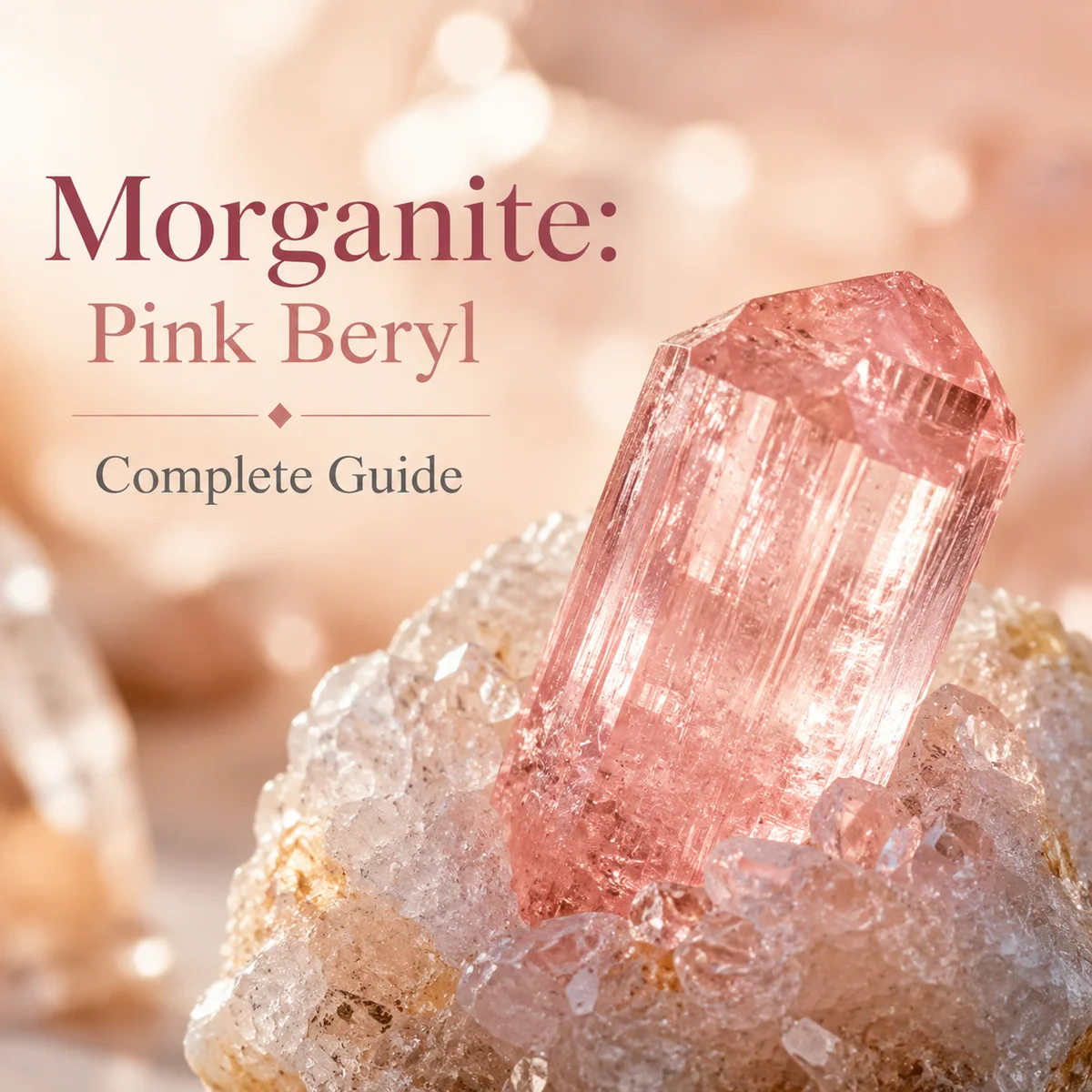
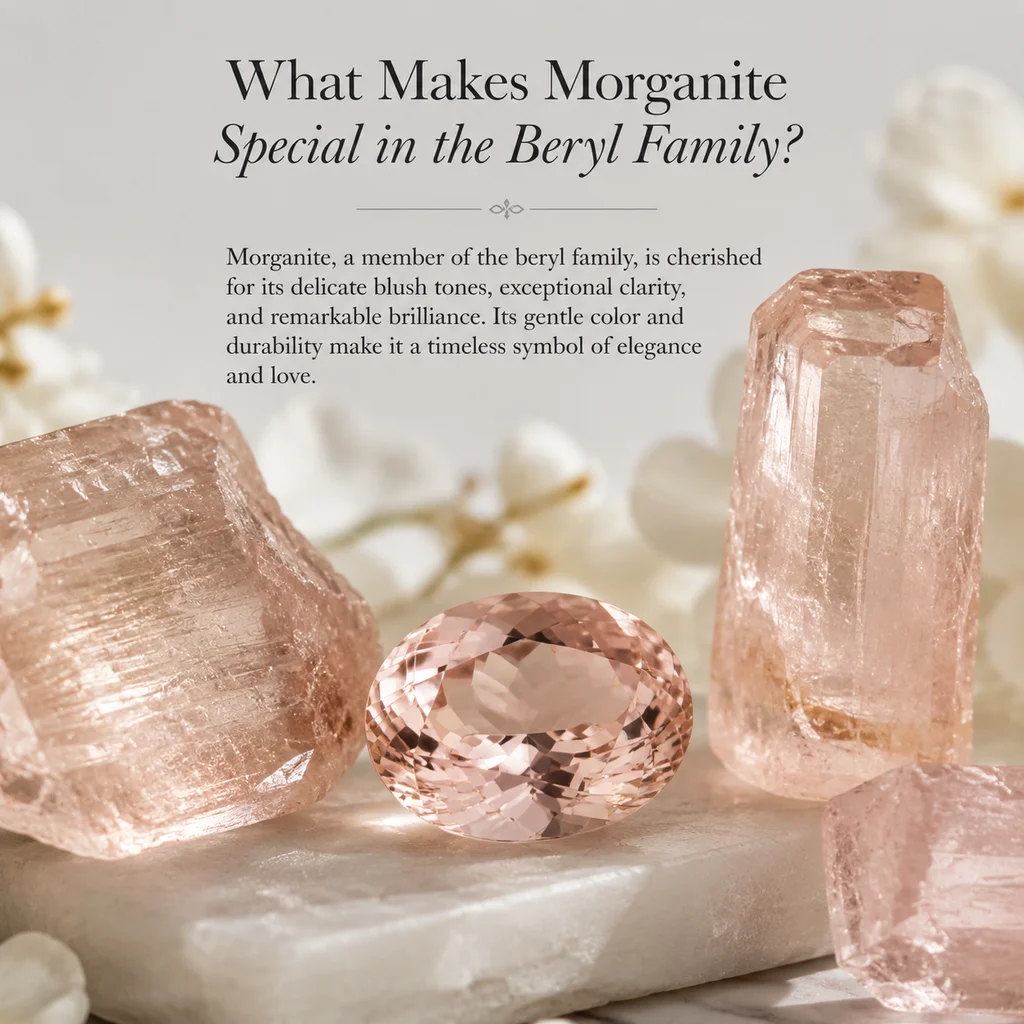
What Makes Morganite Special in the Beryl Family
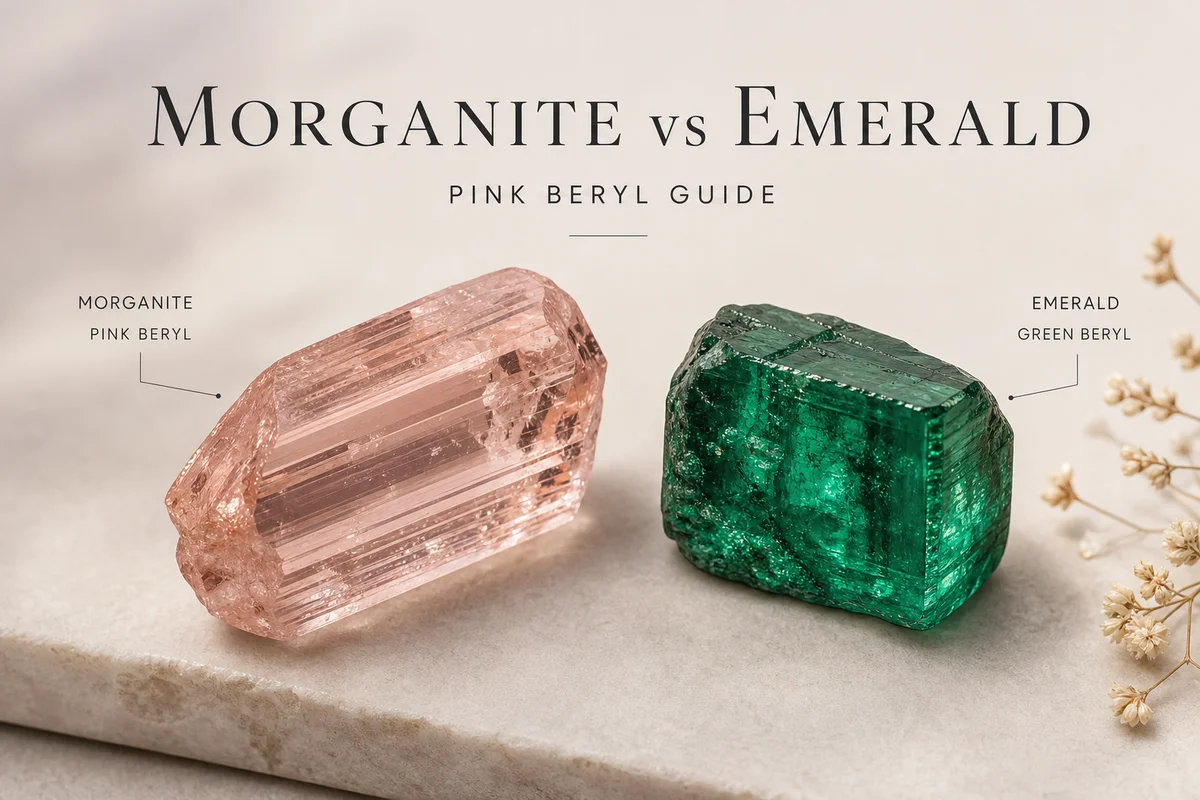
Morganite is the pink to peach-pink variety of beryl, the same mineral family that produces emerald (green), aquamarine (blue), heliodor (yellow), and the rare red beryl (bixbite). Its chemical formula is Be₃Al₂Si₆O₁₈—identical to all other beryls—and the pink color comes from trace amounts of manganese (Mn²⁺) substituting for aluminum in the crystal lattice. The amount of manganese, along with minor amounts of cesium and other alkali metals, determines whether a morganite leans pale pink, vivid salmon, or soft peach.
Morganite was first identified as a distinct variety in 1910 and named after J.P. Morgan, the American financier and gem collector, by George Kunz of Tiffany and Company. Kunz was one of the most influential gemologists of his era, and his decision to name this new pink beryl after Morgan helped establish the stone's reputation in the luxury jewelry market from the very beginning.
How Morganite Gets Its Color
The pink-to-peach coloration in morganite is caused by Mn²⁺ ions replacing Al³⁺ ions in the crystal lattice. The specific shade depends on the concentration of manganese and the presence of other trace elements. Cesium, an alkali metal found in pegmatitic beryl deposits, often accompanies morganite and can influence the color toward a warm peach tone.
An important detail that distinguishes morganite from many other colored gemstones: the color is stable. Unlike kunzite (spodumene), which can fade significantly with prolonged sun exposure, morganite's manganese-based coloration is resistant to light-induced fading. This makes it practical for daily-wear jewelry that will be exposed to normal indoor and outdoor lighting.
Heat Treatment in Morganite
Heat treatment is common in the morganite market, and it is worth understanding before you buy. Many morganites on the market—particularly those with orangey or brownish tones—are heated to around 400°C (750°F) to remove the yellow/brown component and shift the color toward a cleaner pink. This treatment is permanent, undetectable with standard gemological equipment, and widely accepted in the trade.
The reason so many morganites are heated is that the majority of rough material from major deposits (Brazil, Madagascar, Mozambique) comes out of the ground with a somewhat muddy or brownish-pink color that is less commercially desirable. Heating simply "unmuddies" the color by driving off trace amounts of iron or titanium that contribute the unwanted warm tones.
Untreated, naturally vivid pink morganite does exist and commands a premium, but it is relatively rare. Most of the "peach morganite" on the market is either untreated material with its natural warm tone or heated material where the treatment was less aggressive, preserving more of the peach component.
Hardness and Durability for Daily Wear
Morganite rates 7.5 to 8 on the Mohs hardness scale—the same as aquamarine and slightly below emerald (7.5-8, but typically more inclusion-prone and thus more fragile in practice). This hardness level means morganite is suitable for all jewelry types including rings, provided the wearer is aware of its limitations relative to corundum (ruby/sapphire, 9) and diamond (10).
In practical terms, a morganite ring will resist scratching from most everyday materials (glass, steel, other common metals) and maintain its polish over years of normal wear. It will eventually show fine scratches if worn daily alongside harder stones or subjected to abrasive environments, but this is true of virtually all gemstones except diamond and corundum. A bezel setting provides additional protection for ring use.
The Rose Gold Connection
Morganite and rose gold have become one of the most popular gemstone-metal pairings in contemporary jewelry, particularly for engagement rings. The warm peach-pink tones of morganite complement the copper-pink of 14K or 18K rose gold (which is yellow gold alloyed with copper and sometimes silver) so naturally that the combination has become nearly synonymous with the stone itself.
This pairing is not just marketing—it is genuinely effective from a color theory perspective. The slight warmth of rose gold mirrors the peach component in most morganite, creating a harmonious monochromatic scheme that is difficult to achieve with cool-toned metals like white gold or platinum. White gold or silver settings can work beautifully with morganite too, but they create a cooler, more contrasting look that highlights the pink tones rather than blending with them.
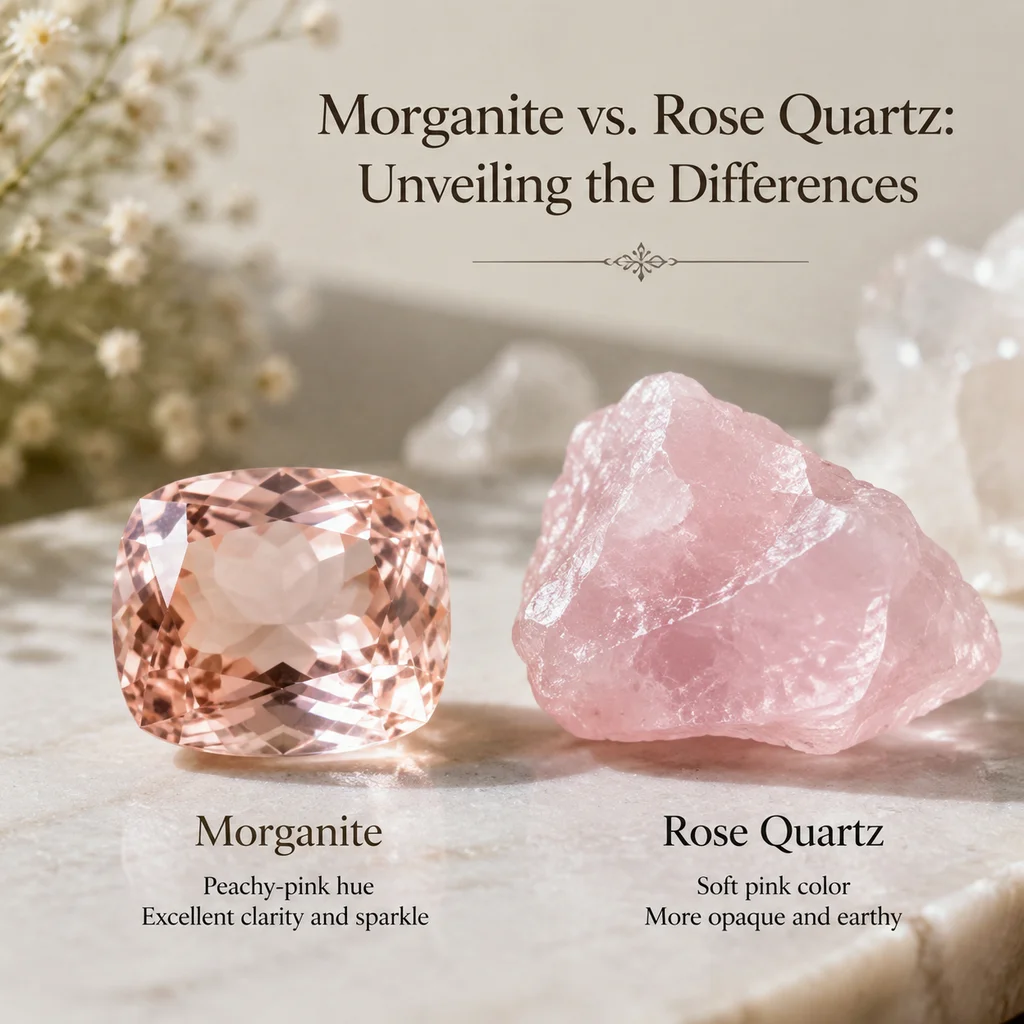
Morganite vs. Rose Quartz: How to Tell Them Apart
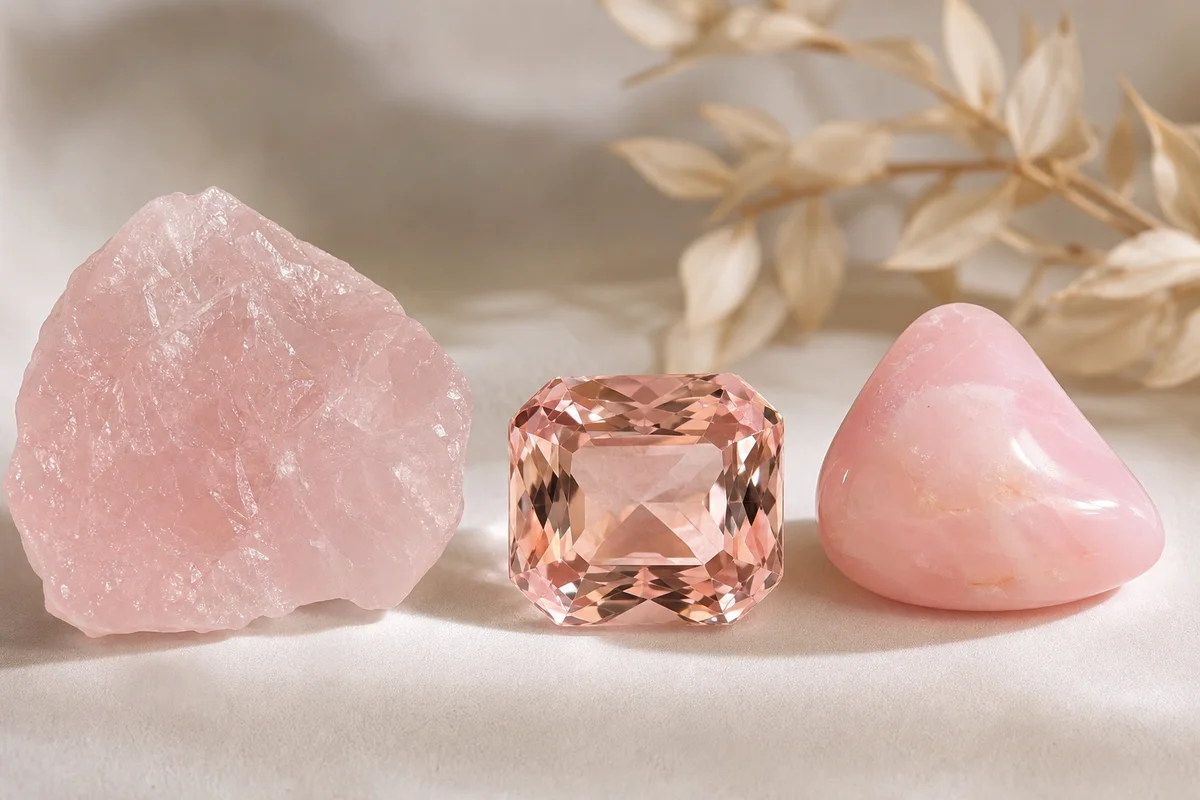
This is one of the most common questions from people new to pink gemstones, because both can appear as soft pink stones in jewelry. The differences, however, are significant:
- Hardness: Morganite is 7.5-8 on the Mohs scale. Rose quartz is 7. Both are reasonably durable, but morganite has a slight edge for ring use because it is less likely to chip at edges.
- Clarity: Morganite is typically eye-clean (no visible inclusions) to lightly included. Rose quartz almost always contains microscopic rutile needle inclusions that create a hazy, translucent quality. Most rose quartz you see in jewelry is translucent rather than transparent.
- Color: Morganite ranges from pale pink to salmon to peach. Rose quartz is typically a soft, even pink without the peach component. Very fine, transparent rose quartz (sometimes called "pink quartz" or "star rose quartz") exists but is rare.
- Price: Morganite is significantly more expensive than rose quartz. A good quality 5mm round morganite might cost $30-80, while a comparable rose quartz bead might cost $2-5. Larger morganite stones for engagement-style rings run $200-2,000 depending on color and size.
- Crystal structure: Both are hexagonal, but they are completely different minerals. Morganite is beryl (Be₃Al₂Si₆O₁₈). Rose quartz is a colored variety of macrocrystalline quartz (SiO₂).
Where Morganite Is Found
The most important morganite deposits are in Brazil (particularly Minas Gerais state), Madagascar, Mozambique, Namibia, and the United States (California and Maine, though these produce primarily specimen-grade material rather than gem quality). Brazil historically produced the finest material, but Madagascar has become a major source since the 1990s, yielding stones with a distinctive peach-pink color that is highly sought after.
Pegmatite deposits are the primary geological source of gem-quality morganite. Pegmatites are coarse-grained igneous rocks that form during the final stages of magma crystallization, when water-rich residual fluids concentrate rare elements like beryllium, cesium, and lithium. These conditions create large, well-formed crystal cavities that produce gem-quality beryl in marketable sizes.
Price Guide: What to Expect
Morganite pricing is more accessible than many people assume, especially for the sizes commonly used in fashion jewelry. A general price guide:
- Small melee (2-4mm): $5-20 per stone
- Medium calibrated (5-7mm, ~0.5-1.5 carats): $30-150 per stone
- Large stones (8mm+, 2-5 carats): $200-2,000 per stone, depending on color intensity
- Exceptional specimens (vivid pink, 5+ carats): Can exceed $5,000 per carat at auction
The most valuable morganite displays a saturated, clean pink without excessive brown or orange modifiers. Very pale material is common and affordable but less visually impactful. The sweet spot for most buyers is a medium-saturated peach-pink stone in the 1-3 carat range for a pendant or 1-2 carats for a ring center stone.
Care and Maintenance
Clean morganite with warm soapy water and a soft brush. Ultrasonic cleaners are generally safe for clean stones, but avoid them if your morganite has visible inclusions or fractures. Steam cleaning should be avoided as well—the heat can potentially cause thermal shock. Store morganite separately from harder stones to prevent surface scratches. Avoid prolonged exposure to harsh chemicals, including chlorine in swimming pools, which can damage the surface over time.
Frequently Asked Questions
Is morganite too soft for an engagement ring?
It depends on your lifestyle. At 7.5-8 hardness, morganite can handle daily wear for years, but it is not as scratch-resistant as sapphire (9) or diamond (10). If you work with your hands frequently or are rough on jewelry, consider a protective setting (bezel or halo) or choose sapphire instead. For office workers or those who are careful with their jewelry, morganite is a beautiful and practical choice.
Does morganite fade in sunlight?
Unlike kunzite and some other pink gemstones, morganite's manganese-based color is generally stable and resistant to fading from normal light exposure. You do not need to worry about storing it in the dark. Prolonged exposure to intense heat (such as leaving it in a hot car on a summer day) is not recommended for any gemstone, but normal sunlight and indoor lighting will not affect morganite's color.
Can I tell if my morganite has been heat-treated?
Standard gemological testing cannot detect the low-temperature heat treatment typically used on morganite. If buying from a reputable dealer, ask for a treatment disclosure—but be aware that untreated, vivid pink morganite is rare enough that most stones on the market have likely been heated. This is normal and accepted.
Expert Tips, Lesser-Known Facts, and Practical Advice for Your Morganite Collection
As someone who has a soft spot for Morganite, I've learned quite a few tips, tricks, and fascinating facts over the years. Here's what I've gathered from the gemstone gurus and my own adventures in the crystal jewelry world.Expert Tips
Let's dive right into some practical advice to ensure your Morganite pieces shine like they're straight out of the box!
- Carefully Handle Your Stones: Morganite is relatively soft compared to some gemstones, with a hardness of 7.5-8 on the Mohs scale. Treat them gently and avoid dropping or scraping them to preserve their sparkle and finish.
- Regular Cleaning: Dust can settle quickly, and your jewelry is more prone to scratching when it's not clean. A soft cloth with mild soap and water will usually do the trick, but remember not to submerge it.
- Avoid Harsh Chemicals: Just like most gems, Morganite is sensitive to chemicals found in lotions, perfumes, and cleaning products. Keep it dry until you've put on your makeup or perfumed your body for the day.
- Professional Cleanings: If you've accumulated a significant amount of grime, it's a good idea to have it professionally cleaned at your jeweler’s every once in a while.
- Store Safely: Use a jewelry box or pouch to store your Morganite pieces separately. They're prone to scratches and can chip, so avoiding direct contact with other metals or gemstones is a must.
Lesser-Known Facts
Morganite might not be the most widely known gemstone, but there are quite a few interesting things you might not know about it.
- Name Origin: Did you know that Morganite is named after its discoverer, a rich financier and gem collector, Percy Wyndham Beryl? Beryl was actually looking for emeralds in a pegmatite vein, but he struck gold with this stunning pink gem instead!
- Color Variations: The pink of Morganite ranges from pale pink to deep peach, with many stones falling into a vibrant and lustrous range in between. Its unique hue has captivated jewelers and consumers alike for generations.
- Not Just Pink: Though commonly referred to as a pink beryl, Morganite actually exists in various colors, with purple being a very sought-after variation known as 'Benessite'. The purple color occurs in morganite because it has manganese present during the stone’s formation.
- Environmental Contribution: If you’re into sustainability, it’s good to know that many of the world's finest Morganites come from Madagascar, which is home to the Fossilière, the most reputable deposit. They’ve set a benchmark for sustainable gemstone mining practices.
Practical Advice for Your Style
Morganite can easily complement many fashion styles and seasons. Here’s how you can work it into your look.
- Elegant Everyday Wear: Morganite earrings are the perfect touch to any everyday look, offering a soft yet bold color statement without overwhelming a neutral palette.
- Sophisticated Occasions: For evening wear, Morganite makes for a statement necklace or a pair of rings. Pair it with classic black or silver for an elegant yet contemporary touch.
- Sprucing Up a Workout: Surprisingly, Morganite can even make for a good gym look! Stackable bangles are lightweight, colorful, and a great way to add a pop of color to your fitness outfit.
- The Right Accessories: For those who want to go the whole hog, consider incorporating rose gold into your jewelry box. The combination of the stone’s natural color with the warmth of rose gold is absolutely captivating and very “in” at the moment.
Frequently Asked Questions
Question:
What is Morganite?
Morganite is a variety of beryl, a mineral known for its transparency and variety of colors. It is characterized by its pink to peach hues, often with a glassy luster. Discovered in 1911, it is named after the American mining magnate and gem collector, Percival P. Morgan. Morganite is formed in hydrothermal veins and is often found in association with other gemstones like emerald and aquamarine.Question:
Where is Morganite found?
Morganite is primarily found in Africa, particularly in Madagascar and Tanzania. It is also found in Brazil, the United States, and other parts of the world. The deposits in Madagascar are especially renowned for producing the highest quality and largest sizes of Morganite.Question:
How is Morganite valued?
The value of Morganite is influenced by several factors, including its color, clarity, size, and origin. The most sought-after color is a pure pink with good transparency and no visible inclusions. Larger sizes and stones with fewer inclusions are generally more valuable. Stones with a secondary color of peach or orange can also be highly prized.Question:
How does Morganite compare to other pink gemstones?
Morganite is often compared to pink sapphire and pink tourmaline. While pink sapphire is generally more expensive, Morganite is more affordable and has a unique, soft pink hue that is often described as more delicate and feminine. Pink tourmaline, on the other hand, has a more vivid and electric pink color, and it can sometimes exhibit a color change under different lighting conditions.Question:
Can Morganite be used in jewelry?
Absolutely, Morganite is a popular choice for jewelry due to its attractive color and durability. It can be used in various types of jewelry, including rings, necklaces, earrings, and bracelets. Its hardness of 7.5 to 8 on the Mohs scale makes it suitable for everyday wear, although it is best to avoid exposing it to harsh chemicals or extreme temperatures.Question:
How should Morganite be cared for?
To care for Morganite, it is recommended to clean it with warm water and a soft cloth or a mild soap. Avoid using harsh chemicals or abrasive cleaners, as these can damage the stone's surface. Store your Morganite jewelry in a protective case or soft pouch to prevent scratches and exposure to dust and other particles. Regular cleaning and proper storage will help maintain the luster and beauty of your Morganite jewelry for years to come.Frequently Asked Questions
What are the spiritual healing properties of morganite?
Morganite is revered in the crystal community for its gentle, compassionate energy. Often called the "Stone of Divine Love," it is believed to attract and maintain love while clearing away emotional baggage. Wearing handcrafted morganite jewelry helps open the heart chakra, promoting deep inner peace, joy, and emotional healing. It is the perfect artisan talisman for inviting more unconditional love and forgiveness into your daily life.
How can I tell if my morganite jewelry is real?
Authentic morganite has a distinct vitreous luster and exceptional clarity, setting it apart from glass imitations. Because it is a form of beryl, genuine morganite will sometimes show subtle natural inclusions. Real morganite is also highly durable and resists scratching from everyday objects. When you shop with SagStone, you are guaranteed authentic, high-quality natural crystals beautifully set in our handcrafted artisan designs for complete peace of mind.
Comments