Lapis Lazuli Mala Beads: Wisdom & Third Eye M...
June 5, 2026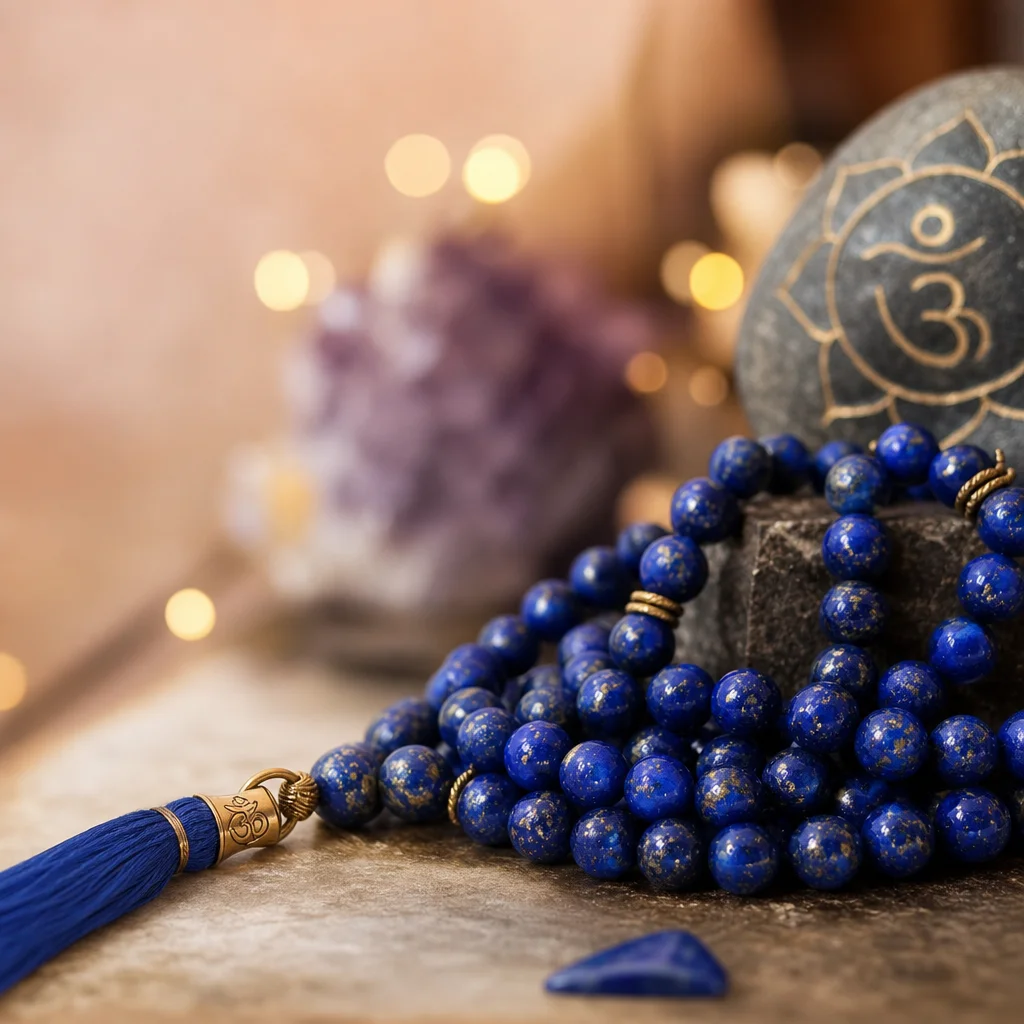
Ancient Roots of Lapis Lazuli in Spiritual Practice
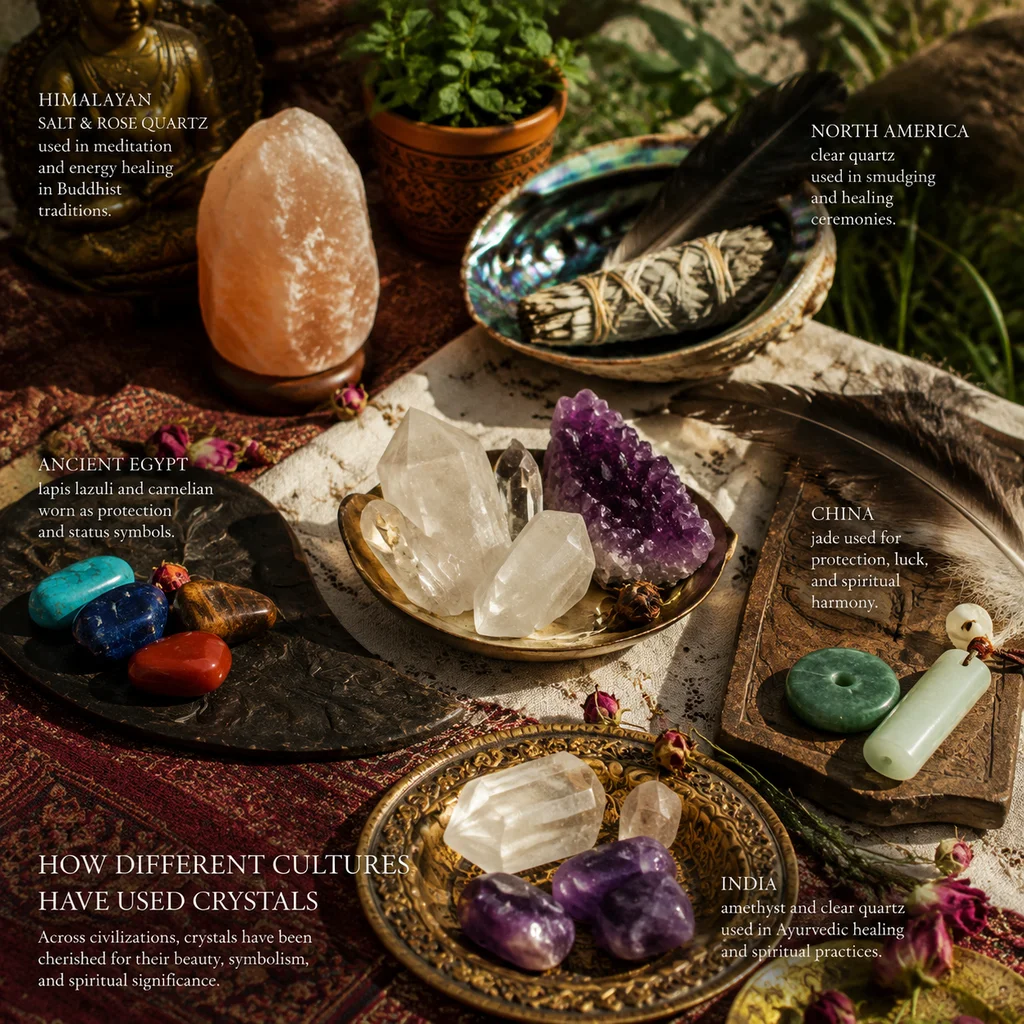
Lapis lazuli holds a unique position in the history of spiritual and meditation objects. It is one of the few gemstones that has been continuously valued for both its beauty and its perceived spiritual properties for over 6,000 years. The ancient Sumerians called it the "stone of rulers" and believed it held the essence of the gods. Egyptian pharaohs wore lapis lazuli amulets, and the stone was ground into pigment for the most sacred artworks — including the funeral mask of Tutankhamun, whose eye makeup was literally lapis lazuli.
Beyond decorative use, lapis lazuli was actively used in spiritual contexts. Sumerian and Babylonian priests carried lapis cylinders inscribed with prayers. Buddhist traditions, which originated centuries later, adopted lapis lazuli as a material for prayer beads and ritual objects, partly because its deep blue color was associated with the limitless sky and the expansiveness of awakened consciousness.
In the Tibetan Buddhist tradition, lapis lazuli is one of the sacred materials associated with the Medicine Buddha (Bhaiṣajyaguru), whose body is traditionally described as being the deep blue color of lapis lazuli. This association links the stone to healing — both physical and spiritual — and to the deep wisdom that comes from seeing beyond surface appearances. This historical context gives lapis lazuli malas a spiritual lineage that few other gemstone malas can match.
Third Eye Chakra and Lapis Lazuli
In the chakra system, lapis lazuli is primarily associated with the third eye chakra (ajna), the energy center located between and slightly above the eyebrows. The third eye is linked to intuition, inner wisdom, clear perception, and the ability to see beyond the obvious — qualities that align naturally with deep meditation practice and with the historical associations of lapis lazuli as a stone of wisdom.
The deep blue color of lapis lazuli — especially when shot through with golden flecks of pyrite — creates a visual that has been compared to a starfield or a night sky filled with possibility. This imagery is not accidental; many practitioners report that gazing at lapis lazuli during meditation naturally draws attention inward and upward toward the third eye region. The stone serves as both a physical anchor for meditation and a visual focal point that supports the practice of inner seeing.
While rose quartz malas are primarily associated with the heart chakra and amethyst malas with the crown, lapis lazuli occupies the third eye position in the chakra mala system. Practitioners who want to develop their intuitive abilities, deepen their meditation practice, or work on perceiving patterns and truths that are not immediately obvious often choose lapis lazuli for this reason.
How to Identify Genuine Lapis Lazuli Mala Beads
The market for lapis lazuli malas includes a significant number of imitations, and being able to distinguish genuine lapis lazuli from substitutes is important both for value and for the quality of your meditation practice.
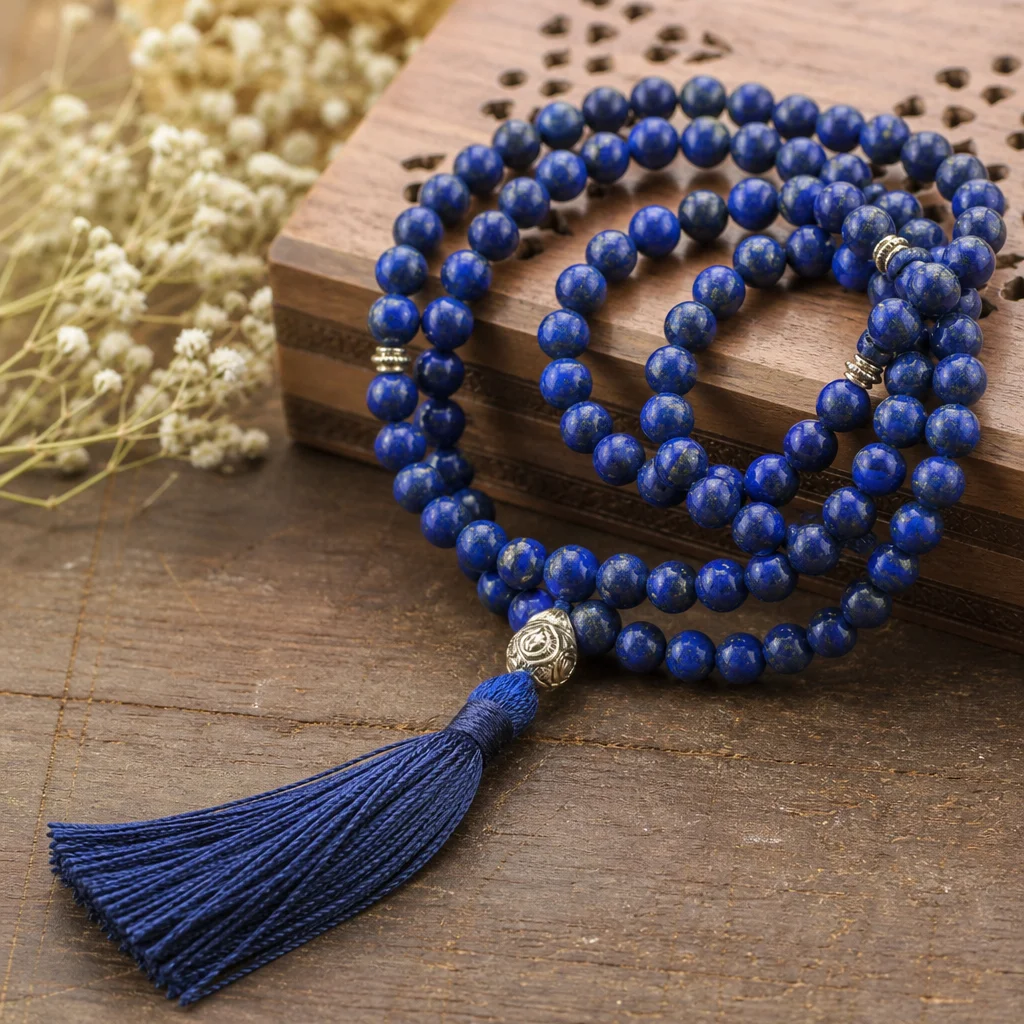
Genuine lapis lazuli characteristics: Deep blue color (ranging from intense royal blue to a slightly greenish navy), often with visible inclusions of golden pyrite (metallic flecks) and white calcite (cloudy patches). The combination of blue, gold, and white is a hallmark of natural lapis lazuli. The stone should feel cool and dense in the hand (specific gravity around 2.7-2.9), noticeably heavier than plastic imitations.
Howlite dyed blue: This is the most common imitation. Howlite is a naturally white stone with distinctive gray veining. When dyed blue, it resembles lapis lazuli at a glance. The telltale sign: the gray veining pattern remains visible through the dye, and the color is often unnaturally uniform. Under magnification, the dye tends to concentrate in the porous veining areas, creating darker streaks that look different from the even color distribution of genuine lapis lazuli.
Glass and synthetic materials: These lack the characteristic pyrite inclusions entirely — a genuine lapis lazuli mala almost always has at least some visible pyrite flecks. Glass imitations may also have tiny air bubbles visible under magnification, which natural stone never has. The weight difference is significant: glass feels lighter and more uniform than natural lapis lazuli.
Sodalite: This is a genuine natural stone that resembles lapis lazuli but lacks pyrite. Sodalite is uniformly blue with white veining but no metallic flecks. It is a legitimate stone with its own properties, and some mala makers use it intentionally — but if you are paying for lapis lazuli, sodalite is a cheaper substitute. Check for the golden flecks: no pyrite means it is either very low-grade lapis (rarely completely pyrite-free) or sodalite.
Choosing the Right Lapis Lazuli Mala
Quality lapis lazuli malas share several characteristics. The beads should have a rich, deep blue color — not washed out, not too dark (almost black), and not obviously dyed. The presence of pyrite flecks is desirable; they add visual interest and are a reliable indicator of authenticity. Small amounts of white calcite are acceptable and even expected in natural lapis, but large white patches that dominate the blue suggest lower-grade material.
Bead size follows the same conventions as other malas: 6mm for a lighter, more delicate piece; 8mm for the standard size that works for both meditation and wearing; 10mm for a chunkier, more substantial mala. Given lapis lazuli's density, 8mm beads produce a mala with noticeable weight compared to a wood or seed mala of the same size — some practitioners appreciate this heft as it provides a more grounded, present feeling during meditation.
Stringing quality is especially important for lapis lazuli malas. The stone is relatively soft (Mohs hardness 5-6) compared to quartz (7), and the beads are denser than many other gemstone beads. The cord needs to handle both the weight and any lateral stress from daily handling. Silk cord is traditional and allows the mala to drape beautifully, but it stretches over time. Waxed nylon or braided polyester cord offers better durability for daily-use malas. As with all malas, knotting between beads is essential — if a lapis lazuli mala breaks during meditation, the beads are dense enough to scatter quickly and could chip on hard floors.
Third Eye Meditation Practice with Lapis Lazuli Mala
The primary meditation practice associated with lapis lazuli malas is third eye (ajna chakra) meditation. Here is a structured approach:
Begin in a seated position with your spine straight and your eyes closed. Hold the mala in your right hand, draped over your middle finger, thumb resting on the first bead after the guru bead. Take five slow breaths, directing your attention to the point between your eyebrows — the physical location associated with the third eye chakra.
Choose a mantra or affirmation related to wisdom, intuition, or inner clarity. Traditional choices include "Om" (the primordial sound), "Om Mani Padme Hum" (the six-syllable mantra of compassion and wisdom), or personal affirmations like "I trust my inner knowing" or "I see clearly what is true."
As you move each bead with your thumb, recite your chosen mantra. Visualize a deep indigo-blue light at the third eye point, growing slightly brighter or more vivid with each repetition. The color visualization is not arbitrary — indigo is the traditional color associated with the third eye chakra, and lapis lazuli's natural blue provides a physical anchor for this visualization.
Move through all 108 beads at a steady pace — roughly 6-8 seconds per bead, completing the full round in 12-15 minutes. When you reach the guru bead, do not cross over it. Sit quietly for a minute or two, noticing any shifts in your mental clarity, any intuitive impressions, or simply a greater sense of calm. Close the session with three slow breaths.
Caring for Your Lapis Lazuli Mala
Lapis lazuli requires more careful handling than harder gemstones because of its relatively low hardness (5-6) and its porous calcite inclusions. The calcite component can be damaged by acids, including household vinegar and citrus juices. Protect your lapis lazuli mala from chemical exposure — including perfumes, lotions, and cleaning products — by putting the mala on after applying cosmetics and removing it before handling any chemicals.
Avoid prolonged exposure to water. While brief contact with water will not immediately damage lapis lazuli, repeated soaking can degrade the calcite inclusions and weaken the cord. Clean beads with a dry or barely damp soft cloth. If the cord becomes dirty, spot-clean it carefully without wetting the beads.
Store your lapis lazuli mala in a soft cloth pouch, separated from harder stones that could scratch the surface. The pyrite inclusions can tarnish slightly over time in humid environments — this is a natural process and does not affect the spiritual properties of the stone, but some collectors prefer to store lapis in a dry environment to preserve the golden shine of the pyrite flecks.
A lapis lazuli mala that is used daily in meditation will show wear over the years — the beads may develop a smooth, polished patina from repeated handling. This is considered desirable by many practitioners, as it represents the accumulation of practice. Unlike gemstones valued primarily for their pristine appearance, a mala is a functional spiritual tool, and the signs of use are part of its story.
Practical Tips for Using Lapis Lazuli Mala
1. **Setting Intentions**: Before beginning your meditation practice, set an intention for what you wish to achieve, such as clearer perception or enhanced intuition. This can help focus your energy and intention on the meditation.
2. **Creating a Meditation Space**: Choose a quiet, peaceful space for your meditation practice. You can decorate this area with items that also resonate with the color blue, such as blue candles or a blue scarf, to enhance the ambiance.
3. **Regular Practice**: Like any skill, meditation requires regular practice. Try to use your lapis lazuli mala daily or at least several times a week to see the most benefits.
4. **Reflecting on Your Experience**: After each meditation session, take a moment to reflect on what you experienced. This could be a new insight, a feeling of peace, or a sense of clarity.
Usage Scenarios for Lapis Lazuli Mala
1. **Daily Meditation**: Lapis lazuli malas are ideal for daily meditation, especially for those focusing on enhancing their intuitive abilities or seeking inner wisdom.
2. **Mindfulness Sessions**: Use your lapis lazuli mala during mindfulness practices to help focus your attention and anchor your mind in the present moment.
3. **Healing Rituals**: Incorporate your lapis lazuli mala into healing rituals, focusing on the stone's association with the Medicine Buddha and its ties to physical and spiritual healing.
4. **Creative Expression**: Some practitioners use lapis lazuli as a source of inspiration for creative endeavors, such as writing, painting, or music, believing the stone's properties can enhance creativity and perception.
Common Questions About Lapis Lazuli Mala
What is the significance of the golden flecks in lapis lazuli?
The golden flecks in lapis lazuli are actually tiny inclusions of pyrite, a sulfide mineral. These flecks add visual interest and a sense of depth to the stone's rich blue color. While they are not a requirement for a stone to be considered lapis lazuli, they are highly valued and can indicate a higher-quality stone.
Can lapis lazuli malas be used for stress relief?
Yes, lapis lazuli malas can be used for stress relief. Their association with the third eye chakra and the ability to enhance intuition can help bring clarity and calmness to a stressful situation. Meditation with a lapis lazuli mala can also serve as a form of mindfulness that helps reduce stress and promote relaxation.
How long should a meditation session with a lapis lazuli mala be?
The duration of a meditation session can vary depending on the individual and their experience with meditation. However, a typical session with a lapis lazuli mala might last between 10 and 20 minutes. Many practitioners find it helpful to start with shorter sessions and gradually increase the duration as they become more comfortable with the practice.
Can lapis lazuli malas be worn as jewelry?
Yes, lapis lazuli malas can be worn as jewelry. They are not only beautiful but also serve as a daily reminder of the intention and practice behind them. Some practitioners wear their lapis lazuli mala on a necklace or bracelet outside of meditation sessions as a symbol of their commitment to personal growth and spiritual practice.
Opinions on the Importance of Lapis Lazuli Mala in Meditation
From my own experience, I find that using a lapis lazuli mala adds a profound depth to my meditation practice. The combination of the stone's physical properties and its spiritual significance creates a powerful tool for inner exploration. The weight and texture of the beads in my hand help to anchor me in the present moment, while the deep blue color serves as a visual reminder to look beyond the obvious and seek the deeper truths within myself. I believe that incorporating a lapis lazuli mala into one's meditation practice can be a transformative experience, offering not just a spiritual boost but also a heightened sense of self-awareness and clarity.
In my opinion, the historical and cultural significance of lapis lazuli as a stone of wisdom and intuition cannot be overstated. Whether you are new to meditation or a seasoned practitioner, a lapis lazuli mala can serve as a valuable tool on your spiritual journey. It is not just a piece of jewelry; it is a vessel for intention, a guide through the meditation process, and a symbol of the deep wisdom and insight that can be accessed through consistent practice.
Frequently Asked Questions
How do I cleanse and charge my lapis lazuli mala beads?
To cleanse your lapis lazuli mala, place it under moonlight overnight or use smoke from sage or palo santo. Avoid water soaking and prolonged sunlight, as lapis is porous and its deep blue color may fade. To charge your mala, hold it while setting a clear intention, or rest it on a selenite charging plate. Regular cleansing keeps the stone's energy vibrant for meditation and third eye work.


Comments