Lab-grown diamonds vs natural diamonds: the real difference nobody explains honestly
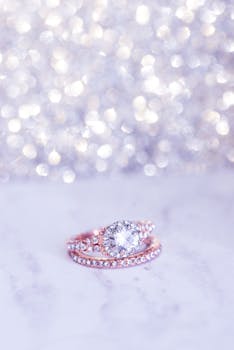
Walk into a jewelry store today and you'll see two display cases that look almost identical. One says "natural diamonds." The other says "lab-grown." Same sparkle, same fire, same physical properties. But the price tags tell a very different story. A 1-carat round brilliant lab-grown diamond might cost $1,500-2,500. The same specs in a natural diamond: $5,000-7,000. So what's actually going on here?
I'm going to skip the marketing from both sides and lay out the real differences. Some of this will surprise you.
The chemistry is identical (and that matters more than people admit)
Both natural and lab-grown diamonds are crystallized carbon. Same atomic structure. Same hardness (10 on the Mohs scale). Same refractive index (2.417). Same thermal conductivity. Same everything at the molecular level. A lab-grown diamond is not a simulant — it's not cubic zirconia, not moissanite, not glass. It is a diamond.
This isn't opinion. It's physics. The carbon atoms in both types are arranged in the same face-centered cubic crystal structure. The properties that make a diamond a diamond — its hardness, its brilliance, its thermal properties — all come from that crystal structure. If the crystal structure is the same, the material is the same.
The diamond industry spent years trying to establish a narrative that "real" means "natural." It didn't work. The Federal Trade Commission updated its jewelry guidelines in 2018 to explicitly state that lab-grown diamonds are real diamonds. The word "real" was never a synonym for "mined from the ground" in any scientific sense.
How lab-grown diamonds are actually made
There are two methods, and understanding them matters because they produce slightly different results.
HPHT (High Pressure High Temperature)
This is the older method, developed in the 1950s (originally for industrial diamond production). It basically recreates the conditions deep in the Earth's mantle: extreme pressure (about 5-6 GPa, roughly 1 million times atmospheric pressure) and extreme temperature (1,300-1,600°C) applied to a carbon source in the presence of a metal catalyst (usually iron, nickel, or cobalt).
A small diamond seed is placed in the growth chamber. Carbon dissolves into the molten metal catalyst and crystallizes onto the seed, layer by layer. The process takes days to weeks depending on the desired size. HPHT diamonds tend to be more likely to have a blue tint (from boron in the growth environment) or, conversely, can be treated to become vivid colors (pink, blue, yellow) that are extremely rare in nature.
CVD (Chemical Vapor Deposition)
CVD works differently and at much lower pressures. A diamond seed is placed in a vacuum chamber. A mixture of methane and hydrogen gas is introduced and ionized into plasma using microwaves. The carbon from the methane deposits onto the seed in thin layers, building up the diamond atom by atom.
CVD operates at pressures around 0.1 atm and temperatures of 800-1,000°C — nowhere near the extremes of HPHT. This method tends to produce diamonds with fewer metallic inclusions (a common HPHT issue) but can have a brownish tint that requires post-growth treatment. CVD is generally better at producing larger, clearer stones at lower cost, which is why it's become the dominant method for gem-quality production.
Most lab-grown diamonds on the market today are CVD-grown. The technology has improved dramatically in the last decade, and prices have dropped fast.
The price situation (and why it's not stable)
Here's where things get genuinely interesting — and where a lot of buyers get confused.
Lab-grown diamond prices have dropped roughly 60-80% over the past five years. In 2020, a 1-carat lab-grown diamond with good specs (VS2 clarity, F color, excellent cut) might have sold for $4,000-5,000. By early 2026, comparable stones are routinely under $1,500. Some online retailers list them for under $1,000.
Why? The production technology keeps improving, more labs are entering the market (China and India are major producers), and there's no real supply constraint. You can always make more. Natural diamonds are finite. Lab-grown diamonds are, for practical purposes, infinite.
This price trajectory is expected to continue. Several market research firms estimate lab-grown diamond prices will fall another 30-50% over the next several years. If you're buying a lab-grown diamond as an "investment," you're making a mistake. The price will almost certainly be lower a year from now, and substantially lower five years from now.
Natural diamond prices are more stable (though not immune to market pressures). A high-quality natural diamond retains a reasonable percentage of its retail value on the secondary market — typically 30-50% of what you paid, depending on the stone and market conditions. It's not an investment in the financial sense, but it's not depreciating to zero either.
Resale value: the uncomfortable truth
This is the single biggest difference between natural and lab-grown diamonds, and it's the one that most articles gloss over.
Natural diamonds have an established secondary market. You can sell a natural diamond to a jeweler, through an auction, or on platforms like Diamond Banc or Worthy. You won't get what you paid (retail markups are substantial), but you'll get something meaningful. A $6,000 natural diamond might resell for $2,000-3,000.
Lab-grown diamonds have almost no secondary market. Most jewelers won't buy them back. The few that do offer pennies on the dollar — often 10-20% of retail price, and sometimes less. The reason is simple: why would anyone buy your used lab-grown diamond for $1,500 when they can buy a brand-new one for $1,200?
This matters. If you're buying a diamond for an engagement ring that you expect to last decades, the resale question might seem irrelevant. But people's circumstances change. Divorce, financial hardship, upgrading — there are plenty of reasons someone might need to sell a diamond. With a natural diamond, you have options. With a lab-grown diamond, you effectively don't.
Can anyone tell the difference?
With the naked eye? No. Not a jeweler, not a gemologist, not your grandmother. They're physically identical.
With professional equipment? Yes, but it requires specific tools. Standard diamond testers (the handheld thermal conductivity probes) can't tell the difference because both types have the same thermal properties. You need a specialized instrument.
The most common tools are spectroscopy devices that detect trace elements or growth patterns. HPHT diamonds often contain metallic flux inclusions (iron, nickel) that show up under magnification. CVD diamonds can have subtle strain patterns or very faint graining visible under UV fluorescence imaging.
Most gemological labs (GIA, IGI, AGS) now offer lab-grown diamond reports. The stones are laser-inscribed on the girdle with "LAB GROWN" or a similar mark, and they come with reports that explicitly state their laboratory origin. This inscription is permanent and microscopic — invisible without magnification but definitive proof of origin.
The detection technology is getting better and cheaper. Within a few years, it'll be standard equipment in most jewelry stores. But for now, an unscrupulous seller could pass off a lab-grown diamond as natural if the buyer doesn't insist on certification. This is a real problem, and it's one of the reasons the industry has pushed for mandatory disclosure.
The ethics argument is more complicated than either side admits
The natural diamond industry has a genuine problem with conflict diamonds (also called "blood diamonds") — diamonds mined in war zones and sold to finance armed conflict. The Kimberley Process, established in 2003, was supposed to solve this. It hasn't, entirely. The definition of "conflict diamond" under the Kimberley Process is narrow (only diamonds financing rebel movements against recognized governments), which means diamonds associated with state-sponsored violence or environmental destruction can still be certified as "conflict-free."
That said, the natural diamond industry has made real improvements. Most major retailers now have traceability programs. Canadian diamonds (from the Northwest Territories) and Australian diamonds (from the Argyle mine, now closed) have strong ethical sourcing credentials. Botswana's diamond industry has funded significant infrastructure and education programs.
Lab-grown diamonds aren't automatically ethical either. The production process is energy-intensive. CVD diamond production requires sustained high temperatures and plasma generation for days or weeks. A 2019 study by the Diamond Producers Association (an industry group, so take it with a grain of salt) estimated that lab-grown diamond production generates about 3 times more CO2 per carat than natural diamond mining. Independent analyses have produced mixed results — some find lab-grown is worse for emissions, others better. It depends heavily on the energy source powering the lab.
Both sides cherry-pick data. The honest answer is that neither option is ethically pure. If ethics matter to you, the specifics of the particular stone's origin (mine or lab, energy source, labor conditions) matter more than the broad "natural vs. lab-grown" label.
What the traditional industry is actually doing
De Beers — the company that spent a century marketing natural diamonds as the only acceptable choice — now sells lab-grown diamonds under its "Lightbox" brand. Their positioning is blunt: lab-grown diamonds are fashion jewelry, not fine jewelry, and they're priced accordingly at about $800 for a 1-carat, which is roughly wholesale cost plus a small margin). It's a clear attempt to segment the market: natural diamonds retain prestige and pricing power, lab-grown diamonds become accessible fashion items.
Other major players have been slower to adapt. Signet (the parent company of Kay, Jared, and Zales) now sells lab-grown diamonds in most of its stores, but the sales staff are still trained to push natural stones first. The traditional industry's strategy is basically to accept that lab-grown exists while trying to maintain a clear value hierarchy.
This strategy has mixed prospects. Younger buyers (under 35) increasingly see no reason to pay 3-5x more for the same physical object. In 2024, lab-grown diamonds accounted for roughly 15-20% of diamond jewelry sales by value in the US market. That share is growing fast.
So which should you buy?
It depends on what you actually care about. If resale value and long-term retention of value matter to you, natural is the only realistic choice. If you want the biggest, best-looking stone for your budget and don't care about resale, lab-grown gives you dramatically more diamond for your money. A $5,000 budget gets you a 1-carat natural diamond with decent specs, or a 2.5-3 carat lab-grown diamond with excellent specs. That's not a small difference.
If environmental impact is your priority, the answer is genuinely murky. Look at the specific source. A lab-grown diamond produced with renewable energy is probably better than a mined diamond from a questionable operation. A lab-grown diamond from a coal-powered facility might be worse than a Canadian diamond with strong environmental oversight.
If tradition and symbolism matter — if the idea of a stone that formed billions of years ago deep in the Earth resonates with you — that's a valid reason to choose natural. It's not rational in the financial sense, but engagement rings aren't rational purchases. They're emotional ones.
My honest take: for most people, lab-grown is the smarter buy if you're buying the diamond to wear it, not to sell it. The savings are too large to ignore, the stone is physically identical, and the "natural diamond premium" is mostly marketing. But if resale matters even a little, or if the romance of natural origin is important to you or your partner, go natural and don't look back. Just don't overpay — negotiate hard, buy from a reputable dealer, and get GIA certification.
Comments