The $50 "Ruby" That Changed Everything
The $50 "Ruby" That Changed Everything
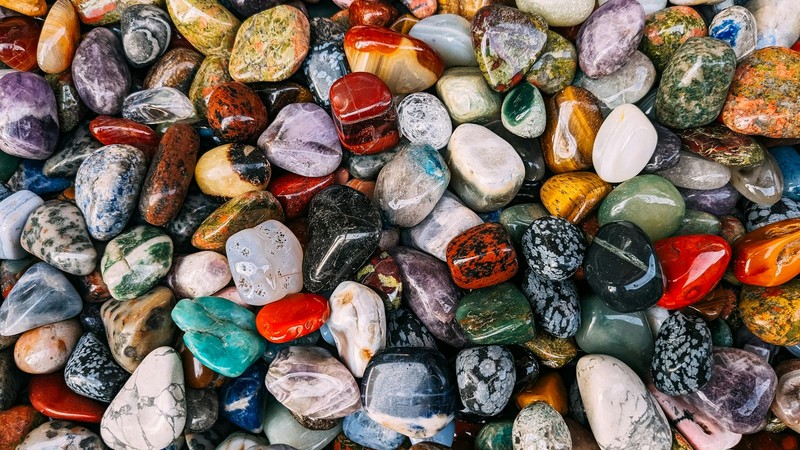
A few years back, I was wandering through a flea market in Berlin when a vendor caught my eye. Spread across a velvet cloth was a stunning collection of loose gemstones — deep reds, vivid blues, rich greens. The vendor picked up a small red stone and told me it was a natural ruby from Burma, originally priced at €300 but he'd let it go for €50 because he needed cash for the train home.
I knew almost nothing about gemstones. But €50 for a Burmese ruby? That seemed like the deal of the century. I handed over the cash, took my little velvet pouch, and spent the entire train ride home imagining the ring I'd set it in.
Three weeks later, I took it to a jeweler to get it appraised. He looked at it under a loupe for about ten seconds, looked at me with this expression that was half amusement and half pity, and said: "This is glass. Very pretty glass, but glass."
That €50 lesson turned into what's now been a years-long obsession with learning how to tell real gemstones from fakes. I'm not a gemologist — I don't have any formal training — but I've picked up enough practical knowledge to avoid getting burned again. And I'm going to share all of it with you.
The Bare-Eye Test: What You Can See Without Any Tools
Before you spend money on magnification or special equipment, start with your own eyes. There are several visual clues that can immediately flag a gemstone as suspicious, and most of them are surprisingly obvious once you know what to look for.
Color that's too perfect is almost always fake. Natural gemstones have color variations — some areas slightly darker, some lighter, sometimes with tiny hints of other colors mixed in. If a stone is a single, absolutely uniform shade of vivid color throughout, that's a major red flag. Nature doesn't do perfect uniformity. That neon-blue "sapphire" that looks like it was colored in Photoshop? Almost certainly synthetic or dyed.
Bubbles mean glass. Hold the stone up to a strong light and look through it. If you see tiny round bubbles trapped inside, you're looking at glass or synthetic material. Natural gemstones don't have perfectly round gas bubbles. They might have inclusions (more on those in a second), but bubbles are a dead giveaway of manufactured material.
Internal inclusions are actually a good sign. This feels counterintuitive, but hear me out. Nearly all natural gemstones have some kind of internal characteristic — tiny crystals, feather-like fractures, color zoning, needle-like inclusions. These are like a fingerprint. Flawless gemstones exist but they're extraordinarily rare and expensive. If you're looking at a stone under decent light and the inside appears completely clean and perfect, you should be skeptical — especially if the price isn't in the thousands.
Look at the facet junctions. The edges where the flat facets meet should be sharp and crisp. In natural stones cut by skilled lapidaries, facet edges meet at precise points. In glass or cheap synthetics, the junctions are often slightly rounded or softened. This is subtle but once you've seen both, the difference is noticeable.
Weight matters. Most natural gemstones are relatively dense. If a stone feels unusually light for its size, it might be glass (which is lighter than most colored gemstones) or even plastic. On the flip side, some synthetics like cubic zirconia are noticeably heavier than the natural stones they imitate. If you handle enough real gemstones, you develop a sense for what the "right" weight feels like.
Simple Tools That Reveal a Lot
You don't need a gemology lab in your garage. A few inexpensive tools will dramatically improve your ability to spot fakes.
A 10x Loupe (Jeweler's Magnifying Glass)
This is the single most useful tool for gemstone identification, and you can get a decent one for under $15. A 10x triplet loupe (three lenses bonded together for minimal distortion) lets you see internal characteristics that are invisible to the naked eye. Look for natural inclusions, check facet edges for sharpness, and examine the surface for scratches or mold marks that indicate manufacture rather than cutting.
With a loupe, you can spot things like the curved growth lines in synthetic sapphires (natural ones have straight growth lines), the "gas bubbles" in glass, and the tiny mineral crystals included in natural emeralds. It's the difference between guessing and knowing.
UV Flashlight
A small ultraviolet LED light (the 365nm wavelength ones work best) costs about $10 and can reveal fluorescence that's invisible under normal light. Many natural gemstones fluoresce under UV, and the specific color and pattern can help identify them. Rubies typically fluoresce strong red. Some sapphires show weak orange or red. Emeralds usually don't fluoresce at all (though Colombian emeralds sometimes show a weak red).
More importantly, UV light can expose treatments. Some dyed stones show unnatural fluorescence patterns, and certain synthetics have telltale fluorescence that differs from their natural counterparts. It's not definitive on its own, but combined with other tests, it's a powerful clue.
Polarizing Filter
A cheap polarizing filter (or even two polarized sunglasses lenses) can tell you whether a stone is singly or doubly refractive. Most natural gemstones are doubly refractive, meaning light splits into two rays as it passes through. When you rotate the stone between crossed polarizing filters, doubly refractive stones go light and dark four times per rotation. Singly refractive stones (like garnet, spinel, and glass) stay dark. This immediately separates glass fakes from many real gemstones.
Refractometer
This is where you start getting into slightly more serious territory. A refractometer measures how much light bends as it enters the stone — the refractive index. Every gemstone species has a specific refractive index or range. If you measure a "ruby" and get a reading of 1.52, that's quartz or glass, not corundum (which is 1.76-1.77). Refractometers cost $80-200 for decent models, and they're one of the most reliable identification tools available to non-professionals.
Spotting Fakes: Common Gemstones
Ruby
Real rubies are corundum (aluminum oxide) with chromium impurities. They're extremely hard (9 on the Mohs scale) and heavy for their size. Fakes are commonly glass, synthetic corundum, or garnet. Glass fakes are the easiest to spot — bubbles, wrong weight, rounded facet edges. Synthetic corundum is trickier because it has the same physical properties as natural ruby, but under a loupe, look for curved growth lines (like the grooves on a record) and tiny gas bubbles. Natural rubies have straight growth lines and mineral inclusions like rutile needles. The most valuable natural rubies have inclusions called "silk" — fine, needle-like rutile crystals that scatter light and give the stone a soft glow.
Sapphire
Same mineral as ruby (corundum), just different trace elements. Blue sapphires are the most common, but they come in nearly every color. Synthetic sapphires are incredibly common and surprisingly hard to distinguish from naturals without lab equipment. Under a loupe, look for curved striae (growth lines) and the absence of natural inclusions. Some synthetic sapphires are so good that even experienced gemologists need a lab to confirm. If you're buying a high-value sapphire, insist on a lab certificate.
Emerald
Emeralds are the one stone where inclusions are expected and even valued. A perfectly clean "emerald" is almost certainly not an emerald. Real emeralds typically contain a three-phase inclusion — a tiny crystal, a liquid bubble, and a gas bubble, all trapped together. This is called a "jardin" (garden) and it's one of the most reliable identifying features. Green glass, dyed quartz, and synthetic beryl are the most common fakes. Glass won't have the three-phase inclusions. Dyed quartz will show concentrated color in cracks and surface-reaching fractures when viewed under a loupe.
Jade (Jadeite)
Jade is one of the most commonly faked gemstones in the world. Type A jade (natural, untreated) is the most valuable. Type B has been bleached and polymer-impregnated. Type C has been dyed. And then there's outright fake jade — serpentine, aventurine, glass, and various plastic composites marketed as jade. Real jadeite has a slightly granular texture visible under magnification, while glass and plastic look too smooth. Real jade feels cold to the touch and takes longer to warm up in your hand than glass or plastic. The "scratch test" is unreliable and can damage real jade, so I'd skip it.
Amethyst
Amethyst is quartz, and it's relatively affordable in its natural form, which means there's less incentive to fake it. But dyed glass and synthetic amethyst do exist. Natural amethyst often has color zoning — areas of deeper and lighter purple, sometimes with a subtle reddish or bluish tint. Synthetic amethyst tends to be more uniformly colored. Under UV light, some natural amethyst shows a weak greenish-blue fluorescence, while glass won't. The biggest risk with amethyst isn't buying fakes but buying stones that have been heat-treated to improve color (this is common and generally accepted, but it affects value).
Turquoise
Real turquoise is porous, relatively soft (5-6 on the Mohs scale), and often has matrix — the dark web-like veins of the host rock running through it. Fakes include dyed howlite (which has a completely different matrix pattern — look for uniform dark veins rather than the irregular patterns of natural turquoise), plastic and resin composites, and reconstituted turquoise (ground-up real turquoise mixed with resin and pressed back together). The acetone test is helpful here — put a tiny drop of nail polish remover (acetone) on an inconspicuous spot. If color comes off on a cotton swab, it's dyed. Real turquoise won't react to acetone.
The Mohs Hardness Test
One of the oldest and most practical tests for gemstone identification is scratch hardness. The Mohs scale runs from 1 (talc, can be scratched with a fingernail) to 10 (diamond, scratches everything). Each mineral on the scale can scratch minerals below it and be scratched by minerals above it.
You can put together a basic hardness testing kit with common materials: a fingernail (2.5), a copper penny (3), a steel knife blade (5.5), a piece of window glass (5.5), and a steel file (6.5). If a stone can scratch glass but not a steel file, it falls in the 5.5-6.5 range (turquoise, opal, jadeite). If it scratches a steel file easily, it's 7 or harder (quartz, topaz, sapphire, ruby).
A word of caution: this test is destructive. Don't go scratching stones you've paid good money for. Use it on loose stones, on the back or bottom where a scratch won't be visible, and understand that it only gives you a range, not a definitive identification. Quartz and topaz are both harder than glass, but they're very different stones with very different values.
Why Lab Certificates Actually Matter
I was skeptical of gemstone certificates for a long time. It felt like a scam — pay extra for a piece of paper that says what the seller already told you? Then I learned what actually goes into a proper gemological report.
Reputable labs like GIA (Gemological Institute of America), IGI (International Gemological Institute), and AIGS (Asian Institute of Gemological Sciences) don't just look at a stone and guess. They use spectroscopy, advanced microscopy, refractive index measurement, and other scientific methods to determine exactly what a stone is, whether it's been treated, and where it likely came from.
A GIA report for a ruby, for example, will tell you: it's natural corundum, the color is natural (not dyed or heated), any treatments it's received, its weight, dimensions, and cutting style. This information directly affects value — a natural, untreated ruby might be worth 10-50 times more than a treated one of similar appearance.
You don't need a certificate for every stone. I wouldn't bother certifying a $20 amethyst or a strand of turquoise beads. But for anything over a few hundred dollars — sapphires, rubies, emeralds, high-quality jade — a certificate from a recognized lab is your only real protection. It's not a guarantee of value, but it is a guarantee of what you're actually buying.
Where to Buy Gemstones Without Getting Scammed
The safest places to buy gemstones are also the most boring: established jewelers with physical stores, gem shows where you can inspect stones in person, and reputable online dealers with clear return policies and lab certification.
Gem and mineral shows are actually fantastic for beginners. You can look at hundreds of stones, talk to dealers, ask questions, and compare prices — all in one afternoon. Bring a loupe and don't be afraid to use it. Serious dealers expect it and will often encourage you to examine stones closely. The ones who get nervous when you pull out a loupe? That's a sign to walk away.
Online, I've had good experiences with dealers who provide detailed photos, full disclosure of treatments, and lab certificates for significant stones. Avoid listings with stock photos (those perfect studio shots that look nothing like what you'll receive), vague descriptions ("beautiful natural gemstone" without specifying the species), and sellers who won't accept returns.
Flea markets, souvenir shops in tourist areas, and random online marketplaces are the highest-risk environments. My Berlin ruby came from a flea market, and while I don't regret the experience (it launched this whole journey), I definitely don't recommend buying significant gemstones from one.
Buying on a Budget? Here's How to Avoid the Common Traps
Not everyone has thousands to spend on gemstones, and that's completely fine. You can build a beautiful collection on a modest budget if you're smart about it.
Buy smaller stones. A 1-carat ruby might be $5,000 per carat, but a 0.3-carat ruby of similar quality could be $800 per carat. Price per carat increases exponentially with size. Small stones set in simple jewelry can be just as beautiful as big ones.
Choose "included" stones. Heavily included gemstones are less valuable to collectors but can be absolutely stunning in jewelry. An emerald with visible jardin, a sapphire with silk inclusions — these have character. You're paying a fraction of the price of "clean" stones and getting something genuinely unique.
Consider alternative gemstones. Red spinel looks remarkably similar to ruby but costs far less. Tsavorite garnet rivals emerald in color and brilliance at a lower price point. Kunzite, tourmaline, and iolite offer beautiful colors at accessible prices. You don't have to stick to the "big three" (ruby, sapphire, emerald) to get gorgeous stones.
Learn the treatment hierarchy. "Natural and untreated" is most valuable. "Heated" (a common treatment for sapphires and rubies that improves color) is acceptable and widely disclosed. "Diffusion treated" and "dyed" are where you need to be careful — these treatments can be unstable and significantly affect value. A dyed stone might lose its color over time or when exposed to sunlight. Always ask what treatments a stone has received, and if the seller can't or won't tell you, pass.
Start with affordable stones and learn as you go. Buy quartz, garnet, and peridot — these are inexpensive in their natural form and great for practicing your identification skills. Once you're comfortable with the basics, you'll be much better equipped to evaluate more valuable stones.
That $50 glass ruby was an expensive lesson at the time, but the knowledge it kicked off has saved me far more money since. The gemstone world is full of beauty and wonder — you just need to know enough to tell the real thing from a really good imitation.
Comments