How to Choose Your First Crystal
I Walked Into a Crystal Shop With $40 and Walked Out Confused
My first crystal purchase was a small, slightly chipped amethyst cluster from a weekend market in Austin, Texas. I paid $12 for it. The vendor told me it would "cleanse my energy" and help me sleep better. I didn't really believe that part, but the purple was pretty, and it fit in my jacket pocket. That was in 2020. I still have that chunk of amethyst on my nightstand. It hasn't cleaned anything, but I like looking at it.
What I didn't know then — what nobody at that market bothered to explain — is that the crystal world is basically the Wild West. No standardized grading. No consistent pricing. No universally accepted quality metrics. Walk into five different shops and you'll find the same type of stone at five wildly different prices, each vendor claiming theirs is better for a different reason. I've now bought crystals from probably 30+ sources — online, at gem shows, from individual collectors, from big retail chains — and the inconsistency still catches me off guard.
This article isn't going to tell you which crystal to buy based on what chakra it aligns with. Instead, I want to share what I've actually learned from six years of buying, collecting, and occasionally wasting money on stones. Think of it as the guide I wish someone had handed me that first day at the market.
The First Thing Nobody Tells You: Most "Beginner" Crystals Are the Same Stone
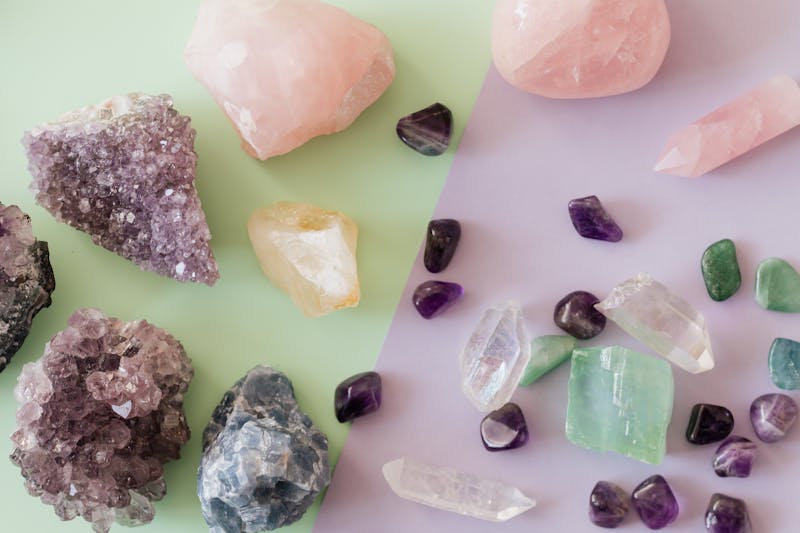
Clear quartz, rose quartz, amethyst, citrine — these are the gateway drugs of the crystal world. They're cheap, widely available, and every beginner guide recommends them. Here's what's interesting: three of those four are literally the same mineral. Quartz. Silicon dioxide. The only difference is trace elements and, in citrine's case, often heat treatment.
Natural citrine is actually quite rare. Most of what you see sold as citrine — including at high-end crystal shops — is amethyst that's been heated until the purple turns yellow-orange. There's nothing wrong with that. The stone is still quartz, still durable, still pretty. But if you're paying a premium for "natural citrine," you might want to ask some questions. In my experience, genuine natural citrine has a more muted, honey-like color with occasional smoky zones. The bright, uniform orange stuff is almost certainly heated amethyst.
Does it matter? For most people, no. But I think transparency in the buying process matters, and this is one of those things that gets glossed over a lot. When I learned that most of my "citrine" collection was actually heated amethyst, I wasn't upset — I just felt like I'd been kept out of the loop.
What $20, $50, and $100 Actually Get You
Let me break down what I've found at different price points, based on my actual purchases rather than what vendors claim:
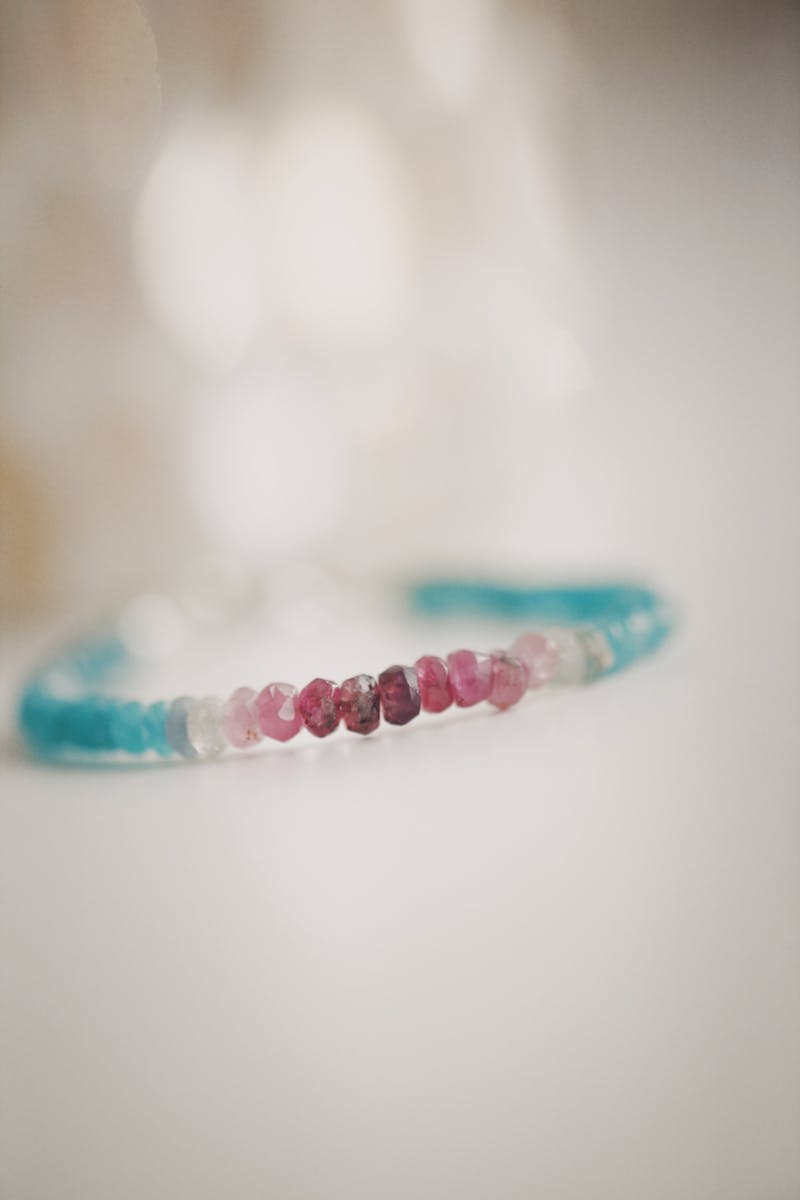
At $20 and under, you're looking at tumbled stones (small, polished pieces), small raw chunks, or very basic beads. Quality varies enormously. I've bought beautiful tumbled stones at this price point and I've bought scratched, dull, clearly machine-polished junk. The key differentiator seems to be whether the vendor is a rock shop that knows minerals or a gift shop that treats crystals as accessories. Rock shops almost always give better value at this price.
The $20–$50 range is where things get interesting. You can find small but decent crystal clusters, medium tumbled stones with good color, and some cut/polished pieces. This is also where I've found the most deceptive pricing. I once paid $35 for a "premium" rose quartz sphere at a boutique shop, then found a visually identical one at a gem show for $8. Same country of origin, same quality — the boutique just had nicer lighting and a Instagram-worthy display.
Above $50, you're paying for size, rarity, or presentation. Large amethyst geodes, high-quality single points, rare minerals — this is where the crystal world starts to overlap with the mineral collecting world. I've bought pieces at this level that I genuinely love and that have held their value. I've also bought pieces I regret. The difference, in hindsight, was whether I bought based on my own judgment or based on a sales pitch.
The Gem Show vs Retail Shop Experience
If you have access to gem and mineral shows, go. Just go. The difference between buying at a show and buying at a retail shop is like the difference between shopping at a farmer's market and shopping at a convenience store.
At the Tucson Gem and Mineral Show — the biggest in the world, held annually in Arizona — I've seen the same type of amethyst geode priced at $40, $120, and $350 at three different booths, all within walking distance of each other. The $350 one was in a polished wooden stand with a spotlight. The $40 one was sitting on a folding table under a fluorescent light. They were both from the same region in Brazil. I bought the $40 one. It sits in my living room and looks exactly as good as the expensive one would have.
But shows have downsides too. It's overwhelming. Vendors are busy. There's no return policy. I've made impulsive purchases at shows that I later regretted — a $60 piece of blue lace agate that looked amazing under the booth's halogen lights but dull at home, for instance. My approach now: walk the entire show once without buying anything, then go back for the pieces I can't stop thinking about. This has saved me hundreds of dollars in impulse buys.
Online Buying: The Wildcards
I've bought crystals online from probably 15 different sellers, ranging from large platforms to individual Instagram vendors. The experience has been... inconsistent. Here's what I've found:
Large platforms (Etsy, Amazon) offer buyer protection and return policies, which is great, but the photo quality varies wildly and you have no idea what you're actually getting until it arrives. I've received stones that were visibly different from the listing photos — different color, different size, different clarity. On Etsy, I've had good luck with shops that show multiple photos including the stone in natural daylight and provide exact measurements. Amazon crystal listings are generally a gamble.
Individual Instagram and website vendors are a mixed bag. Some of my best purchases have come from small, passionate sellers who photograph every stone individually and provide detailed descriptions. Some of my worst purchases have come from the same category — vendors who use heavily edited photos, refuse to show stones in natural light, or ship pieces that look nothing like what was advertised.
My hard rule now: if a seller only shows close-up, backlit photos with saturated colors and won't provide a video or additional angles, I pass. Every time. No exceptions. This rule has cost me a few purchases I probably would have been happy with, but it's saved me from far more disappointing ones.
The Questions I Wish I'd Asked on Day One
Looking back, here are the questions that would have saved me the most money and frustration:
"Has this been treated in any way?" — This applies to everything, not just the citrine situation I mentioned. Heat treatment, dyeing, irradiation, fracture filling — these are all common and not always disclosed. A stone that's been dyed will fade in sunlight. A filled stone can be damaged by heat or household chemicals. Knowing what's been done to your stone matters for how you care for it, even if you don't care about the "natural vs treated" debate.
"Where does this come from?" — Not because origin necessarily affects quality, but because some sources are more ethical than others. I started asking this after learning about artisanal mining conditions in certain regions. It's a complicated topic with no easy answers, but I think it's worth being aware of where your money goes.
"Can I see it in different lighting?" — If you're buying in person, this is the single most important question. Crystal color is incredibly lighting-dependent. That deep purple amethyst might be pale and washed out in your kitchen. That sparkly clear quartz might be full of inclusions you can't see under store lights. Always check before you pay.
My Honest Advice for Your First Purchase
Don't overthink it. I know this article might make it sound like there's a lot to worry about, and there is — but only if you're spending significant money. Your first crystal shouldn't be a stress-inducing research project. It should be fun.
Go to a local rock shop or gem show if you can. Pick something that genuinely appeals to you visually. Don't worry about metaphysical properties or investment value or whether it's from a famous mine. Hold it in your hand. Turn it in the light. If it makes you smile, buy it.
That $12 amethyst I bought in 2020 is still my favorite piece in my collection. Not because it's valuable or rare or particularly beautiful by collector standards, but because it was the first stone I chose entirely for myself, based on nothing but my own reaction to it. Every crystal purchase I've made since has been informed by research and experience, but that first one was pure instinct. And honestly, I think that instinct is the best guide you'll ever have.
Spend $15–$30 on your first piece. Don't buy a set. Don't buy a "starter kit." Buy one stone. Learn what you like and don't like about it. Then buy another one. Build your collection slowly, one piece at a time, based on your own preferences rather than someone else's recommendations.
The crystal world will still be there when you're ready for the complicated stuff. For now, just start somewhere.
Comments