What gives crystals their shapes (and why quartz looks different from pyrite)
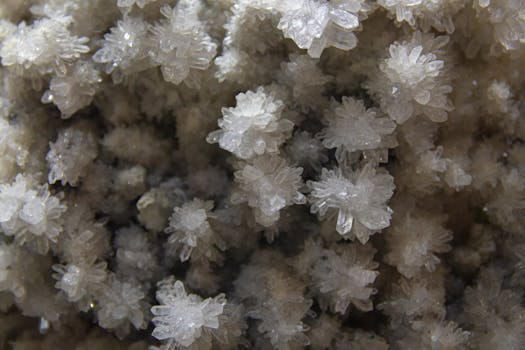
Pick up a quartz crystal and it's a six-sided prism with a pointed tip. Pick up a pyrite crystal and it's a perfect cube. Both are crystals. Both formed underground. But they look nothing alike. The reason comes down to something invisible: the way their atoms are arranged on the inside.
This is one of those things that seems like it should be obvious but actually has some depth to it. Crystal shape isn't random. It's not about how fast the stone grew or how much room it had (though those things do influence the final size). The fundamental shape of a crystal is determined by its internal atomic structure, and that structure falls into one of seven categories called crystal systems.
The seven crystal systems
Mineralogists classify all crystalline minerals into seven crystal systems based on the geometry of their unit cell (the smallest repeating block of atoms that, stacked together, builds the entire crystal. Each system has specific constraints on the lengths of its axes and the angles between them.
Cubic (isometric)
All three axes are equal length, and all angles are 90 degrees. This is the most symmetrical system, and it produces the most geometrically recognizable shapes: cubes, octahedrons, dodecahedrons, and combinations of these forms.
Pyrite is the textbook example of a cubic crystal. Those perfect, sharp-edged cubes you see in mineral collections? That's the cubic system expressing itself directly. The iron and sulfur atoms in pyrite arrange themselves in a cubic lattice, and the crystal grows outward in three equal directions at right angles.
Diamond is also cubic. Natural diamond crystals are most commonly octahedrons (eight triangular faces), not cubes, but the underlying symmetry is the same. The octahedron is just a different form expression of the cubic system. Halite (rock salt), galena, fluorite, and garnet are other cubic minerals.
Tetragonal
Three axes at 90 degrees, but two are equal length and one is different. This creates shapes that look like stretched or compressed cubes: rectangular prisms with square cross-sections, or pyramids with rectangular bases.
Zircon is the most well-known tetragonal gemstone mineral. Its crystals typically appear as four-sided prisms (tetragonal prisms) terminated by pyramids. The different vertical axis length compared to the horizontal axes gives the crystals a distinctly elongated appearance compared to cubic minerals.
Other tetragonal minerals include rutile, cassiterite, and idocrase (vesuvianite). Most are less familiar to casual collectors, but the system is well-represented in mineralogy.
Orthorhombic
Three axes at 90 degrees, all different lengths. The shapes tend to be blocky but asymmetric, like rectangular prisms where no two dimensions are the same. Think of a shoebox shape.
Topaz is orthorhombic. Its crystals often form as long, slender prisms with a distinctive rhombus-shaped cross-section. Peridot (olivine) is another orthorhombic gemstone, typically forming smaller, less well-developed crystals. Chrysoberyl (including alexandrite and cat's eye chrysoberyl) is orthorhombic too, though its crystals are often not as visually dramatic as topaz.
Sulfur crystals are a great visual example. They form in orthorhombic dipyramids that look like slightly squashed octahedrons. The shape is recognizably geometric but doesn't have the clean symmetry of a cubic crystal.
Hexagonal
Four axes total: three equal-length horizontal axes at 120 degrees to each other, and one vertical axis at 90 degrees to the horizontal plane. The vertical axis can be a different length. This system produces six-sided prisms and pyramids.
Emerald is the classic hexagonal gemstone. Its crystals form as six-sided prisms with flat or pyramidal terminations. If you've ever seen a natural emerald crystal, that hexagonal column shape is immediately recognizable.
Beryl (the mineral family emerald belongs to) is hexagonal across all its varieties: aquamarine, morganite, heliodor, and goshenite all share the same basic crystal shape. Apatite, which is the mineral your teeth are partly made of, also crystallizes in the hexagonal system.
Trigonal
This is where things get slightly confusing because trigonal is technically a subdivision of the hexagonal system (it shares the same four-axis framework) but is treated as a separate system in most gemological contexts due to its distinctive three-fold symmetry.
Quartz is trigonal. Its crystals form as six-sided prisms. Yes, six sides, not three, which confuses a lot of people. The trigonal label refers to the three-fold rotational symmetry of the atomic structure, not the number of prism faces. The six-sided prism is a consequence of the trigonal symmetry expressing itself in three pairs of faces.
Corundum (ruby and sapphire) is also trigonal. Its natural crystals often form as hexagonal barrel shapes, wider in the middle, tapering at both ends. Calcite is trigonal too, and its most common crystal form is the rhombohedron (a tilted cube shape), which looks nothing like quartz despite being in the same system. This illustrates an important point: same crystal system does not mean same crystal shape.
Tourmaline is trigonal, and its crystals are famous for their triangular cross-section. If you look at a tourmaline crystal end-on, it often has a distinctly triangular outline with rounded edges. This is the trigonal symmetry expressing itself more obviously than in quartz.
Monoclinic
Three axes of different lengths, with two at 90 degrees and one at a non-90-degree angle. This asymmetry tends to produce crystals that are often blade-like, tabular, or elongated prisms with skewed terminations.
Jadeite (the harder, more valuable form of jade) is monoclinic. Its crystals are microscopic and interlocking, which is part of what gives jade its legendary toughness. You'll almost never see a jadeite crystal; it's always found in massive form (more on that later).
Gypsum (including selenite crystals) is monoclinic and forms some of the largest natural crystals on Earth. The Cave of the Crystals in Naica, Mexico, contains selenite crystals up to 12 meters long. Orthoclase feldspar and epidote are other common monoclinic minerals.
Malachite is monoclinic too, typically forming as botryoidal (grape-like) masses or fibrous aggregates rather than distinct crystals. The monoclinic system doesn't tend to produce clean, geometric crystals as often as the cubic or hexagonal systems.
Triclinic
Three axes, all different lengths, all at angles other than 90 degrees to each other. This is the least symmetrical system, and the crystals it produces tend to look irregular, tilted, or just plain odd.
Kyanite is triclinic, and its bladed crystals are a good example. They're elongated and often slightly curved or bent, which is unusual for a mineral crystal. Axinite is another triclinic gemstone mineral, forming thin, wedge-shaped crystals.
Labradorite and albite (both feldspars) are triclinic. Feldspars are the most abundant minerals in Earth's crust, so the triclinic system is actually very common in nature; it just doesn't produce the showy geometric crystals that collectors tend to photograph.
Why the same crystal system can produce different shapes
I mentioned that calcite and quartz are both trigonal but look completely different. This needs explanation.
A crystal system defines the possible forms a mineral can take, not the specific form it will take. Within each system, there are multiple "habits": preferred ways the crystal expresses its structure. These habits are influenced by growth conditions: temperature, pressure, the availability of chemical constituents, how much open space the crystal had to grow in, and the presence of other minerals.
Quartz normally grows as a hexagonal prism with a pyramidal termination. But under different conditions, it can grow as needle-like crystals (acicular habit), as squat, stubby crystals, as twinned intergrowths, or as massive, shapeless material. The crystal system is always trigonal, but the outward form varies.
Calcite has over 300 known crystal forms, more than any other mineral. It can form as rhombohedrons, scalenohedrons (dogtooth spar), prisms, pinacoids, and various combinations. All of these are valid expressions of the trigonal system. The specific form depends on growth conditions and the chemical environment.
Twinning: when crystals grow wrong (and look amazing)
Crystal twinning happens when two or more crystals of the same mineral grow together in a symmetrical relationship that follows specific crystallographic rules. The result is often a shape that looks impossible: interpenetrating cubes, X-shaped crosses, or star-like formations.
Staurolite is famous for this. Its twinned crystals regularly form perfect crosses (60-degree crosses and 90-degree crosses are both common. These "fairy crosses" were traditionally considered good luck charms, and they're one of the most recognizable twinned mineral specimens.
Fluorite commonly forms penetration twins where two cubes interlock at an angle. The result is a geometrically complex shape that's hard to describe but instantly recognizable. Quartz forms several types of twins, including the Japan law twin (two crystals meeting at nearly 90 degrees) and the Carlsbad twin.
Twinning is not a defect. It's a specific growth behavior governed by the crystal's structure. Some minerals are more prone to twinning than others — calcite and feldspars twin extremely readily, while diamond almost never does.
Why some gems don't look like crystals at all
Not all minerals grow as distinct, recognizable crystals. Many grow in what mineralogists call "massive form" (solid, shapeless material with no visible crystal faces. Jade (both jadeite and nephrite), turquoise, lapis lazuli, and most chalcedony are found this way.
Massive form happens when many tiny crystals grow together in a random, interlocking pattern. The individual crystals may be microscopic, too small to see without magnification. The material is still crystalline (the atoms are still in ordered patterns within each microscopic grain), but there's no overall shape because the grains are oriented in random directions.
Chalcedony is a special case. It's a cryptocrystalline variety of quartz, meaning it's composed of quartz crystals so tiny (typically less than 1 micron) that they can only be seen with an electron microscope. Despite being quartz (trigonal), chalcedony never shows crystal faces. It forms as nodules, veins, and crusts with smooth, curved surfaces that reflect the aggregate growth of millions of invisible microcrystals.
Agate and onyx are varieties of chalcedony with banding patterns caused by rhythmic variations in the mineral content during growth. The bands don't follow crystal faces; they follow the contours of the cavity the chalcedony filled.
Jade's toughness comes from this same microcrystalline interlocking structure. Nephrite jade is composed of microscopic, felted amphibole fibers that interlock like a mat. This is why nephrite is one of the toughest natural materials known, tougher than steel by some measures, despite having a lower hardness on the Mohs scale than many other gemstones. The crystals individually are relatively weak, but they can't be pulled apart because they're all tangled together.
Growth interference and weird shapes
Crystals that grow in confined spaces develop shapes that reflect their environment. A quartz crystal growing against a wall will be flat on one side. Crystals growing in a narrow fissure will be elongated in the direction of the fissure. Multiple crystals growing near each other will compete for space, resulting in intergrown or distorted shapes.
Scepter quartz is a particularly dramatic example: a quartz crystal that started growing normally, then was coated with a different mineral that temporarily stopped growth, then resumed growing later with a wider top, creating a shape like a scepter or mushroom. This requires specific conditions (growth, interruption, and resumption), and the result is distinctive enough to be a recognized variety.
Faden quartz (from the German word for "thread") contains a white thread-like line running through the crystal parallel to its length. This thread is a healed fracture zone. The crystal cracked during growth, then the two halves continued growing and sealed the crack with new quartz. The line is a permanent record of a geological event that happened millions of years ago.
Looking at crystals differently
The next time you see a crystal specimen, try to read its shape. A cube is almost certainly cubic (think pyrite, fluorite, or halite. A hexagonal prism is hexagonal or trigonal (emerald, beryl, quartz, corundum, tourmaline. A blade-shaped crystal with a slight tilt might be monoclinic or triclinic (kyanite, gypsum, epidote.
The shape is the external manifestation of the internal structure. It's physics expressing itself as geometry, and it's one of the few places in nature where you can literally see the atomic arrangement with your naked eye. That, to me, is worth appreciating.

Comments