How to Tell if an Opal Is Real: 6 Ways to Spo...
June 5, 2026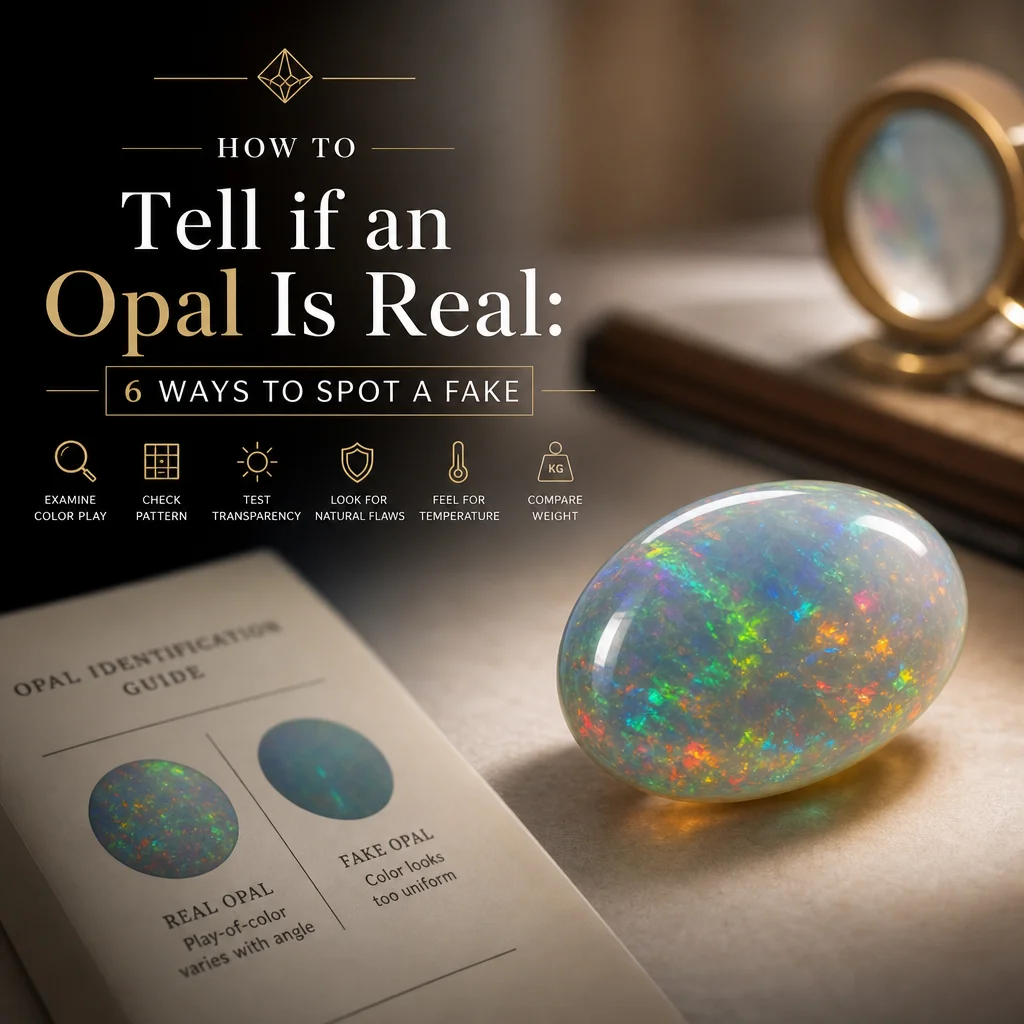
The Opal Authentication Challenge
Opal is arguably the most difficult gemstone for a non-specialist to authenticate. Its unique play-of-color (the shifting rainbow flashes that make opal famous) can be convincingly imitated by synthetics, assembled stones, and even cleverly crafted glass. Unlike diamonds or rubies, where basic tests give clear answers, opal identification often requires careful observation and a practiced eye.
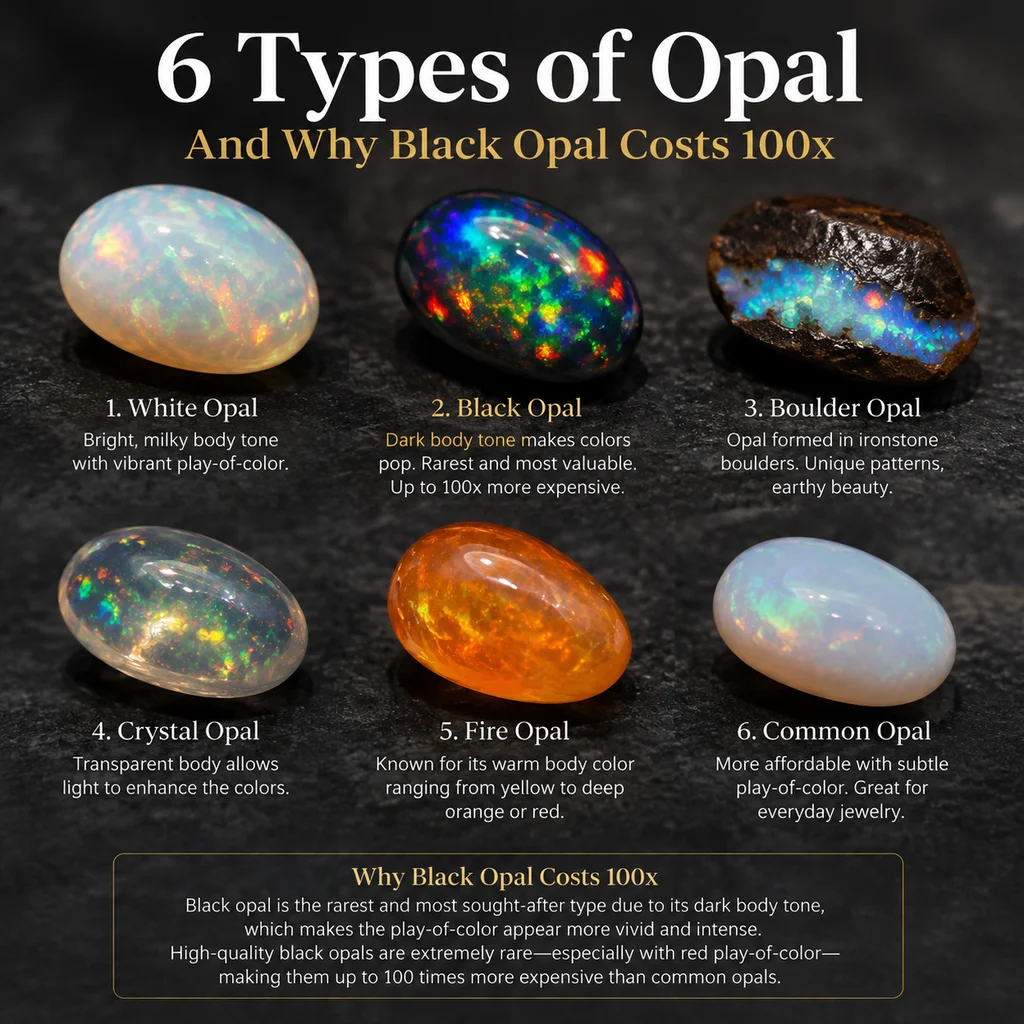
The financial stakes are real too. Fine Australian black opal can sell for $5,000–$20,000 per carat, while a convincing synthetic might cost $30–$100. Understanding how to separate the genuine from the artificial protects both your wallet and your collection.
Test 1: Examine the Play-of-Color Pattern
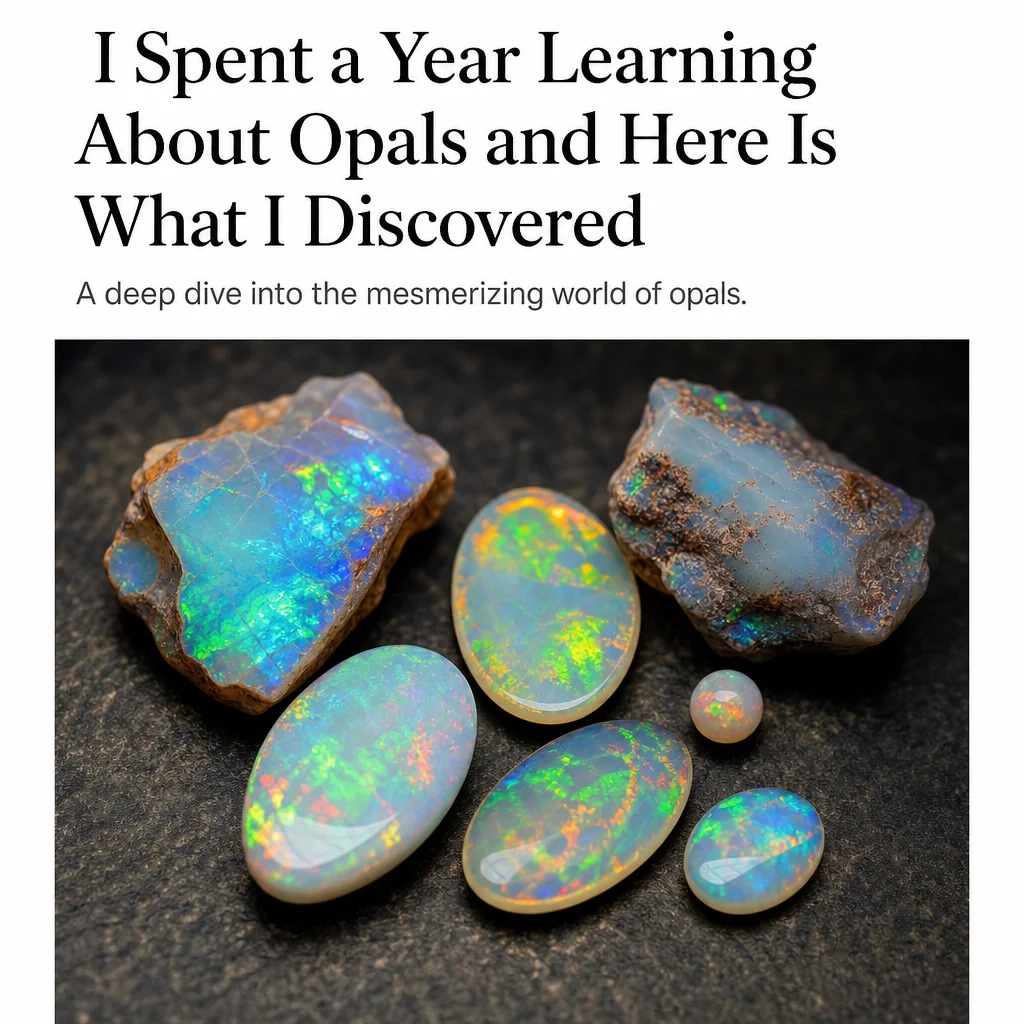
This is the most important single test. Natural opal's play-of-color comes from the diffraction of light through microscopic spheres of silica arranged in a regular grid. This physical structure creates patterns that are fundamentally different from synthetic alternatives.
Natural Opal Patterns
Natural play-of-color appears organic and irregular. Common patterns include:
- Harlequin — close-set rectangular patches resembling a checkerboard
- Pinfire — tiny, pinpoint flashes scattered across the stone
- Flash fire — broad sheets of color that sweep across the stone as it moves
- Ribbon — color arranged in flowing, curved bands
- Rolling flash — color that appears to roll or move like a wave as you tilt the stone
These patterns show subtle gradations, random placement, and natural variation that are difficult to replicate convincingly.
Synthetic Opal Patterns (Gilson)
Gilson synthetic opal, the most common lab-grown opal, has a telltale pattern: a regular, columnar or snake-skin structure visible under 10x magnification. Instead of natural randomness, the color patches form in a honeycomb, mosaic, or lacy pattern that looks too organized. Think of the difference between a hand-painted watercolor and a pixelated digital image — the synthetic has a mechanical regularity.
Another dead giveaway: Gilson opal often shows a columnar structure when viewed from the side, visible as vertical striations running parallel through the stone. Natural opal never shows this columnar growth pattern.
Test 2: Body Tone Classification
Opal body tone refers to the background color behind the play-of-color. Australian opal grading uses a standardized N1–N9 scale, where N1 is the darkest (most valuable for black opal) and N9 is the lightest body tone.
This matters for authentication because synthetic opal often has a body tone that doesn't match any natural classification. Gilson opal tends toward a grayish or slightly milky background that's distinctly different from the warm, translucent body of natural white opal or the deep, pure darkness of natural black opal.
Compare the suspect stone against known natural specimens. If the body tone looks "off" — too uniform, too gray, too perfectly white — that's a warning sign. Natural opals show subtle color variations in their body tone, while synthetics tend to be more monochromatic.
Test 3: Detect Doublets and Triplets
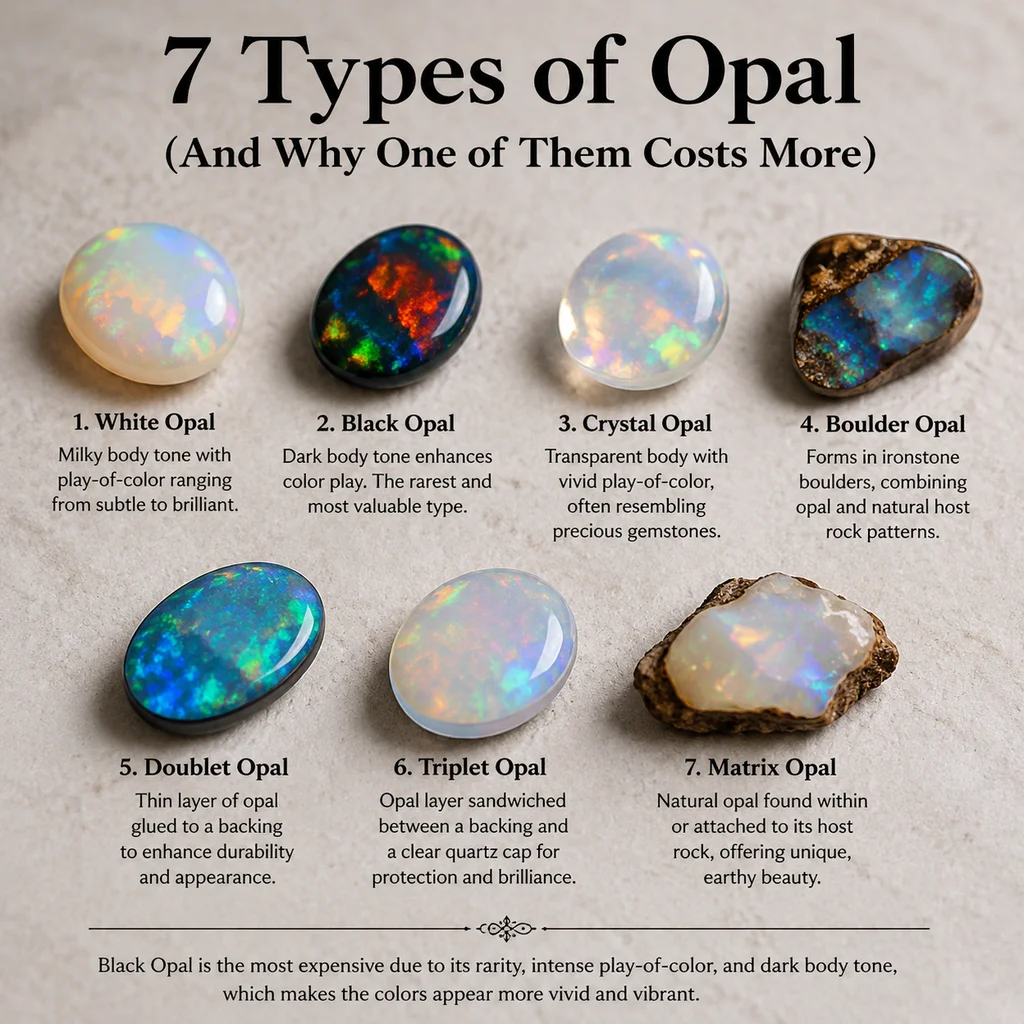
A doublet consists of a thin slice of natural opal glued to a dark backing (usually black glass, obsidian, or ironstone). A triplet adds a clear domed cap on top, usually made of quartz, glass, or plastic. These assembled stones use a thin sliver of genuine opal to simulate the appearance of a much thicker, more valuable solid opal.
Detection methods:
- Check from the side — Look at the stone's profile (girdle area). In a doublet or triplet, you'll see a flat, straight joining line where the layers meet. Natural solid opal has a continuous, curved surface all the way through.
- Examine the table facet from an angle — Tilting the stone and looking along the surface often reveals the glue line as a faint, slightly reflective seam.
- Look for bubbles or irregularities at the join — The adhesive layer may contain tiny trapped air bubbles visible under magnification.
- Test with a needle tip — Carefully probe near the suspected join with a fine needle. If there's a seam, the needle may catch slightly at the glue boundary.
Doublets and triplets are not necessarily "fakes" in the traditional sense — they contain real opal. But they're worth far less than solid opals and should be priced and described accordingly. A 10mm doublet might sell for $50–200, while a comparable solid could be $1,000+.
Test 4: Water Content Test
Natural opal contains 3–21% water by weight, locked within the silica structure. This water content gives real opal distinctive physical properties that synthetics and imitations don't share.
One practical test: gently warm the stone with a hairdryer on low heat for 10–15 seconds, then immediately touch it to your upper lip (a sensitive area for detecting temperature changes). Natural opal with high water content will feel slightly cooler than glass or plastic, which heat up and retain warmth differently.
A more dramatic version: some people have reported that genuine opals feel slightly tacky or grip the skin when held against the inside of the wrist. This is attributed to the hygroscopic nature of the silica-water structure, though the effect is subtle and not universally reliable.
Test 5: Price Reasonability Check
This isn't a physical test, but it's often the quickest way to spot a problem. Opal pricing follows fairly predictable ranges based on body tone, play-of-color intensity, and origin:
- Fine Australian black opal — $500–$5,000+ per carat
- Quality white opal — $50–$300 per carat
- Commercial-grade boulder opal — $20–$100 per carat
- Ethiopian opal (welo) — $10–$80 per carat
If someone is offering a "natural black opal" with vivid play-of-color at $20 per carat, it's almost certainly a synthetic, a doublet, or a mislabeled stone. Natural black opal at that price simply doesn't exist in the real market.
Similarly, if an opal is described as "Australian solid black opal" but the price suggests Ethiopian material, ask questions. Misrepresentation of origin is one of the most common forms of opal fraud.
Test 6: Gilson Identification Under Magnification
Gilson synthetic opal has several microscopic features that trained observers can identify:
- Giraffe-skin or snake-skin pattern — a lacy, cellular structure unlike any natural play-of-color pattern
- Columnar growth structure — visible from the side as parallel columns or vertical striations
- Too-perfect color patches — uniform size, spacing, and intensity that look manufactured
- Absence of natural inclusions — no sand grains, matrix material, or other debris commonly found in natural opal
Under 20–40x magnification, these features become increasingly obvious. If you have access to a gemological microscope, Gilson opal is usually identifiable within seconds.
Other Imitations to Know
Beyond the common tests above, be aware of these less common but still circulating imitations:
- Slocum stone — an early opal imitation made from silica glass with embedded foil flakes that mimic play-of-color. Rare today but still encountered in vintage jewelry.
- Resin imitations — transparent resin with embedded iridescent flakes. Very lightweight and warm to the touch compared to natural opal.
- Opalite (trade name for glass) — not opal at all, but a man-made glass that shows a faint, milky iridescence. Often sold misleadingly at craft markets.
Frequently Asked Questions
Are doublets and triplets worth buying?
They can be, if priced correctly. A well-made doublet provides the visual appearance of black opal at a fraction of the cost. Just make sure you know what you're buying and aren't paying solid-opal prices for an assembled stone.
Can Ethiopian opal be real?
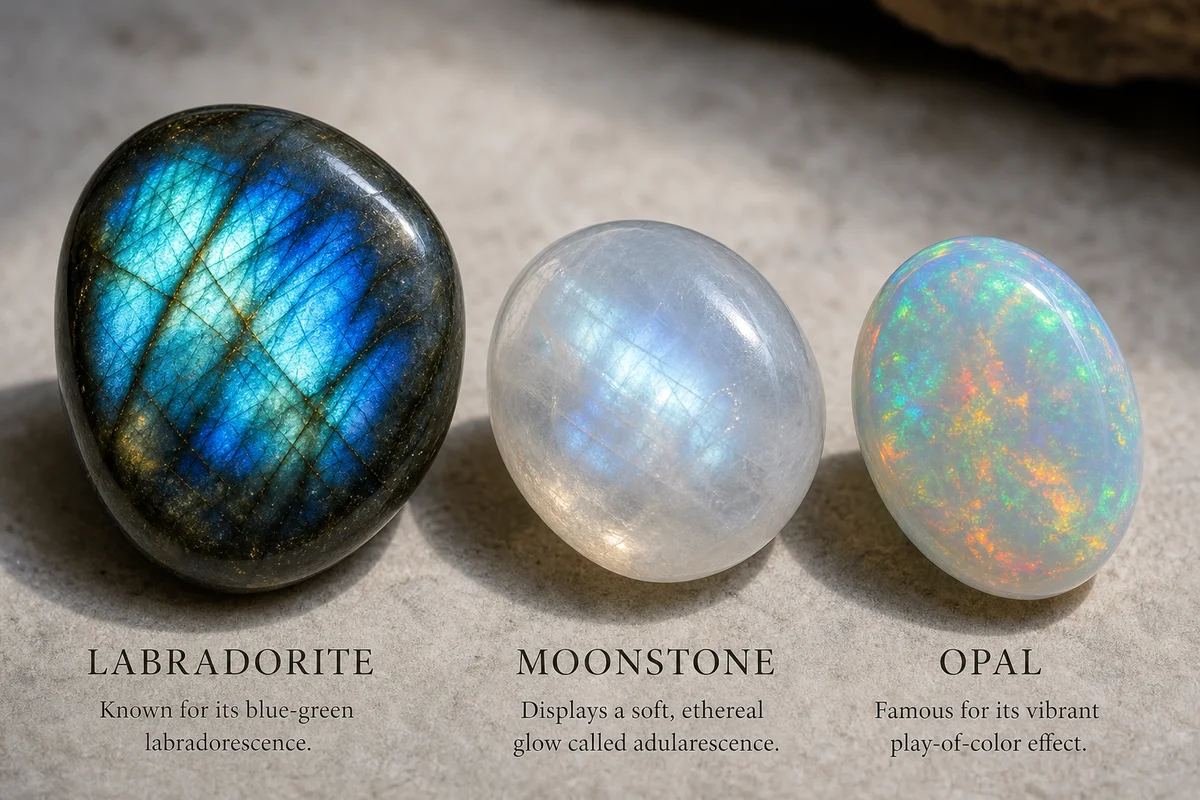
Absolutely. Ethiopian (Welo) opal is natural opal with genuine play-of-color. It differs from Australian opal in structure — Ethiopian opal is often more porous and may temporarily become cloudy when wet then dry. It's generally less expensive than comparable Australian material.
Does UV light help identify fake opal?
Not reliably. Natural opal may show a faint yellow-green fluorescence, but this varies by source and isn't diagnostic. Some synthetics may fluoresce similarly. UV is not a primary tool for opal authentication.
Opal in Jewelry and Personal Style
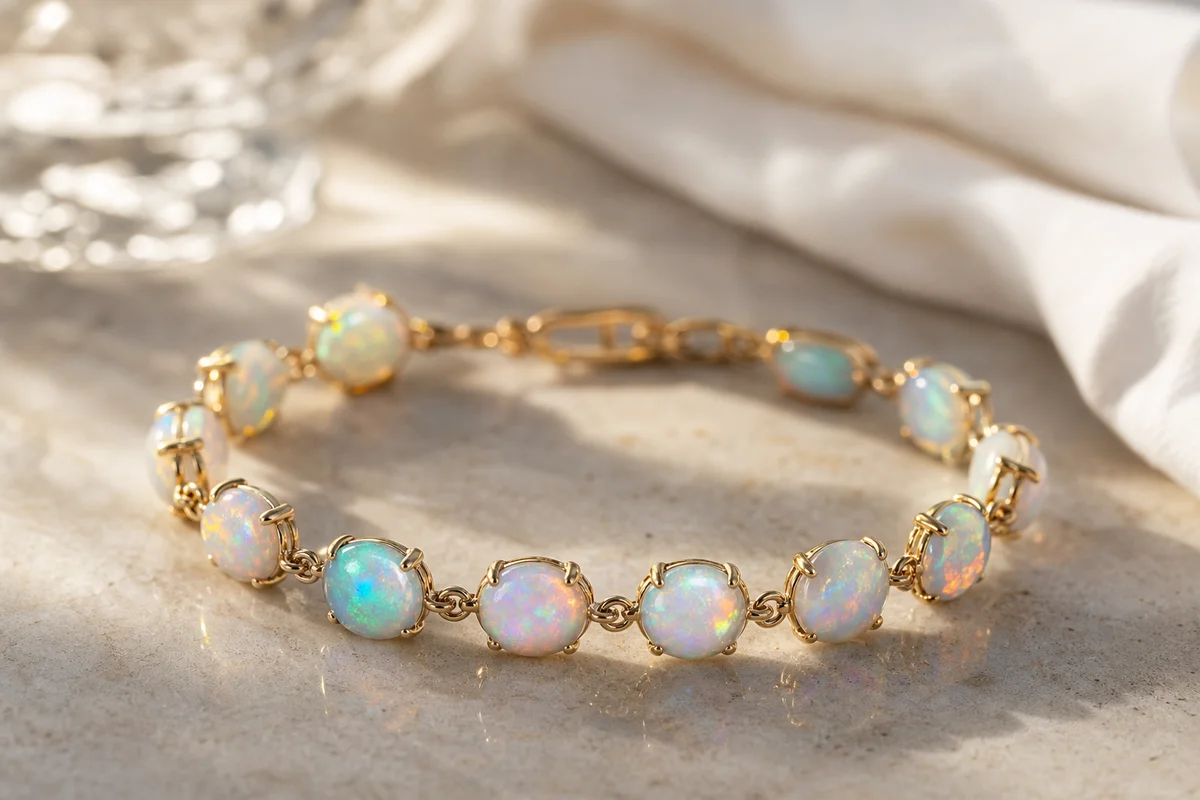
Opals are a popular choice for jewelry, especially for those looking to add a touch of natural magic to their wardrobe. Here's how to integrate this gemstone into your personal style.
Matching Opal with Metals
Opals pair beautifully with metals, offering a mix of traditional and modern options:
- Gold — classic gold is a timeless choice that complements the rich hues of opal.
- White Gold — this lighter metal brings out the subtle shades of the opal's play-of-color.
- Palladium — an alternative metal that pairs well with opal, offering a modern aesthetic.
- Silver — for a bolder statement, consider silver, which contrasts sharply with the vibrant colors of opal.
The metal you choose will depend on your personal style and the occasion for which you're dressing.
Opal for Fashion-forward Pieces
For those who want to make a statement, opal can be a standout piece:
- Necklaces — a pendant set with a single, large opal can serve as a statement piece for a minimalist outfit.
- Rings — opal engagement rings or statement rings are popular, with their unique and natural beauty.
- Earrings — dangle or stud earrings can highlight the opal's colors and add a pop of color to any ensemble.
Remember, opals are more delicate than some other gemstones, so when selecting a piece for your collection, consider its setting and care requirements.
Care Instructions for Opals
Opals are quite sensitive gemstones and require special care to maintain their beauty and integrity:
- Avoid Harsh Chemicals — Opals can be damaged by harsh chemicals found in household cleaners, solers, and perfumes. Always remove your jewelry before cleaning and when using products with chemicals.
- Keep it Dry — Opals can crack if they are exposed to extreme temperature changes or sudden dryness. Keep your opal jewelry dry, and avoid leaving it in a steamy bathroom or out in the sun for extended periods.
- Use a Soft Cloth — Clean your opal jewelry with a soft cloth and lukewarm water. Never use abrasive cleaners or a cloth that might scratch the surface.
- Avoid Extreme Temperatures — Do not expose your opal to extreme temperatures, such as putting it in the dishwasher, microwave, or near an open flame.
When not wearing your opal jewelry, store it in a fabric-lined box to protect it from dust and scratches. By following these simple care instructions, your opal can remain beautiful for years to come.
Opal Symbolism and Meaning
Opals are rich in symbolism and meaning, with different cultures attributing various qualities to this mesmerizing gemstone:
Historical Beliefs
In ancient Greece, opals were thought to grant foresight, and in Rome, they were associated with love and passion. In the Middle Ages, opals were believed to bring bad luck, a sentiment that persists in some parts of the world even today.
Cultural Significance
In Australia, the country with the largest opal fields, opals are considered the "national gemstone" and are a symbol of the country's cultural identity and connection to the earth. Opals are also significant in Aboriginal culture, representing the dreaming, the world's creation story.
In Native American lore, opals are seen as protective stones, believed to bring strength and healing to the wearer. They are also said to help the wearer communicate and understand their dreams and intuition.
Conclusion
Opals are truly captivating stones, with their ability to shift colors and tell a story through their play-of-color. While authentication can be challenging, knowing how to distinguish real opals from their synthetic counterparts is key to protecting your investment and enjoying the natural beauty of these precious gems.
As you embark on your opal journey, whether for personal enjoyment or as an addition to your collection, remember to respect and care for these stones, for they are more than just jewels — they are pieces of natural history and culture.
Practical Tips for Buying Opals
Buying an opal can be an exciting venture, but there are some practical tips to keep in mind to ensure you make a well-informed decision:
Understanding Opal Grades
Opals are graded based on several factors, including:
- Body Tone — The background color of the opal, with higher grades having more desirable colors.
- Play-of-Color — The intensity and distribution of the iridescent colors within the opal.
- Clarity — The lack of inclusions, which can affect the transparency and value of the opal.
- Cut — The way the opal has been shaped and the symmetry of the stone.
When shopping for an opal, be sure to understand the grade and what it means for the value and quality of the stone.
Reputable Sources
Always purchase opals from reputable dealers or jewelers. Look for certifications from respected gemological laboratories, which can provide assurance that the opal is genuine and has been accurately graded.
View Multiple Stones
Opals come in a wide variety of colors and patterns. When shopping, take your time to view multiple stones and compare their play-of-color, body tone, and clarity. Don't rush the process, as finding the perfect opal can be a personal and sometimes serendipitous experience.
Consider the Setting
When buying opal jewelry, consider the setting as well. A well-designed setting can enhance the appearance of the opal and protect it from damage. Some opals may be better suited to certain settings, such as prong settings for stones with fewer inclusions.
Budget Considerations
Opals can range greatly in price, so consider your budget before you start shopping. Be realistic about what you can afford and look for the best quality opal within that range. Remember, you don't have to break the bank to own a beautiful opal.
Final Thoughts
Opals are not just a gemstone; they are a window into the earth's past, with each piece offering a unique story and beauty. Whether you are drawn to the vibrant colors of an opal or the historical significance it carries, the experience of owning and admiring an opal is truly special.
With careful selection, proper care, and an appreciation for the stone's unique qualities, your opal can be a cherished part of your life for generations to come.
Frequently Asked Questions
Can real opals get wet or be damaged by water?
Real solid opals are generally safe in water, which is why the water content test doesn't damage them. However, soaking them for extended periods isn't recommended. At SagStone, we advise removing your handcrafted opal jewelry before showering or swimming. While brief exposure to water won't hurt a genuine natural opal, repeated soaking can eventually affect their structural stability.
How can I tell if an opal is glass or plastic?
Glass and plastic imitations lack the distinct, three-dimensional play-of-color found in authentic opals. When you look closely at a genuine SagStone opal, the colors flash from deep within the stone in a unique, irregular pattern. Fakes often look too perfect, with colors sitting flat on the surface like foil. Additionally, plastic imitations will feel unusually light and warm up quickly in your hand.
Comments