How to Spot Fake Crystals
May 28, 2026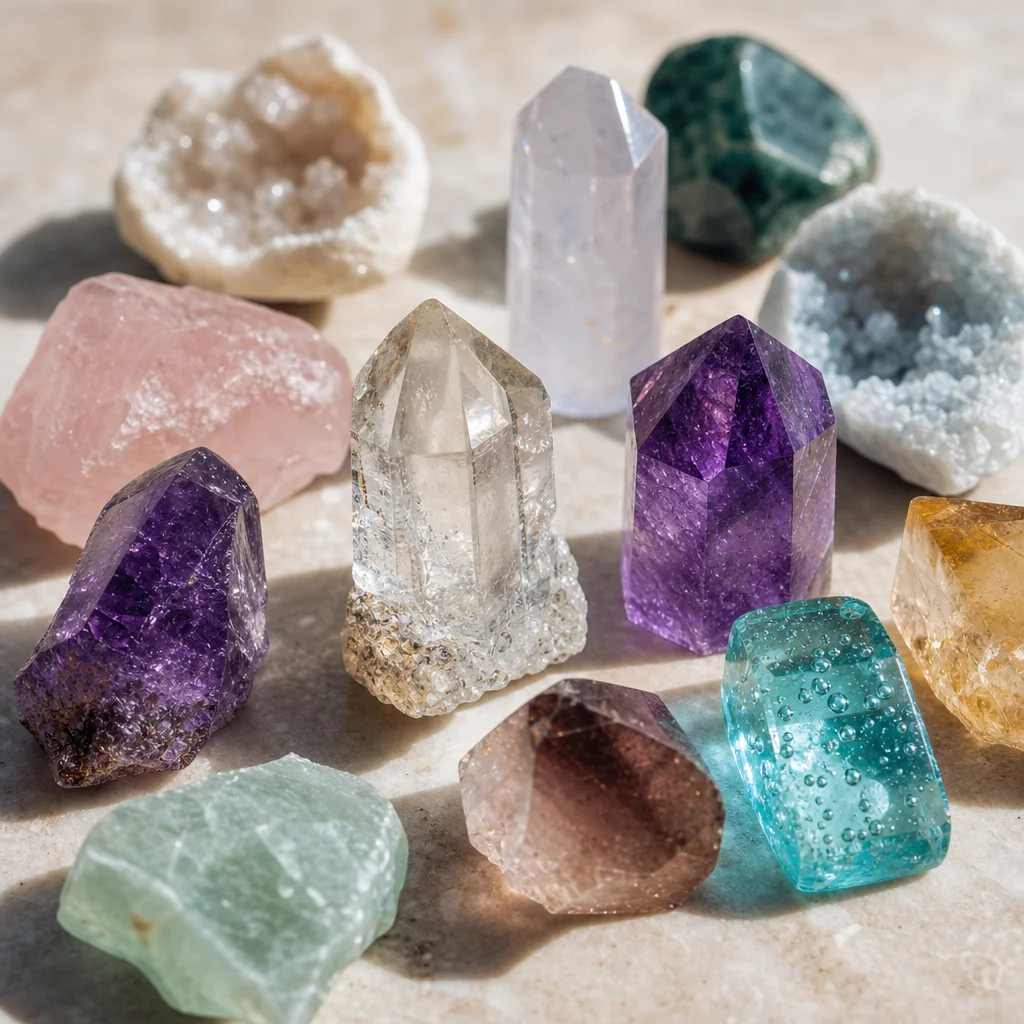
How to Spot Fake Crystals: A Field Guide for Buyers
The Fake Crystal Problem Is Real
The global crystal and gemstone market is worth billions of dollars, and where there's money, there are fakes. Walk into any crystal shop, browse Etsy, or scroll through Instagram crystal sellers, and you'll encounter stones that are dyed, heat-treated, irradiated, reconstituted, or entirely synthetic — often marketed as natural specimens.
This isn't always malicious. Many sellers themselves don't know their stock is treated or synthetic. They bought from a wholesaler who bought from a distributor who sourced from a mine, and somewhere in that chain, the information about treatments got lost (or was never provided in the first place).
But whether the deception is intentional or accidental, you deserve to know what you're actually buying. This guide covers the most common types of crystal fakes and treatments, practical tests you can perform with everyday tools, and what to look for (and look out for) when shopping for specific popular stones.
Categories of "Fake" Crystals
Not all fakes are created equal. Understanding the spectrum of treatments and imitations helps you evaluate what you're actually looking at:
1. Complete Fakes (Imitation Materials)
These are not crystals at all. They're made from glass, plastic, resin, or other materials shaped and colored to look like natural stones.
Examples:
- Glass sold as obsidian (real obsidian is volcanic glass, but manufactured glass is different)
- Plastic beads sold as amber (real amber floats in saltwater, plastic sinks)
- Resin or plastic sold as jade (real jade is much harder and colder to touch)
- Colored glass sold as any transparent gemstone
2. Dyed Natural Stones
These are real stones (usually agate, howlite, or quartz) that have been dyed to resemble more valuable stones.
Examples:
- Blue-dyed agate sold as "natural blue agate" or even lapis lazuli
- Green-dyed howlite sold as turquoise
- Pink-dyed howlite sold as rhodonite or rose quartz
- Purple-dyed agate sold as "natural amethyst"
- Multi-color dyed agate sold as "natural rainbow" stones
3. Treated Natural Stones
These are genuine stones that have been altered through heat, radiation, or chemical processes to change their color or appearance.
Examples:
- Heat-treated amethyst sold as citrine (very common — natural citrine is pale yellow, heat-treated is deep orange)
- Irradiated smoky quartz (darker than natural specimens)
- Heat-treated tiger eye (red tiger eye)
- Bleached and dyed jadeite ("B jade" or "C jade")
- Fracture-filled quartz with glass or resin in cracks
4. Synthetic (Lab-Created) Crystals
These have the same chemical composition and crystal structure as natural stones but are grown in a laboratory. They're chemically identical to natural stones but were made in weeks instead of millennia.
Examples:
- Synthetic quartz (amethyst, citrine, smoky quartz)
- Synthetic corundum (ruby, sapphire)
- Synthetic emerald
- Synthetic opal
Synthetic stones are not inherently "fake" — they're real crystals with the same chemical properties — but they should be priced and labeled differently from natural specimens.
Universal Tests: Quick Checks for Any Stone
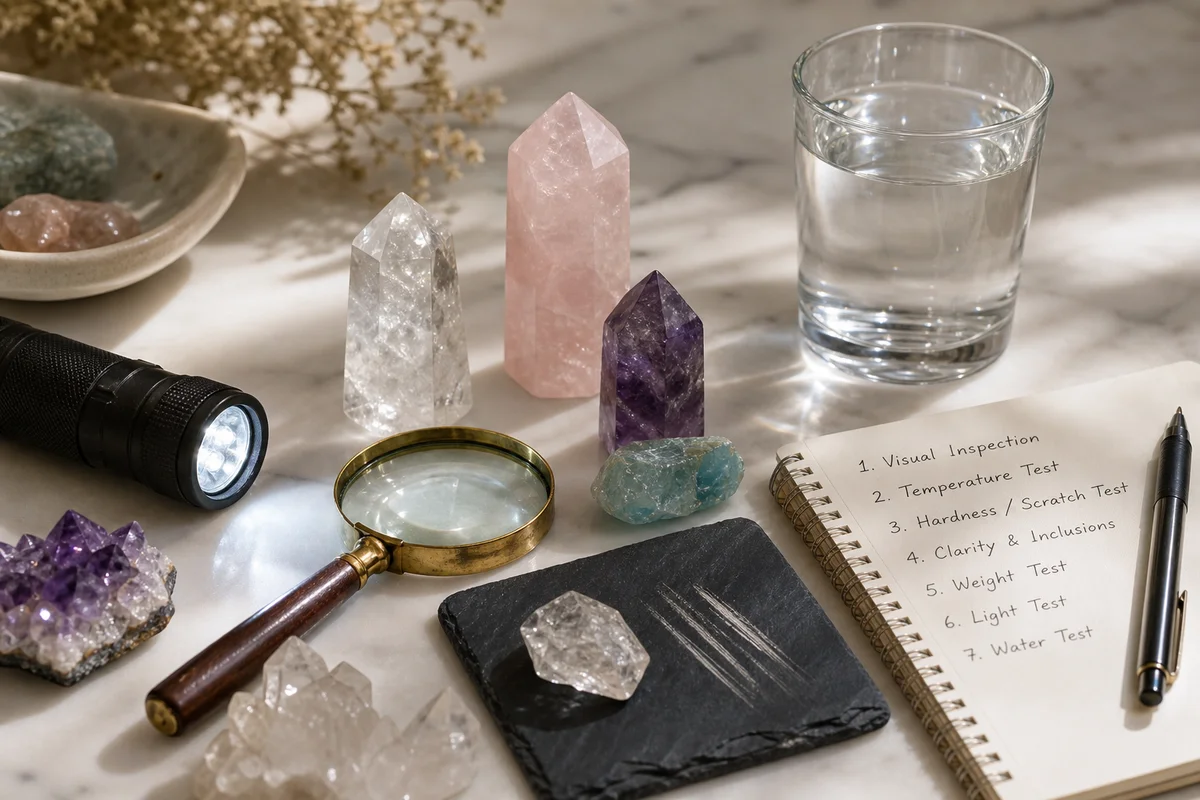
1. The Flashlight Test
Shine a bright flashlight directly through the stone (works best with translucent to transparent stones). Look for:
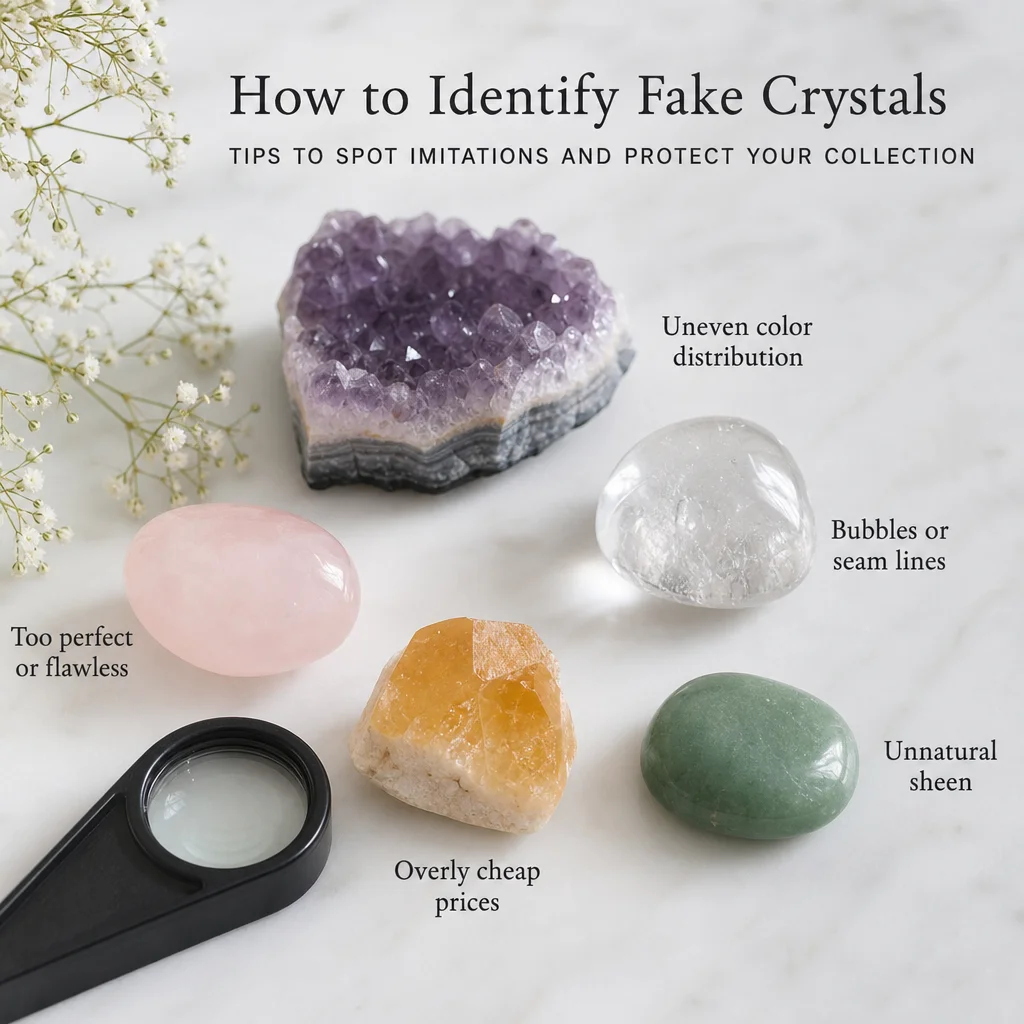
- Uneven color concentration — Dye tends to pool in cracks, fractures, and porous areas. If the color is noticeably darker along cracks or in specific spots, the stone has been dyed.
- Perfect uniformity — Natural stones almost never have perfectly uniform color. If every part of the stone is exactly the same shade with zero variation, be suspicious.
- Bubbles — Spherical or elongated bubbles inside the stone indicate glass, not crystal. Natural mineral inclusions are irregular, not perfectly round.
- Conchoidal fractures — If the interior shows smooth, shell-shaped fractures, you might be looking at glass.
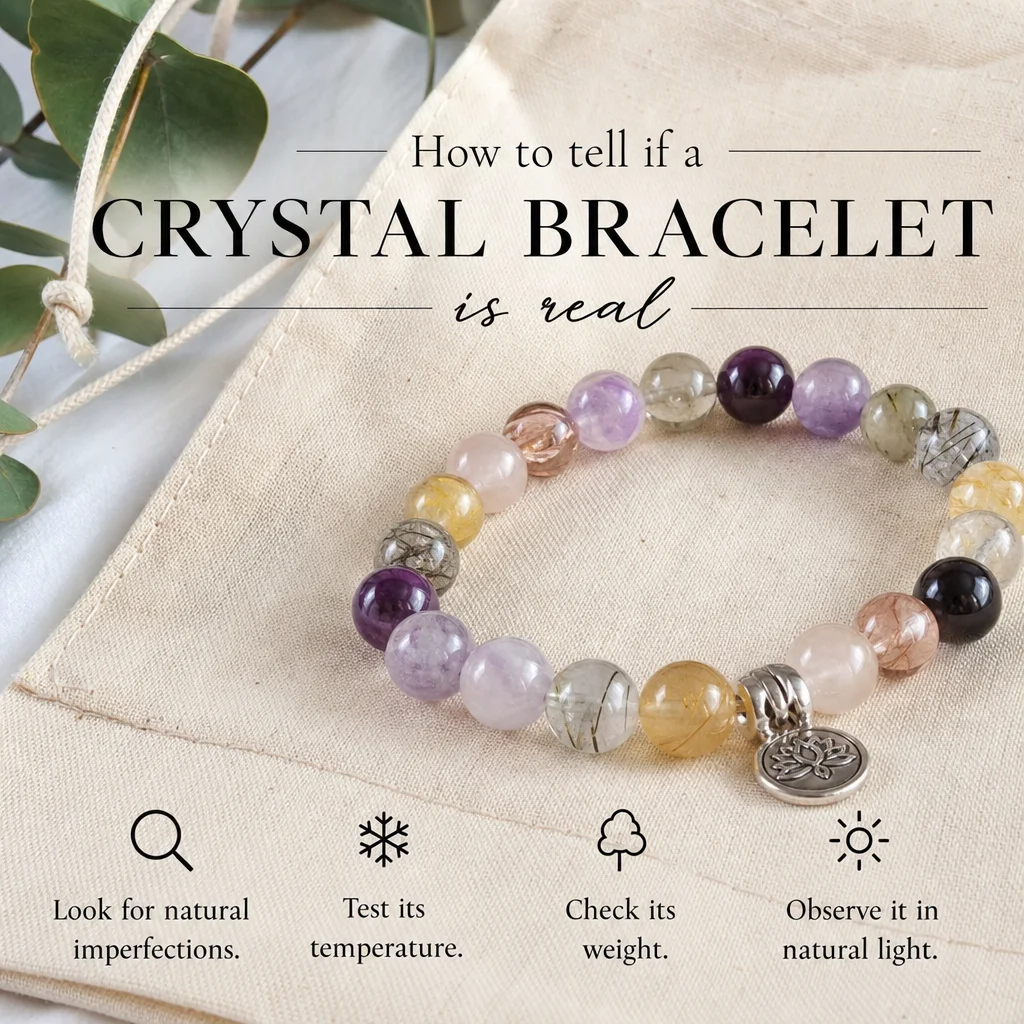
2. The Temperature Test
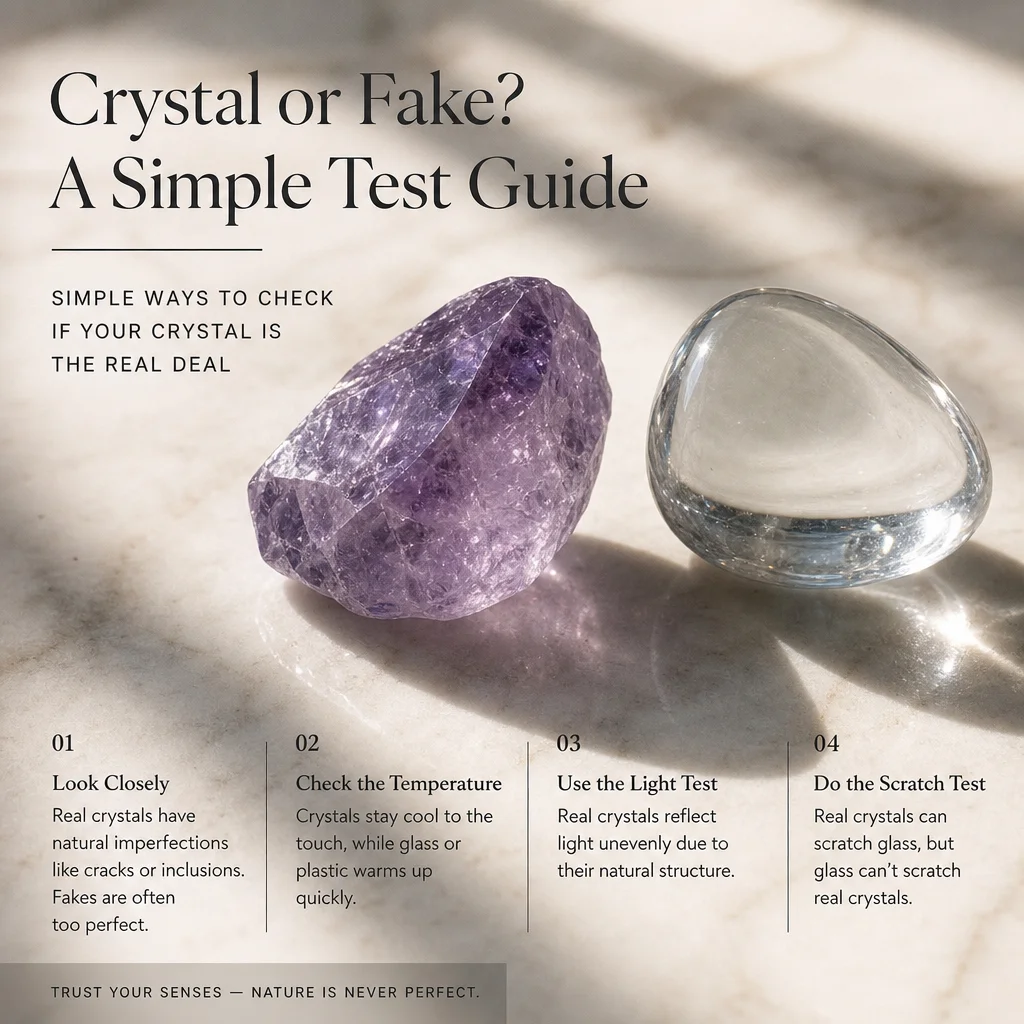
Real crystals (minerals with high thermal conductivity) feel noticeably cold when you first pick them up, and they warm up slowly. Glass and plastic warm up quickly.
Hold the stone against your inner wrist or cheek. Genuine quartz, jasper, agate, and most common crystals will feel distinctly cool. Glass will feel closer to room temperature. Plastic will warm up almost immediately.
This test isn't definitive on its own, but it's a good quick check.
3. The Hardness Test
Every mineral has a specific Mohs hardness. If you know what the stone is supposed to be, you can test whether its hardness matches:
- Quartz (Mohs 7) should scratch glass (Mohs 5.5)
- Calcite (Mohs 3) should be easily scratched by a steel knife (Mohs 4-4.5)
- Fluorite (Mohs 4) should be scratched by a knife but not by a copper coin
- Jade (Mohs 6-7) should scratch glass
Use the edge of a glass jar or bottle for testing. A genuine quartz crystal will leave a visible scratch on the glass surface.
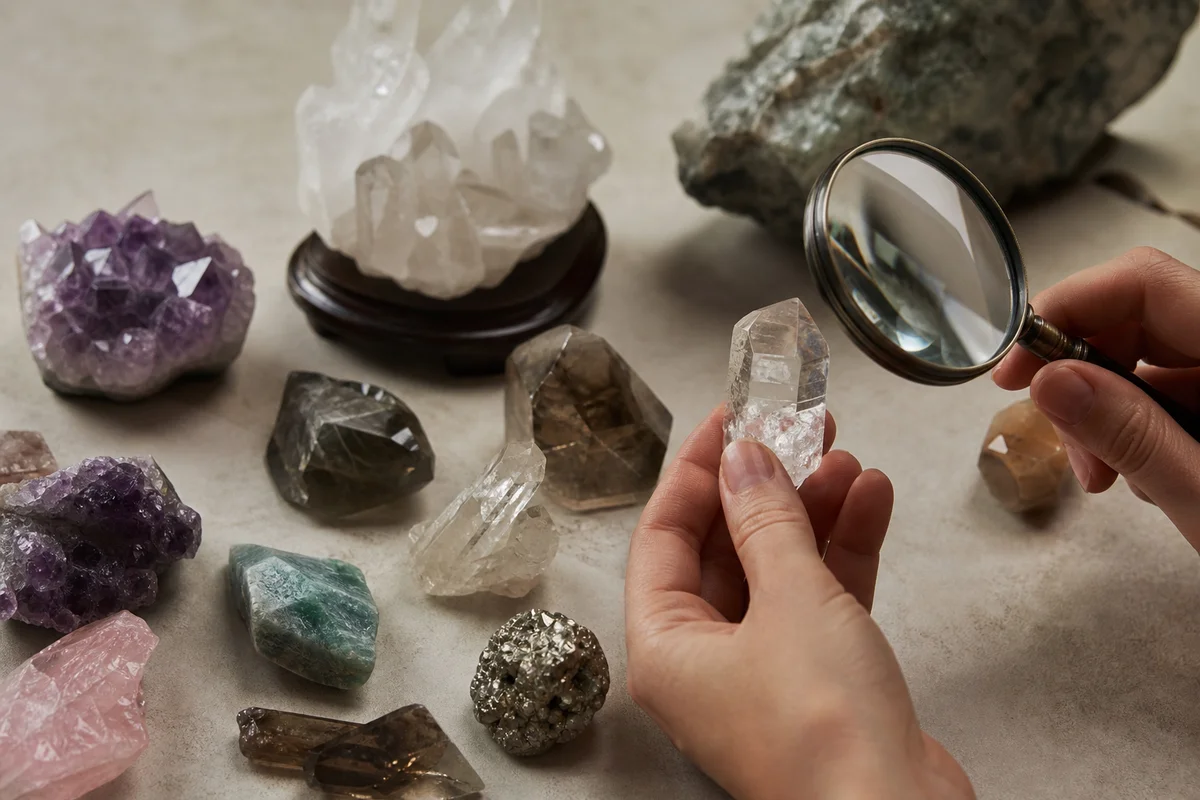
4. The Magnification Test (Loupe or Phone Camera Zoom)
Examine the stone under 10x magnification (a jeweler's loupe costs $5-10, or use your phone's camera zoom):
- Natural inclusions — Look for irregular mineral inclusions, tiny fractures, growth lines, and internal features that look organic and chaotic. Natural stones have character.
- Bubbles — Perfect, round bubbles = glass. Elongated gas bubbles = glass.
- Color lines — In dyed stones, you may see color concentrated along fracture lines or in porous zones.
- Too perfect — If the interior is absolutely flawless with zero inclusions, it's either synthetic, glass, or extremely expensive. If it's being sold for $5, it's not a flawless natural stone.
Stone-Specific Fake Detection
Turquoise
Turquoise is one of the most faked stones in the market. Real turquoise is a copper aluminum phosphate mineral with a characteristic waxy luster and natural matrix (dark veining).
What's fake:
- Howlite dyed blue-green (howlite is naturally white with grey veining)
- Magnesite dyed blue
- Plastic or resin composites
- Reconstituted turquoise (ground turquoise mixed with resin and pressed)
How to spot fakes:
- Real turquoise has a waxy-to-porcelain luster, not a glassy shine
- The matrix in real turquoise is irregular and natural-looking; dyed howlite's veining is more uniform
- Touch a hidden spot with a drop of acetone (nail polish remover) — dye will come off on a cotton swab
- Real turquoise is relatively soft (5-6 Mohs) and should not scratch glass easily
Amethyst
Real amethyst is a purple variety of quartz that gets its color from iron impurities and natural irradiation.
What's fake:
- Purple-dyed agate or chalcedony
- Synthetic amethyst (lab-grown)
- Glass with purple coloring
How to spot fakes:
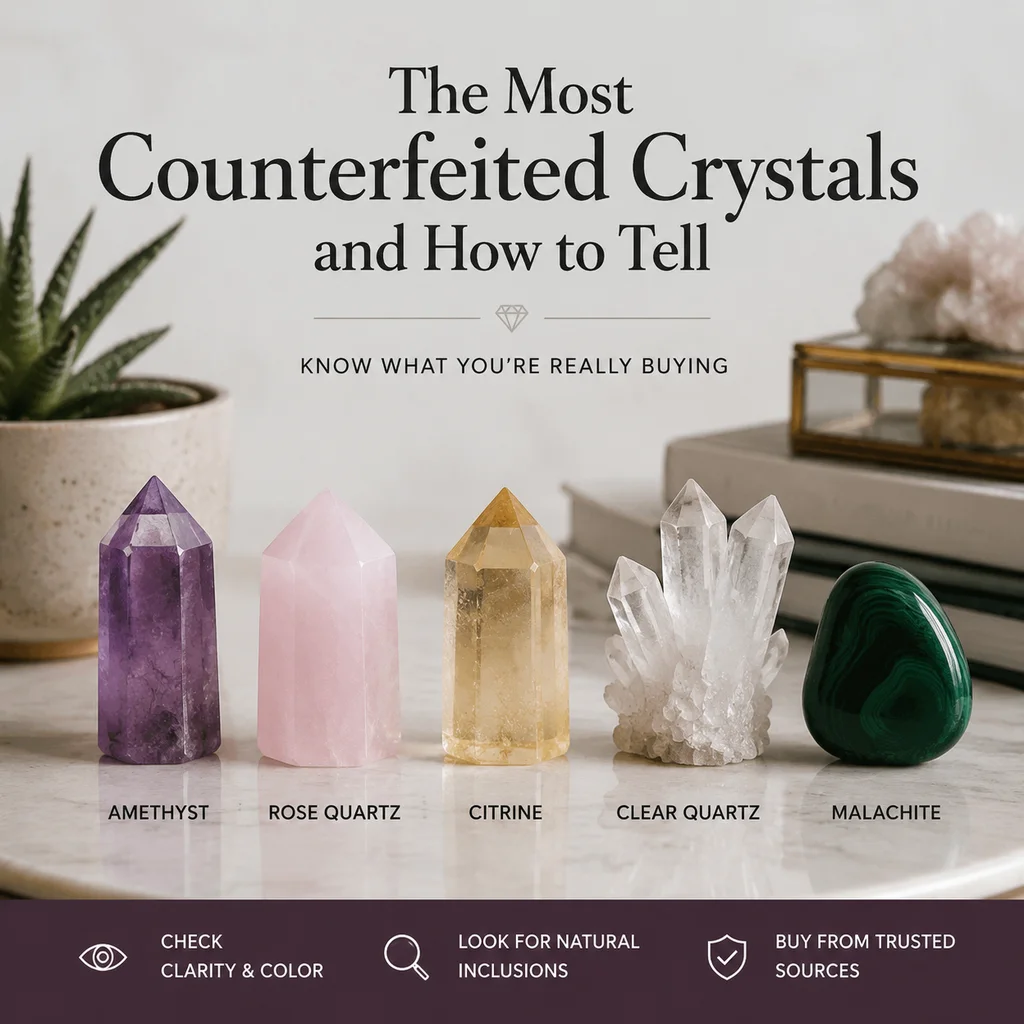
- Real amethyst has color zoning — the color varies in intensity throughout the crystal. Uniform purple is suspicious.
- Under magnification, real amethyst may have tiny natural inclusions; synthetic amethyst is often flawless
- Real amethyst crystals grow in geode formations with pointed terminations; fake "crystal clusters" may have an unnatural, manufactured look
Citrine
This is one of the biggest sources of confusion in the crystal market. Most "citrine" sold today is actually heat-treated amethyst.
Natural citrine vs. heat-treated amethyst:
- Natural citrine: Pale yellow to honey gold, often with slight smokiness. Rare and relatively expensive.
- Heat-treated amethyst: Deep orange to reddish-brown. Very common and inexpensive.
- Both are real quartz with the same chemical composition — heat-treated amethyst isn't "fake" per se, but it should be labeled accurately.
How to tell them apart:
- Color: Natural citrine is pale and warm. Heat-treated is deep orange to brownish-red.
- Price: If someone is selling "natural citrine" clusters for $10, it's almost certainly heat-treated amethyst.
- Crystal habit: Natural citrine crystals tend to have the same prismatic shape as other quartz varieties. Heat-treated amethyst clusters (sold as "citrine clusters") often retain the geode shape of their amethyst origins.
"Aura" Crystals (Angel Aura, Aqua Aura, Rainbow Aura)
Aura crystals are genuine quartz (or other minerals) that have been coated with a thin layer of metal (usually titanium, niobium, or gold) through a process called vapor deposition. The result is an iridescent, rainbow-like surface sheen.
Are they fake? They're treated, not fake. The base stone is real quartz; the surface color is from the metal coating. They should be labeled as "treated" or "coated" specimens. The coating can wear off over time, especially with frequent handling.
Moldavite
Moldavite is a natural green tektite (glass formed by a meteorite impact) found only in the Czech Republic. Genuine moldavite is scarce and relatively expensive ($30-100+ for small specimens).
What's fake:
- Green glass shaped to look like moldavite
- Synthetic green glass with fake "lechatelierite" textures
- Very common on online marketplaces
How to spot fakes:
- Real moldavite has a distinctive sculptured, deeply textured surface (called "texture" or "sculpturing") with ridges, pits, and valleys
- Real moldavite is translucent green (not opaque) and shows internal flow lines and bubbles
- Under UV light, genuine moldavite may show a faint green fluorescence
- If the price seems too good to be true ($5 for a "moldavite" pendant), it's almost certainly glass
Obsidian
Real obsidian is volcanic glass formed from rapidly cooled lava. It's naturally occurring but has the same basic composition as manufactured glass (SiO₂).
What's fake:
- Manufactured glass sold as obsidian
- Plastic or resin imitations (especially for "rainbow obsidian" and "gold sheen obsidian")
How to spot fakes:
- Real obsidian has conchoidal fracture — broken edges have smooth, shell-shaped curves. This is hard to fake.
- Real obsidian is heavier than you'd expect for glass; plastic imitations are noticeably lighter
- Real obsidian is opaque and very dark. If you can see through it easily, it's probably manufactured glass
- Rainbow and golden sheen obsidian should show chatoyancy (a moving band of light) when tilted. If the "flash" looks painted on or doesn't move with the viewing angle, it's suspect
Red Flags When Shopping
Watch for these warning signs when buying crystals:
- "100% natural" without specifics — Legitimate sellers specify the source, treatment status, and any enhancements
- Prices that seem too good — A $3 "natural emerald" or $5 "moldavite" is almost certainly not what it claims
- Perfectly uniform color — Nature rarely produces perfectly uniform specimens
- No inclusions at all — Especially in stones priced under $50. Truly flawless natural stones are expensive.
- Seller can't answer questions about origin or treatment — If they don't know, they haven't done their homework
- "Rare" stones at common prices — Charoite, sugilite, genuine moldavite, and natural alexandrite are genuinely rare and priced accordingly
- Excessive claims — "This crystal cures anxiety / attracts wealth / protects against EMF" — these are marketing claims, not mineral facts
FAQ
Q: Are heat-treated stones "fake"?
A: Not exactly. Heat treatment is a standard industry practice that's been used for centuries. Many commercial gemstones (including rubies, sapphires, and citrine) are heat-treated. The issue isn't the treatment itself — it's whether the seller discloses it. A heat-treated amethyst sold as "heat-treated citrine" is honest. The same stone sold as "natural citrine" is deceptive.
Q: Can I trust crystal shops at gem shows?
A: It varies. Established dealers at major gem shows usually know their stock and will disclose treatments if asked. Casual sellers at smaller shows may or may not know. Always ask about treatments and origin, and use the verification tests in this guide.
Q: Does being synthetic make a crystal worthless?
A: No. Synthetic crystals have the same chemical composition and crystal structure as natural ones. They're valued for their clarity, color consistency, and affordability. Many people prefer synthetic stones for jewelry because they're often clearer and more uniform than natural specimens. The key is knowing what you're buying and paying an appropriate price.
Q: How can I test turquoise at home?
A: The acetone test is the most accessible. Dip a cotton swab in acetone (nail polish remover) and rub it on a hidden area of the stone. If blue-green color comes off on the swab, the stone has been dyed. Real turquoise won't bleed color. For a non-destructive test, check the luster (real turquoise is waxy, not glassy) and the matrix pattern (natural veining is irregular).
Q: Is all cracked or included quartz genuine?
A: Not necessarily. Some sellers deliberately create fractures in quartz (through thermal shock or mechanical means) and then fill them with colored resin or glass, creating "aurora quartz" or "garden quartz" imitations. If the internal fractures look unnaturally colorful or the "inclusions" appear too perfectly arranged, investigate further.
Frequently Asked Questions
How do I know if a crystal I purchased is real or fake?
Inspect the crystal under a magnifying glass. Real crystals should have inclusions or imperfections that mimic their natural formation. Fakes often have unnatural clarity or color consistency.
Can I use salt to test a crystal for authenticity?
While this method is popular, it is not reliable. Real crystals will not react to salt; they may remain on the surface or stick to the sides of the crystal. For a proper test, seek a professional鉴定.
What is the best light to examine a crystal to check for fakes?
The most effective light for inspecting crystals is a black light or UV light. This exposes the natural colors and inclusions more clearly, helping to differentiate real crystals from their artificial counterparts.
How can I determine the quality of a natural crystal's clarity?
High-quality crystals have good clarity with minimal imperfections or inclusions. The clarity should be consistent throughout the crystal. Overly cloudy or overly clear crystals should be inspected further to verify authenticity.
What should I look for in the surface texture of a crystal?
A natural crystal should have a surface texture that mimics its formation. This could be a waxy or silky feel. Smooth, perfectly polished surfaces could indicate that the crystal has been heat treated or otherwise processed, potentially altering its authenticity.
Understanding the Basics
This section covers important aspects of understanding the basics. For detailed information, please refer to the FAQ section below.
Key Factors to Consider
This section covers important aspects of key factors to consider. For detailed information, please refer to the FAQ section below.
Step-by-Step Instructions
This section covers important aspects of step-by-step instructions. For detailed information, please refer to the FAQ section below.
Common Mistakes to Avoid
This section covers important aspects of common mistakes to avoid. For detailed information, please refer to the FAQ section below.
Comments