Optimize Your Crystal Bracelet Layering
May 31, 2026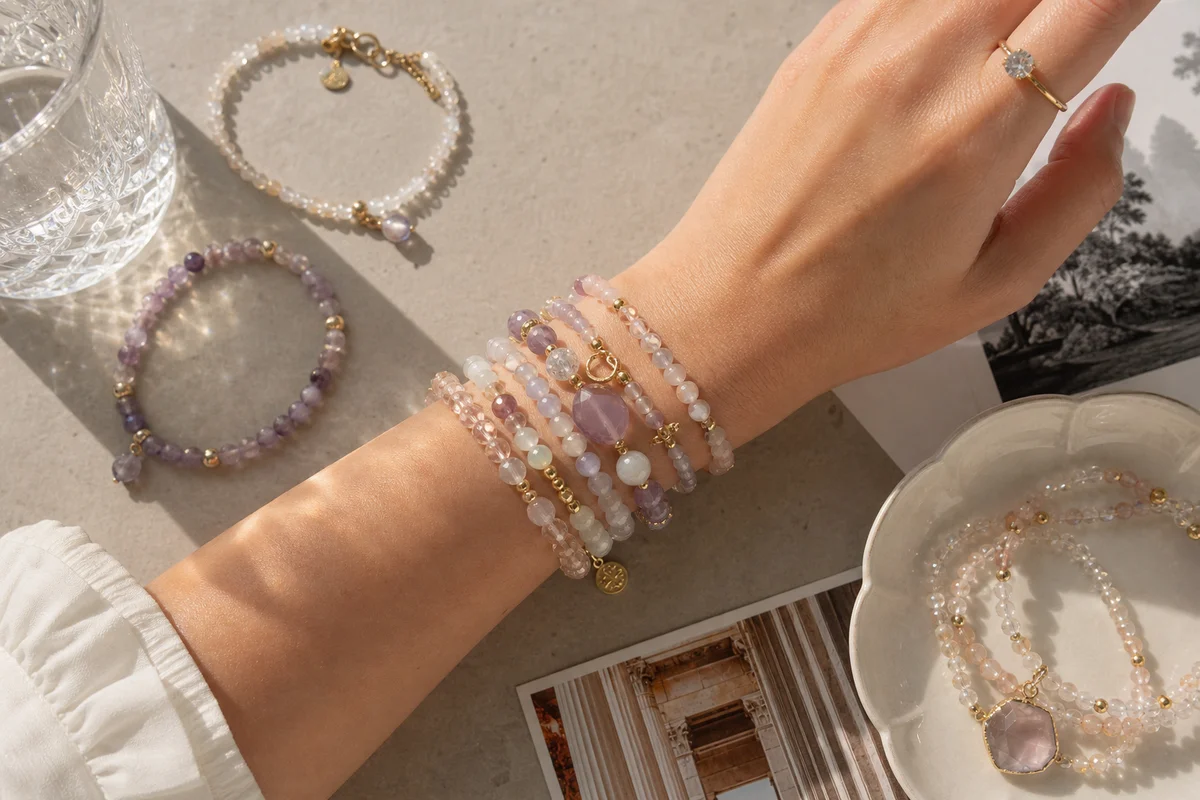
Crystal bracelet stacking has become one of the most popular ways to wear crystals, and for good reason. It lets you carry multiple stones throughout the day, creates visual interest, and can be customized to match your intentions, your outfit, or just your mood. But there's a difference between a thoughtful stack that looks put-together and a chaotic pile of beads on your wrist. This guide covers the practical, aesthetic, and structural considerations that make a stack work.
Before You Stack: The Hardness Rule
This is the single most important technical consideration when stacking crystal bracelets, and it's one most people learn the hard way — after their softer stones get scratched.
Every mineral has a Mohs hardness rating. When you stack bracelets, harder stones can scratch softer ones through normal movement. Quartz-based stones (amethyst, citrine, rose quartz, aventurine — Mohs 7) will easily scratch softer materials like calcite, selenite, fluorite, and malachite (Mohs 3-4). Even stones of similar hardness can wear each other down over months of daily contact.
The practical solution: keep your stack within a hardness range. A stack of quartz-family stones (amethyst, rose quartz, citrine, clear quartz, aventurine — all Mohs 6.5-7) will wear evenly without significant damage. Adding a tourmaline or garnet (Mohs 7-7.5) to this group is fine too. But combining, say, a malachite bracelet with a quartz bracelet means the malachite will gradually develop scratches.
If you want to include a softer stone in your stack, put it on a different wrist or wear it as a pendant instead. There's no structural workaround — physics doesn't care about your aesthetic vision.
Color Coordination: Three Strategies That Work
Color is where most people start when thinking about stacking, and it's a good starting point. Three approaches consistently produce visually appealing results.
Monochromatic Stacking
Choose one color family and vary the shade. All-blue stacks (blue lace agate + aquamarine + larimar + blue chalcedony), all-pink stacks (rose quartz + rhodonite + pink tourmaline + morganite), or all-green stacks (green aventurine + jade + peridot + malachite if you're okay with the hardness issue) look cohesive and sophisticated. The monochromatic approach works especially well when stones have different textures — one matte, one polished, one faceted.
Complementary Color Stacking
Use the color wheel as a guide. Purple and yellow (amethyst + citrine), blue and orange (sodalite + carnelian), pink and green (rose quartz + aventurine) create lively contrast that catches the eye. This approach is bolder and more playful than monochromatic, and it works best when you limit yourself to two main colors with a neutral bridge (like clear quartz or black tourmaline).
Earth Tone Stacking
Browns, blacks, grays, and warm tones create a grounding, versatile stack that pairs with virtually any outfit. Picture unakite (pink-green), picture jasper (brown-tan), tiger's eye (golden-brown), black tourmaline, and smoky quartz together. Earth tone stacks feel intentional even with mixed materials and textures because the colors naturally harmonize.
Size, Fit, and Comfort
Stacking multiple bracelets means your wrist needs to accommodate the combined width. Here's how to think about it.
Total width: A comfortable stack is typically 15-25mm of total width for most wrist sizes. Three standard 8mm beaded bracelets take up about 24mm. If you have a smaller wrist, use 6mm beads instead of 8mm to fit more bracelets comfortably. If you have a larger wrist, 10mm beads create a bolder look with fewer pieces.
Individual fit: Each bracelet should fit snugly enough that it doesn't slide off your hand easily, but loose enough that it doesn't restrict circulation or leave deep marks. A good test: you should be able to slide one finger between the bracelet and your wrist without forcing it. If a bracelet is too tight, the beads compress against each other and the stack becomes uncomfortable.
Spacer bracelets: Thin metal cuffs or plain cord bracelets between beaded bracelets create visual breathing room and prevent bead-to-bead friction. A simple silver or gold-toned chain bracelet breaks up a stack of five beaded bracelets into manageable groups and adds a jewelry element that elevates the overall look.
Clasp types: Stretchy elastic is the most common for beaded crystal bracelets, and it works well for stacking because it accommodates slight size variations. If a stretch bracelet loses its elasticity (which happens after 6-12 months of daily wear), restring it with new elastic — it's a 10-minute task that extends the life of the bracelet significantly.
Intention-Based Stacking
Beyond aesthetics, many crystal enthusiasts build stacks around specific intentions. This approach creates a purposeful collection rather than a random assortment.
The Protection Stack
Black tourmaline (grounding and shielding) + obsidian (absorbing negativity) + hematite (energetic armor) + smoky quartz (transmuting negative energy). This is a popular combination for people who work in stressful environments, spend time in crowded public spaces, or simply want a sense of energetic security. The all-dark color scheme looks sleek and intentional.
The Calm Stack
Amethyst (peaceful energy) + blue lace agate (soothing communication) + lepidolite (emotional balance — lithium-rich) + clear quartz (amplifying the calm). Light purple, soft blue, and clear white create a gentle palette that reflects the intention. This stack works well for people managing anxiety, preparing for stressful situations, or establishing a calming daily routine.
The Energy Stack
Citrine (motivation and creativity) + carnelian (courage and action) + sunstone (joy and vitality) + red jasper (stamina and endurance). Warm oranges, golds, and reds create a vibrant, energizing visual. This is a popular stack for morning wear, workout motivation, or creative work sessions.
The Love Stack
Rose quartz (unconditional love) + rhodonite (emotional healing) + pink tourmaline (heart chakra activation) + kunzite (compassionate love). The pink palette is unmistakable and works beautifully for self-care focus, relationship work, or simply because you love the color.
Mixing Materials: Crystal + Metal + Wood
The most interesting stacks combine different materials. Here's what works and what doesn't.
Crystal + silver metal: Classic combination. Silver chain bracelets, hammered silver cuffs, and silver charms work between crystal beaded bracelets. Silver pairs especially well with blue, purple, and clear crystal colors.
Crystal + gold metal: Warmer and more luxurious. Gold-toned chains and cuffs elevate a stack and pair naturally with peach, yellow, amber, and brown crystal tones. Rose gold bridges warm and cool tones.
Crystal + wooden beads: Sandalwood, rudraksha, and other wooden bead bracelets add texture and earthiness to a crystal stack. They also bring down the visual weight — a stack of five heavy stone bracelets can look bulky, but replacing one or two with wooden bead bracelets creates a lighter, more balanced look.
Crystal + leather cord: Leather wrap bracelets that combine crystals with braided leather are popular, but stacking them with standard beaded bracelets requires care. The leather can catch on beads and create friction points. Use leather wraps as a single statement piece rather than as part of a multi-bracelet stack.
Common Stacking Mistakes to Avoid
Too many bracelets: More isn't always better. Beyond 5-6 bracelets, the stack starts to look cluttered rather than curated. Your wrist should be able to move freely, and the individual bracelets should still be identifiable, not lost in a mass of beads.
Conflicting intentions: If you believe in the energetic properties of stones, be aware that some traditions suggest certain combinations counteract each other. For example, combining highly energizing stones (carnelian, sunstone) with deeply calming stones (lepidolite, blue lace agate) might not serve a clear intention. If intention matters to you, define what you want from the stack before choosing stones.
Ignoring your activities: A delicate 6mm bead stack looks beautiful for office work or socializing but isn't suitable for the gym, cooking, or any activity where bracelets might catch on things. Have a "daily" stack for regular wear and a "special" stack for occasions.
Size mismatch: Mixing very large beads (12mm+) with very small beads (4mm) in the same stack creates visual imbalance. Stick to similar bead sizes within a 2mm range, or use a spacer bracelet to transition between size groups.
Frequently Asked Questions
How many crystal bracelets should I wear at once?
Three to five is the sweet spot for most people. Fewer than three doesn't really constitute a "stack," while more than five starts to look cluttered and becomes uncomfortable for many wrist sizes. Start with three and add more as you find combinations that work.
Can I wear crystal bracelets on both wrists?
You can, but consider the hardness rule for both wrists. Some crystal traditions suggest wearing "receiving" stones on the left hand and "projecting" stones on the right, though this is a cultural convention rather than a geological requirement. If you're stacking on both wrists, consider making each wrist a separate, coordinated stack rather than randomly distributing bracelets.
Do crystal bracelets lose their properties when stacked together?
From a scientific perspective, mineral properties don't change based on proximity to other minerals. From a crystal tradition perspective, some practitioners believe that certain stones amplify each other while others can interfere. If this matters to you, research stone compatibility before combining. If not, wear whatever appeals to you aesthetically.
How do I clean a bracelet stack?
Remove the bracelets and clean each one individually. Most quartz-family stones tolerate warm water and mild soap. Dry thoroughly before restringing if any have loosened. Avoid cleaning the whole stack at once — water and soap can get trapped between bracelets where they overlap, potentially degrading elastic or string over time.
Frequently Asked Questions
Which wrist should I wear my crystal bracelet stack on?
Your wrist choice depends on your intentions. The left side is your body's receiving side, perfect for drawing in calming energy, love, or abundance. The right side is the giving side, ideal for projecting protection, confidence, or grounding energy outward. Trust your intuition when styling your handcrafted SagStone jewelry to build a beautifully balanced stack that supports your personal goals.




Comments