The Complete Guide to Gemstone Cutting Styles and Techniques
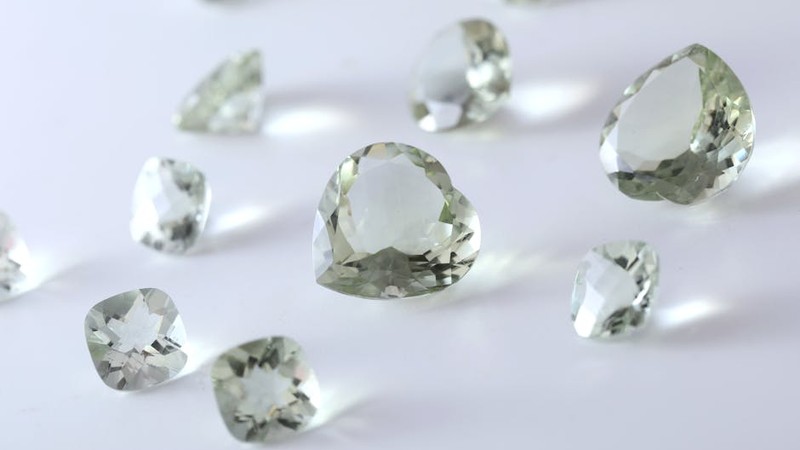
A couple of years ago, I went to a gem and mineral show in Tucson—not the massive main one, but one of the smaller satellite shows. There was a dealer who had a display that stopped me in my tracks. On the left side of his case, he had a piece of rough aquamarine, maybe 12 carats, still in its natural crystal form. On the right, he had that same stone—except it had been cut into a stunning elongated cushion shape. The price tag on the rough was $200. The price tag on the cut stone was $2,800.
Same stone. Same material. A 14x difference in value, entirely because of how it was cut.
That's when I started taking gemstone cutting seriously. Not as a cutter myself—I don't have the equipment or the patience for that—but as someone who wanted to understand why certain cuts look the way they do, and more importantly, why they're priced the way they are. This guide is everything I've learned since that show, written for anyone who wants to look at a gemstone and actually understand what they're seeing.
Why Cutting Matters So Much
Before getting into specific cut types, it helps to understand what cutting actually does to a gemstone. A raw crystal, no matter how beautiful its color, doesn't show you its full potential. Cutting is what unlocks three critical qualities:
Brilliance is the white light that bounces back out of the stone toward your eye. A well-cut gemstone acts like a hall of mirrors inside, with each facet angled to redirect light back up through the top of the stone. If the angles are wrong, light leaks out the sides or bottom and the stone looks dark and lifeless.
Fire (or dispersion) is the rainbow effect you see when white light splits into its component colors. Diamond is famous for this, but many colored gemstones also display fire when cut properly—sphene, demantoid garnet, and zircon come to mind. Fire depends on both the material and the facet arrangement.
Color presentation is unique to colored stones. Unlike diamonds, where you're mostly managing light return, colored gemstones have their own body color that needs to be enhanced, not overwhelmed. A cut that's too deep can make a light-colored stone look too dark. A cut that's too shallow can make a dark stone look washed out. The cutter has to read the rough and decide how to bring out the best color.
A skilled cutter is essentially negotiating between these three factors. Push too hard for brilliance and you might wash out the color. Optimize for color and you might sacrifice fire. That balancing act is why two stones of the same type and weight can look completely different after cutting.
The Classic Round Brilliant Cut
The round brilliant is the most common gemstone cut in the world, and for good reason—it's been mathematically optimized over more than a century to maximize light return. A standard round brilliant diamond has 57 facets (58 if you count the culet, the tiny flat point at the bottom, though most modern stones have a pointed culet instead).
The arrangement is specific: 8 star facets, 8 bezel (or kite) facets, 16 upper girdle facets on the crown (top half), and 16 lower girdle facets plus 8 pavilion mains on the pavilion (bottom half). Every single one of these angles has been calculated to bounce light back toward the viewer.
For diamonds, the round brilliant is the gold standard. It's also used for colored stones, though it works best for lighter-colored gems where you want maximum brilliance. For deeply saturated stones like dark rubies or sapphires, a round brilliant can sometimes make the color look too concentrated and dark.
When buying a round brilliant, the key metric for diamonds is the cut grade on the GIA certificate—Excellent, Very Good, Good, Fair, or Poor. For colored stones, there's no standardized cut grading system, so you have to rely on your eye: does the stone look bright and lively, or does it have dark patches?
Oval Cut
The oval is essentially a stretched round brilliant, maintaining the same facet pattern but in an elongated shape. It's one of the most popular cuts for colored gemstones, especially sapphires, and it has a practical advantage: for the same carat weight, an oval looks larger face-up than a round.
That size-per-carat advantage is significant. A 1-carat round diamond is about 6.4mm across, while a 1-carat oval can be 7-8mm long depending on the length-to-width ratio. Visually, the oval looks noticeably bigger, which is one reason it's popular in engagement rings for people who want a larger-looking stone on a budget.
The ideal length-to-width ratio for an oval is around 1.33:1 to 1.5:1. Too elongated and it starts looking like a rectangle with rounded ends. Too squat and it might as well be round. There's also a technical issue to watch for: ovals can show a bow-tie effect, a dark area across the center that happens when the pavilion facets don't reflect light properly. Not all ovals have this, but it's worth checking when you're evaluating a stone.
Pear (Teardrop) Shape
The pear shape combines the rounded end of an oval with a pointed end, creating a teardrop silhouette. It's a beautiful, feminine shape that has one notable optical trick: when worn as a ring, the pointed end follows the line of your finger, making your hand look longer and more elegant.
Like the oval, the pear cut is based on the brilliant facet pattern, so it has excellent light return when well-cut. The pointed end is the tricky part for cutters—it's easy to make the point too thin (fragile) or too blunt (loses the shape's character). A well-cut pear should come to a clean point without looking like it could snap off.
For pendants, pear shapes are ideal because the natural drop follows the line of a chain. For rings, positioning matters: traditionally the point faces toward your fingertips, though some people prefer it the other way. If you're setting a pear in a ring, make sure the point is protected by the setting, as it's the most vulnerable part of the stone.
Marquise (Navette) Cut
The marquise is an elongated shape with pointed ends on both sides, like a football or an eye. Legend says it was commissioned by King Louis XIV of France to match the smile of his mistress, the Marquise de Pompadour. Whether that's true or not, it's a good story.
The marquise has a unique advantage among all gemstone cuts: it has the largest face-up surface area per carat of any cut. A 1-carat marquise can look dramatically bigger than a 1-carat round or even a 1-carat oval. If "looking big" is a priority for you, the marquise delivers.
Like ovals, marquise cuts can show a bow-tie effect if poorly cut. The ideal length-to-width ratio is about 1.75:1 to 2.25:1. The pointed ends are both vulnerable to chipping, so they need good protection in the setting. A prong at each tip is standard for rings.
One thing to note: marquise cuts are less common in colored gemstones than in diamonds. When you do find colored marquise stones, they tend to be in lighter colors where the brilliance of the brilliant-cut faceting really shows.
Princess Cut
The princess cut is a square (or sometimes slightly rectangular) cut with a brilliant facet pattern. It's the second most popular diamond cut after the round brilliant, and it's easy to see why—it has a modern, geometric look that works beautifully in contemporary jewelry designs.
Despite being square, the princess cut actually has more fire than many other cuts because of its sharp, angular facet intersections. Light bounces around inside a well-cut princess in a way that creates visible rainbow flashes, especially under point lighting like candlelight or spotlights.
The thing about princess cuts that surprised me is how much the proportions matter. A princess cut with a 70% depth (meaning the stone's depth is 70% of its width) looks significantly smaller face-up than one with a 65% depth, even if they're the same carat weight. If you're comparing princess cuts, always look at the millimeter measurements, not just the carat weight.
For colored stones, princess cuts work best in lighter colors. The strong light return can wash out the color in pale stones, but it can also make saturated stones look too dark. Medium-saturated gems in the blue-to-green range tend to look gorgeous in princess cuts.
Emerald (Step) Cut
The emerald cut is fundamentally different from all the cuts I've mentioned so far. Instead of brilliant faceting (where facets radiate from the center to maximize light return), the emerald cut uses stepped facets—parallel rows of rectangular facets that create a "hall of mirrors" effect.
It was originally developed for emeralds because the step cut's large, open table (the top facet) lets you see deep into the stone and appreciate its color. Brilliant cuts create a lot of sparkle that can actually distract from body color in deeply saturated stones. Step cuts let the color speak for itself.
Emerald cuts also have a distinctly elegant, architectural quality. They look clean and sophisticated, which is why they're popular in high-end jewelry and have a timeless appeal. The long step lines create a window into the stone that's quite different from the scattered sparkle of brilliant cuts.
The trade-off is that step cuts show inclusions much more than brilliant cuts. With a brilliant cut, the facets scatter light in a way that hides small imperfections. With a step cut, the large flat facets make every flaw visible. That's why step cuts require higher-clarity rough. This is also why emerald cut diamonds with VS clarity or better are significantly more expensive than brilliant cuts of the same clarity—there's less room for imperfections.
Emerald cuts work wonderfully in larger sizes. Below about 0.5 carats, the step pattern is hard to appreciate. Above 1 carat, the geometry becomes really striking. For colored stones, emerald cuts are ideal for any gem with strong color and decent clarity—aquamarine, morganite, tourmaline, and of course, emerald.
Heart Shape
The heart shape is exactly what it sounds like—a faceted gemstone in the shape of a heart. It's the most obviously romantic of all gemstone cuts, which makes it a popular choice for sentimental jewelry and Valentine's Day pieces.
What most people don't realize is how technically demanding the heart cut is. The cleft (the dip between the two lobes at the top) and the point at the bottom both create areas where light performance is hard to optimize. Getting both lobes to match perfectly in terms of color and brilliance requires an extremely skilled cutter.
This is why well-cut heart shapes command a premium. A badly cut heart is easy to spot—the lobes might be different sizes, the cleft might be too shallow or too deep, or there might be a dark spot right at the point. A well-cut heart should look symmetrical and lively across its entire surface.
Hearts below 0.5 carats tend to look like blobs rather than hearts—the shape definition gets lost at small sizes. For the shape to read clearly, you generally need at least 0.75 carats for diamonds, and the colored stone equivalent in terms of millimeter size.
Cushion (Pillow) Cut
The cushion cut has been enjoying a massive comeback in recent years, partly because of the vintage jewelry trend. It's a rounded square or rounded rectangle shape with softened corners—literally shaped like a cushion or pillow.
Historically, the cushion cut was the precursor to the modern round brilliant. Older cushion cuts (sometimes called "old mine" cuts) have deeper proportions and larger facets that create a distinctive soft, chunky sparkle—less precise than a modern brilliant, but with a warmth and personality that many people find appealing.
Modern cushion cuts can be either brilliant or modified brilliant, meaning they maintain the rounded square shape but with a facet pattern closer to a round brilliant. These have more fire and brilliance than antique cushions while keeping the appealing shape.
The cushion cut is particularly beautiful in colored gemstones. The slightly deeper proportions and broader facets enhance color saturation, making the stone look richer. Padparadscha sapphires, alexandrites, and imperial topaz look absolutely stunning in cushion cuts. There's something about the combination of the warm, rounded shape and the concentrated color that feels luxurious.
Like ovals and marquise cuts, cushions can show a bow-tie effect, especially in the more elongated rectangular variations. Square cushions with a 1:1 ratio tend to have the most even light distribution.
Specialty and Fancy Cuts
Beyond the classic shapes, there are several specialty cuts worth knowing about:
radiant cut is essentially a rectangular brilliant cut with trimmed corners. It was designed to combine the shape of an emerald cut with the sparkle of a brilliant cut. It's a great option if you love the rectangular shape but want more fire than a step cut provides.
Asscher cut is a square step cut with dramatically trimmed corners, creating an almost octagonal outline. It's a vintage cut from the 1920s that has a unique art deco quality. The high crown and deep pavilion create a mesmerizing "hall of mirrors" effect. Asscher cuts have become much more popular since the Art Deco revival in jewelry design.
Trillion (Trilliant) cut is a triangular brilliant cut, often used as a side stone paired with a larger center stone. It has surprising brilliance for its shape and can also work as a standalone center stone in more avant-garde designs.
Barion cut is a modified brilliant cut with a mixed facet pattern—brilliant facets on the pavilion and step facets on the crown (or vice versa). It's less common but produces beautiful light patterns. Some cutters use barion-style cutting for colored stones to get better color face-up.
How to Choose the Right Cut
Here's the practical framework I use when evaluating a gemstone's cut:
For diamonds: stick to GIA Excellent or Very Good cut grades. The difference between Excellent and Good is visible to the naked eye, especially in larger stones. Pay attention to the depth and table percentages—GIA publishes ideal ranges for each shape. For round brilliants, look for depth between 59-62.4% and table between 53-58%.
For colored gemstones: there's no standardized grading, so you have to train your eye. Look at the stone face-up under good lighting and ask yourself three questions: Is the color even across the stone? Does it look bright and lively or dark and dead? Can you see through the stone or is it too dark in the center? If the answer to the first is yes and the second is "bright and lively," you're probably looking at a well-cut stone.
For your specific priorities: if maximum size appearance per carat matters, go with marquise or oval. If you want the most sparkle, round brilliant or princess. If you love color depth and elegance, emerald or cushion. If romance is the theme, pear or heart.
How Cutting Affects Price
The pricing impact of cutting is dramatic and often misunderstood. Here's what drives the cost differences:
Weight retention is the biggest factor. A rough gemstone crystal might weigh 2 carats, but cutting it into the optimal shape for beauty might leave you with a 0.8-carat finished stone. Cutters have to choose between maximizing beauty (which usually means cutting away more rough) and maximizing weight (which means keeping more rough but compromising on angles). Well-cut stones that prioritize beauty over weight retention cost more per carat because more rough was sacrificed.
Cutting difficulty matters too. Round brilliants are actually relatively straightforward for experienced cutters—they're standardized and the angles are well-established. Hearts, marquises, and specialty cuts require more skill and more time, and the risk of ruining the stone is higher. That risk is baked into the price.
Cut precision separates commercial-grade stones from premium ones. A commercial round brilliant might have a Good cut with slightly off proportions. A premium stone with Excellent cut has facets aligned to within a fraction of a degree. The precision takes more time, more skill, and often means rejecting stones that don't meet the standard.
For colored gemstones specifically, the orientation of the cut relative to the crystal axis can dramatically affect both color and value. Some stones display different colors from different angles (pleochroism), and the cutter has to choose which direction to orient the table. A poorly oriented sapphire might show a grayish face-up view, while a properly oriented one displays rich blue. This alone can account for a 2-3x price difference between otherwise similar stones.
Understanding gemstone cutting completely changed how I shop for stones. I used to just look at carat weight and color. Now I know that the cut is what makes all the difference between a stone that's merely pretty and one that's genuinely stunning. That aquamarine at the gem show taught me a lesson I'll never forget—cutting isn't just a finishing step, it's the thing that transforms a rock into a jewel.
Comments