The Perilous Dance of Salt Water and Crystals: A Closer Look
We all know crystals are super cool and add this chill vibe to our lives. But, guess what? Not all crystals are the same. Some are like the weakest link when it comes to salt water. It's like a sneaky little enemy to their delicate parts. So, let's dive into the science-y stuff about why some crystals go all wonky in salt water and see what makes each mineral so unique.
Pyrite: The Sparkling Fool's Gold
Oh, you've got to check out this pyrite stuff, also known as "fool's gold." It's super shiny and looks like the real thing, but it's not. It's actually iron sulfide (FeS2). And get this: if you toss it in salt water, the sulfide ions oxidize and turn into iron sulfates. It's like watching it slowly lose its sparkle and get all dull. Kind of a bummer, but super interesting nonetheless!
Hematite: The Iron-Clad Vulnerability
Oh, hematite is such a cool mineral, isn't it? It's got this dark red or metallic gray look that really catches your eye. It's all about that iron oxide, which is why its chemical formula is Fe2O3. But the thing is, the iron in hematite is a real showstopper – it's super reactive. If it runs into salt water, it can start to dissolve, and that's not good for the crystal. It can really mess with the crystal's structure, causing it to lose its shine and get all pitted and flaky. Kinda sad to see, honestly.
Malachite: The Green Guardian's Dilemma
Malachite, oh man, it's like the poster child for bright green minerals! It's actually made of copper carbonate hydroxide, and its chemical name is Cu2CO3(OH)2—kind of a tongue twister, huh? But here's the catch, it's a total magnet for salt water. The copper in it? It loves to party with chloride ions from salt, creating this copper chloride thing that's not as chill. And trust me, it can make malachite dissolve faster than you can say "ocean breeze." I'm head over heels for its color, but it's like the ocean's kryptonite. You gotta be super careful with it if it's going to chill near the salty sea.
Selenite: The Delicate Elegance of the Crystal Queen
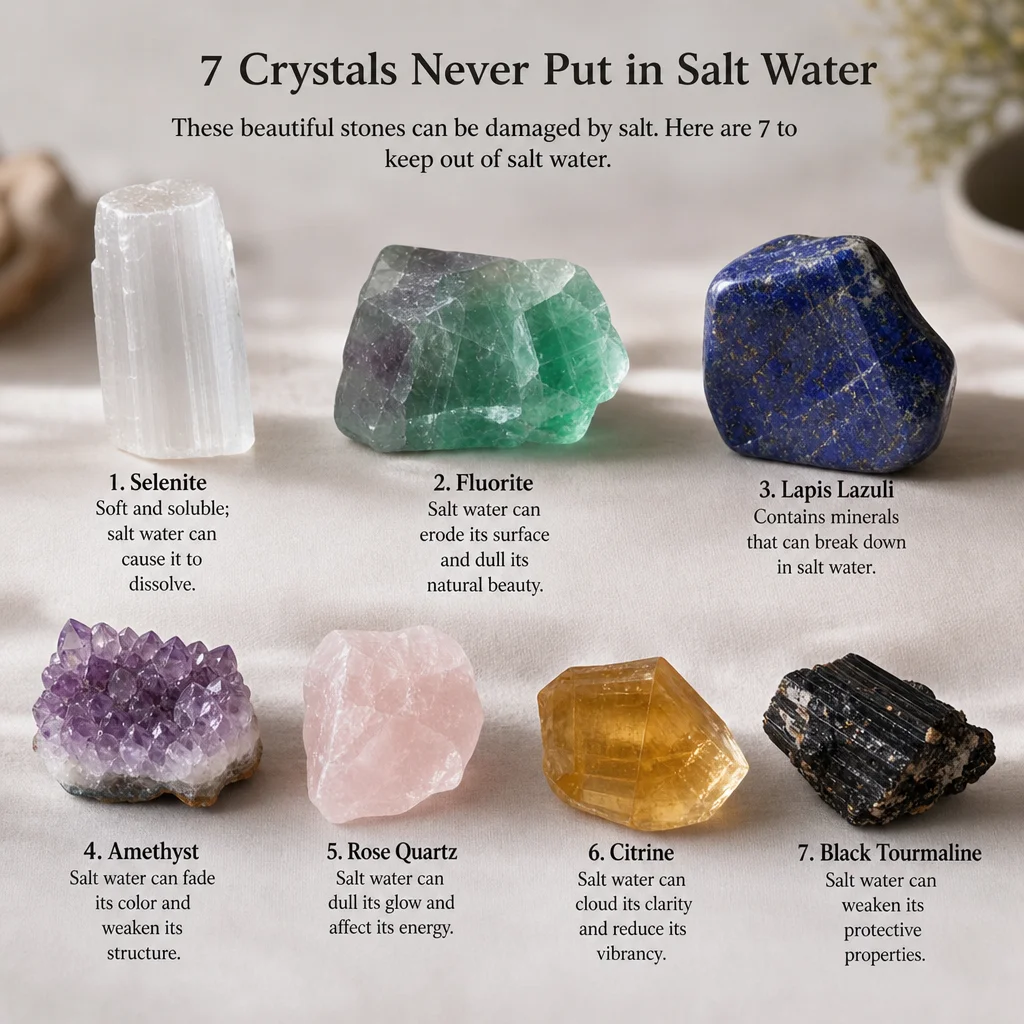
Selenite, you know, it's this clear, colorless to white hexagonal crystal with the chemical formula SeO3. It's super delicate, like, just think of it dissolving in water – it's like magic. But, hey, if it lands in salt water, it's gone in a flash! It leaves just a faint mark behind. Salt ions, man, they're the real deal when it comes to speeding up that process. So, selenite is like the crystal queen, but the thing is, she's super vulnerable to salt water damage. Honestly, it's fascinating!
Calcite: The Carbonate's Dance Party
Oh, calcite, right? It's this super chill carbonate mineral, you know, with the CaCO3 stuff. So, when it hangs out with salty water, it's like, "Hey, you there?" And then, bam! The carbonates and chloride ions start this little dance. And get this— they make calcium chloride! It's like they're throwing a rockin' party and calcite's surface gets all etched up, leaving this not-so-smooth surface. Kinda cool, but honestly, a bit of a bummer too.
Turquoise: The Blue Beauty's Absorption
Turquoise, yeah, it's that awesome blue stone. It's a hydrous phosphate mineral, and it's got all these scientific-sounding names. But what I really dig about it is how it absorbs minerals from saltwater. It gets a bit crusty and changes color over time, which is a bummer, but hey, that's just part of the appeal!
Lapis Lazuli: The Mosaic of Mysteries
Oh, Lapis Lazuli, you're such an intense blue gem! It's all about this mineral called lazurite, and then there's that shiny pyrite and the calcite. But the thing is, when the pyrite meets salt water, it gets this rusty look, and it actually makes iron sulfates. And get this, the calcite can even dissolve, making the lapis super fragile. Not so cool for our favorite lapis, honestly.
Safe Alternatives: Dry Brush, Sound, and Smoke
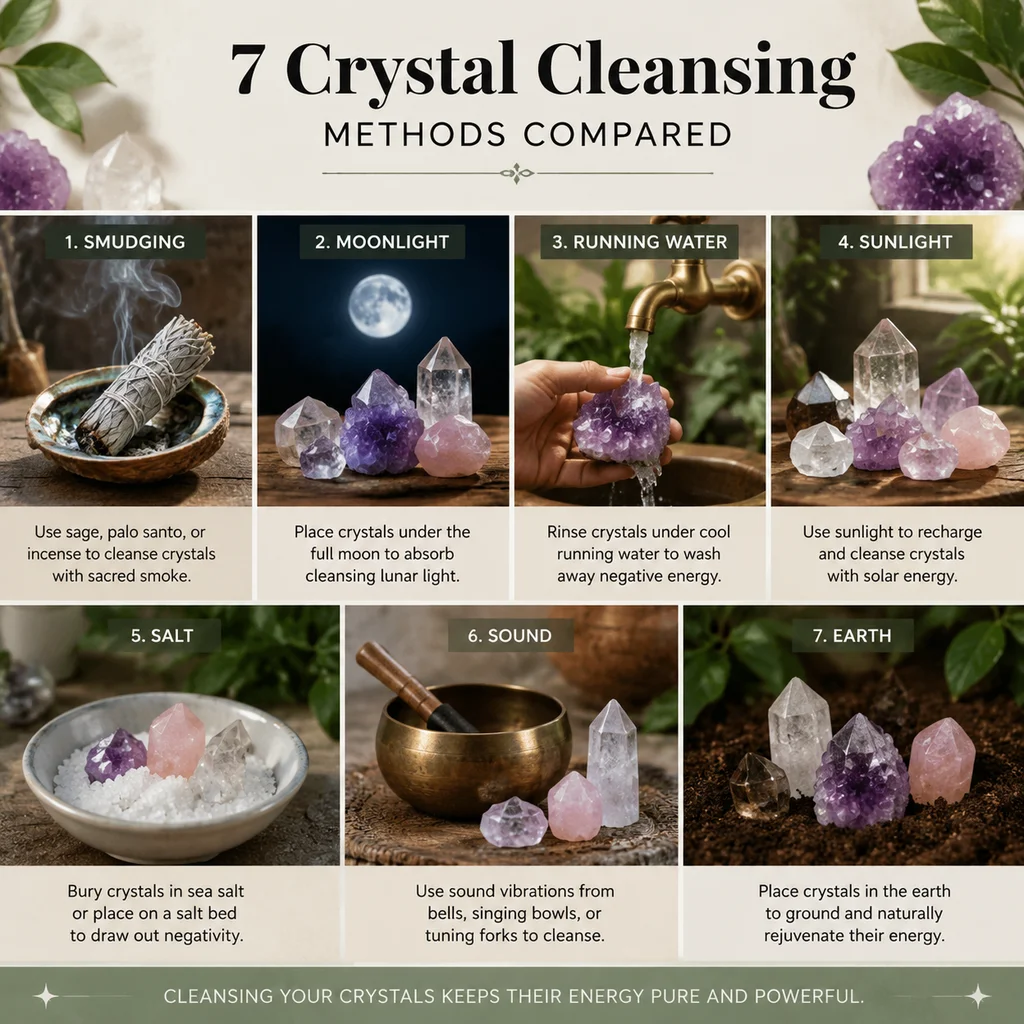
Hey, so salt water can totally mess with your crystals, but no fear, there are some really neat ways to keep 'em safe. Dry brushing is the bomb, it wipes away that gross salt gunk. And get this, sound and smoke are like crystal superheroes. They purify and give them a little energy jolt. It's like they're reborn, super vibrant and all!
FAQ
**Q: Can salt water mess up all crystals?**
A: Oh, no way! Crystals like quartz and amethyst are tough cookies. They can handle a little splash of salt water and still be fine.
**Q: How do I know if my crystal got icky from salt water?**
A: Just take a good peep at it. If it's got spots or lines or just looks a bit dull, it might have had a bumpy ride in the salty stuff.
**Q: Can I fix a crystal if it got damaged by salt water?**
A: It's hit or miss. You can give it a scrub, but if it's totally toasted, it might not bounce back.
**Q: Are there any crystals that are totally bulletproof against salt water damage?**
A: Yeah, for sure! Quartz and amethyst are like the crystal superheroes. They're cool as a cucumber near the ocean.
So, you know, working with crystals and salt water is like a whole guessing game. Figuring out what your crystal can take is super important for keeping them looking good. Whether you're a crystal buff or just starting out, knowing the ropes can help keep your crystals in tip-top shape.
Oh no, crystals and salt water don't mix! Let's talk about why they get damaged.
So, I've found that crystals are super cool, but the thing is, they're super sensitive too. I mean, honestly, I've had a few break on me just from a little splash of salt water. It's like, they're delicate, you know? And it's not just salt water, either. Any water with minerals in it can be a problem. It's just one of those things you gotta watch out for.
Now, I've heard some people say they can use crystals in the shower, but I'm not so sure about that. I think it's safer to just keep them away from water altogether. And definitely, no swimming in a pool with them on! It's not worth the risk. Just a little splash can do a number on them.
The thing is, once they're damaged, it's hard to fix them. They might crack or fade, and that's a bummer. So, I've learned my lesson. I keep my crystals dry and away from any water. It's all about that extra care, you know?
Hey, we all adore our crystals for their beauty and those magical healing vibes. But, honestly, it's crucial to know that not all of 'em play nice with salt water. So, here's the dirt on the crystals that get real icky in salt water and how it messes with 'em.
1. Pyrite Oxidizes
Hey, have you heard about "Fool's Gold"? It's actually pyrite, this cool metal sulfide with that fancy chemical name, FeS2. But here's the thing, when it gets wet with salt water, the sulfur in it starts a reaction with oxygen. And just like that, voilà! You get this rust-looking iron oxide on the surface. Kinda neat, huh? Honestly, I've found it super interesting.
2. Hematite Dissolves
Oh, hematite is totally rad, right? It's got this secret code, Fe2O3, which is like its hidden superpower. It's a big deal 'cause it's a key player in making iron. And guess what? When it hangs out in water with salt, it slowly breaks down over time. Super cool, honestly!
3. Malachite Copper Reacts
So, malachite, right? It's got that rad chemical formula, Cu2CO3(OH)2. It's like a copper carbonate hydroxide vibe. But here's the kicker, if it gets a whiff of saltwater, the copper gets all washed away, and then it gets all funky and loses its sparkle. Not cool, honestly.
4. Selenite Dissolves
Hey, so selenite is this crystal thing made from selenic acid, which is just a fancy name for H2SeO4. It's like, super attracted to water. Like, if you drop it in, it's like, "Oh, hello water!" It just kind of melts away. And if you throw some saltwater in there, it's the cherry on top. It makes it go super fast, so the crystals are like, "Bye-bye!" in no time!
5. Calcite Etches
Oh, calcite! Such a cool mineral, right? It's CaCO3, which is its fancy name. It's pretty much like a regular mineral, but the thing is, it's got this wild side. It can actually get etched by saltwater's acidic side, which is pretty neat, if you ask me. But, yeah, it leaves these pesky white spots and pitting on the surface. Not the best look, but hey, that's part of its charm, honestly.
6. Turquoise Absorbs
So, turquoise is this awesome crystal that's all about hydrated copper aluminum phosphate. It's like a magnet for yucky stuff in water. I've found that saltwater can totally mess with it, making it lose its color and sparkle. It's such a bummer when that happens.
Hey, look at this awesome Lapis Lazuli Pyrite Rust and Calcite Dissolves stuff! It's so cool.
Hey, so Lapis Lazuli is a total gem! It's got this cool mix of pyrite and calcite. The pyrite, it's like a mini rust party, right? And the calcite? It's a total chameleon in saltwater, totally changing the lapis's color and texture. It's kind of neat, honestly!
"Crystals are not a substitute for medical treatment. While many believe in the healing properties of crystals, they should be used as a complement to traditional medical care."
Comparative Table of Salt Water Damage on Crystals
| Crystal |
Chemical Formula |
Reaction with Salt Water |
| Pyrite |
FeS2 |
Oxidizes, rusts |
| Hematite |
Fe2O3 |
Dissolves |
| Malachite |
Cu2CO3(OH)2 |
Leaches copper |
| Selenite |
H2SeO4 |
Dissolves |
| Calcite |
CaCO3 |
Etches, pitting |
| Turquoise |
CuAl6(PO4)4(OH)8·4H2O |
Discolors, absorbs impurities |
| Lapis Lazuli |
Varied (contains pyrite and calcite) |
Pyrite rusts, calcite dissolves |
Safe Alternatives to Protect Your Crystals
When it comes to protecting your crystals from salt water damage, there are several safe alternatives to consider:
- Dry Brush: Gently brush your crystals with a soft-bristled brush to remove any saltwater residue after use.
- Sound: Play soothing music or sounds to create a calming environment for your crystals.
- Smoke: Use smoke from sage or incense to purify the energy around your crystals and prevent negative influences.
Understanding Mineral Solubility and the Mohs Hardness Scale
To understand why certain crystals succumb to salt water, we must look at the Mohs Hardness Scale. Developed in 1812 by German geologist Friedrich Mohs, this scale ranks minerals from 1 to 10 based on their scratch resistance. Stones ranking lower on the scale, such as selenite (a 2) or calcite (a 3), are inherently softer and physically porous. When submerged in salt water, the saline solution easily penetrates their microscopic fissures. As the water eventually evaporates, expanding salt crystals are left behind, causing the delicate stone to fracture, splinter, or lose its structural integrity from the inside out.
Beyond physical hardness, mineral solubility plays a critical role in how crystals interact with liquid. Some stones contain chemical compounds that naturally dissolve when exposed to water, regardless of salt content. For instance, halite is literally a rock salt crystal, meaning it will rapidly melt and dissolve in a water bath. Similarly, minerals containing high levels of copper, iron, or other reactive metals can undergo rapid oxidation when introduced to a saline solution. This chemical reaction leads to rust, structural breakdown, and a permanently altered, dull appearance that ruins the aesthetic and energetic value of the stone.
Emergency Care: Steps to Take If Your Crystal Gets Wet
Accidents happen, and occasionally, a vulnerable stone might accidentally take a plunge into the ocean or a saltwater bowl. If your crystal makes contact with salt water, immediate action is required to prevent irreversible chemical and physical damage. First, quickly remove the crystal from the water and rinse it under a gentle stream of pure, room-temperature distilled water. It is crucial to use distilled water rather than tap water, as tap water contains additional trace minerals and chlorine that could react further with the stone's surface or leave behind cloudy deposits.
Once the salt residue is completely rinsed away, carefully pat the crystal dry using a microfiber cloth or a soft paper towel. Avoid rubbing vigorously, as lingering salt granules can act like sandpaper and leave permanent micro-abrasions on the stone's surface. Instead, gently dab the moisture away. Finally, place the crystal in a dry, well-ventilated area away from direct sunlight to air-dry completely for the next 24 to 48 hours. Allowing the stone to rest undisturbed ensures that no residual moisture remains trapped in tiny internal crevices, preserving the crystal's natural polish and longevity.
Frequently Asked Questions (FAQ)
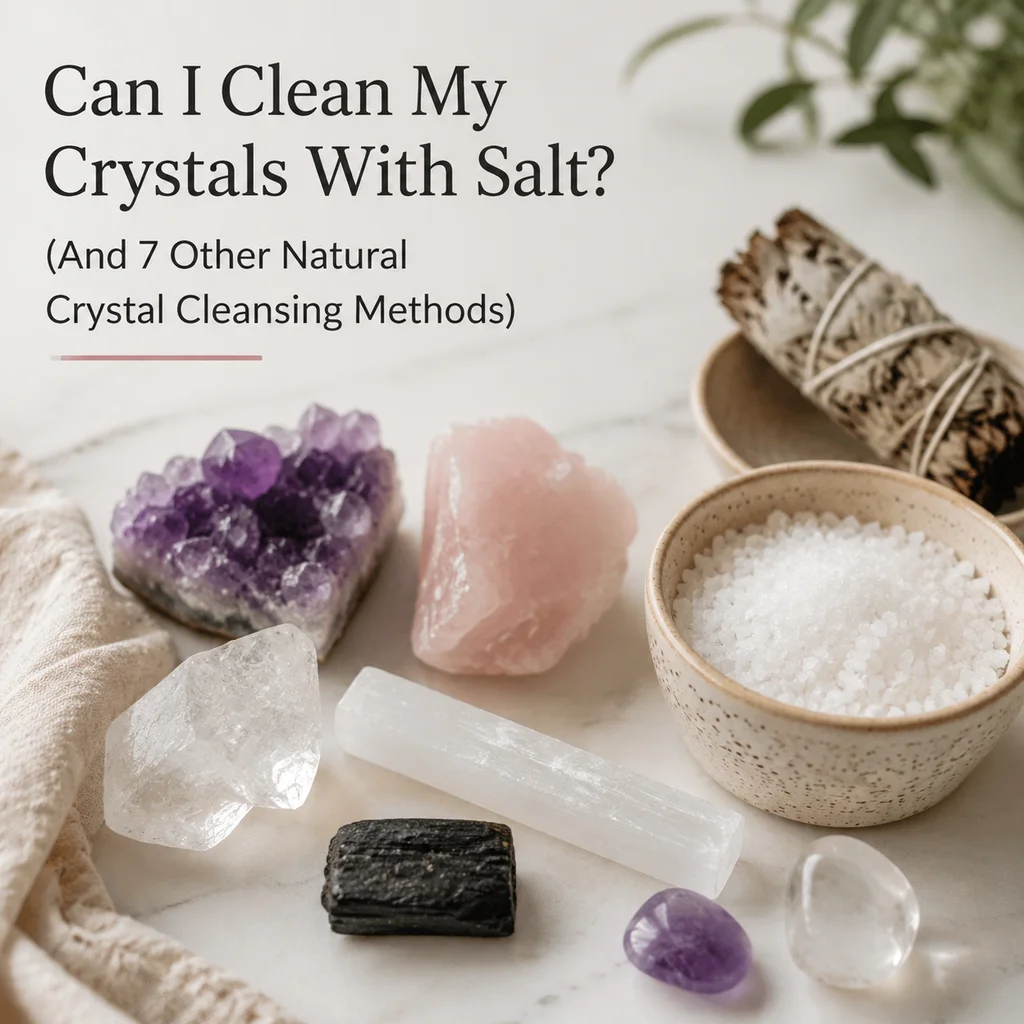
Q: Can I use salt water to cleanse my crystals?
A: While some people use salt water to cleanse crystals, it's important to understand the risks involved. Salt water can damage certain crystals, so it's not recommended for all types of minerals.
Q: How can I tell if my crystal has been damaged by salt water?
A: Look for signs of discoloration, pitting, or a loss of luster. These are indicators that the crystal has been affected by exposure to salt water.
Q: Can I reverse the damage to my crystals?
A: In some cases, the damage may be irreversible. However, if the damage is minimal, you can try to clean the crystal thoroughly and give it time to recover.
Q: Are there any crystals that are resistant to salt water damage?
A: Yes, some crystals are more resistant to salt water damage than others. Quartz and amethyst are two examples of crystals that are less likely to be affected by salt water.
To understand why certain crystals succumb to salt water, we must look at the Mohs Hardness Scale. Developed in 1812 by German geologist Friedrich Mohs, this scale ranks minerals from 1 to 10 based on their scratch resistance. Stones ranking lower on the scale, such as selenite (a 2) or calcite (a 3), are inherently softer and physically porous. When submerged in salt water, the saline solution easily penetrates their microscopic fissures. As the water eventually evaporates, expanding salt crystals are left behind, causing the delicate stone to fracture, splinter, or lose its structural integrity from the inside out.
Beyond physical hardness, mineral solubility plays a critical role in how crystals interact with liquid. Some stones contain chemical compounds that naturally dissolve when exposed to water, regardless of salt content. For instance, halite is literally a rock salt crystal, meaning it will rapidly melt and dissolve in a water bath. Similarly, minerals containing high levels of copper, iron, or other reactive metals can undergo rapid oxidation when introduced to a saline solution. This chemical reaction leads to rust, structural breakdown, and a permanently altered, dull appearance that ruins the aesthetic and energetic value of the stone.
Accidents happen, and occasionally, a vulnerable stone might accidentally take a plunge into the ocean or a saltwater bowl. If your crystal makes contact with salt water, immediate action is required to prevent irreversible chemical and physical damage. First, quickly remove the crystal from the water and rinse it under a gentle stream of pure, room-temperature distilled water. It is crucial to use distilled water rather than tap water, as tap water contains additional trace minerals and chlorine that could react further with the stone's surface or leave behind cloudy deposits.
Once the salt residue is completely rinsed away, carefully pat the crystal dry using a microfiber cloth or a soft paper towel. Avoid rubbing vigorously, as lingering salt granules can act like sandpaper and leave permanent micro-abrasions on the stone's surface. Instead, gently dab the moisture away. Finally, place the crystal in a dry, well-ventilated area away from direct sunlight to air-dry completely for the next 24 to 48 hours. Allowing the stone to rest undisturbed ensures that no residual moisture remains trapped in tiny internal crevices, preserving the crystal's natural polish and longevity.
While wearing your SagStone jewelry to the beach sounds beautiful, it is best to avoid submerging your natural crystal pieces in ocean water. The heavy salt content can dull the polish, degrade elastic cords, and cause irreversible structural damage to softer stones like selenite or calcite. To protect your artisan pieces, remove them before swimming.



Comments