<h2>Crystal Charging Myths: What Actually Happens and What Doesnt</h2>
Moonlight charging
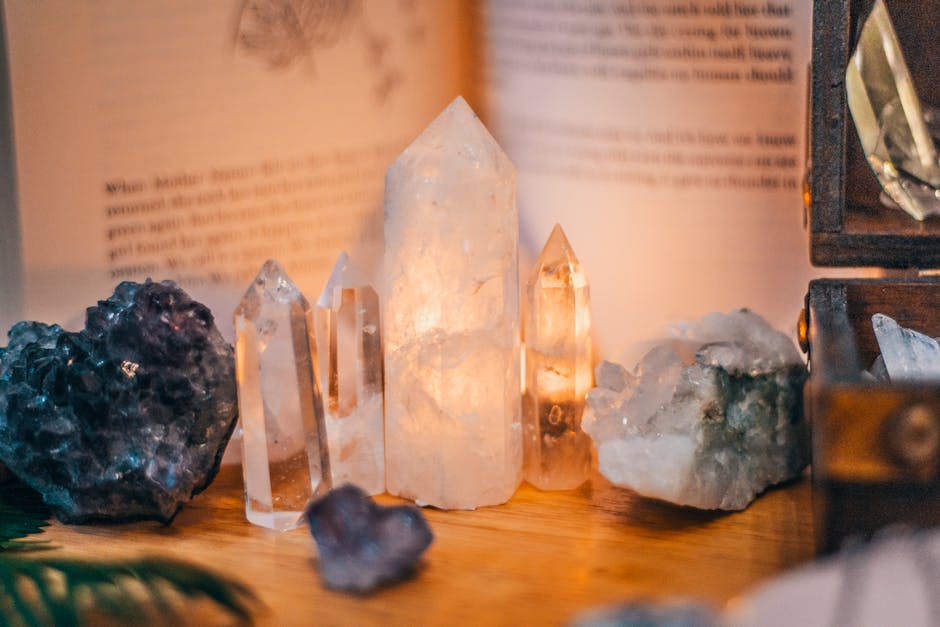
This one is everywhere. Set your crystals on a windowsill during a full moon, and they'll supposedly absorb lunar energy and come out "cleansed" or "recharged." The cultural roots run deep — full moon rituals show up in Wiccan traditions, Ayurvedic practices, and various folk customs across South Asia and Europe.
From a practical standpoint, leaving stones outside overnight doesn't hurt most of them. The moon itself emits no significant UV radiation, so there's no risk of fading. Temperature swings are usually mild. If you live in a humid area, condensation could theoretically promote mold growth on organic materials like amber or pearls, but that's about the worst of it.
I've done this probably a hundred times. My stones came back looking exactly the same as they went out. That's kind of the point — moonlight charging is one of the safest methods because it essentially does nothing physically to the mineral. Whether you believe it does something energetically is a separate conversation, and one I'm not here to dismiss. But mineralogically? Zero impact, positive or negative.
Reality check: ★★★★☆ — Not harmful to any mineral I'm aware of. The only downside is that it takes time, and if you forget your stones outside and it rains, you might end up with dirty specimens instead of charged ones.
Sunlight charging
People love sun-charging because it feels intuitive. The sun is powerful, visible, and warm — why wouldn't it "charge" a stone? Crystal sellers on Instagram constantly post photos of their inventory laid out on blankets in direct sunlight.
Here's the problem, and it's one that mineralogists have been shouting about for years: ultraviolet radiation destroys certain minerals. Amethyst (a purple variety of quartz, silicon dioxide, SiO₂) gets its color from trace amounts of iron that have been irradiated naturally over millions of years. Prolonged UV exposure reverses that process. I've personally watched a friend's beautiful deep-purple amethyst cluster turn a sickly, washed-out yellowish-brown after she left it on a sunny porch for two straight weeks. She was devastated. The technical term is "fading," and it's irreversible without artificial irradiation, which isn't something most collectors have access to.
Rose quartz faces a similar threat. Its pink hue comes from microscopic inclusions of dumortierite, titanium, or manganese, depending on the specimen. UV light gradually breaks down these inclusions at the surface level, leaving the stone looking paler and sometimes unevenly blotchy. Citrine that hasn't been heat-treated can also shift color under intense sun exposure, though heat-treated citrine is already stable enough that this is less of a concern.
The minerals that handle sunlight well include opaque, dark, or metallic stones: black tourmaline, hematite, obsidian, pyrite. These are physically unaffected by UV in any meaningful timeframe. But if you're sun-charging a transparent or translucent purple, pink, or yellow stone, you're gambling with its appearance.
My rule: 30 minutes of early-morning or late-afternoon indirect sunlight is probably fine for most things. Direct midday sun for hours is asking for trouble with amethyst, rose quartz, fluorite, aquamarine, and kunzite. These are all stones with well-documented photosensitivity.
Reality check: ★★☆☆☆ — Actively dangerous for a specific set of minerals. If you only own black tourmaline and obsidian, go wild. If you have amethyst, think twice.
Sea salt charging
This method shows up in almost every beginner crystal book. Bury your stone in a bowl of sea salt, or dissolve sea salt in water and soak the crystal, and the salt supposedly draws out "negative energy." Some variations use dry salt, others use salt water. The rationale usually draws from the idea that salt is purifying — a concept found in Shinto rituals, Catholic holy water, and various cleansing traditions worldwide.
Mineralogically, this is where things get genuinely destructive. Salt is sodium chloride (NaCl), and it's corrosive. Not in a dramatic, dissolves-your-rock way, but in a slow, persistent, surface-damaging way that's easy to underestimate.
I learned this the hard way with a piece of turquoise I bought at a gem show in Tucson. Turquoise is a hydrated copper aluminum phosphate (CuAl₆(PO₄)₄(OH)₈·4H₂O). It's porous — sometimes up to 20% of its volume is water and microscopic voids. When I soaked it in salt water following a guide I'd found online, the salt crystals formed inside those pores. Over the next few weeks, I watched the surface develop a chalky white residue that no amount of polishing could fully remove. A lapidary friend later confirmed that salt had penetrated the stone's structure and was essentially impossible to fully extract.
Pearls are even worse. They're organic — calcium carbonate (CaCO₃) layers built around an irritant inside a mollusk. Salt water attacks the nacre, causing pitting, dulling, and eventually structural weakness. Opals contain up to 20% water and are similarly porous. Salt exposure can cause "crazing" — those tiny internal cracks that make an opal look like a cracked windshield.
Stones that tolerate salt well include non-porous, hard minerals: quartz, garnet, diamond, sapphire, ruby. Anything with a Mohs hardness above 7 and low porosity will generally survive a salt encounter without visible damage. But even then, why risk micro-scratches from salt crystals rubbing against a polished surface?
The dry salt method is slightly less aggressive than soaking, since there's no liquid medium to carry salt into pores. But salt is hygroscopic — it absorbs moisture from the air — so in humid environments, dry salt bowls still create localized salt-water conditions at the contact points between crystals and salt grains.
Reality check: ★☆☆☆☆ — The most physically harmful method on this list for porous and organic gems. I'd rank it as the one method I'd actively tell people to avoid, at least for turquoise, pearls, opals, malachite, and anything else with high water content or porosity.
Sound charging
Singing bowls, tuning forks, bells, even recorded frequencies — sound charging has gained a lot of traction in the last five years. The idea is that specific vibrations "re-tune" the crystal's energy field. You'll find YouTube videos with millions of views promising "528 Hz crystal cleansing" and similar claims.
Here's what's actually happening, physically: sound waves are mechanical vibrations traveling through air (or water, or solid surfaces). When they hit a crystal, they cause it to vibrate at the same frequency — this is called resonance, and it's basic physics. Every material has natural resonant frequencies determined by its density, shape, and elasticity. A large amethyst cluster and a small quartz point will respond differently to the same sound because of their different physical properties.
Can sound damage a crystal? In everyday conditions, no. The sound pressure levels from singing bowls (typically 70-90 dB at close range) aren't enough to fracture even the most fragile mineral specimens. You'd need industrial-level sound — think jet engines or explosives — to physically crack a stone through vibration alone. So this method is, from a preservation standpoint, completely safe.
I've tried it with Tibetan singing bowls, a quartz singing bowl, and a set of tuning forks. It's pleasant. My cats hate it. My crystals look identical before and after. If the ritual aspect of the process brings you a sense of calm or intentionality, that has value — but that value is psychological, not mineralogical.
One interesting physical note: ultrasonic cleaners, which use very high-frequency sound waves in a liquid bath, are commonly used in the jewelry industry to clean diamonds and sapphires. Those work by creating microscopic cavitation bubbles that physically dislodge dirt. They can damage treated emeralds, opals, and pearls though. That's a different mechanism than "charging," but it shows that sound can interact with minerals in measurable ways at certain frequencies and intensities.
Reality check: ★★★★★ — The safest method on this list for all mineral types. No UV exposure, no corrosive chemicals, no liquid penetration risks. The worst that happens is your neighbors get annoyed.
Burial charging
Burying crystals in the earth is one of the oldest methods, rooted in the idea that returning a stone to the ground allows it to reconnect with "earth energy." Indigenous cultures in the Americas, Australia, and parts of Africa have traditions of placing stones in the ground for ceremonial purposes, sometimes for days, sometimes for years.
The physical reality of burying crystals is messier than the spiritual framing suggests. Soil is not a neutral medium. It contains moisture, acids (from decomposing organic matter), salts, and microorganisms. If you bury a crystal in your garden, you're exposing it to a chemically active environment that varies dramatically depending on your local soil composition.
Acidic soil — which covers a surprising amount of the planet, including most of the eastern United States and Southeast Asia — will slowly etch the surface of calcite, fluorite, and other acid-sensitive minerals. Even quartz, which is chemically resistant, can develop surface etching over months of burial in particularly acidic conditions (pH below 5.0). Selenite, which is hydrated calcium sulfate (CaSO₄·2H₂O), will dissolve in wet soil. I'm not exaggerating — it literally dissolves, because it's water-soluble.
Then there's the physical damage. Soil contains particles of varying hardness. Quartz sand grains (Mohs 7) will scratch softer minerals like malachite (Mohs 3.5-4), azurite (Mohs 3.5-4), and calcite (Mohs 3) just through normal ground movement from rain, frost heave, or root growth. I buried a small piece of malachite for a month as an experiment, wrapped in cloth as most guides suggest. When I dug it up, the cloth was damp and the malachite had lost its polish where it had been in contact with the soil through the fabric. Not ruined, but definitely worse for wear.
There's also the very real risk of losing your crystals. I've seen forum posts from people who buried stones, forgot exactly where, and spent hours with a trowel trying to find them. If you live in an area with wildlife, buried shiny objects might get dug up by curious animals.
The one scenario where burial makes some physical sense is for stones that are already damaged or rough and that you plan to tumble or cut later. A month in the ground won't significantly affect a chunk of raw quartz destined for the rock tumbler. But for polished specimens, jewelry pieces, or anything you care about aesthetically, burial introduces risks with no real physical benefit.
Reality check: ★★☆☆☆ — Highly dependent on your soil type and the mineral species. Safe for hard, chemically inert stones in sandy, neutral soil. Potentially destructive for soft, porous, or water-soluble minerals in acidic or clay-heavy soil.
So what actually works?
After years of experimenting and reading geological texts, here's my honest assessment. If by "charging" you mean "doing something to the crystal that changes its physical properties," then none of these methods do that in any beneficial way. Crystals are what they are — ordered lattices of atoms that formed under specific geological conditions over millions of years. A night under the moon isn't going to rearrange their molecular structure.
But if by "charging" you mean "engaging in a ritual that helps you feel connected to your collection and sets an intention for how you want to use the stones," then almost any method works as well as any other. The psychological component is real and well-documented across cultures. Rituals create meaning, and meaning creates a subjective experience that feels significant to the person having it.
My practical recommendation, balancing both perspectives: keep your crystals clean (warm water and mild soap work for most non-porous stones), store them away from direct sunlight, and keep them away from salt if they're porous or organic. Beyond that, do whatever ritual feels meaningful to you — just know what the physical costs and benefits actually are, so you can make informed choices rather than following advice that might damage the very stones you're trying to care for.
Comments