Crystals for Men: 9 Stones & How to Wear Them...
June 5, 2026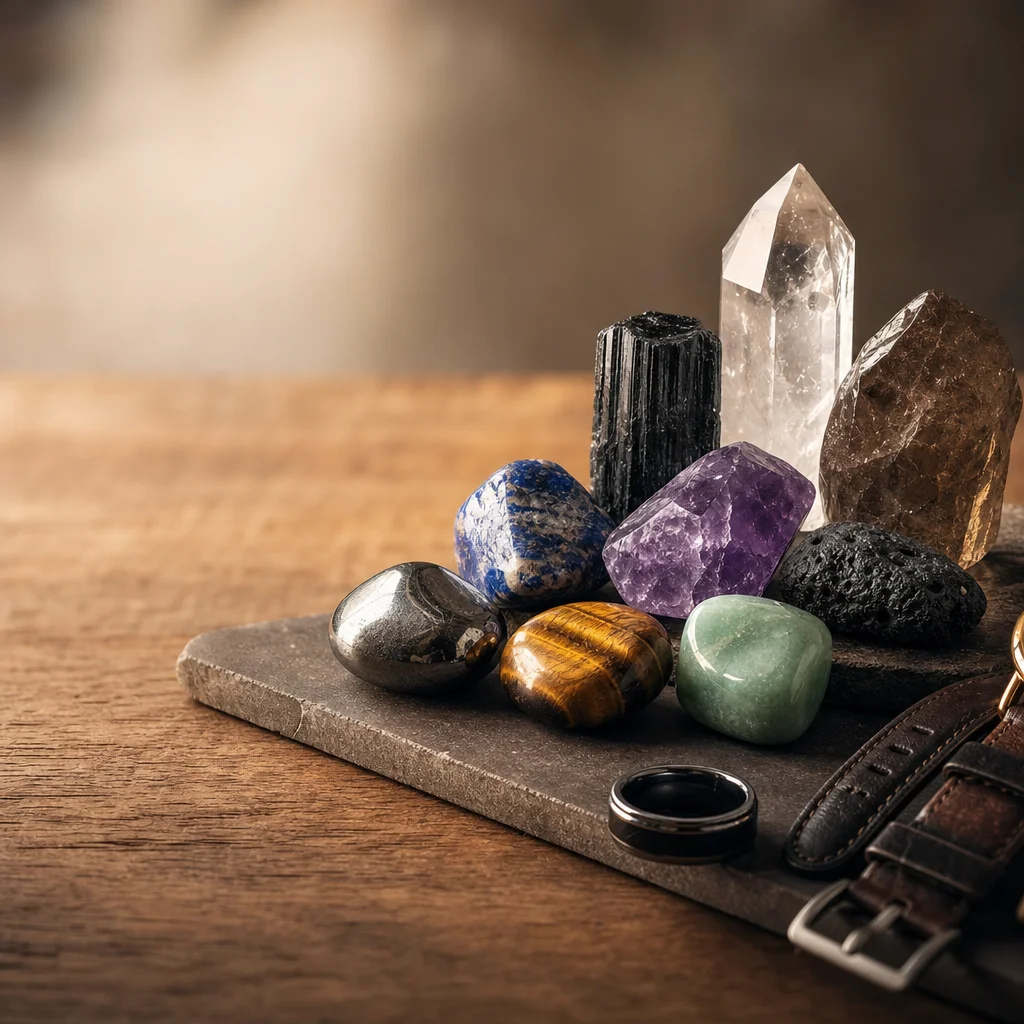
The Growing Trend of Men's Crystal Jewelry
Crystal jewelry for men has moved firmly into mainstream fashion over the past several years. What was once a niche practice has become common across fitness communities, professional environments, and social media. Professional athletes wear beaded crystal bracelets during games, entrepreneurs keep grounding stones on their desks, and men in their 20s through 50s are incorporating crystals into their daily wardrobes without thinking twice about it.
The appeal is practical as much as aesthetic. A well-chosen crystal bracelet, pendant, or keychain adds a textural element to an outfit while serving as a personal talisman or mindfulness anchor. The stones below are selected specifically for their compatibility with men's style — darker, more muted tones that integrate easily with existing wardrobes.
9 Essential Crystals for Men
1. Black Tourmaline — The Everyday Shield
Black tourmaline is the most popular crystal for men's daily wear, and for good reason. Its deep, opaque black color works with any outfit, from a business suit to gym wear. It's also one of the most durable crystals available (Mohs 7–7.5), so it holds up well to the knocks and scrapes of daily life.
In crystal traditions, black tourmaline is associated with grounding, protection, and electromagnetic field (EMF) shielding. Whether or not you subscribe to these beliefs, there's something undeniably satisfying about the weight and coolness of a black tourmaline bead against your wrist — a physical anchor that can help create a moment of pause in a busy day.
Best worn as: 8mm or 10mm beaded bracelet, single stone pendant on leather cord, or pocket stone.
2. Hematite — The Grounding Stone
Hematite's gunmetal-gray metallic luster gives it a distinctly masculine aesthetic that resembles dark steel or pewter. It's heavy for its size — noticeably heavier than most other stones of similar dimensions — which gives hematite jewelry a satisfying, substantial feel.
Mined primarily in Brazil, England, and the Lake Superior region of the United States, hematite is an iron oxide mineral (Fe₂O₃) that has been used for thousands of years. Ancient Egyptians carved hematite into heart amulets, and Roman soldiers rubbed hematite on their bodies before battle, believing it made them invulnerable.
Best worn as: Beaded bracelet (often combined with black tourmaline or onyx), ring, or magnetic hematite bracelet (be aware these use small magnets — not suitable for pacemaker wearers).
3. Tiger's Eye — The Confidence Booster
Tiger's eye is a chatoyant gemstone — it displays a silky, moving light effect (the chatoyancy) that shifts as you tilt the stone, mimicking the eye of a cat. The golden-brown variety is the most common, though blue (hawk's eye) and red tiger's eye also exist.
The alternating bands of golden yellow and dark brown create a visually dynamic stone that pairs well with earth-tone clothing and brown or tan accessories. Tiger's eye has a hardness of 6.5–7, making it durable enough for daily bracelet wear.
Best worn as: Beaded bracelet, pendant on a chain, or signet-style ring with a polished cabochon.
4. Black Onyx — The Power Stone
Black onyx is a form of chalcedony (cryptocrystalline quartz) that's been treated to achieve its uniform black color. While natural black onyx exists, most commercial black onyx has been dyed — this is standard practice and doesn't affect the stone's durability or appearance. What you get is a perfectly uniform, glassy-black stone that looks polished and sophisticated in any setting.
With a Mohs hardness of 6.5–7, black onyx handles daily wear well. It's been used in men's jewelry for centuries, from Roman signet rings to Victorian mourning jewelry, giving it a historical gravitas.
Best worn as: Beaded bracelet (the smooth, uniform beads look particularly clean), cufflinks, or tie clip inlay.
5. Obsidian — The Protector
Obsidian is volcanic glass formed when lava cools so rapidly that mineral crystals don't have time to form. The result is a dense, amorphous material with conchoidal fracture (like glass) and a hardness of 5–5.5. Black obsidian is the most common variety, though snowflake obsidian (with white cristobalite inclusions forming snowflake-like patterns) offers visual interest.
Obsidian's connection to volcanic fire and its razor-sharp edges (when fractured) give it a raw, primal quality that appeals to many men. The Aztec and Maya cultures used obsidian extensively for mirrors, weapons, and ritual objects.
Best worn as: Tumbled stone pendant (polished pieces are safe), carved skull pendant, or beaded bracelet with larger, irregular beads.
6. Shungite — The Modern Mineral
Shungite is a carbon-rich rock found almost exclusively in the Karelia region of Russia. It's relatively new to the crystal market but has gained significant popularity, particularly among men interested in its purported EMF-shielding properties. The stone is nearly pure carbon, and some deposits contain fullerenes — a unique molecular form of carbon discovered in 1985.
Visually, shungite ranges from matte black with a slight metallic sheen to a lighter gray. Its aesthetic is industrial and modern, working particularly well with minimalist styles.
Best worn as: Pyramid pendant, beaded bracelet, or phone stand/plate (some people place shungite near electronics).
7. Jasper — The Strength Stone
Jasper is an opaque variety of chalcedony that comes in an enormous range of colors and patterns. For men's jewelry, the most popular varieties are red jasper (rich brick red), picture jasper (landscape-like banding in earth tones), and dalmatian jasper (black spots on cream background, resembling the breed).
All jasper varieties share a hardness of 6.5–7 and excellent toughness, making them ideal for daily-wear jewelry. The earthy colors and natural patterns give jasper a rugged, outdoorsy character.
Best worn as: Beaded bracelet with mixed jasper types, pendant on leather or woven cord, or carved bead in a larger bracelet design.
8. Lapis Lazuli — The Wisdom Stone
Lapis lazuli's deep blue color with pyrite (fool's gold) inclusions has made it one of the most prized decorative stones since ancient times. The ancient Egyptians used it extensively — Cleopatra reportedly wore powdered lapis as eyeshadow, and it was ground into pigment for ultramarine blue paint during the Renaissance.
For men's jewelry, lapis lazuli works as an accent stone — a single lapis bead in an otherwise dark bracelet, or a lapis pendant that adds a pop of rich blue against a dark shirt or jacket.
Best worn as: Single bead or cabochon accent in a mixed-stone bracelet, polished pendant, or signet ring.
9. Amazonite — The Calming Stone
Amazonite's turquoise-green to blue-green color offers a lighter counterpoint to the predominantly dark stone palette. Named after the Amazon River (though it's not found there), amazonite is a variety of microcline feldspar with a characteristic white streak pattern and a hardness of 6–6.5.
Its cool, calming color palette makes it a good choice for men who want crystal jewelry with a more relaxed, coastal aesthetic. Amazonite pairs particularly well with silver, hemp, and light-colored leather cords.
Best worn as: Beaded bracelet in larger (10mm+) beads, pendant on woven cord, or combined with black stones for contrast.
Practical Wearing Guide for Men
Bracelet Styles
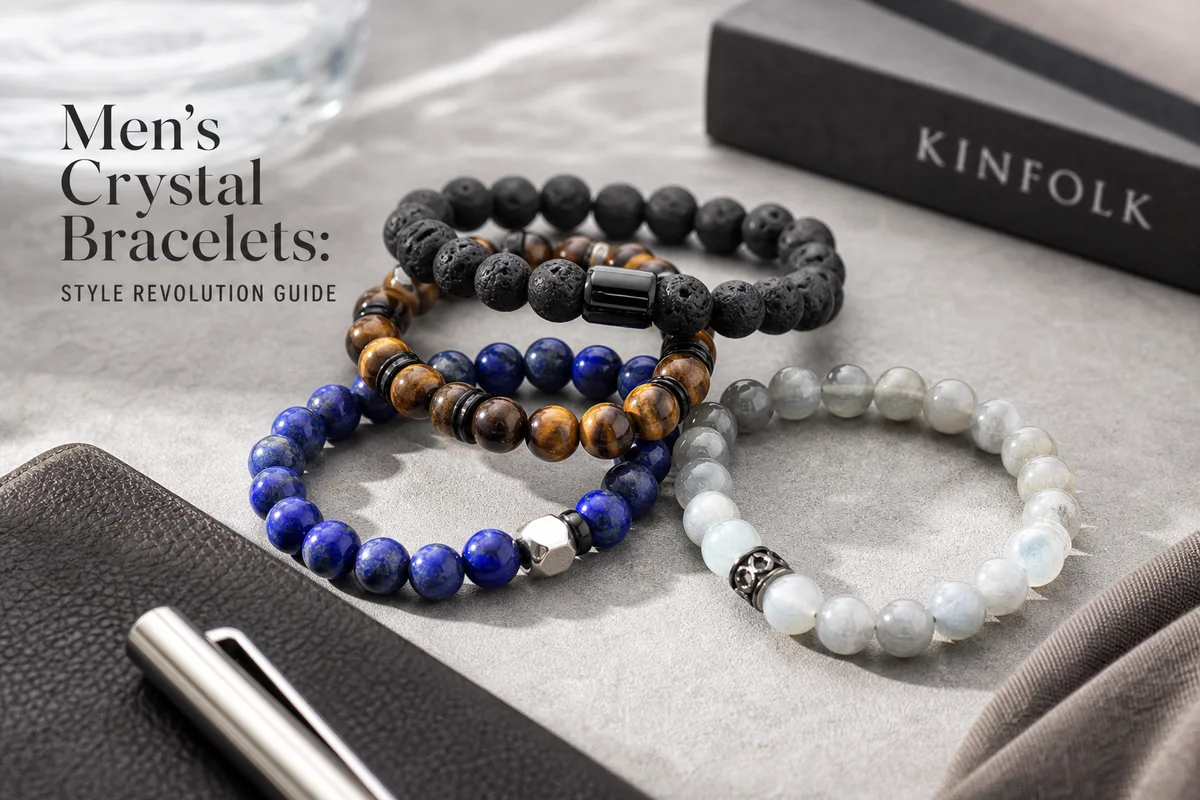
The beaded bracelet is the most popular and versatile option for men. Standard bead sizes are 8mm (subtle, professional) and 10mm (bolder, more visible). A single-strand bracelet with 2–3 stone types looks clean and intentional. Stack two bracelets for a more casual, layered look.
Elastic cord bracelets are the most common and convenient — they stretch over the hand and require no clasp. For a more polished look, knotted cord on a single strand of beads provides better durability and a slightly dressier appearance.
Necklace Options
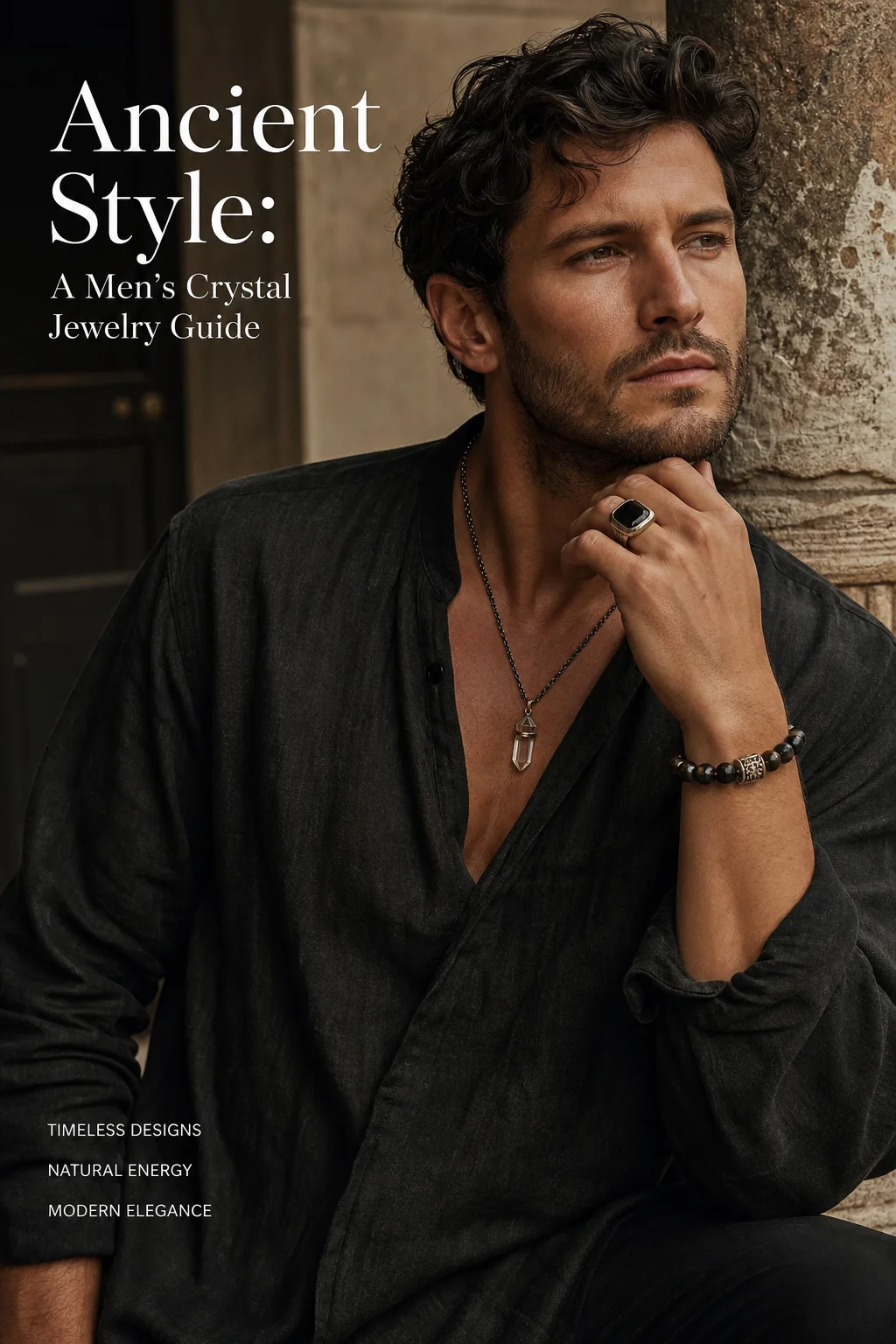
Pendants on leather cord (2–3mm) or woven macramé give a natural, masculine look. Chain necklaces work for smaller stones — a simple 20-inch sterling silver chain with a polished stone pendant is clean and understated. Avoid very long chains or overly ornate settings, which can look costume-like.
Office and Professional Settings
In conservative professional environments, a single black onyx or hematite bracelet on the non-dominant wrist is subtle enough not to draw attention. A small pendant hidden under a shirt collar is another option for keeping the stone close without it being visible.
Answering "Why Do You Wear Crystals?"
If someone asks about your crystal jewelry, simple answers tend to work best: "I like the look," "It helps me stay grounded," or "My partner gave it to me" all redirect the conversation without inviting debate. You don't owe anyone a spiritual justification for your personal choices.
How to Cleanse and Care for Your Crystals
Proper maintenance ensures your crystal jewelry remains both visually striking and structurally sound over time. For physical cleaning, wipe your stones with a soft, damp cloth after exposure to sweat, dirt, or cologne. Because many stones contain trace minerals that can react with water, it is best to avoid prolonged soaking. Harsh chemical cleaners and ultrasonic jewelry machines should also be avoided, as they can strip the natural polish or cause microscopic fractures in softer stones.
Beyond physical upkeep, many men choose to energetically cleanse their crystals to clear absorbed environmental stress. Simple, damage-free methods include placing the stones in direct moonlight overnight or resting them on a bed of dry sea salt. Another popular technique is using sound frequency, such as a singing bowl, which resets the stone's vibration without risking water damage.
When not wearing your jewelry, store your crystal bracelets and pendants in a dedicated pouch or lined box. Keeping harder stones like quartz away from softer minerals prevents unwanted scratching. This routine care protects your investment and keeps the jewelry looking sharp for daily wear.
Styling Crystals with Watches and Accessories
Integrating crystal jewelry into a masculine wardrobe requires a focus on balance and proportion. A common approach is pairing a beaded crystal bracelet with a high-quality wristwatch. To avoid a cluttered look, wear the bracelet on the opposite wrist from your watch, or choose a thinner, single-stone cord bracelet to sit comfortably next to the watch face. Matte stones like onyx or unpolished lava rock pair exceptionally well with stainless steel or titanium watches, creating a rugged, understated aesthetic.
When stacking multiple crystal bracelets on the same wrist, adhere to the rule of three. Combining three varied textures—such as tiger’s eye, hematite, and a braided leather cord—adds visual interest without looking bulky. Pay attention to color palettes by matching the stone's hue to your wardrobe; earth tones like browns and deep greens complement a casual style, while black and dark blue stones easily transition into business casual attire.
Ultimately, crystal jewelry should act as an accent piece rather than the focal point of your outfit. By keeping the rest of your accessories minimal, the natural texture of the stones stands out, projecting quiet confidence.
The Geology Behind Popular Men's Stones
Understanding the geological formation of your jewelry adds a layer of factual appreciation to the aesthetic. Many of the stones favored in men's jewelry, such as black tourmaline and smoky quartz, are formed deep within the Earth's crust under immense heat and pressure over millions of years. These igneous and metamorphic processes align the mineral structures that give each stone its unique durability and color profile. For instance, the deep black color of obsidian comes from rapidly cooled volcanic lava, creating a naturally occurring glass.
From a scientific standpoint, crystal hardness is measured using the Mohs scale, which ranks minerals from 1 (talc) to 10 (diamond). Most durable beads used in men's jewelry, including agate, jasper, and quartz, rank at a 7 or higher. This high rating means they resist daily scratching and can withstand the rigors of an active lifestyle, typing at a desk, or working out at the gym.
Selecting stones with a higher Mohs rating ensures longevity. While softer minerals offer striking metallic or translucent finishes, they require more careful handling. Recognizing these geological properties allows you to choose stones that accurately match your daily physical demands.
Frequently Asked Questions
Can men wear crystal bracelets to the gym?
Some stones handle gym environments better than others. Black tourmaline and hematite are excellent choices — they're hard and won't be damaged by sweat or impact. Avoid softer stones like obsidian (5.5) or selenite (2) for active use.
How do I clean men's crystal jewelry?
For daily wear, a quick rinse under lukewarm water and dry with a soft cloth is usually sufficient. For deeper cleaning, use mild soap and a soft toothbrush. Avoid harsh chemicals, ultrasonic cleaners (for stones with inclusions), and prolonged soaking.
What size bracelet do men need?
Measure your wrist circumference, then add approximately 0.5 inches (1.3 cm) for a comfortable fit. Most men fall between 7 and 8.5 inches. If you're between sizes, go slightly larger — elastic cord stretches, and a too-tight bracelet is uncomfortable.
Frequently Asked Questions
What hand should a man wear a crystal bracelet on?
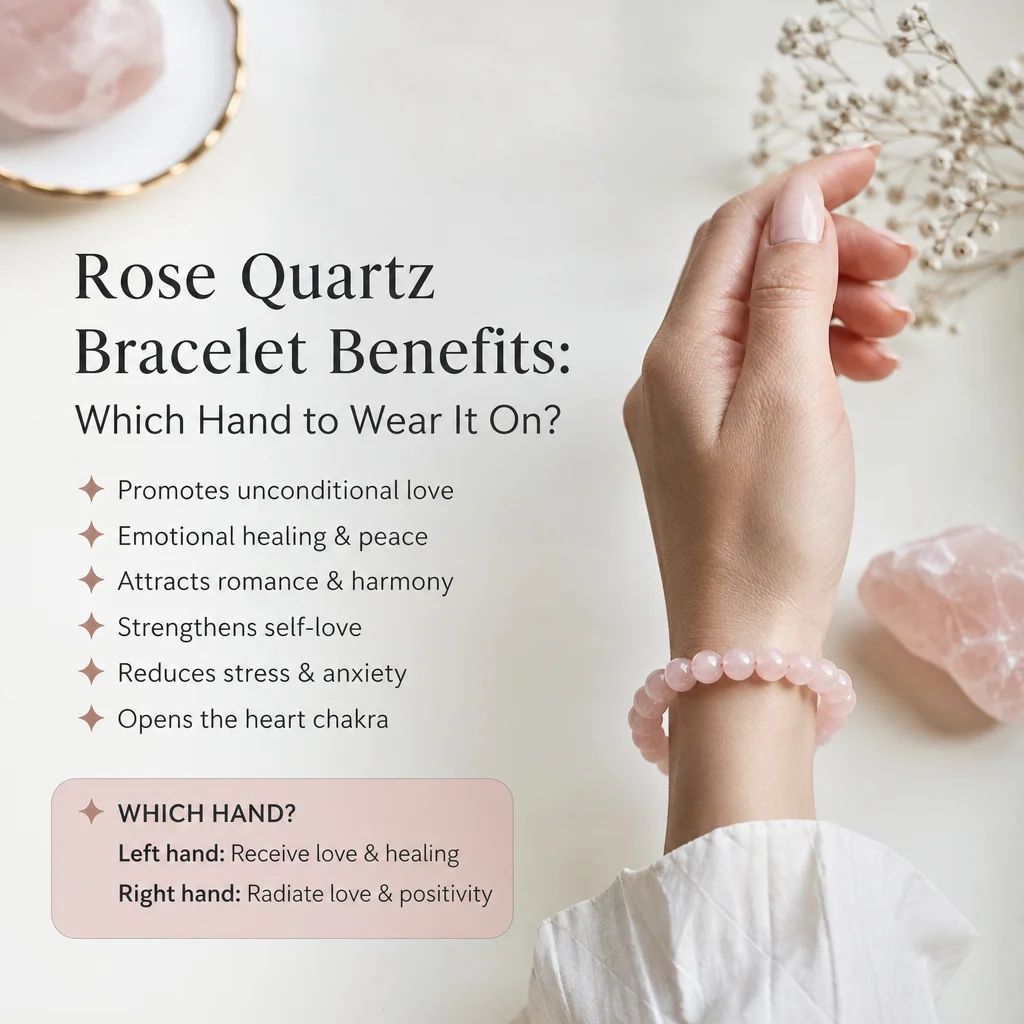
In crystal practices, the wrist you choose depends on the stone's purpose. Men typically wear a crystal bracelet on the left hand to receive calming or protective energy, ideal for stones like Black Tourmaline. Conversely, wear your bracelet on the right hand to project outgoing energy and confidence, perfect for Tiger's Eye. Ultimately, choose the wrist that feels most comfortable for your daily lifestyle.

Comments