Men's Crystal Jewelry: It's More Common Than You Think
A longer history than most people realize
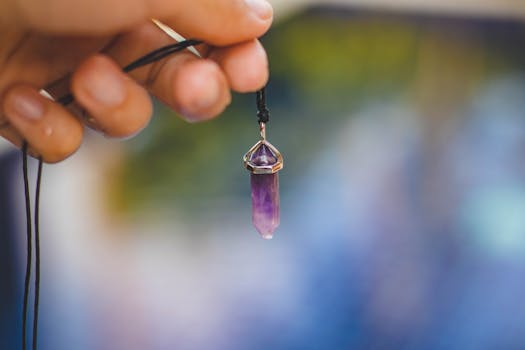
Crystal and gemstone jewelry on men isn't a 2020s trend. It's been around for thousands of years. Roman soldiers wore signet rings carved from carnelian and onyx to press their official seal into wax — a practical purpose that doubled as personal style. Kings across Europe filled their crown jewels with rubies, sapphires, and emeralds. Native American warriors carried turquoise amulets into battle. The idea that stones are "for women" is, historically speaking, a pretty recent invention.
What changed was the industrial revolution. Mass production made plain metal jewelry cheap and uniform. Gemstones got pushed into the "feminine" category by Victorian-era marketing, and by the mid-20th century, a man wearing anything beyond a watch and a wedding band was considered unusual in Western culture. But that shift only lasted about 80 years. Men's crystal jewelry is back, and it's selling at a pace that would have surprised jewelers even a decade ago.
Where the market stands in 2026
The men's gemstone jewelry segment has grown roughly 18% year-over-year since 2022, according to market analysis from Edited and Jeweller magazine. The single biggest product category? Beaded bracelets. Not rings, not necklaces — stretchy or adjustable beaded bracelets strung with 8mm or 10mm stone beads. They accounted for an estimated 62% of all men's crystal jewelry sales in 2025.
Part of the surge comes from cultural elements that have gone mainstream. Lion's Head beads (inspired by Chinese guardian lion symbolism), Dzi wheel beads (from Tibetan tradition), and Ganesha elephant-head beads have moved out of niche spiritual shops and into mall jewelry counters. Instagram and TikTok have been the primary drivers — the hashtag #menscrystalbracelet has over 340,000 posts on Instagram as of early 2026, and the content is split between styling advice, stone-education posts, and straight product showcases.
What's interesting is that a lot of buyers aren't choosing stones for any symbolic reason. They pick what looks good with their outfit. Black stones for monochrome fits. Brown-gold stones for earthy tones. Green stones when they want something that pops against a white t-shirt. The decorative function has overtaken the spiritual one for the majority of under-35 buyers.
The five stones you'll see everywhere
Black obsidian
This is the best-selling men's stone by a wide margin. Obsidian is volcanic glass — it's literally hardened lava. It forms a deep black surface that catches light in a subtle sheen, and it pairs well with almost everything. A black obsidian beaded bracelet works with a white t-shirt and jeans, a navy suit, or gym clothes. No other stone has that kind of versatility for men's fashion.
Obsidian is also inexpensive compared to most gemstones. A genuine obsidian bracelet typically retails between $12 and $35. That low price point is part of why it dominates — a guy can buy three or four different obsidian pieces for less than the cost of one stainless steel chain.
Tiger's eye
Golden-brown with a silky chatoyant band that shifts when the stone moves under light, tiger's eye is the second most popular choice. The brown-gold tone matches leather jackets, brown boots, khaki pants, and olive green shirts naturally. It reads as "warm" and "earthy" without trying too hard.
The stone is a form of quartz with crocidolite inclusions that create its signature striped appearance. Most commercially available tiger's eye comes from South Africa or Western Australia. Quality matters here — cheap tiger's eye can look dull and plastic-like, while well-polished pieces have a depth that's immediately noticeable. Expect to pay $15 to $45 for a decent bracelet.
Lava stone
Lava stone beads are porous, lightweight, and matte black. They're popular partly because they double as diffuser beads — you can put a drop of essential oil on them and the scent lasts for hours. That functional angle has made lava stone a crossover hit in the "wellness aesthetic" space.
From a style perspective, the matte texture is what sets lava stone apart from glossy obsidian. It looks more casual and rugged. Combined with a leather cord or wooden accent beads, a lava stone bracelet reads as outdoorsy and relaxed. It's not the stone you'd wear to a business meeting, but it works for weekend outfits, beach trips, and music festivals.
Matte onyx
Don't confuse this with obsidian. Onyx is a banded form of chalcedony that's been treated to produce a uniform black color. The "matte" finish gives it a soft, non-reflective surface that some men prefer over the glassy look of polished obsidian. It feels a bit more understated.
Matte onyx has one practical advantage: it doesn't show fingerprints or smudges, which glossy stones do after a few hours of wear. That small detail matters for daily-wear pieces. Price-wise, it's similar to obsidian, usually $10 to $30.
Hematite
Hematite is the heaviest stone in this list, and that weight is part of its appeal. A hematite bracelet has a satisfying heft that feels substantial on the wrist. The metallic silver-gray color means it reads almost like steel, which makes it one of the easier stones to incorporate into professional or formal settings.
The downside is that hematite scratches more easily than harder stones. After a few months of daily wear, a hematite bracelet will develop visible surface marks. Some people like that worn-in look. Others find it frustrating. If you want something that stays pristine, hematite probably isn't the right choice.
How to actually wear it
Casual outfits
The easiest entry point is a leather and stone bracelet. A braided leather cord (2mm or 3mm width) with 2-3 stone beads strung onto it is casual without looking sloppy. Earth tones work best here — tiger's eye with brown leather, picture jasper with tan leather, or obsidian with black leather. Wear it on your non-dominant wrist so it doesn't bang against your watch.
A common mistake is stacking too many bracelets at once. Two is fine. Three is pushing it unless you have a very specific bohemian look going on. One well-chosen piece almost always looks better than a jumble of five.
Work and business settings
The rule here is simple: keep it subtle. A single matte onyx or hematite bracelet with small beads (6mm instead of 10mm) is professional enough for most offices. Avoid anything with large beads, bright colors, or dangling charms. A dark stone bracelet with a silver or gunmetal clasp reads as intentional rather than accidental.
If you're in a conservative industry like finance or law, skip the bracelets entirely and go for a stone inlay in a tie clip, cufflinks, or a signet ring. A small black onyx stone set in a silver tie bar is the kind of detail that someone notices on a second glance without being distracting.
Formal occasions
A signet ring is the classic option. Black onyx, lapis lazuli, or bloodstone set in sterling silver or gold-plated brass is traditional and appropriate for anything from a wedding to a gala. Keep the stone face small — under 12mm across — and make sure the ring fits properly. A loose signet ring looks sloppy on a formal outfit.
For a modern alternative, a thin chain necklace (1mm or 2mm) with a single small stone pendant is acceptable at most formal events in 2026. A 6mm obsidian or tiger's eye cabochon on a silver chain is understated enough. Skip anything with visible text, symbols, or large pendants.
Materials and durability
The base material matters more than most people think. Stainless steel is the most durable option — it doesn't tarnish, doesn't react with sweat, and rarely causes skin irritation. Most men's beaded bracelets use stainless steel for the spacer beads and clasps because of this. It's the practical choice for daily wear.
Leather looks great but has a shorter lifespan. A genuine leather cord will last 6 to 18 months depending on how often it gets wet. Faux leather is worse — it cracks and peels within 3-6 months. If you're buying a leather bracelet, check whether the cord is replaceable. Some designs allow you to restring the beads onto a new cord when the old one wears out, which extends the life of the piece significantly.
Sterling silver accents look premium but require maintenance. Silver tarnishes when exposed to sulfur (which is in sweat, in small amounts). You'll need to polish silver components every few weeks to keep them looking clean. If you don't want that upkeep, go with stainless steel or gunmetal-plated brass.
Sizing matters
Most men's bracelets fall between 8 and 9 inches in circumference. The average man's wrist is about 7.5 inches, but you want the bracelet to have some slack so it doesn't grip too tightly. Here's a quick sizing guide:
Measure your wrist with a soft tape measure, then add 0.5 to 1 inch for a beaded bracelet (they should roll over your hand without being loose enough to fall off). For leather or metal chain bracelets, add about 0.75 inches. If you're between sizes, go up — a slightly loose bracelet is more comfortable than one that restricts circulation.
Bead size also affects fit. A bracelet made with 10mm beads will feel tighter than the same circumference made with 8mm beads, because the larger beads take up more of the interior space. Keep this in mind when ordering online, where you can't try it on first.
The bottom line
Men's crystal jewelry isn't a gimmick and it isn't going away. The market has grown consistently for four straight years, driven by social media visibility and a broader cultural shift away from rigid gender norms in fashion. The best approach is to start simple — one black obsidian or tiger's eye bracelet, worn with casual clothes — and expand from there based on what you actually enjoy wearing. Don't overthink it. The whole point is that it's supposed to be fun.
Comments