Crystal Care Guide 2026: Cleaning, Charging
May 14, 2026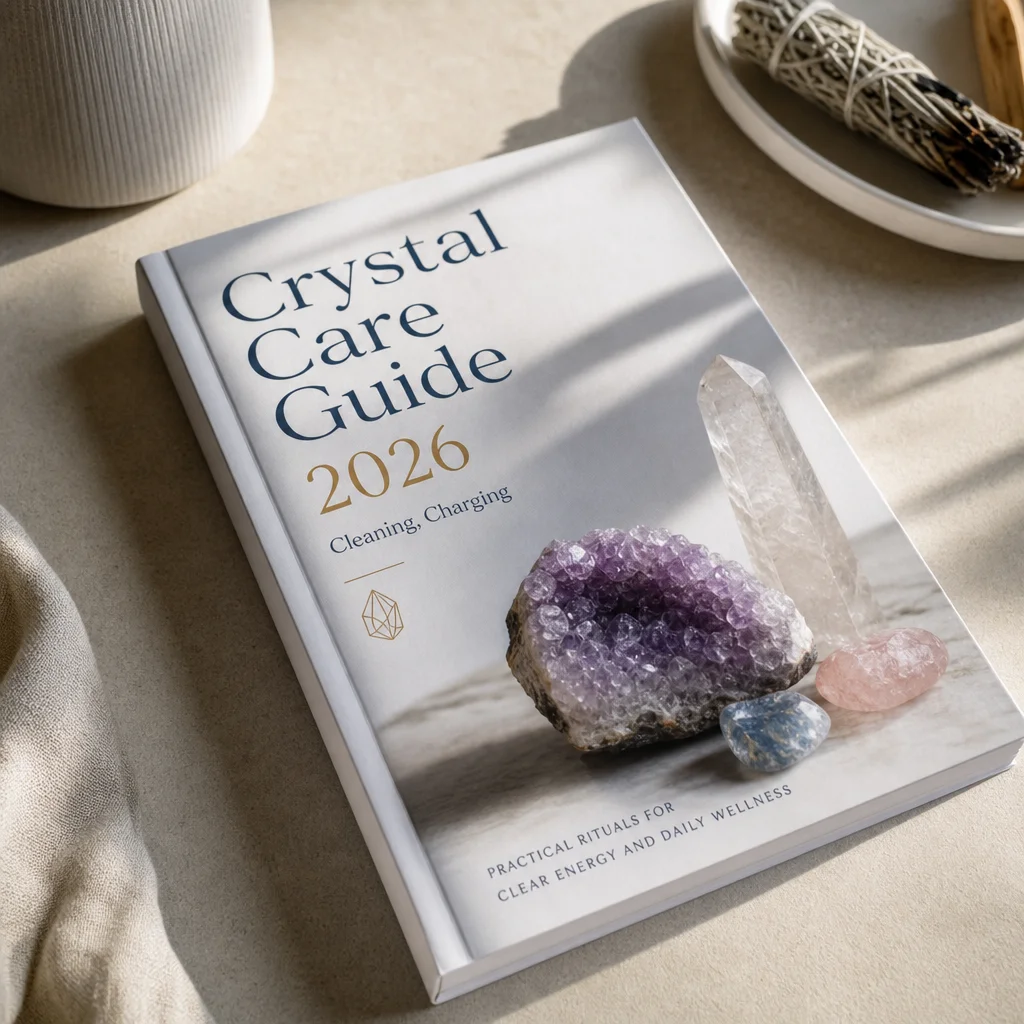
The Complete Crystal Care Guide: Cleaning, Charging, Storing, and Repairing Every Type of Stone
You bought a nice crystal. Maybe it was expensive, maybe it wasn't. Either way, you want it to look good and last. The problem is that crystal care advice online is a mess — one site says "cleanse with moonlight," another says "never get it wet," and a third tells you to bury it in salt. Most of this is either unnecessary or actively harmful.
This guide covers the physical maintenance of crystals: how to clean them without damaging them, how to store them so they don't scratch each other, which stones fade in sunlight, and what to do when one gets chipped. Everything here is based on mineral properties, not metaphysical traditions.
Start With Hardness: The Mohs Scale Is Your Cheat Sheet
Every care decision starts with one question: how hard is this stone? The Mohs scale runs from 1 (talc, scratches with a fingernail) to 10 (diamond, scratches everything). Knowing where your stone falls tells you:
- Mohs 1-3 (soft): Scratches easily, don't store near harder stones, never use abrasive cleaners, handle gently. Examples: selenite (2), calcite (3), malachite (3.5-4)
- Mohs 4-6 (medium): Moderate care needed, can be stored with similar-hardness stones. Examples: fluorite (4), lapis lazuli (5-6), labradorite (6-6.5)
- Mohs 7+ (hard): Durable, can handle most cleaning methods, safe to store with anything softer. Examples: quartz (7), topaz (8), sapphire (9)
Why this matters: a quartz crystal (Mohs 7) stored next to a calcite (Mohs 3) will scratch the calcite every time they touch. Harder stones damage softer ones. This is the single most common way people ruin their collections.
Cleaning Methods by Stone Type
Method 1: Warm Water and Soft Brush (Universal Safe)
Works for 90% of stones. Use lukewarm water (not hot — thermal shock cracks some minerals), a soft toothbrush, and a drop of mild dish soap. Rinse thoroughly and dry with a soft cloth.
Safe for: Quartz varieties (amethyst, citrine, rose quartz, smoky quartz, clear quartz), feldspar (labradorite, moonstone, sunstone), most silicates, topaz, corundum (ruby, sapphire), beryl (emerald, aquamarine)
Not safe for: See the "never get wet" list below.
Method 2: Dry Brushing (For Water-Sensitive Stones)
Use a clean, dry makeup brush or soft paintbrush to remove dust. This is the only safe cleaning method for stones that dissolve or degrade in water.
Never get these stones wet:
- Selenite/gypsum (Mohs 2) — dissolves slowly in water. Even high humidity can degrade the surface over time.
- Halite (rock salt) — literally salt. Dissolves rapidly.
- Calcite (Mohs 3) — effervesces in acids, including mild ones. Even slightly acidic tap water can dull the surface.
- Pyrite — water accelerates oxidation ("pyrite disease"), producing sulfuric acid that destroys the specimen from inside. This is irreversible and contagious — infected pyrite can damage adjacent specimens.
- Angelite — absorbs water, turns into gypsum structure, crumbles.
- Stones with iron inclusions or matrix — water causes rust staining that's nearly impossible to remove.
Method 3: Ultrasonic Cleaner (Hard Stones Only)
Ultrasonic cleaners use high-frequency vibrations to knock dirt loose. They're effective but can destroy certain stones:
- Never use ultrasonic on: Emeralds (always have inclusions/fractures that can expand), opals (high water content, can crack), amber (soft, heat-sensitive), pearls (organic, will degrade), tanzanite (structural fractures)
- Safe for: Quartz, sapphire, ruby, topaz, garnet — hard stones without internal fractures
Sunlight Sensitivity: Which Stones Fade
UV light breaks down trace elements that give crystals their color. Some stones fade noticeably in weeks of direct sunlight; others are completely stable.
- Fades quickly (weeks): Amethyst (loses purple depth), kunzite (pink fades to near-colorless), rose quartz (pink softens), celestite (blue fades)
- Fades slowly (months): Citrine (orange-gold softens), aquamarine (blue-green shifts toward clear), fluorite (varies by color — purple fades fastest)
- Stable in sunlight: Obsidian, black tourmaline, tiger's eye, carnelian, garnet, peridot, lapis lazuli
Practical rule: If a stone's color comes from trace impurities (amethyst = iron in quartz, rose quartz = titanium/manganese in quartz), it can fade. If the color is structural (tiger's eye's chatoyancy from asbestos fibers, obsidian's black from iron in volcanic glass), it's stable.
Storage: Preventing Damage
The three enemies of stored crystals are scratching, moisture, and light. Here's how to handle each:
Scratch prevention:
- Separate by hardness. Store Mohs 7+ stones together, Mohs 4-6 together, Mohs 1-3 individually wrapped.
- Wrap soft stones in tissue paper or individual cloth pouches. Never let raw calcite touch raw quartz.
- Use compartmentalized boxes for small specimens. Jewelry boxes with padded slots work well.
Moisture prevention:
- Selenite and halite should be stored with silica gel packets in sealed containers.
- Pyrite should be stored in low-humidity environments (below 60% relative humidity) to prevent oxidation.
- Opals contain 3-21% water — store them in sealed bags with a damp cotton ball to prevent cracking from dehydration. This is the opposite of most stones.
Light prevention:
- Keep fade-prone stones in closed boxes or drawers when not on display.
- Display cases with UV-filtering glass help, but are expensive. Indirect light is usually sufficient protection.
Chipping and Cracking: Prevention and Repair
Prevention:
- Never place crystals on hard surfaces without a cushion (felt pad, cloth, or rubber mat).
- Be especially careful with terminated points — the tip is the most fragile part and the most expensive to replace.
- Large heavy specimens should have a stable base — don't balance them precariously on shelves.
Repair options:
- Small chips: Super glue (cyanoacrylate) works on quartz-family stones. Apply sparingly with a toothpick, hold for 30 seconds. The repair is visible under magnification but invisible to casual inspection.
- Surface scratches: Polish out with increasingly fine abrasives (from 600 to 2000 grit wet/dry sandpaper), finishing with cerium oxide. Only works on hard stones (Mohs 7+).
- Clean breaks: Two-part epoxy is stronger than super glue for larger breaks. Clamp for 24 hours. The seam will always be visible.
- Irreparable damage: Stones shattered into many pieces, or damage to soft minerals (calcite, selenite) that crumble rather than break cleanly. These can't be meaningfully repaired. Save attractive fragments for crystal gardens or mosaics.
Jewelry-Specific Care
Crystal jewelry needs different care than loose specimens because the metal settings add complexity:
- Remove before: Swimming (chlorine damages silver and weakens gold), exercising (sweat + friction), sleeping (prongs catch on fabric and loosen), cleaning house (chemicals damage both stone and metal)
- Put on last: Apply perfume, lotion, and hairspray before putting on jewelry. These chemicals can dull polished stone surfaces and accelerate silver tarnish.
- Earrings: Clean ear wire posts with alcohol regularly. Bacteria builds up on posts, not the stones themselves.
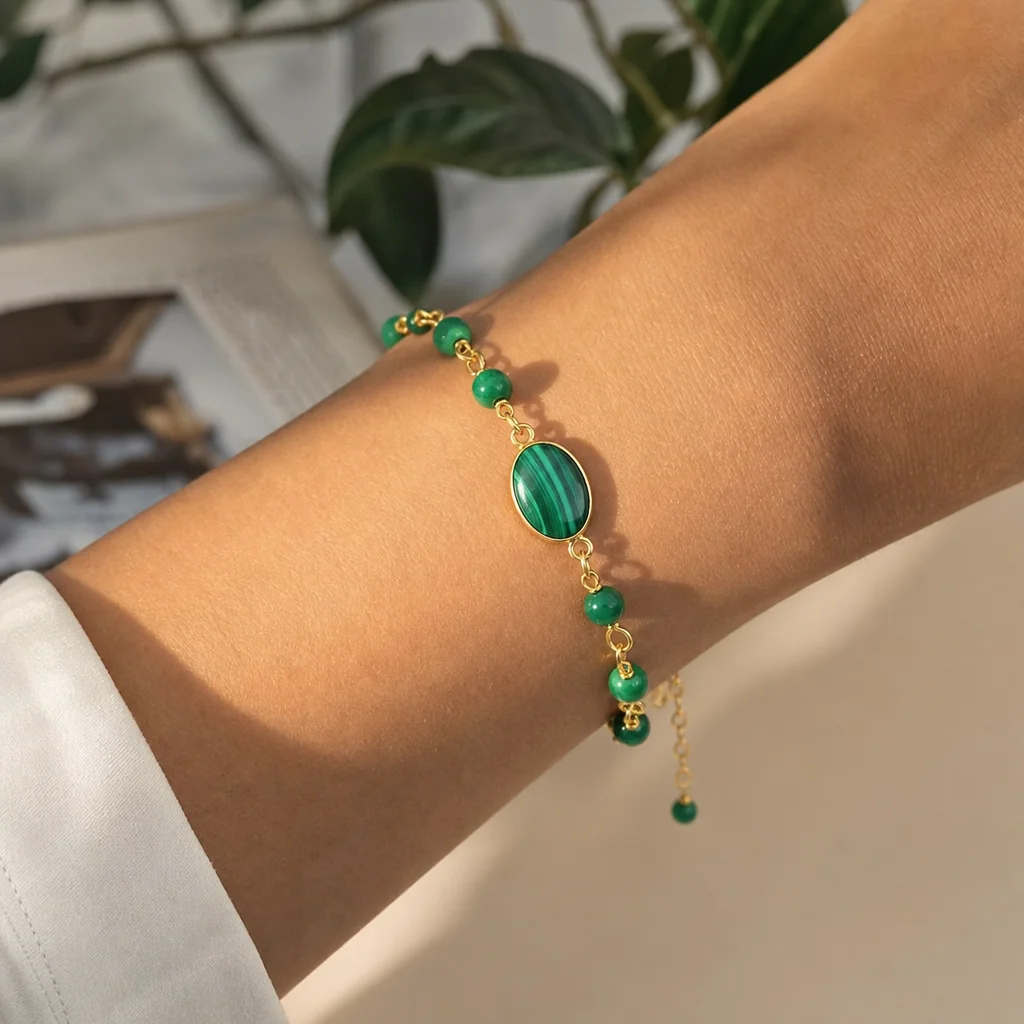
- Bracelets: Check elastic stretch cord every 3-6 months. If it's stretching or fraying, restring before it breaks (losing beads is worse than the 15 minutes to restring).
Seasonal Maintenance Schedule
Twice a year (spring and fall), do a full collection check:
- Inspect each stone: Look for new chips, cracks, or surface changes
- Check storage: Replace silica gel packets (they saturate over time), check for moisture in containers
- Clean display pieces: Dust with a soft brush, wipe hard stones with a damp cloth
- Check jewelry: Inspect prongs and clasps for wear, restring elastic bracelets if needed
- Reorganize: If you've acquired new pieces, make sure hardness separation is still correct
That's it. No moonlight, no salt, no rice, no sound baths. Crystal care is mineral care — it's about knowing what your stone is made of and treating it accordingly. A well-organized collection that's stored properly will look good for decades with minimal effort.
For a deep dive into every aspect of jewelry and crystal care, check out our The Complete Guide to Crystal and Jewelry Care, Cleaning, and Storage.
Frequently Asked Questions
How do I charge my crystal gemstone for optimal energy?
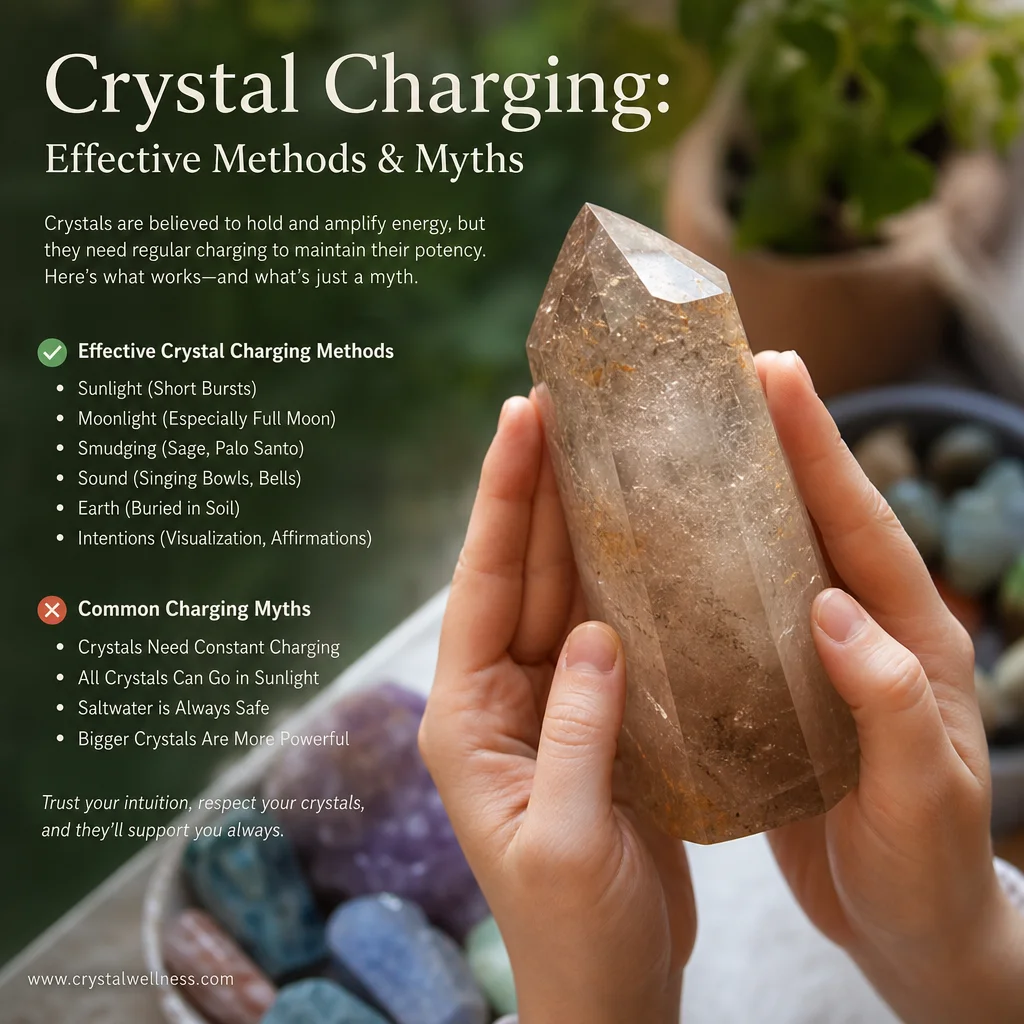
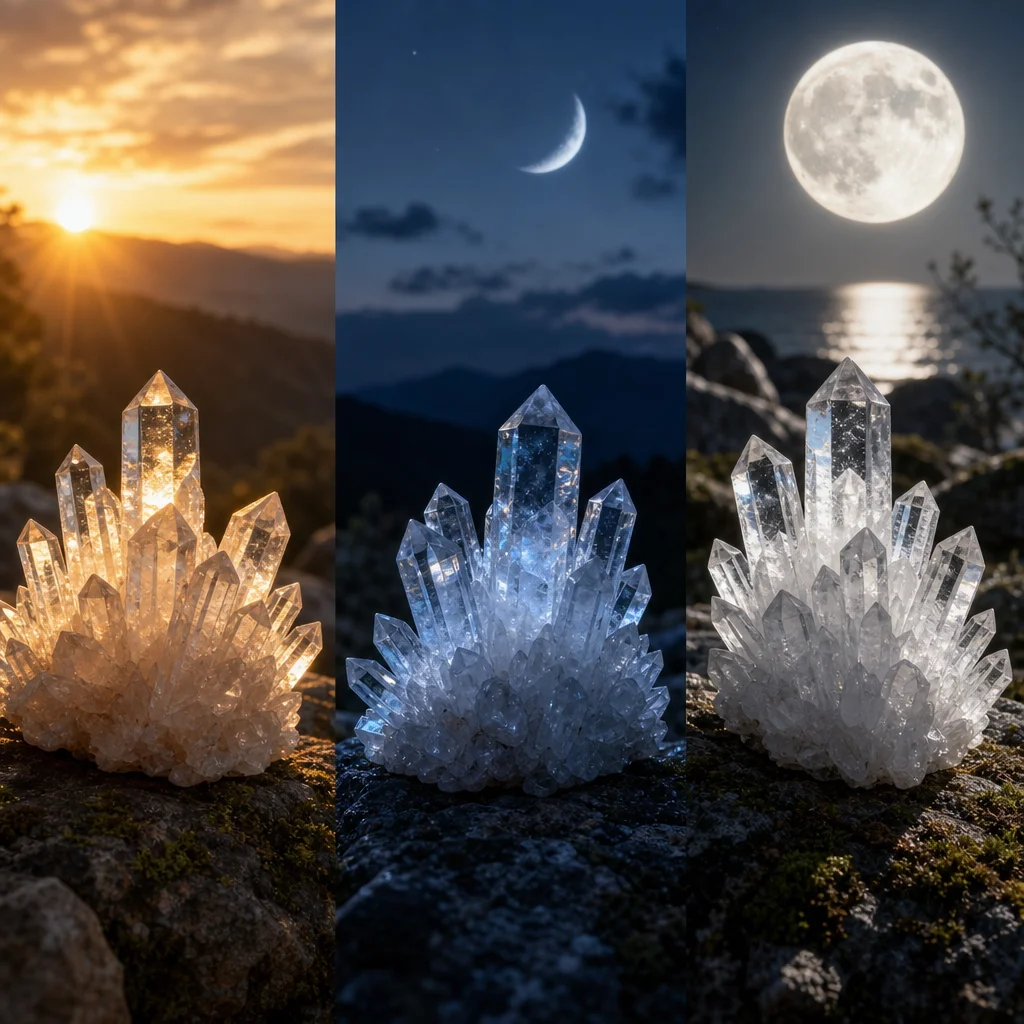
Charge your crystal by placing it on a quartz charger overnight or during a full moon phase. Ensure it is placed on a stable surface and not directly exposed to sunlight or heat sources.
Can I clean my crystal with ultrasonic cleaner?
No, most crystals are sensitive to ultrasonic cleaners. Avoid using them, as it can cause damage. Use warm water and a soft cloth or gentle brush instead.
How often should I clean my handcrafted crystal jewelry?
For routine care, clean your crystal jewelry once a month. However, if you notice any dirt or oil, clean it as needed with a soft cloth and warm water.
Are there crystals that should not be worn during the day?
Yes, certain crystals like amethyst are said to enhance meditation and should be worn at night. For everyday wear, choose stones that align with your daytime activities and intentions.
How can I tell if my crystal has lost its luster?
Inspect your crystal for dullness or surface wear. If the luster has diminished, gently polish the surface with a microfiber cloth or use a crystal-specific polish recommended by the artisan.
Understanding the Basics
This section covers important aspects of understanding the basics. For detailed information, please refer to the FAQ section below.
Key Factors to Consider
This section covers important aspects of key factors to consider. For detailed information, please refer to the FAQ section below.
Step-by-Step Instructions
This section covers important aspects of step-by-step instructions. For detailed information, please refer to the FAQ section below.
Common Mistakes to Avoid
This section covers important aspects of common mistakes to avoid. For detailed information, please refer to the FAQ section below.

Comments