Charoite vs Sugilite: 6 Key Differences
June 2, 2026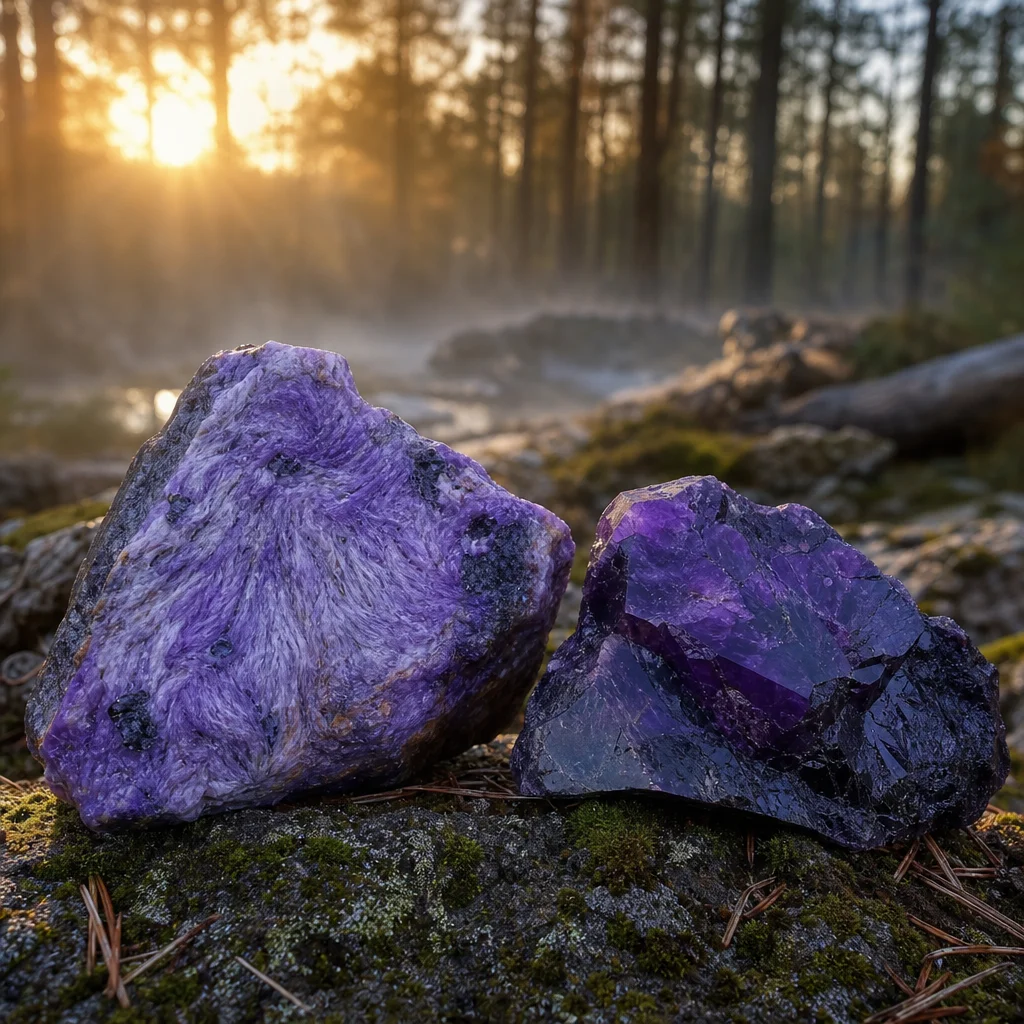
The Enchanting World of Purple Crystals: Charoite vs. Sugilite
I remember holding my first charoite stone in my palm years ago—its swirling patterns of deep violet, lavender, and white seemed to capture the Northern Lights themselves. This wasn't just any purple stone; it felt alive with ancient energy from the Siberian wilderness where it was born. Later, when I discovered sugilite with its royal purple hue, I was struck by how nature creates such stunning diversity in the color purple. These two magnificent crystals, though both predominantly purple, offer vastly different experiences for crystal enthusiasts and collectors alike.
As a crystal artisan who has hand-selected thousands of stones over the past decade, I've grown fascinated by the subtle distinctions between these purple powerhouses. While both charoite and sugilite carry profound metaphysical properties, they each tell their own geological story and offer unique energetic signatures. Understanding these differences—beyond mere appearance—allows us to appreciate their individual qualities and choose the stone that resonates most deeply with our personal journey.
Charoite: The Siberian Violet Stone
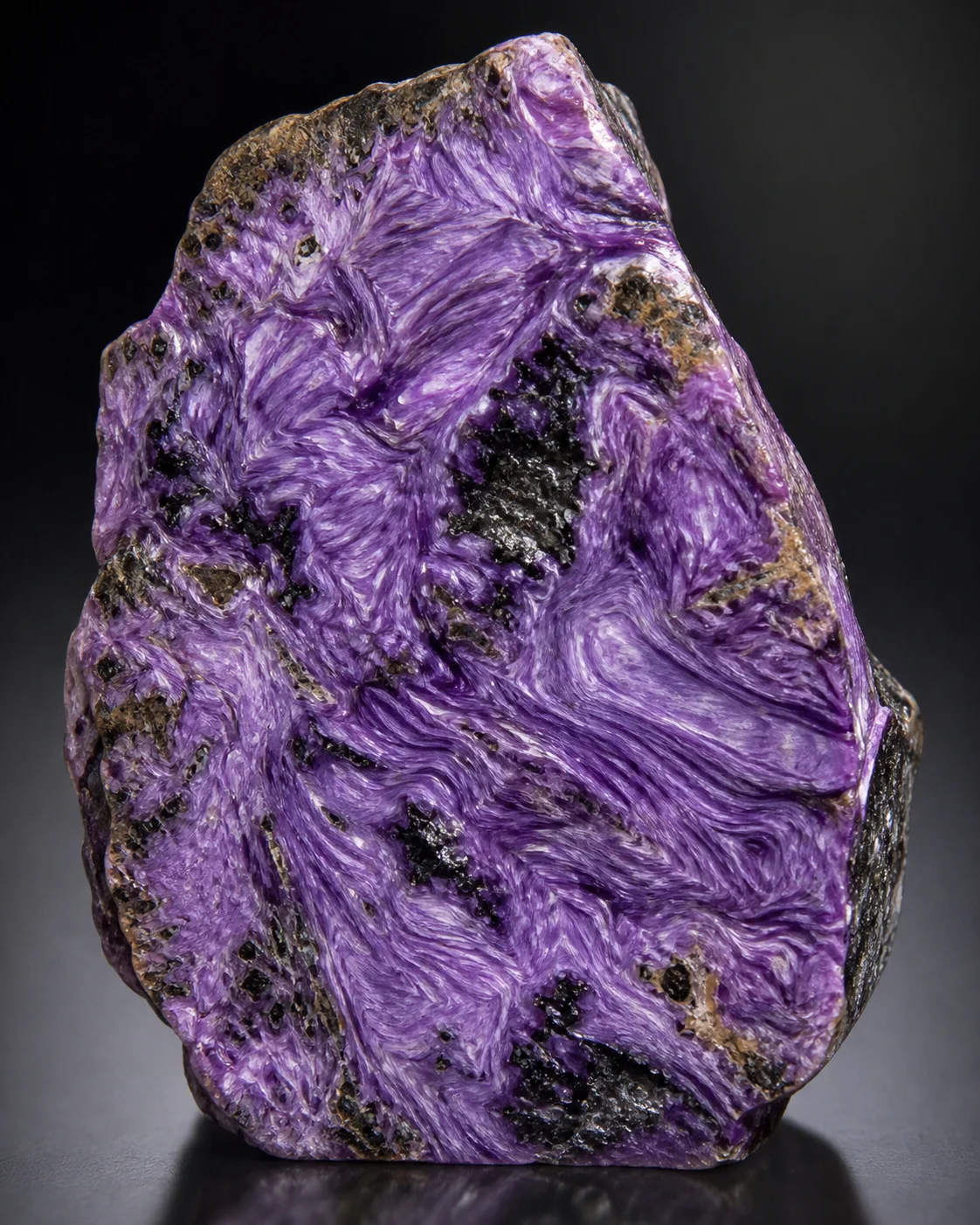
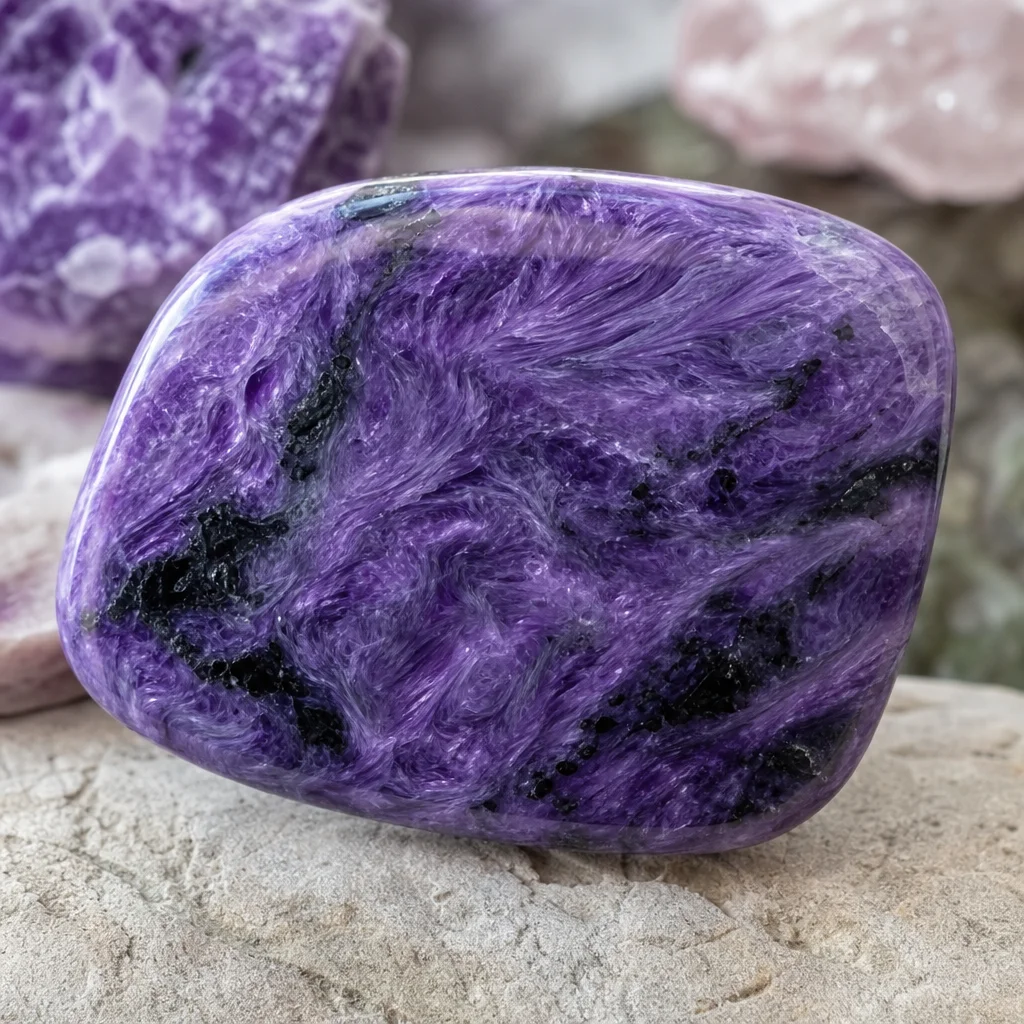
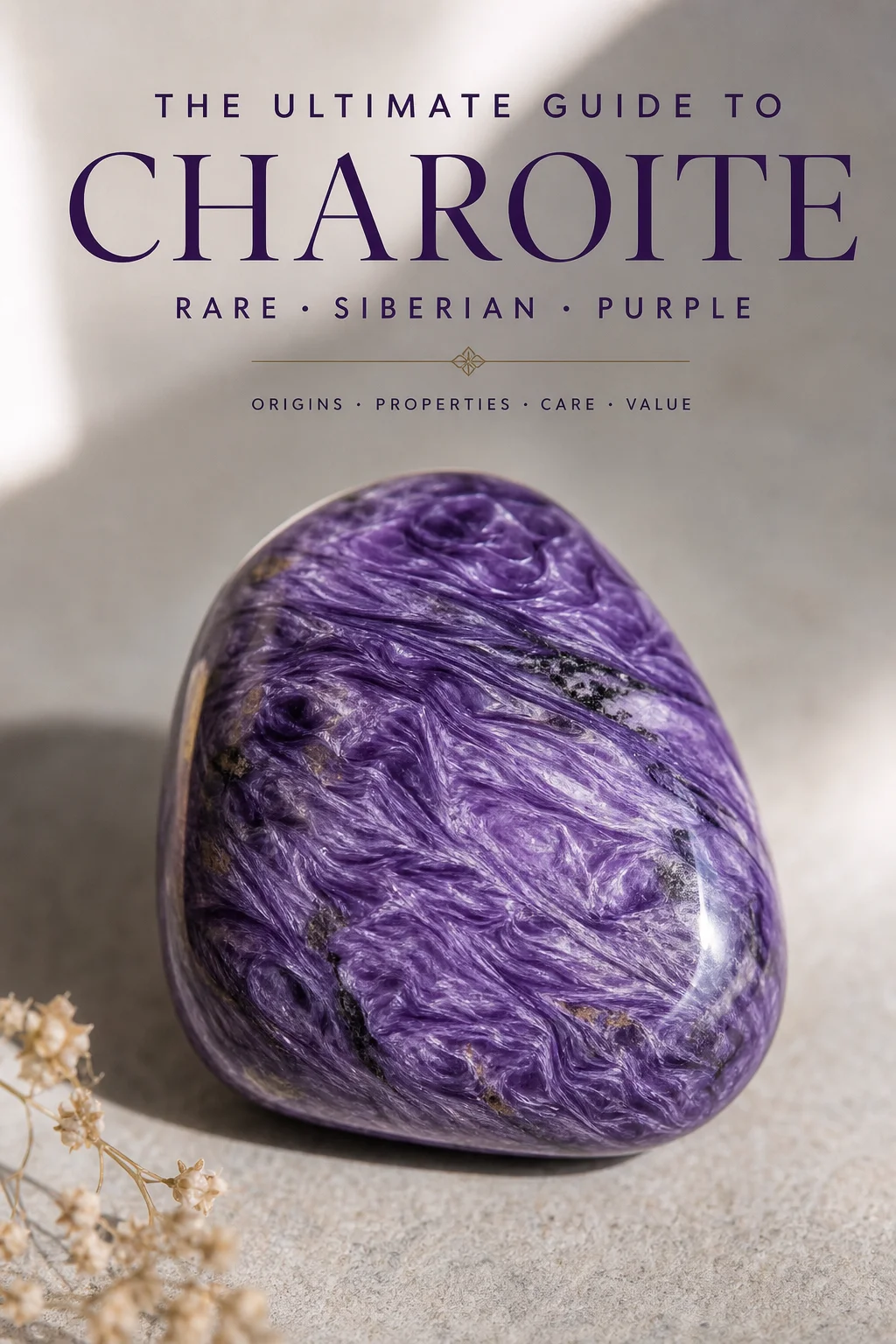
Charoite is truly one of Earth's geological rarities, discovered in the 1940s but not described mineralogically until 1978. Found exclusively in the Murun Mountains in Siberia, Russia, this magnificent stone forms under extreme metamorphic conditions where limestone meets igneous intrusion. Its distinctive appearance features swirling patterns of lilac, violet, and purple with white and black inclusions of aegerine and tinaksite minerals. Unlike many stones that develop through volcanic processes, charoite's creation tells a story of mountain-building and intense geological pressure.
What makes charoite particularly fascinating is its chatoyant quality—certain angles reveal a silky lumen that seems to dance across the surface. This optical phenomenon results from the stone's fibrous structure, where microscopic needles of aegerine align in patterns that catch and redirect light. In metaphysical traditions, charoite is celebrated as a stone of transformation, helping to release fear and negative patterns while opening the heart to unconditional love. Many practitioners report that working with charoite helps them overcome obstacles they previously thought insurmountable.
When selecting charoite pieces for our collections at SagStone, we look for stones with well-defined patterns and rich color saturation. This charoite handbracelet features carefully selected beads that showcase the stone's natural swirling patterns, each bead hand-polished to highlight the interplay of violet and white tones. The craftsmanship ensures that every piece carries the stone's full energetic potential while serving as a beautiful adornment for daily wear.
Sugilite: The Royal Lavender Wonder
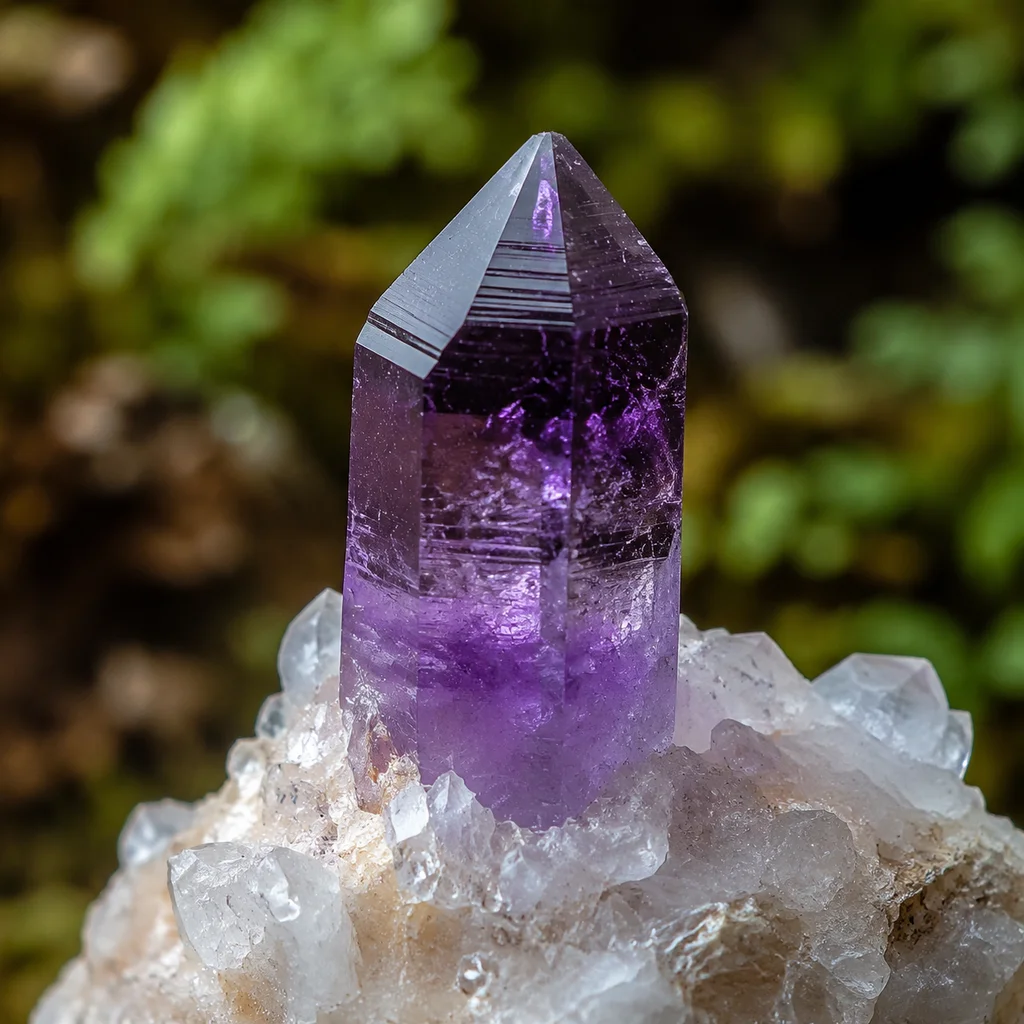
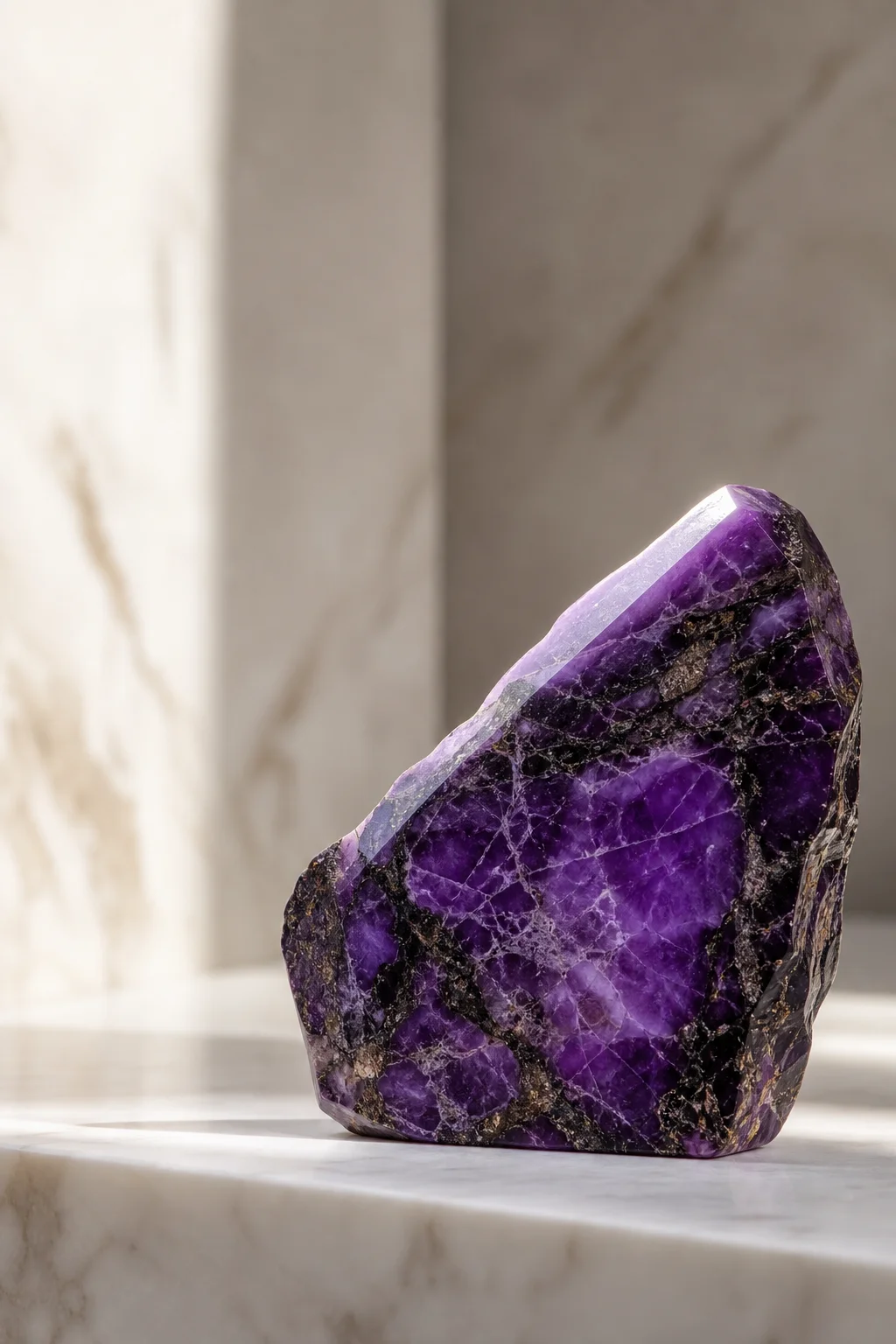
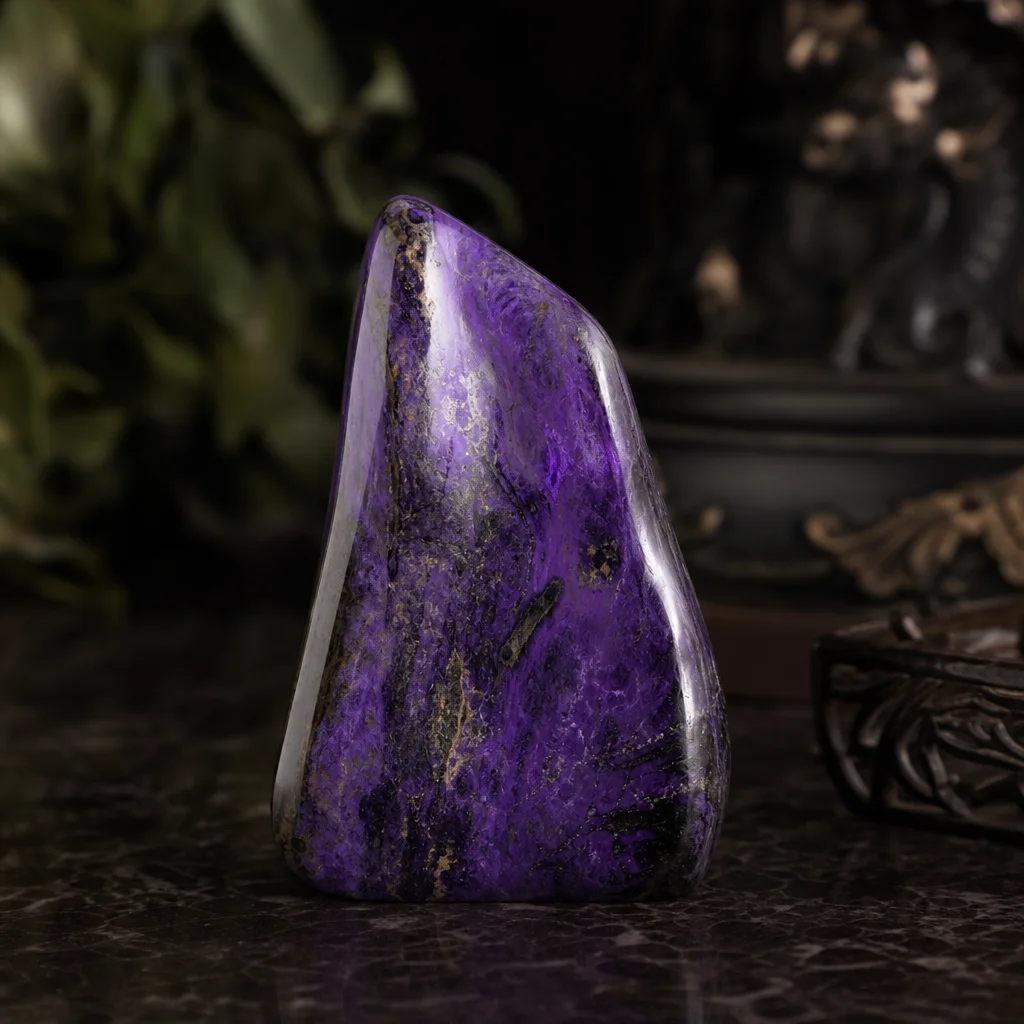
Sugilite, discovered in 1944 by Japanese petrologist Ken-ichi Sugi, presents a different purple majesty entirely. Unlike charoite's limited Siberian origin, sugilite has been found in locations including Japan, South Africa, and Canada. This potassium sodium lithium iron aluminum silicate mineral typically forms in silica-poor igneous rocks, emerging as a secondary mineral in hydrothermal veins. Its most prized specimens showcase a deep, uniform purple color, though it can range from pale lavender to rich magenta, often with striking black manganese inclusions.
Sugilite's metaphysical reputation precedes it in crystal healing circles, where it's known as the "stone of light" or "love stone." Many practitioners value sugilite for its connection to the crown chakra and its ability to channel spiritual wisdom into the physical realm. Unlike charoite's transformative energy, sugilite is often sought for its protective qualities and its ability to purify the aura. Historically, sugilite has been used by traditional healers to support cellular regeneration and strengthen the immune system, though these applications remain in the realm of alternative healing practices.
In the gem trade, sugilite presents unique challenges and considerations. While natural sugilite commands premium prices, dyed materials and synthetic imitations flood the market. What distinguishes authentic sugilite is its specific pleochroism—showing different colors when viewed from different angles—and its vitreous to waxy luster. The finest sugilite specimens, often called "gel sugilite" for their translucent quality, can rival the most valuable colored gemstones per carat, though they remain relatively unknown in mainstream jewelry markets.
Visual Distinctions: Beyond Color Differences
At first glance, charoite and sugilite might appear similar in their purple dominance, but a closer inspection reveals striking visual differences. Charoite's pattern is its most defining characteristic—swirling, flowing patterns of purple, white, and black that resemble a frozen northern night sky. These patterns are rarely uniform; instead, they create dynamic, sometimes chaotic compositions that make each piece unique. In contrast, sugilite typically displays more consistent color distribution, with uniform purple fields marked by black manganese dendritic inclusions that resemble ferns or organic networks.
Transparency offers another key distinction. Charoite is generally translucent to opaque, with light penetrating only the thinnest sections. Its fibrous structure creates a distinctive sheen that shifts with viewing angle, an optical effect known as chatoyance. Sugilite, especially the higher-grade material, can be semi-translucent to translucent, allowing light to pass through the purple matrix and create a glowing effect. This difference becomes particularly apparent when examining stones against a light source, where sugilite's translucency reveals internal structures invisible in charoite.
The color palette itself differs significantly. Charoite's purple tends toward cooler tones with lilac and lavender undertones, often contrasted with bright white mineral streaks. Sugilite's purple ranges from cool lavender to warm magenta, with fewer color variations within a single specimen. When placing these stones side by side, the distinction becomes obvious—charoite appears more complex and layered, while sugilite presents a more cohesive, unified purple field with distinctive black matrix patterns.
The Touch Test: Five Physical Differences Between Charoite and Sugilite
Experienced crystal collectors know that appearance alone doesn't tell the whole story. The physical properties of these stones offer additional distinguishing characteristics that reveal their geological heritage. Here are five tactile differences you can observe when handling these magnificent purple stones:
- Temperature Conductivity: Charoite, being denser with a more complex mineral composition, typically feels cooler to the touch initially and retains its temperature longer. Sugilite, with its lighter structure, warms more quickly in contact with skin. This difference becomes apparent when holding both stones in your hands—charoite will feel distinctly cooler for the first minute or two.
- Surface Texture: Even highly polished charoite often retains a slightly fibrous or silky texture due to its natural composition. When you run your finger across a charoite surface, you might notice subtle ridges or directional patterns. Sugilite, by contrast, typically presents a smoother, more uniform polish that feels like glass or polished stone with no directional texture.
- Weight and Density: Charoite generally has a higher specific gravity (2.5-2.8) compared to sugilite (2.74-2.90), but this difference becomes apparent when comparing similarly sized pieces. Charoite feels slightly heavier and more substantial in the hand, while sugilite feels slightly lighter for its size. This weight difference becomes particularly noticeable in larger specimens.
- Response to Pressure: When gently pressed between fingers, charoite's fibrous structure gives slightly under pressure, creating a compressible sensation. This is particularly noticeable in stones with high aegerine content. Sugilite, being more compact and uniform, feels harder and more resistant to pressure, maintaining its shape more rigidly when gently squeezed.
- Energy Vibration: While harder to quantify scientifically, many experienced crystal workers report distinct energetic differences when holding these stones. Charoite often creates a pulsating, dynamic sensation that seems to move through the hand, while sugilite radiates a more steady, consistent vibration that feels more grounded and pervasive. These subtle differences in energetic signature can be an important consideration for those working with these stones for metaphysical purposes.
These tactile distinctions complement the visual differences, providing a more complete understanding of each stone's unique character. For collectors and practitioners who work with stones energetically, these physical properties offer additional layers of connection to the mineral kingdom's magnificent diversity.
Market Price Analysis: Understanding the Value of Purple Gemstones
The world of purple gemstones presents fascinating economic dynamics, with charoite and sugilite occupying different price points and market positions. Understanding these differences can help consumers make informed decisions while avoiding common pricing pitfalls.
Authentic charoite typically ranges from $15 to $75 per carat, depending on color intensity, pattern quality, and translucency. The finest specimens with vibrant purple coloring and distinctive fibrous patterns command premium prices. In contrast, natural sugilite usually commands $20 to $100+ per carat, with rare, translucent material reaching even higher prices. These price differences reflect relative rarity and mining challenges.
Beware of significant price discrepancies that may indicate synthetic or treated stones. Dyed sugilite, often sold as genuine, appears unnaturally purple and lacks the characteristic matrix of natural sugilite. These imitations can be priced attractively low—sometimes under $10 per carat—but represent poor investments with rapidly fading color.
The market for both stones has evolved with changing mining conditions. Charoite, once sourced exclusively from the Murun Mountains in Siberia, now appears in limited quantities since the original deposit's partial depletion. This scarcity has gradually increased prices over the past decade. Sugilite, primarily from the Wessels Mine in South Africa, experiences periodic fluctuations based on mining output and collector demand.
When purchasing, always request proper identification and be skeptical of unusually low prices. Authentic charoite displays its characteristic chatoyancy and complex fibrous structure, while genuine sugilite shows a distinctive lacy pattern of white or black matrix against its purple background. Both stones should feel substantial in weight for their size, reflecting their mineral density.
Jewelry Applications & Design Considerations
The unique properties of charoite and sugilite make them distinctly suited for different jewelry applications and design approaches. Understanding these differences can help both designers and consumers select the perfect stone for their intended purpose.
Charoite's striking patterns and fibrous structure make it exceptional for statement pieces. Its chatoyant quality creates a velvety appearance that translates beautifully into polished cabochons, particularly when cut en cabochon to maximize the shimmering effect. Our Charoite Handcrafted Bracelet showcases this stone's best qualities, with each bead carefully selected to display the most desirable patterns. Charoite pairs exceptionally well with silver, which accentuates its purple tones without overwhelming them.
Sugilite's homogeneous color and fine-grained texture make it ideal for more refined, continuous surfaces in jewelry. When properly polished, sugilite can achieve a smooth, glassy finish that works beautifully in inlay designs and mosaic settings. Its consistent color lends itself well to bead necklaces and earring designs where a uniform appearance is desired. Sugilite complements both silver and gold settings, though cooler metal tones tend to enhance its purple vibrancy.
For durability considerations, charoite's slightly higher hardness (5-6 on Mohs scale) makes it more versatile for everyday wear than sugilite (5.5-6.5). Both stones should be protected from hard knocks and abrasive chemicals. Settings with protective bezels rather than prongs help maintain these stones' integrity over time.
The aesthetic possibilities differ significantly between these stones. Charoite's dramatic patterns inspire organic, flowing designs that highlight natural beauty, while sugilite's uniform color facilitates geometric and contemporary designs. Artisans often combine charoite with complementary stones like amethyst or lapis lazuli to create contrasting textures and color depths, while sugilite works well with moonstone or labradorite for ethereal effects.
Caring for Your Purple Gemstones
Proper care ensures that charoite and sugilite jewelry maintains its beauty for generations. These unique purple gemstones require specific attention to cleaning, storage, and protection from environmental factors that could compromise their appearance and structural integrity.
Cleaning these stones requires gentle methods that preserve their natural surfaces. For routine cleaning, use a soft cloth with mild soap and lukewarm water—never use ultrasonic cleaners or steam, as these can damage the stones. After cleaning, pat dry with a lint-free cloth and allow to air completely before storing. Avoid harsh chemicals, including household cleaners, acetone, and jewelry polishing compounds, which can react with the stones' mineral composition.
Storage recommendations differ slightly between these stones. Charoite can be stored with other jewelry, but sugilite should be kept separate to prevent scratching from harder stones. Store both in fabric-lined compartments or individual soft pouches. For long-term storage, consider placing silica gel packets in the storage area to prevent moisture damage, especially in humid environments.
Both stones are sensitive to prolonged sunlight exposure, which can cause fading over time. When not wearing your jewelry, store it away from direct sunlight and heat sources. The deep purple color of both stones comes from trace elements that can degrade under UV radiation, particularly in sugilite where manganese is responsible for its coloring.
For regular maintenance, gently polish with a soft, non-abrasive cloth to maintain the natural luster. Avoid commercial jewelry dips or harsh polishing compounds, as these can strip away the natural finish of both stones. Professional cleaning and inspection every 12-18 months can help identify potential issues before they become problems, such as loose settings or developing surface scratches.
Frequently Asked Questions
Can charoite and sugilite be worn together in the same jewelry piece?
Yes, these stones can be beautifully combined in jewelry designs! Their complementary purple tones create striking visual contrasts. Charoite's bold patterns provide an excellent counterpoint to sugilite's uniform color. Many designers successfully pair them in statement necklaces, earrings, or bracelets. When combining them, consider balance—the dramatic charoite can overpower sugilite if not carefully proportioned. Our artisans often place charoite as accent elements to highlight sugilite's rich purple background, creating harmonious compositions that showcase both stones' unique qualities.
How can I tell if my purple stone is genuine charoite or sugilite?
Several key distinctions can help identify these stones. First, examine the pattern: charoite displays distinctive fibrous bands in swirling patterns, while sugilite shows more uniform color with characteristic white or black matrix patterns. Touch-test reveals charoite has a slightly smoother, more velvety surface, while sugilite feels more uniformly grainy. Authentic charoite often displays chatoyancy (a silky sheen), particularly when moved under light. For definitive identification, consult a gemologist who can perform refractive index tests—charoite typically measures 1.54-1.55, while sugilite ranges from 1.60-1.61. These differences, combined with visual examination, provide reliable identification methods.
Are these stones suitable for engagement rings or daily wear?
Both charoite and sugilite can be incorporated into daily wear jewelry, but they require careful consideration for engagement rings specifically. With hardness ratings of 5-6.5 on Mohs scale (diamond is 10), they're significantly softer than traditional engagement ring stones like sapphire or diamond. This makes them more vulnerable to scratches and chips with everyday activities. For daily wear, we recommend settings that protect the stone, such as bezel settings or pendants rather than rings. Our charoite bracelets and earrings make excellent everyday options, as they're less exposed to impacts than rings. If you desire an engagement ring with these stones, consider a protective setting design and be prepared for potential wear over time—part of their unique beauty includes developing character marks that reflect your life's journey.
Do charoite and sugilite have any metaphysical properties?
Both stones hold significant places in metaphysical traditions, though with different emphases. Charoite is often called "the stone of transformation," believed to facilitate spiritual growth and release fear-based thinking. Many practitioners use it during meditation to access higher states of consciousness and gain insight into one's life path. Sugilite, sometimes called "the stone of light and love," is associated with healing emotional trauma and promoting spiritual love. It's believed by many to balance mind, body, and spirit while providing protection against negative energies. While scientific evidence for metaphysical properties remains limited, many individuals report meaningful personal experiences working with these stones. The psychological benefits—focusing intention, creating calming visual anchors, and serving as tangible reminders of personal values—can be valuable regardless of one's belief system.
Can these stones lose their color over time?
Both charoite and sugilite are stable under normal conditions but can fade with prolonged exposure to harsh elements. Authentic charoite's color is remarkably stable, derived from its complex mineral structure, and unlikely to fade significantly over decades. Sugilite's vibrant purple comes primarily from manganese content, which can potentially fade with intense UV exposure or extreme heat. To preserve their color, store both stones away from direct sunlight when not in use. Normal indoor lighting and occasional sun exposure won't cause noticeable fading, but avoiding extended beach days or tanning sessions with jewelry will help maintain their original vibrancy. The patina that develops with proper aging is considered part of these stones' natural evolution rather than deterioration, adding character to the jewelry over time.
Conclusion: Your Journey with Purple Gemstones
As we conclude our exploration of charoite and sugilite, we've discovered that these purple gemstones offer more than just aesthetic appeal—they carry geological stories, cultural significance, and personal meaning that enrich the jewelry experience. The distinctions between them extend beyond appearance to practical considerations like care, durability, and appropriate applications.
Whether you're drawn to charoite's dynamic patterns or sugilite's deep, uniform purple, selecting the right stone becomes an expression of personal style and intention. Our charoite handcrafted bracelet exemplifies how this stone's unique patterns can transform into wearable art, while sugilite offers a more consistent purple experience for those seeking understated elegance.
As you consider adding these purple treasures to your collection, we recommend reflecting on what qualities resonate most with you. Are you drawn to the transformational energy associated with charoite's swirling patterns, or does sugilite's spiritual connection more align with your intentions? The perfect stone often speaks to us on both conscious and subconscious levels.
For those ready to begin or expand their purple gemstone journey, we suggest these actionable next steps: First, spend time handling both stones if possible—nothing compares to the tactile experience of these unique minerals. Second, consider how each stone aligns with your lifestyle and daily activities. Third, research reputable sources who provide proper documentation of authenticity. Finally, trust your intuition while appreciating the geological marvels that have taken millions of years to form.
At SagStone, we invite you to discover not just jewelry, but connections to Earth's ancient stories. Each charoite and sugilite piece in our collection has been selected with both expert knowledge and artistic appreciation, ensuring that you receive not just a beautiful accessory, but a meaningful connection to natural history.
Comments