Charoite: the purple stone that only comes from one place on Earth
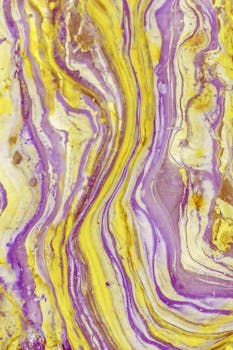
Most minerals have multiple sources spread across continents. Quartz comes from Brazil, Madagascar, Arkansas, and a dozen other places. Even tanzanite, famous for its single-origin status, could theoretically appear wherever the right geological conditions exist. Charoite does not have that luxury. Every piece of charoite ever found came from one location: the Murun massif in the Sakha Republic of Siberia, Russia. One mountain. That is it. And geologists have looked. They have searched similar alkaline rock formations on every continent and found nothing comparable.
Discovery and Soviet secrecy
Charoite was first identified in the 1940s by Soviet geologists surveying the Murun massif, but it did not receive official recognition until 1978, when it was entered into the mineralogical record. The delay was political, not scientific. The Murun massif was in a remote part of eastern Siberia, far from any city, accessible only during a brief summer window when the permafrost softened enough for heavy equipment. The Soviet government classified geological data from the region, so knowledge of charoite stayed inside Soviet scientific circles for decades.
Western mineralogists got their first real look at charoite in the late 1970s, when samples began appearing at mineral shows in Europe. The reaction was immediate disbelief. The swirling purple, white, and black patterns looked almost manufactured, like something painted onto stone rather than grown in it. Several buyers initially assumed the samples were dyed or synthetic.
What makes charoite look like that
The swirling patterns in charoite come from its formation process. It crystallized from hot, mineral-rich fluids that flowed through fractures in limestone, interacting with existing minerals and creating a chaotic, intergrown mess of fibers, blades, and masses. The purple color comes from manganese within a complex silicate structure. The white streaks are typically microcline feldspar. Black spots are usually aegirine or tinaksite, dark minerals that formed alongside charoite in the same fluid environment.
No two pieces look exactly alike. The patterns range from broad, flowing swirls to tight, fibrous tufts that almost resemble fur or feathers under magnification. The best material has a vivid purple base with sharp white and black contrast. Lower-quality specimens are muddy brown-purple with indistinct patterns. The difference in visual appeal between top and bottom grade is enormous.
The chemistry behind the color
Charoite is a complex potassium barium calcium sodium silicate. The full formula is K(Ca,Na)2Si4O10(OH,F), which is a mouthful even by mineralogical standards. The purple color specifically comes from Mn3+ ions in the crystal structure, which is unusual. Most manganese-colored minerals get their hue from Mn2+ (which tends toward pink). The oxidized Mn3+ state that produces charoite's purple requires specific chemical conditions during formation, which is part of why the mineral is so rare.
The presence of barium in the formula is also notable. Barium-bearing silicates are uncommon in general, and the combination of barium, potassium, and manganese in a single mineral with this specific structure appears to have occurred only at the Murun massif. Geologists have studied the site extensively and concluded that the convergence of alkaline magmatism, metasomatic alteration, and specific fluid chemistry was a geological coincidence unlikely to have been replicated anywhere else on the planet. In plain terms: the right rocks, the right fluids, and the right temperatures all came together in one spot, and that spot happens to be in the middle of nowhere in Siberia.
Physical properties and the durability problem
Charoite has a Mohs hardness of 4.5-5. That is soft. Softer than apatite (5), softer than glass (5.5), and significantly softer than the quartz dust that floats around in normal air. In practical terms, a charoite piece left on a shelf will gradually accumulate fine scratches from ambient dust. A charoite ring would look beaten up within weeks of daily wear.
The stone has an uneven fracture pattern rather than cleavage, which means it does not split along predictable planes, a small mercy. But the combination of low hardness and fibrous structure makes charoite challenging to cut. Lapidaries have to work carefully to avoid tearing the fibrous material. Polishing takes patience. The results can be stunning, but the process is slower and more wasteful than with harder, more predictable stones.
Specific gravity is 2.5-2.6, which is light for a mineral of this visual complexity. Charoite is translucent to opaque. The finest cabochons show some translucency at thin edges, but you are never going to get a transparent faceted gem. The stone is almost always cut en cabochon or left as carved objects.
The Soviet collapse and charoite prices
During the Soviet era, charoite was extracted as a byproduct of other mining operations in the Murun massif, where the government was primarily interested in rare earth elements and apatite for fertilizer. Charoite was secondary, interesting enough to collect but not worth a dedicated mining operation. Supply was steady, prices were low, and Soviet mineral dealers sold it at prices comparable to common decorative stones.
Then the Soviet Union collapsed in 1991. Mining operations in remote Siberia were hit hard. Funding dried up, equipment deteriorated, and the infrastructure needed to extract and transport charoite from one of the most inhospitable places on Earth fell apart. Supply dropped sharply through the 1990s and 2000s. Meanwhile, demand in the West had been growing steadily as more collectors and lapidaries discovered the stone.
The result was predictable: prices rose. In the early 1990s, good charoite cabochons sold for $5-10 per carat. By the 2010s, comparable material was fetching $30-80 per carat, and exceptional pieces with vivid purple and strong pattern contrast have sold for considerably more. The stone is still affordable compared to fine tourmaline or opal, but the days of charoite as a cheap curiosity are over.
What charoite is used for
Beads and cabochons dominate the market. Charoite bead strands, whether round, oval, or chip-cut, are the most affordable way to own the stone, typically ranging from $10-40 per strand depending on size and quality. Cabochons set in sterling silver are the next tier up, popular in artisan jewelry and mineral-show circuits.
Carvings are where charoite really shines. The swirling patterns make for dramatic decorative objects: eggs, spheres, freeform pieces, and small figurines. A well-polished charoite sphere with vivid purple and sharp white contrast is one of the more visually striking mineral specimens you can own at any price. Large pieces (10+ cm) with top-grade color can command several hundred dollars.
Some dealers still sell charoite as "lilac stone" or "charoite jade," neither of which is accurate. It is not jade, and calling it that is misleading. Charoite is charoite, its own thing, with its own chemistry and its own origin story.
Charoite meaning and associations
In crystal traditions, charoite is often linked to transformation and spiritual growth. The reasoning is partly visual. The swirling, almost psychedelic patterns suggest change and movement. It is also partly cultural, tied to its Siberian origin and the idea of a stone forged under extreme conditions. Many people find charoite visually meditative, and some keep polished pieces on altars or meditation spaces for that reason. These are personal and cultural associations, not claims with scientific support.
The purple color also connects charoite to crown chakra associations in traditional systems, though this is a fairly generic link that applies to most purple stones including amethyst, sugilite, and lepidolite.
The supply question
Charoite is not running out, but it is not abundant either. The Murun massif still contains charoite-bearing rock, and small-scale mining continues. Russian export regulations, however, have tightened over the years, and the logistical challenges of extracting anything from central Siberia remain formidable. Short winter days, permafrost, and the sheer distance from any port or processing facility all add cost and complexity.
Some dealers claim that "old stock" charoite, material mined in the 1980s and 1990s, has better color than current production. This is plausible but hard to verify systematically. What is clear is that the market for charoite has shifted from a niche curiosity to a recognized collector's mineral, and supply is unlikely to increase dramatically.
Caring for charoite
Charoite is sensitive to heat, acids, and mechanical abrasion. Clean it with warm soapy water only. No ultrasonic cleaners, no steam, no chemical solutions. Store it separately from harder stones and away from direct sunlight, which can gradually fade the purple color over long periods. Avoid wearing charoite rings or bracelets daily. Pendants and earrings are safer because they encounter fewer impacts.
If you own a charoite sphere or carving, display it out of direct sun and away from heat sources. The stone is stable under normal indoor conditions, but UV exposure over years will take a toll on the color.
Why charoite matters
Charoite is proof that Earth still produces genuinely unique minerals. In an age when most new mineral discoveries are micro-specimens visible only under electron microscopes, charoite is a large, visible, beautiful stone that exists in one place and nowhere else. That rarity, geological rather than artificial, gives it a story that no amount of marketing could manufacture. You are not buying a brand. You are buying a piece of one specific mountain in Siberia, and that mountain does not share its secrets with anywhere else on the planet.
Comments