How to Build a Chakra Crystal Grid: Balance Al..
June 2, 2026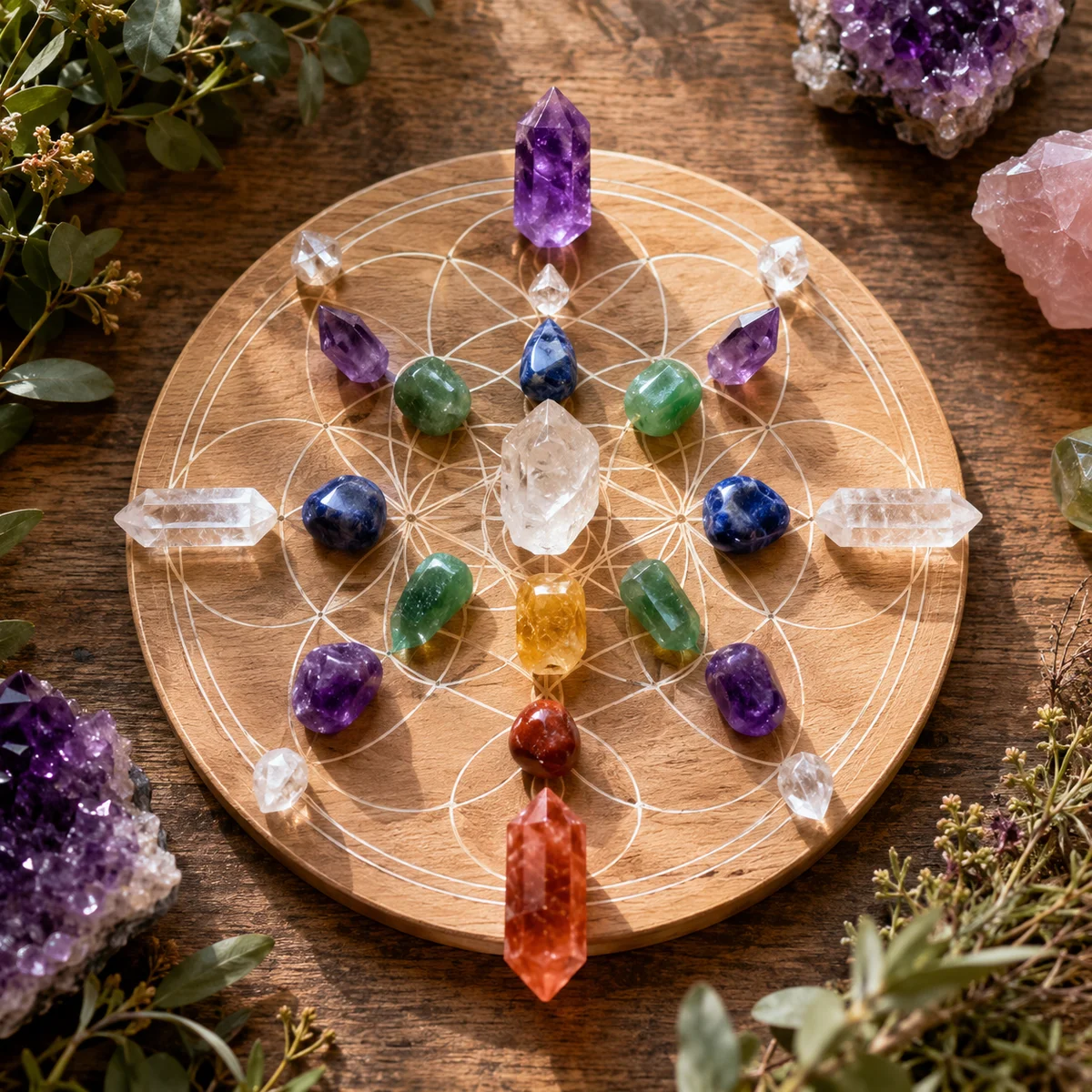
What Makes a Chakra Crystal Grid Different
A standard crystal grid arranges stones in sacred geometric patterns to amplify intention. A chakra crystal grid takes this further by mapping seven specific stones to the seven chakras (energy centers) arranged in a pattern that mirrors the body's vertical energy column. Each stone corresponds to a particular chakra's location, color, and function, creating a layout that addresses the entire energy system at once rather than targeting a single intention.
The key distinction is the body-mapping aspect. In a general crystal grid, you might choose stones based on their properties for abundance, protection, or healing. In a chakra grid, the stone selection is determined by chakra correspondences — root chakra stones go at the bottom of the layout (representing the base of the spine), crown chakra stones at the top (representing the top of the head), and the five others arranged in their anatomical sequence between.
This doesn't mean a chakra grid can't also hold an intention — it can, and most practitioners set one. But the foundational structure is the chakra system itself, which adds a layer of specificity that general grids don't have.
Stone Selection for Each Chakra
Each chakra has multiple stones associated with it. Choose one for each position based on what you have available and what resonates with you visually and intuitively:
Root Chakra (Muladhara) — Base
Color: Deep red, black, brown
Stones: Red jasper, black tourmaline, smoky quartz, hematite, garnet, obsidian
Role in grid: Grounding anchor point. This stone sits at the bottom of your layout and represents stability, security, and connection to the physical world.
Sacral Chakra (Svadhisthana) — Lower Abdomen
Color: Orange
Stones: Carnelian, orange calcite, sunstone, peach moonstone, fire opal
Role in grid: Represents creativity, emotional flow, and vitality. This is often a warm, energizing stone that provides the grid's creative spark.
Solar Plexus Chakra (Manipura) — Upper Abdomen
Color: Yellow
Stones: Citrine, yellow jasper, tiger's eye, pyrite, amber
Role in grid: Represents personal power, confidence, and will. The "engine" of the chakra grid — the stone that drives intention forward.
Heart Chakra (Anahata) — Center of Chest
Color: Green or pink
Stones: Rose quartz, green aventurine, jade, malachite, rhodonite, green tourmaline
Role in grid: The center point of the entire grid, both literally and symbolically. This stone sits in the middle of the layout and represents love, compassion, and balance between lower and upper chakras.
Throat Chakra (Vishuddha) — Throat
Color: Light blue, turquoise
Stones: Aquamarine, blue lace agate, turquoise, sodalite, larimar, blue chalcedony
Role in grid: Represents communication, truth, and self-expression. This stone bridges the heart and mind centers of the grid.
Third Eye Chakra (Ajna) — Forehead
Color: Indigo, deep blue, purple
Stones: Amethyst, lapis lazuli, iolite, fluorite (blue or purple), azurite
Role in grid: Represents intuition, insight, and inner wisdom. Positioned near the top of the layout, this stone is the "visionary" component.
Crown Chakra (Sahasrara) — Top of Head
Color: Violet, white, clear
Stones: Clear quartz, selenite, amethyst (high quality), howlite, moonstone
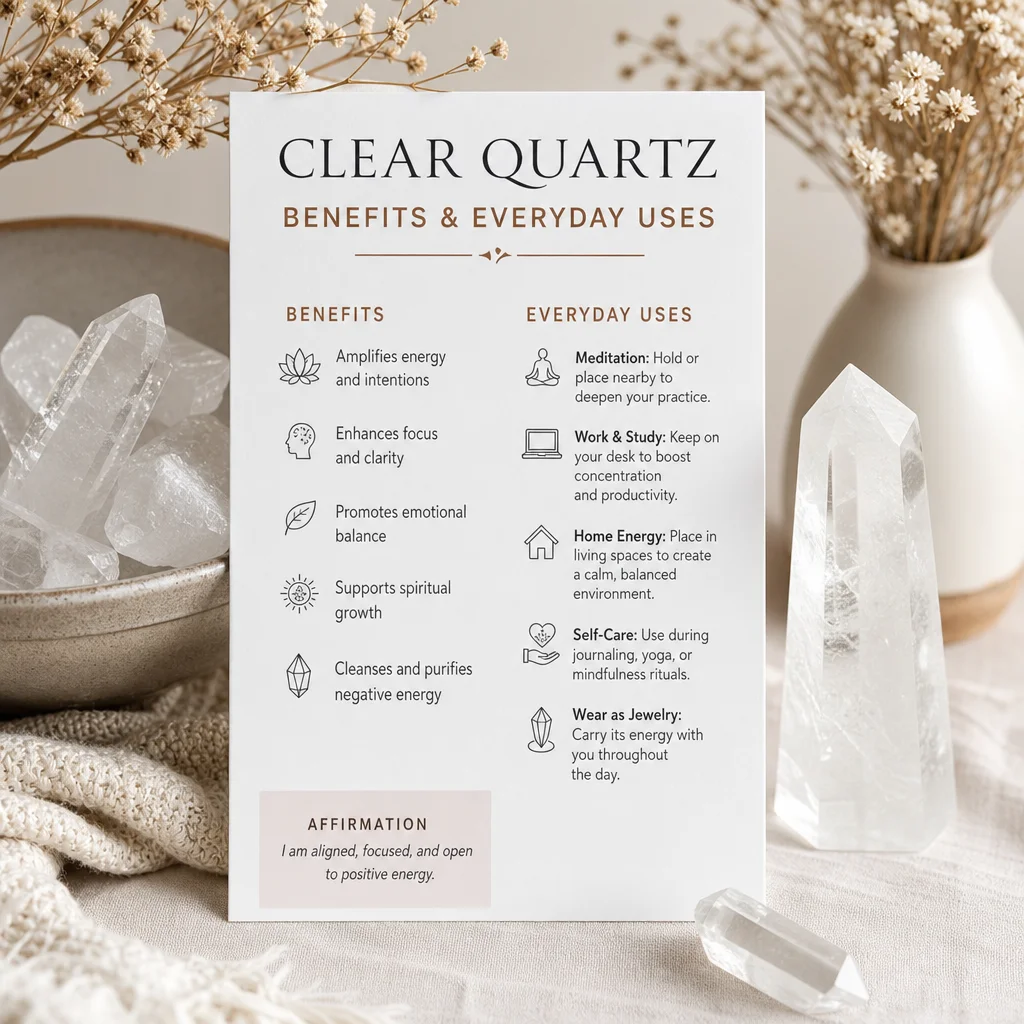
Role in grid: The apex of the grid, representing spiritual connection and higher consciousness. Clear quartz is the most common choice here because it's associated with amplification — it takes the energy flowing through all the other chakra stones and amplifies it.
Layout Designs for Your Chakra Grid
Three layout options work well for chakra grids, from simple to complex:
Layout 1: The Vertical Line (Beginner)
Arrange the seven stones in a straight vertical line, root at the bottom and crown at the top, with the other five in anatomical order. This is the simplest chakra grid — essentially a vertical representation of the body's energy column. It's easy to set up, requires only the seven chakra stones, and works well on a narrow shelf or windowsill.
Place a larger clear quartz point or selenite wand at the center of the line (at the heart chakra position) pointing upward to direct energy flow from root to crown.
Layout 2: The Circle with Center Stone (Intermediate)
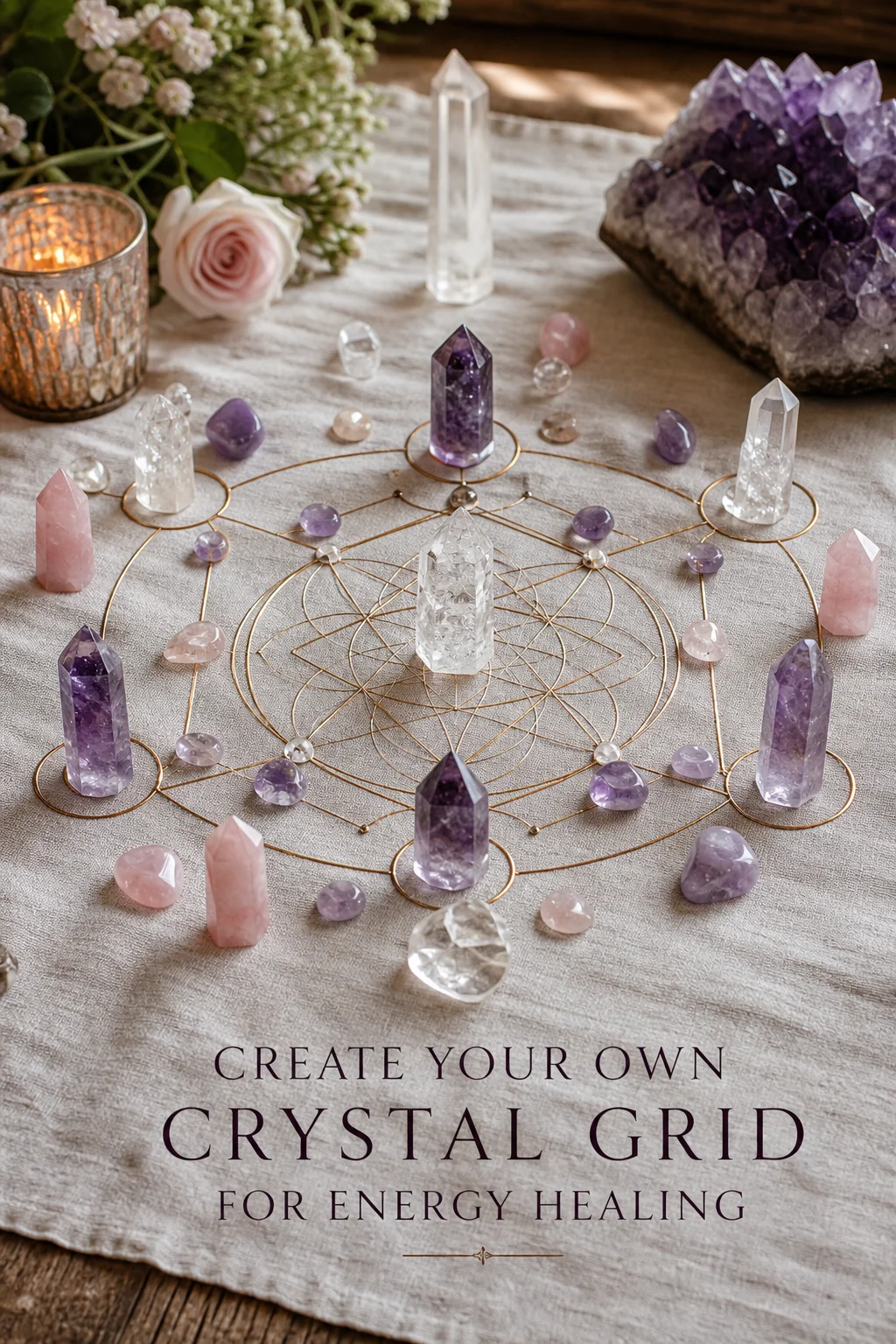
Arrange the seven chakra stones in a circle, with the root stone at the bottom (6 o'clock position) and the crown at the top (12 o'clock). The remaining five stones are spaced evenly around the circle. Place a larger activation stone (typically clear quartz or selenite) in the center of the circle.
This layout adds the energy-circulation aspect of the circle pattern to the chakra mapping. Energy flows both around the circle (through all seven chakras in sequence) and inward/outward through the center stone. It's the most popular chakra grid layout and works on a table, altar, or dedicated grid cloth.
Layout 3: The Flower of Life Expansion (Advanced)
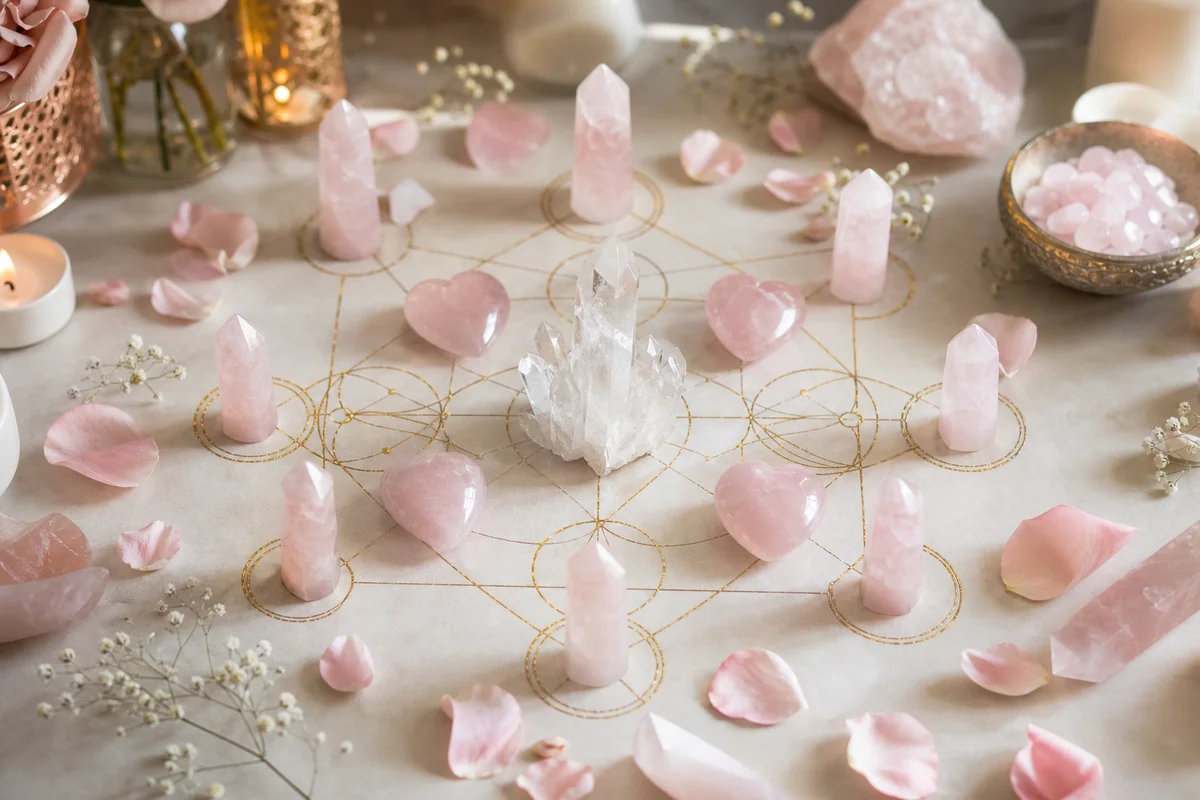
Place the seven chakra stones in their circular arrangement, then add additional stones at the intersections of a Flower of Life or Metatron's Cube pattern drawn or printed on the grid cloth. These additional stones are typically clear quartz points (acting as energy amplifiers) placed at key geometric intersections around the central chakra circle.
This layout incorporates sacred geometry more explicitly and is visually stunning when done with well-matched stones. It requires more stones (7 chakra stones + 6–12 additional quartz points) and more setup time, but many experienced grid practitioners consider it the most powerful configuration.
Grid Cloth and Surface Selection
The surface under your grid matters more than many beginners realize. A dedicated grid cloth serves both practical and aesthetic functions:
Sacred geometry cloth: Printed or embroidered patterns (Flower of Life, Sri Yantra, Seed of Life) provide visual structure that helps you position stones accurately. These are widely available in sizes from 6 inches to 24 inches.
Solid color cloth: A plain cloth in white, black, or purple works well if you prefer to arrange stones freely without pattern guidance. White is the most versatile choice.
Wood board: Some practitioners use a plain wooden board or slice as their grid surface. The natural grain provides visual texture without pattern. Avoid varnished surfaces — the finish can interact with stone surfaces over time.
Natural surfaces: A clean stone slab, ceramic tile, or even a clean cloth on a table all work. The key is a flat, stable surface where stones won't roll.
Activating Your Chakra Grid
Once your grid is arranged, most practitioners activate it through a brief ritual. The concept is that activation "turns on" the grid and sets its energy in motion. Whether or not this is literally true, the activation ritual serves an important psychological function — it marks a clear transition between setup and active use, and it gives your mind a concrete moment to focus your intention.
Basic activation: Hold a clear quartz point in your dominant hand. Starting at the root stone, trace an imaginary line connecting each chakra stone in sequence (root → sacral → solar plexus → heart → throat → third eye → crown). At each stone, pause briefly and visualize the corresponding color. When you reach the crown, draw the energy line down to the center stone (if using a circle layout). Do this three times, then place the activating quartz point at the center or at the crown position.
Setting intention: Before or after activation, state your intention clearly — either aloud or mentally. Some examples: "This grid supports my overall balance and well-being" or "May this grid help me move through blocked energy in my communication" (if the throat chakra is a particular focus). Keep your intention specific and positive.
Maintenance and Refreshing
Chakra grids are not set-and-forget installations. Regular maintenance keeps the practice meaningful:
Daily touch-up: Smooth 30 seconds. Gently check that all stones are in their correct positions and adjust any that have shifted. Dust the surface if needed. This daily contact also serves as a brief mindfulness moment.
Weekly reset: Once a week, take the grid apart completely, clean each stone (dry brush or brief water rinse for hard stones, dry only for soft stones like selenite), and rebuild with fresh intention. This prevents the grid from becoming static background decoration and keeps it an active practice tool.
Monthly reassessment: Each month, consider whether your chakra focus needs adjustment. If you've been working on throat chakra expression, maybe the next month shifts to solar plexus confidence. Adjust your stone selection accordingly.
Full moon/New moon cycle: Some practitioners align their grid refresh cycle with lunar phases — setting up new grids on the new moon and dismantling them on the full moon. This adds a natural time rhythm to the practice, even if the lunar connection is symbolic rather than literal.
Common Mistakes to Avoid
Too many stones: Adding dozens of extra stones dilutes the focused energy of the seven-chakra structure. Keep the core seven clearly defined and limit additions to clear quartz amplifiers in the sacred geometry positions.
Mismatched sizes: Using one massive stone for root and tiny chips for the other chakras creates visual and energetic imbalance. Aim for roughly similar sizes across all seven positions. Small tumbled stones (1–2 cm) work consistently well.
Setting it up once and ignoring it: A grid that sits untouched for months becomes decoration, not a practice tool. Even 30 seconds of daily attention maintains its role as an active practice anchor.
Overthinking the "perfect" stone: Substitutions are always fine. If you don't have aquamarine for the throat chakra, blue lace agate works. No lapis lazuli for third eye? Use amethyst. The intention matters more than the specific mineral species.
Frequently Asked Questions
How long should I leave a chakra grid up?
Most practitioners keep a grid up for 1–4 weeks before dismantling and rebuilding. Shorter periods (1–2 weeks) work well for focused intentions. Longer periods (3–4 weeks) work for general maintenance. Leaving the same grid up indefinitely tends to make it fade into background awareness, reducing its effectiveness as a practice tool.
Can I use tumbled stones instead of natural points?
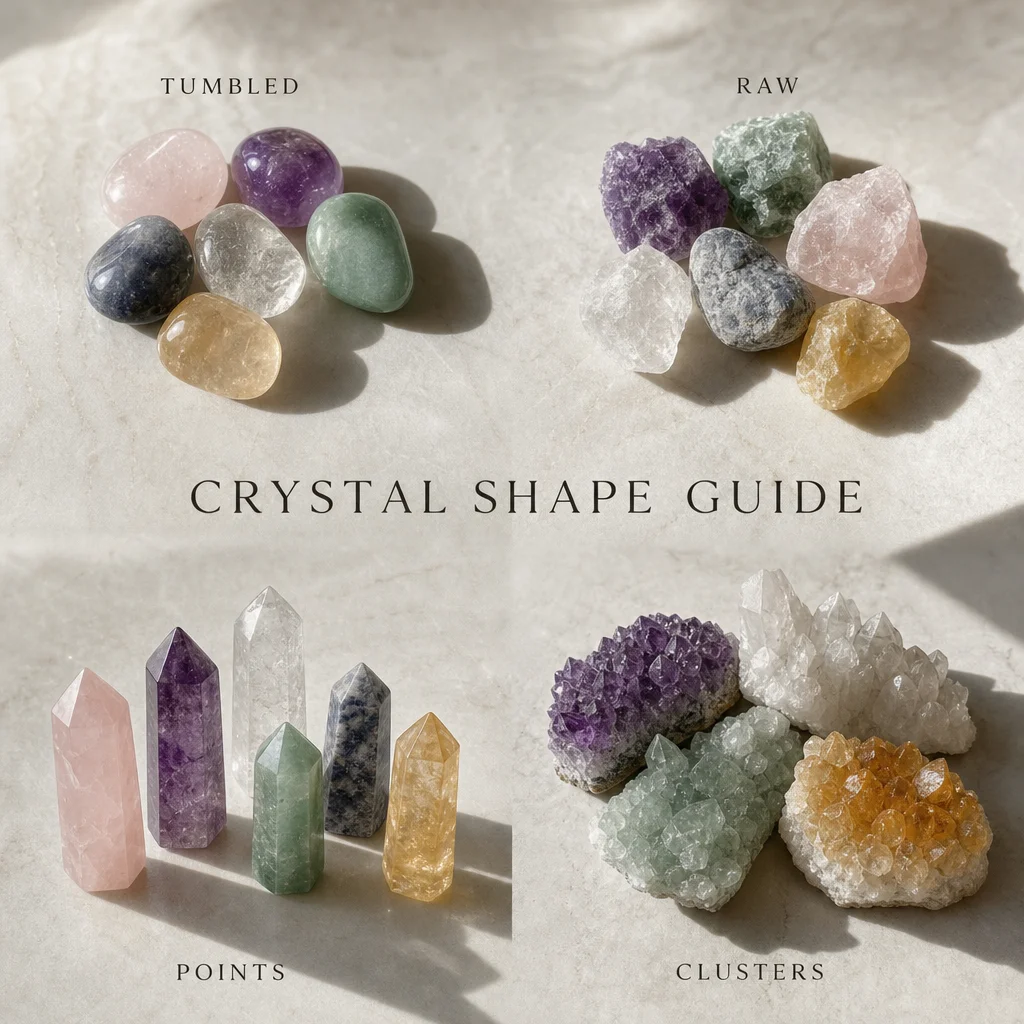
Tumbled stones work perfectly for chakra grids. In fact, many practitioners prefer them because they sit flat and stable in their positions, don't roll, and come in a consistent size range. Natural points have the advantage of directional energy (pointed in specific directions), but for a balanced chakra grid, the rounded shape of tumbled stones is actually preferable.
What if I'm missing a chakra stone?
Use what you have. Clear quartz can substitute for any chakra position in a pinch. Color visualization can compensate for missing color associations — place a clear quartz in the empty position and visualize the appropriate chakra color. The grid's structure matters more than having every "correct" stone.
Do chakra grids actually work?
The practice of arranging crystals in intentional patterns is a mindfulness and meditation tool. The structured layout, the selection process, the activation ritual, and the daily interaction all serve as focused attention practices. Whether the crystals themselves generate any energy effect is a matter of personal belief. The psychological and meditative benefits of the practice are real regardless of your position on crystal energy.
Frequently Asked Questions
Can I use chakra jewelry as the center of my crystal grid?
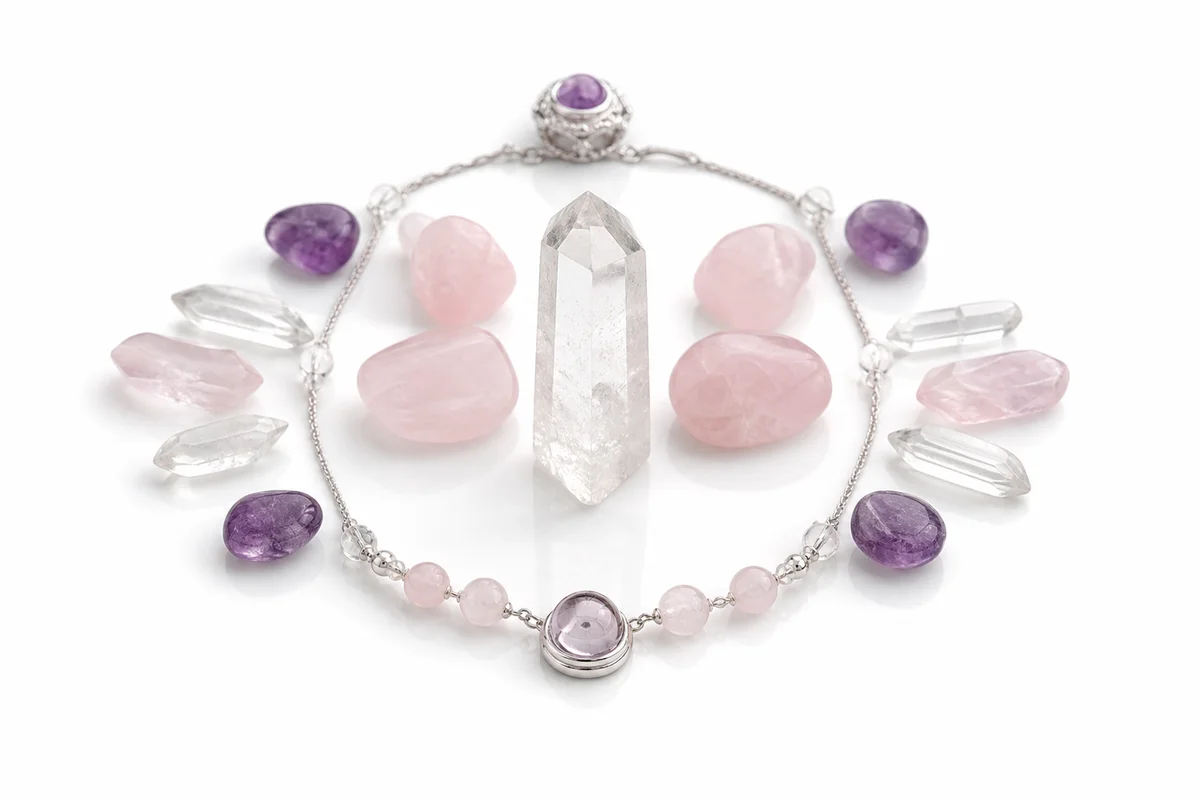
Absolutely! Using a piece of handcrafted chakra jewelry as the center of your grid is a beautiful way to anchor your intentions. Placing an artisan gemstone pendant in the middle of your layout merges the personal energy of wearable art with the stationary power of loose stones. This creates a deeply meaningful focal point for your daily spiritual practice.

Comments