Meaning & Benefits of Carnelian Crystal
May 31, 2026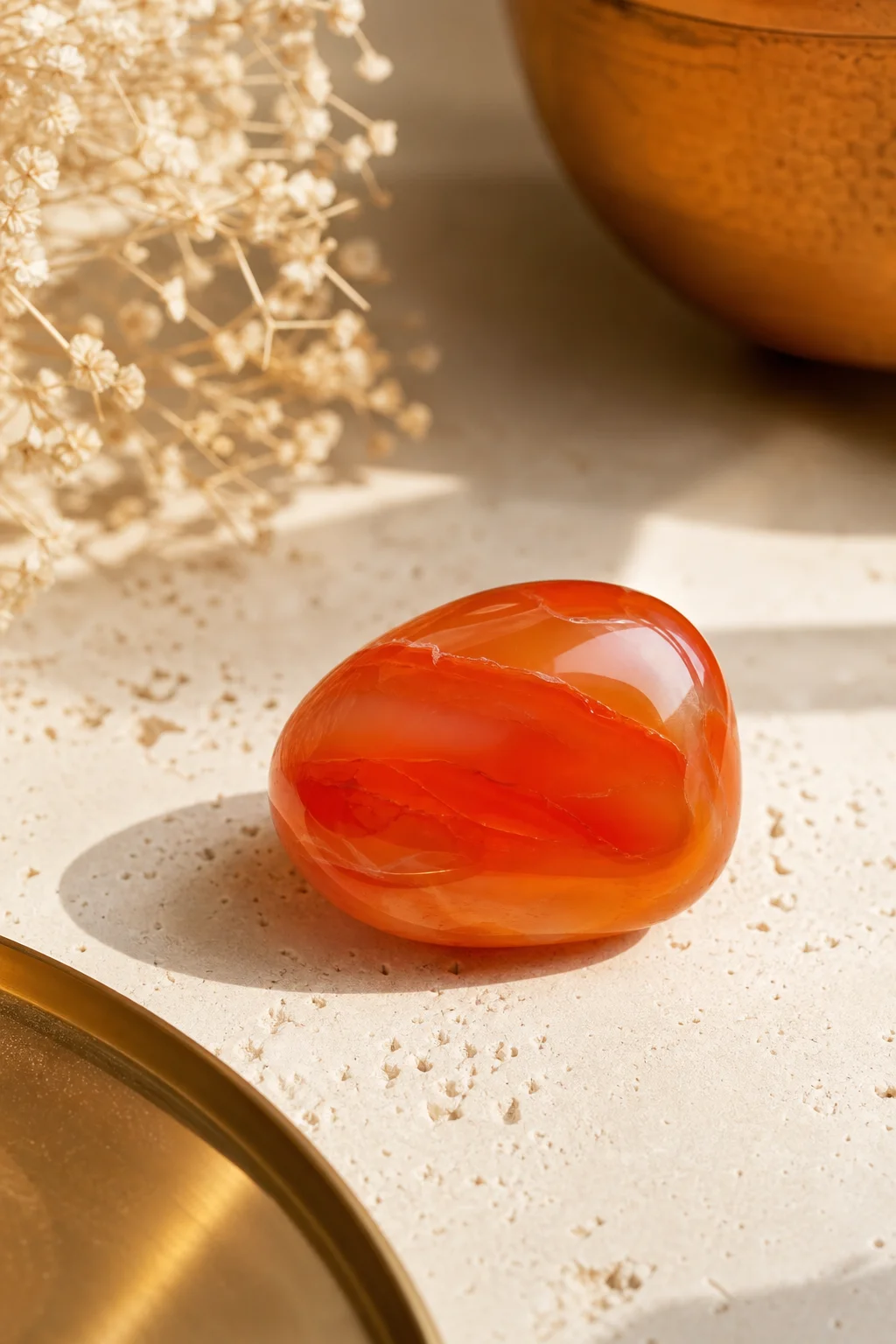
Five Millennia of Human Connection to This Stone
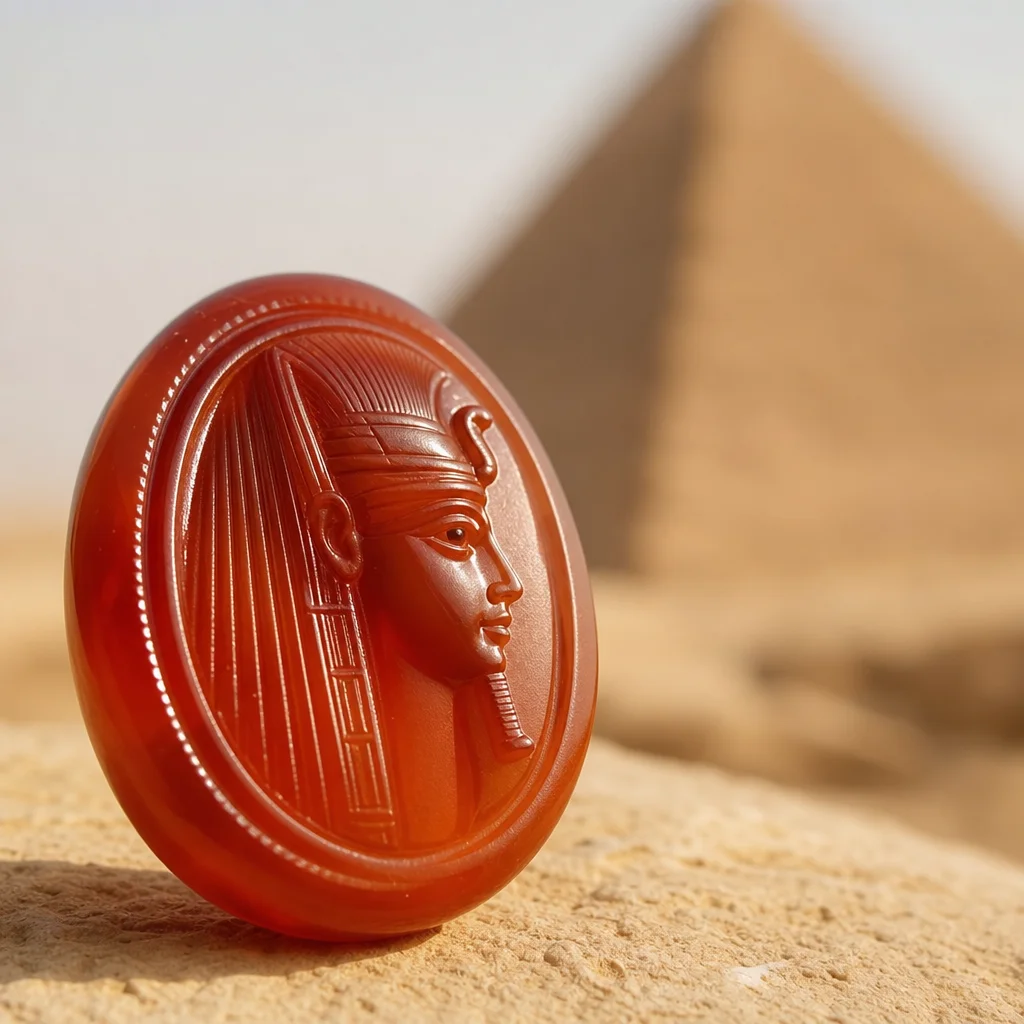
Carnelian occupies a unique position in the history of human ornamentation because it's one of the oldest stones in continuous use. Archaeologists have found carnelian beads in 5,000-year-old Egyptian tombs, carved seals from ancient Mesopotamia, and Roman intaglio rings depicting deities and emperors. The Vikings wore carnelian, the Mughal emperors set it in gold, and Victorian jewelers used it in mourning jewelry. There aren't many gemstones that have remained continuously popular across that many cultures and centuries.
The reason for this extraordinary longevity is partly practical — carnelian is durable (Mohs 6.5-7), takes a beautiful polish, and occurs in colors that are warm, distinctive, and easy to work with — and partly symbolic. Across widely separated cultures, orange and red-orange have been associated with vitality, courage, creative energy, and the life force. Carnelian's natural color taps into these associations without any artificial enhancement, making it a naturally meaningful stone in ways that transcend any single cultural tradition.
Mineralogy: What Makes Carnelian Orange
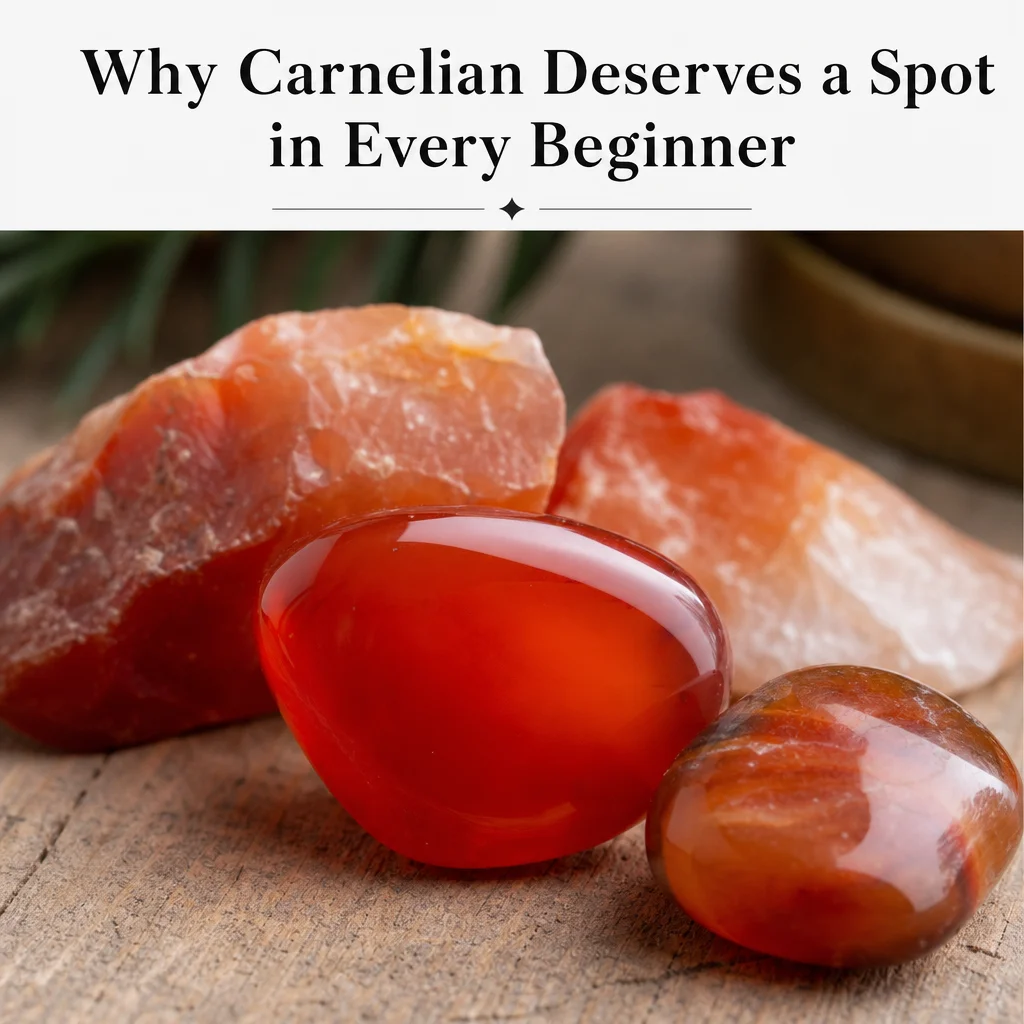
Carnelian is a variety of chalcedony, which itself is a microcrystalline form of quartz (SiO₂). Unlike macrocrystalline quartz varieties like amethyst and citrine, where you can see individual crystal faces, chalcedony is composed of interlocking quartz crystals so tiny they're visible only under a microscope. This microscopic crystal structure gives chalcedony its characteristic waxy to vitreous luster and its uniform, smooth appearance.
The orange to red-orange color of carnelian comes from trace amounts of iron oxide (Fe₂O₃, hematite) within the silica structure. The exact shade depends on the concentration and distribution of iron particles within the chalcedony. Higher iron concentrations produce deeper, more saturated orange-red colors, while lower concentrations yield paler, more translucent material. Natural carnelian often shows some color variation within a single piece — bands or zones of slightly different orange tones — which is one indicator of natural origin.
The boundary between carnelian and sard (the darker, brownish-red variety of chalcedony) is not sharply defined. Both are iron-oxide colored chalcedony; the distinction is primarily one of color range. Carnelian is generally understood to include the orange through orange-red range, while sard refers to darker brown-red material. In practice, the terms overlap and are sometimes used interchangeably in the trade.
Natural vs. Heat-Treated Carnelian
Most carnelian on the market has been heat-treated. Natural carnelian mined from the earth is often pale yellowish-brown or lightly tinted. Heating this material to 200-400°C intensifies and deepens the color, turning yellowish material into vivid orange and pale orange into deep orange-red. Heat treatment of carnelian is so standard and has been practiced for so long that it's essentially an expected step in the production process, not a deceptive practice.
The main concern is material that's been dyed rather than heat-treated. Dyed agate (a closely related chalcedony variety) is sometimes sold as carnelian. Check for unnaturally uniform color that doesn't match the stone's natural banding patterns, and be wary of prices that seem too low for deeply saturated material. Genuine carnelian, even heat-treated, tends to show some color variation and subtle banding.
Transparency Levels
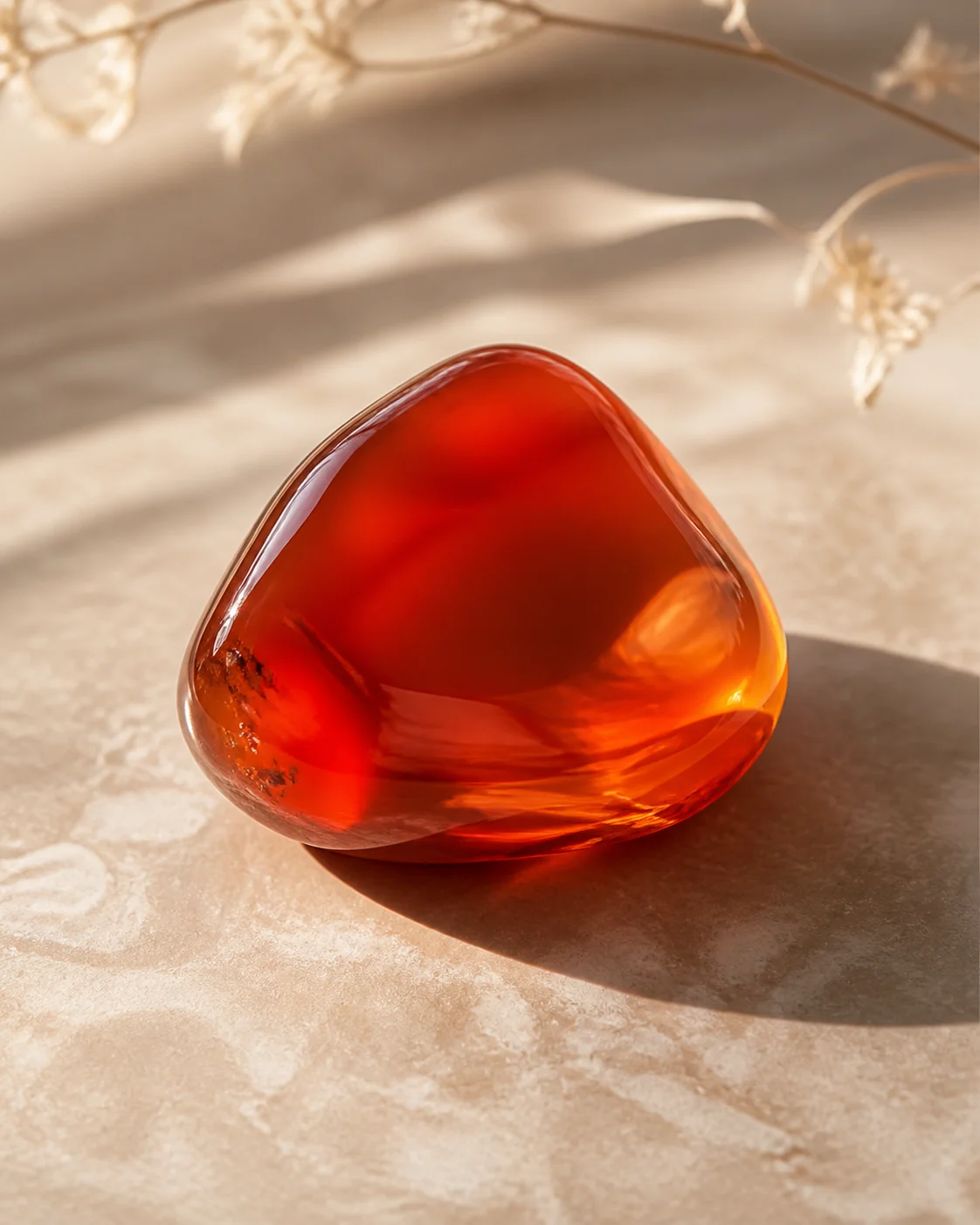
Carnelian occurs across a range of transparency, from nearly opaque through semi-translucent to partially transparent at thin edges. The most sought-after quality for cabochon cutting and jewelry is semi-translucent material with a warm, glowing quality when held to light — sometimes called "jelly" carnelian. Opaque, dull material has less visual appeal but is perfectly functional for beads and rough decorative pieces.
Ancient Egypt: The Stone of the Dead and the Living
The ancient Egyptians valued carnelian highly and used it extensively in both funerary and everyday contexts. In funerary practice, carnelian amulets were placed in tombs to accompany the deceased. The Book of the Dead specifically mentions carnelian amulets intended to protect the heart of the deceased — one passage describes a carnelian heart amulet that ensures the deceased's heart will not testify against them during the judgment of Osiris. This association with the heart and with moral protection made carnelian one of the most important funerary stones.
In daily life, Egyptian craftsmen carved carnelian into scarab amulets, beads for elaborate necklaces, and inlays for furniture and shrines. The stone's workability — it's hard enough to hold detail but soft enough to carve with copper tools — made it ideal for the intricate designs Egyptian artisans produced. Some of the finest surviving Egyptian carnelian pieces show remarkably detailed carving that would be difficult to replicate with the same tools available today.
The color association is worth understanding in its original context: to the Egyptians, orange-red was the color of blood, and by extension the color of life force (ka). Wearing carnelian was, in a sense, wearing vitality itself — a portable concentration of the life force that the color represented.
Roman Empire: Seals, Rings, and Status
The Romans adopted carnelian enthusiastically and found new applications for it. Roman intaglio carving — the art of engraving images in reverse into a gemstone so that pressing the stone into soft wax or clay produces a positive image — reached extraordinary levels of skill in carnelian. The hardness of carnelian allowed intaglio artists to create fine detail that wore well over repeated use, making carnelian signet rings practical tools for sealing documents as well as beautiful ornaments.
Images carved into Roman carnelian intaglios included portraits of emperors, mythological scenes, deities, and personal symbols. Owning a carnelian intaglio with a finely carved image was a marker of status and education — it indicated that the wearer was literate, wealthy enough to commission custom carving, and connected enough to need sealed correspondence.
Creative Energy and Motivation: Modern Associations
In contemporary crystal healing practice, carnelian is primarily associated with creative energy, motivation, and the courage to take action. These associations connect directly to the stone's historical use as a symbol of vitality and boldness — the modern interpretation builds on rather than departs from traditional meanings.
The specific recommendations you'll hear from crystal practitioners include:
For creative blocks: Hold carnelian while brainstorming or beginning a creative project. The stone serves as a physical anchor for the intention to create, and its warm color is visually stimulating in ways that can help break through inertia.
For motivation and procrastination: Carry carnelian as a pocket stone during tasks you've been avoiding. Each time you touch the stone, it serves as a tactile reminder of your intention to move forward. The warmth of carnelian in your hand creates a sensory association that builds over time — eventually, touching the stone itself triggers a motivational response.
For confidence: Wear carnelian jewelry in situations where you need an extra boost of assertiveness — public speaking, difficult conversations, interviews, presentations. Whether the effect is placebo or something more, many users report feeling more grounded and confident with carnelian as a physical support.
For physical energy: Some practitioners associate carnelian with vitality and recommend it for low-energy periods. The sacral chakra connection (orange color in the chakra spectrum) links carnelian to physical pleasure, creative expression, and emotional passion — all forms of "fire" in the traditional energy body model.
Wearing Carnelian: Jewelry and Practical Considerations
Bracelets
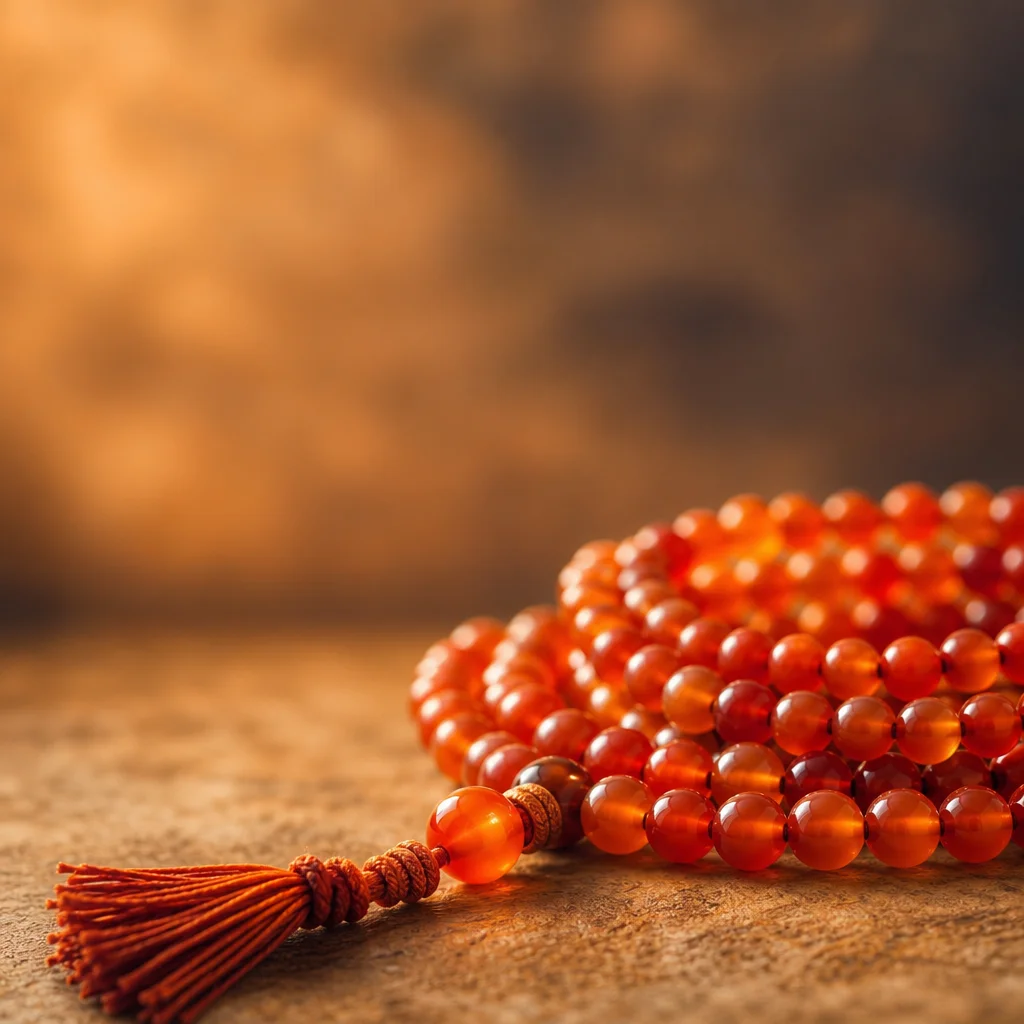
Carnelian bracelets are one of the most popular ways to keep the stone's energy accessible throughout the day. The wrist is a good placement for carnelian if you're working on motivation or creative energy — the stone is in constant contact with your body and visible to you at all times, providing both tactile and visual reinforcement. Beaded stretch bracelets are the most common style, ranging from uniform 8mm rounds to mixed-shape artistic pieces.
Durability is good — carnelian's 6.5-7 Mohs rating means it holds up well to daily bracelet wear. The main risk is impact against hard surfaces, which can chip the beads. But for normal daily activities, carnelian bracelets are among the more durable crystal jewelry options.
Pendants and Necklaces
Carnelian pendants worn at heart level or throat level are recommended for emotional warmth and communication support. The stone's orange color complements both warm and cool skin tones, and it looks particularly good against silver settings (which create a cool contrast) or gold settings (which amplify the warmth). Large, statement carnelian cabochons in sterling silver are a classic bohemian look.
Wrist vs. Neck Placement
The traditional placement recommendation depends on what you're working toward. Wrist placement is more active — the stone is in motion, visible, and constantly being touched. This suits motivation and action-oriented intentions. Neck placement is closer to the heart and throat, which suits emotional warmth, communication clarity, and self-expression intentions. Both work; the choice depends on your specific goals.
Choosing Quality Carnelian
Color is the primary quality factor. Deep, saturated orange-red with good translucency commands the highest prices. The color should look "alive" — meaning it has depth and dimension rather than appearing flat or dull. When held to light, quality carnelian should glow warmly, showing internal color that seems to emanate from within.
Avoid material that looks brown rather than orange, unless you specifically want that earthy tone. Also avoid material with visible cracks, dull patches, or uneven polish — these indicate lower quality rough material or poor finishing. Good carnelian should feel smooth and slightly warm to the touch (not physically warm from heat, but perceptually warm due to the orange color).
For bead purchases, check that the beads are uniform in color within a strand unless the variation is intentional and aesthetically pleasing. Significant color mismatch in a single bracelet suggests mixed lots from different sources, which is common in budget-priced carnelian but less desirable than color-matched material.
Frequently Asked Questions
Is carnelian the same as agate?
Carnelian is a variety of chalcedony, and agate is another variety of chalcedony — they're closely related but distinct. The main difference is banding: agate typically shows visible concentric banding patterns, while carnelian is more uniform in color. Some pieces exist in a gray zone where the distinction becomes arbitrary.
Does carnelian fade in sunlight?
Natural, untreated carnelian is generally color-stable. However, some dyed material or material with unstable iron coloring can fade with prolonged sun exposure. Keep high-quality, deeply colored carnelian out of direct sun to be safe, especially for pieces you've invested significant money in.
Can carnelian go in water?
Yes. Carnelian is not water-sensitive and can be rinsed or briefly soaked without damage. Warm soapy water and a soft brush work well for cleaning carnelian jewelry. Avoid harsh chemicals and ultrasonic cleaners if the stone has fractures or inclusions.
What's the difference between carnelian and sunstone?
Carnelian is chalcedony (microcrystalline quartz) colored by iron oxide. Sunstone is a feldspar (a different mineral family entirely) that shows a distinctive metallic spangle effect called aventurescence, caused by tiny copper or hematite inclusions that catch light. They look completely different — carnelian is warm and uniform, sunstone sparkles.
Frequently Asked Questions
What chakra is carnelian associated with?
Carnelian is primarily associated with the Sacral Chakra, the energy center related to creativity, passion, and emotional balance. It also stimulates the Root Chakra, providing grounding and stabilizing energy. Wearing handcrafted carnelian jewelry over these centers helps keep your creative and motivational life force flowing beautifully throughout your day.
Comments