Best Crystals for Beginners: A Complete Starter Guide
Best Crystals for Beginners: A Complete Starter Guide
My first time in a crystal shop was a disaster
I walked into a crystal shop about four years ago with no idea what I was doing. Shelves floor to ceiling with every color imaginable. I picked up something green and the woman behind the counter told me it was malachite and that I needed to wash my hands because it was toxic. I put it down and left with nothing.
It took three more visits before I bought anything, and my first pick was not ideal. I grabbed a large piece of labradorite because it looked cool. I had no idea what it was for. It sat on my desk for a month looking pretty and that was it.
If I had known then what I know now, I would have started with a handful of affordable, versatile stones and learned how to work with them before expanding. That is what this guide is for. These are the best crystals for beginners, the ones that are easy to find, cheap, and genuinely useful even if you are completely new to all of this.
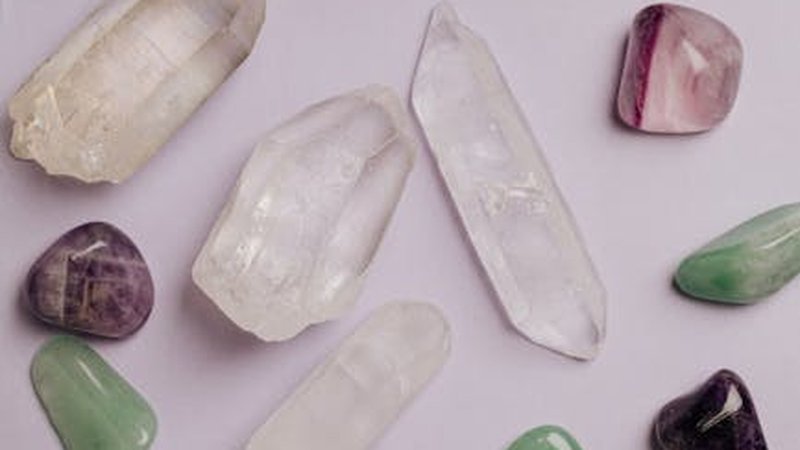
[IMG: A flat-lay photo showing ten different crystals arranged in a circle on a wooden surface, each labeled with its name]
The ten best starter crystals
These are the stones I recommend to everyone who is just getting started. Each one is widely available, usually costs under fifteen dollars for a tumbled piece, and serves a clear purpose.
Rose quartz
If there is one crystal that belongs in every beginner collection, it is rose quartz. The soft pink color comes from trace amounts of titanium, manganese, or iron within the quartz. It is one of the most abundant and affordable crystals you can buy.
People associate rose quartz with love, compassion, and emotional healing. Some keep a piece by their bed to promote restful sleep. Others carry it as a reminder to be gentle with themselves during stressful periods. I keep a tumbled rose quartz in my jacket pocket, and while I cannot prove it does anything metaphysical, reaching into my pocket and feeling that smooth, warm stone does genuinely calm me down when I am having a rough moment.
It is hard, durable, and does not require any special care. You can wear it as jewelry, carry it loose, or just set it on a shelf. It works everywhere.
Amethyst
Amethyst is purple quartz, and it is probably the most popular crystal in the world for good reason. It is beautiful, affordable, and has a long history of being associated with calm, clarity, and protection.
I use amethyst differently than most people, I think. I keep a small amethyst cluster on my nightstand. The claimed benefit is better sleep and more vivid dreams, which I cannot verify, but having something beautiful to look at when I turn off the lights is reason enough to keep it there.
Amethyst geodes make stunning home decor. A medium-sized geode with good color saturation can transform a shelf or mantel. For beginners, I suggest starting with a tumbled stone or a small cluster before investing in larger pieces.
One thing to watch out for: amethyst can fade in direct sunlight. Keep it out of windowsills and bright display areas if you want the color to last.
Black obsidian
Obsidian is volcanic glass, not a crystal at all, but it is one of the most recommended stones for beginners. It forms when lava cools so quickly that mineral crystals cannot grow. People associate it with protection and grounding, saying it absorbs negative energy. I keep a small piece on my desk at work, and whether it is absorbing bad vibes or just giving me something to fidget with, it serves a purpose.
It is incredibly affordable at three to five dollars for a tumbled piece, and nearly indestructible compared to more fragile stones. The main varieties are plain black, snowflake (with white spots), and rainbow (with iridescent bands). Pick whichever one appeals to you.
Clear quartz
Clear quartz is sometimes called the "universal crystal" because people believe it amplifies the energy of other stones. It is also associated with clarity and focus. Practically speaking, it is beautiful, hard enough to resist scratches (7 on the Mohs scale), and catches light in a way that makes any room look better.
Tumbled pieces cost two to four dollars. Larger points and clusters cost more but are still affordable. I keep a couple on a shelf with small plants and a candle, and they look great without any particular spiritual intention behind it.
Citrine
Citrine is yellow to amber-colored quartz, and it is associated with positivity, energy, and abundance. The natural color comes from trace amounts of iron within the quartz structure, though much of the citrine on the market is actually heat-treated amethyst. Both types work fine for display and personal use.
I like citrine because it is warm-looking. In winter, when everything feels gray and cold, a piece of citrine on my desk adds a splash of color that genuinely improves my mood. That might not be metaphysical, but it is real.
Natural citrine tends to be pale yellow with a smoky or cloudy quality. Heat-treated citrine is usually deeper orange or reddish-orange. Neither is better than the other. Choose the color that speaks to you.
Black tourmaline
Black tourmaline is the protection crystal that serious collectors recommend over obsidian. It is a genuine crystalline mineral with a complex chemical structure, and it forms in long, striated columns that look distinctly different from the smooth glass of obsidian.
People place black tourmaline near the entrance of their home, believing it blocks negative energy from entering. Others keep it near electronic devices, saying it absorbs electromagnetic fields. I have no way to verify these claims, but a chunky piece of black tourmaline on a bookshelf does look impressive and adds visual weight to a room.
It is slightly more expensive than obsidian, usually five to twelve dollars for a tumbled piece, but still very affordable. Raw pieces with visible striations are my personal favorite because they look more interesting than the perfectly smooth tumbled versions.
Tiger's eye
Tiger's eye is a chatoyant gemstone, meaning it has a silky, moving light effect when you tilt it. The golden-brown bands shift and change as you turn the stone in your hand. It is mesmerizing to look at, and that alone makes it a great starter crystal.
The traditional associations are courage, confidence, and mental clarity. I have a tiger's eye worry stone, a small flat piece with a thumb-shaped indent, that I keep in my car. Rubbing the smooth surface with my thumb while driving helps me focus, especially during stressful commutes or when I am running late.
Tiger's eye is durable, affordable, and distinctive. Nobody is going to mistake it for any other stone. It is a solid addition to any beginner collection.
Selenite
Selenite is extremely soft, only a 2 on the Mohs scale, meaning you can scratch it with your fingernail. This makes it a poor choice for jewelry but excellent for display and for cleansing other crystals. Many people place their stones on a selenite charging plate overnight to "reset" them.
The white, translucent surface catches light in an ethereal, moonlit way that no other crystal really matches. Handle it carefully and keep it dry, because water will dissolve it over time.
Carnelian
Carnelian is a translucent orange to red variety of chalcedony used decoratively since ancient Egypt. The color ranges from pale peach to deep rust. People associate it with creativity and motivation, and I keep a piece on my writing desk. The warm orange color is genuinely stimulating, and turning it over in my hand helps me get moving on blank-page days.
It is hard enough for everyday handling. Tumbled pieces cost four to eight dollars.
Jade
Jade has been valued for thousands of years across Chinese, Mesoamerican, and Maori traditions as a symbol of purity and harmony. There are two types, jadeite and nephrite, and both are exceptionally tough. The green color comes from chromium or iron, but jade comes in white, lavender, yellow, and black too.
For beginners, a simple nephrite pendant or tumbled piece is affordable. Jade is traditionally given as a gift representing friendship and protection. My mother gave me a small jade pendant when I started my first job, and I still wear it sometimes. The weight of it is comforting in a way I cannot fully explain.
[IMG: A curated collection of ten beginner crystals arranged on a wooden tray with natural light, each stone clearly visible and identifiable]
How to choose which crystals to start with
You do not need all ten right away. I suggest starting with three to five stones that match what is most relevant to your life. If you are dealing with stress, rose quartz, amethyst, and black tourmaline are a solid trio. For energy and motivation, citrine, carnelian, and tiger's eye work better. If you are just curious, grab rose quartz, clear quartz, and amethyst and see how it goes.
The most important factor is that you actually like the way the stone looks and feels. If a crystal does not appeal to you visually, you will not interact with it. Pick what catches your eye first, then learn about it after. Tumbled stones are the best format for beginners: smooth, easy to carry, cheap, and durable.
Cleansing and caring for your crystals
Most crystals can be rinsed under lukewarm water and dried with a soft cloth whenever they look dusty. Avoid water with selenite, malachite, and pyrite, which can dissolve or degrade when wet. For those, just wipe with a dry cloth.
People talk about charging crystals in moonlight or smudging them with sage. These are meaningful if they are meaningful to you, but not required for basic maintenance. Store harder stones loose on a shelf, wrap softer ones in cloth, and keep everything out of direct sunlight. Amethyst, rose quartz, and citrine will fade with prolonged sun exposure.
Common beginner mistakes to avoid
I made most of these myself, so learn from my experience.
Do not buy expensive pieces right away. Some shops sell large crystals for hundreds of dollars, and it is tempting to buy something impressive on your first visit. Start small. A ten-dollar tumbled stone teaches you just as much as a hundred-dollar cluster.
Do not worry about the "right" way to use crystals. There is no exam. Some people meditate with their stones. Some carry them in their pockets. Some just display them because they look nice. All of these approaches are valid.
Do not buy dyed or artificially colored stones without knowing what you are getting. Some sellers dye cheap stones to make them look like more expensive varieties. Bright turquoise-colored howlite is almost certainly dyed. Deep blue agate that looks too perfect probably is. Ask the seller if you are unsure. Reputable shops will be honest about treatments.
Do not dismiss common stones as boring. Rose quartz and clear quartz might seem less exciting than something rare and exotic, but they are popular for a reason. They work, they are affordable, and they are easy to find. Master the basics before chasing rarities.
[IMG: A person's hand holding a tumbled rose quartz stone against a window with natural light streaming through, demonstrating the simple beauty of a basic starter crystal]
Where to buy crystals without getting scammed
The crystal market is largely unregulated, which means there is a lot of low-quality, misidentified, and artificially treated material out there. Here is how to find good sources.
Local crystal shops are the best starting point. You can see and feel the stones before buying, ask questions, and gauge whether the shop is trustworthy. A good owner will tell you where their stones come from and whether anything has been treated or dyed.
Gem and mineral shows are even better, bringing together collectors and dealers with prices often lower than retail. Check your local events calendar because these happen regularly in most cities.
Online shopping is convenient but riskier. Look for sellers with detailed descriptions that specify the variety, origin, any treatments, and accurate dimensions. Read reviews with photos. Avoid listings that use vague terms like "natural healing stone" without naming the actual mineral.
Price is a good reality check. A baseball-sized natural ruby for fifteen dollars is almost certainly synthetic or misidentified. If a deal seems too good to be true, it probably is. Start with affordable, common stones from a source you trust and build from there.
Comments