Do Healing Crystals Reduce Anxiety? Real Facts
May 31, 2026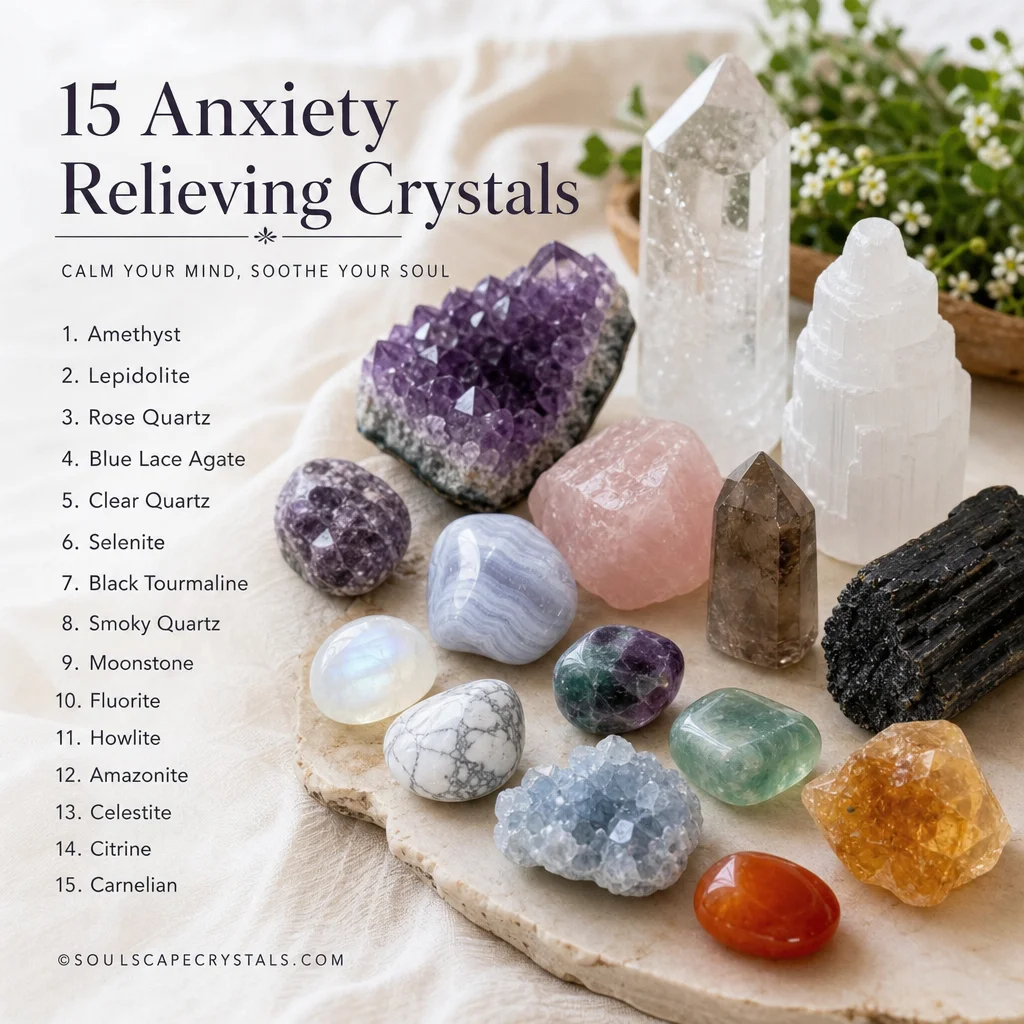
Before We Start: An Important Disclaimer
Crystals are not a substitute for medical treatment, therapy, or prescribed medication. Anxiety disorders are genuine medical conditions that respond to evidence-based treatments including cognitive behavioral therapy, medication, and lifestyle interventions. If your anxiety significantly impacts your daily functioning, see a mental health professional. The stones discussed here are complementary tools — practices that some people find helpful alongside (not instead of) professional care.
With that established, there's genuine value in having physical objects that support emotional regulation practices. The act of selecting a stone, holding it during moments of stress, and creating rituals around self-care all contribute to a sense of agency that anxiety often undermines. Whether the benefit comes from placebo effect, focused attention, sensory grounding, or something we don't fully understand, many people report meaningful relief from crystal-based practices. This guide organizes the most commonly recommended stones by the specific type of anxiety they're traditionally used for.
For General Anxiety and Overthinking
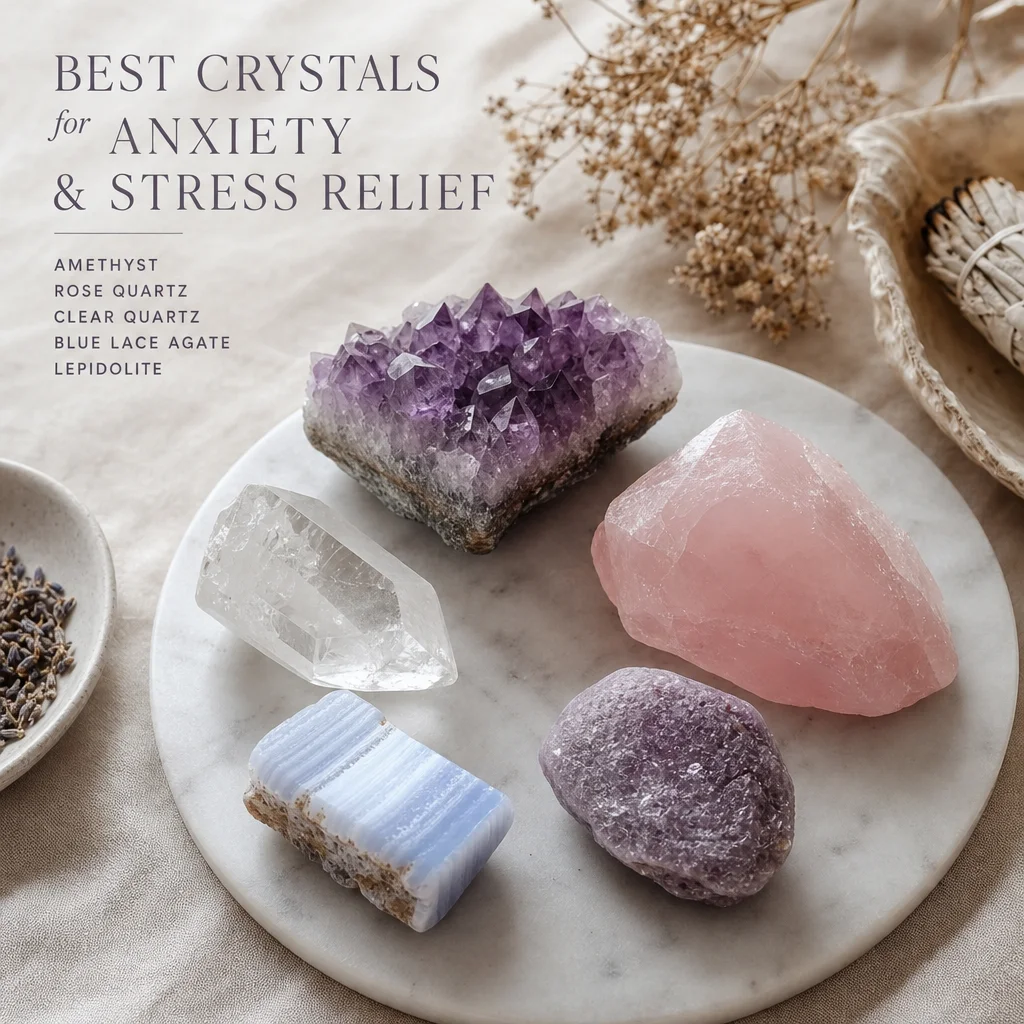
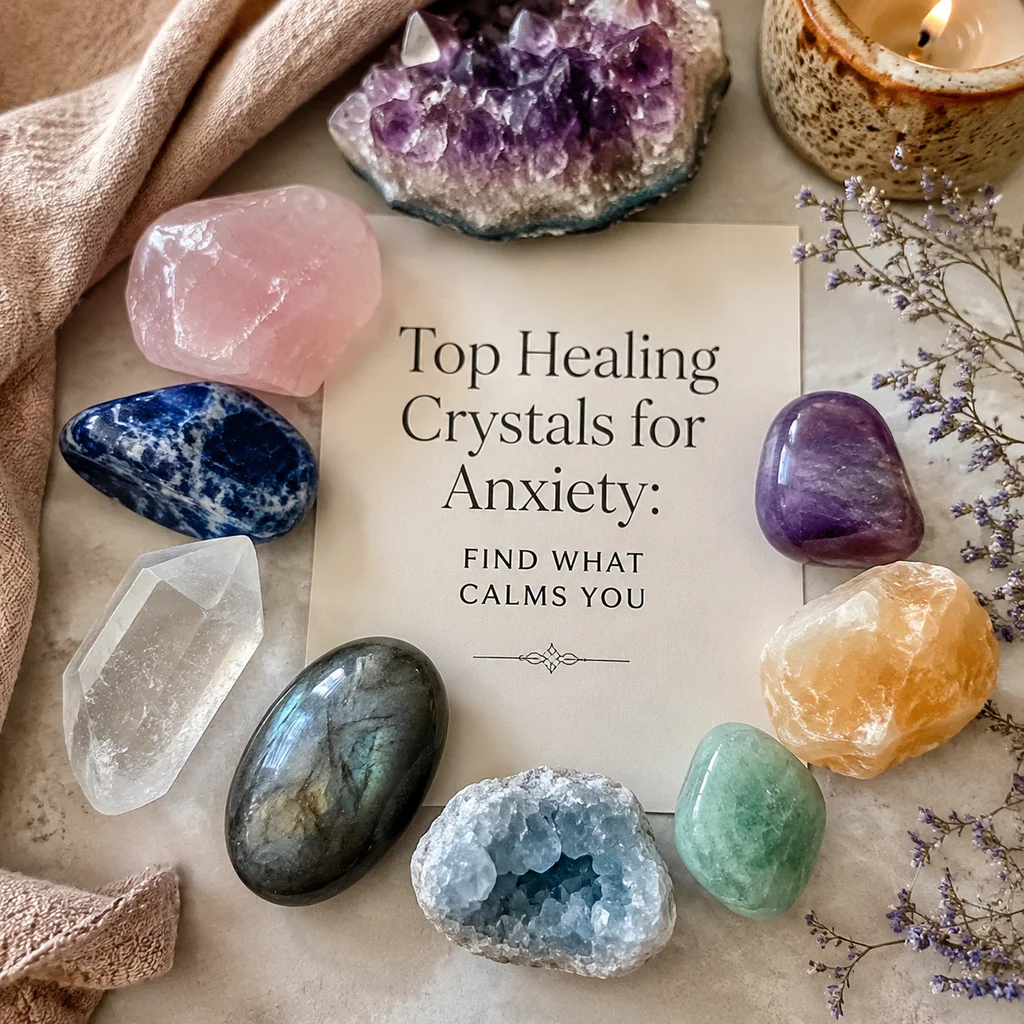
1. Amethyst
Amethyst is the most widely recommended crystal for anxiety in virtually every crystal healing tradition. Its association with calm, mental clarity, and emotional regulation spans thousands of years — the ancient Greeks literally named it "amethystos" (meaning "not intoxicated") because they believed it could prevent drunkenness, and over time this evolved into a broader association with preventing mental overwhelm of all kinds.
For anxiety specifically, amethyst is recommended for its "cooling" quality — practitioners describe it as bringing down the emotional temperature when anxiety runs hot. Whether this is a real energetic effect or a metaphor for the visual and tactile experience of holding a cool purple stone during a moment of distress, the reported effect is consistent across users. Amethyst is versatile enough for daily wear (bracelets, pendants), bedroom placement (clusters on nightstands), and meditation focus.
2. Lepidolite
Lepidolite is a lithium-bearing mica, and its lithium content is often cited as the basis for its calming reputation. Lithium is, of course, used medicinally as a mood stabilizer. However, the lithium in lepidolite is chemically bound in the crystal structure — holding the stone does not deliver bioavailable lithium to your body any more than holding an iron nail delivers dietary iron. The association, while scientifically tenuous at the literal level, provides a useful conceptual anchor for the stone's traditional use.
What makes lepidolite genuinely effective for many anxiety sufferers is its physical texture. The mica structure means lepidolite has a naturally flaky, layered surface that's pleasing to touch. Rubbing or stroking a lepidolite tumble during an anxiety episode provides tactile grounding similar to a worry stone, and the stone's pink-lavender color is visually calming. The combination of tactile engagement and visual aesthetics creates a self-soothing ritual that many users find genuinely helpful.
3. Blue Lace Agate
Blue lace agate combines a soft, pale blue color with delicate banding patterns that create a visually soothing effect. In crystal healing, it's specifically associated with calming anxious speech — the stone is recommended for people whose anxiety manifests as nervous talking, social anxiety around communication, or the inability to express themselves clearly when stressed.
For generalized anxiety, blue lace agate's value is primarily sensory. The pale blue color falls within the range that psychological research associates with calm and trust (hence its use in healthcare and corporate branding). Wearing a blue lace agate pendant or bracelet creates a visual anchor that subtly reinforces a calm state throughout the day.
For Sleep-Related Anxiety
4. Selenite
While selenite's water sensitivity limits its practical applications (it dissolves in water — never soak it), its association with peaceful energy and mental clarity makes it a popular bedroom crystal. A selenite wand or tower on the nightstand is a common recommendation for people whose anxiety spikes at night — the kind of racing thoughts that keep you awake when everything goes quiet.
The visual quality of selenite — translucent white with a gentle, ethereal glow — contributes to its calming effect in bedroom settings. It catches and diffuses ambient light in a way that feels peaceful rather than dramatic, creating a soft visual presence that many users find sleep-supportive. Place it where moonlight or streetlight can interact with the crystal surface for a subtle nighttime effect.
5. Howlite
Howlite is the workhorse of calming crystals — inexpensive, readily available, and traditionally associated with insomnia and anxiety-related sleep disturbance. The stone is naturally white with gray veining (unlike the dyed turquoise howlite commonly sold to imitate real turquoise), and its porous surface absorbs essential oils well, making it popular for aromatherapy combinations.
For sleep anxiety, place a howlite tumble under your pillow or on your nightstand. The traditional practice combines the stone with a calming intention: before sleep, hold the howlite, acknowledge whatever is causing anxiety, mentally "give" the concern to the stone, and place it aside. This practice of externalizing anxious thoughts onto a physical object has documented psychological benefits — it's essentially a simplified version of cognitive defusion techniques used in acceptance and commitment therapy.
6. Angelite
Angelite (blue anhydrite) is a relatively soft stone with a distinctive pale blue color that many users find immediately calming. Its association with peaceful communication and angelic connection makes it popular for people who experience prayer or meditation as part of their anxiety management practice. Hold angelite during meditation for a gentle, calming energy that many users describe as "supportive" rather than "intense."
For Social Anxiety
7. Rose Quartz
Rose quartz is primarily known as the love stone, but its association with self-compassion makes it particularly relevant for social anxiety. Social anxiety often involves harsh self-judgment — fear of saying the wrong thing, being judged, being visibly nervous. Rose quartz's traditional connection to unconditional self-acceptance directly addresses this internal criticism loop.
The practice: hold rose quartz before a social event, setting the intention of self-acceptance. Carry it during the event as a tactile anchor. If anxiety spikes, touch the stone and redirect focus to self-compassion rather than self-criticism. This is a behavioral technique (attention redirection combined with self-compassion framing) supported by a physical object — the crystal is a tool for the technique, not the technique itself.
8. Rhodonite
Rhodonite is a pink manganese silicate with black manganese oxide veining. It's traditionally used for emotional healing, specifically for processing old wounds and trauma that contribute to current anxiety. For social anxiety that has roots in past social rejection, embarrassment, or criticism, rhodonite's association with emotional processing makes it a relevant companion.
The black veining in rhodonite is sometimes interpreted symbolically as representing the balance between emotional openness (pink) and protective boundaries (black). This visual metaphor can be useful during social situations — reminding yourself that openness doesn't require vulnerability and that healthy boundaries are a form of self-care, not weakness.
9. Amazonite
Amazonite's association with hopeful, forward-looking perspectives makes it a counter to the catastrophic thinking that social anxiety often produces. When your mind jumps to worst-case scenarios — "they'll think I'm stupid, everyone will notice I'm nervous, I'll be humiliated" — amazonite is traditionally used as a visual and tactile anchor for alternative, more balanced thinking patterns.
Carry amazonite as a pocket stone or wear it as a pendant. During anxious moments, hold the stone and consciously redirect your thoughts from worst-case scenarios to more realistic outcomes. The stone serves as a physical trigger for this cognitive reframing practice.
For Grounding During Panic
10. Black Tourmaline
When anxiety escalates to near-panic levels, grounding techniques become essential. The "5-4-3-2-1" sensory grounding exercise (name five things you see, four you can touch, three you hear, two you smell, one you taste) is one of the most effective non-medication interventions for acute anxiety. Black tourmaline serves as a physical anchor for these grounding techniques.
The stone's weight (tourmaline is dense at 3.0-3.2 specific gravity), its dark color, and its solid, opaque feel in the hand all contribute to a sensory experience that pulls attention away from anxious thought spirals and into physical reality. During a panic episode, gripping a piece of black tourmaline and focusing on its weight, texture, and temperature provides a concrete alternative to the abstract catastrophizing that panic involves.
11. Smoky Quartz
Smoky quartz offers a slightly warmer alternative to black tourmaline for grounding during anxiety. While black tourmaline has a "shielding" quality that some people find too intense during vulnerable moments, smoky quartz is described as more companion-like — supportive rather than defensive. For people who find black tourmaline emotionally cold or distancing during acute anxiety, smoky quartz may be a better fit.
The earth tones of smoky quartz contribute to its grounding quality visually. Brown is psychologically associated with stability, earth, and reliability. Wearing smoky quartz or holding a piece during anxiety episodes creates a visual and tactile connection to these stabilizing associations.
12. Hematite
Hematite's exceptional density (specific gravity 5.3 — noticeably heavier than most stones of similar size) makes it one of the most grounding crystals you can hold. The weight alone is enough to pull your attention into your body, which is exactly what you need during an anxiety spiral that's pulling your attention into catastrophic mental scenarios. A hematite worry stone or tumble in your pocket provides instant access to this grounding weight.
Practically, hematite's metallic luster and weight make it one of the most tactilely satisfying crystals for repetitive handling — the kind of absent-minded rubbing and turning that anxiety-prone people naturally gravitate toward. This fidget function, while simple, provides real sensory grounding that interrupts thought loops.
For Chronic Worry and Rumination
13. Citrine
Chronic worry and rumination are characterized by repetitive, circular thinking — the same anxious thoughts cycling endlessly without resolution. Citrine's traditional association with optimism, joy, and forward-looking energy provides a conceptual counterpoint to this stuck-in-the-past thinking pattern.
The visual warmth of citrine (yellow to orange-yellow) activates psychological associations with sunlight, happiness, and energy. Wearing citrine jewelry creates a persistent visual reminder of these positive associations throughout the day. For people caught in chronic worry patterns, the stone serves as a bright, warm counterbalance to the mental gray of repetitive anxious thinking.
14. Clear Quartz
Clear quartz is the most versatile stone in crystal healing, and for anxiety management, its value lies in its association with mental clarity and focus. When anxiety makes thinking foggy and scattered, clear quartz is traditionally used to sharpen mental focus and bring clarity to confused emotional states.
The practice: hold a clear quartz point with the termination facing upward during meditation or quiet contemplation. Visualize (or simply intend) the stone helping organize scattered thoughts into coherent, manageable pieces. The pointed shape of the crystal provides a visual metaphor for directing and focusing energy, which can be helpful when anxiety has your thoughts shooting in every direction.
15. Labradorite
Labradorite's iridescent flash — the unexpected play of blue, green, and gold colors that appears when the stone catches light at the right angle — makes it a powerful tool for perspective-shifting. Anxiety often narrows your focus to the worst aspects of a situation. Labradorite's visual surprise, that sudden flash of unexpected beauty, can serve as a momentary pattern interrupt that breaks the tunnel vision of anxious thinking.
For rumination specifically, labradorite is recommended for its association with transformation and seeing beyond surface appearances. The stone's play of color is literally about seeing hidden dimensions that aren't visible from every angle — a useful metaphor for recognizing that anxious thoughts represent one perspective among many, not the complete picture.
Combining Stones for Maximum Effect
Many crystal practitioners recommend combinations rather than relying on a single stone. Common effective pairings include:
Grounding stack: Black tourmaline (shielding) + smoky quartz (warm grounding) + hematite (weight and focus). Wear all three as a bracelet stack for comprehensive grounding during high-anxiety days.
Sleep kit: Amethyst cluster on nightstand + howlite under pillow + selenite wand at head of bed. This combination addresses anxiety from multiple angles — visual calming (amethyst and selenite) and tactile comfort (howlite).
Social event prep: Rose quartz pendant (self-compassion) + amazonite in pocket (hopeful reframing) + blue lace agate bracelet (communication calm). Each stone addresses a different aspect of social anxiety.
There's no "wrong" combination — trust what resonates with you and adjust based on what actually helps. The effectiveness of crystal work comes from the combination of sensory engagement, focused intention, and consistent practice, not from following specific combinations prescribed by others.
Frequently Asked Questions
Can crystals replace anxiety medication?
No. Crystals are complementary tools, not medical treatments. If you're taking prescribed medication for anxiety, continue taking it as directed and discuss any changes with your healthcare provider. Crystals can be used alongside professional treatment, not as a substitute.
Which crystal should I start with?
Amethyst is the most versatile and widely recommended starting point. It addresses general anxiety, supports better sleep, and works in multiple contexts (wear, display, meditate). From there, add stones based on your specific anxiety patterns — black tourmaline for grounding, rose quartz for self-compassion, lepidolite for tactile soothing.
How long does it take for crystals to help with anxiety?
Most people report feeling some immediate benefit from the sensory and ritual aspects of crystal use — the tactile grounding of holding a stone during an anxious moment works right away. Deeper, more consistent benefits typically develop over weeks of regular practice. Like any self-care technique, consistency matters more than intensity.
Do I need to cleanse my anxiety crystals regularly?
Regular cleansing is recommended in crystal healing practice — weekly sound cleansing (which works on all stones without water or sunlight risk) is the most universally safe method. The cleansing ritual itself becomes part of the self-care practice, creating a regular moment of intention-setting and attention to your anxiety management tools.
Frequently Asked Questions
Can wearing crystal jewelry actually help with anxiety?
Wearing handcrafted crystal jewelry is a beautiful way to keep calming stones like Amethyst or Lepidolite close to your energy all day. When you feel stress rising, simply touching your SagStone pendant or bracelet serves as a tactile reminder to pause, take a deep breath, and recenter your thoughts throughout your daily routine.
Comments