The Starting Point
The Starting Point
Full disclosure: I didn't believe crystals would do anything. A friend gave me an amethyst point for my birthday last December, and it sat on a shelf for two months before I even picked it up. But I was going through a rough patch at work — deadlines piling up, team drama, the usual stuff — and I figured I had nothing to lose by trying something new. So I started keeping that amethyst on my desk while I worked. That's how it began.
I didn't set out to write a scientific study or prove anything to anyone. I just wanted to see what the experience was like from the inside. Three months later, I have some thoughts. They're not revolutionary, and they're probably not what crystal enthusiasts or skeptics want to hear, but they're honest.
Week One: Placebo, Habit, or Something Else
The first thing I noticed was the ritual. Every morning, I'd place the amethyst next to my keyboard, adjust its angle so it caught the light, and then start working. This tiny routine — maybe five seconds — became a signal to my brain that the workday was beginning. I've read enough about habit formation to recognize what was happening: the crystal was functioning as a physical anchor for a mental transition.
Did the amethyst itself reduce my stress? I genuinely can't say. What I can say is that having a consistent start-of-work ritual made my mornings feel less chaotic. I stopped reaching for my phone first thing and instead reached for a rock. That alone was probably worth the experiment.
My desk also looked nicer. That sounds trivial, but it matters. A polished piece of amethyst catching afternoon light is objectively more pleasant to look at than a clutter of sticky notes and charging cables. I found myself straightening up my workspace more often, which made me feel more in control. The crystal wasn't curing anxiety, but it was nudging me toward behaviors that did help.
The Rose Quartz Phase
Around week three, I added a rose quartz tumble stone. A friend told me rose quartz is traditionally associated with emotional comfort and self-compassion in various cultural traditions, particularly in Chinese and Greek folklore. I'm not going to claim it emitted calming energy waves. What I will say is this: I started a habit where I'd hold the rose quartz for a minute before difficult conversations or meetings.
That minute of holding something smooth and cool gave me a pause between stimulus and response. Instead of rushing into a confrontation or spiraling into anxiety about an upcoming presentation, I'd sit there with this pink stone in my palm, take a breath, and then proceed. Psychologists call this a "grounding technique," and it's well-documented in anxiety management literature. The stone was just a tool for a technique that already existed.
I also started carrying the rose quartz in my pocket. Reaching into my pocket and feeling its smooth surface during stressful moments — a tense email, a bad meeting, a subway delay — became a small, private coping mechanism. Nobody knew I was doing it. It was between me and the stone. I'm aware this sounds absurd written out, but the effect was real enough that I kept doing it.
What Black Tourmaline Actually Did
Around week six, someone recommended black tourmaline. In crystal lore, it's considered a protective stone that wards off negative energy. I'm a skeptic by nature, so I bought one mostly out of curiosity. I placed it near my computer monitor and mostly forgot about it.
Then something interesting happened. I started noticing when I was doomscrolling. The black tourmaline was sitting right next to my screen, and every time I caught myself staring at bad news for the twentieth time that day, I'd glance at the stone and remember I was supposed to be working. It became an unintentional attention cue. Not because of any property of the stone itself, but because it was a physical object in my visual field that I had mentally associated with "focus."
This is basically operant conditioning, and it works with any distinctive object — a lucky pen, a desk toy, a postcard. The stone just happened to be what I chose. But I'd argue that's the point. Crystals are ordinary rocks that become meaningful because of the meaning we assign to them. And that assigned meaning can have real psychological effects, even if the rock itself is chemically inert.
The Honest Skeptic Take
Let me address the elephant in the room. I don't think crystals have magical properties. I don't think they emit vibrations that interact with human energy fields. I've read the studies on crystal healing — there aren't many, and the ones that exist tend to have small sample sizes and methodological issues. A 2001 study published in the British Journal of Psychology found that crystal effects were consistent with placebo, which is basically what I experienced.
But here's what I've come to believe after three months: the placebo effect is underrated. It's not fake. It's your brain actually doing something in response to a stimulus it believes will help. If holding a piece of quartz before a stressful meeting genuinely reduces my subjective experience of anxiety, does it matter whether the mechanism is "real" in a physics sense? The outcome is the same: I feel better.
I also think the crystal community gets a lot of unfair mockery. Yes, some claims are over the top. But at its core, the practice of keeping meaningful objects close is ancient and cross-cultural — worry stones in Greece, prayer beads in multiple religions, pocket crosses, lucky coins. Crystals are just the current iteration of something humans have always done.
The Month-Three Check-In
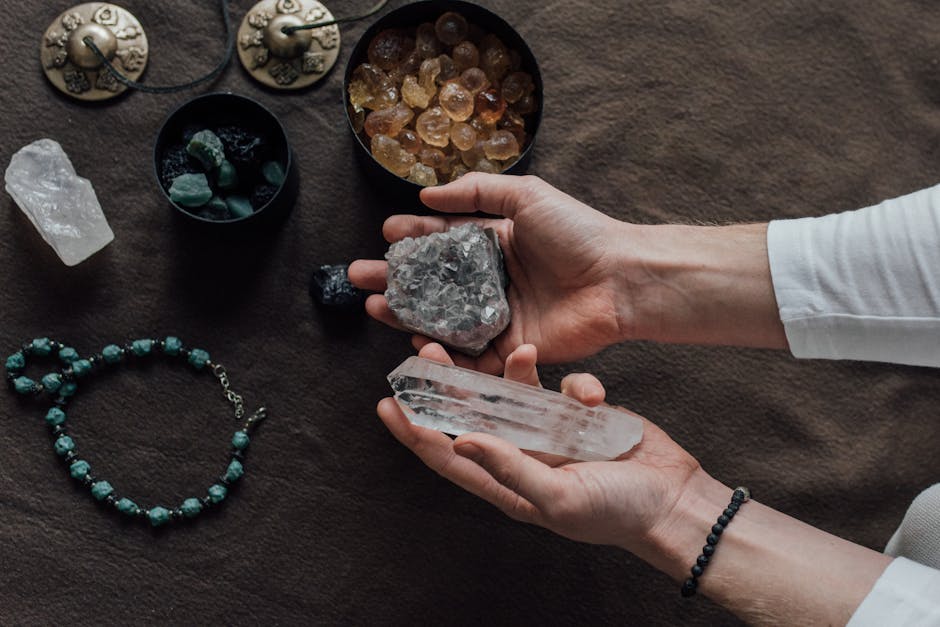
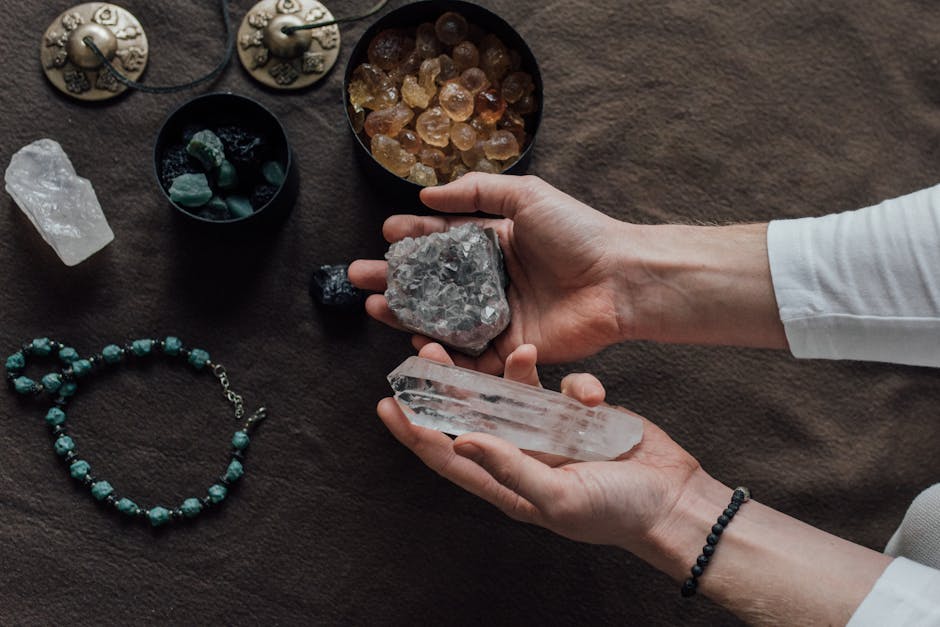
By the end of month three, I had four crystals on my desk: amethyst, rose quartz, black tourmaline, and a small piece of clear quartz. My workspace had transformed from a generic office setup into something that felt personal and intentional. I'd also developed several habits I hadn't planned: the morning ritual, the pre-meeting grounding minute, the doomscrolling interruption.
My stress levels? Hard to measure objectively. I can tell you that my sleep improved, probably because I was spending less time on my phone before bed (I'd started putting the amethyst on my nightstand as a "stop scrolling" signal). I was snapping at people less often. I felt more organized. Whether any of that is attributable to the crystals themselves, to the behavioral changes they prompted, or to the simple passage of time and natural stress cycling, I genuinely can't say.
What I can say is that the experiment cost me about forty dollars total, took no real effort, and left me with several habits I've kept. That's a better return on investment than most stress-relief interventions I've tried, including meditation apps I abandoned after a week and a gym membership I used twice.
What I'd Tell Someone Considering It
If you're thinking about trying crystals for stress relief, here's my honest advice. Pick one stone that you find visually appealing — don't overthink the metaphysical properties. Find a place for it where you'll see it regularly. Create a small ritual around it. That's it. Don't expect miracles. Don't spend hundreds of dollars. Don't buy into claims that a specific crystal will cure your anxiety disorder — that's what therapists and doctors are for.
Think of it as a low-cost behavioral experiment. You're not testing whether crystals work. You're testing whether introducing a small, intentional ritual into your day changes how you handle stress. The stone is just the prop.
Three months in, I'm not a convert to crystal mysticism. I'm not going to start telling people that amethyst cures insomnia or that rose quartz attracts love. But I am going to keep my little collection on my desk, because the habits they've helped me build are worth more than the stones cost. Sometimes the value of a practice isn't in what it claims to be, but in what it actually does.
Comments