Healing Crystals for Anxiety: What Actually Works
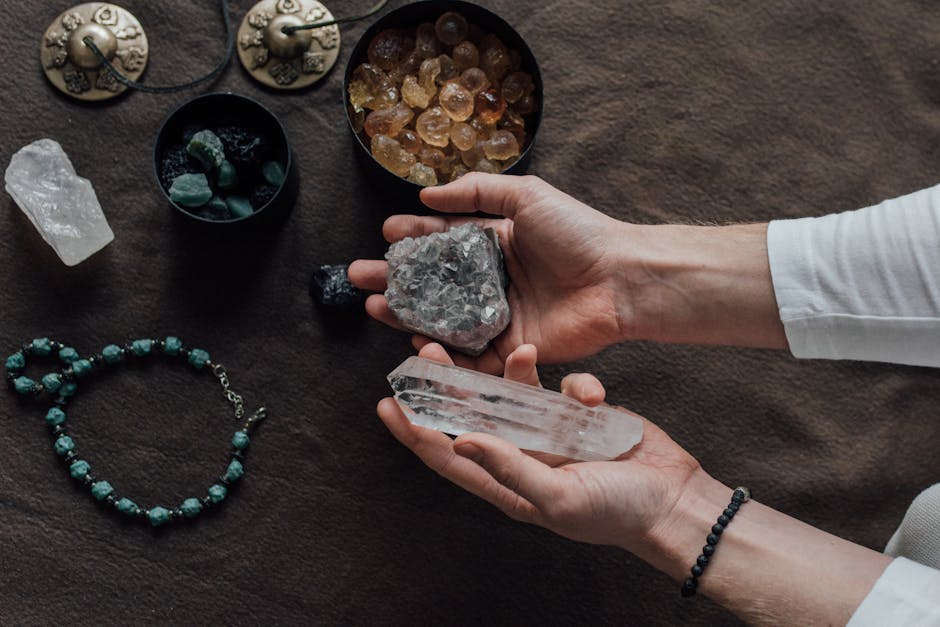
The conversation around crystals and anxiety
Walk into any wellness shop or scroll through crystal-focused social media accounts, and you'll find no shortage of claims about specific stones helping with anxiety. Amethyst for calm, black tourmaline for protection, lepidolite for stress relief. The messaging is everywhere, and it's easy to see why it resonates. Anxiety is one of the most common mental health challenges people face, and the appeal of a simple, tangible coping tool is strong.
But what does the evidence actually say? And more practically, which crystals have the most meaningful connection to anxiety management, even if that connection is more psychological than geological? Let's cut through the noise and look at what's genuinely useful.
The placebo effect is real and not an insult
Before we get into specific stones, let's address the elephant in the room. Yes, there's no scientific evidence that crystals emit energy that directly reduces anxiety. That's not a controversial statement. What is worth taking seriously, though, is the well-documented placebo effect and the power of ritual in mental health management.
Research in psychology consistently shows that belief in a treatment, even when the treatment has no active mechanism, can produce measurable physiological changes. Heart rate decreases, cortisol levels drop, and subjective anxiety ratings improve. This isn't weakness or gullibility. It's how the human brain works. If holding a crystal during a stressful moment helps you feel more grounded, that benefit is real regardless of the mechanism.
The key distinction is using crystals as a complementary tool alongside evidence-based approaches like therapy, medication, and lifestyle changes, not as a replacement for them.
Amethyst: the most popular choice, and for good reason
Amethyst consistently ranks as the most recommended crystal for anxiety, and its popularity isn't arbitrary. The deep purple color is visually calming, which matters more than you might think. Color psychology research has shown that purple and blue tones are associated with reduced stress responses.
Practically speaking, amethyst is widely available, affordable, and comes in forms that are easy to carry. Tumbled stones fit in a pocket, worry stones have a smooth thumb groove designed for repetitive rubbing, and larger geodes make striking desk pieces that serve as visual anchors in a workspace.
The repetitive motion of rubbing a worry stone has documented calming effects. It's a form of bilateral stimulation, similar to the techniques used in EMDR therapy. The physical sensation gives your hands something to do during anxious moments, which can interrupt the spiral of anxious thoughts. Whether the stone is amethyst, jade, or a smooth river rock, the mechanism is the same. But if the color and cultural association with amethyst make the practice feel more meaningful to you, that adds another layer of benefit.
Black tourmaline: grounding through weight and texture
Black tourmaline is often recommended for "protection" against negative energy, but its practical value for anxiety management comes from something more concrete. It's a dense, heavy stone with a satisfying weight in the hand. For people who experience anxiety as a sense of being unmoored or disconnected, that physical weight can serve as a grounding anchor.
Try this: hold a piece of black tourmaline in each hand during a moment of anxiety. Focus on the weight, the texture, and the temperature. This is essentially a mindfulness exercise using the stone as a focal point. Grounding techniques that engage the senses are well-supported by clinical research as effective tools for managing acute anxiety episodes.
Black tourmaline is also quite hard and durable, making it practical for daily carry without worrying about chips or scratches. A palm stone or small raw specimen works well for this purpose.
Lepidolite: the lithium connection
Lepidolite has an interesting geological footnote that makes it stand out in anxiety discussions. It's a lithium-bearing mica mineral, meaning it naturally contains lithium, which is used in some prescription medications for bipolar disorder and mood stabilization. However, and this is important, the lithium in lepidolite is not bioavailable through skin contact or proximity. You cannot absorb therapeutic amounts of lithium from holding the stone.
That said, lepidolite's soft lavender color and flaky, layered structure make it visually and tactilely interesting. The stone is relatively fragile and best kept as a display piece rather than something you carry daily. Its value in anxiety management is primarily aesthetic and symbolic, which is perfectly valid if it resonates with you.
Selenite: the ritual of cleansing
Selenite is a soft, white, translucent mineral that's often used in the practice of "cleansing" other crystals. Whether or not you believe in energetic cleansing, the ritual itself has value. The act of arranging your crystals, handling them mindfully, and setting intentions creates a structured pause in your day. For someone dealing with anxiety, that intentional pause is genuinely therapeutic.
Selenite is extremely soft, rating only a 2 on the Mohs scale, so it scratches and chips easily. Keep it in a safe place and handle it gently. A selenite tower on a nightstand or desk catches light beautifully and serves as a visual reminder to slow down.
How to actually use crystals for anxiety management
The most effective approach is to build specific, repeatable practices around your stones rather than just carrying them passively. Here are a few evidence-informed strategies:
First, create a grounding ritual. Choose a crystal, hold it in your hands, and spend two minutes focusing on its physical properties. The weight, the texture, the temperature. This is essentially a sensory grounding exercise, and it works with or without the crystal. The stone just makes it easier to maintain focus.
Second, use worry stones during transitions. Keep one in your car, at your desk, or in your bag. The habit of reaching for it during stressful moments creates a conditioned response over time. Your brain learns to associate the physical sensation with stepping back and regaining composure.
Third, build a mindful arrangement practice. Spend ten minutes arranging and rearranging a small collection of crystals on a tray or shelf. The focused attention required is a form of active meditation. It's not about the outcome of the arrangement but about the process of being present with what you're doing.
When crystals aren't enough
Crystals can be a meaningful part of an anxiety management toolkit, but they're not a substitute for professional help. If anxiety is significantly impacting your daily life, your relationships, or your ability to function, the most important step is talking to a mental health professional. Cognitive behavioral therapy, medication, and lifestyle changes like exercise and sleep optimization have strong evidence bases for anxiety treatment.
Think of crystals as the decorative touches on a house, not the foundation. They add something, and that something is real. But the structure needs to be sound first.
Choosing what works for you
At the end of the day, the best crystal for anxiety is the one that you'll actually use. If amethyst's purple hue makes you pause and breathe a little deeper, that's the right choice. If black tourmaline's weight in your hand helps you feel anchored during a stressful meeting, that's working too. The stone itself doesn't need special powers to be useful. Your brain does all the heavy lifting. The crystal is just a tool that helps it do its job.
Comments