Discover the Hope in Amazonite: Ultimate
May 31, 2026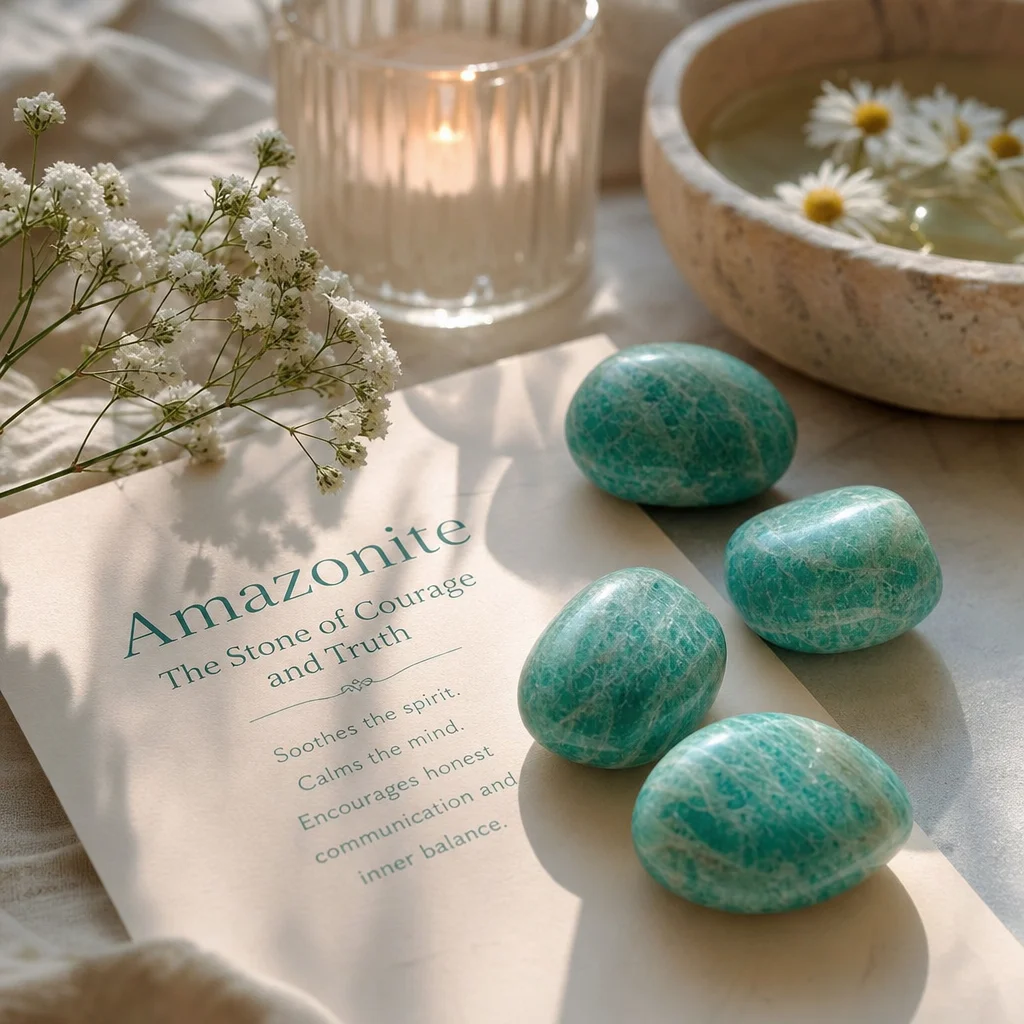
What Makes Amazonite Unusual
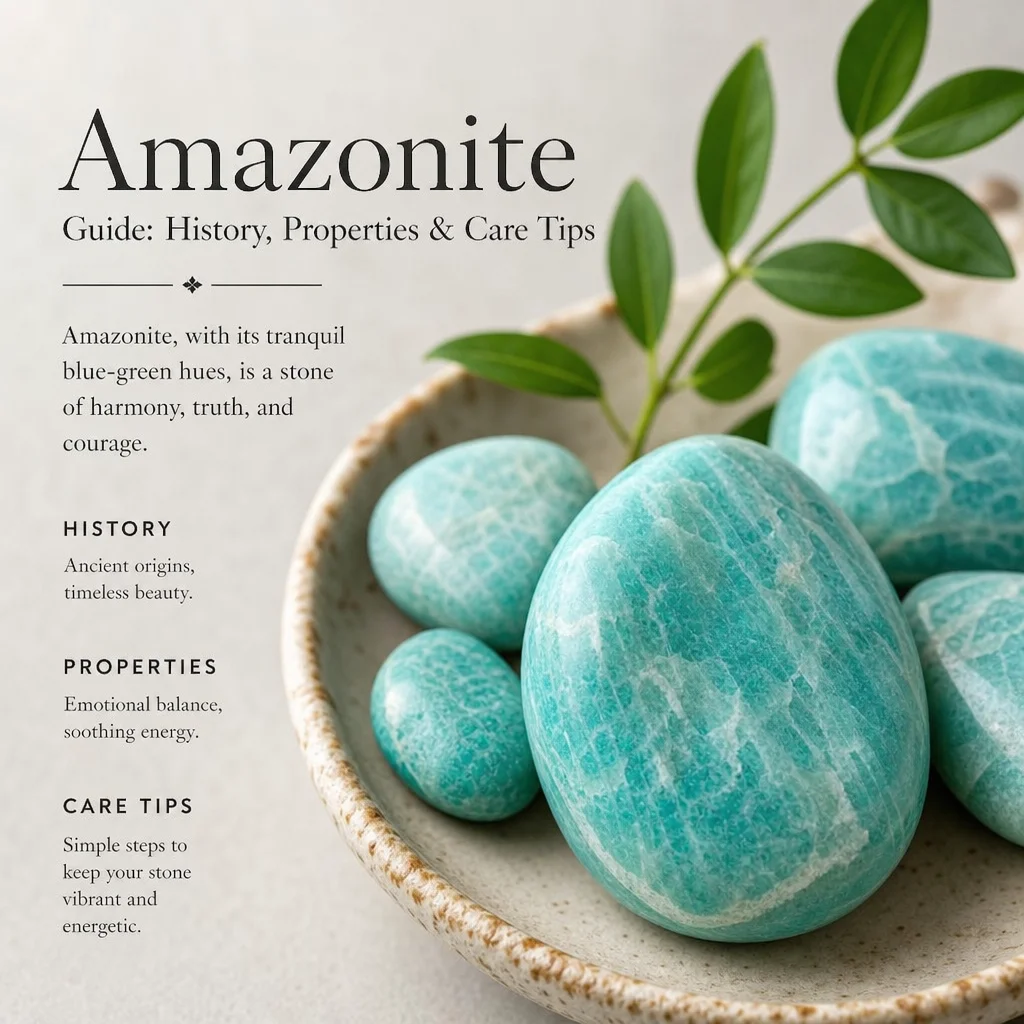
If you've ever seen amazonite in person, you probably noticed the color first. That distinctive blue-green, somewhere between turquoise and sea foam, stands out in any collection. It's a color you don't find in many other natural stones, and it's what draws most people to amazonite before they know anything else about it.
But the color is only part of the story. Amazonite is a variety of microcline feldspar, which makes it part of one of the most abundant mineral families on Earth. Feldspars make up roughly 41% of the Earth's continental crust, but most of that is white or pink plagioclase and orthoclase you'd never give a second look. Amazonite is the exception — its vivid color comes from trace amounts of lead and water within the crystal structure, creating a unique optical effect that's still not fully understood by mineralogists.
The scientific debate over amazonite's color is worth knowing because it tells you something about the stone's rarity. Unlike amethyst (where iron impurities in quartz produce a purple color through well-understood mechanisms), the exact process that produces amazonite's blue-green is debated. Lead content is clearly involved, but the role of water molecules in the feldspar structure, and how they interact with light, remains an active area of research. What this means practically: genuine amazonite's color is genuinely unusual and difficult to manufacture synthetically, which is good news when it comes to identifying fakes.
Mineralogy: More Than a Pretty Face
Amazonite is potassium-rich feldspar with the chemical formula KAlSi₃O₈. It scores 6 to 6.5 on the Mohs hardness scale, which puts it in the medium range — hard enough for most jewelry applications but soft enough that it will show wear in rings or bracelets worn daily over years. Pendants, earrings, and occasional-wear bracelets are better choices than everyday rings if you want your amazonite to maintain its polish.
The stone has two notable physical properties that affect how it looks and behaves. First, it exhibits perfect cleavage in two directions at nearly right angles to each other. This means amazonite crystals naturally break into blocky, rectangular fragments. In jewelry, this cleavage can be a vulnerability — a sharp impact at the right angle could cause the stone to split along one of its cleavage planes. Second, amazonite shows a subtle schiller effect in some specimens — a faint, silky sheen caused by microscopic inclusions aligned along the crystal structure. Not all amazonite shows this, but when present, it adds depth to the stone's appearance.
Major sources include Colorado (the Pikes Peak region produces some of the finest amazonite in the world, often associated with smoky quartz and topaz), Brazil, Madagascar, Russia (specifically the Ilmensky Mountains in the Ural region, near the city of Miass), and Ethiopia. Colorado amazonite tends to be deeply saturated with crisp blue-green color, while material from other sources is often paler or more uniformly turquoise.
The Name: An Enduring Misnomer
The name "amazonite" comes from the Amazon River, and the story goes that early European explorers found green stones in the Amazon basin and named them after the river. The problem is that no amazonite deposits have ever been found in the Amazon River basin. The green stones the explorers encountered were almost certainly either green nephrite jade or peridot. But the name stuck, and by the time geologists realized the error, it was too deeply entrenched in mineralogical nomenclature to change.
The "Hope Stone" nickname has a more poetic origin. In crystal healing traditions, amazonite is associated with hope, optimism, and the ability to see possibilities even in difficult situations. This association likely comes from the stone's color — blue-green has been linked to calm, renewal, and forward-looking perspectives across many cultures. The combination of "amazon" (evoking adventure and vast, unexplored territory) and "hope" creates a compelling symbolic package that has made amazonite one of the more popular stones in the metaphysical market.
Traditional and Cultural Significance
Amazonite has been used as an ornamental and symbolic stone for thousands of years. Ancient Egyptian artisans carved it into amulets, scarabs, and inlays for furniture and jewelry. The Egyptians may have valued it partly for its visual similarity to turquoise (which was imported from the Sinai and considered extremely precious) — amazonite offered a similar look at presumably lower cost and greater local availability.
In Mesopotamia, amazonite beads have been found in archaeological sites dating back several thousand years, indicating trade or local use across a wide geographic area. The stone's relative softness made it easy to shape with the tools available to ancient craftsmen, and its attractive color ensured demand.
Indigenous peoples of the Americas, particularly in the Andes region, have used amazonite (and other green stones) in ceremonial objects for centuries. The association of green stones with fertility, agricultural abundance, and water appears in multiple pre-Columbian cultures, though separating specific amazonite use from general green-stone symbolism is difficult without more precise archaeological records.
Emotional Balance: The Practical Side of the Hope Stone
In modern crystal healing practice, amazonite is most commonly recommended for emotional regulation and communication. Practitioners suggest it for people who tend to either suppress their emotions or express them explosively — the idea being that amazonite helps find a middle path of clear, authentic communication without overwhelming emotional volatility.
The stone's association with the throat chakra and heart chakra reflects this dual focus on feeling (heart) and expressing (throat). Whether you find the chakra framework meaningful or simply metaphorical, the underlying idea — that emotional awareness and honest communication are linked skills — has practical psychological merit. Many therapists and counselors would agree that people who can identify and articulate their emotions tend to navigate interpersonal conflicts more effectively than those who can't.
Amazonite is also recommended for decision-making support. The "hope" aspect comes into play here: when you're faced with a difficult choice and feel stuck between fear of the unknown and desire for certainty, amazonite is traditionally used as a focus object to help clarify what you actually want and what's genuinely blocking you. Whether this works through placebo effect, focused attention, or some other mechanism, the practice of sitting quietly with a meaningful object while working through a problem has documented psychological benefits.
The EMF Protection Claim: What's Real and What Isn't
Amazonite is frequently marketed as an EMF (electromagnetic field) protection stone, with claims that it can shield you from radiation from cell phones, Wi-Fi routers, computers, and other electronic devices. You'll see this claim repeated across thousands of websites, social media posts, and crystal shop descriptions.
Here's what the evidence actually supports: amazonite contains trace amounts of lead and water within its crystal structure. Lead is, in fact, an effective radiation shield (lead aprons in dental offices work on this principle). However, the amount of lead in amazonite is minuscule — on the order of parts per million. A piece of amazonite on your desk is not creating any meaningful radiation barrier between you and your electronics.
The more generous interpretation is that amazonite serves as a visual reminder to take breaks from screens, practice digital boundaries, and be mindful about technology use. If having a pretty blue-green stone next to your monitor reminds you to step away for five minutes every hour, that's genuinely beneficial — but the benefit comes from the behavioral reminder, not from any shielding property of the stone itself. Be honest about why you're using it, and you'll get more out of the practice.
How to Use Amazonite in Daily Life
Wearing Amazonite
Amazonite looks especially good in pendants and earrings, where its color catches light and complements both warm and cool skin tones. Beaded bracelets are popular but show wear faster — expect some surface scratching after months of daily wear. For rings, amazonite is best reserved for occasional pieces rather than everyday wear. Pair it with silver settings for a clean, modern look or with gold for warmer contrast.
Home and Workspace
A piece of amazonite in your workspace serves as a focus point during stressful moments. The tradition of "gazing" at a crystal when you feel overwhelmed has some basis in mindfulness practice — redirecting your attention to a single object interrupts spiraling thought patterns. Amazonite's calming color makes it particularly effective for this purpose.
In the bedroom, amazonite is sometimes recommended for sleep support, though it doesn't have the same deep association with sleep as amethyst or lepidolite. Its value here is more about creating a visually peaceful environment than any specific sleep-promoting property.
Meditation
For meditation, hold amazonite in your receiving hand (left hand for most people) or place it at your throat or heart center during a body layout. The traditional practice involves setting a specific intention — communication clarity, emotional healing, or decision-making support — and then meditating with the stone as a physical anchor for that intention.
Identifying Genuine Amazonite
Amazonite is relatively easy to identify because few other natural stones match its specific blue-green color. The main lookalike is dyed howlite or dyed magnesite, both of which can be dyed turquoise-green and sold as "amazonite" by dishonest vendors. Check the color distribution: genuine amazonite usually shows some color variation, subtle white streaks, and an organic feel to the pattern. Dyed material often has unnaturally uniform color that pools in crevices and looks too consistent.
Another test: genuine amazonite has a vitreous to pearly luster and a slightly grainy texture in unpolished areas. Dyed stones may feel smoother than expected or show color rubbing off on a white cloth when scratched. If the price seems too good to be true for the color saturation, it probably is — quality amazonite with deep, even color commands moderate prices, not bargain-basement discounts.
Frequently Asked Questions
Can amazonite go in water?
Amazonite is generally safe for brief contact with water — it won't dissolve or degrade quickly like selenite or malachite. However, prolonged soaking isn't recommended because it can affect the stone's surface polish and potentially leach trace minerals. A quick rinse under running water is fine; leaving it in a water bottle for days is not.
Is amazonite expensive?
Not particularly. Tumbled amazonite stones and basic beads are quite affordable, typically costing a few dollars each. High-quality, deeply colored Colorado material in larger sizes or well-cut cabochons can command higher prices, but amazonite remains one of the more accessible collector stones.
Does amazonite really come from the Amazon?
No. Despite the name, no amazonite deposits have been found in the Amazon River basin. The name is a historical misnomer that stuck. Major sources are Colorado, Brazil, Madagascar, Russia, and Ethiopia.
Can I use amazonite with other crystals?
Absolutely. Amazonite pairs well with rose quartz for heart-centered work, with blue lace agate for communication support, and with black tourmaline for a grounding counterpoint. There are no traditional "conflict" combinations for amazonite in crystal healing practice.
Frequently Asked Questions
What chakra is amazonite associated with?
Amazonite is primarily associated with the heart and throat chakras. By opening these energy centers, this soothing crystal encourages compassionate communication and helps you express your true inner thoughts. Wearing handcrafted amazonite jewelry near these areas can beautifully support emotional harmony and honest, heart-centered connections every day.


Comments