Why This Guide Exists
Why This Guide Exists
I remember my first time walking into a crystal shop. The place was overwhelming — rows of shelves covered in stones I couldn't identify, price tags that ranged from two dollars to two hundred, and a shop owner who spoke in terms I didn't understand. "This rose quartz is from Madagascar," she said, handing me a pink chunk. "Much better vibration than the Brazilian stuff." I nodded politely, had no idea what she meant, and left with a random assortment of stones that collected dust on my shelf for years.
If you're reading this, you're probably in a similar position. You're curious about crystals, maybe you've seen them on social media or a friend has some, and you want to try it yourself. But the sheer variety is paralyzing. Where do you start? What do you buy? How much should you spend? And do you actually need a sage bundle and a singing bowl, or can you just pick up a rock you like the look of?
This guide is for you. No jargon, no gatekeeping, no pressure to buy anything expensive. Just a straightforward approach to picking your first crystal without getting lost in the noise.
Step One: Decide What You Want From This
Before you buy anything, figure out why you're interested. People get into crystals for very different reasons, and your reason should guide your first purchase.
If you're drawn to the visual beauty and want something decorative for your space, you can approach this purely from an aesthetic standpoint. Pick what catches your eye. That's valid. Some of the most satisfying crystal collections are built entirely on "I saw it and liked how it looked."
If you're interested in the geological side — how crystals form, where they come from, what makes them different from each other — you might want to start with a basic mineralogy approach. Learn about crystal systems, hardness, and formation. Pick up a quartz crystal (easy to find, cheap, and structurally fascinating) and study it.
If you're interested in the cultural and traditional associations — the idea that certain stones have been linked to specific qualities across different cultures and centuries — then you might want to start with one of the historically significant stones and learn about its background. Not as a substitute for anything medical or professional, but as a way to connect with traditions that go back thousands of years.
Be honest with yourself about your motivation. It'll make the next steps much easier.
Step Two: Start With One Crystal, Not Ten
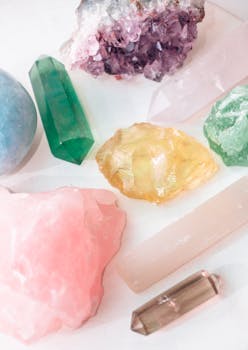
The biggest mistake beginners make is buying a bunch of stuff at once. I did this — walked out of that first shop with rose quartz, amethyst, citrine, black tourmaline, clear quartz, and a selenite wand. None of them meant anything to me because I hadn't spent time with any single one. They were just objects on a shelf.
Pick one crystal. Just one. Spend time with it. Hold it, look at it from different angles, learn about where it comes from and how it formed. The connection you build with a single stone will teach you more than a dozen random purchases ever will.
Here are five crystals that work well as a first pick, along with reasons why.
Clear Quartz
The most common crystal on Earth, and for good reason. Clear quartz is inexpensive (you can find tumbled stones for under five dollars), widely available, and visually appealing. It forms in hexagonal columns with pointed terminations, and good specimens have remarkable clarity. Geologically, it's silicon dioxide — the same stuff that makes up most sand. But when it grows slowly under the right conditions, it forms these incredible transparent crystals.
Clear quartz has been used decoratively and ornamentally across virtually every human civilization. The ancient Greeks believed it was permanently frozen ice. Roman naturalists wrote about it. Medieval craftsmen carved it into vessels and lenses. It's a good starting point because it's so accessible — both in terms of cost and information available about it.
Amethyst
Amethyst is a purple variety of quartz, colored by trace amounts of iron irradiated by natural radiation in the earth. It ranges from pale lavender to deep, saturated purple, with the most valued specimens coming from locations in Brazil, Uruguay, and Zambia. Historically, amethyst was considered one of the cardinal gemstones, valued alongside diamond, ruby, sapphire, and emerald. That changed when large deposits were discovered in Brazil in the 1800s, crashing the price and making it affordable for everyone.
As a first crystal, amethyst is great because the color range is so wide. You can find specimens that suit any taste, from delicate pale purple to almost-black deep violet. Tumbled stones are cheap. Small geodes are inexpensive and make beautiful display pieces.
Rose Quartz
Rose quartz is the pink variety of quartz, colored by trace amounts of titanium, manganese, or both. It's usually translucent, with a soft, cloudy pink that ranges from nearly white to a rich salmon color. It's been used in jewelry and decorative objects for thousands of years — the Romans and Egyptians both used it, and carved rose quartz beads have been found in archaeological sites dating back to 7000 BC.
Rose quartz is one of the most affordable colored stones. Tumbled pieces cost just a few dollars, and rough chunks are even cheaper. It's traditionally associated with love and compassion in many cultures, which makes it a popular gift. As a first crystal, its gentle color and low price make it an easy entry point.
Black Tourmaline
Black tourmaline, also called schorl, is an iron-rich tourmaline that forms in long, striated prismatic crystals. It's opaque, heavy for its size, and has a distinctive appearance that's hard to confuse with anything else. It's one of the most common tourmaline species and is found on every continent.
Black tourmaline is often recommended as a "grounding" stone in crystal traditions, and it's popular among people who want something that feels solid and substantial. A piece of black tourmaline in your pocket is a genuinely satisfying weight — it's dense, about 3.1 times the density of water, so even a small piece has real heft to it.
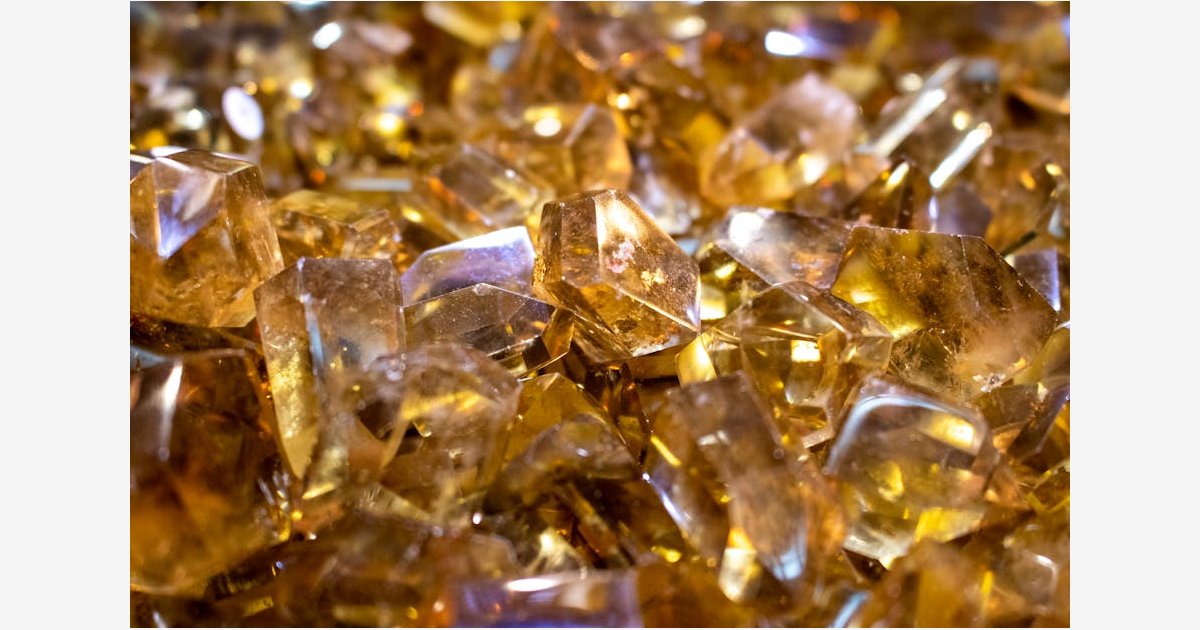
Citrine
Citrine is the yellow-to-orange variety of quartz. Natural citrine is relatively rare — most commercial citrine is actually heat-treated amethyst. Both are quartz, and the heat treatment just accelerates a natural process, but purists sometimes prefer to know whether they're getting the natural or treated version. For a beginner, the distinction doesn't matter much. Either way, you're getting a quartz crystal with a warm, sunny color that looks beautiful on a shelf or in a window where light can pass through it.
Citrine is affordable, widely available, and has been used decoratively since at least the ancient Roman period. Its warm color makes it a popular choice for people who find clear quartz too plain and amethyst too cool-toned.
Step Three: Decide on a Form
Crystals come in several forms, and the form you choose affects both price and how you'll interact with the stone.
Tumbled stones are the cheapest and most beginner-friendly. They're small, smooth, rounded stones that have been polished in a tumbling machine. Prices range from two to ten dollars each. They're easy to hold, fit in a pocket, and don't have sharp edges. This is what most people start with.
Raw or rough stones are unpolished pieces straight from the mine. They're cheaper than tumbled stones of the same material, and many people prefer the natural, untouched look. Rough amethyst clusters, for example, are stunning display pieces and cost very little for their size.
Points and towers are crystals that have been cut or naturally formed with a single termination (a pointed end). These are popular in crystal traditions because the pointed shape is said to "direct" energy in a specific direction. Whether or not you buy into that, they look cool and make good display pieces. They cost more than tumbled stones but less than faceted gemstones.
Geodes are hollow rocks lined with crystal formations. They're dramatic, visually impressive, and make excellent centerpieces. Small geodes are affordable; large ones can be very expensive. Amethyst geodes from Brazil are the most common type you'll see in shops.
For your first crystal, I'd suggest a tumbled stone or a small raw piece. Keep it simple, keep it cheap, and see how it feels to have one around.
Step Four: Know Where to Buy
Where you buy matters more than you'd think. There are three main options, each with different pros and cons.
Local crystal shops are the best option if you have one nearby. You can see and touch the stones before buying, ask questions, and get a feel for what you're drawn to. Prices are usually moderate — higher than online, but you're paying for the experience and the ability to hand-pick your stones. Support local if you can.
Online crystal shops are convenient and often cheaper, but you're buying based on photos. Some shops take accurate photos and represent their stones honestly. Others don't. Read reviews, check return policies, and be wary of deals that seem too good to be true. A "natural emerald" for ten dollars on eBay is almost certainly not what it claims to be.
Gem and mineral shows are the best value if you can find one near you. These are events where dealers from around the country (or world) set up tables and sell directly. Prices are typically 30-50% below retail, the selection is enormous, and you can talk directly with people who know their stuff. The Tucson Gem and Mineral Show in Arizona is the biggest in the world, but most states have smaller shows throughout the year.
Wherever you buy, don't be afraid to ask questions. A good seller will tell you where the stone came from, whether it's been treated in any way, and what you should expect in terms of quality. A bad seller will be evasive or make claims that sound too good to be true.
Step Five: Set a Budget and Stick to It
Crystal prices are all over the place, and it's easy to overspend when you're just starting out. A small tumbled stone can cost two dollars. A large museum-quality specimen of the same mineral can cost two thousand. Set a budget before you walk into a shop or open a website, and don't let yourself get talked into spending more.
For a first crystal, ten to twenty dollars is plenty. That gets you a nice tumbled stone or a small raw piece from any of the five I recommended above. If you want to spend a bit more, thirty to fifty dollars gets you a larger specimen or a small geode.
Don't fall into the trap of thinking more expensive means better. A five-dollar tumbled amethyst from a reputable dealer is just as "real" as a hundred-dollar amethyst point from the same source. You're paying for size, color saturation, and formation quality — not authenticity. A cheap stone from a dishonest dealer, on the other hand, might not be what it claims to be. That's why buying from someone trustworthy matters more than spending a lot.
Step Six: Learn as You Go
Once you have your first crystal and have spent some time with it, start learning. There's no rush. You don't need to memorize a hundred stone names or memorize the Mohs hardness scale in a weekend. Just follow your curiosity.
Look up your specific crystal. Where does it come from? How does it form? What's its chemical composition? What cultures have used it historically, and what did they use it for? This kind of knowledge makes your collection feel more meaningful and helps you make better choices when you're ready to add more.
Visit mineralogy websites, not just crystal shops. The crystal community and the mineralogy community overlap but aren't the same thing, and mineralogists tend to provide more grounded, verifiable information. The Mindat database (mindat.org) is an excellent free resource for learning about any mineral species.
Don't worry about "getting it right." There's no test. There's no certification. You bought a rock you like, and you're learning about it at your own pace. That's the whole point.
What Not to Do
A few quick warnings based on common beginner mistakes.
Don't buy a crystal because someone told you that you "need" it. Crystals aren't medicine, and nobody can diagnose you as deficient in amethyst. If a seller is pressuring you to buy something, walk away.
Don't worry about "cleansing" or "charging" your crystals right away. If these practices appeal to you, great — you can explore them later. But they're not a prerequisite to owning a crystal, and worrying about them from day one adds unnecessary complexity to what should be a simple, enjoyable experience.
Don't compare your collection to anyone else's. Social media is full of people with massive crystal collections, expensive specimens, and elaborate displays. That's their journey. Yours starts with one stone. That's enough.
Don't buy rare or expensive stones as a beginner. Stick with common, affordable minerals until you understand what you're looking at. There's plenty of time for the exotic stuff later — and by then, you'll know enough to avoid getting ripped off.
Final Thought
The best first crystal is the one you pick up, hold in your hand, and think "yeah, I like this one." That's it. That's the whole secret. Everything else — the geology, the history, the traditions — is enrichment. It adds depth and interest. But it doesn't replace the simple act of finding a stone that speaks to you and deciding to keep it.
Go to a shop. Pick up a few things. Put down the ones that don't feel right. Buy the one that does. Take it home. Put it somewhere you'll see it every day.
Start there. The rest will come naturally.
Comments