Citrine Yellow Diminishing? Discover the
May 31, 2026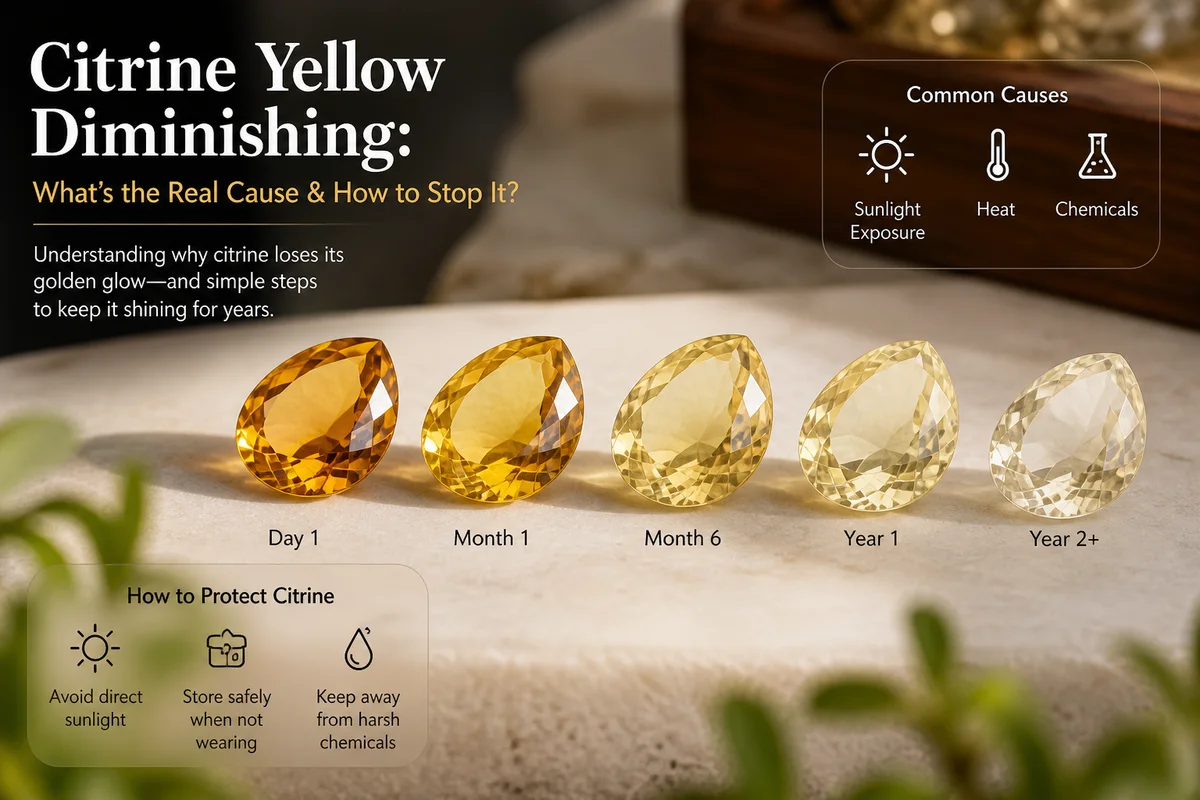
The Short Answer: Iron Ions and UV Light Don't Mix
If you've noticed your citrine losing its sunny yellow color, you're not imagining things—and you're definitely not alone. This is one of the most common questions crystal collectors ask, and the answer comes down to basic chemistry happening at the atomic level inside your stone.
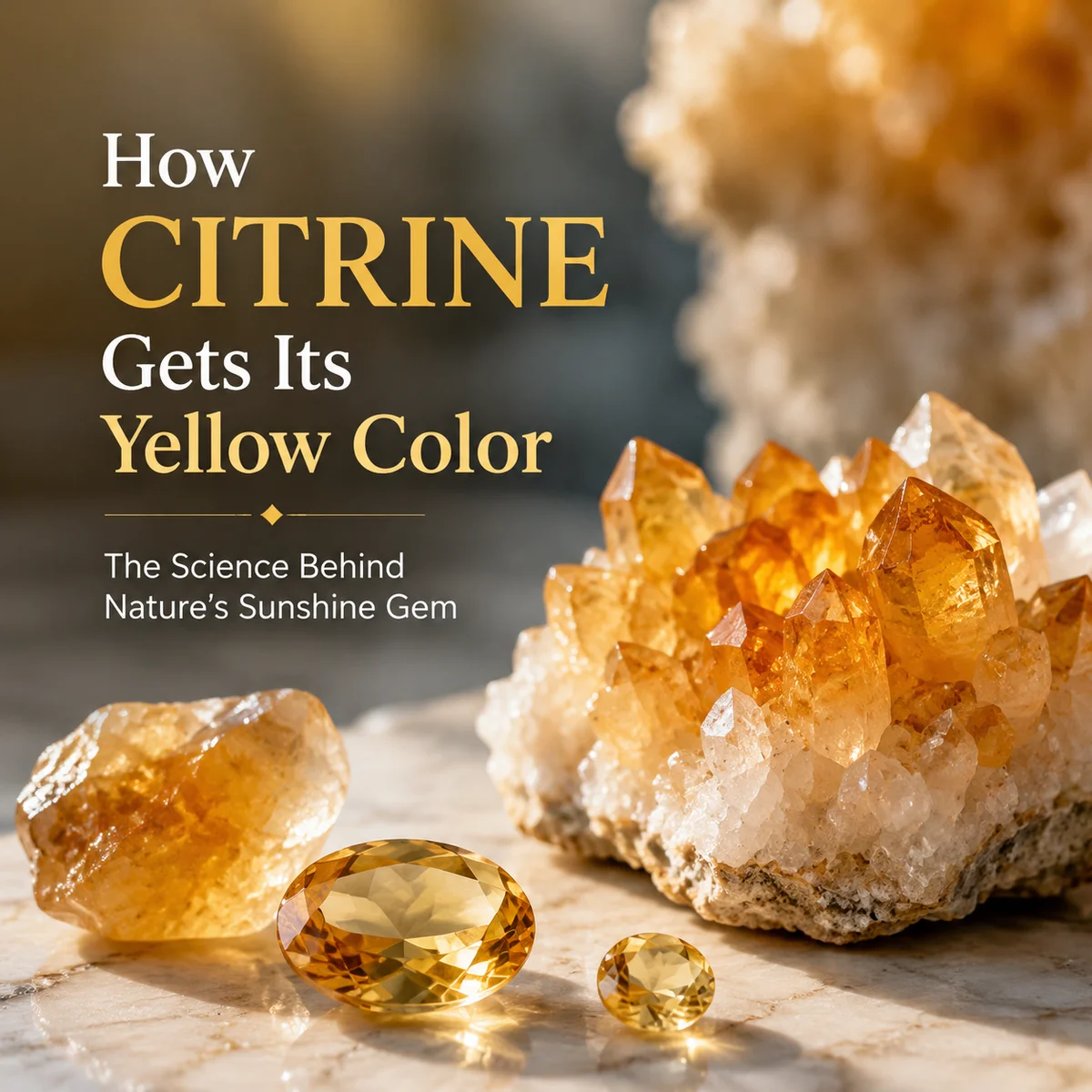
Citrine gets its yellow-to-amber color from trace amounts of iron (Fe³⁺ ions) embedded in the silicon dioxide crystal lattice. These iron atoms absorb certain wavelengths of light and reflect the yellow-orange spectrum back to your eye. It's a beautiful piece of physics that's been creating colored quartz for millions of years.
The problem starts when ultraviolet radiation—from sunlight or artificial UV sources—interacts with these iron ions. UV photons carry enough energy to change the oxidation state of some iron ions from Fe³⁺ to Fe²⁺, or to displace them from their lattice positions entirely. When this happens, the crystal's ability to absorb and reflect yellow light diminishes, and the color fades toward pale yellow or nearly colorless.
This is the same basic mechanism that causes rose quartz to fade (manganese/titanium ions) and kunzite to lose its pink (manganese ions). Transition metal ions in quartz are inherently photo-sensitive, and there's no way to make them permanently immune to UV radiation.
Natural vs. Heat-Treated Citrine: A Critical Distinction
Before we talk about prevention, there's something you need to know: most citrine on the market isn't natural citrine at all. The vast majority (estimated 80–90%) is heat-treated amethyst. Purple amethyst contains iron in a different oxidation state (Fe⁴⁺) and when heated to 350–450°C, the iron changes configuration, producing a yellow-to-orange color that looks like citrine.
This distinction matters enormously for color stability:
- Natural citrine (relatively rare, mostly from Brazil, Madagascar, and Russia) has developed its color over geological time through natural irradiation and mild heating. Its iron ions are in a more thermodynamically stable configuration, making the color moderately more resistant to fading. It still fades under prolonged UV exposure, but more slowly.
- Heat-treated amethyst-citrine has been forced into its yellow color through artificial heating. The iron-ion configuration is less stable—it achieved its color state through a rapid, artificial process rather than millions of years of geological equilibrium. This makes it significantly more prone to fading. A heat-treated citrine might show noticeable color loss after just a few weeks of daily sun exposure.
How can you tell them apart? Natural citrine tends to have a more subtle, honey-like color with possible color zoning (bands of darker/lighter yellow). Heat-treated citrine often has a more intense, slightly orange-brown tone and may show remnants of the original amethyst's purple in certain lighting or at certain angles. Some heat-treated stones even retain visible purple patches—the telltale sign of artificial color conversion.
What Triggers Fading (Beyond Just Sunlight)
While sunlight is the primary culprit, it's not the only factor that accelerates citrine fading:
- Direct sunlight is the worst offender. Even a few hours of direct sun exposure per day will noticeably fade most citrine within weeks. This includes windowsills, car dashboards, and outdoor display areas. The UV index matters—midday summer sun in direct light is the most destructive.
- Fluorescent lighting emits small amounts of UV radiation. In a typical office or retail environment with fluorescent ceiling lights, the UV exposure is minimal. But if a citrine sits directly under a fluorescent lamp for months—like on a display shelf in a shop—cumulative fading can occur.
- High heat accelerates the chemical reactions that cause fading. Even without UV light, elevated temperatures speed up ion migration within the crystal. A citrine sitting in a hot car (interior temperatures can reach 60°C/140°F in summer) is being degraded by both heat and any ambient light.
- Chemical exposure isn't a direct cause of fading but can damage the surface polish, making the color appear more muted. Chlorine from pools, sulfur compounds from polluted air, and acidic cleaning products can etch the surface, scattering light in ways that reduce perceived color saturation.
Prevention: The Complete Protection Protocol
Protecting your citrine from fading isn't complicated, but it does require consistency. Here's what actually works:
- Store away from direct sunlight. This is non-negotiable. A jewelry box, drawer, or cloth pouch provides complete UV protection. If you display crystals on a shelf, position citrine in a spot that receives no direct sunlight—indirect ambient light is fine.
- Remove citrine before outdoor activities. A citrine bracelet worn to the beach, on a hike, or at an outdoor café is getting hammered by UV. It takes 10 seconds to take it off and put it in a pocket or bag. Make this a habit.
- Avoid window displays. Window glass transmits most UV-A and some UV-B rays. A citrine sitting on a sunny windowsill is NOT protected by the glass—it's still fading, just more slowly than direct outdoor exposure.
- Keep temperature stable. Don't store citrine in hot cars, near heat vents, or in direct sun during summer. Room temperature (18–24°C/65–75°F) is ideal.
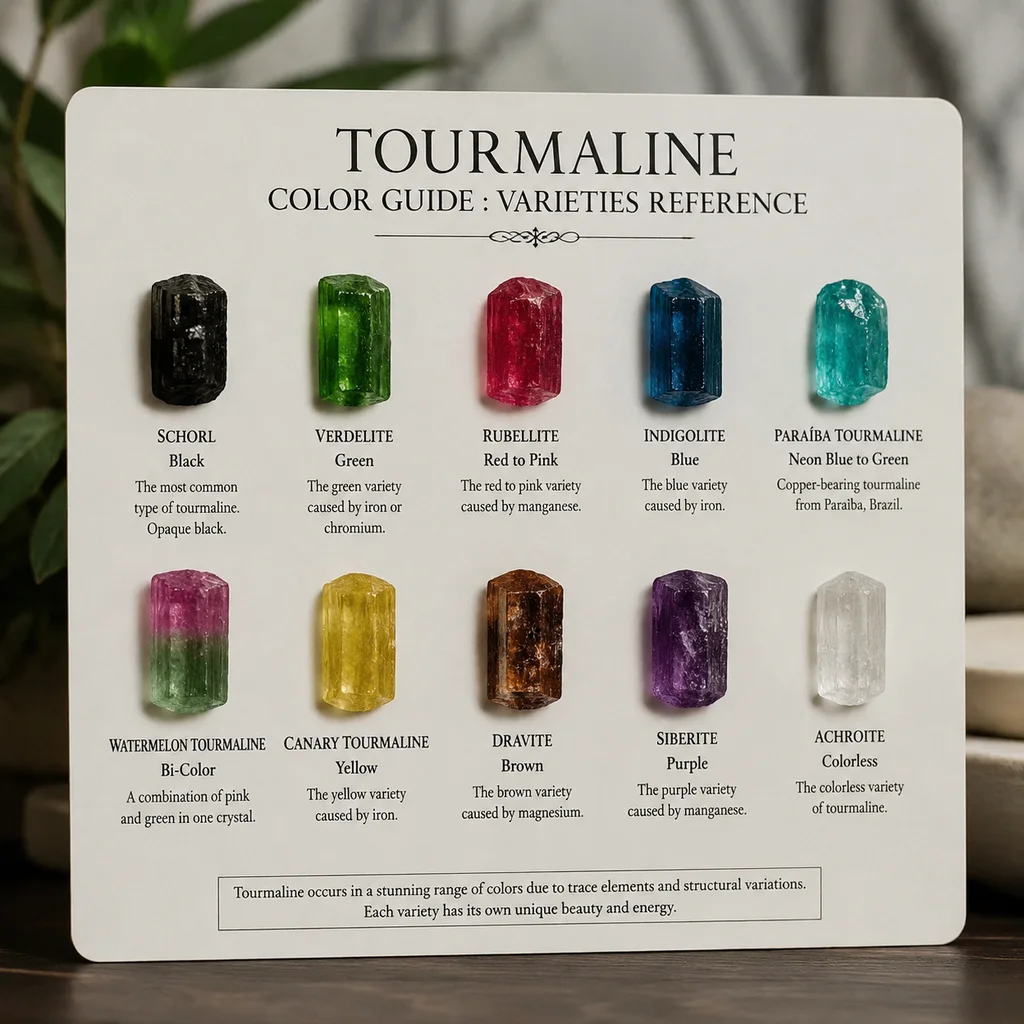
- Rotate display crystals. If you have citrine on display, swap it with a UV-resistant crystal (like black tourmaline, which doesn't fade) every few weeks. This gives each stone a "rest" from ambient light exposure.
Can Faded Citrine Be Restored?
Technically, yes—heat treatment can partially restore color in some cases. But there are important caveats.
If the fading was caused by UV exposure alone (without surface damage), gentle reheating to 200–300°C can sometimes re-oxidize the iron ions and restore some yellow color. This is similar to the original heat treatment process that created the citrine from amethyst.
However, this is NOT something to try at home. Professional gemologists use controlled kilns with precise temperature monitoring. Home attempts with kitchen ovens or heat guns risk cracking the stone, producing uneven color, or even converting it partially back to amethyst purple (if the stone was originally heat-treated amethyst).
The more honest answer: if your citrine has faded significantly, consider it a lesson in crystal care rather than something to fix. The restored color will be less stable than the original, and you'll be repeating the cycle. Better to invest in proper storage habits going forward.
Crystals That Share This Vulnerability
Citrine isn't the only popular crystal prone to fading. If you're a collector, this list is worth memorizing:
- Amethyst: Fades to gray/lavender with prolonged sun exposure. Keep it in the dark.
- Rose quartz: Loses its pink—ironically, one of the most UV-sensitive common crystals. Some rose quartz fades dramatically within days of direct sunlight.
- Kunzite: Spodumene's pink/lilac color is notoriously light-sensitive. Kunzite collectors consider this the most fade-prone gemstone of all.
- Smoky quartz: Can lose its brown-gray color with prolonged UV exposure, though it's somewhat more resistant than citrine.
- Topaz (blue): Irradiated blue topaz can fade if exposed to very intense UV (sunlight alone usually isn't strong enough, but prolonged intense exposure might). This is more rare.
And on the opposite end, crystals that are virtually immune to color fading include: black tourmaline, obsidian, garnet, peridot (its color comes from iron in a very stable configuration), and carnelian. These are your go-to crystals for sunny display locations or outdoor wear.
Frequently Asked Questions
Does citrine fade under indoor lights?
Standard LED and incandescent bulbs emit negligible UV radiation—your citrine is safe under normal indoor lighting. Fluorescent tubes emit small amounts of UV, but fading from fluorescent lighting alone would take years of continuous exposure. The real threat is sunlight, whether direct or through windows.
Does citrine in a crystal bracelet fade faster?
The crystal itself doesn't fade any faster in bracelet form—it's the UV exposure that matters. But since bracelets are worn on the wrist and often exposed to sunlight during daily activities, they're more likely to experience fading than citrine stored in a jewelry box. The physics of fading is the same; it's the usage pattern that increases risk.
Is fading citrine still effective for crystal healing?
Crystals are not a substitute for medical treatment. From a mineralogical perspective, faded citrine is still silicon dioxide with iron content—the chemical composition hasn't changed, only the optical properties. The iron ions responsible for the color are still present; they've just been partially reconfigured by UV exposure.
How fast does citrine fade in sunlight?
Heat-treated amethyst-citrine can show noticeable fading after 40–80 hours of direct sunlight exposure. Natural citrine might take 200+ hours for equivalent fading. A sunny windowsill provides roughly 4–6 hours of UV-relevant light per day, so a citrine bracelet left in a south-facing window could show fading within 2–3 weeks.
Buying Guide
When purchasing citrine, consider the following to ensure you're getting the best quality and value:
- Origin: Natural citrine from Brazil, Madagascar, and Russia tends to have the best color and stability. Be wary of stones from other sources that may be heat-treated or treated with other methods.
- Color: Look for a consistent, clear yellow color. Color zoning (bands of darker/lighter yellow) can be a sign of natural citrine.
- Transparency: High transparency with minimal inclusions is desirable, though some inclusions can add to the stone's character.
- Cut: A well-cut citrine will have a high level of brilliance and sparkle.
- Price: Consider the stone's size, quality, and origin when comparing prices.
Care Tips
To maintain the beauty of your citrine jewelry, follow these care tips:
- Cleaning: Use warm water and mild soap for cleaning. Avoid harsh chemicals or ultrasonic cleaners.
- Storage: Keep your citrine away from direct sunlight and high heat. Store in a jewelry box or pouch to protect from dust and scratches.
- Handling: Avoid touching your citrine with oils or lotions from your hands, as these can leave residue on the surface.
- Professional Cleaning: Have your citrine professionally cleaned and checked for loose settings periodically.
Crystal Pairings
Pairing citrine with other crystals can enhance its properties and create a harmonious energy. Consider these combinations:
- Sunstone: Amplifies the energizing and warming effects of citrine.
- Clear quartz: Enhances clarity of thought and amplifies the benefits of citrine.
- Amber: Combines with citrine to provide a powerful energy boost and protection.
- Golden heather agate: Creates a soothing, grounding effect that complements the uplifting energy of citrine.
Price Tiers
Citrine can range in price depending on factors such as origin, quality, and size. Here's a general guide to price tiers:
- Entry-level: Smaller stones or lower-quality specimens, typically under $20.
- Mid-range: Larger, higher-quality stones with clear color and good clarity, $20-$100.
- High-end: Large, exceptionally clear and vibrant stones from reputable sources, $100-$500 or more.
Frequently Asked Questions
Does heat-treated citrine fade faster than natural citrine?
Yes, typically. Most citrine on the market is actually heat-treated amethyst or smoky quartz, where the color comes from a delicate alteration of iron ions rather than natural geological formation. Heat-treated stones tend to be more vulnerable to UV-induced fading because their color centers are artificially created and less structurally stable. Natural citrine, formed over millennia under intense heat and pressure deep within the earth, generally has more durable coloration. If you own a piece from our SagStone collection, proper storage away from prolonged sunlight will keep both varieties looking vibrant for years.

Comments