How to Wear a Chakra Bracelet: Which Wrist & W..
June 2, 2026
The Left Wrist vs. Right Wrist Question
If you've just purchased your first chakra bracelet, the wrist question is probably the first thing you're wondering about. Should it go on the left wrist or the right wrist? The answer depends on what you're trying to accomplish — and there's a consistent logic behind the traditional recommendation that makes sense regardless of whether you approach chakra work from an energetic or psychological perspective.
The fundamental principle in most healing traditions is this: the left side of the body is associated with receiving, and the right side is associated with giving or projecting. This concept appears in Ayurveda, traditional Chinese medicine (yin/yang), and various energy healing frameworks. Applied to chakra bracelets, the logic works as follows.
Left Wrist — Receiving Mode
Wearing your chakra bracelet on your left wrist is traditionally recommended when you want to:
- Receive healing energy into your system
- Draw in positive qualities associated with the chakra stones in your bracelet
- Address internal imbalances — emotional, mental, or energetic blockages you're working through
- Calm anxiety and stress — the receiving hand draws in calming, grounding energy
- Begin a chakra practice — starting on the receiving side is recommended for newcomers
In practical terms, the left wrist is also the non-dominant wrist for most people (about 90% of the population is right-handed). Wearing a bracelet on your non-dominant hand means it's less likely to bump into things, get scratched against surfaces, or catch on clothing during daily activities. This makes the left wrist a pragmatic choice for preserving a bracelet that you may have invested in.
Right Wrist — Projecting Mode
Wearing your chakra bracelet on your right wrist is traditionally recommended when you want to:
- Project energy outward — share positive qualities with your environment
- Protect yourself — the projecting hand sends protective energy outward as a shield
- Enhance your personal expression and confidence
- Give healing to others — whether in professional practice or personal relationships
- Amplify your intentions into the external world
For the roughly 10% of people who are left-handed, the traditional associations flip: your dominant (left) hand becomes the projecting side, and your non-dominant (right) hand becomes the receiving side. The principle is the same — dominant hand projects, non-dominant hand receives — regardless of which hand is dominant.
The Balanced Approach: One on Each Wrist
Some practitioners recommend wearing chakra bracelets on both wrists simultaneously when you want to balance receiving and projecting — essentially creating a complete energy circuit. This is more common in advanced practice and works particularly well if each bracelet addresses different aspects. For example, a 7-chakra bracelet on the left wrist (receiving overall balance) combined with a single-chakra bracelet for the heart on the right wrist (projecting compassion and love) creates a focused intention with balanced energy flow.
From a purely fashion perspective, wearing complementary bracelets on both wrists is also a popular styling choice that happens to align with the traditional energy framework.
7-Color Chakra Bracelet vs. Single-Chakra Bracelet
Not all chakra bracelets are the same, and the type you're wearing influences how and when to use it.
Full 7-Chakra Bracelets
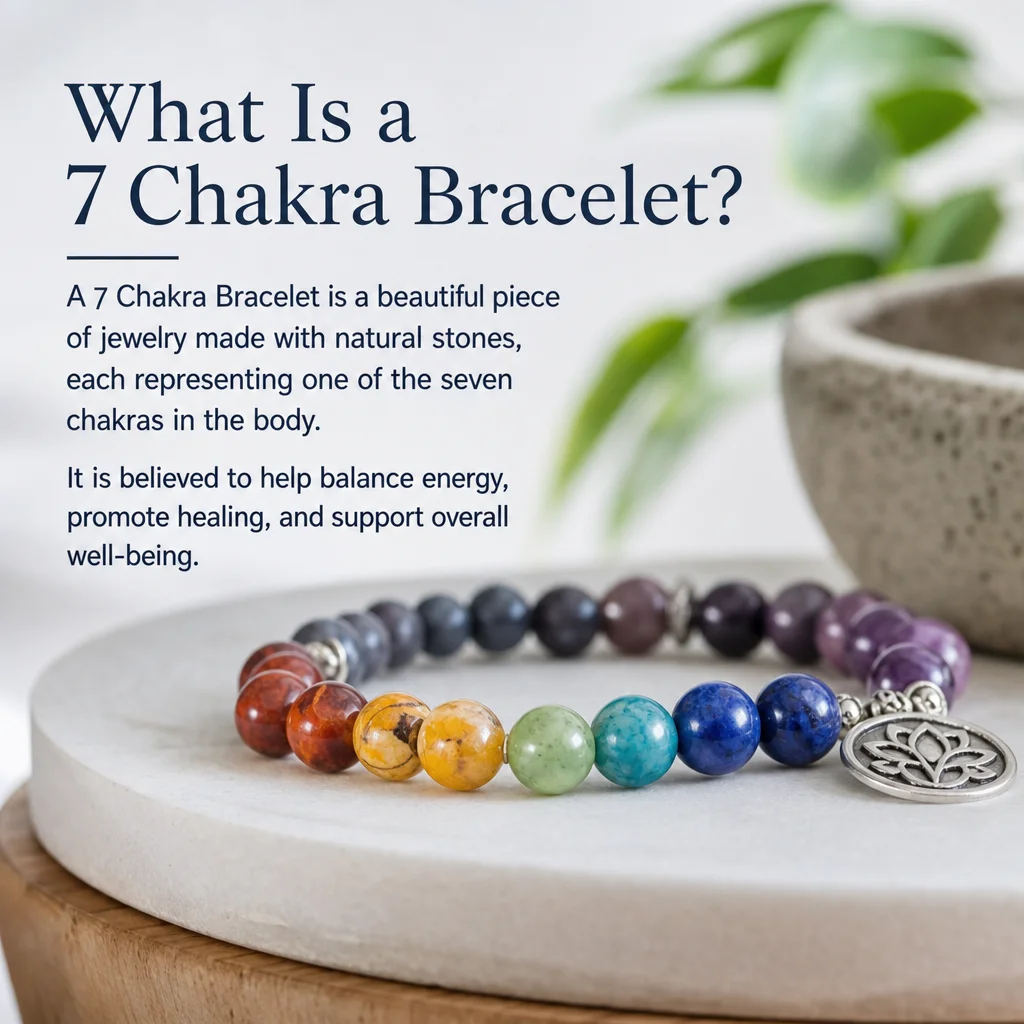
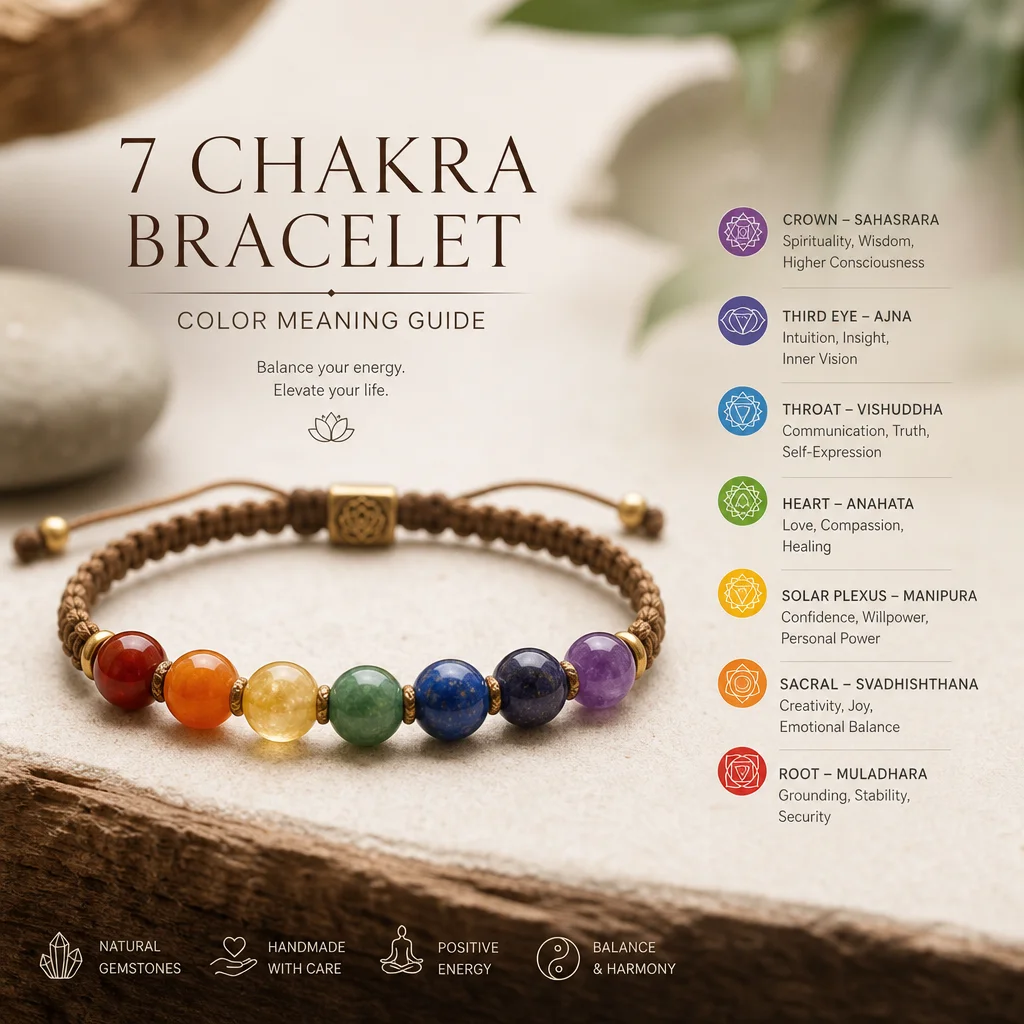
The most common type of chakra bracelet features beads representing all seven chakras — typically seven colors (red, orange, yellow, green, blue, indigo, violet) arranged in a specific sequence. These are designed as general-purpose balancing tools that address all energy centers simultaneously.
Best for: Daily wear, beginners, general wellness maintenance, and situations where you want overall balance rather than targeting a specific issue.
Wrist recommendation: Left wrist for general receiving and balancing, unless you have a specific reason to project.
Single-Chakra Bracelets
Single-chakra bracelets use beads of a specific color or stone associated with one energy center. A red jasper bracelet targets the root chakra, a green aventurine bracelet targets the heart chakra, and so on.
Best for: Targeted work on a specific chakra that you've identified as needing attention. If you're dealing with communication issues (throat chakra), a blue lace agate or turquoise bracelet provides focused support.
Wrist recommendation: This depends on the chakra and your intention. For grounding (root chakra), left wrist receiving is usually appropriate. For expression (throat chakra), right wrist projecting might be more aligned. Trust your intuition — if putting a bracelet on one wrist feels wrong, try the other.
Stacking Rules for Multiple Chakra Bracelets
Wearing multiple bracelets together (stacking) is popular but has some guidelines in the chakra tradition:
Maximum Recommendations
Most practitioners recommend wearing no more than three chakra bracelets at a time on a single wrist. More than three can feel physically uncomfortable (tight, heavy, or causing skin irritation from friction) and, in the traditional framework, can create "energy congestion" by overwhelming the receiving or projecting channels.
Chakra Sequence in Stacking
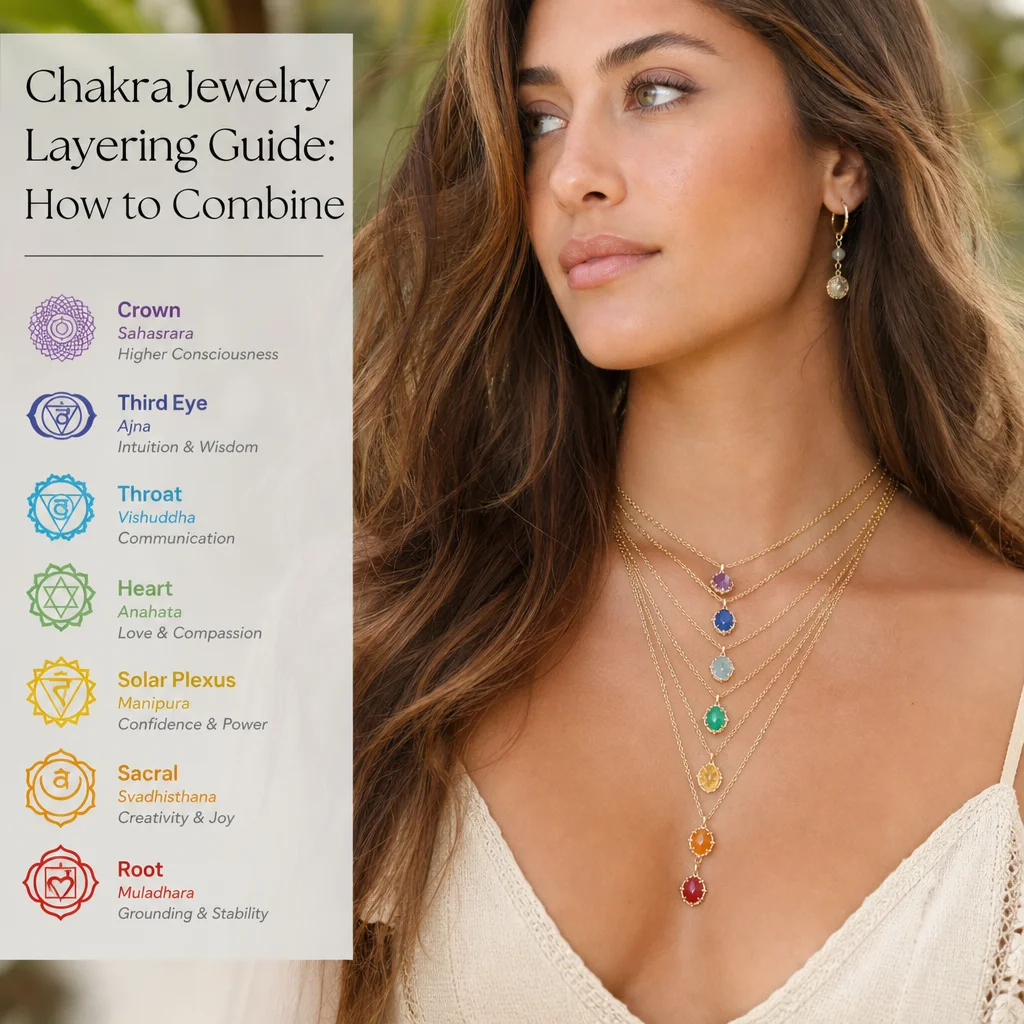
When stacking multiple single-chakra bracelets, some practitioners recommend arranging them in chakra order — root at the bottom (closest to your hand), crown at the top (closest to your elbow). This mirrors the vertical alignment of chakras along the spine and is said to create a harmonious energy flow through the stack. Whether or not you subscribe to the energetic framework, arranging colors in rainbow order (red, orange, yellow, green, blue, indigo, violet from bottom to top) is visually appealing and intentional.
Mixing Chakra and Non-Chakra Bracelets
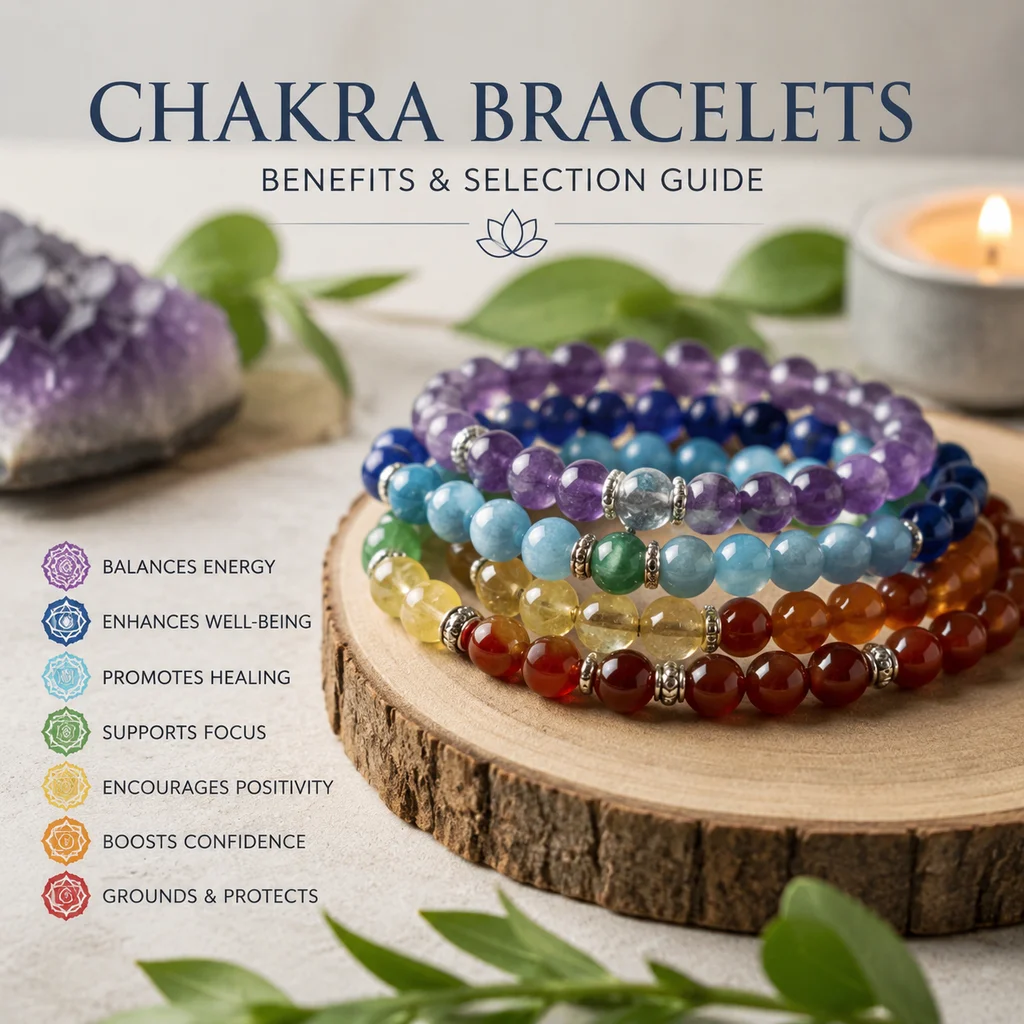
It's common to wear chakra bracelets alongside other jewelry. The traditional guideline is simple: don't mix bracelets with conflicting intentions on the same wrist. If you're wearing a heart chakra bracelet for compassion, wearing an aggressive or protective black tourmaline bracelet on the same wrist might create conflicting energetic associations. On the other hand, wearing complementary non-chakra stones — rose quartz alongside a heart chakra bracelet, for example — is generally considered fine and may enhance the intention.
Daily Timing: When to Wear Your Chakra Bracelet
Meditation and Yoga
Many people wear chakra bracelets specifically during meditation or yoga practice. The bracelet serves as a physical reminder of the chakra system and can be a focus point during body-scan meditations that move through each energy center. During yoga, especially kundalini or chakra-focused practices, the bracelet reinforces the energetic theme of the session.
Recommendation: Wear on the left wrist during meditation/yoga for receiving and integrating the practice's benefits.
Work and Public Settings
Chakra bracelets are increasingly common as everyday jewelry, and the 7-color beaded style works well with casual and even some professional outfits. The stones provide subtle color accents that can complement your clothing. From a practical standpoint, be aware that the beads on a multi-stone bracelet will clink against keyboards, desks, and other surfaces during the workday — this isn't damaging to most stone beads but can be audible.
Sleep Considerations
Whether to sleep with your chakra bracelet on is a personal choice with practical considerations. Beaded bracelets can be uncomfortable during sleep — pressing into your wrist, catching on bedding, or potentially scratching you if a bead has a rough edge. Stretch cord bracelets are less obtrusive than knotted silk thread designs.
In the traditional framework, some practitioners recommend sleeping with certain chakra bracelets on (particularly root chakra and heart chakra stones) to continue their influence through the dream state. Others recommend removing all jewelry before sleep to give both the body and the stones a rest period.
Practical recommendation: If you want to try sleeping with your bracelet, start with a lightweight single-chakra bracelet on a soft stretch cord. If it's uncomfortable or disturbs your sleep, remove it. A good compromise is placing the bracelet on your nightstand or under your pillow rather than on your wrist.
Exercise and Physical Activity
During exercise, bracelets face increased risk of damage from sweat, impact, and repetitive motion. Stretch cord can degrade with repeated exposure to sweat and friction. Silk thread can weaken. Stone beads can chip if they strike hard surfaces during exercise.
Recommendation: Remove your chakra bracelet before vigorous exercise, swimming, or any activity involving repetitive impact. This protects both the bracelet and your wrist from potential injury (a beaded bracelet can catch on equipment during weightlifting or climbing).
Bathing and Water Exposure
Water exposure is one of the most common ways people accidentally damage their chakra bracelets:
Stone beads: Most stone beads tolerate brief water exposure, but repeated exposure to soap, shampoo, and hot water can dull the polish over time and weaken the stringing material. Some specific stones (turquoise, lapis lazuli, malachite, opal) are porous and can be damaged by water and chemicals.
Wood or seed beads: If your chakra bracelet includes any wood or seed elements, remove it before bathing. Water causes swelling, warping, and potential cracking in organic materials.
Thread/cord: Even water-resistant stretch cord degrades with repeated exposure to hot water and soap. Silk thread weakens noticeably after getting wet. Each bath you take with the bracelet on shortens its lifespan.
Recommendation: Remove your chakra bracelet before bathing, showering, swimming, or washing dishes. It takes 5 seconds and can add months or years to the bracelet's life.
Choosing the Right Fit
Proper fit affects both comfort and the bracelet's longevity:
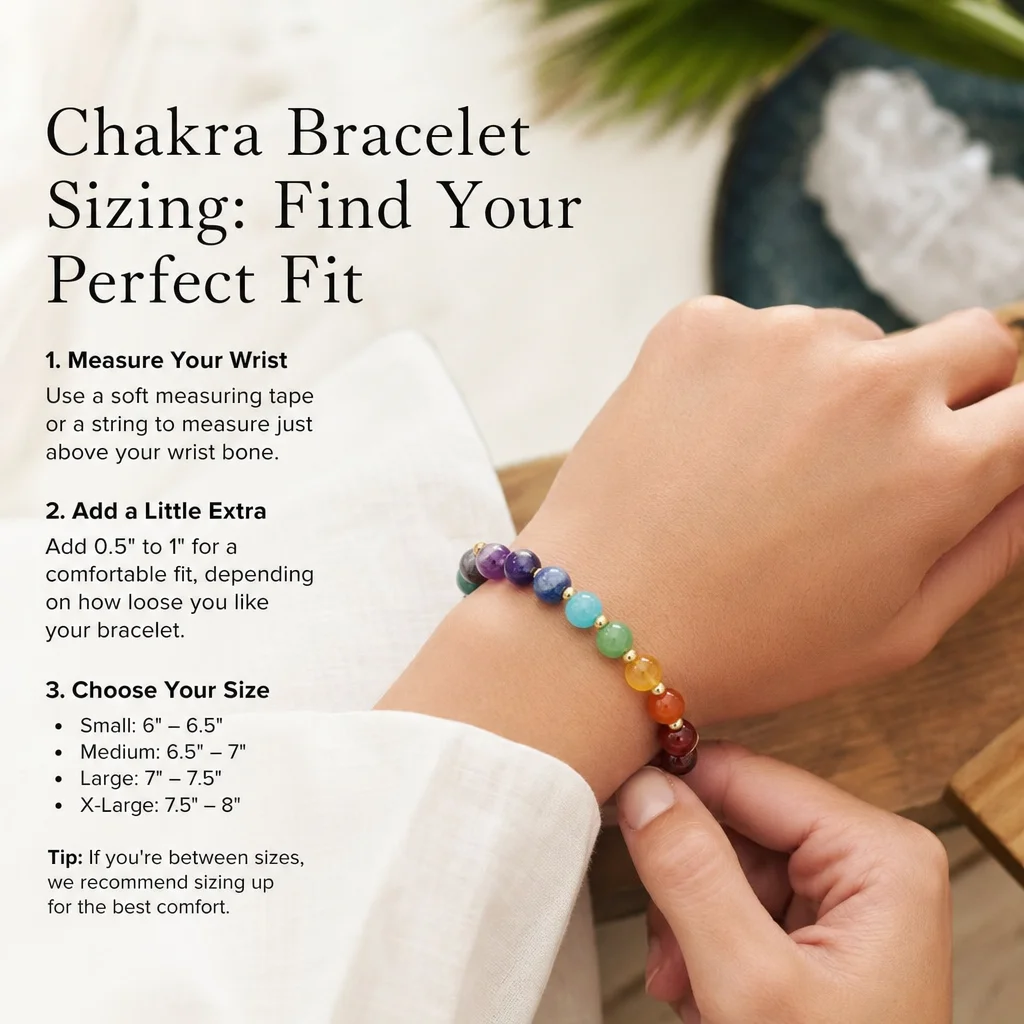
Snug but not tight: The bracelet should move slightly on your wrist but not slide freely up and down your forearm. If it's so loose it slides over your hand when relaxed, it could fall off during activity. If it's so tight it leaves indentations on your skin, the stringing material is under excessive tension and will fail prematurely.
Size by wrist measurement: Measure your wrist with a soft tape measure at the point where you'd wear the bracelet. Add about 0.5 to 1 inch (1-2 cm) for comfort. For beaded bracelets, this usually translates to one of three standard sizes: small (6-6.5 inches / 15-16.5 cm), medium (7-7.5 inches / 17.5-19 cm), or large (8-8.5 inches / 20-21.5 cm).
Consider bead size: 8mm beads are the most common for chakra bracelets and work well for most wrist sizes. 6mm beads make the bracelet more flexible and comfortable for smaller wrists. 10mm beads create a chunkier look but require more circumference and may feel heavy on smaller frames.
Signs Your Chakra Bracelet Needs Attention
Catching problems early prevents bracelet failure:
- Stretch cord losing elasticity: If the bracelet slides on and off too easily or gaps appear between beads, the cord is stretched. Restring soon or the bracelet will break.
- Knots coming loose: On traditionally knotted malas, check that knots between beads are still tight. Loose knots mean the thread is slipping.
- Stone beads chipping: Small chips on bead edges are normal wear, but growing chips or cracks mean the bead may eventually break.
- Color fading: Some natural stones (amethyst, rose quartz, citrine) can fade with prolonged sun exposure. Store out of direct sunlight.
- Metal findings tarnishing: Silver guru beads or spacers will tarnish naturally. A silver polishing cloth restores shine quickly.
Building Your Daily Chakra Bracelet Practice
Wearing a chakra bracelet becomes more meaningful when you develop a personal practice around it. Here's a simple daily routine that takes under two minutes:
- Morning: Put the bracelet on your left wrist. As you slide it on, take a deep breath and set a brief intention — "I receive balance and healing today" or something personal to your current goals.
- Throughout the day: When you notice the bracelet (it catches your eye, or you feel it on your wrist), use it as a mindfulness cue. Take one conscious breath and check in with yourself — how are you feeling? What do you need?
- Evening: Remove the bracelet. As you take it off, briefly reflect on the day — what happened, what you learned, what you're grateful for. This creates a bookend to the morning intention-setting.
This practice transforms the bracelet from a simple accessory into an active mindfulness tool. The physical act of putting it on and taking it off creates natural anchors for intention-setting and reflection that can genuinely improve daily self-awareness and emotional balance.
Frequently Asked Questions
Can you wear a chakra bracelet while sleeping?
Yes, you can wear your chakra bracelet while sleeping, and many practitioners believe it can enhance the healing process during rest. However, if the bracelet is uncomfortable or disrupts your sleep, it's perfectly acceptable to remove it at night and place it on your nightstand or under your pillow.
Should you cleanse your chakra bracelet regularly?
Yes, it's recommended to cleanse your chakra bracelet periodically to clear any accumulated energy and restore its natural vibration. Common methods include placing it under moonlight overnight, using sage or palo santo smoke, or setting it on a piece of selenite for a few hours.
Does the bracelet need to touch your skin to work?
While many practitioners believe direct skin contact enhances the energetic connection between the stones and your body's energy field, it's not strictly necessary for the bracelet to be effective. You can wear the bracelet over thin clothing and still benefit from the stones' properties, though skin contact is generally preferred.
Can you wear multiple chakra bracelets at the same time?
Yes, you can wear multiple chakra bracelets simultaneously, either stacked on the same wrist or distributed between both wrists. Just be mindful of the combined intentions you're setting, as different stones and chakra focuses can complement or sometimes conflict with each other depending on your goals.
Can you wear a chakra bracelet in water?
It depends on the materials used in your bracelet, as some stones like selenite, malachite, and certain forms of calcite can be damaged or dissolved by water. Additionally, water can weaken the elastic cord over time, so it's generally best to remove your bracelet before showering, swimming, or washing dishes to preserve its longevity.

Comments