What Is a Gemstone? A Complete Beginner's Guide to How Minerals Become Jewels
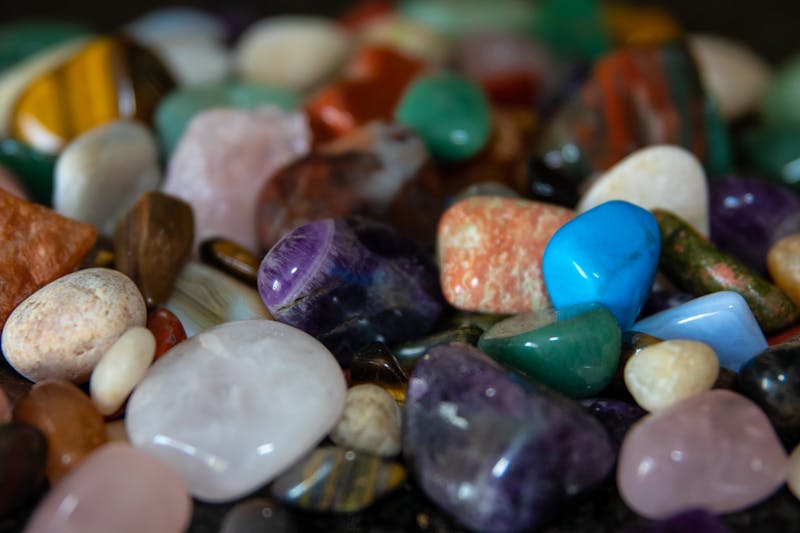
Maybe you've admired the deep green of an emerald ring, wondered why rubies cost more than garnets, or picked up a tumbled amethyst at a shop and thought, "What exactly is this thing?" You're not alone. Gemstones surround us in jewelry, decor, and wellness culture — yet most people have never learned what a gemstone actually is, how it forms, or why some are worth thousands while others cost a few dollars.
This guide covers everything from the ground up (literally). We'll start with the mineralogical definition of a gemstone, walk through how they form deep underground, explain the system gemologists use to grade them, and finish with practical advice for anyone thinking about starting a collection. No geology degree required.
What Is a Gemstone? The Technical Definition
In mineralogy, a gemstone (or gem) is a piece of mineral crystal that, when cut and polished, is used to make jewelry or other adornments. But that simple definition hides several important distinctions.
First, not all gemstones are minerals. A mineral is a naturally occurring, inorganic solid with a defined chemical composition and crystalline structure. Quartz, corundum, and beryl are minerals. But some well-known gems — like pearl, amber, and jet — are organic gemstones, formed by living organisms rather than geological processes. Pearls come from mollusks, amber is fossilized tree resin, and jet is compressed ancient wood.
Second, a rock is different from a mineral. A rock is an aggregate of one or more minerals. Lapis lazuli, for example, is technically a rock — it's a mixture of lazurite, calcite, and pyrite — but it's widely accepted as a gemstone because of its beauty and historical importance. Similarly, jade is valued as a gem even though it refers to two different minerals (jadeite and nephrite).
So the practical definition is broader: a gemstone is any natural material — mineral, rock, or organic — that possesses beauty, durability, and rarity in sufficient measure to be prized for adornment or collection.
How Gemstones Form: Three Geological Pathways
Every gemstone's story begins inside the Earth. The vast majority form through one of three geological processes, each producing different types of gems under different conditions.
Igneous Gemstones: Born from Magma
When magma (molten rock beneath the surface) cools and crystallizes, or when lava erupts and solidifies on the surface, the minerals that crystallize can become gemstones. Diamonds form about 150–200 kilometers below the surface under extreme heat and pressure, then are carried upward by volcanic eruptions in rock called kimberlite pipes. Peridot (olivine) forms in magma deep in the upper mantle and sometimes appears in basalt flows. Topaz and tourmaline crystallize in pegmatites — the very last, slow-cooling remnants of granite magma, which allow large, well-formed crystals to grow.
Sedimentary Gemstones: Layers of Time
Sedimentary processes create gems through erosion, deposition, and compaction over millions of years. Opal forms when silica-rich groundwater seeps into rock cavities and slowly solidifies. Turquoise forms through the weathering of copper-bearing rocks in arid climates. Malachite and azurite crystallize in the oxidized zones of copper ore deposits. Even diamonds can be found in alluvial deposits — places where erosion has washed them from their original volcanic sources into riverbeds.
Metamorphic Gemstones: Transformed by Heat and Pressure
When existing rocks are subjected to intense heat and pressure without melting, their mineral composition can transform entirely, creating new gemstones. Ruby and sapphire (both varieties of corundum) commonly form in metamorphic marble. Garnet grows in metamorphic rocks like schist and gneiss. Jadeite forms under the extreme pressure of subduction zones where tectonic plates collide. Kyanite, staurolite, and iolite are other metamorphic gems.
Want to go deeper on the science behind crystal formation? Check out our article on how crystals are formed for a geology lesson written specifically for jewelry lovers.
Mohs Hardness Scale: Why It Matters
If you've ever browsed a gemstone shop, you've probably seen "Mohs 7" or "hardness 9" listed in the description. The Mohs scale of mineral hardness, developed by German geologist Friedrich Mohs in 1812, ranks minerals from 1 (softest) to 10 (hardest) based on their ability to scratch one another.
The scale is ordinal, not linear. Diamond (10) is roughly four times harder than corundum (9), and corundum is about twice as hard as topaz (8). The gaps between lower numbers are much smaller.
Here's where the most popular gemstones fall:
- 1 — Talc: Can be scratched with a fingernail
- 2–3 — Gypsum, Calcite: Soft minerals rarely used in jewelry
- 4 — Fluorite: Too soft for daily wear rings
- 5–6 — Apatite, Feldspar (moonstone, labradorite): Suitable for earrings and pendants, not ideal for rings worn daily
- 7 — Quartz (amethyst, citrine, rose quartz): Good general-purpose durability; the most common mineral in Earth's crust
- 8 — Topaz: Excellent durability for all jewelry types
- 9 — Corundum (ruby, sapphire): Second hardest natural material; extremely durable
- 10 — Diamond: The hardest known natural material, roughly 10× harder than corundum on an absolute scale
Why does hardness matter for everyday wear? A gem rated below 7 on Mohs scale will accumulate scratches from ordinary household dust (which contains tiny quartz particles, hardness 7). Softer gems like opal (5.5–6.5), pearl (2.5–4.5), and turquoise (5–6) are beautiful but need more careful handling — ideal for earrings or occasional-wear pendants, not everyday rings. For a deeper look at caring for softer stones, see our guide on protecting your crystals.
Where Gemstone Colors Come From
Color is often the first thing we notice about a gemstone, and the most visually striking gems command the highest prices. But where do these colors actually come from?
Trace Elements (Chromophores)
The most common source of color is tiny amounts of impurity elements — called chromophores — that replace atoms in the crystal lattice. The chemistry is elegant in its simplicity: pure corundum (Al₂O₃) is colorless, but add a few hundred parts per million of chromium and you get ruby. Add iron and titanium instead, and you get blue sapphire. Pure beryl (Be₃Al₂Si₆O₁₈) is colorless, but chromium makes it emerald, iron makes it aquamarine, and manganese produces pink morganite.
Color Centers
Some gems owe their color not to chemical impurities but to structural defects in the crystal lattice — missing atoms, extra electrons, or radiation damage. These are called color centers. Amethyst gets its purple from iron impurities that have been irradiated, creating a color center. Smoky quartz is colored by natural radiation interacting with trace aluminum. Blue topaz found in nature gets its color from color centers created by millions of years of natural irradiation.
Structural Color
Some gems produce color not through pigments or impurities but through the physical structure of the material itself. Opal's famous play-of-color comes from diffraction of light through microscopic spheres of silica arranged in a regular grid. Labradorite's labradorescence — that stunning blue-green flash — is caused by light reflecting off thin layers of different compositions within the stone. Pearls and abalone shell get their iridescence from overlapping platelets of aragonite that interfere with light waves. Learn more about these optical wonders in our labradorite guide.
Gemstone Grading: Beyond the Diamond 4Cs
Most people have heard of the 4Cs for diamonds — Cut, Color, Clarity, and Carat weight. This system, developed by the GIA in the mid-20th century, is the gold standard for diamond grading. But when it comes to colored gemstones, the 4Cs need significant adaptation.
Color becomes the dominant factor. For colored stones, gemologists evaluate three aspects of color: hue (the basic color like red, blue, or green), saturation (how vivid or intense the color is), and tone (how light or dark the stone appears). The most valuable colored gems have a pure, vivid hue with medium-dark tone. A slightly included ruby with superb color is typically worth more than a flawless ruby with weak, grayish color.
Clarity standards are far more lenient for colored gems. While a VS-clarity diamond is standard, many prized colored gems are visibly included. Emeralds are almost always included (the French even have a term for it: jardin, meaning "garden"). These inclusions are often accepted — and sometimes even valued — as proof of natural origin. Only when inclusions threaten the stone's durability or severely impact transparency do they significantly reduce value.
Cut in colored stones is less standardized than for diamonds. There's no single "ideal cut" for a ruby or sapphire. Instead, the cutter's goal is to maximize color — sometimes by cutting the stone deeper to intensify hue, or orienting it to minimize unsightly color zoning. A well-cut colored gem displays even color across the face with minimal "windowing" (areas where you can see straight through the stone, appearing transparent like glass).
Carat weight works similarly to diamonds, but the price-per-carat curves differ dramatically. Large rubies, emeralds, and sapphires increase in price exponentially with size because truly fine material in large sizes is extremely rare. A 1-carat ruby might cost $1,000 per carat while a comparable 5-carat ruby could be $10,000+ per carat.
Natural vs. Synthetic vs. Treated Gemstones
This is one of the most misunderstood areas in gemology, and it matters a lot when you're buying. There are three broad categories.
Natural Gemstones
Formed entirely by geological processes in the Earth, mined, cut, and polished with no artificial modification. A natural ruby pulled from a mine in Myanmar and cut without any treatment is the most straightforward example. These command the highest prices, especially when accompanied by a laboratory certificate confirming "no treatment."
Synthetic (Lab-Grown) Gemstones
These have the same chemical composition, crystal structure, and optical properties as their natural counterparts — they're real gems, just not from the Earth. They're created in laboratories using methods like flux growth (slow cooling of a chemical solution) or the Verneuil flame-fusion process (melting powdered ingredients and letting them crystallize as they cool). Synthetic ruby, sapphire, emerald, and alexandrite are widely available. They're not "fake" — they're chemically identical — but they cost a fraction of natural stones because supply is unlimited. For a thorough comparison, read our article on natural vs. synthetic crystals.
Treated Gemstones
The vast majority of colored gemstones on the market have been enhanced in some way. The key distinction: treatments modify what nature produced, while synthetics replace it entirely. Common treatments include:
- Heat treatment: By far the most common and widely accepted treatment. Heating rubies and sapphires to high temperatures can improve color and dissolve unwanted inclusions. An estimated 90–95% of commercial rubies and sapphires are heat-treated. It's permanent and generally does not significantly affect value.
- Oiling/resin filling: Emeralds are routinely treated with cedar oil or synthetic resins to fill surface-reaching fractures, improving clarity. This is expected and accepted in the trade, but heavy filling can affect value and requires disclosure.
- Diffusion treatment: Chemicals are diffused into the surface of a stone at high temperature to create a thin layer of color. Blue diffusion-treated sapphires, for instance, have color only near the surface. This treatment must be disclosed.
- Irradiation: Exposing gems to radiation can change or intensify color. Blue topaz is almost always irradiated (natural blue topaz is extremely rare). Most irradiated gems are safe to wear, as any residual radiation decays quickly.
- Dyeing: Adding color to porous or fractured gems by introducing dye. This is common with lower-grade turquoise, quartz, and jade. It's the least accepted treatment because it can be difficult to detect and significantly misrepresents the stone's natural quality.
The golden rule: any treatment should be disclosed by the seller. If you're buying a gemstone and the seller can't or won't tell you whether it's treated, that's a significant red flag. Our guide on how to tell real from fake crystals covers some practical identification tips.
15 Popular Gemstones at a Glance
Here's a quick reference for the most commonly encountered gemstones, each with a single defining fact:
- Diamond — The hardest natural substance (Mohs 10), composed of pure carbon crystallized under extreme pressure deep in the mantle.
- Ruby — The red variety of corundum, colored by chromium; historically the most valued colored gemstone, especially stones from Myanmar.
- Sapphire — Corundum in any color except red; blue is most famous, but "fancy sapphires" come in pink, yellow, green, and even color-change varieties.
- Emerald — The green variety of beryl, colored by chromium and/or vanadium; prized since ancient Egypt, with the famous Cleopatra mines.
- Amethyst — Purple quartz, colored by iron and irradiation; was once as valuable as ruby until large Brazilian deposits were discovered in the 19th century. Read our full amethyst benefits guide for more.
- Aquamarine — Blue-green beryl, named for seawater; ranges from pale icy blue to deeper blue-green, with the most valued stones showing pure blue.
- Garnet — A group of minerals, not a single stone; comes in virtually every color, though deep red (almandine and pyrope) is most common.
- Topaz — Available in many colors, with imperial topaz (orange-pink from Brazil) and blue topaz being the most commercially popular.
- Tourmaline — Perhaps the most colorful gemstone family, occurring in every color including bi-color and tri-color stones; the Paraíba variety (neon blue-green) is among the most expensive gems per carat.
- Opal — A hydrated silica displaying play-of-color through diffraction; Australian opals (especially from Lightning Ridge) are the most famous black opals.
- Peridot — The gem-quality variety of olivine; one of the few gemstones that occurs in only one color (green), caused by iron in its structure.
- Citrine — Yellow to orange quartz; much of the commercial citrine on the market is actually heat-treated amethyst.
- Turquoise — A copper aluminum phosphate prized for its distinctive blue-green color; has been used in jewelry for over 7,000 years across many cultures.
- Moonstone — A feldspar mineral displaying adularescence — a billowy, blue-white floating light effect; the most valued specimens come from India and Sri Lanka.
- Lapis Lazuli — A rock composed primarily of lazurite, giving it an intense blue that has been used in art and jewelry since the ancient civilizations of Mesopotamia and Egypt.
How to Start Collecting Gemstones: Practical Advice for Beginners
Starting a gemstone collection doesn't require a fortune. Here's a realistic approach for someone just getting into this fascinating hobby.
Start with What Draws You
The best collection is one you genuinely enjoy, not one assembled for investment value. If purple stones captivate you, start with amethyst varieties — amethyst, charoite, sugilite, lepidolite. If you love the flash and fire of gems, explore opal, labradorite, and moonstone. Collections built around a theme (color, geography, mineral family) tend to be more cohesive and personally satisfying.
Learn Before You Spend Big
Before investing hundreds or thousands in a single stone, spend time handling gems at different price points. Visit gem shows, mineral shops, and reputable online dealers. Look at stones side by side — compare a $20 amethyst with a $200 amethyst and learn to see the differences in color saturation, clarity, and cut quality. Our beginner's guide to crystal bracelets is a great low-cost entry point.
Set a Realistic Budget
Here's a suggested budget breakdown for a first-year collector:
- $0–200: Build a tumbled stone collection. You can acquire 30–50 different mineral varieties in tumbled form. It's the cheapest way to handle many different gems and learn their properties firsthand. See our comparison of raw vs. tumbled stones.
- $200–500: Add a few small faceted stones (2–5 carats each) in colors that interest you. Look for well-cut stones in the $30–80 range from reputable online dealers.
- $500–1000: Consider one or two "keeper" pieces — higher quality stones that you'd set in jewelry. At this level, always buy from dealers who provide origin information and are transparent about treatments.
- $1000+: Only after you've handled enough stones to develop an eye. Consider getting a few pieces certified by GIA or a reputable lab.
Buy with Documentation
As you move beyond tumbled stones, insist on knowing what you're buying. Reputable dealers disclose: the gem species and variety, country of origin (when known), any treatments applied, and whether the stone is natural or synthetic. For stones over $100, a lab certificate from GIA, AGL, or Gübelin adds significant confidence.
Handle and Store Properly
Gemstones harder than quartz (Mohs 7+) can scratch softer gems, so store them separately — individual pouches or a divided gem box. Keep opals and pearls slightly humid (a damp cloth in the storage box helps). Most gems can be cleaned with warm soapy water and a soft brush. Avoid ultrasonic cleaners for stones with inclusions (emeralds, opals, tanzanite) as the vibrations can worsen existing fractures.
Frequently Asked Questions
Is a crystal the same thing as a gemstone?
Not exactly. All gemstones are either crystalline or have crystalline components, but "crystal" is a broader term. In everyday language, "crystal" often refers to specimens valued for their natural form (like a quartz point or amethyst cluster), while "gemstone" usually implies a material selected and cut for jewelry. Many stones occupy both categories — a piece of citrine can be a crystal specimen or a faceted gemstone depending on how it's prepared.
Are lab-grown gemstones worth buying?
Absolutely. Lab-grown gems are chemically identical to natural ones and offer excellent value. They're ideal for everyday jewelry where you want beauty without the premium price of natural stones. The key is honest disclosure — a lab-grown sapphire sold as lab-grown is a fine purchase; one sold as natural is fraud. Many collectors even specialize in synthetics because they can acquire flawless, large stones at accessible prices.
How can I tell if a gemstone has been treated?
Many treatments (like heat) are undetectable even to trained gemologists without advanced laboratory equipment. Others (like dyeing or heavy filling) can be detected with magnification and experience. For valuable stones, a laboratory certificate is your best protection. For everyday purchases, buy from reputable dealers who disclose treatments as standard practice. If you're interested in the scientific perspective on crystal claims, our skeptic's guide to crystals offers a balanced view.
What's the most affordable gemstone for beginners?
Quartz varieties (amethyst, citrine, rose quartz, smoky quartz) are among the most affordable and widely available. Garnet is another excellent choice — red garnets in the $5–20 per carat range offer rich color and good hardness (Mohs 6.5–7.5). For something more unusual, kyanite, sunstone, and prehnite offer distinctive appearances at moderate prices.
Do gemstones have any scientific or metaphysical properties?
Scientifically, gemstones have well-documented physical properties — hardness, refractive index, crystal structure, and optical characteristics that gemologists use for identification. Metaphysical and healing claims associated with specific stones are popular in wellness communities but are not supported by controlled scientific studies. Many people find personal meaning and comfort in working with crystals, which is valuable in its own right, even if the mechanisms remain unproven by clinical research.
Conclusion
Understanding gemstones doesn't require a geology degree — just curiosity and a willingness to look closer at the remarkable materials that form beneath our feet over millions of years. Whether you're picking out a birthstone ring, starting a mineral collection, or simply want to know what that purple stone on your coworker's desk actually is, the fundamentals covered here give you a solid foundation.
The gemstone world is vast and endlessly fascinating. Start small, stay curious, and let your own taste guide you. The best collection is the one that brings you joy every time you open the box.
This article was created with the assistance of AI writing tools. While the geological and gemological information has been reviewed for accuracy, we recommend consulting a certified gemologist (GIA, FGA, or equivalent) for professional gem identification, appraisal, or purchasing decisions. SageStone believes in transparency about how our content is produced.

Comments