Labradorite Crystal Meaning and Uses Guide
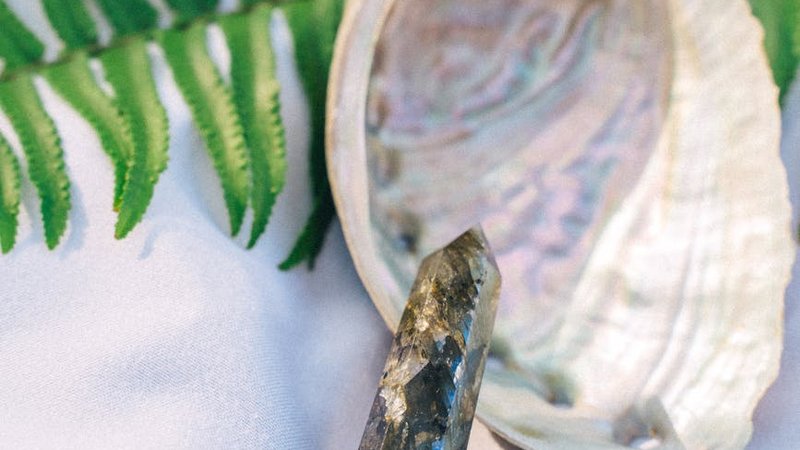
I remember the first time I really saw labradorite. I was at a gem and mineral show in Tucson — not the big famous one, just a smaller weekend market. There was a tray of rough stones on a table, and most of them looked like someone had left gray concrete out in the rain. I almost walked past it. But then I picked one up, turned it in the light, and the entire stone just... ignited. Vivid blue flashed out of nowhere, with hints of green and gold rippling across the surface. I stood there like an idiot, rotating the same stone for a solid two minutes while the vendor tried not to laugh.
I bought it. Obviously. And then I spent the next week reading everything I could find about this weird, magical-looking rock. Years later, labradorite is still one of my favorite stones to work with and collect. Here's everything I've learned.
What Is Labradorite, Actually?
Labradorite is a feldspar mineral — the same broad family that includes moonstone and sunstone. It sits at about 6 to 6.5 on the Mohs hardness scale, which puts it between glass and quartz. Hard enough for daily-wear jewelry, but soft enough that you don't want to throw it against a brick wall.
The name comes from the Labrador Peninsula in Canada, where it was first identified in the late 1700s by Moravian missionaries. That Canadian source is still one of the most important today, along with Finland (where the finest specimens come from) and Madagascar (which produces a huge volume of commercial-grade material). You'll also find labradorite in Russia, Australia, and a few other locations, but those three are the big ones.
What sets labradorite apart from virtually every other gemstone is its signature optical effect — labradorescence. Hold the stone at the right angle, and it erupts with iridescent flashes of blue, green, gold, purple, and sometimes even red. Turn it slightly, and the flash disappears completely, leaving what looks like plain gray rock. It's the most dramatic before-and-after effect in the mineral kingdom.
The Science Behind the Flash
So what's actually happening when labradorite does its thing? It's not magic — it's optics, specifically a phenomenon called light interference.
Inside labradorite, there are microscopic layers of different feldspar compositions (albite-rich and anorthite-rich layers, if you want the technical terms). These layers formed as the original molten rock cooled very slowly, allowing different minerals to separate into thin alternating sheets. When light enters the stone, these layers act like a diffraction grating — they split white light into its component colors and reflect specific wavelengths back to your eye. The color you see depends on the thickness of the layers and the angle at which you're viewing the stone.
It's essentially the same physics that makes a soap bubble or an oil slick show rainbow colors, just built into solid rock over millions of years. I think that's actually cooler than magic.
Color Grades: Not All Labradorite Is Equal
If you've shopped for labradorite, you've probably noticed a huge range of prices and quality. Here's how it breaks down:
Spectrolite (The Premium Tier)
Spectrolite is the trade name for labradorite from Finland that displays the full spectrum of colors — blue, green, gold, purple, and red — often all in the same stone. This is the most valuable and sought-after type. Genuine Finnish spectrolite commands premium prices, and there's a lot of material from other sources marketed as "spectrolite" that... isn't. If you're paying spectrolite prices, ask for the origin.
Blue Flash (The Classic)
This is what most people picture when they think of labradorite — a predominantly blue flash, often with some green or gold secondary colors. Blue flash labradorite is widely available from Madagascar and Canada, and it's the sweet spot for quality versus price. Most of my jewelry pieces use blue flash stones because they're reliable, beautiful, and not absurdly expensive.
Green Flash
Green labradorite is less common and has a different vibe — earthier, more subtle. You see it less in mass-market jewelry, which means collectors tend to seek it out. I've found that people who love green flash labradorite really love it.
No Flash / Low Grade
Plain labradorite without significant flash is still sold — you'll see it carved into hearts, spheres, and decorative objects. It's pretty in its own understated way, but if you're buying for the flash effect, make sure you're actually seeing flash before you pay for it. Photos can be deceiving (or worse, deliberately misleading).
Meaning and Symbolism
Labradorite has a rich history of symbolism, and one of my favorite stories comes from Inuit legend. According to the tradition, the Northern Lights were once trapped in the rocks along the coast of Labrador. A warrior found them and struck the stones with his spear, freeing most of the light back into the sky — but some remained trapped within the rocks. That trapped light, they say, is what we see as labradorescence today.
In modern crystal practice, labradorite is known as the Stone of Transformation. It's associated with change, intuition, and self-discovery. The idea is that just as the stone looks ordinary until you find the right angle, people have hidden depths that emerge under the right conditions. Whether or not you buy into crystal energy, that's a pretty solid metaphor for life.
It's also called a protective stone, specifically for the auric field (the energy field some believe surrounds the body). The idea is that labradorite acts as a shield, deflecting unwanted energy while keeping your own energy intact. In practical terms, a lot of people wear it during stressful periods — career changes, moves, difficult relationships — as a symbol of staying grounded through upheaval.
Healing Properties (What People Believe)
I want to be upfront here: there is no scientific evidence that crystals have healing properties. I love labradorite, I wear it daily, and I think it's genuinely beautiful — but I'm not going to tell you it'll cure anything.
That said, here's what the crystal community commonly associates with labradorite, so you know what people mean when they talk about it:
Enhanced intuition: Labradorite is often recommended for people who want to develop their "gut feelings" or inner knowing. It's sometimes called the "psychic's stone" for this reason.
Auric protection: Believed to create a protective barrier around the wearer, filtering out negative energy and preventing energy drain in social situations.
Self-discovery: Associated with helping people understand themselves better, uncover hidden talents, and gain clarity about their life path.
Anxiety relief: Many people report feeling calmer when wearing or holding labradorite. Whether this is the stone itself or simply the grounding effect of holding something smooth and beautiful during a stressful moment is open to interpretation.
Think of these as the cultural meaning attached to the stone, not medical claims. If holding a piece of labradorite helps you feel centered during a hard day, that's valuable regardless of the mechanism.
How to Use Labradorite
Wearing It
A pendant worn at chest level is probably the most popular way to use labradorite. In crystal work, this position is near the heart chakra, and it keeps the stone against your skin throughout the day. Rings work too, though labradorite's moderate hardness means a ring will show wear faster than a pendant. Earrings are a great option if you want something visible but protected from daily impacts.
Meditation
Here's a technique I picked up from a crystal worker years ago and still use: hold a labradorite palm stone and slowly rotate it in your hands while you breathe. Watch the light shift and change across the surface. The constantly changing colors give your eyes and mind something to follow, which makes it easier to stay present. It's basically a fidget spinner for meditation, and it works surprisingly well.
Workspace
A piece of labradorite on your desk or near your computer is a common recommendation for creative workers. The idea is that the stone's association with intuition and inspiration helps break through creative blocks. I can't prove it helps, but I've had a polished labradorite slab on my workbench for years and I like looking at it, so there's that.
Entryways
Some people place labradorite near their front door as an energy filter — the idea being that it screens the energy coming into your home. This is one of those practices where even skeptics can appreciate the aesthetic: a beautiful stone greeting you when you walk in the door is just nice, regardless of what you believe about energy.
How to Pick Good Labradorite
After handling hundreds of pieces, here's what I look for:
Flash intensity matters more than color. A stone with a blazing blue flash will always look better than one with a faint rainbow. Vivid, sharp flashes of even a single color beat washed-out multi-color any day.
More angles of flash = better stone. The best labradorite shows strong color from multiple viewing angles, not just one narrow sweet spot. If you have to hunt for the flash, you'll spend your whole life tilting the stone trying to show it to people.
Watch for cracks. Labradorite has perfect cleavage in two directions, which means it can develop internal fractures. Cracks don't necessarily mean the stone will break, but they can weaken it over time, especially in jewelry that gets bumped around.
Buy in person when possible. Photos — even good ones — rarely capture the full range of labradorite's flash. The interplay of light and angle is the whole point, and that's something you really need to see in your own hands.
Caring for Labradorite
Labradorite isn't fragile, but it's not indestructible either. At 6–6.5 on the Mohs scale, it can be scratched by harder materials (quartz, topaz, sapphire, and anything harder). Don't store it loose in a bag with other jewelry where pieces can rub against each other.
For cleaning, warm water and a soft cloth is all you need. No ultrasonic cleaners — the vibrations can aggravate any internal fractures. No harsh chemicals or steam. If the stone starts looking dull, a light polish with a jewelry cloth usually brings the flash right back.
Labradorite is also sensitive to sudden temperature changes, which can cause internal stress and cracking. Don't wear it in a hot tub and then plunge into a cold pool. Common sense stuff, but worth mentioning.
Crystal Pairings
If you're into combining stones (and a lot of crystal workers are), here are the pairings that come up most often with labradorite:
Labradorite + Black Tourmaline: This is probably the most popular combination. Labradorite opens up intuition and perception; black tourmaline grounds and protects. The metaphor is clear — see more, but stay protected while you do it. A lot of people keep this combination on their desk during intense work sessions.
Labradorite + Clear Quartz: Clear quartz is considered an "amplifier" in crystal work — it's believed to enhance the properties of whatever stone it's paired with. Pairing it with labradorite is meant to intensify the intuitive and transformative aspects of the labradorite. Practically, the two look beautiful together — the clear transparency of quartz next to the deep flash of labradorite makes for striking jewelry.
Labradorite + Amethyst: Both stones are associated with spiritual awareness and intuition. Together, they're often recommended for meditation practices or for people going through major life transitions. Amethyst brings calm; labradorite brings clarity. It's a gentle, contemplative combination.
At the end of the day, I think the best crystal pairing is the one that you're drawn to. The stone that catches your eye, the one you pick up and don't want to put down — that's the right one for you. Labradorite taught me that. I walked past a tray of rocks and picked up the grayest, most unassuming piece there, and it turned out to be one of my most treasured finds.
Sometimes the best things are hiding in plain sight. You just have to turn them in the right light.

Comments