What Is Dalmatian Jasper?
June 4, 2026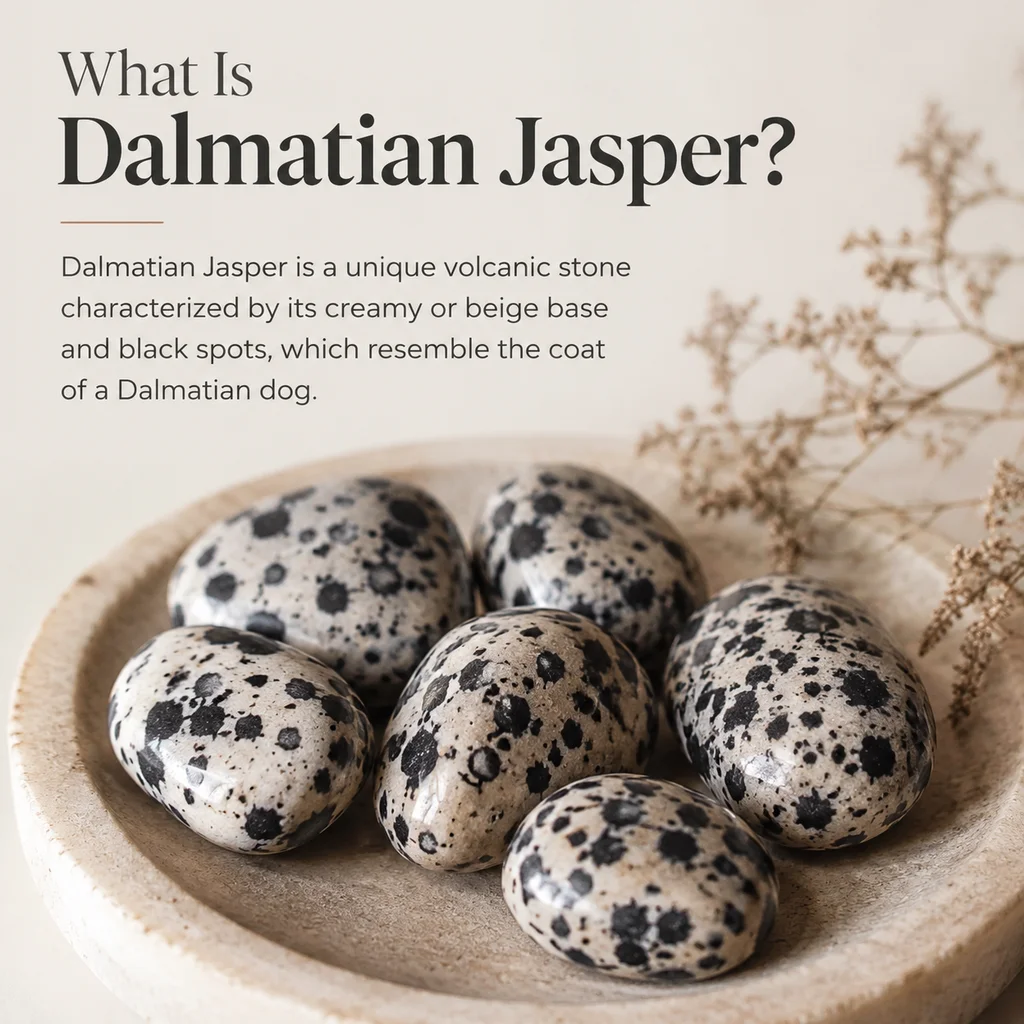
What Is Dalmatian Jasper?
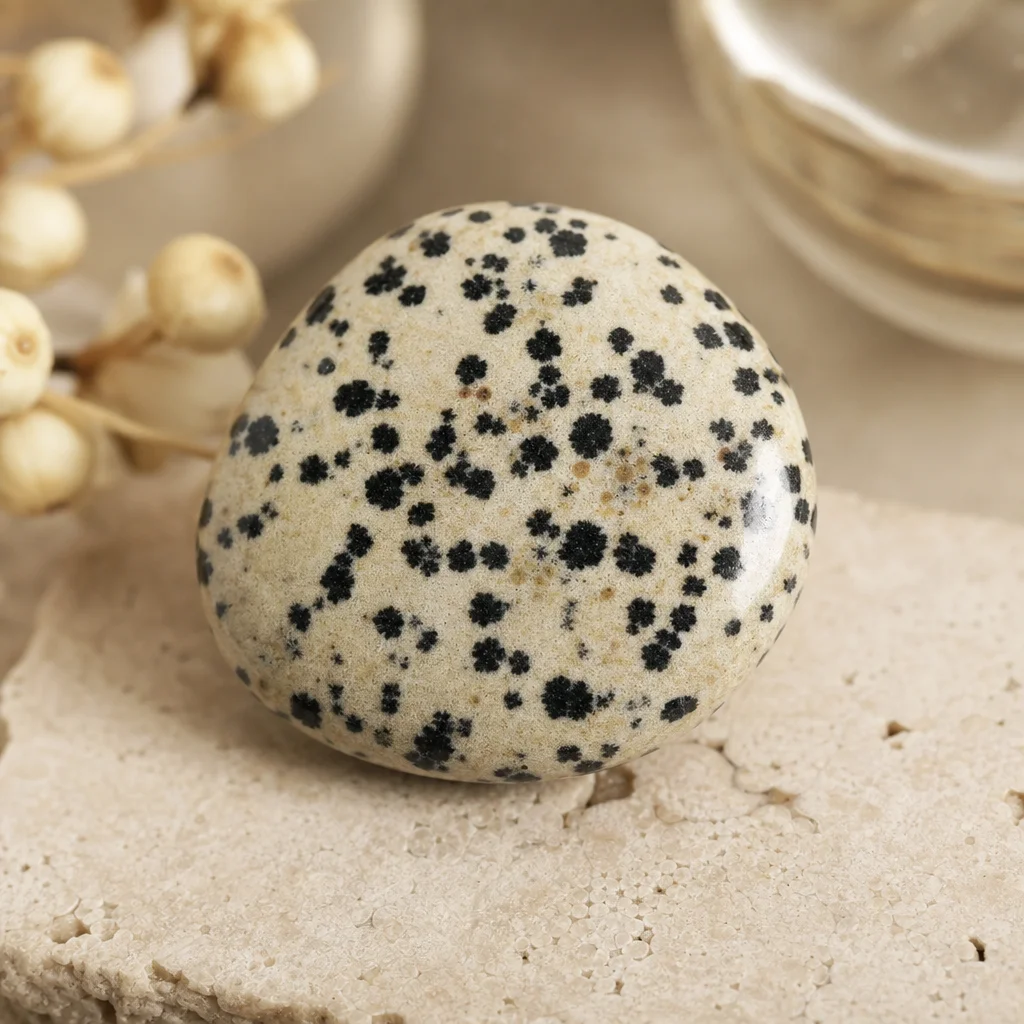
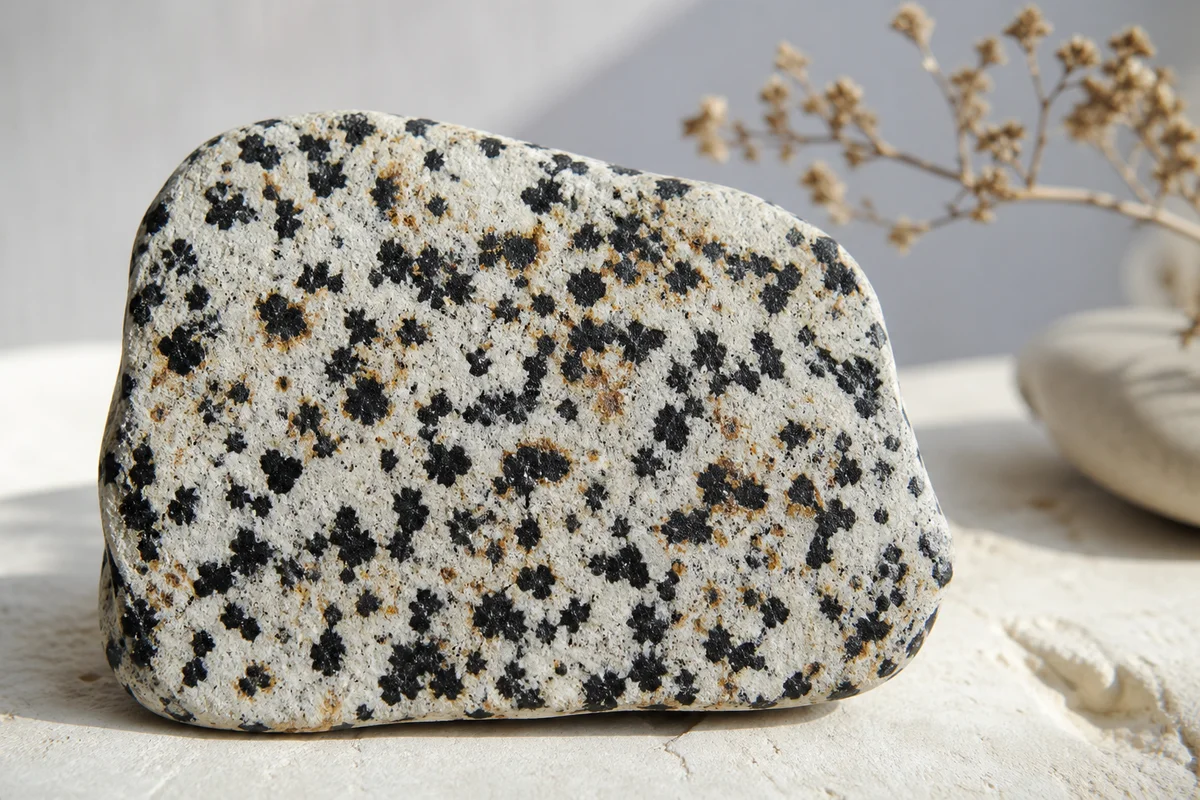
Despite its common name, Dalmatian jasper is not technically a jasper at all. It is a microcrystalline quartz (chalcedony) with inclusions of black minerals—primarily tourmaline, along with iron oxides and other dark minerals—that create the distinctive spotted pattern resembling a Dalmatian dog's coat. The base stone is cream to light gray, and the black spots range from tiny pinpoints to larger, irregular blotches.
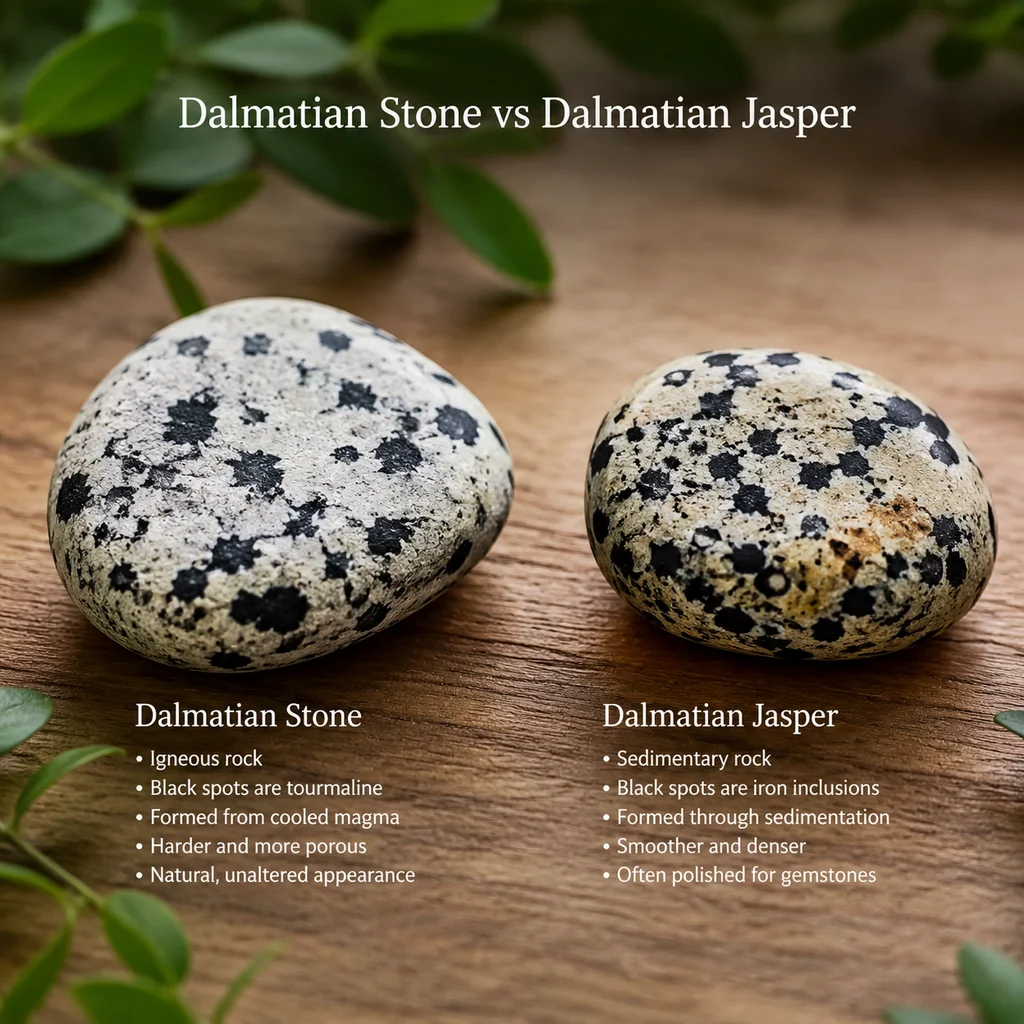
The mineralogical accuracy of calling it "jasper" is debatable. True jasper is an opaque, impure variety of silica that typically contains clay or iron oxide impurities. Dalmatian jasper's composition is closer to an agate or chalcedony with inclusions, but the name has stuck in the gem and crystal trade. Expect to find it labeled as "Dalmatian jasper," "Dalmatian stone," or "Dalmatian agate" depending on the dealer.
How the Spots Form
The black spots in Dalmatian jasper are inclusions—foreign mineral particles trapped within the quartz matrix as it formed. The primary black mineral is tourmaline, specifically black tourmaline (schorl), though some specimens also contain manganese oxides or other dark minerals.
The formation process likely occurred over millions of years in volcanic or hydrothermal environments:
- Silica-rich solutions deposited microscopic quartz crystals, gradually building the cream-colored chalcedony base.
- Simultaneously or subsequently, tourmaline and other dark minerals crystallized from nearby fluids, becoming embedded as the quartz matrix solidified around them.
- The random distribution of these inclusions creates the pattern—no two stones look exactly alike.
The size and density of spots vary considerably. Some pieces have a dense, even distribution of fine spots like a well-marked Dalmatian. Others show sparse, irregular blotches. Both types occur in the same deposits, suggesting the pattern depends on local conditions during formation rather than different geological processes.
Where Dalmatian Jasper Is Found
The primary source of commercial Dalmatian jasper is Chihuahua, Mexico. This region is geologically active and has produced a wide variety of decorative and ornamental stones. The specific mines that produce Dalmatian jasper are relatively small-scale operations, and supply can fluctuate with local mining conditions.
Minor sources have been reported in other parts of the Americas, but Mexican material dominates the market. If a dealer offers "Dalmatian jasper" from an unusual origin (Madagascar, India, Brazil), verify the identification carefully—it may be a different spotted stone altogether.
Physical Properties
- Mineral class: Microcrystalline quartz (chalcedony) with tourmaline inclusions.
- Hardness: 6-7 on the Mohs scale, similar to other forms of chalcedony. Hard enough for most jewelry applications including bracelets and rings.
- Density: 2.58-2.64 g/cm³, typical for quartz-based stones.
- Fracture: Conchoidal (shell-like), like most quartz varieties.
- Luster: Dull to waxy on natural surfaces, vitreous (glassy) when polished.
- Transparency: Fully opaque. No light passes through even thin slices.
Why Is It Called the "Happy Stone"?
The nickname "happy stone" comes from crystal and metaphysical traditions rather than any scientific property. The cheerful visual pattern—cream background with playful black spots—is inherently lighthearted and approachable, which is likely the original reason for the association.
In crystal lore, Dalmatian jasper is said to promote a sense of playfulness and reduce the tendency to overthink. The black tourmaline inclusions are sometimes cited as providing a "grounding" influence that balances the stone's playful energy with stability. These interpretations are cultural and personal rather than scientifically verified.
What is objectively true is that the stone's appearance tends to make people smile. It is one of the most immediately recognizable and conversation-starting stones in any collection. The Dalmatian reference creates an instant connection that most other stones cannot match.
Dalmatian Jasper in Jewelry
The stone's moderate hardness and opaque nature make it well-suited for certain types of jewelry:
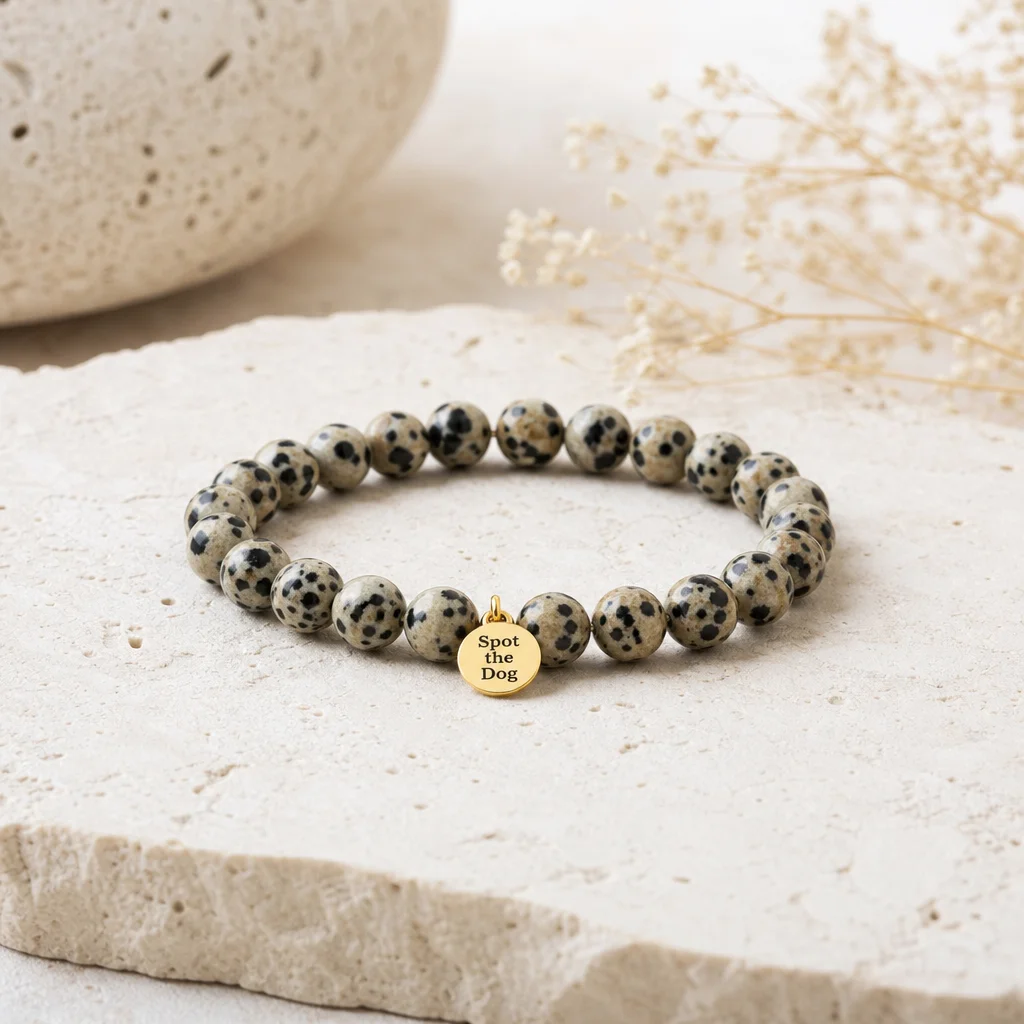
- Bracelets: Beaded Dalmatian jasper bracelets are extremely popular and practical. The stone is hard enough for daily wear as a bracelet, and the round beads showcase the spotted pattern beautifully. Most beaded bracelets use 8mm or 10mm beads on elastic cord.
- Pendants: Cabochons cut from solid material make attractive pendants. The pattern is visible from a distance, making these statement pieces.
- Earrings: Lightweight drop earrings or studs work well. The white-and-black pattern pairs easily with many wardrobe choices.
- Worry stones: The tactile surface and engaging pattern make Dalmatian jasper ideal for worry stones. Running your thumb over the smooth, spotted surface is satisfying and grounding.
For rings, Dalmatian jasper works best in protective settings (bezel or heavy prongs). While its hardness is adequate, the opaque nature means that any chip or scratch will be visible against the lighter background.
How to Identify Genuine Dalmatian Jasper
The distinctive pattern makes Dalmatian jasper one of the easier stones to identify by sight. However, there are a few things to watch for:
- Painted or dyed material: Some lower-quality chalcedony is dyed to create a spotted pattern. Genuine Dalmatian jasper has inclusions that are embedded within the stone—you can feel slight texture differences on the spots if you examine the surface closely. Dyed spots are typically uniform in color and feel identical to the surrounding surface.
- Reconstituted material: Crushed stone mixed with resin and pressed into shapes. Look for uniform spot distribution and lack of natural variation. Genuine material has random, irregular patterns.
- Similar stones: Some forms of rhyolite or volcanic glass can have spotted patterns. These are different minerals with different properties and should not be sold as Dalmatian jasper.
A simple scratch test can help verify quartz composition: a steel knife (hardness 5.5) should not scratch genuine Dalmatian jasper. If the stone scratches easily, it is likely a softer material painted to imitate the pattern.
Care and Maintenance
Dalmatian jasper requires standard quartz care:
- Clean with warm water and mild soap. Dry with a soft cloth.
- Avoid ultrasonic cleaners—the tourmaline inclusions could create stress points that vibration exploits.
- Avoid prolonged exposure to direct sunlight, which can cause very slight fading in the cream base over years (minimal but cumulative).
- Store in a soft pouch or fabric-lined box to prevent scratching against harder gems.
- Beaded bracelets can be cleaned by wiping with a damp cloth. Avoid pulling on the elastic cord, which weakens over time.
Dalmatian Jasper vs. Leopard Jasper vs. Zebra Stone
Several spotted stones exist in the market, and the names can be confusing:
- Dalmatian jasper: Cream/white base with black spots. Mexican origin. Quartz-based with tourmaline inclusions.
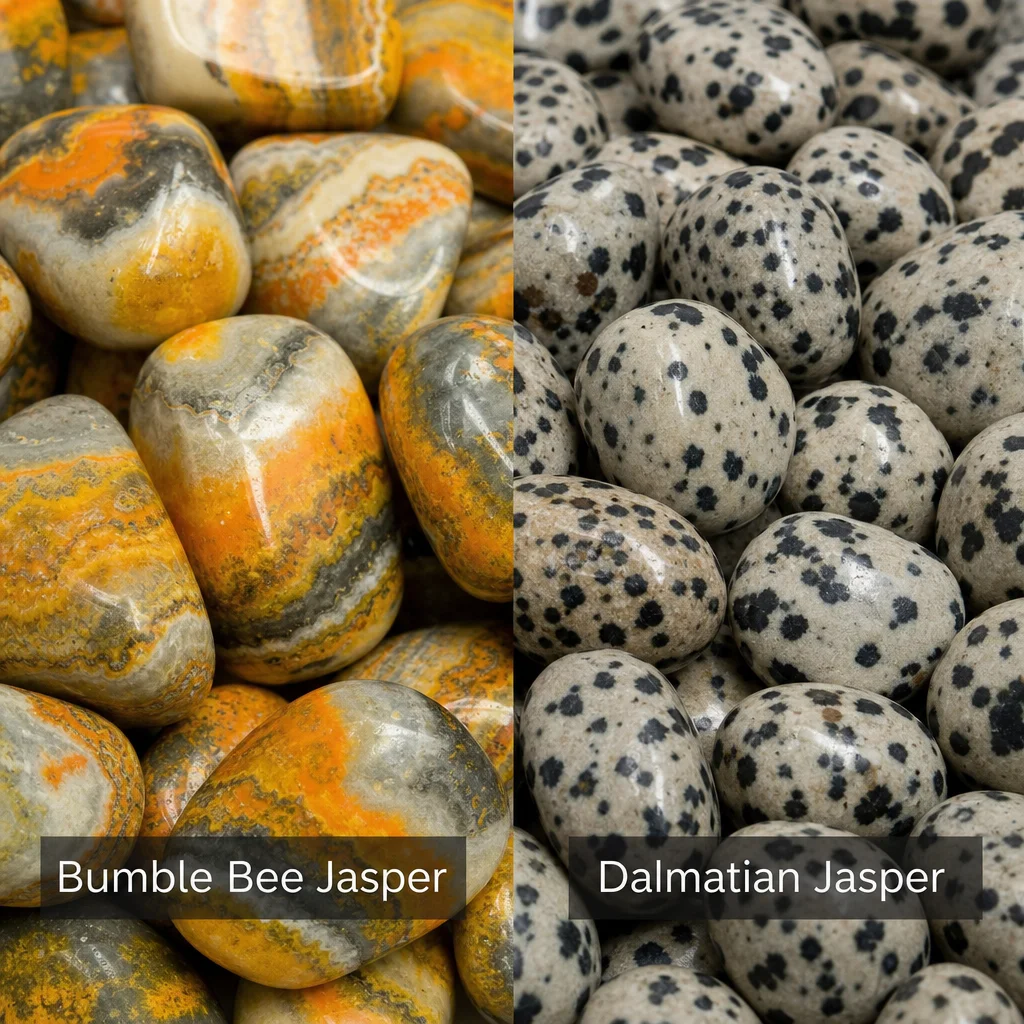
- Leopard jasper (also called leopard skin jasper): Usually brown or reddish-brown base with darker spots or "rosettes" resembling leopard print. Different mineral composition from Dalmatian jasper.
- Zebra stone: Usually black-and-white striped (not spotted) material. Different formation process and visual pattern entirely.
The color of the base matrix and the shape of the markings are the key distinguishing features. Dalmatian jasper is always cream or white with round to irregular black spots on a light background.
Frequently Asked Questions
Is Dalmatian jasper expensive?
No. It is one of the most affordable ornamental stones. A 8mm beaded bracelet typically costs $5-15. Cabochons for pendants run $3-10 each. Tumbled stones sell for $1-3.
Can Dalmatian jasper go in water?
Yes. As a quartz-based stone with hardness 6-7, it is safe for brief water exposure. Avoid salt water for prolonged periods, which can affect the tourmaline inclusions over time.
Does the black tourmaline in Dalmatian jasper provide any benefit?
In crystal traditions, tourmaline is associated with protection and grounding. However, the tourmaline in Dalmatian jasper exists as microscopic inclusions, not as a significant percentage of the stone's mass. Any perceived benefit is more likely from the visual and tactile experience of using the stone rather than from the tourmaline itself.
Why are some pieces more spotted than others?
The density and size of spots depend on the local conditions during formation—specifically, the concentration and distribution of tourmaline minerals in the silica solution at that particular location. Natural variation is the norm, and both sparsely and densely spotted pieces come from the same deposits.
What Is Dalmatian Jasper?
Dalmatian Jasper is a unique and visually striking type of chalcedony that has garnered significant attention in the world of gemstones and decorative stones. It is characterized by its distinct spotted appearance, which gives it a look reminiscent of the famous spotted coat of the Dalmatian dog. This stone is formed through the combination of quartz and chalcedony, which create its vibrant patterns of white and black or grey spots. Dalmatian Jasper is often found in deposits in countries like the United States, Australia, and China. The stone is highly sought after for its aesthetic appeal, and it has become a popular choice for use in jewelry, home decor, and as a collectible. Its patterns are random, which adds to its allure, making each piece one-of-a-kind. The white and black spots can vary in size, with some stones displaying more spots than others. The contrast between the white and the black or grey hues is what truly makes Dalmatian Jasper stand out.Formation and Composition
Dalmatian Jasper is a form of chalcedony, which is a variety of quartz. The spots within the stone are thought to form when iron oxide is trapped within the quartz as it is being deposited. The color variations arise from the amount of iron present and how it interacts with the quartz. The black or grey spots are usually a result of hematite or magnetite, while the white areas are primarily composed of quartz. This stone is often found in veins or nodules, which are formed when water carries the dissolved quartz and chalcedony deposits, later hardening to create the distinct patterns we see in Dalmatian Jasper. The geological process that leads to the formation of Dalmatian Jasper is complex and can take millions of years.Properties and Uses
Dalmatian Jasper is known for its hardness, which is on par with quartz, making it durable and suitable for a variety of applications. Its physical properties make it ideal for jewelry making, where it can be crafted into beads, pendants, and rings. Additionally, it is frequently used in decorative arts and crafts due to its vibrant color and unique patterns. In addition to its aesthetic value, Dalmatian Jasper is believed to possess certain metaphysical properties. Many people who work with this stone believe it brings balance, stability, and a sense of fun. It is thought to encourage laughter and playfulness, which can be particularly beneficial for those who feel stressed or overwhelmed.Care and Cleaning
Caring for Dalmatian Jasper is relatively straightforward. The stone is quite resilient and can be cleaned using mild soap and water. It is best to avoid using harsh chemicals or abrasive materials that could scratch the surface. If used in jewelry, it is advisable to store Dalmatian Jasper away from other jewelry pieces to prevent scratching or chipping.Frequently Asked Questions
Question 1:
Is Dalmatian Jasper a good choice for jewelry?
Yes, Dalmatian Jasper is an excellent choice for jewelry due to its hardness and durability. It is resistant to scratches and can maintain its luster with regular cleaning.
Question 2:
How do you care for Dalmatian Jasper jewelry?
Care for Dalmatian Jasper jewelry involves regular cleaning with mild soap and water, avoiding harsh chemicals or abrasive materials. It is also advisable to store it separately from other jewelry pieces to prevent scratching.
Frequently Asked Questions
Is Dalmatian jasper a real jasper?
Despite its name, Dalmatian jasper is not a true jasper. It is actually an igneous rock primarily made of feldspar and quartz, featuring black tourmaline spots. However, it is grouped with jaspers in the gemstone world due to its similar texture and how beautifully it polishes. This unique natural makeup gives our artisan handcrafted jewelry a striking spotted look, making every stone uniquely one-of-a-kind.
Comments