Vesuvianite (Idocrase): The Green Crystal of ...
June 5, 2026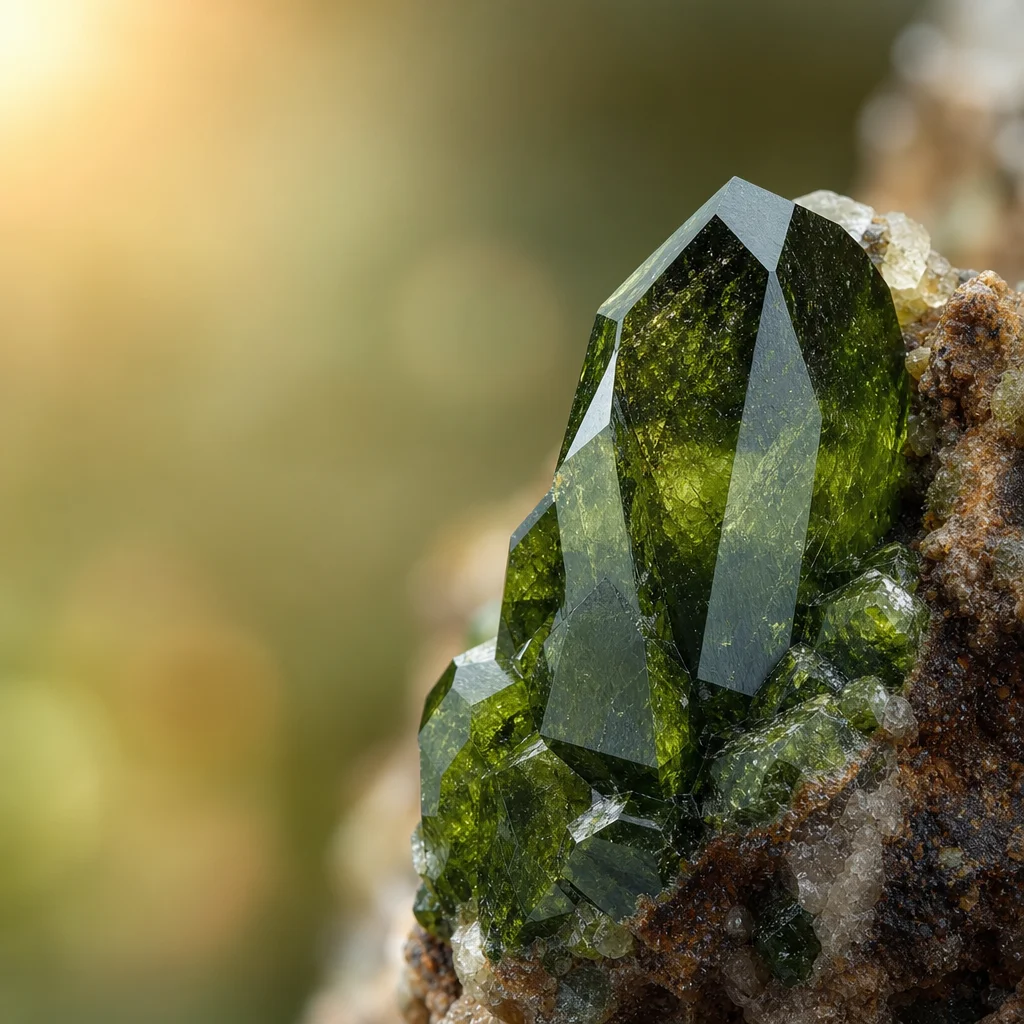
What Is Vesuvianite? A Volcanic-Born Mineral
Vesuvianite is a calcium aluminum sorosilicate mineral with the complex chemical formula Ca₁₀(Mg,Fe)₂Al₄(SiO₄)₅(Si₂O₇)₂(OH,F)₄. It was first identified in 1795 by the German mineralogist Abraham Gottlob Werner, who named it after Mount Vesuvius in Italy — the volcano where it was discovered in the ejected volcanic material. The name "idocrase," from the Greek words eidos (form) and krasis (mixture), refers to the mineral's mixed crystal forms and is still commonly used, particularly in older mineralogical literature and among European collectors.
The connection to Vesuvius is fitting. Vesuvianite typically forms in metamorphic rocks that have been altered by contact with hot, silica-rich fluids — conditions that are common in volcanic regions and in skarn deposits where limestone meets igneous intrusions. The mineral can also form in high-pressure metamorphic environments. Its formation conditions give vesuvianite its distinctive characteristics: complex crystal structures, a range of colors, and associations with other calcium-rich minerals.
Physical Properties and Identification
Vesuvianite has a hardness of 6.5 to 7 on the Mohs scale, making it moderately durable — hard enough to survive in a mineral collection and to be cut into cabochons for occasional wear, but not tough enough for everyday ring use without protective settings. Its specific gravity ranges from 3.3 to 3.5, noticeably heavier than quartz but lighter than most garnets.
The crystal system is tetragonal, and vesuvianite frequently forms striking prismatic crystals with a distinctive pyramidal termination. What makes vesuvianite particularly interesting to collectors is its tendency to form skeletal crystals — partially formed crystals where the internal structure is visible as a lattice of intersecting ridges and hollow spaces. These skeletal forms occur when the crystal grows rapidly under conditions of supersaturation, and they give vesuvianite specimens a distinctive architectural quality that is unlike almost any other mineral.
Some vesuvianite crystals display a columnar or even acicular (needle-like) habit, while others form equant, blocky crystals. This variety of crystal forms is one of the reasons the mineral received the name "idocrase" — it genuinely does display a remarkable mixture of forms.
Color Varieties of Vesuvianite
While green is the most common and well-known color, vesuvianite occurs in a surprisingly wide range of hues:
Green vesuvianite is the classic variety and the one most collectors encounter. The green ranges from a pale celery shade through rich grass green to a deep forest green. The color comes from trace amounts of iron and chromium in the crystal structure. Fine green vesuvianite from the Jeffrey Mine in Quebec, Canada, is among the most sought-after by collectors.
Brown vesuvianite occurs at many localities and is the most common form overall. It ranges from a warm amber-brown to nearly black. Brown specimens are often the largest crystal forms found at skarn deposits.
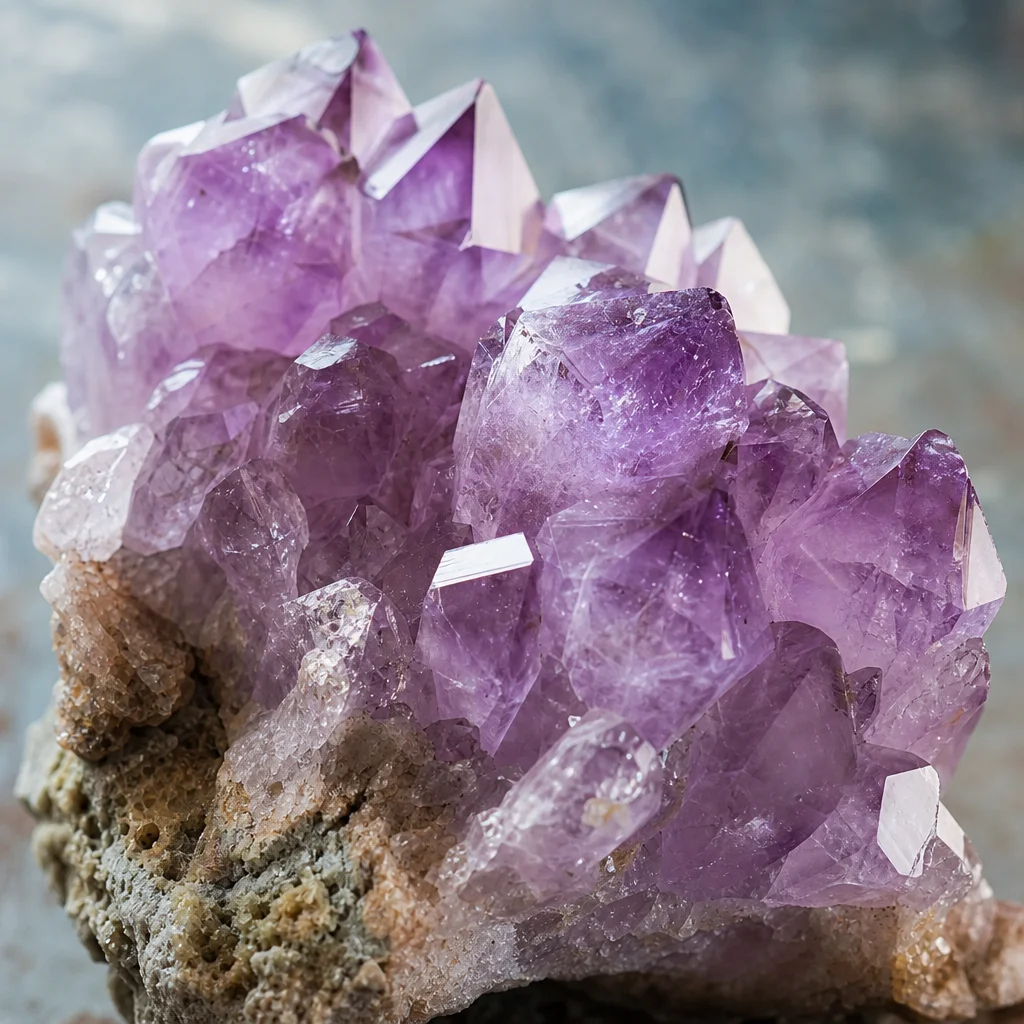
Purple and violet vesuvianite is considerably rarer and commands premium prices among collectors. The best examples come from the Palabora mine in South Africa, where distinct violet crystals have been found embedded in carbonatite matrix. Manganese is responsible for the purple coloration. A related variety called "manganovesuvianite" is almost exclusively purple.
Blue vesuvianite is extremely rare, known from only a handful of localities. When found, the blue is typically a pale, grayish-blue rather than a vivid sapphire shade. The Willow Creek deposit in California has produced some of the finest blue specimens.
Yellow vesuvianite occurs occasionally, usually as a pale yellow-green that grades into the green range. The famous Wilui River deposit in Siberia has produced both yellow and green specimens.
How to Distinguish Vesuvianite from Similar Minerals
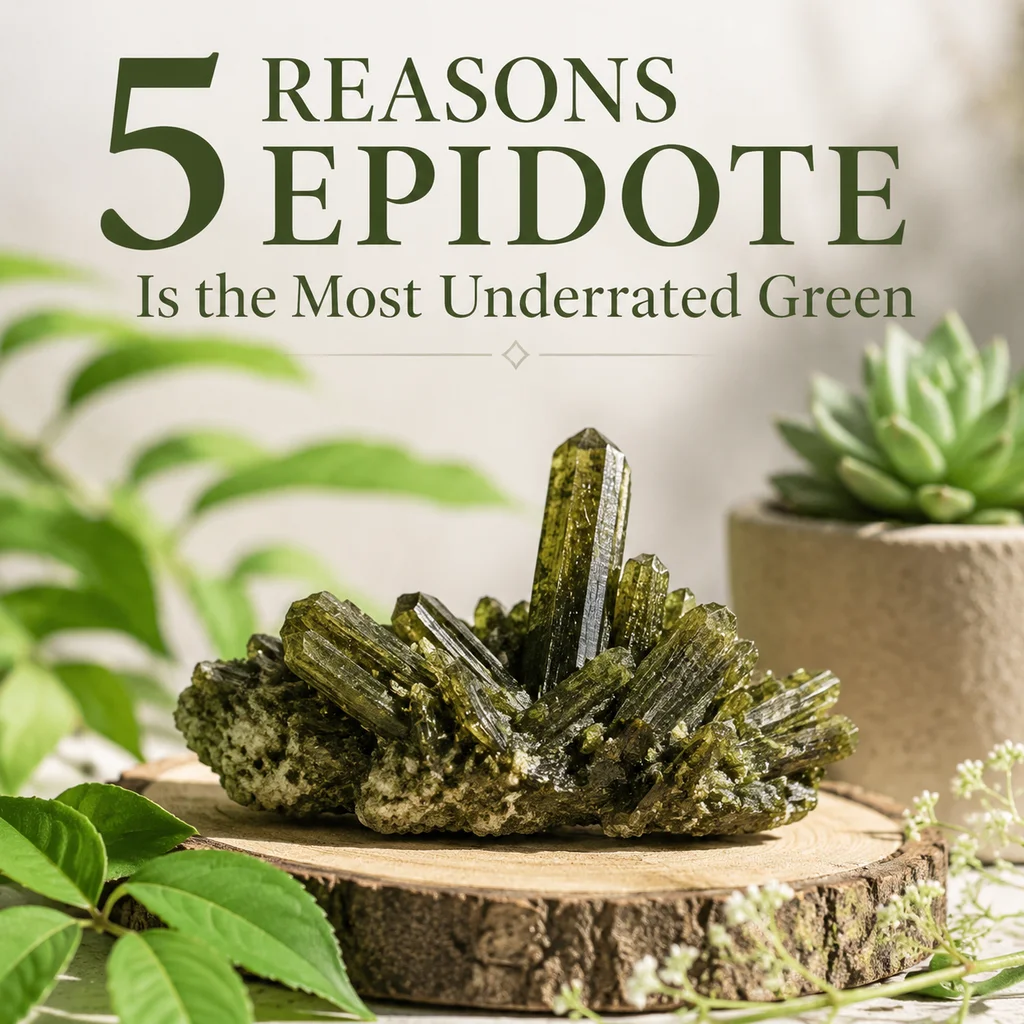
One of the most common identification challenges with vesuvianite is distinguishing it from epidote, because the two minerals frequently occur together in the same deposits and can look remarkably similar. Both form dark green to brownish-green prismatic crystals, and both are calcium-rich sorosilicates.
The most reliable visual distinction is the crystal habit. Vesuvianite typically forms thicker, more equant prisms with well-developed pyramid terminations, while epidote tends toward slender, elongated crystals with a characteristic striated surface. Under good lighting, vesuvianite has a resinous to vitreous luster, whereas epidote is more distinctly vitreous and sometimes slightly pearly on cleavage surfaces.
Diopside is another mineral that can be confused with green vesuvianite. Diopside tends to be paler green and forms shorter, more blocky crystals. A simple hardness test helps: diopside scores 5-6 on the Mohs scale, while vesuvianite is 6.5-7 — a steel knife will scratch diopside more readily than vesuvianite.
Tourmaline can occasionally resemble vesuvianite when both occur in similar green shades, but tourmaline's triangular cross-section and striated prisms are distinctive. Grossular garnet (in its green tsavorite or hessonite forms) can look similar in hand specimen but is typically more equant and lacks the prismatic crystal habit.
Notable Localities and Mining Areas
Vesuvianite has been found on every continent, but certain localities have produced exceptional specimens that define the mineral for collectors:
Mount Vesuvius and Somma, Italy — The type locality and historically the most significant source. Fine green and brown crystals have been collected from the volcanic ejecta for over 200 years. While active collecting at the volcano is now restricted, historical Italian specimens remain among the most valued.
Jeffrey Mine, Asbestos, Quebec, Canada — Arguably the finest source of gem-quality green vesuvianite in the world. The Jeffrey Mine produced stunning emerald-green crystals, some transparent enough to cut into gemstones, embedded in a serpentine matrix. The mine closed as an asbestos operation but its vesuvianite specimens remain highly prized.
Wilui River, Sakha Republic, Siberia — A classic Russian locality that has produced large, well-formed crystals in both green and yellow-green colors since the 19th century. Siberian vesuvianite specimens are frequently seen in major museum collections.
Palabora Mine, Limpopo, South Africa — The premier source of purple and violet vesuvianite. The carbonatite complex at Palabora also produces unusual vesuvianite varieties with rare earth element substitutions.
Val Malenco, Lombardy, Italy — Alpine metamorphic deposits in this region have produced fine vesuvianite crystals in association with diopside, clinochlore, and other metamorphic minerals.
Eden Mills, Vermont, USA — A classic American locality known for green vesuvianite crystals in a talc matrix. While smaller than the Quebec and Siberian specimens, Vermont vesuvianite has been collected since the 19th century and remains popular with local collectors.
Vesuvianite in Crystal Collections
For mineral collectors, vesuvianite offers several attractive qualities. Its range of colors means a dedicated collection could showcase green, brown, purple, yellow, and even rare blue specimens. The skeletal crystal forms found at certain localities are genuinely unique among mineral species — they resemble tiny, intricate architectural models and display beautifully under good lighting.
Vesuvianite is moderately priced for common brown and green specimens, making it accessible for beginning collectors. Fine transparent green material from the Jeffrey Mine and purple specimens from Palabora command premium prices but remain within reach of serious collectors. The mineral displays well under both natural and artificial lighting, and its moderate hardness means it survives handling without the extreme care required for softer minerals like sulfur or crocoite.
When purchasing vesuvianite specimens, check for damage to the crystal terminations — the pyramidal tips are the most visually important feature and the most vulnerable to damage during collection and transport. Skeletal crystals should be intact with minimal repair. Matrix specimens with contrasting rock (white serpentine from Quebec or dark basalt from Vesuvius) often display better than loose crystals because the matrix provides visual contrast.
Care and Display
At 6.5-7 hardness, vesuvianite requires no special precautions beyond basic mineral care. It can be cleaned with lukewarm water and a soft brush. Avoid harsh chemicals and ultrasonic cleaners — not because vesuvianite is particularly fragile, but because these are unnecessary for mineral specimens and can damage matrix material attached to the crystals. Store specimens away from harder minerals to prevent surface scratching. Display in a cabinet away from prolonged direct sunlight, which can fade the color of some vesuvianite varieties over decades.
Vesuvianite is a mineral that rewards close examination. A hand lens or low-power microscope reveals details invisible to the naked eye: the intricate step patterns on crystal faces, the tiny inclusions of other minerals, and in skeletal specimens, the fascinating internal lattice structure. It is a mineral that bridges geology and aesthetics — scientifically interesting and visually compelling in equal measure.
Frequently Asked Questions
What is the difference between vesuvianite and idocrase?
Vesuvianite and idocrase are actually the same mineral, known by two different names. The name "vesuvianite" comes from its discovery in the volcanic area of Vesuvius in Italy, while "idocrase" is a more general term used in mineralogy.
How can I tell if vesuvianite is real?
Real vesuvianite is typically a vibrant green color, ranging from pale to deep forest green. It often has a glassy luster and may contain inclusions or veins. To ensure its authenticity, consider purchasing from a reputable source and look for a certificate of authenticity if available.
Can vesuvianite be used in jewelry?
Yes, vesuvianite can be used in jewelry. However, due to its relatively soft nature (with a hardness of 6.5 on the Mohs scale), it's best used in pieces that are not subject to frequent friction or impact. It's often used in pendants, earrings, and rings with protective settings.
Is vesuvianite rare?
Vesuvianite is not as rare as some other crystals, but it is not as common as quartz or amethyst. It can be found in various locations around the world, but high-quality specimens with vibrant color and clarity are still quite sought after.
How to Choose Quality Vesuvianite (Idocrase)
When shopping for vesuvianite, here are some tips to help you choose the best quality:
- Color: Look for a vibrant, even green color. Avoid stones with brown or gray hues, as these may indicate lower quality.
- Clarity: Choose vesuvianite with minimal inclusions or imperfections. A clear stone will reflect more light and have a higher value.
- Shape and Size: Well-cut stones with good proportions are more desirable. Avoid stones that are too small or oddly shaped.
- Origin: While vesuvianite can be found in various locations, some regions are known for producing particularly high-quality specimens. Consider the origin if you're looking for the best quality.
Care and Maintenance
Here are some tips for caring for your vesuvianite:
- Avoid Heat: Vesuvianite is sensitive to heat and can become discolored or cracked if exposed to high temperatures.
- Keep Clean: Use a soft cloth to wipe down your vesuvianite jewelry. Avoid using harsh chemicals or abrasive cleaners.
- Storage: Store your vesuvianite in a cool, dry place away from direct sunlight. A soft cloth or a protective case can help prevent scratches and damage.
- Regular Check-ups: Periodically inspect your vesuvianite for any signs of wear or damage. This will help you address any issues promptly.
Similar Stones You Might Like
If you enjoy the unique beauty of vesuvianite, you might also appreciate these related crystals:
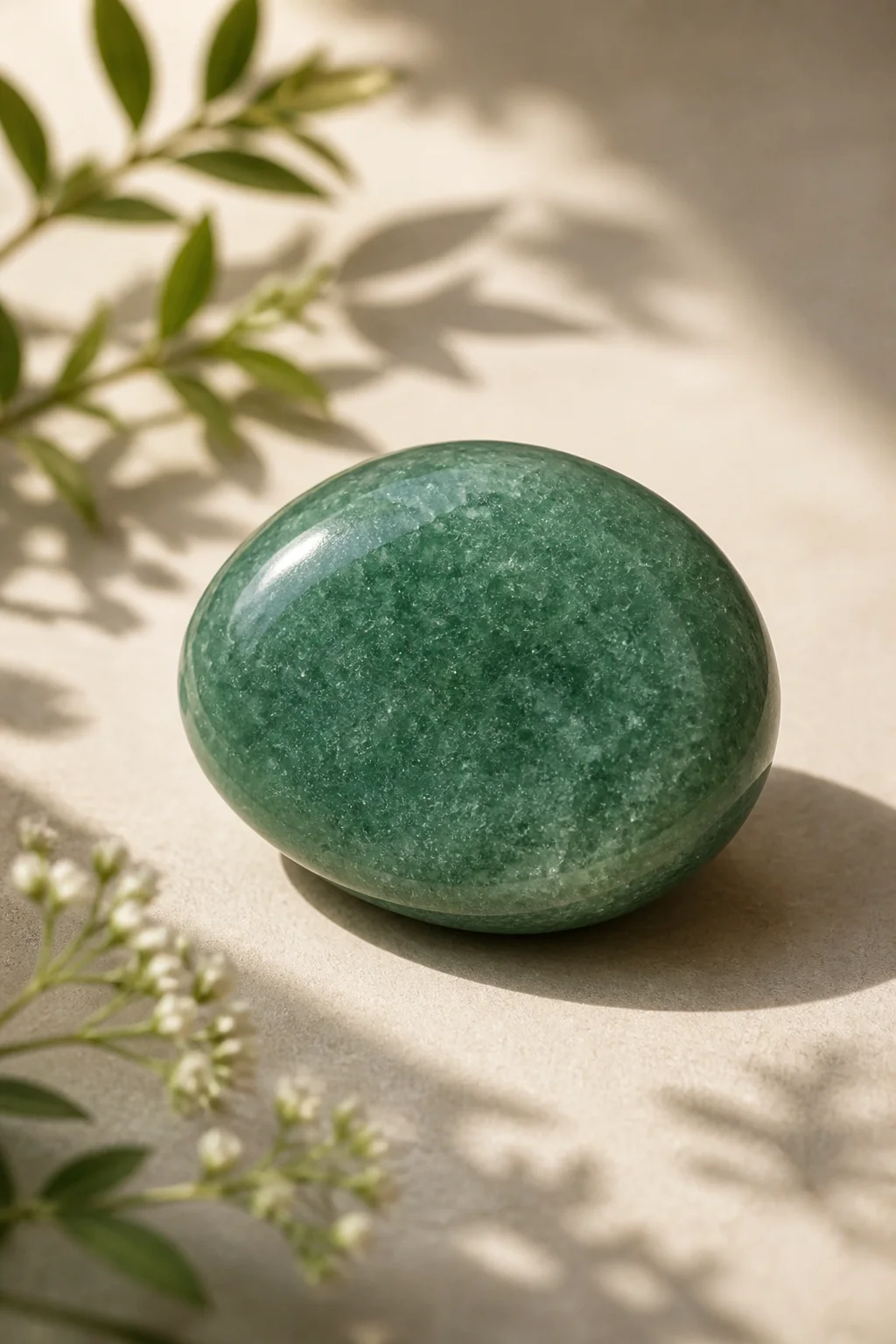
- Green Aventurine: Known for its chatoyant appearance, green aventurine is a popular stone for its calming and protective properties.
- Malachite: A vibrant green stone with a unique fibrous texture, malachite is often used for its metaphysical and healing properties.
- Chrysocolla: With its soft blue-green color, chrysocolla is often associated with emotional healing and balance.
- Praseodymium Garnet: This gemstone has a striking green color and is known for its durability and beauty.
Frequently Asked Questions
What are the healing properties and benefits of vesuvianite?
Vesuvianite is highly cherished in crystal healing for its ability to align the heart and solar plexus chakras. Wearing a handcrafted vesuvianite piece from SagStone is believed to encourage emotional growth, release negative thought patterns, and boost self-confidence. It is an excellent companion for those seeking to transform their ambitions into reality while staying grounded and calm.

Comments