Sterling Silver Tarnished in 2 Weeks
May 16, 2026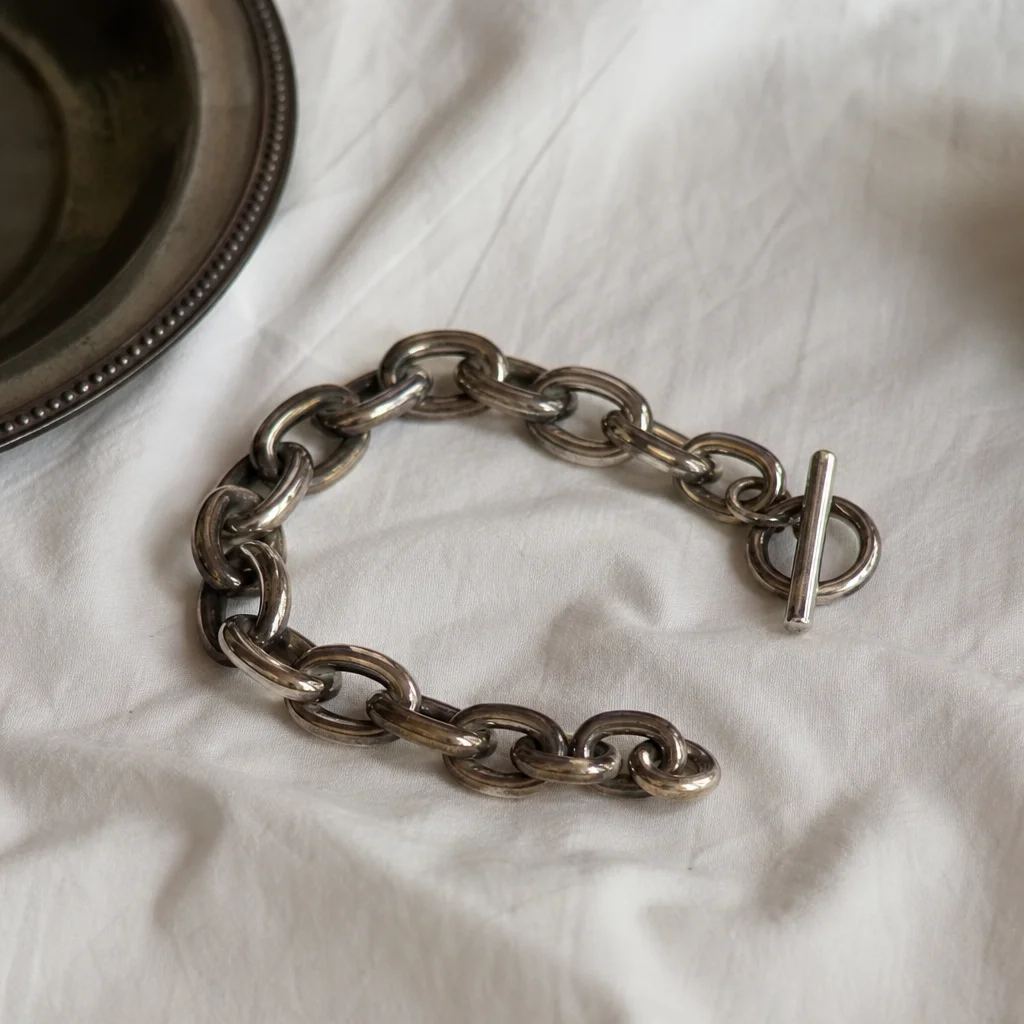
My Grandmother's Necklace Turned Black in Two Weeks
My grandmother left me her sterling silver necklace when she passed. A simple chain with a small pendant — nothing flashy, but it meant everything. I wore it to her funeral, came home, put it in my jewelry box on the dresser. Two weeks later, I opened the box to wear it again and the chain was covered in a dull gray-black film. The pendant looked like it had been dragged through mud.
I was furious. This was the only thing I had from her, and my jewelry box had ruined it in 14 days. I grabbed some silver polish, spent 20 minutes rubbing the chain back to shine, and started googling. What I found was old wives' tales, contradictory advice, and product pitches disguised as articles.
"Store it in a plastic bag!" one site said. "Never use plastic!" said another. "Chalk absorbs moisture!" claimed a 2011 forum post. "Silica gel packets work miracles!" insisted a TikTok with 2 million views. Nobody had actually tested any of this stuff. It was all just repeated advice passed around without evidence.
So I ran my own experiment. I bought six identical sterling silver chains — 18-inch box chains from a local jeweler, $18 each — and stored them six different ways in the same bathroom where my grandmother's necklace had tarnished. I checked them every week for 60 days, photographed them, and rated tarnish on a 1-5 scale. I spent more time thinking about silver storage than any reasonable person should.
Spoiler: the method that costs $4 total beat the $65 "tarnish-proof" jewelry box by a mile. If you've ever opened your jewelry box to find your favorite piece discolored and dull, keep reading.
Why Sterling Silver Tarnishes (And Why It Happens Fast)
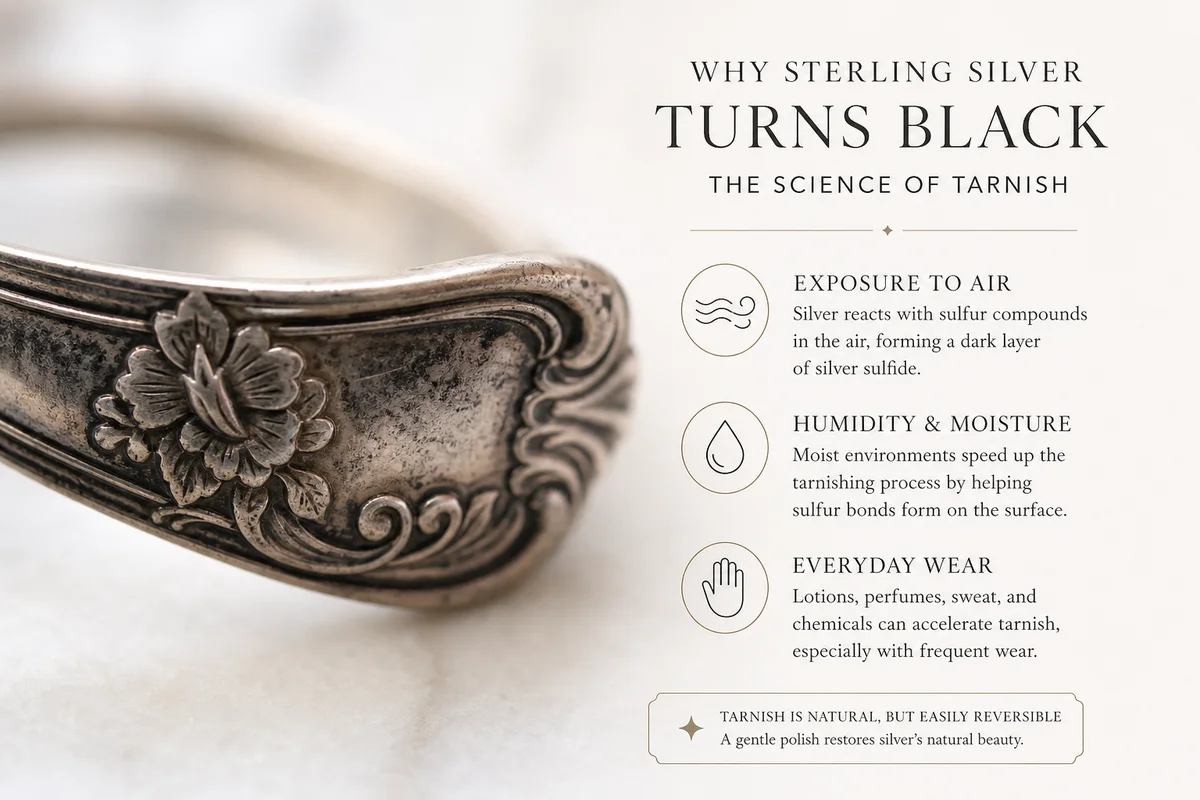
Sterling silver is 92.5% silver and 7.5% copper. The copper adds strength — pure silver is too soft for jewelry. But it's also the weak link. When silver reacts with sulfur in the air, it forms silver sulfide — that black coating on tarnished jewelry. The reaction is straightforward: silver + sulfur = silver sulfide.
Sulfur is everywhere. Indoor air contains trace hydrogen sulfide, and it's worse near cities, roads, and industrial areas. Even clean rural homes have enough to start tarnishing. You can't escape it — sulfur compounds are part of the air we breathe.
Humidity is the accelerator. Moisture speeds up the silver-sulfur reaction dramatically. That's why bathroom-stored jewelry tarnishes fastest — and why jewelry kept in dry, air-conditioned rooms lasts longer. My test bathroom averaged 55-70% humidity, typical for a bathroom without an exhaust fan. Compare that to my living room at 35-40% — that difference alone can double or triple the tarnish rate.
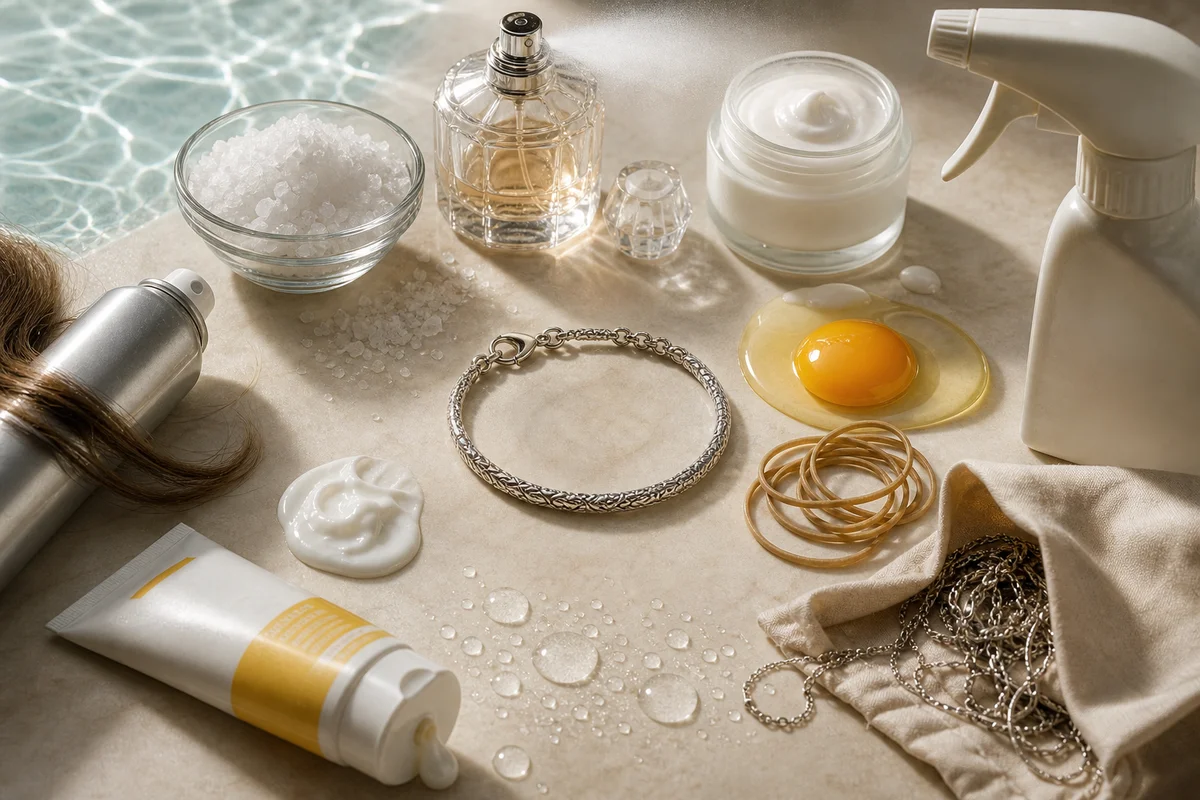
Other culprits: rubber (never store silver near rubber bands), wool, latex, skin oils, perfumes, lotions, and cleaning products. Even eggs and onions release sulfur compounds. For more on silver composition, see our guide to sterling silver vs fine silver.
My 60-Day Storage Test Setup
The chains: Six identical 18-inch sterling silver box chains, $18 each from the same jeweler. I polished all six before starting so they began in identical condition.
The location: My main bathroom — no exhaust fan, steamy after every shower. All six setups on the same shelf, 3 feet from the shower. Temperature: 65-78°F. Humidity: 55-70%. A harsh environment, exactly what ruined my grandmother's necklace.
The six methods:
- Method 1: Loose in a standard ziplock plastic bag (the cheap kind from the grocery store)
- Method 2: Inside a typical felt-lined jewelry box with a hinged lid (a $28 box from Target)
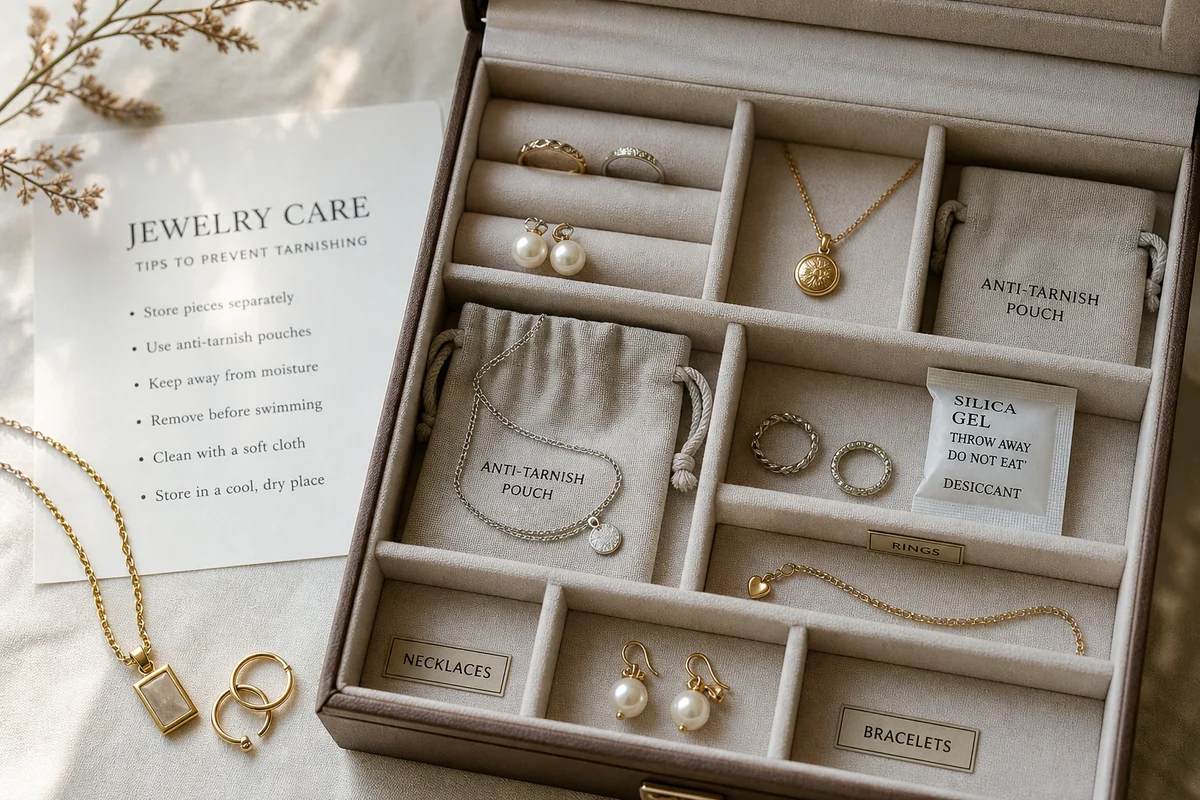
- Method 3: In an anti-tarnish cloth bag (a $7 bag from Amazon, infused with tarnish-inhibiting chemicals)
- Method 4: Loose in a small container with two pieces of blackboard chalk (the calcium carbonate kind, $2 for a box)
- Method 5: In a ziplock bag with three silica gel packets (salvaged from shoe boxes and vitamin bottles, so free)
- Method 6: In an airtight plastic container with two anti-tarnish strips (the container was $3 from a discount store, the strips were $4 for a pack of 10 on Amazon)
The check-ins: Every Sunday for 60 days, I examined each chain under the same desk lamp and rated tarnish from 1 (perfect shine) to 5 (heavy black coating), then photographed and returned them without polishing.
Results: Ranked From Worst to Best
6th Place — Plastic Bag (The Worst)
By week one, faint yellowing appeared on the chain links closest to the bag's seal. By week three, the entire chain had a noticeable gray tint. By day 45, it scored 4 out of 5 — firmly in "embarrassing to wear" territory.
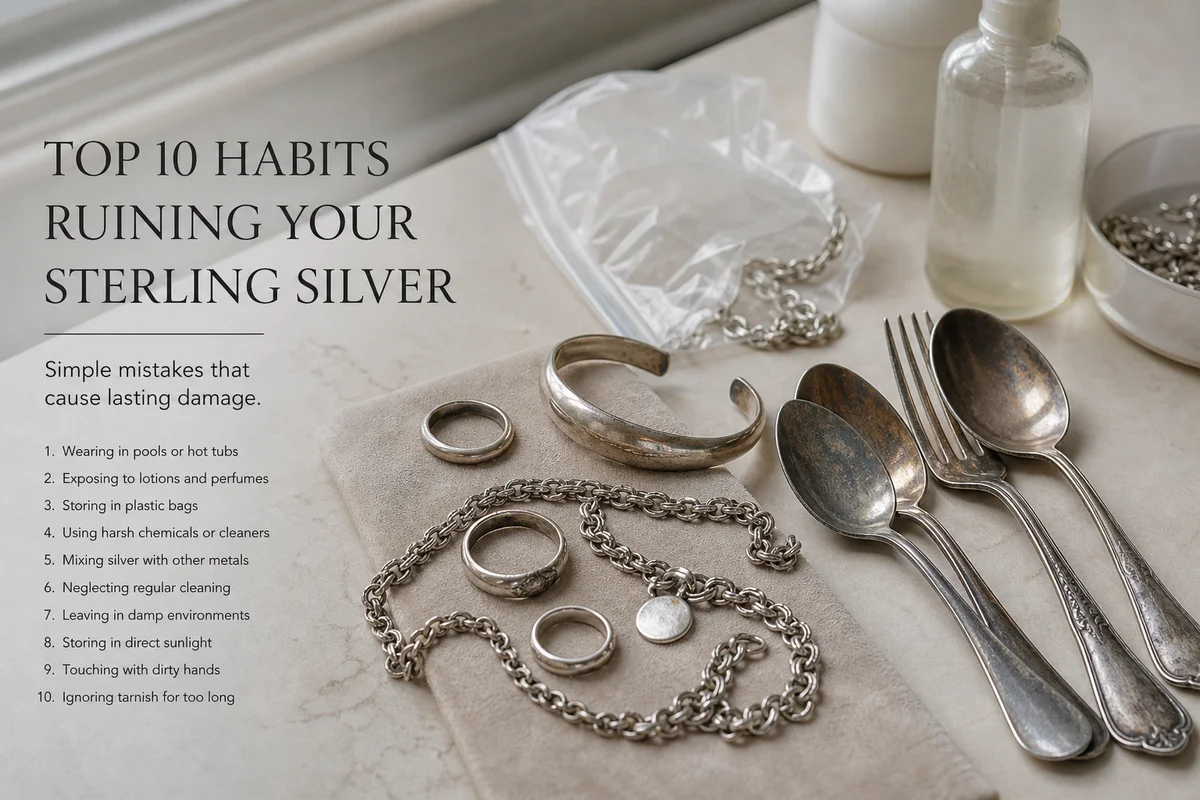
The problem: plastic traps whatever humid air is inside when you seal it. In a steamy bathroom, you're locking damp, sulfur-laden air right against your silver. The plastic doesn't breathe and doesn't absorb anything. You're creating a tiny greenhouse for tarnish. I've seen this method recommended on dozens of blogs, and I genuinely wonder if anyone who recommends it has actually tested it. Cost: $0.02. Effectiveness: worthless. Do not store sterling silver in plain plastic bags.
5th Place — Jewelry Box
The $28 felt-lined jewelry box from Target looked nice on the shelf, but did a lousy job. Tarnish appeared by day 10 — slightly later than the plastic bag, but not by much. By week four, consistent gray dullness across every link. Day 60 score: 3.5 out of 5.
Felt-lined jewelry boxes are the default storage most people use, which explains why most silver tarnishes. The felt doesn't absorb moisture, the box isn't airtight, and sulfur drifts through the gap between lid and base. The rubber feet on the bottom accelerate tarnishing further. The box looks pretty — that's about all it has going for it. For better options, see our jewelry organization guide.
4th Place — Anti-Tarnish Cloth Bag
The $7 anti-tarnish cloth bag — fabric treated with sulfur-absorbing chemicals — kept the chain cleaner than the first two methods for three weeks. Then it lost ground. By week four, light tarnish appeared near the bag's seams where the fabric was folded double. By day 50: 2.5 out of 5.
The bag breathes (less trapped moisture) but that also means airborne sulfur still reaches the silver. The chemical treatment has limited capacity — it can only absorb so much sulfur before saturating. Most manufacturers say replace every 6-12 months. Based on my results, 6 months is the realistic limit in a humid environment. In a dry climate, you might get away with a year. For more protection tips, see our article on cleaning sterling silver necklaces.
3rd Place — Chalk Method
The idea: blackboard chalk absorbs moisture, creating a drier micro-environment. I put two pieces in a small container with the chain draped over them.
Surprisingly effective for five weeks. The chain stayed shiny through week three, showed faint yellowing by week four, and didn't develop visible gray tarnish until day 38. Final score: 2 out of 5 — better than the cloth bag.
Downsides: chalk crumbles and leaves white dust. By week seven, the pieces felt damp and spent. You'd need to swap them every 4-6 weeks. Cost: $2 for a box. See our household jewelry cleaning guide for more DIY solutions.
2nd Place — Silica Gel Packets
Three silica gel packets sealed in a ziplock bag with the chain, air squeezed out. Through week six, the chain looked nearly new. By week eight, light tarnish appeared on the clasp (highest copper content). Score: 1.5 out of 5.
The key: silica gel doesn't block sulfur, but by removing moisture it dramatically slows the reaction. A dry pocket of air is hostile to tarnish chemistry.
Packets lose effectiveness when saturated. Recharge by baking at 200°F for 2 hours, or just use new ones. Cost: $0 if you save them from packaging, or $6 for a 50-pack on Amazon. For more care tips, see our complete sterling silver care guide.
1st Place — Airtight Container + Anti-Tarnish Strips (The Winner)
A $3 airtight container with two $0.40 anti-tarnish strips. After 60 days in a steamy bathroom, the chain looked practically brand new — score: 1 out of 5. I could detect the faintest warm tone next to a fresh chain, but on its own, you'd never know.
Why it works: the airtight container blocks new humid air, and the strips actively capture sulfur trapped inside. Barrier plus absorber.
Strips last 6 months. A pack of 10 costs $4 on Amazon — about $0.80/year. The container lasts forever. Grand total: under $4 setup, less than $1/year to maintain. Compare that to the $28 jewelry box that tarnished my chain in 10 days. For more on silver types, see our guide to different types of silver jewelry.
The One Thing That Matters More Than Storage
After the 60-day test, I started wearing one chain daily — showering, sleeping, putting lotion on, everything. After two weeks of daily wear, it had less tarnish than the chain sitting in the jewelry box for the same period. I wasn't expecting that.
The reason: friction. Your skin and clothing constantly rub against worn silver, wiping away the early silver sulfide layer before it can build up into visible tarnish. Your body is basically a slow-motion polishing cloth. It's the same reason well-worn silverware often looks better than silverware that sits in a drawer for years.
Caveats: chlorine from pools and hot tubs damages silver. Heavy sweat during workouts accelerates tarnish and corrosion. Always take off silver before applying perfume, lotion, or hairspray, and put it back on after those products have absorbed.
The principle: worn silver fares better than stored silver, as long as you're mindful. The worst thing you can do is put a piece in a damp, unsealed container and forget about it.
My routine now: wear everyday pieces regularly. Store the rest in airtight containers with anti-tarnish strips. Check monthly. That's it.
My grandmother's necklace lives in a $3 airtight container now. I take it out to wear it when I want to feel close to her. Four months later, it still shines like the day she gave it to me. The right storage doesn't have to be expensive — it just has to be smart. For tips on choosing pieces worth this level of care, see our sterling silver buying guide.
Quick Reference Chart
Here's the bottom line for all six methods, ranked by effectiveness after 60 days in a humid bathroom:
- Airtight container + anti-tarnish strips — Cost: ~$4 | Tarnish after 60 days: Minimal (1/5) | Verdict: The clear winner. Cheap, effective, low maintenance.
- Silica gel packets in sealed bag — Cost: $0-6 | Tarnish after 60 days: Light (1.5/5) | Verdict: Nearly as good, free if you save packets. Needs periodic replacement.
- Chalk in open container — Cost: ~$2 | Tarnish after 60 days: Moderate (2/5) | Verdict: Cheap and decent, but messy and needs frequent replacement.
- Anti-tarnish cloth bag — Cost: ~$7 | Tarnish after 60 days: Moderate (2.5/5) | Verdict: Better than nothing, limited lifespan, replace every 6 months.
- Felt-lined jewelry box — Cost: ~$28 | Tarnish after 60 days: Heavy (3.5/5) | Verdict: Looks nice, protects poorly. Not recommended for silver.
- Plain plastic bag — Cost: ~$0.02 | Tarnish after 60 days: Severe (4/5) | Verdict: Actively harmful. Traps moisture against your silver.
My recommendation: Go with the airtight container and anti-tarnish strips. It's the cheapest effective solution and requires almost zero effort. If you already have silica gel packets lying around, that method runs a close second and costs you nothing.
Frequently Asked Questions
Can I prevent sterling silver from tarnishing completely?
No. Tarnish is a chemical reaction between silver and airborne sulfur — you can't stop it completely. But with proper storage (airtight container + anti-tarnish strips), you can push noticeable tarnish from two weeks to six months or more. Think of it like sunscreen: not immunity, just a lot more time before problems start.
How often should I polish my sterling silver?
Only when you can see tarnish. Polishing removes a microscopic layer of silver each time, so over-polishing will wear down your jewelry over years and decades. For pieces you wear daily, a gentle wipe with a soft polishing cloth after each wear is plenty. For stored pieces, check them monthly and polish only when you see discoloration. The proper polishing technique matters — always use long, straight strokes rather than circular rubbing to minimize visible scratch marks.
Does sterling silver tarnish faster than pure silver?
Yes, significantly. The 7.5% copper in sterling silver reacts more readily with sulfur and moisture than pure silver would. Fine silver (99.9% pure) tarnishes extremely slowly — you could leave it in open air for years and barely see a change. But fine silver is too soft for most jewelry, which is why we use sterling. The tradeoff for durability is faster tarnishing. Some modern alloys like argentium silver replace some of the copper with germanium, which makes them more tarnish-resistant — worth considering if tarnishing is a constant frustration for you.
Is tarnished silver damaged permanently?
No. Tarnish is a surface-level chemical reaction, not structural damage. Even heavily tarnished silver can be restored to its original shine with proper cleaning and polishing. The black coating (silver sulfide) sits on top of the metal and can be removed. The only risk is if tarnish is left for years on a piece with fine details — the sulfide can pit the surface in those crevices, leaving tiny marks even after cleaning. So don't panic if your silver is black, but don't ignore it for a decade either. Clean it, store it properly, and it'll last generations.
Frequently Asked Questions
How should I store my sterling silver jewelry to prevent tarnish?
To keep your handcrafted sterling silver jewelry looking its best, store it in an airtight container, like a Ziploc bag or a dedicated anti-tarnish pouch. Exposure to air and moisture speeds up oxidation, which causes that dark tarnish. Keeping your SagStone crystal pieces completely sealed with an anti-tarnish strip protects the delicate silver and preserves its beautiful shine.

Comments