Spirit Quartz (Fairy Quartz): The Community Cr..
June 2, 2026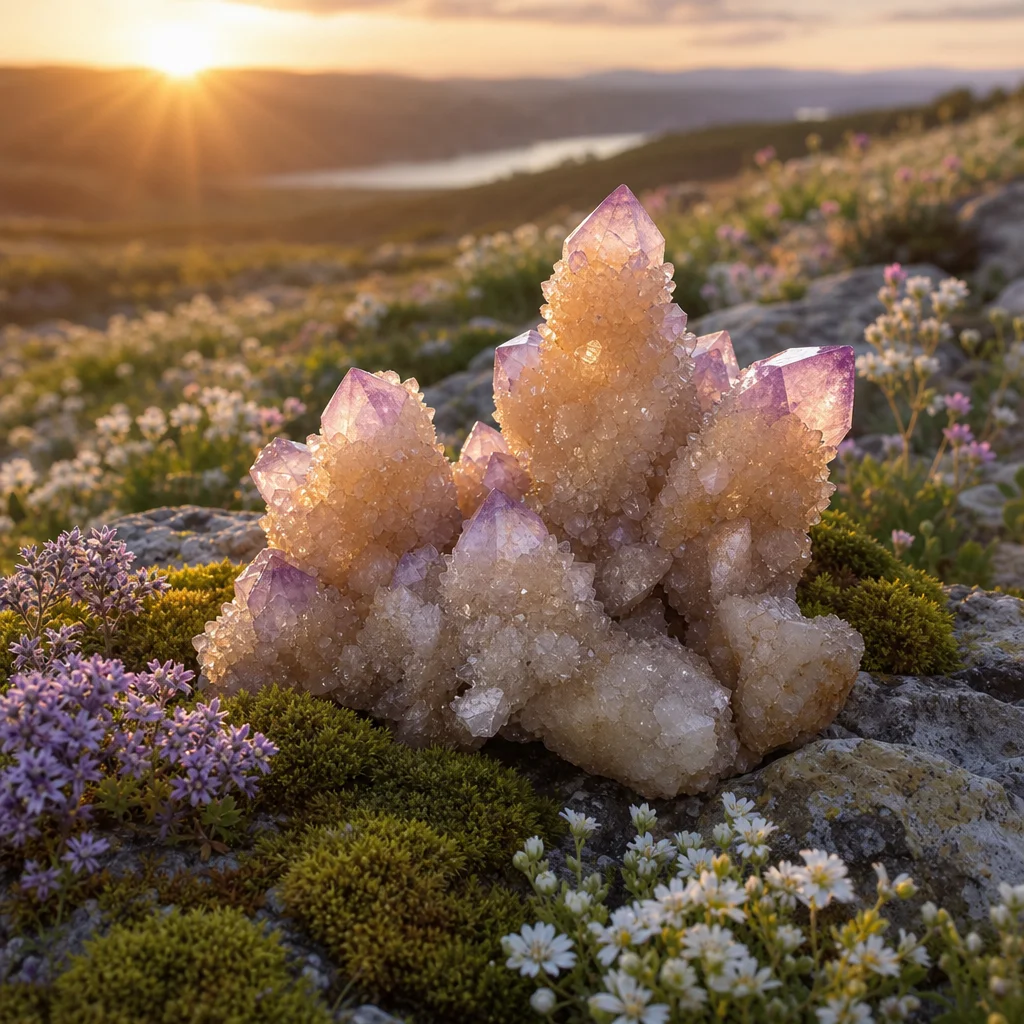
What Is Spirit Quartz?
Spirit quartz is one of those stones that stops people in their tracks. Imagine a single quartz crystal — clear, amethyst, or golden — completely covered in hundreds of tiny, sparkly crystal points radiating outward in every direction. That's spirit quartz. Each small point grew on the surface of a larger host crystal, creating a specimen that looks almost like a miniature crystal city.
This crystal goes by several names in the mineral world. "Spirit quartz" is the most common trade name, but you'll also see it called "fairy quartz," "cactus quartz," or "porcupine quartz." Each nickname captures something about its appearance — the fairy-like sparkle, the cactus-like texture, or the spiky silhouette. Regardless of what you call it, there's no mistaking this crystal once you've seen one in person.
Where Does Spirit Quartz Come From?
Every natural spirit quartz specimen on the market comes from a specific region in South Africa: the Magaliesberg Mountains in the North West Province. This area sits about 120 kilometers northwest of Johannesburg and has been a source of remarkable quartz specimens for decades.
The geological story here is interesting. Millions of years ago, hydrothermal fluids rich in silica moved through fractures in the dolomite bedrock of the Magaliesberg. Under specific conditions of temperature and pressure, these fluids deposited quartz crystals in the cavities. What makes spirit quartz unique is that the mineral-rich environment persisted long enough for secondary crystal growth to occur on the surfaces of the primary crystals.
Most spirit quartz comes from small-scale mining operations rather than large commercial mines. Miners extract specimens by hand from dolomite cavities, which limits the supply and contributes to the crystal's premium pricing. The South African government regulates these operations, but specimens still make their way to international markets through established mineral dealers.
How Spirit Quartz Forms: A Geological Process
The formation of spirit quartz is a two-stage crystallization process, and understanding it helps explain why these specimens look the way they do.
In the first stage, a normal quartz crystal grows in a cavity — this becomes the "host" or "core" crystal. It might be clear quartz, amethyst (purple from iron impurities), or citrine (yellow from heat or iron oxidation). This crystal forms the structural foundation.
In the second stage, conditions shift slightly — perhaps a change in temperature, pressure, or fluid composition. New crystal points begin nucleating on the surface of the host crystal. Instead of growing into free space, they grow outward from the existing surface, each one oriented roughly perpendicular to the host crystal's face. This secondary growth creates the characteristic drusy-like coating of tiny terminations.
The tiny points on spirit quartz are actual crystal terminations — they have the same hexagonal structure as any quartz crystal, just on a much smaller scale. Most range from 1 to 8 millimeters in length, and they typically cover the entire surface of the host except possibly the base where it was attached to the cavity wall.
Spirit Quartz vs Druzy Quartz: What's the Difference?
People often confuse spirit quartz with druzy quartz, and it's easy to see why — both feature tiny crystal points covering a surface. But there are key differences that matter for collectors and crystal enthusiasts.
Structure: Spirit quartz forms as tiny crystal points growing outward from a single host crystal. The underlying structure is always a distinct, identifiable quartz crystal. Druzy, on the other hand, forms as a carpet of micro-crystals growing on any mineral surface — agate, chalcedony, quartz, or even non-quartz minerals. Druzy doesn't require a host crystal.
Appearance: Spirit quartz has a more three-dimensional, almost sculptural quality. You can clearly see the original crystal shape beneath the tiny points. Druzy tends to be flatter and more like a sparkling surface coating — think of it as the difference between a decorated Christmas tree and glitter on paper.
Formation: Spirit quartz is specifically associated with the Magaliesberg deposits in South Africa. Druzy occurs worldwide in many different geological environments and on many different mineral substrates.
Types and Colors of Spirit Quartz
Spirit quartz comes in several distinct color varieties, each determined by trace minerals present during formation and any subsequent natural or geological heating.
Amethyst Spirit Quartz
The most sought-after variety features deep purple to lavender tones. The purple color comes from trace amounts of iron within the crystal lattice, activated by natural radiation from surrounding rocks. Amethyst spirit quartz ranges from pale lilac tips on a clear core to fully saturated purple specimens where both the host crystal and the secondary points are uniformly colored. The deeper the purple, the higher the price typically runs.
Citrine Spirit Quartz
Golden to honey-yellow specimens occur when amethyst undergoes natural heating — either from geological processes or volcanic activity in the region. The iron impurities that create purple in amethyst change their oxidation state when heated, producing warm yellow, amber, or golden tones. Some specimens show a beautiful gradient where the base is amethyst purple and the tips transition to citrine gold.
White (Clear) Spirit Quartz
Colorless to milky white specimens lack the iron impurities that color their amethyst and citrine cousins. White spirit quartz has a clean, icy appearance with excellent sparkle — the tiny clear points catch and reflect light beautifully. These are often the most affordable variety and popular with people who prefer the pure energy association of clear quartz.
Smoky Spirit Quartz
Less common but increasingly popular, smoky spirit quartz ranges from pale gray to deep chocolate brown. The color comes from natural irradiation interacting with aluminum impurities in the quartz. Smoky spirit quartz has an earthy, grounded quality that appeals to collectors looking for something beyond the typical purple or gold varieties.
Multi-Color and Bi-Color Spirit Quartz
Some specimens display dramatic color zoning — amethyst roots transitioning to citrine tips, or patches of white, purple, and gold on a single piece. These "harlequin" or "rainbow" specimens command premium prices because the color combinations are entirely natural and can't be replicated artificially.
Spirit Quartz Meaning and Symbolism
In crystal healing traditions, spirit quartz is known as the "community stone" or "harmony crystal." This reputation comes directly from its physical structure — hundreds of individual crystal points working together on a single foundation. The metaphor is obvious and compelling: many individuals united in purpose, each maintaining their unique identity while contributing to a greater whole.
The energy associated with spirit quartz is often described as gentle yet powerful, communal rather than individual. Unlike clear quartz, which is considered a universal amplifier that intensifies whatever energy you bring to it, spirit quartz is said to have its own frequency — one of cooperation, group harmony, and collective well-being.
Many people use spirit quartz in group settings — meditation circles, family gatherings, team meetings, or community events. The idea is that its energy promotes patience, mutual understanding, and the kind of empathy that makes group dynamics flow more smoothly.
In terms of chakra associations, spirit quartz aligns primarily with the Crown Chakra (Sahasrara) and the Heart Chakra (Anahata). The Crown connection relates to spiritual awareness and the sense of being connected to something larger than yourself. The Heart connection ties to the communal, loving energy the crystal is believed to carry.
How to Use Spirit Quartz
In Meditation
Place a spirit quartz specimen in front of you during meditation, or hold a smaller piece in your hand. The multiple terminations are thought to radiate energy in all directions, creating a sphere of influence that can fill a meditation space. Some practitioners prefer spirit quartz over single-point crystals for group meditations specifically because of its association with collective harmony.
In Crystal Grids
Spirit quartz works well as the center stone or anchor point in crystal grids designed for community goals, relationship healing, or group projects. Its natural radiating structure fits perfectly with grid layouts that use a central hub with outward-reaching pathways.
As Display Pieces
Let's be honest — spirit quartz is gorgeous on a shelf or altar. The way light plays across hundreds of tiny crystal faces creates a constantly shifting sparkle that catches the eye. Many collectors display their spirit quartz near a window where natural light can show off its beauty throughout the day.
In Jewelry
Spirit quartz is occasionally set into jewelry, but this requires careful consideration. The tiny surface points are fragile and can be damaged or worn down with regular handling. Pendants in protective bezel settings are the most practical option. Rings and bracelets are generally not recommended because of the constant contact and abrasion these pieces endure.
How to Identify Genuine Spirit Quartz
The market for spirit quartz has grown significantly, and with that growth comes the risk of misidentification and artificial enhancement.
Check the structure: Real spirit quartz has naturally formed crystal points with distinct terminations. Under magnification, you should see individual hexagonal crystal faces on the tiny points. If the surface looks uniformly granular or sugary without distinct crystal faces, it may be a different mineral or a lower-quality specimen being marketed as spirit quartz.
Examine the base: Most genuine spirit quartz specimens show at least part of the original host crystal — a larger quartz point that the secondary growth occurred on. If the piece looks like it's entirely made of tiny points with no visible host structure, it might be standard druzy rather than true spirit quartz.
Watch for dye: Lower-quality white or pale spirit quartz is sometimes dyed to produce vivid purple, pink, or blue colors. Check for color concentration in crevices, uneven color distribution, or dye residue on the surface. Genuine amethyst spirit quartz has color that penetrates the crystal structure evenly.
Consider the price: True Magaliesberg spirit quartz isn't cheap. If you find a large, deeply colored specimen at a price that seems too good to be true, it probably is — either it's from a different location with different formation characteristics, or it's been artificially enhanced.
Caring for Your Spirit Quartz
The biggest care concern with spirit quartz is protecting those delicate surface points. Store your specimens individually, wrapped in soft cloth or placed in a padded compartment. Don't let spirit quartz pieces rub against each other or against harder stones, as the tiny points will chip and break.
Clean spirit quartz with lukewarm water and a soft brush if needed. Avoid ultrasonic cleaners — the vibrations can fracture the tiny surface points. Avoid steam cleaning and harsh chemicals for the same reason. Mild soap is fine if the specimen has picked up dirt or oil from handling.
Direct sunlight won't damage clear or smoky spirit quartz, but prolonged sun exposure can fade amethyst spirit quartz over time. If you display your amethyst specimens in a sunny window, the purple color may gradually lighten. This is a natural process and won't harm the crystal, but it does reduce the visual appeal and value of the piece.
Is Spirit Quartz Right for You?
Spirit quartz occupies a unique niche in the crystal world. It's not the most powerful energy amplifier (that's clear quartz), nor is it the most protective stone (that title goes to black tourmaline). What spirit quartz offers is something more subtle and arguably more needed in modern life — a reminder that individual strength and collective harmony aren't opposites. They can coexist, just like hundreds of crystal points thriving together on a single stone.
Whether you're drawn to it for its community symbolism, its stunning visual appeal, or its geological rarity, spirit quartz is a specimen that rewards closer examination. The more you look at it, the more detail you discover in those tiny crystal points — each one a perfect miniature of the larger crystal it grows upon.
Frequently Asked Questions
Is spirit quartz the same as fairy quartz?
Yes, "fairy quartz" is a marketing name for spirit quartz. Some dealers use "fairy quartz" specifically for the pale white to pinkish variety, while "spirit quartz" covers all color varieties. They're the same mineral formation regardless of the name used.
Why is spirit quartz so expensive?
Genuine spirit quartz comes exclusively from the Magaliesberg region of South Africa. Limited supply from small-scale mining operations, combined with growing international demand, keeps prices elevated. Large, deeply colored amethyst specimens with intact surface points command the highest prices.
Can I wear spirit quartz every day?
It's not ideal for daily wear jewelry. The tiny surface points are fragile and will wear down with regular handling. A pendant in a protective setting for occasional wear is the best jewelry option. For daily crystal use, a tumbled stone or single crystal point is more practical.
Does spirit quartz need energetic cleansing more often than other crystals?
There's no scientific basis for the idea that spirit quartz absorbs or holds energy differently than any other quartz variety. If you follow crystal cleansing practices, treat spirit quartz the same way you would clear quartz — whatever method you prefer, use it at whatever frequency feels right to you.

Comments