Pietersite: The Rare Tempest Stone Explained
May 31, 2026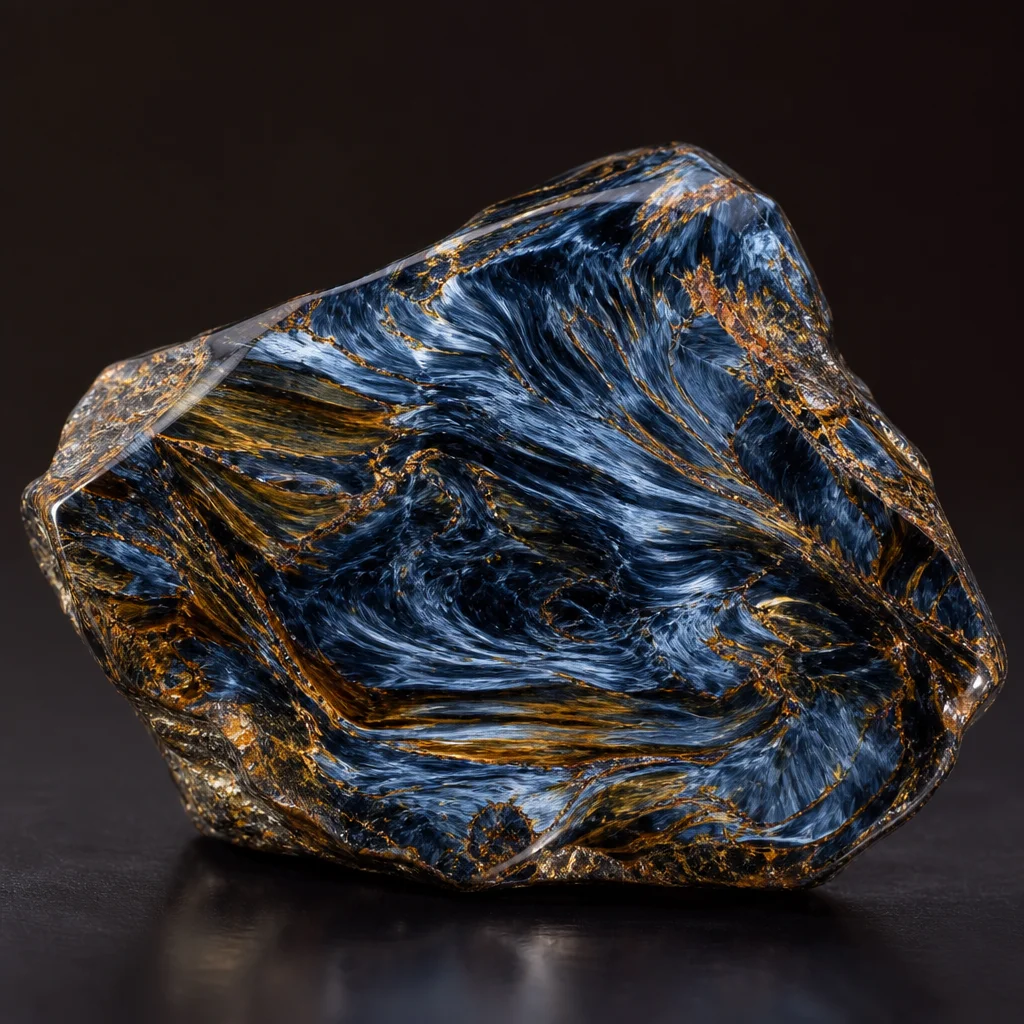
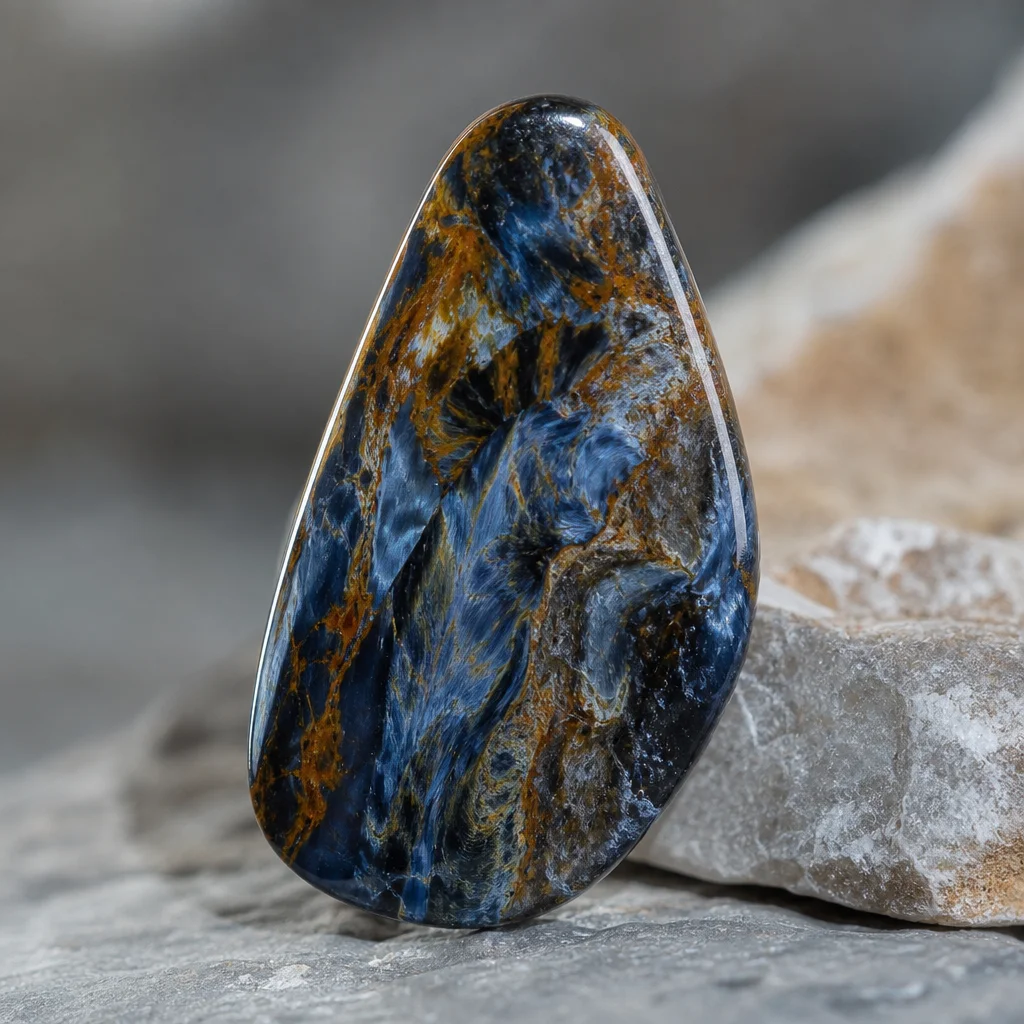
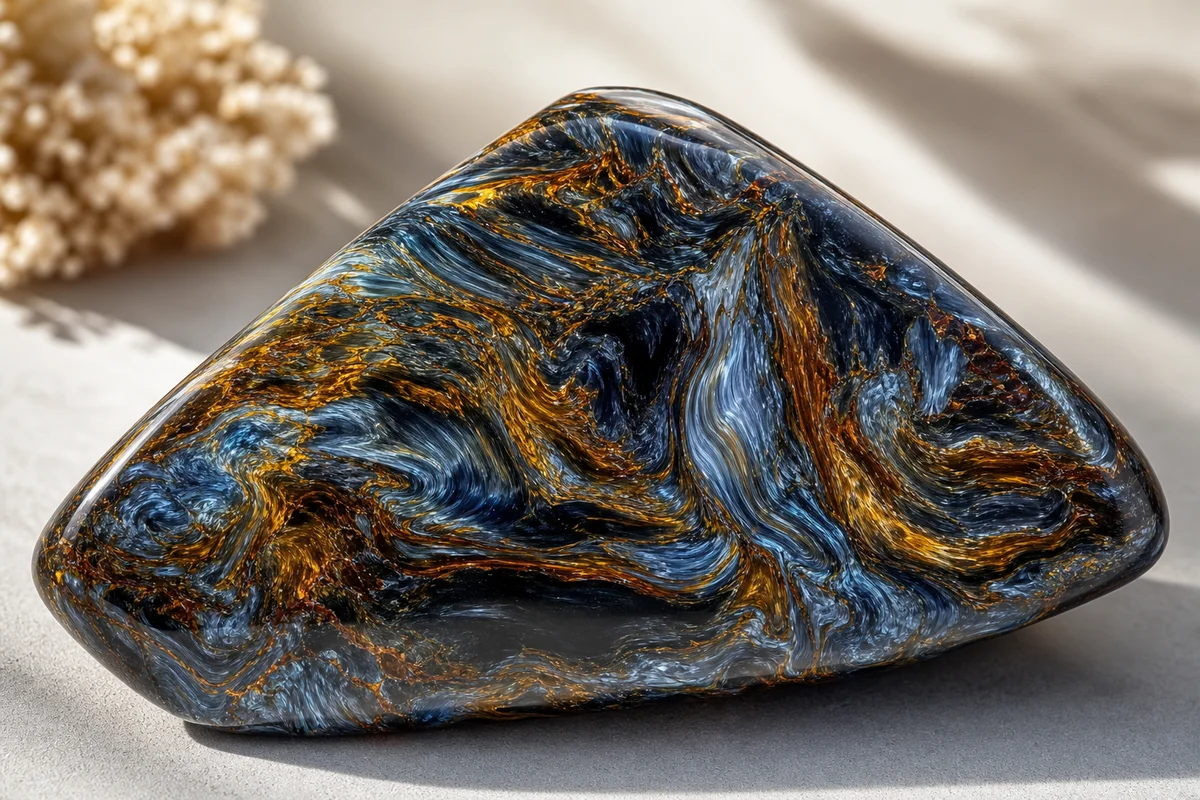
The first time you hold a polished pietersite cabochon and roll it under a light source, the effect is almost disorienting. Threads of deep blue and stormy gold swirl across the surface like a miniature thunderstorm frozen in stone. It's the kind of material that makes you stop and look twice — and that reaction is exactly how it earned its nickname: the Tempest Stone.
What Makes Pietersite Different From Tiger's Eye
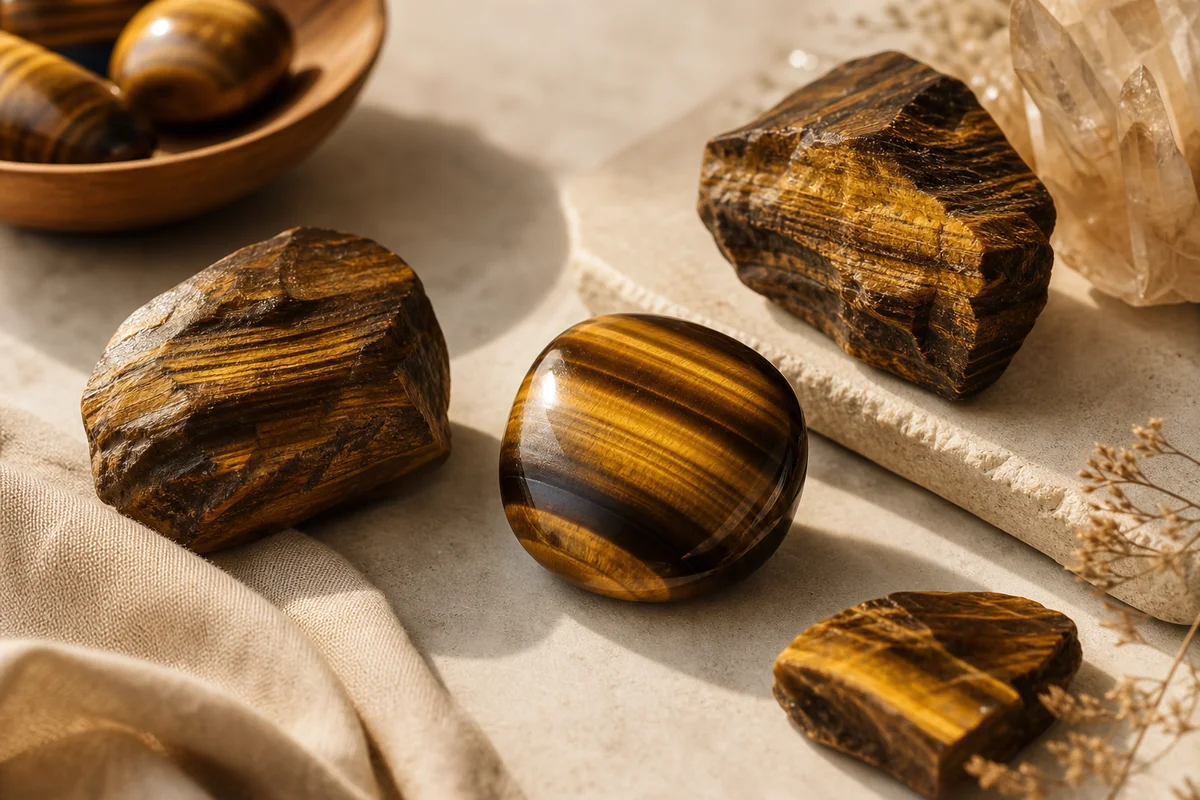
Here's where pietersite gets interesting geologically. Tiger's eye, hawk's eye, and pietersite all start from the same basic raw material — crocidolite, an iron-bearing asbestos mineral. In normal tiger's eye formation, quartz slowly replaces the crocidolite fibers while preserving their structure, creating the characteristic silky, chatoyant bands.
Pietersite forms when this replacement process is interrupted. The partially replaced material gets broken, fractured, and jumbled by tectonic forces before the quartz replacement is complete. Then silica-rich fluids percolate through the broken mass and cement everything back together. The result is a brecciated structure — fragments of the original fibrous material suspended in a quartz matrix, with the fibers oriented in every possible direction.
This chaotic re-formation is what gives pietersite its unique appearance. Instead of the orderly parallel bands of tiger's eye, pietersite has swirling, turbulent patterns that shift and change as you rotate the stone. The chatoyancy is present but disrupted — instead of a single clean "eye" line, you get multiple flashes of light that appear and disappear across the surface like heat lightning in a summer sky.
Because of this chaotic formation, pietersite is significantly rarer than tiger's eye. For every ton of tiger's eye mined, only a small fraction gets reworked into pietersite-grade material. The geological conditions required for the break-and-re-fuse process are uncommon, which is why pietersite is found in only two commercial localities worldwide.
Chinese Pietersite vs. Namibian Pietersite
The two sources produce noticeably different-looking material, and collectors often have strong preferences between them.
Chinese Pietersite (Henan Province)
Chinese pietersite, discovered in 1962 by a man named Sid Pieters (hence the name, despite being found in China), is known for its dramatic blue and gold coloration. The blue comes from crocidolite fibers that haven't been completely replaced by iron oxides, while the gold comes from limonite and goethite staining. The best Chinese material shows vivid, saturated blue swirling through golden-brown, with sharp chatoyant flashes that are visible even in moderate lighting.
The fibrous structure in Chinese pietersite tends to be coarser, which means the chatoyant effect is bolder and more pronounced. Each fiber bundle is individually visible under magnification, creating a texture that resembles twisted silk threads suspended in amber glass.
Namibian Pietersite
Namibian pietersite, from the area near Outjo in the Kunene Region, has a warmer overall tone. Instead of the dramatic blue-gold contrast, Namibian material tends toward red-brown, orange-gold, and gray-blue combinations. The chatoyancy is present but often more subtle, with a softer, more diffused flash. Some specimens show a deep burgundy-brown base with golden highlights that almost glow from within.
The fibrous structure is generally finer in Namibian pietersite, giving it a smoother, more uniform appearance at first glance. Under magnification, the individual fiber orientation becomes apparent, but to the naked eye, the effect is more of a shimmering iridescence than distinct flashing lines.
Both varieties are genuine pietersite. Neither is considered superior in an absolute sense — it comes down to personal taste and the specific use case. Chinese material tends to be preferred for statement jewelry pieces where maximum visual impact is the goal, while Namibian material is often favored for more subtle, wearable designs.
The Man Who Named It
The story of how pietersite got its name is worth telling because it explains why a stone found in China bears a Dutch-sounding name. In 1962, Sid Pieters, a Namibian mineral dealer and prospector, was examining a parcel of minerals that had been imported from China. Among the mixed lot, he noticed an unusual chatoyant stone with broken, swirling fiber patterns that didn't match any known tiger's eye variety. Recognizing it as something unique, he acquired the material and subsequently described it as a new variety in mineralogical circles.
The name "pietersite" was adopted by the gem trade, and it has stuck despite the geographic disconnect. When Namibian pietersite was discovered later (around the 1990s), it was confirmed to be the same material by different formation processes, and the existing name was retained rather than creating a confusing second label.
What Makes Pietersite Valuable
As with most semi-precious materials, value in pietersite comes down to several factors that interact with each other.
Chatoyancy quality: The sharpness and intensity of the chatoyant flash is the primary value driver. A pietersite cabochon that shows vivid, well-defined light movement across the entire surface commands significantly higher prices than one with weak or patchy chatoyancy. The best material shows a "three-dimensional" flash — the light seems to move beneath the surface rather than sitting on top of it.
Color saturation: Rich, saturated blue combined with golden brown is the most sought-after combination, particularly in Chinese material. Specimens with pale, washed-out colors or muddy brown tones are considerably less valuable. Deep blue that shifts to violet under certain lighting angles is especially prized.
Pattern complexity: The swirling, chaotic nature of pietersite's fiber structure means some pieces show more interesting patterns than others. Specimens with multiple swirl centers, interlocking fiber bundles, and clear directional changes create more visual interest than pieces with relatively uniform or linear patterns.
Size and cut quality: Because the fibrous structure can create internal stresses, large, clean pietersite cabochons are harder to produce than small ones. Well-cut specimens with smooth domes, even thickness, and no visible fractures or pits are worth more than roughly shaped or damaged pieces.
Working With Pietersite
For lapidary artists, pietersite is moderately challenging to work with but rewarding when done well.
On the Mohs scale, pietersite typically rates 6-7, making it comparable to tiger's eye in terms of cutting difficulty. The quartz matrix provides reasonable hardness, while the fibrous inclusions create zones of slightly different hardness within the same stone. This means that aggressive cutting can sometimes tear out fiber bundles, leaving pits or uneven areas on the surface.
The recommended approach is to use diamond-impregnated wheels with increasingly fine grits, working slowly through the forming and sanding stages. Final polishing with cerium oxide or tin oxide on a felt wheel typically produces a high-gloss finish that maximizes the chatoyant display. Cabochons are by far the most common cut — the domed shape is ideal for showing off the chatoyancy, and faceted pietersite is almost never seen because the fibrous structure doesn't take facets well.
One important safety note: like all materials containing crocidolite fibers, cutting pietersite generates dust that may contain respirable fibers. Always use water-cooled cutting equipment, wear a proper particulate respirator (N95 at minimum, P100 preferred), and work in a well-ventilated area or with dust extraction. The risk from finished, polished pietersite is negligible, but the cutting and grinding dust should be treated with appropriate caution.
Pietersite in Jewelry
Pietersite is primarily used in cabochon-style jewelry — pendants, rings, earrings, and brooches where the chatoyant effect can be displayed prominently. Because of the moderate hardness (6-7) and relatively good toughness, it holds up reasonably well in most jewelry applications, though rings worn daily will eventually show wear over years of use.
The swirling patterns mean that each stone is essentially unique, which appeals to buyers looking for distinctive, one-of-a-kind pieces. A well-cut pietersite pendant with strong blue-gold chatoyancy is a genuine conversation starter — people who aren't familiar with the material often assume it's a synthetic or treated stone because the patterns look almost too dramatic to be natural.
Price-wise, finished pietersite jewelry is positioned in the upper range of semi-precious stone pieces. A good quality pietersite cabochon of 15-20 carats might cost $30-80 from a gem dealer. Set into a sterling silver pendant, the finished piece typically retails for $80-200. Gold settings and large, premium-grade cabochons can push prices considerably higher.
Caring for Pietersite
Pietersite care is straightforward. It's safe to clean with warm soapy water and a soft brush. Avoid ultrasonic cleaners — the fibrous structure can create internal stress points that ultrasonic vibration might exploit over time. Steam cleaning is generally safe for short exposures but prolonged steam heat should be avoided.
As with all chatoyant stones, the chatoyant effect depends on the orientation of the fibrous inclusions. If a pietersite stone loses its flash, it usually means the surface polish has become dull rather than any internal change. Repolishing by a lapidary can restore the original chatoyancy.
Store pietersite separately from harder stones (corundum, topaz, quartz) to prevent scratching, and keep it away from prolonged direct sunlight, which can very slowly fade the blue crocidolite fibers in some specimens over decades.
Frequently Asked Questions
Is pietersite natural or man-made?
Pietersite is entirely natural. It forms through geological processes involving the breakage and re-fusion of partially replaced crocidolite (blue asbestos) minerals. No treatment is needed to produce its characteristic appearance — the swirling chatoyant patterns are a result of the stone's chaotic formation history.
Why is pietersite so expensive?
Pietersite is roughly 10 times rarer than tiger's eye because its formation requires specific geological conditions — tectonic disruption of partially replaced crocidolite followed by silica cementation — that occur infrequently. It's found in only two commercial locations worldwide, and high-quality rough with vivid chatoyancy is uncommon.
Does pietersite contain asbestos?
Raw pietersite contains crocidolite fibers (a form of asbestos), but these are locked within a solid quartz matrix. The risk from wearing polished pietersite jewelry is considered negligible. The primary concern is during cutting and grinding, when dust containing free fibers can be inhaled — proper respiratory protection is essential for lapidary work.
How can I tell real pietersite from fake?
Real pietersite shows chaotic, multi-directional chatoyancy that shifts as you rotate the stone. The fibrous structure is visible under magnification. Common fakes include dyed tiger's eye (which shows only parallel, orderly bands) and synthetic materials with printed patterns. Real pietersite's patterns are three-dimensional — they move with the light source, not just with stone rotation.
Frequently Asked Questions
What are the spiritual benefits of wearing Pietersite?
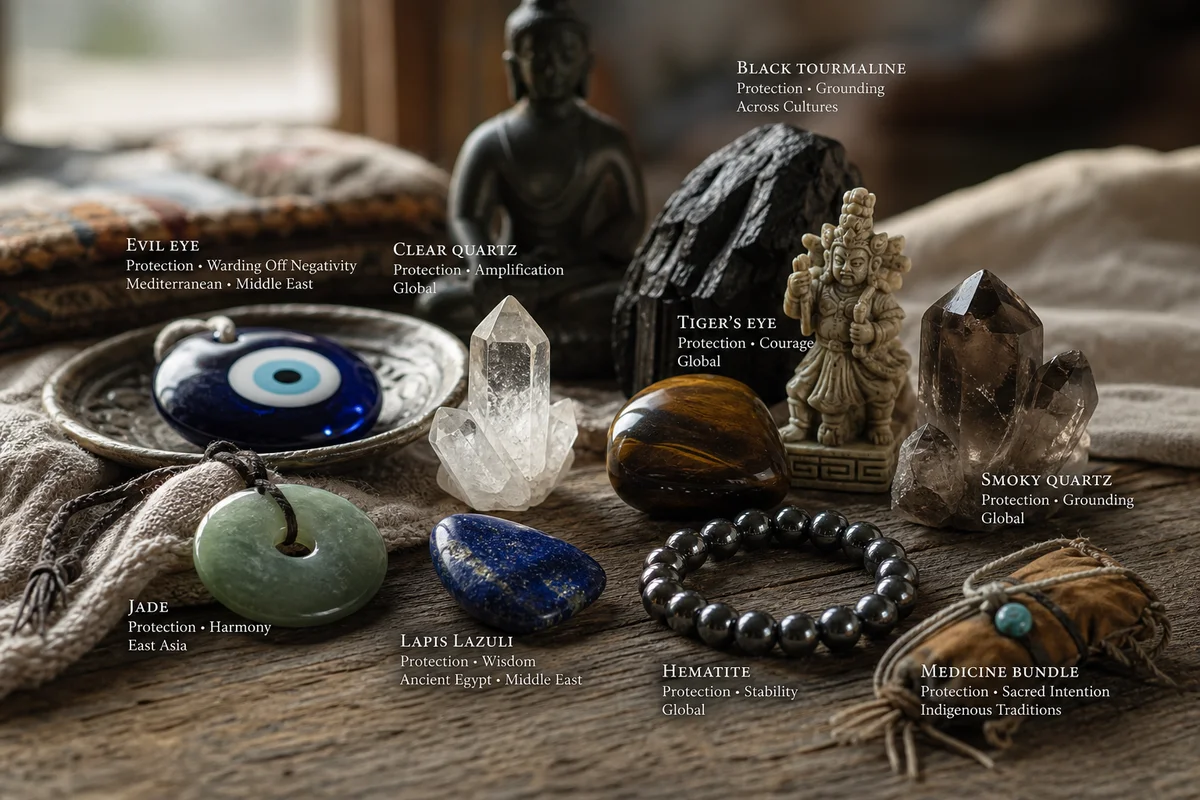
Often called the "Tempest Stone," Pietersite is cherished in crystal healing for its ability to clear stagnant energy. Wearing this natural crystal is believed to stimulate the third eye chakra, promoting deep intuition and grounding during chaotic times. At SagStone, we love setting this striking stone into wearable art so you can carry its protective, storm-calming energy with you every day.
Comments