Opal: The Gemstone That Looks Like It Has Galaxies Inside
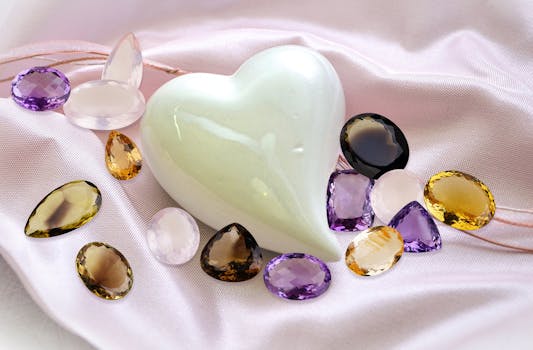
Hold an opal up to the light and you'll see something weird happen. Colors shift and roll across the surface like oil on water — greens bleeding into blues, reds flashing where there weren't any a second ago. It doesn't look like a rock. It looks like a tiny window into somewhere else.
No other gemstone does this. Diamonds sparkle because they bend light. Sapphires have color because of trace elements in their crystal structure. Opal plays with light in a completely different way, and the result has fascinated people for thousands of years. The Romans called it opalus, meaning "precious stone." The ancient Greeks believed opals gave their owners the gift of prophecy. Aboriginal Australians have a different story — they say the creator came to earth on a rainbow, and where his foot touched the ground, opals sprang up in every color.
What opal actually is
Opal is hydrated silica — SiO₂ with water molecules trapped inside, typically between 3% and 21% by weight. Unlike most gemstones, it isn't crystalline. There's no orderly lattice of atoms repeating in a grid. Instead, opal is made up of tiny silica spheres, each one roughly 150 to 400 nanometers across, packed together in a semi-regular arrangement.
Those spheres are the whole trick. When light enters an opal, it hits these spheres and diffracts — the light waves bend around them and interfere with each other. Different sphere sizes produce different colors. Spheres around 150 nanometers diffract blue and violet. Push them to 250 nanometers and you get greens and yellows. Around 350 nanometers, red appears. This is called "play of color," and it's what separates precious opal from the ordinary stuff that looks like milky glass.
The gaps between the spheres are filled with water and more silica. Over millions of years, as the water slowly evaporates or gets replaced by more silica, the structure locks into place. The whole process is fragile and specific — the spheres have to be uniform in size and evenly packed, or the diffraction breaks down and you just get common opal with no color play at all.
How opals form
Most of the world's opal comes from Australia, and the story of how it got there starts about 100 million years ago. At that time, central Australia wasn't a desert — it was an inland sea. Silica-rich water seeped into cracks and cavities in sedimentary rock. As the climate dried out over tens of millions of years, the water evaporated slowly, leaving behind those layers of silica spheres.
The Great Artesian Basin, which underlies about 22% of the Australian continent, is the source. Groundwater still moves through this basin today, carrying dissolved silica at extremely low concentrations — roughly 2 to 10 parts per million. That's a tiny amount, which is why opal formation takes so long. The silica precipitates out where the water meets cavities in the rock, building up layer by layer over geological timescales.
Opal forms in other places too. Ethiopia produces significant opal from volcanic deposits, where silica-rich hot springs deposited material in cavities in basalt. The Ethiopian opals tend to be more porous and sometimes less stable than Australian ones — they can develop cracks or lose color if they dry out too fast. Nevada has opal deposits in Virgin Valley, where opalized wood and fossil bones have been found. Opal also occurs in Brazil, Mexico, Honduras, and a handful of other countries, but none of these produce at the volume or consistency of Australia.
The Australian town of Coober Pedy produces most of the world's precious opal. It sits in the middle of South Australia, where summer temperatures regularly hit 45°C (113°F). Most of the town lives underground — houses, hotels, churches — dug into the sandstone to escape the heat. Mining opal there is still largely done by hand with small equipment. A miner might dig a shaft straight down 20 meters, then tunnel horizontally, following seams of opal-bearing clay. It's speculative, physically demanding work, and most miners come up empty more often than not.
Types of opal
"Opal" covers a wide range. Not all of it is colorful, and not all of it is worth cutting into jewelry.
Precious opal vs common opal
Precious opal shows play of color. Common opal — sometimes called "potch" in Australian mining slang — doesn't. Common opal makes up the vast majority of what's mined. It's milky, translucent, and not particularly valuable, though some varieties like pink common opal from Peru have found a market in bead jewelry.
Black opal
Black opal is the most valuable variety, and it comes almost exclusively from Lightning Ridge in New South Wales. The "black" refers to the body tone — the background color against which the play of color appears. A dark background makes the colors look more intense, the same way a dark projector screen shows brighter images. Top-grade black opal with a full spectrum of color can sell for tens of thousands of dollars per carat. In 2023, a black opal from Lightning Ridge known as the "Fire of Australia" was valued at over $675,000, and it's roughly the size of a man's fist.
White opal
White opal has a light or translucent body tone. Coober Pedy and Mintabie in South Australia produce most of it. The play of color can be just as vivid as black opal, but the lighter background mutes the effect. White opal is more common and less expensive, though fine specimens still command high prices.
Boulder opal
Boulder opal is found in Queensland, where thin seams of precious opal run through ironstone boulders. Cutters usually leave the ironstone backing in place — it adds structural support and contrast. The result can look like a river of color running through dark rock. Boulder opal tends to be irregularly shaped because cutters follow the natural seam rather than trying to carve a standard cabochon.
Fire opal
Fire opal from Mexico is different from the rest. It has a warm body color — yellow, orange, or red — caused by iron oxide impurities. Some fire opal shows play of color, but many don't. The ones without color play are valued for their body color alone. Mexican fire opal forms in volcanic rhyolite, which is a completely different geological environment from Australian sedimentary opal.
Why opal is fragile
Here's the thing about opal that catches people off guard: it's not tough. On the Mohs scale, opal sits between 5.5 and 6.5. That's softer than quartz (7) and significantly softer than sapphire and ruby (9). You can scratch an opal with a steel knife.
But hardness isn't the real problem. The issue is water content. Opal contains 3% to 21% water, held within its silica structure. If an opal dries out too quickly — say, you leave it in a hot car or store it near a heating vent — it can develop fine cracks called "crazing." Once crazing starts, there's no way to fix it. Ethiopian opals are especially prone to this because their structure is more porous.
Australian opals are generally more stable. Millions of years of slow drying in the ground have already removed most of the unstable water. But even stable opals benefit from reasonable care — not soaking them, not exposing them to sudden temperature changes, and storing them with some ambient humidity. Some jewelers recommend keeping opals in a small container with a damp cotton ball when they're not being worn. Others say that's overkill for Australian stones. The truth depends on the individual opal.
Synthetics, treatments, and fakes
The opal market has a counterfeiting problem, and it's been around for a long time. Understanding what you're looking at matters.
Synthetic opal is real opal — same chemistry, same structure — but grown in a lab. Gilson synthetic opal has been produced since the 1970s. It shows play of color and looks convincing, but under magnification, the color pattern has a "snakeskin" or columnar structure that natural opal doesn't. Synthetic opal is worth a fraction of natural opal's price.
Doublets and triplets are composite stones. A doublet is a thin slice of precious opal glued to a dark backing (usually obsidian, potch, or glass). A triplet adds a clear dome of quartz or glass on top. These aren't fake — the top layer is real opal — but they're much cheaper than solid opal, and the adhesive layer can degrade over time, especially with moisture exposure.
Then there are actual fakes: glass with foil backing, plastic imitations, and "slocum stone," which is a type of opalescent glass made to mimic opal's play of color. Some of these are obvious. Others require a gemologist to identify.
What makes opal worth buying
Opal is polarizing. Some gemstone buyers avoid it entirely because of the fragility and the complexity of the market. Others — particularly Australian collectors — consider it the most beautiful gemstone on earth. There's not much middle ground.
If you're going to buy opal, a few things matter. Body tone matters a lot — darker backgrounds intensify the color play. Pattern matters too; a large, connected flash of color is generally more desirable than small pinfire dots. The range of colors visible across the stone matters, with red being the rarest and most valued in Australian opal. And origin matters to some buyers, though a beautiful Ethiopian opal shouldn't be dismissed just because it's not from Lightning Ridge.
The best advice is probably the simplest: buy what you like looking at. Opal is the one gemstone where every piece is genuinely unique. No two opals have the same pattern, the same color distribution, or the same way of catching the light. That's either frustrating or wonderful, depending on how you look at it.
The play of color in opal isn't just a visual trick — it's a physical phenomenon visible to the naked eye, happening in real time, in a stone that formed over millions of years in ancient seabeds. There isn't anything else like it in geology. And whether that's worth the price tag and the fragility is a call only you can make.
Comments