How to Choose the Right Necklace Length for Every Neckline
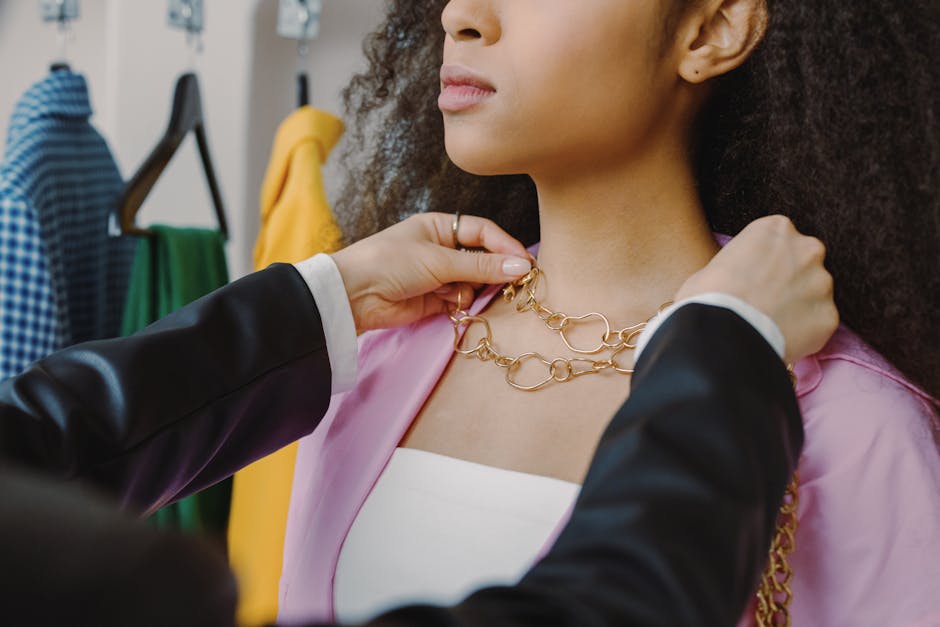
I Bought the Wrong Necklace Length for Years — Here's How I Stopped
I spent three years wearing a 16-inch chain with V-neck tops and wondering why my outfits always looked slightly off. The necklace sat right where the neckline dipped, creating this awkward overlap that made everything look cluttered instead of intentional. A friend who worked at a jewelry counter finally pointed it out, and I felt like an idiot.
That was fifteen years ago. I've since worked behind that same counter, helped hundreds of people find their ideal chain length, and learned that most of us are walking around in the wrong necklace. Not because we have bad taste — because nobody ever explained the relationship between necklace length and neckline.
That's what this guide is for.
The Standard Necklace Lengths (And What They Actually Look Like)
Before we get to the matching part, you need to know what's out there. Jewelers use standard lengths, and each one hits your body at a specific point. Here's the breakdown:
| Length Name | Inches | Centimeters | Where It Sits |
|---|---|---|---|
| Collar | 12–13" | 30–33 cm | Snug against the middle of the neck |
| Choker | 14–15" | 36–38 cm | Base of the neck, above the collarbone |
| Princess | 16–18" | 41–46 cm | Just below the collarbone |
| Matinée | 20–24" | 51–61 cm | Above the bust, on the chest |
| Opera | 26–36" | 66–91 cm | On or below the bust |
| Rope/Lariat | 37+" | 94+ cm | Below the bust to the navel |
Most people gravitate toward the princess length (16–18 inches) because it's the most versatile. That's the safe zone. But "safe" and "perfect" are not the same thing.
Step 1: Match Your Necklace to Your Neckline
This is the part that took me years to figure out. The general rule is simple: your necklace should either follow the shape of your neckline or contrast it deliberately. Never compete with it.
The Quick Reference Chart
| Neckline Style | Best Necklace Length | Why It Works |
|---|---|---|
| V-neck | Princess (16–18") or Opera (26–36") | Follows the V shape or drops below it completely |
| Scoop neck | Princess (17–18") or Matinée (20–24") | Fills the open space without crossing the fabric line |
| Crew neck / round | Matinée (20–24") or Opera (28–30") | Sits below the high neckline, creating visual length |
| Boat neck / bateau | Opera (28–36") or layered choker + princess | Long lines echo the horizontal sweep, or stacked short pieces frame the collarbone |
| Sweetheart | Princess (16–17") or collar (12–13") | Curves mirror the sweetheart shape at the neck or right above it |
| Halter | Choker (14–15") or collar (12–13") | Keeps everything above the halter straps |
| Turtleneck | Opera (30–36") or Rope (37+") | Long chains over knitwear add dimension without bulk |
| Off-shoulder | Choker (14–15") or layered princess + matinée | Draws attention to the exposed collarbone area |
| Button-down (open collar) | Princess (18") or Matinée (20–22") | Falls into the open V created by the unbuttoned collar |
Notice I didn't say "always wear X with Y." That's because body proportions matter. If you have a shorter neck, a 14-inch collar might feel suffocating even with a halter top. If you have a longer torso, a 20-inch matinée might land higher than expected. Always try before you commit.
Step 2: Consider the Chain Type (It Affects Everything)
Here's something most guides skip: the chain style changes how a necklace drapes, how heavy it feels, and how much it costs. A 16-inch cable chain and a 16-inch snake chain are two very different experiences.
Chain Types and Their Real-World Differences
| Chain Type | Weight (per inch, sterling silver) | Drape | Durability | Price Range (16", sterling) |
|---|---|---|---|---|
| Cable | ~0.3 g | Flexible, moves freely | Good — simple links resist pulling | $15–$35 |
| Box | ~0.4 g | Stiffer, holds shape | Excellent — square links don't twist | $20–$45 |
| Snake | ~0.5 g | Very fluid, almost liquid | Fair — can kink if bent sharply | $18–$40 |
| Rope | ~0.6 g | Drapes with subtle twist | Very good — twisted links distribute stress | $25–$55 |
| Figaro | ~0.4 g | Relaxed, casual feel | Good — alternating link sizes add strength | $20–$50 |
| Wheat / Spiga | ~0.5 g | Smooth, elegant drape | Excellent — braided pattern resists stretching | $25–$55 |
| Herringbone | ~0.7 g | Lies completely flat | Poor — creases permanently if bent | $30–$65 |
Weight matters more than you'd think. A heavy herringbone chain at 18 inches will pull downward throughout the day, shifting the pendant lower than where you started. A lightweight cable chain at the same length barely moves. If you're wearing a pendant — especially a natural stone pendant that has genuine weight to it — go with a sturdier chain like a box or rope style.
I learned this the hard way when a customer's amethyst pendant slid off a too-thin cable chain during a dinner party. The pendant fell right into her soup. We laughed about it later, but she switched to a box chain the next day and never had an issue.
Step 3: Factor in Your Body Proportions
Charts are great starting points, but your body has the final say. Here's how to adjust:
- Short neck (under 4 inches from chin to collarbone): Skip collar and choker lengths. Go straight to princess or matinée. Short necklaces on short necks create a stuffed-in look.
- Long neck: You can pull off collar and choker lengths beautifully. They highlight what's already elegant about your proportions.
- Full bust: Matinée and opera lengths work better than princess — the chain falls below the bust line instead of getting lost in it.
- Petite frame: Stick to finer chains (1mm or less). A chunky rope chain on a small frame can look like you're wearing a leash.
- Tall / broad frame: You can handle wider chains and longer lengths. A delicate 16-inch chain might look like a thread on a broader build.
The easiest way to figure this out? Grab a piece of string, loop it around your neck at different lengths, and look in the mirror. No fancy tools needed. The string doesn't lie.
Step 4: Layering Multiple Necklaces (Without the Tangle)
Layering is where necklace length gets fun — and where it gets complicated fast. The key is spacing each chain at least 2 inches apart so they don't compete for the same visual real estate.
A solid starter combination: 14-inch choker + 18-inch princess + 24-inch matinée. Three distinct zones, no overlap. If you're mixing metals, keep the chains in the same weight family — a delicate gold choker under a chunky silver princess chain looks like you got dressed in the dark.
And since we're talking about stacking, the same "less is more" principle applies to your wrists. Here's a full guide to stacking bracelets that complements layered necklaces without turning you into a walking jewelry store.
One thing I always tell people about layering: if you have to fiddle with it more than once after putting it on, it's wrong. Good layering stays put. If your chains are constantly crossing or flipping, either the length spacing is too tight or the chain types are incompatible (a snake chain will slide right over a herringbone, for instance).
Step 5: Think About Maintenance While You're at It
The length you choose determines how much contact your chain has with your skin, your clothes, and the elements. A choker sits directly on your neck, where sweat, perfume, and body oils hit it constantly. A 30-inch opera chain spends most of the day rubbing against fabric.
Both scenarios cause different kinds of wear. Chokers and collars tarnish faster because of skin contact. Opera-length chains get more physical abrasion from clothing. Either way, you'll need to clean them regularly — and different metals require different approaches. This cleaning guide covers the dos and don'ts, including which household cleaners will ruin your chains permanently (hint: most of them).
For daily-wear necklaces, I recommend sterling silver or solid gold over plated options. The plating wears off fastest at the back of the neck where the clasp sits — right where the chain gets the most friction from your hair and collar. Once the plating goes, the base metal underneath can irritate your skin.
The Cost Reality: What You'll Actually Spend
Let me be blunt about pricing, because nobody in jewelry retail wants to talk about this.
| Chain Style | Sterling Silver (16") | 14K Gold Filled (16") | Solid 14K Gold (16") |
|---|---|---|---|
| Cable (1mm) | $12–$25 | $25–$45 | $150–$250 |
| Box (1.2mm) | $18–$40 | $35–$60 | $200–$350 |
| Snake (1.5mm) | $15–$35 | $30–$55 | $180–$300 |
| Rope (1.5mm) | $22–$50 | $40–$70 | $250–$400 |
| Figaro (2mm) | $20–$45 | $35–$65 | $220–$380 |
Every 2 inches you add beyond 16 inches bumps the price up roughly 15–20%, because you're adding more material. So that $25 sterling cable chain at 16 inches becomes $30–$32 at 18 inches. Not a huge jump, but it adds up if you're building a layered set of three.
My honest recommendation for most people: start with gold-filled or sterling silver in the princess length. It covers 80% of outfits. Add a matinée or opera length later for variety. You don't need six chains. You need two good ones.
FAQ
How do I measure my ideal necklace length at home?
Take a soft measuring tape (or a piece of string and a ruler), drape it around your neck, and adjust it to where you want the necklace to fall. Read the measurement. That's it. No need for fancy tools or online calculators. If you're between standard sizes, size up — you can always use the extra chain at the clasp to shorten it slightly.
Can one necklace length work for multiple necklines?
The princess length (16–18 inches) comes closest to being universal. It works with scoop necks, V-necks, open collars, and strapless tops. Where it struggles is with high necklines like turtlenecks and boat necks — for those, you want something longer. If you're building a minimal collection, start with a princess chain and add a 28-inch opera chain as your second piece.
Does pendant size change what length I should get?
Yes, and this catches a lot of people off guard. A heavy pendant will pull the chain down about half an inch to an inch from where an empty chain of the same length would sit. If you're buying a chain specifically for a pendant, measure where you want the top of the pendant to hang, then add 1 inch to account for the weight.
What if my necklace keeps flipping to show the clasp?
That usually means the chain is either too light for the pendant or the wrong type. Snake chains are notorious for this — they're so fluid that any imbalance causes them to rotate. Switch to a box or wheat chain, which are more structurally stable. Also check that your pendant's bail (the loop it hangs from) is centered. An off-center bail will flip any chain.

Comments