<h2>My First Year of Collecting Crystals: What I Wish Someone Had Told Me</h2>
How it started
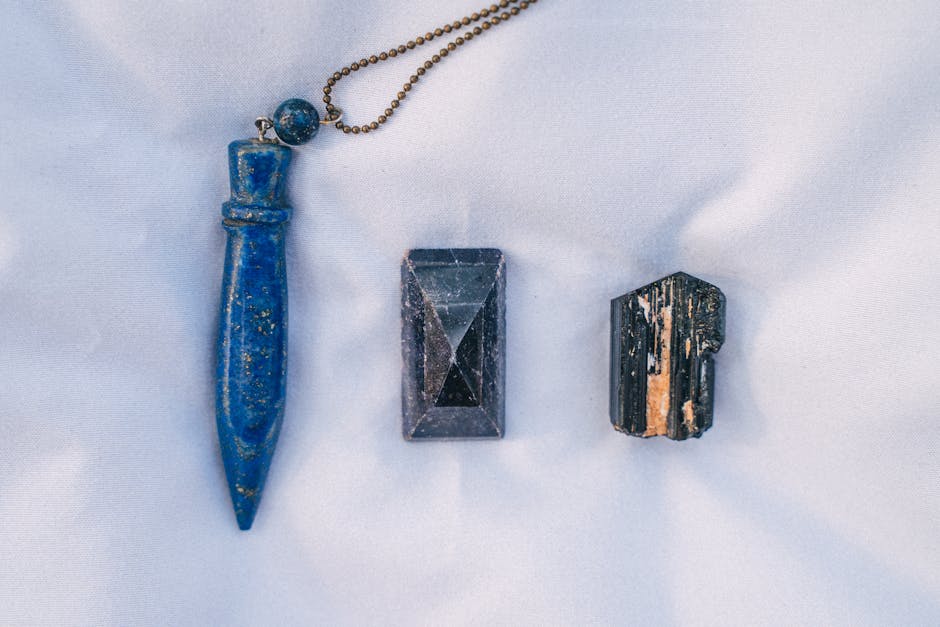
A friend showed me her collection one afternoon. Just a handful of stones on a windowsill. Amethyst, rose quartz, a chunk of black tourmaline. Nothing fancy. But I was hooked. Within a week I had placed my first Amazon order, and within a month I had spent roughly $300 on tumbled stones, a few raw pieces, and a bracelet that left a green ring around my wrist after two days of wear.
That first year was a mess of impulse buys, broken pieces, and a lot of confusion about what I actually liked versus what Instagram told me I should like. Looking back, there are a handful of things that would have saved me money and frustration. I am writing this for anyone who just discovered crystals and wants to avoid my mistakes.
Mistake 1: buying everything at once
The Amazon algorithm is good at what it does. I searched for "crystal starter kit" and within minutes I was staring at a 50-piece tumbled stone set for $35. Seemed like a deal. I bought it. Then I bought another set. Then a few individual pieces. Then a selenite wand, a charging plate, and a velvet pouch to put it all in.
The problem was quality. Those $35 sets from bulk sellers on Amazon are often machine-tumbled to within an inch of their life. The colors look washed out. Half the stones in my first set were so small I could barely identify them. A few were clearly dyed. The "carnelian" turned out to be agate that had been heat-treated to look orange. The "citrine" was almost certainly amethyst that had been baked in an oven until it turned yellow, which is a common industry practice but not something a beginner expects.
If I had bought five stones from a reputable dealer instead of fifty from a bulk listing, I would have spent less money and ended up with pieces I actually wanted to keep.
Mistake 2: not knowing what I liked
Every crystal account on social media was pushing the same handful of stones. Moldavite. Herkimer diamond. Lemurian seed crystal. I bought into it. I purchased a small piece of moldavite for $40 because everyone said it was rare and powerful. Honestly, I thought it looked like a chunk of dirty green glass and I never reached for it again.
The stones I actually gravitated toward were the ones I picked for no particular reason. A chunk of labradorite I found at a farmers market because the flash caught my eye. A palm stone of picture jasper that just felt good to hold. A tiny piece of unakite a shop owner gave me for free because I mentioned it was my birthday.
Those became my favorites, and none of them were on any "must-have beginner" list. The lesson here is simple. Buy what draws your attention, not what a listicle tells you to buy. You will end up with a collection that feels personal instead of generic.
Mistake 3: cheap jewelry that turned my skin green
I bought a crystal pendant necklace from a popular online seller for $12. It was advertised as "gold-plated rose quartz." Within two days of wearing it, I had a green circle on my collarbone. That green stain is copper oxide leaching from the base metal through the thin gold plating. It washes off with soap and water, but it is annoying and it means the jewelry is not made to last.
Here is the thing about cheap plated jewelry. The plating on a $12 pendant might be a few microns thick. That is thinner than a human hair. With regular wear, it will rub off in weeks. The copper or brass underneath will oxidize and that is where the green comes from.
If you want crystal jewelry that holds up, look for sterling silver (.925), gold vermeil (thick gold plating over sterling), or solid gold. Yes, it costs more. A sterling silver crystal pendant runs $25-60. But it will last years instead of weeks and it will not turn your skin green. I wish someone had explained this to me before I bought five different cheap pendants that all ended up in the trash.
Mistake 4: storing everything in one bag
I kept all my crystals in a velvet drawstring pouch. All of them. Together. Tumbled stones, raw pieces, a delicate selenite wand. They rattled around in my bag every time I moved it, and over the course of a few months, several stones got chipped or scratched.
The worst casualty was my selenite wand. Selenite ranks a 2 on the Mohs hardness scale. For reference, your fingernail is about 2.5. A piece of quartz, which ranks 7, can easily scratch selenite just by sitting next to it in a bag. I did not know about Mohs hardness at the time, and my selenite ended up with several deep scratches from harder stones bumping against it during transport.
Now I keep soft stones in individual small bags or compartments, and hard stones can share a container without much risk. The Mohs scale is not complicated. Stones rated 1-3 are soft and scratch easily. Stones rated 6 and above are hard and can scratch softer stones. Keep them separated and your collection stays in better shape.
What actually worked
Starting a crystal journal
About four months into collecting, I started keeping a small notebook. Every time I bought a new piece, I wrote down the name, where I got it, how much it cost, and one sentence about why I picked it. It took maybe two minutes per entry.
This changed my buying habits completely. When I looked back through the journal, I noticed a pattern. I kept reaching for the same types of stones over and over. Blues and greens. Stones with interesting patterns rather than uniform colors. Pieces with natural texture rather than mirror-polished surfaces. Once I saw the pattern, I stopped buying random stuff and started curating. My collection got smaller but much more cohesive, and every new piece felt like it belonged.
Building relationships with local shops
My local rock shop is a 15-minute drive from my house. I had walked past it for two years without going in. When I finally did, I spent an hour talking to the owner, who showed me how to tell real amber from fake, explained why some citrine is naturally yellow and some is heat-treated amethyst, and let me handle dozens of pieces before buying anything.
The prices were comparable to online sellers, sometimes cheaper for common stones, and the quality was noticeably better. Plus, I could see and feel exactly what I was getting. No surprises. No dyed stones. No misleading photos. I still buy online occasionally, but my default is now the local shop. The relationship matters too. The owner gives me a small discount now because I am a regular, and she sets aside interesting pieces she thinks I would like.
Focusing on 3-5 types instead of 50
After about eight months of collecting, I had accumulated over 60 different types of stones. Most of them I barely looked at. I decided to focus on a few categories that genuinely interested me: quartz varieties, feldspar minerals, and jaspers. Everything else I either traded, gifted, or set aside.
Narrowing my focus made the hobby more interesting, not less. Instead of surface-level knowledge of 60 stones, I developed real knowledge of maybe 15-20. I could tell rutilated quartz from tourmalinated quartz at a glance. I knew the difference between ocean jasper and orbicular jasper. The depth made the hobby more satisfying and made shopping more intentional.
Learning about Mohs hardness the hard way
I already mentioned what happened to my selenite. That was not my only hardness-related mishap. I once set a piece of fluorite (Mohs 4) on a quartz cluster (Mohs 7) for a display and came back a week later to find the contact point had left a visible scratch on the fluorite. I also dropped a piece of malachite (Mohs 3.5-4) on a tile floor and it cracked cleanly in half because the tile was harder than the stone.
After those incidents, I spent an evening reading about the Mohs scale and then sorted my entire collection by hardness. Soft stones (1-4) went into individual padded compartments. Medium stones (5-6) got grouped together. Hard stones (7-10) could share space without worry. It took about an hour and it has saved me from losing any more pieces to preventable damage.
A realistic budget for crystal collecting
One of the questions I see most in online crystal communities is how much money you need to spend. The honest answer is that you can spend as little or as much as you want. But if you want a realistic framework, here is what worked for me after I stopped making impulse purchases.
I set a budget of $50 per month. That is it. Some months I spent nothing because I did not see anything I wanted. Other months I spent the full $50 on one nice piece. Occasionally I would save up for two months and buy something in the $80-100 range. Over a year, that comes out to roughly $600, which is enough to build a nice collection of 20-30 quality pieces without any waste.
Compare that to my first month where I burned through $300 and ended up with a pile of stones I did not want. Slow and intentional beats fast and random every time.
Your first-year shopping checklist
If I were starting over today with what I know now, here is what I would buy in my first year. I am keeping it practical and budget-friendly.
Month one: Pick 3-5 tumbled stones that you genuinely find attractive. Budget: $15-25. Do not buy a bulk set. Go to a local shop if possible, or order individual pieces from a seller with good reviews and clear photos.
Month two: One medium-sized raw or polished piece of a stone you already know you like. A chunk of amethyst, a piece of labradorite, whatever caught your eye in month one. Budget: $20-40.
Month three: Start a small reference library. A pocket guide to identifying rocks and minerals costs about $10-15. It will help you understand what you are buying and spot misleading listings. Budget: $10-15 for the book, $15-25 for a stone or two.
Month four through six: Build slowly. One or two pieces per month. Try visiting a gem and mineral show if one is nearby. The selection is huge and prices are often better than retail. Budget: $30-50 per month.
Month seven through twelve: Start specializing. Figure out which types of stones you keep reaching for and focus there. Maybe you are into quartz varieties, or maybe you discover a love for fossils, or maybe you get into wire-wrapping your own pendants. Let the collection develop naturally. Budget: $30-60 per month.
Total first-year spending: roughly $300-500 for a curated collection of 20-30 pieces you actually like, a reference book, and zero regret purchases.
That is what I wish someone had told me on day one. Crystals are a great hobby. They are beautiful, interesting, and there is always something new to learn. But like any hobby, you get out of it what you put into it, and a little bit of knowledge up front saves a lot of money and frustration down the road.
Comments