Malachite vs Azurite vs Chrysocolla Guide
May 16, 2026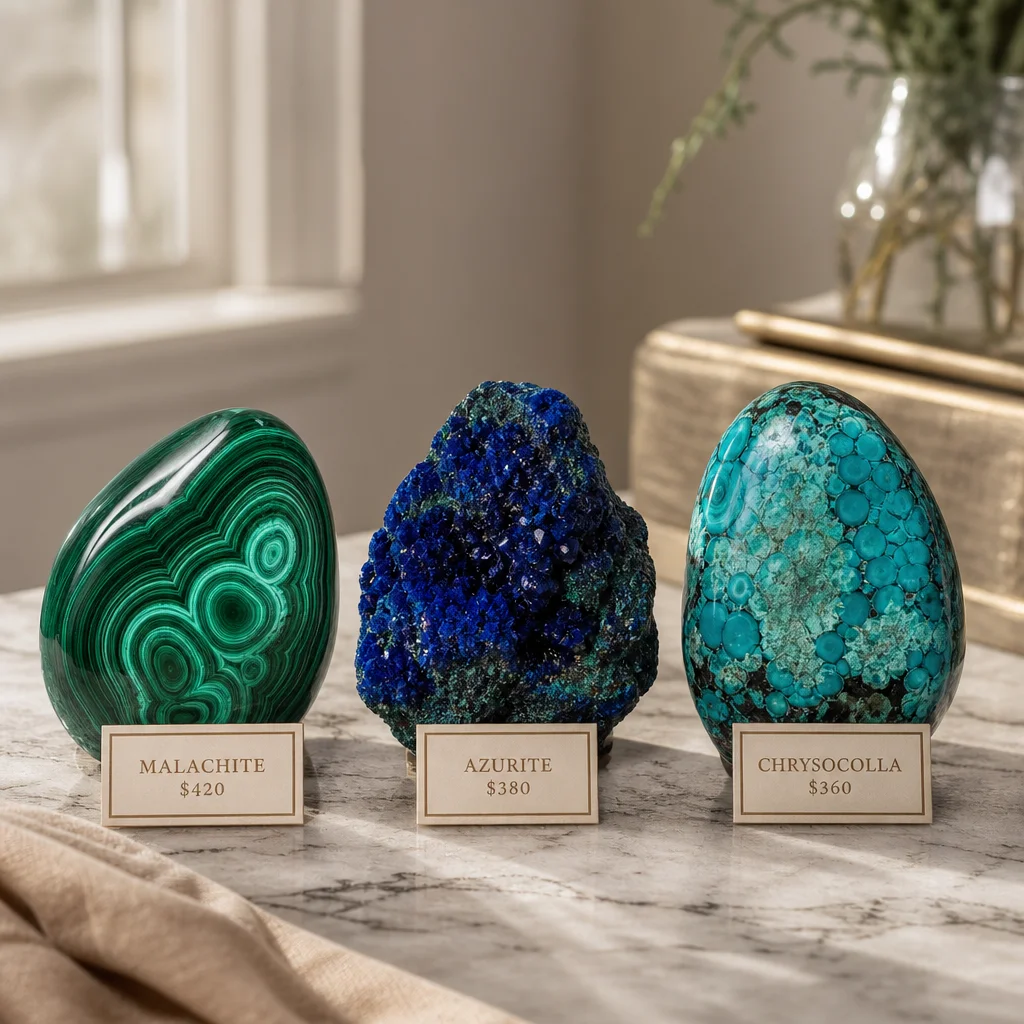
The Unveiling of Copper's Hidden Treasures: A path into the Top 3 Copper Minerals – Azurite, Malachite, and Chalcocite
Hey there, fellow crystal junkie! So, I've always been totally into minerals and gemstones, and copper minerals have been a real obsession for me. There's just something so cool about copper's bright blues, greens, and bronzes – it's been fascinating people for ages. Today, I'm diving into the best of the best when it comes to copper minerals: Azurite, Malachite, and Chalcocite. They're not just eye-catching but also have this super cool cultural and historical vibe. Get ready for a full-on guide where I'll break down each mineral, compare 'em, dish on their history, and give you some tips on how to snag a good one if you're into collecting. We're gonna take a little adventure through the copper-filled nooks of our planet and meet the most stunning copper minerals out there.As an aficionado of minerals and gemstones, my fascination with copper minerals has always been a driving force in my quest for knowledge and beauty.
Copper, with its vibrant blues, greens, and bronzes, has intrigued humanity for millennia.
Today, I present to you the crème de la crème of copper minerals: Azurite, Malachite, and Chalcocite.
These three minerals are not only stunning in their appearance but also hold significant cultural and historical value.
In this complete guide, I will dig into into the specifics of each mineral, compare them side by side, share their cultural history, and offer some buying advice for collectors and enthusiasts.
Let's start on a path through the copper-rich landscapes of our planet, where we will encounter the most captivating copper minerals.
1. Azurite
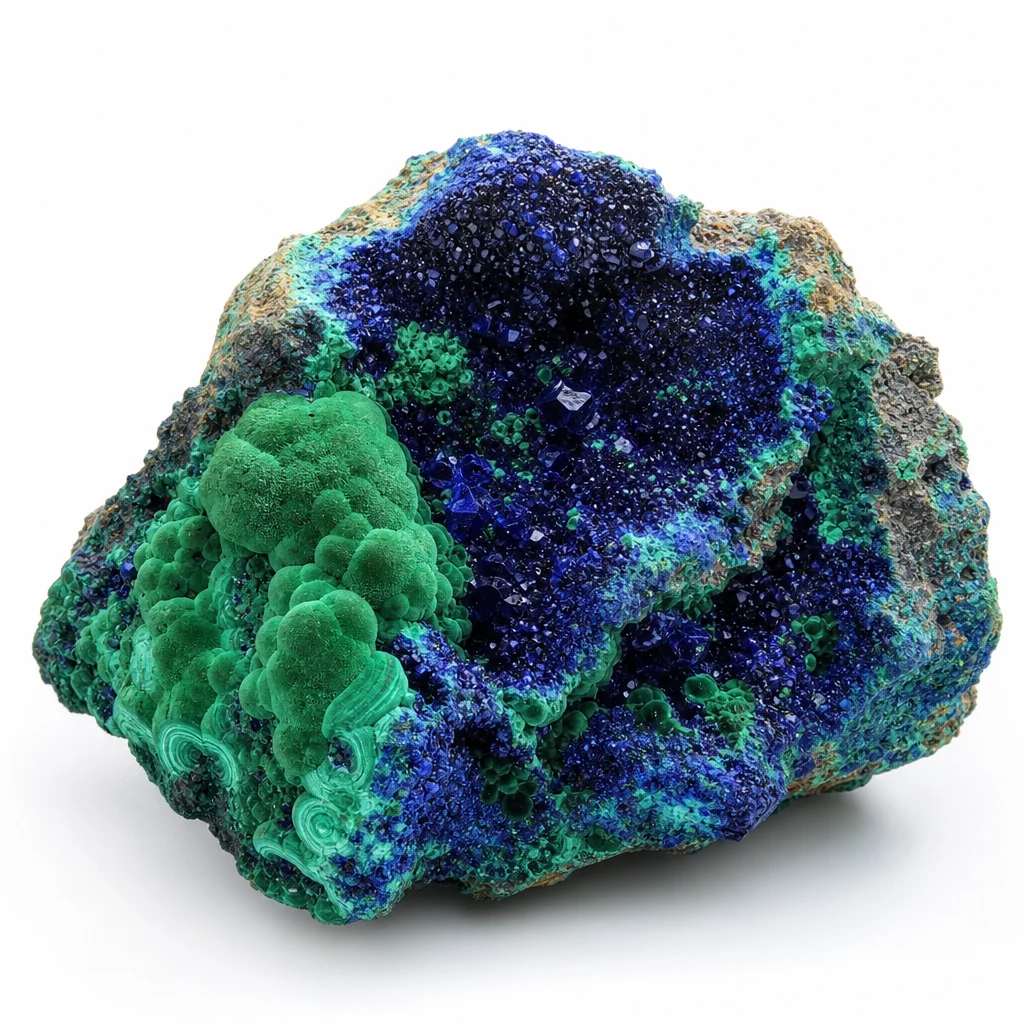
Oh, you've got to check out azurite! It's this totally rad copper carbonate hydroxide mineral with this mind-blowing deep blue color. It goes from a kind of soft sky blue to this super bright, almost electric blue. It's like, honestly, the color is just so unique—it's why they call it the "blue stone." No other mineral even comes close! **Specific Data:**Hey, Check Out This Cool Azurite Stuff!
So, Azurite, right? It's got this rad chemical formula, Cu3(CO3)2(OH)2, and it's all about that stunning blue, like the sky but way better. It's trigonal in crystal system, which is a fancy way of saying it's got those cool shapes. It's not too hard, like 3.5 – 4 on the hardness scale, and it leaves this greenish blue streak. It's got a specific gravity of 3.9 – 4.0, which is pretty neat.
- Chemical Formula: Cu3(CO3)2(OH)2
- Color: Blue, varying from pale sky to deep indigo
- Crystal System: Trigonal
- Hardness: 3.5 – 4
- Streak: Greenish blue
- Specific Gravity: 3.9 – 4.0
- Crystal Habits: Prismatic, tabular, acicular
Hope That Helps!
2. Malachite
Oh, you've got to check out malachite! It's part of the copper family, and it's all about that striking green color. It goes from a light, apple green to a deep, rich forest green. It's usually found near copper ore deposits, and it often hangs out with azurite. **Specific Data:**Oh, hey! So Malachite, it's this super cool crystal, you know? Its chemical formula is Cu2CO3(OH)2, which is just a fancy way of saying it's made of copper, carbonate, and hydroxide. The color is a total standout—green, from that light, almost apple green to the deep, forest green that makes you think of emerald leaves. It's got this orthorhombic crystal system going on, and it's not too tough, with a hardness of about 3.5 to 4. Its streak is green too, which is kind of neat. It's heavy, with a specific gravity between 3.9 and 4.0, and the crystals are usually tabular, acicular, or fibrous, like they're just weaving through the rock. Now, you might've seen Malachite and thought, "Oh, that's Azurite," but they're not the same. Malachite is the green one, and it's got this brownish streak to tell it apart. It's also different from Chalcocite—it's not metallic like that one. Cultural history? Well, the ancient Egyptians thought Malachite was pretty magical. They wore it as jewelry and carried it as amulets for protection. The Aztecs loved it too, thinking it brought fertility and kept bad vibes away. And now? It's still super popular for making jewelry, cool decorative stuff, and as a gemstone. When you're shopping for Malachite, honestly, you want something with a deep, rich green that really pops. The shape can be botryoidal or fibrous—it's like it's got this cool pattern. Stay away from pieces that have too much matrix or look kind of dull—they're not as good quality. What I love about Malachite is how vibrant it is, you know? It's just this little piece of nature that's super stylish.3. Chalcocite
Oh, so Chalcocite, that's the stuff! It's a pure copper mineral, which is pretty cool, right? It's got this awesome bronze hue that really sets it apart from other copper minerals. **Specific Data:**- Hey, did you know Chalcocite's chemical formula is Cu? It's got this cool bronze, brownish, reddish, or silvery color.
- It's in the Orthorhombic crystal system and has a hardness of 3.5 to 4. Its streak is a nice greenish color, and it's got a specific gravity of 7.5 to 8.0.
- It's cubic and octahedral in shape, by the way.
Conclusion
So, Azurite, Malachite, and Chalcocite, right? They're like the cool kids of the mineral world. Each one's got its own style—Azurite's those vivid blues and greens, Malachite's all about the lush greens, and Chalcocite, well, it's got that sleek bronze vibe. They've been wowing us for ages with their colors. When you're into collecting these, you gotta know your stuff. Compare 'em to the others, dig into their history, and you'll find something that's not just pretty but also tells a story about the Earth's past. And as you dive into this copper mineral thing, just take a moment to savor each stone's unique qualities and the tales they carry. Whether you're a pro or just getting your feet wet, this copper mineral journey is one that's always exciting and full of surprises. So, what are you waiting for? Let's get started!Hey, check out how copper minerals form!
So, copper minerals like azurite, malachite, and chrysocolla usually pop up in the areas where copper sulfide deposits are oxidizing. It's like when groundwater, full of oxygen and carbon dioxide, mixes with the copper ores. Then, this cool chemical reaction happens right on the surface! It's like magic, really. The raw copper slowly breaks down and then comes back as these super colorful minerals in the cracks and holes of the rock around it.
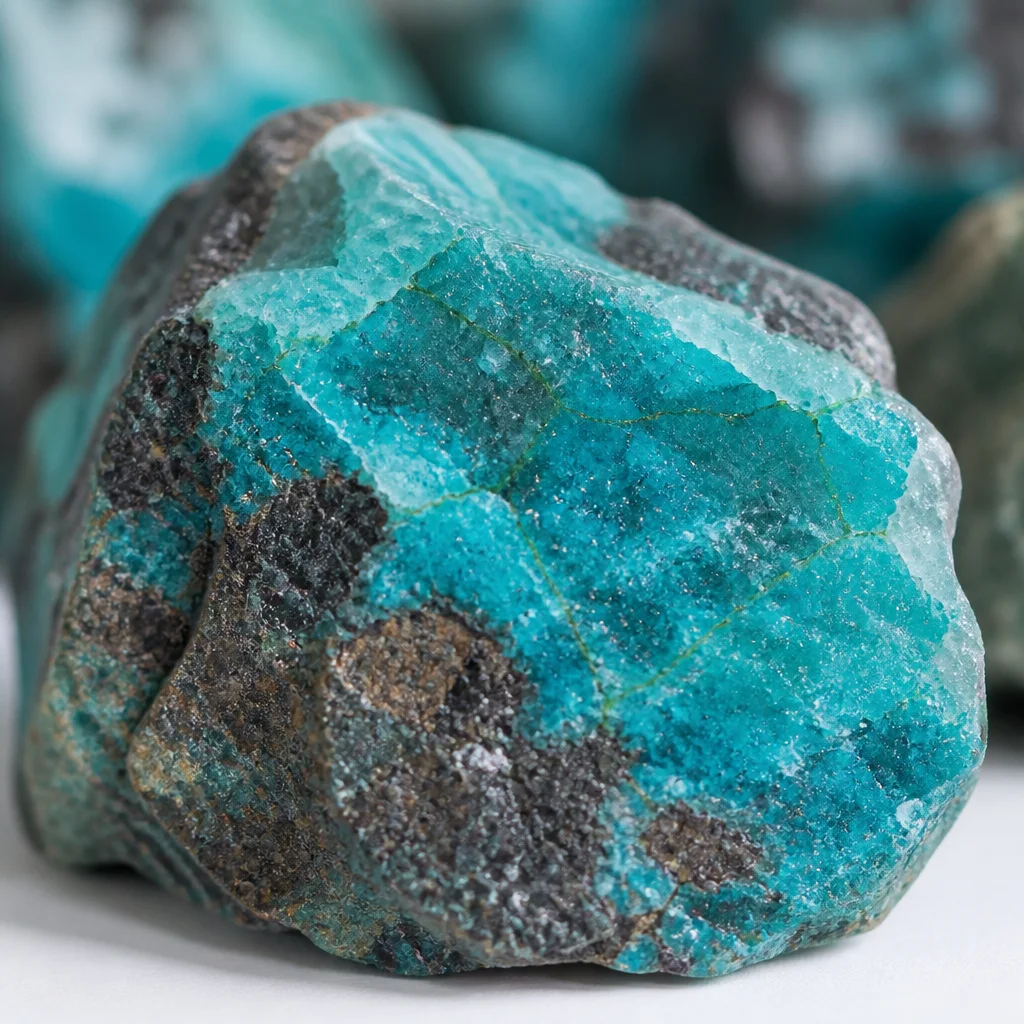
Oh, check out Chrysocolla, this awesome blue-green crystal thing. It's like this cool gem that often pops up when certain conditions are just right. It often hangs out with quartz, malachite, or limonite. The combo of these crystals makes these totally breathtaking, multicolored pieces that collectors just go nuts for. It's really cool to think about how all this stuff came together, you know? It's like Mother Nature's magic, and it makes you appreciate all the big, powerful natural forces and the super-specific chemical conditions needed to make this earthy beauty possible.
Modern Uses and the Spiritual Side of Things
So, these top copper minerals aren't just old-timey pigments; they're still super valuable in making jewelry and all sorts of cool carvings. Chrysocolla, with its awesome turquoise look, is a hit for artists who make those beautiful cabochons. And malachite? It's like the king of luxury decor pieces. Crafty folks have to be careful because these stones are a bit porous and脆, so they use resins to make 'em last longer for everyday use.
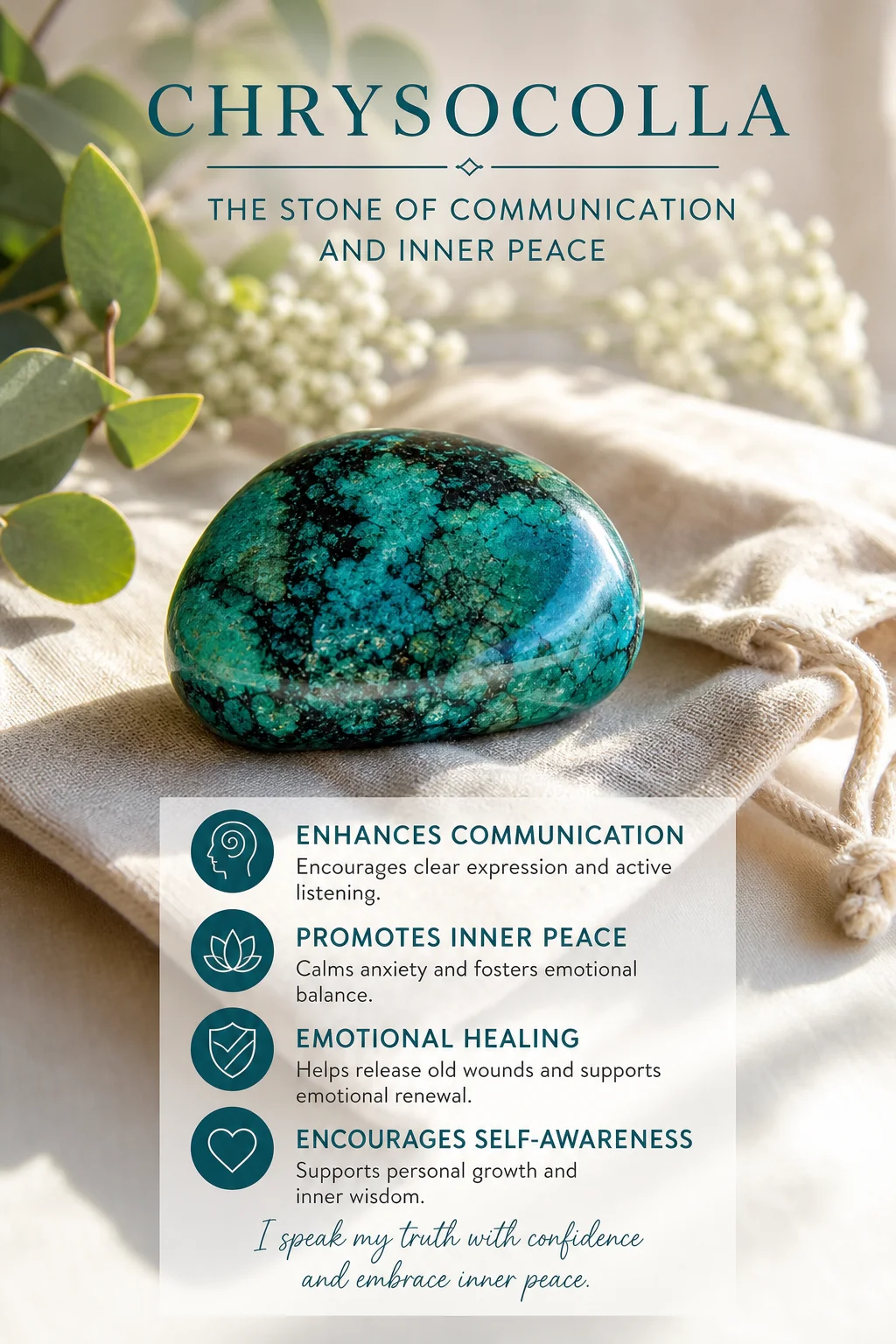
So, when you're diving into crystal healing and the whole alternative spirituality thing, there are these gems—azurite, malachite, and chrysocolla—that people really, really dig for their supposed spiritual stuff. Folks swear azurite gets your third eye in gear for supercharged intuition, and malachite's like a bodyguard for your vibes, warding off any bad juju. And then there's chrysocolla, a total chill-out gem for when you're needin' some smooth talkin' vibes. It's like it wraps you in a calm, powerful hug when you wear it.
Hey, here's the lowdown on taking care of your copper babies!
Hey, so, I've found that keeping those beautiful azurite, malachite, and chrysocolla crystals looking fresh is a bit of a mission. They're super sensitive to their surroundings, you know? Azurite is especially tricky because if it gets too much of that bright, harsh light and dry air, it can actually change color from its deep blue to a green malachite over time. It's like, honestly, you gotta be careful with these guys. So, collectors should really keep them out of direct sunlight when storing or showing them off.
So, these copper minerals? They're pretty soft and have lots of pores, right? They're definitely not a fan of harsh cleaners or those ultrasonic gadgets. A soft cloth or just a tiny bit of unscented soap with warm water is the way to go if you want to wipe away the dust gently. And honestly, keeping them in a place with low humidity is a game-changer. It's like they're living in their own perfect little world, and you want to keep it that way so your grandkids can admire them, too!
Frequently Asked Questions
Hey there! So, you're curious about the price difference between azurite and chrysocolla, right? Azurite is this really cool, vibrant blue stone that's a bit rarer and, honestly, it tends to be on the pricier side. On the other hand, chrysocolla is more affordable and super pretty, with that soothing greenish-blue hue. It's a bit more common, so you'll usually find it a little cheaper. But, the thing is, it really depends on the quality and size of the stones. Sometimes, you'll get an azurite piece that's not as pricey as you'd think if it's not super large or has any inclusions. And don't forget, the way they're cut and polished can also make a big difference in the final cost.Oh, Azurite is a total gem, way pricier than chrysocolla, right? It's all about that beautiful, vibrant blue that collectors just can't get enough of. What I love about it is how rare it is!
Frequently Asked Questions
Hey, have you ever wondered what makes copper minerals so bright and colorful?
The presence of copper in the chemical structure of these minerals interacts with light to produce striking blue and green hues, such as those seen in Azurite and Malachite.
Are Azurite and Malachite found together?
Yes, Azurite and Malachite are often found together. In fact, Azurite can pseudomorph into Malachite over time, creating stunning bi-color specimens.
Is Chalcocite considered a colorful gemstone?
Unlike Azurite and Malachite, Chalcocite is typically dark and metallic. It is highly valued for its copper content rather than its use as a colorful gemstone.
How should I care for Azurite specimens?
Azurite is relatively soft (3.5-4 on the Mohs scale) and sensitive to light, heat, and air. Keep specimens away from harsh chemicals and prolonged direct sunlight to preserve their deep blue color.
Can these copper minerals be used in jewelry?
Yes, but due to their relative softness, they are usually cut into cabochons or used as protective pendant pieces rather than being placed in rings that endure daily wear and tear.
The Cultural History of Azurite
Comparing Azurite to Other Copper Minerals
Azurite Properties and Characteristics
1. Azurite: The Deep Blue Stone
start on the Mineral path
How do the prices of azurite, malachite, and chrysocolla compare?
Azurite is typically the most expensive, followed by malachite, which is more common but still valuable, and chrysocolla, which is the least expensive of the three.
Which is more valuable, azurite or chrysocolla?
Azurite is generally considered more valuable than chrysocolla due to its rarity and the intensity of its color, which is highly prized in the gemstone market.
Frequently Asked Questions
Q1 What is Azurite?
A1 Azurite is a copper mineral known for its deep blue color, commonly used in jewelry and decorative items.
Q2 How does Malachite differ from Azurite?
A2 While both are copper minerals, Malachite is green and typically has a fibrous or leafy texture, in contrast to Azurite's blue and crystalline structure.
Frequently Asked Questions
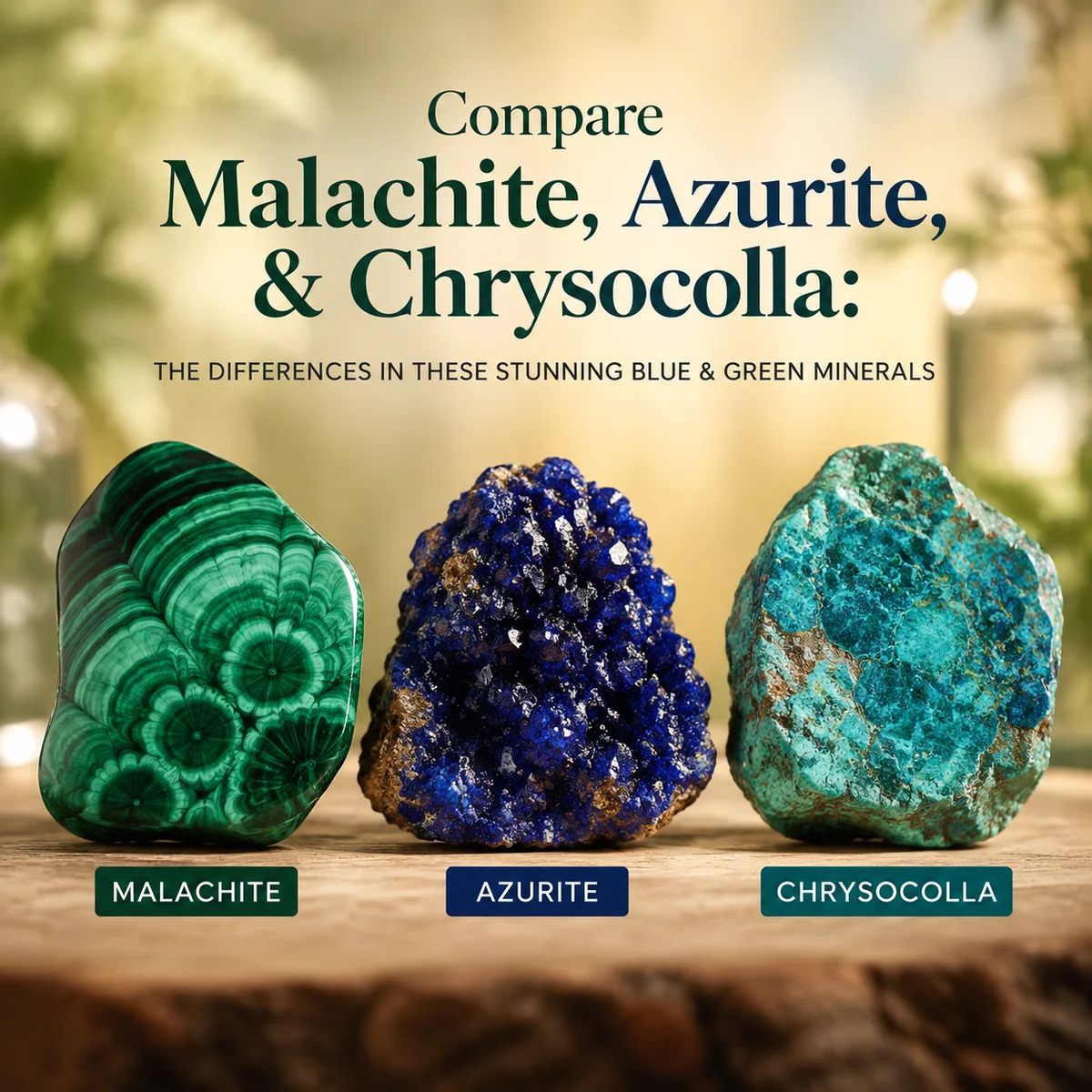
What is the difference between azurite, malachite, and chrysocolla?
Azurite is a deep blue copper carbonate hydroxide, malachite is a bright green copper carbonate hydroxide, and chrysocolla is a vibrant blue-green copper silicate. They all share a similar chemical composition but differ in color and structure.
How do azurite and chrysocolla compare?
Azurite is a carbonate while chrysocolla is a silicate, which affects their hardness and stability. Azurite is softer and more susceptible to weathering, while chrysocolla is harder and more durable.
What are the key characteristics of malachite?
Malachite is known for its distinct green color, often with a fibrous or banded appearance. It is a soft mineral, with a hardness of 3.5 to 4 on the Mohs scale, and is commonly found in copper-rich deposits.
Can you tell me about the similarities and differences between azurite and malachite?
Azurite and malachite are both copper minerals, with azurite being blue and malachite being green. Azurite is a carbonate and is softer, while malachite is a hydroxide and is harder. They often occur together in copper deposits.
What are the differences between chrysocolla and azurite?
Chrysocolla is a silicate and has a different chemical composition than azurite, which is a carbonate. Chrysocolla is harder and more durable, with a hardness of 2.5 to 3 on the Mohs scale, while azurite is softer, with a hardness of 3.5 to 4.
Comments