Larimar Stone: The Caribbean Gemstone Complet...
June 5, 2026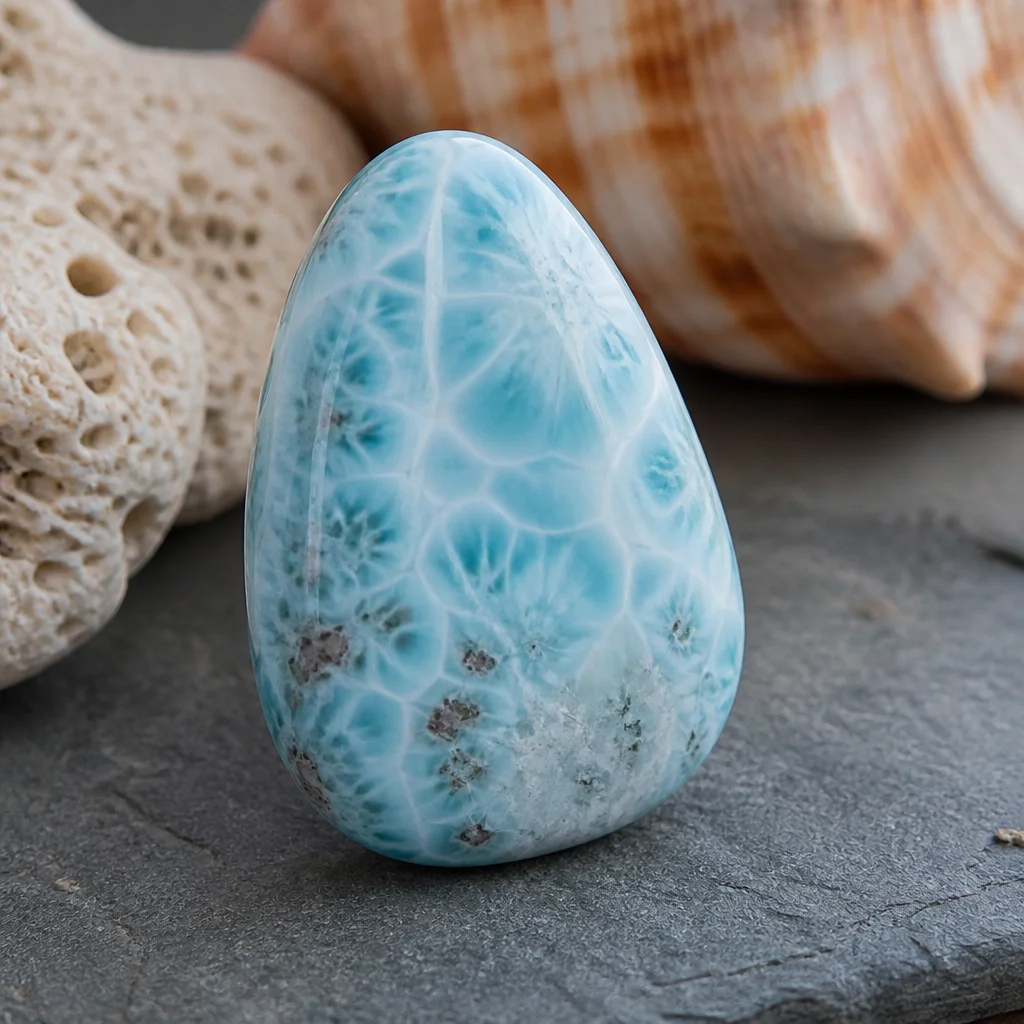
What Is Larimar? The Mineral Behind the Stone
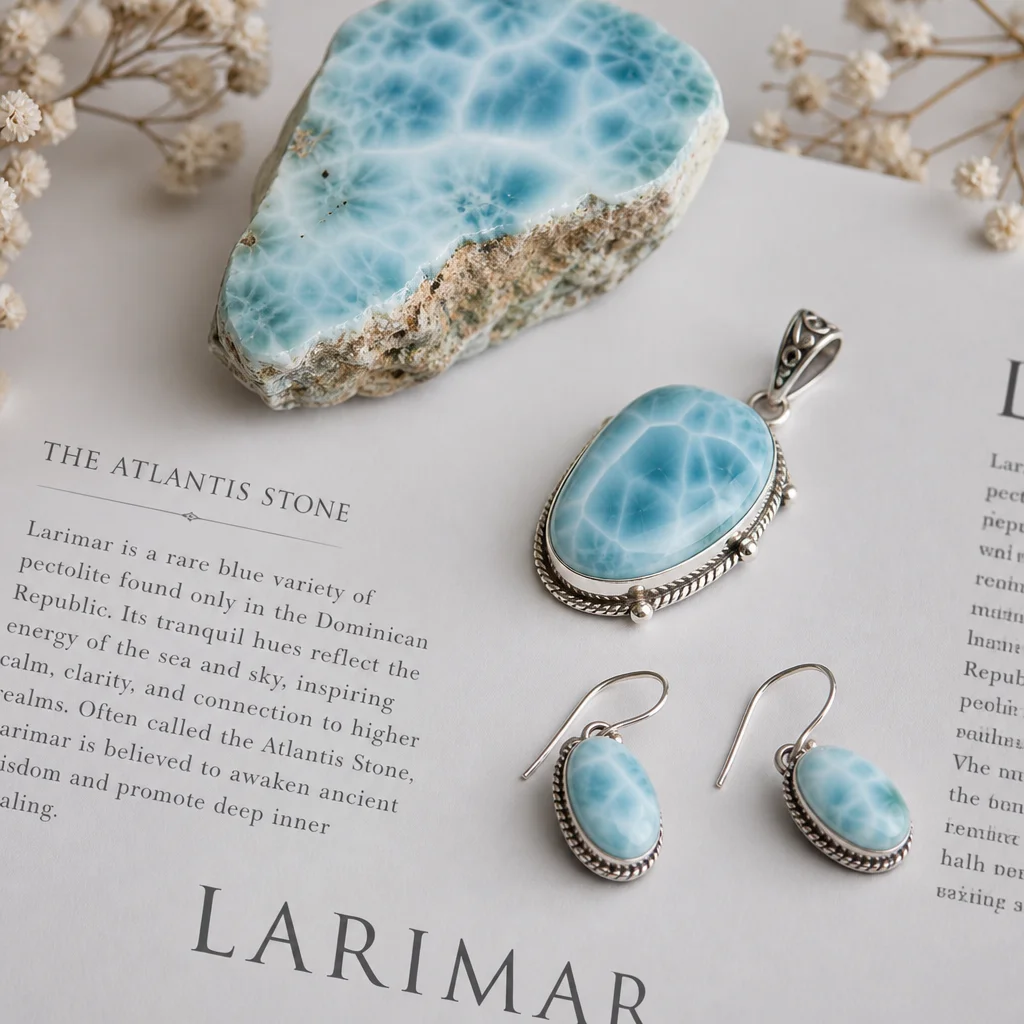
Larimar is a variety of pectolite, a mineral composed of sodium calcium silicate (NaCa₂Si₃O₈(OH)). Pectolite itself is not especially rare — it occurs in several locations worldwide, typically in gray, white, or colorless forms. What makes larimar extraordinary is its vivid blue coloration, caused by trace amounts of copper substituting for calcium within the crystal structure. This copper content is the same mechanism that gives turquoise and azurite their distinctive blue hues.
Larimar forms inside volcanic cavities known as amygdules, where hot mineral-rich gases and fluids fill voids in basaltic rock and slowly crystallize over thousands of years. The Dominican Republic's unique geological history — a collision zone between the Caribbean and North American tectonic plates — created the specific pressure, temperature, and chemical conditions required for blue pectolite to form. This is why larimar has never been found anywhere else in comparable quality or quantity.
On the Mohs hardness scale, larimar ranks between 4.5 and 5. This places it in the same general range as turquoise and apatite — hard enough to hold a polish and be worn in jewelry, but soft enough that it requires some care. Prolonged exposure to hard impacts, abrasive surfaces, or harsh chemicals can damage the stone. We will cover care guidelines in detail later in this article.
Where Does Larimar Come From?
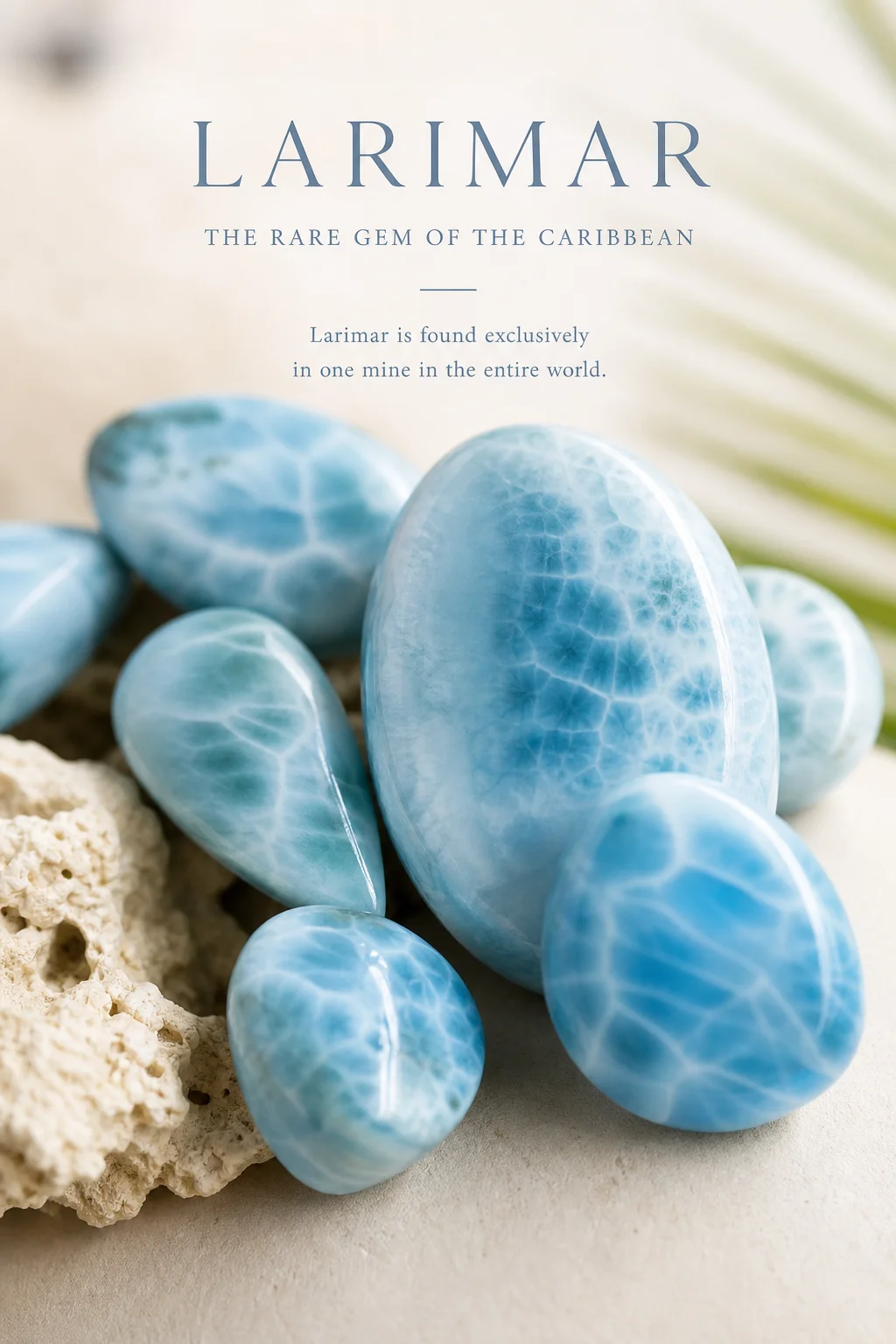
The entire world supply of larimar comes from a single location: the Los Checheses region of the Barahona province in the southwestern Dominican Republic, specifically within the Sierra de Baoruco mountain range. The mine itself is a series of volcanic tubes and cavities that miners access by hand, often digging narrow tunnels into hillsides with basic tools.
The story of larimar's discovery is relatively recent in gemstone terms. In 1974, a Dominican priest and geologist named Miguel Méndez noticed blue stones along a beach near the Bahoruco River. Local inhabitants had been finding these stones for years but largely ignored them. Méndez recognized the material as pectolite and traced it back to its source in the mountains. He combined the name of his daughter, Larissa, with the Spanish word for sea, mar, to create the name "larimar" — a fitting tribute to both its oceanic color and the personal connection.
Mining conditions remain challenging today. The deposits are scattered rather than concentrated, and the best material often lies deep within volcanic rock. Miners extract the stone by hand, making each piece of larimar a product of significant manual labor. This limited and difficult extraction process is a major factor in the stone's value and scarcity.
The Colors and Patterns of Larimar
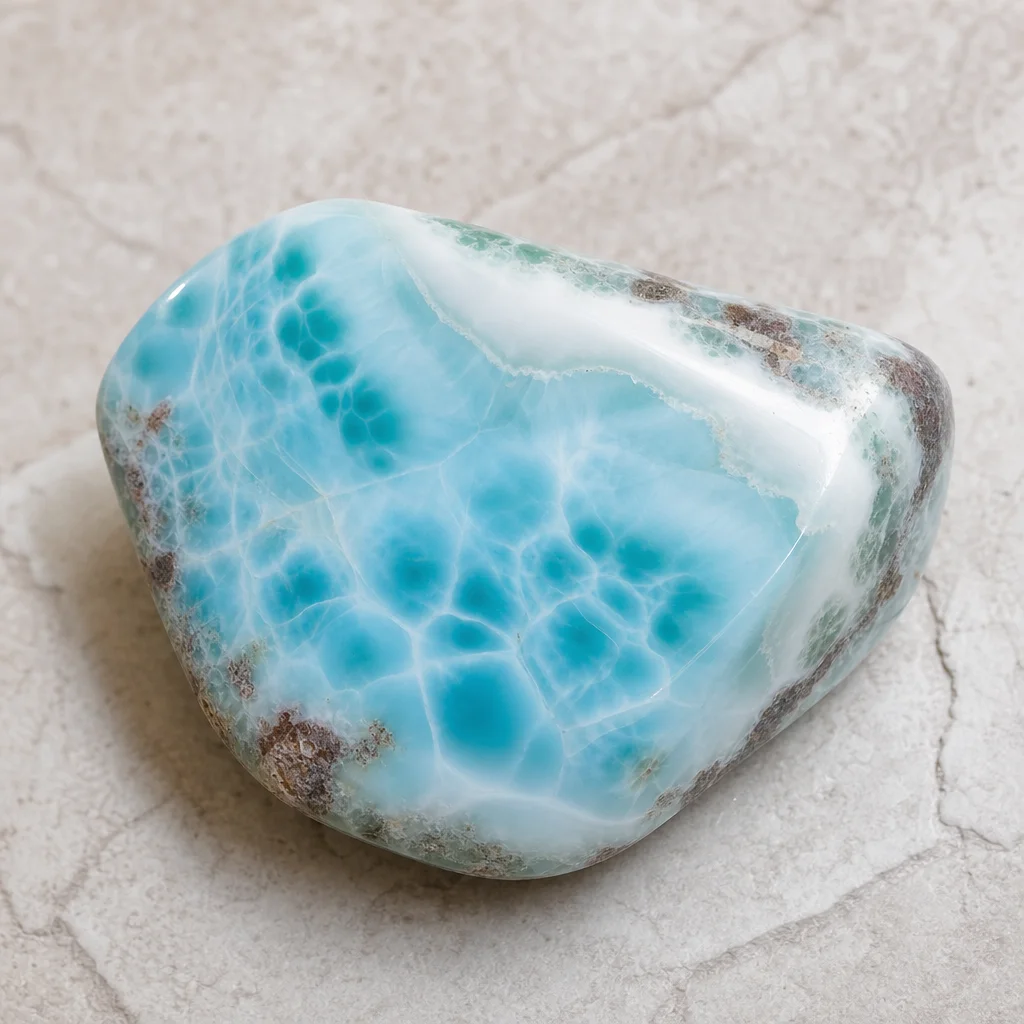
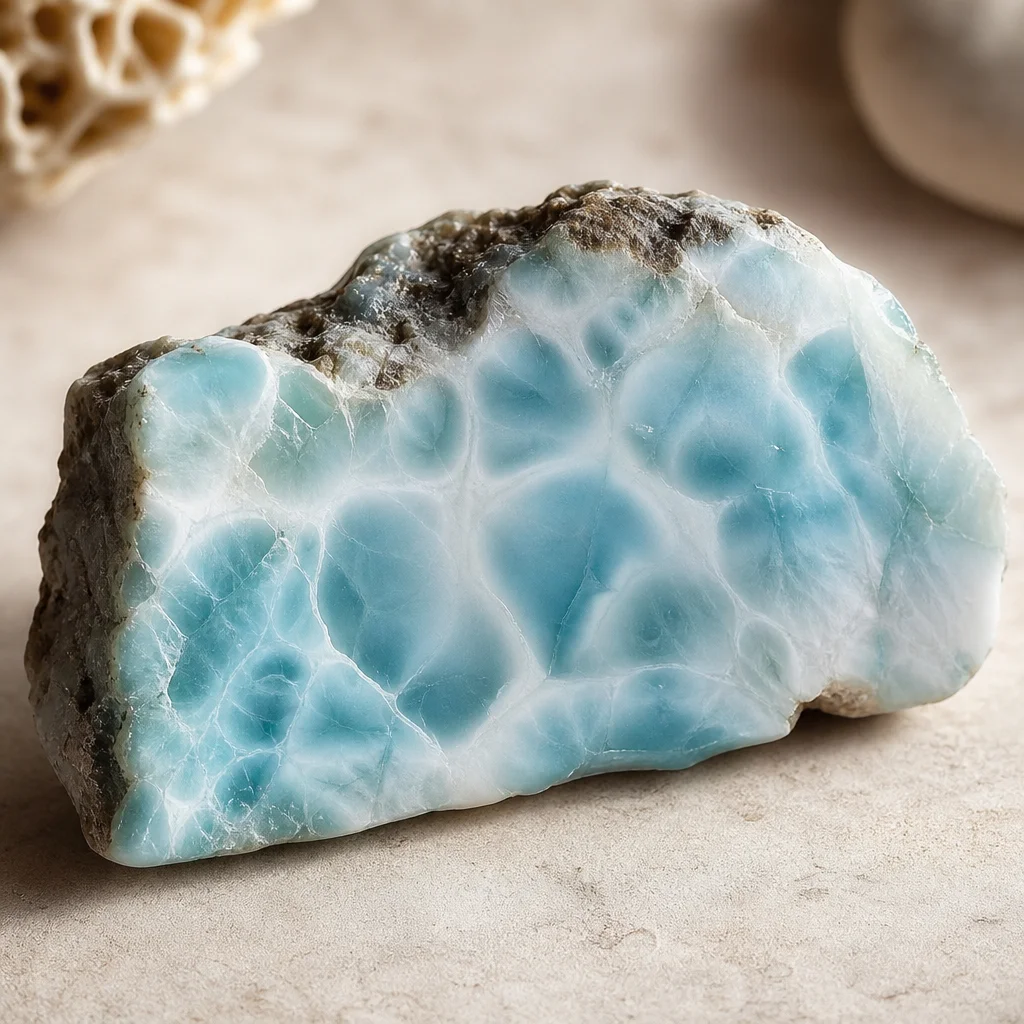
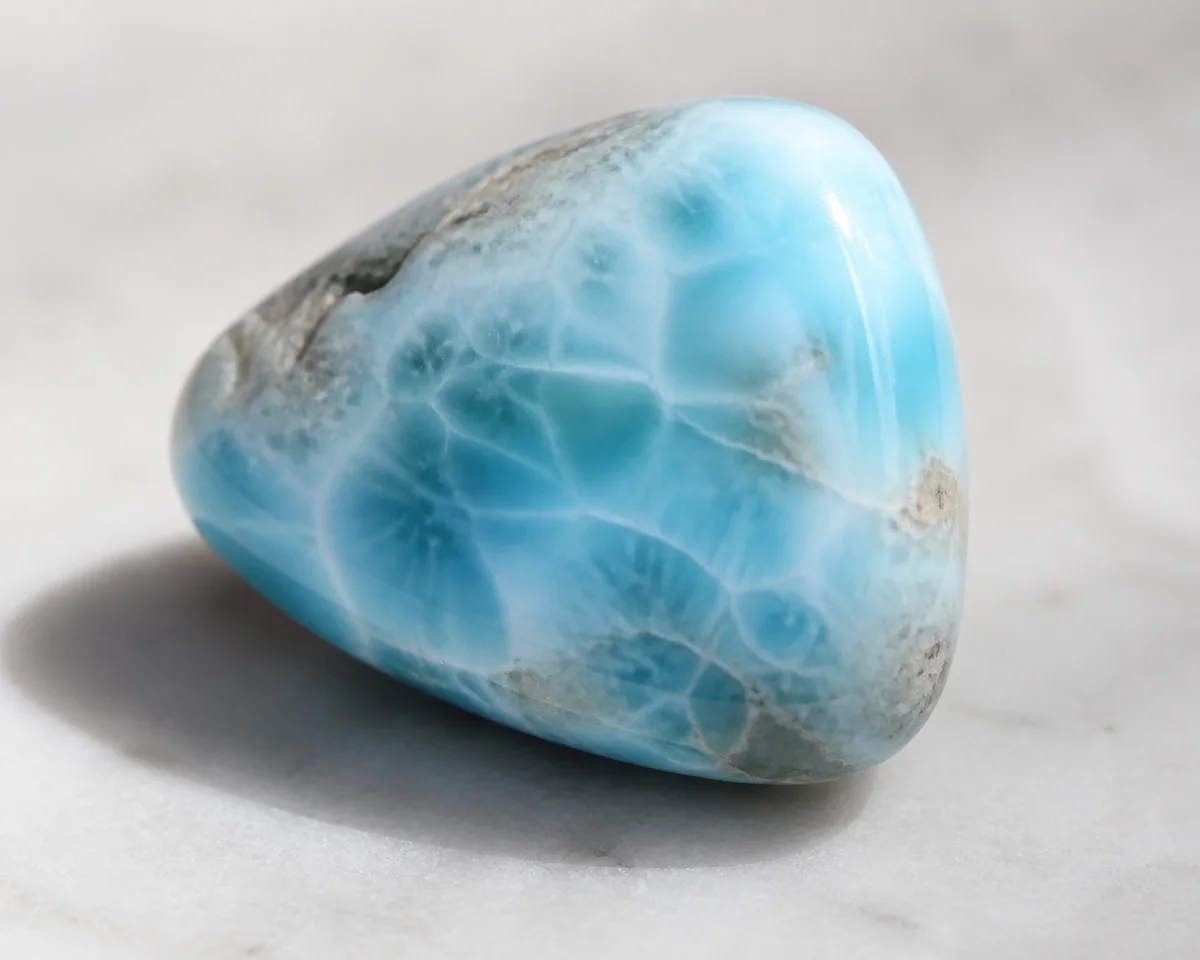
One of the most appealing aspects of larimar is its visual range. While it is primarily known for its blue tones, the stone actually occurs across a spectrum of sea-inspired colors:
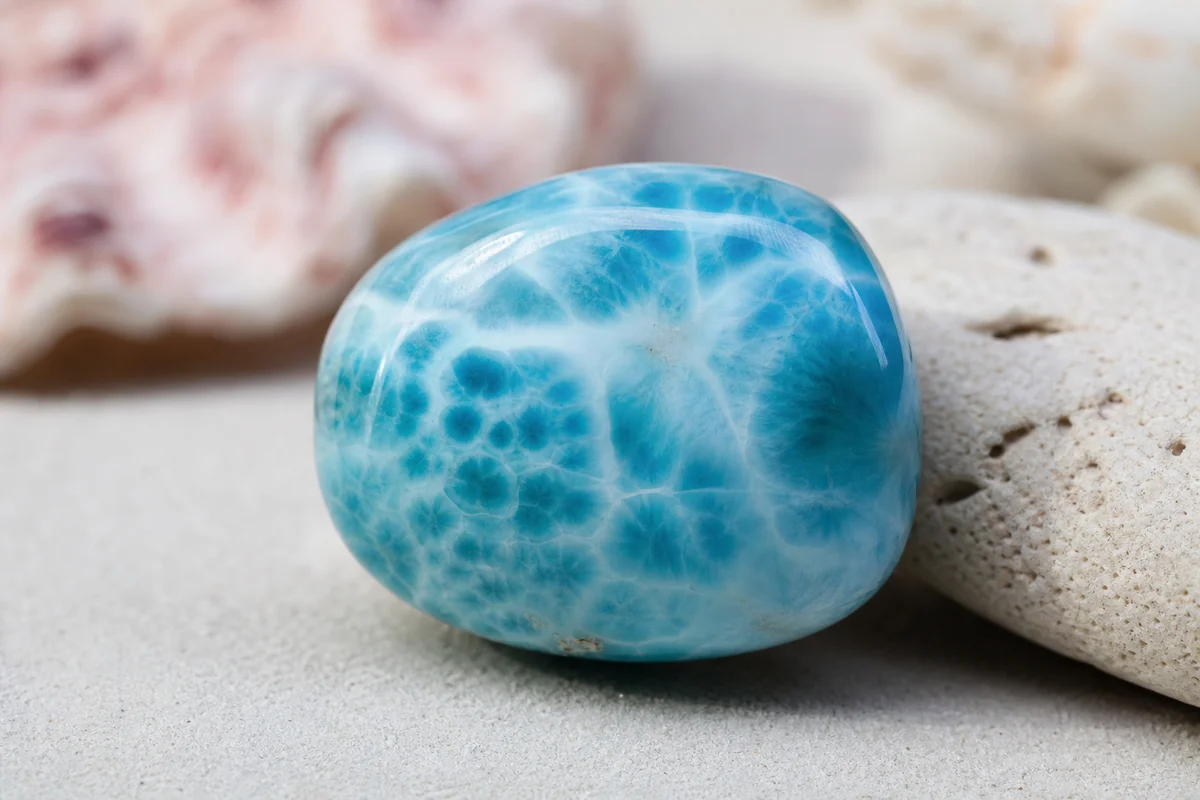
- Sky blue — The most valued and sought-after color. Clean, uniform sky-blue larimar with minimal inclusions commands the highest prices.
- Robins egg blue — A slightly greenish-blue tone that many collectors find equally attractive. Often contains subtle white webbing.
- Sea green — A blend of blue and green, reminiscent of shallow Caribbean waters. Sometimes called "green larimar" in the trade.
- White to light gray — Lower-grade material with minimal blue saturation. These pieces are more affordable but still display the characteristic volcanic patterning.
- Volcanic blue with red, brown, or black inclusions — Some pieces contain iron oxide or other mineral inclusions that create dramatic contrast against the blue matrix. These are popular with collectors who appreciate unique patterns.
The characteristic swirling and webbing patterns in larimar form naturally during crystallization. Many people see ocean waves, clouds, or even dolphins in the stone's patterns — which is part of why it has such a strong association with water and the sea in metaphysical traditions.
Larimar Meaning and Symbolism
In crystal healing and metaphysical practice, larimar is strongly associated with the element of water and the energy of the ocean. Its primary associations include:
- Emotional calm and serenity — The cooling blue energy of larimar is said to soothe turbulent emotions, reduce stress, and promote a peaceful state of mind. Many people keep a piece of larimar on their desk or carry it during stressful situations.
- Communication and self-expression — Larimar is linked to the throat chakra in chakra healing systems. Practitioners use it to encourage honest, clear communication, especially around difficult emotions that are hard to articulate.
- Inner wisdom and feminine energy — The stone's association with water connects it to lunar and feminine archetypes across many spiritual traditions. It is sometimes called the "Stone of the Divine Feminine."
- Physical healing — In crystal healing, larimar is sometimes used for throat and respiratory issues, joint pain, and skin conditions. These associations are cultural and spiritual rather than scientifically proven. Crystals are not a substitute for medical treatment.
Larimar vs Turquoise: How to Tell Them Apart
Because both larimar and turquoise are blue stones with similar hardness and casual visual appeal, confusion between the two is common. Here are the key differences:
- Mineral family — Larimar is pectolite (sodium calcium silicate); turquoise is a hydrated phosphate of copper and aluminum (CuAl₆(PO₄)₄(OH)₈·4H₂O).
- Color pattern — Turquoise typically shows a more uniform blue-green with dark matrix webbing (veins of host rock). Larimar displays softer, more fluid swirled patterns that look like water or clouds.
- Origin — Turquoise has been mined across the globe (Iran, the American Southwest, China, Egypt). Larimar comes exclusively from the Dominican Republic.
- Texture — Polished turquoise feels slightly waxy or porous. Polished larimar has a smoother, more glassy feel due to its higher silica content.
- Hardness — Turquoise is slightly harder at 5-6 on the Mohs scale versus larimar's 4.5-5.
How to Evaluate Larimar Quality
When shopping for larimar, whether as loose stones or finished jewelry, these factors determine quality and value:
Color intensity — Deeper, more saturated blue commands higher prices. The most valuable stones are a vivid sky blue with minimal green or gray tones. However, personal preference matters — some people prefer the softer, more variegated pieces.
Pattern appeal — While clean blue is the most expensive, many buyers specifically seek out larimar with interesting patterns. A dramatic swirling design or a pattern resembling ocean waves can increase the aesthetic value even if the blue saturation is not the deepest.
Clarity and inclusions — Fewer visible inclusions generally mean higher value, but tiny mineral specks or subtle veining are normal and expected in natural larimar. Avoid pieces with large cracks or fracture lines that could compromise durability.
Cut and polish — A well-polished larimar cabochon with smooth, even surfaces reflects light beautifully. Poorly cut pieces with flat spots, scratches, or dull areas will be worth less.
Size — Larger pieces of high-quality blue larimar are rare. Stones over 10 carats with good color are considered significant. Very large clean pieces command premium prices.
How to Care for Larimar
Because of its moderate hardness and natural porosity, larimar needs more careful handling than harder stones like quartz or topaz:
- Avoid prolonged water exposure — While brief contact with water is fine, soaking larimar for extended periods can weaken the stone over time. Remove larimar jewelry before swimming, bathing, or washing dishes.
- Store separately — Keep larimar away from harder stones that could scratch it. A soft cloth pouch or a separate compartment in your jewelry box works well.
- Avoid chemicals — Perfume, sunscreen, household cleaners, and acids can damage the surface. Put larimar jewelry on after applying cosmetics.
- Avoid heat — Sustained high temperatures can cause color fading or structural changes. Do not leave larimar in a hot car or in direct sunlight for extended periods.
- Clean gently — Use lukewarm water, mild soap, and a soft cloth or very soft brush. Pat dry with a clean cloth.
Frequently Asked Questions
Is larimar expensive?
Larimar is moderately priced for a gemstone. Small cabochons of average quality can be found for $20-50, while larger, high-quality blue pieces with desirable patterns can reach $200-500 or more per carat. Fine jewelry pieces with premium larimar typically range from $100 to several thousand dollars depending on stone quality, size, and metalwork.
Can larimar fade in sunlight?
Yes, prolonged direct sunlight can cause the blue color in larimar to fade over time, though it is more heat-resistant than some other colored stones. Storing your larimar in a cool, dark place when not wearing it will help preserve its color.
Is larimar a birthstone?
Larimar is not a traditional birthstone, but it is sometimes associated with March (alongside aquamarine) due to its water connection and blue color. Some crystal enthusiasts also link it to the zodiac signs of Pisces and Aquarius.
How can I tell if my larimar is real?
Real larimar comes exclusively from the Dominican Republic. Look for natural swirling patterns — genuine larimar will have irregular, flowing designs rather than uniform or artificially repeating patterns. The stone should feel cool to the touch and heavier than plastic imitations. If purchasing online, buy from reputable dealers who can verify the source. Laboratory-created pectolite does exist but is rare; most fake larimar on the market is dyed howlite, dyed magnesite, or glass.
Final Thoughts
Larimar occupies a special place in the world of gemstones. Its exclusive Caribbean origin, stunning ocean-like appearance, and the dedicated hand-mining required to extract it all contribute to a stone that feels both precious and deeply connected to nature. Whether you are drawn to larimar for its visual beauty, its metaphysical properties, or simply the romantic story of a priest naming a stone after his daughter and the sea, it is a gemstone that rewards closer exploration.
Frequently Asked Questions
Can you wear larimar jewelry every day?
Yes, you can wear your SagStone larimar jewelry every day, but it requires mindful handling. With a Mohs hardness of 4.5 to 5, this beautiful Caribbean stone is somewhat softer than quartz. To keep your handcrafted piece looking its best, avoid harsh impacts, take it off during strenuous activities, and keep it away from harsh chemicals to preserve its stunning ocean-blue hues.
Comments