How to Tell if Tanzanite Is Real: 7 Practical...
June 5, 2026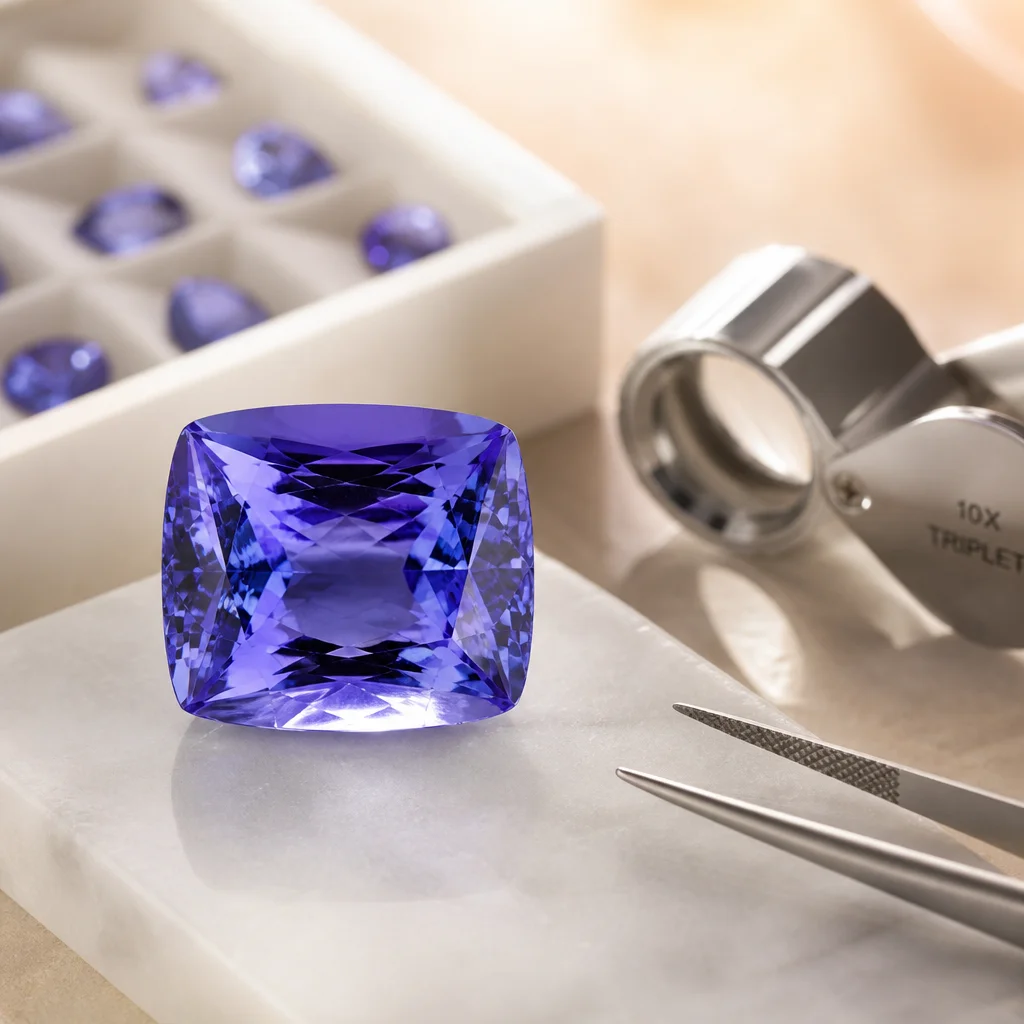
Why Tanzanite Authentication Matters More Than You Think
Tanzanite has a unique market position that makes authentication particularly important. Unlike diamonds, rubies, or sapphires — which have been traded, studied, and certified for centuries — tanzanite was only discovered in 1967 near Kilimanjaro in Tanzania. In the decades since, it has become one of the most popular colored gemstones in the world, but its relative novelty means that many buyers and even some jewelers are less familiar with its properties than they are with better-established gems.
The combination of high demand, a single-source origin (tanzanite is mined almost exclusively from a small area near Merelani in Tanzania), and relatively high prices (quality stones sell for $300-$600 per carat at retail, and fine specimens fetch far more) creates strong incentives for counterfeiting. Common substitutes include synthetic corundum (both blue and purple varieties), glass, coated quartz, and in some cases, simulants that are themselves genuine gemstones but not tanzanite.
Understanding how to distinguish real tanzanite from imitations does not require a gemology lab. Several reliable tests can be performed at home or at a jeweler's counter with basic equipment. Here are seven practical methods, ranked roughly from most reliable to most accessible.
Test 1: Trichroic Color — The Definitive Identifier
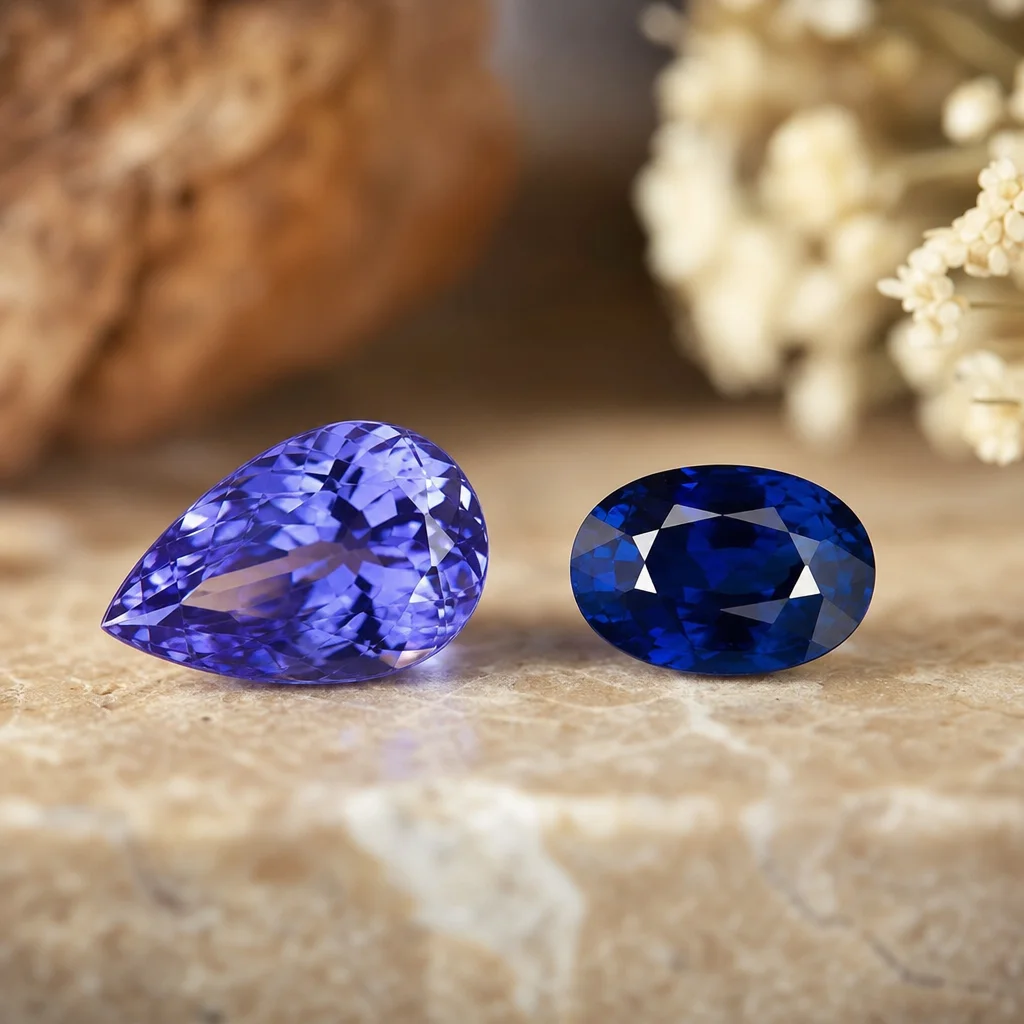
This is the single most reliable test for genuine tanzanite, and it requires nothing more than good lighting and a pair of alert eyes. Tanzanite is trichroic, meaning it displays three distinct colors when viewed from different angles. In most tanzanite specimens, these colors are blue (dominant face-up view), violet or purple (at a 90-degree rotation), and red-brown or burgundy (at an intermediate angle).
Here is how to perform the test: hold the stone under strong natural daylight or a bright white LED light. Rotate it slowly while watching the color shift. A genuine tanzanite will show a noticeable change from blue to purple to a reddish undertone as you change your viewing angle. The color shift is not subtle — it is clearly visible to the naked eye.
Most imitations fail this test. Blue synthetic corundum shows only blue and possibly a slight green flash. Glass shows no color shift at all. Coated quartz may show some color variation, but it will be limited to two colors (blue and purple) rather than the three distinct hues of genuine tanzanite. Violet sapphire can show some color shift but typically only two colors (blue and violet) without the characteristic red-brown component.
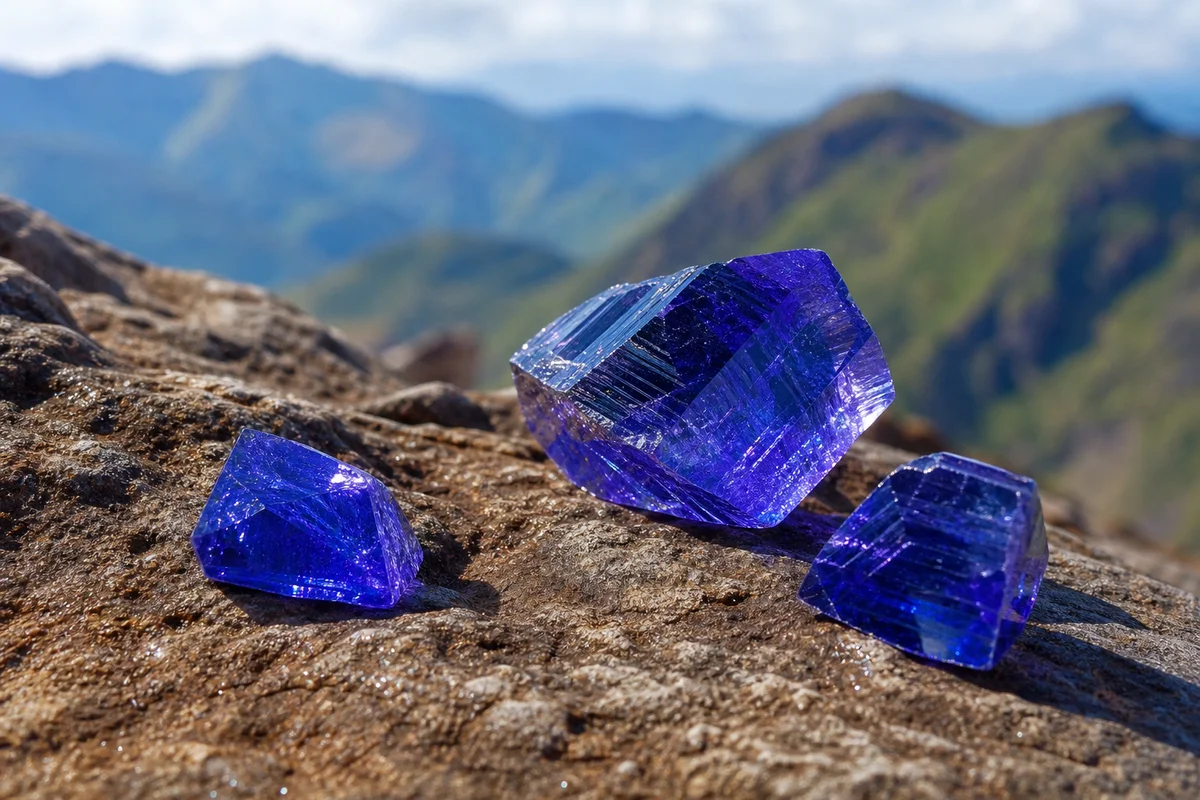
One important caveat: roughly 99% of tanzanite on the market has been heat-treated. Rough tanzanite is usually brownish or greenish-brown, and heating to approximately 500-600°C transforms it into the vivid blue-violet that the market demands. This treatment is permanent, accepted industry-wide, and does not affect the trichroic properties. Both treated and untreated tanzanite display the same three-color shift.
Test 2: The Single-Source Test
Tanzanite is one of the few major gemstones with a single geographic source. If a seller claims a stone is tanzanite but cannot or will not confirm its Tanzanian origin, that is a significant red flag. While it is theoretically possible that similar mineral deposits exist elsewhere (the mineral zoisite, of which tanzanite is a blue-violet variety, occurs in other locations), the specific geological conditions that produce gem-quality tanzanite have only been found near Merelani.
This test alone does not prove authenticity — a seller could lie about origin — but it serves as a quick filtering tool. Combined with other tests, origin documentation (even a verbal statement from a reputable dealer) adds to the chain of evidence.
Test 3: Hardness Check
Tanzanite scores 6 to 6.5 on the Mohs scale of hardness. This is softer than sapphire (9), harder than glass (5.5), and roughly comparable to feldspar and apatite. You can perform a basic hardness test by attempting to scratch a piece of glass with the stone, then attempting to scratch the stone with a steel knife or a copper penny.
A genuine tanzanite will scratch glass (glass is softer at 5.5). A steel knife (hardness ~5.5) will not scratch tanzanite. This two-part test narrows the field significantly. Glass imitations obviously fail the glass-scratch test. Synthetic corundum passes both (it is harder than tanzanite) but is identified by Test 1. Some cheaper simulants are made from softer materials and will fail the knife test.
Use this test with caution on finished jewelry — the scratching action may damage settings or polish. Test on an inconspicuous area of the stone or, ideally, on a loose stone. Professional jewelers can perform more precise hardness tests with scratch kits that do not risk damage.
Test 4: UV Fluorescence
When exposed to long-wave ultraviolet light, genuine tanzanite typically shows a weak to moderate orange or greenish fluorescence. The fluorescence is not strong — it will not make the stone glow vividly under a UV lamp — but it should be detectable. Short-wave UV may produce no visible fluorescence at all, which is also consistent with genuine tanzanite.
This test requires a UV light source (inexpensive handheld UV flashlights are readily available online). Place the stone under long-wave UV in a dark room and observe. The weak orange fluorescence is a supporting indicator but not definitive on its own, as some imitations may also fluoresce.
What to watch for: strong blue fluorescence suggests synthetic corundum (sapphire), while no fluorescence at all under long-wave UV is less concerning than it might seem — some genuine tanzanite shows very little reaction.
Test 5: Refractive Index (RI) Testing
Tanzanite has a refractive index of approximately 1.691-1.700, with a birefringence of 0.009. A gemological refractometer (a standard tool at any jeweler's bench) can measure this property quickly and accurately. If you have access to one, this is one of the most conclusive tests available outside a professional lab.
Place a drop of contact fluid on the refractometer's glass, set the stone table-down on the fluid, and read the scale. Genuine tanzanite will produce a reading in the 1.69-1.70 range. Synthetic corundum reads much higher (1.762-1.770). Glass reads around 1.50-1.55. The difference is large enough to be unmistakable.
Most reputable jewelers will perform an RI test for free or for a small fee if you ask them to verify a stone. It takes about 30 seconds and is non-destructive.
Test 6: Density Measurement
Tanzanite has a specific gravity (density) of approximately 3.35. You can measure this at home with a decent jewelry scale and a glass of water, though it requires some patience and a steady hand.
Weigh the stone in air first, then weigh it suspended in water (using a fine wire or thread to hold it submerged). The formula is: Specific Gravity = weight in air / (weight in air - weight in water). A result close to 3.35 supports genuine tanzanite. Glass simulants typically weigh in around 2.5-2.6 (noticeably lighter), while synthetic corundum weighs about 4.00 (noticeably heavier).
This test works best with loose stones and a scale accurate to at least 0.01 carats. For small stones, the measurement error can be significant enough to make the result ambiguous. But for stones above 1 carat, a careful measurement should give a result within 0.1 of the true specific gravity.
Test 7: Inclusion Examination Under Magnification
Every natural tanzanite contains inclusions — tiny internal features that are impossible to reproduce exactly in synthetic or glass imitations. A jeweler's loupe (10x magnification) or a USB microscope (20-40x) is sufficient to examine these features.
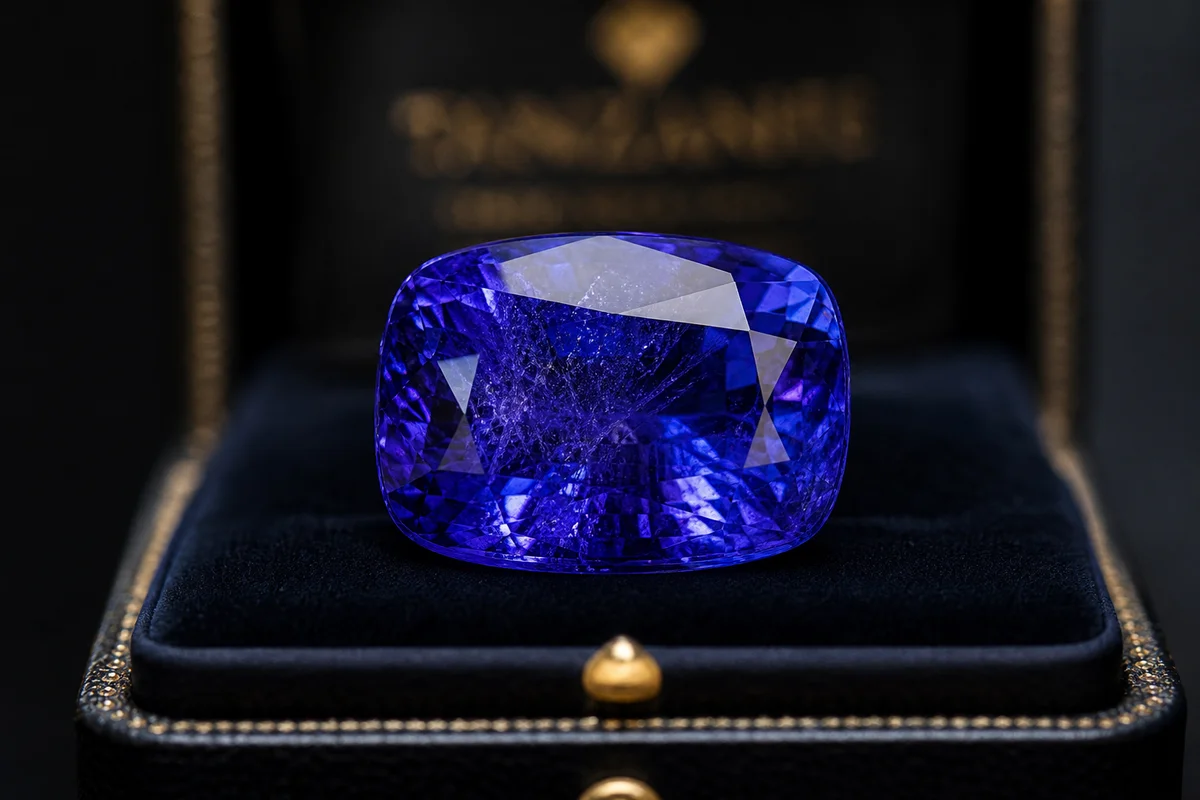
Common inclusions in genuine tanzanite include: needle-like inclusions (possibly rutile), tiny crystal inclusions of other minerals from the Merelani deposit, and fingerprint-like fluid inclusions that form during growth. The presence of these natural inclusions is actually a positive sign — it supports the stone's natural origin.
What to look for in imitations: perfectly clean stones with no visible inclusions under 10x magnification are suspicious. While flawless natural tanzanite exists, it is rare. Glass simulants may show round gas bubbles (a dead giveaway for glass). Synthetic corundum may show curved growth lines or tiny metallic flux inclusions that look different from tanzanite's natural inclusion patterns.
Tanzanite vs. Lookalike Gemstones
Several genuine gemstones resemble tanzanite closely enough that they can be confused with it, even by experienced buyers:
Iolite (water sapphire) is the most common natural lookalike. Iolite also displays strong pleochroism (three colors), typically showing violet, blue, and colorless to pale yellow. The key difference: iolite's hardness is 7-7.5 (harder than tanzanite), and its colors include a distinct colorless component that tanzanite does not show. Iolite is also considerably less expensive.
Blue sapphire is harder (9), heavier (SG ~4.0), and typically shows only two colors (blue and green) rather than three. Fine blue sapphire is also more expensive per carat than most tanzanite, which is another distinguishing factor.
Violet sapphire can closely mimic the purple face of tanzanite but typically lacks the characteristic red-brown component in its pleochroic range.
Blue spinel is harder (8) and shows no pleochroism at all — it looks the same color from every angle. Spinels are also denser (SG ~3.6).
When to Get a Professional Certification
For any tanzanite purchase above $200-300, professional certification from a recognized gemological laboratory (GIA, IGI, or Gübelin) is strongly recommended. These labs use advanced spectroscopic analysis, precise RI and SG measurements, and microscopic examination to produce a definitive report. The cost is typically $50-$150 for a standard identification report — a worthwhile investment for a stone that may cost thousands.
Certification is particularly important for tanzanite because of the common heat treatment. While heat treatment is accepted and does not reduce value, undisclosed treatments (such as fracture filling or coating) should be identified. A lab report will clearly state whether any treatments have been applied beyond the standard heating.
Ultimately, the combination of trichroic color testing, hardness checks, and professional certification provides a robust authentication framework. No single test is foolproof on its own, but when multiple tests converge on the same conclusion, you can be confident in your tanzanite's authenticity.
Frequently Asked Questions
How can I clean my Tanzanite jewelry at home?
Use warm water and a mild soap solution. Gently brush the jewelry with a soft-bristled toothbrush, ensuring to rinse thoroughly. Dry with a soft cloth, and avoid using jewelry cleaners that contain ammonia or alcohol as they can damage Tanzanite.
What is the best way to store my Tanzanite jewelry?
Store your Tanzanite jewelry in a fabric-lined jewelry box or a soft pouch to prevent scratches. Keep it away from harsh chemicals, extreme temperatures, and direct sunlight. It's also a good idea to separate it from other jewelry to prevent tangling and damage.
Can I wear Tanzanite jewelry in extreme weather conditions?
While Tanzanite is a durable gemstone, it is sensitive to extreme temperatures and direct sunlight. It is best to remove your Tanzanite jewelry when going to the beach or engaging in outdoor activities in intense heat, as prolonged exposure can cause the gemstone to fade or discolor.
What is the best setting for a Tanzanite engagement ring?
The best setting for a Tanzanite engagement ring is one that highlights the gemstone's vibrant blue hues. Solitaire settings with a thin metal band, pave settings, or bezel settings are popular choices as they keep the stone secure and emphasize its beauty.
How can I determine the quality of a Tanzanite gemstone?
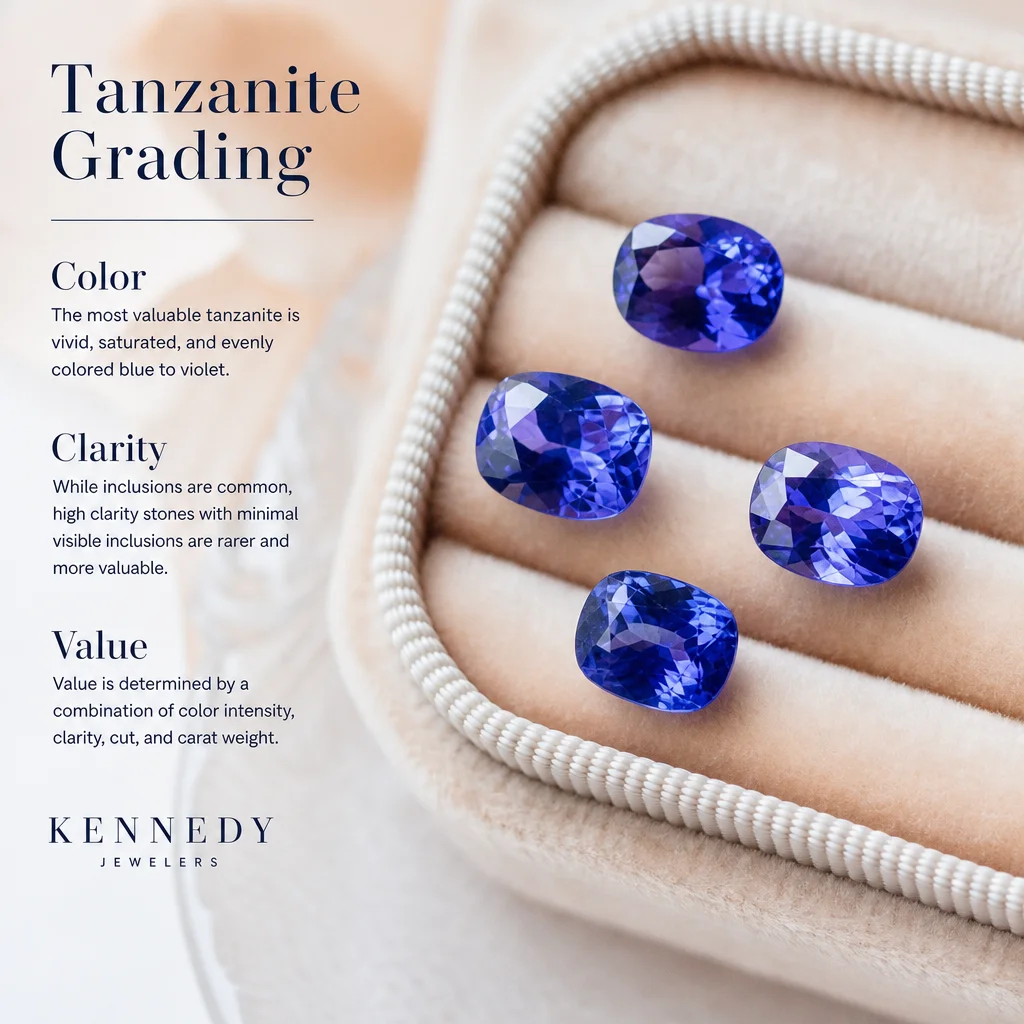
The quality of a Tanzanite gemstone is determined by the "Four Cs": Color, Cut, Clarity, and Carat Weight. Look for a gemstone with a rich blue color, a well-proportioned cut that enhances its brilliance, minimal inclusions, and a desirable carat weight without compromising color and cut.
Comments